June 18, 2025
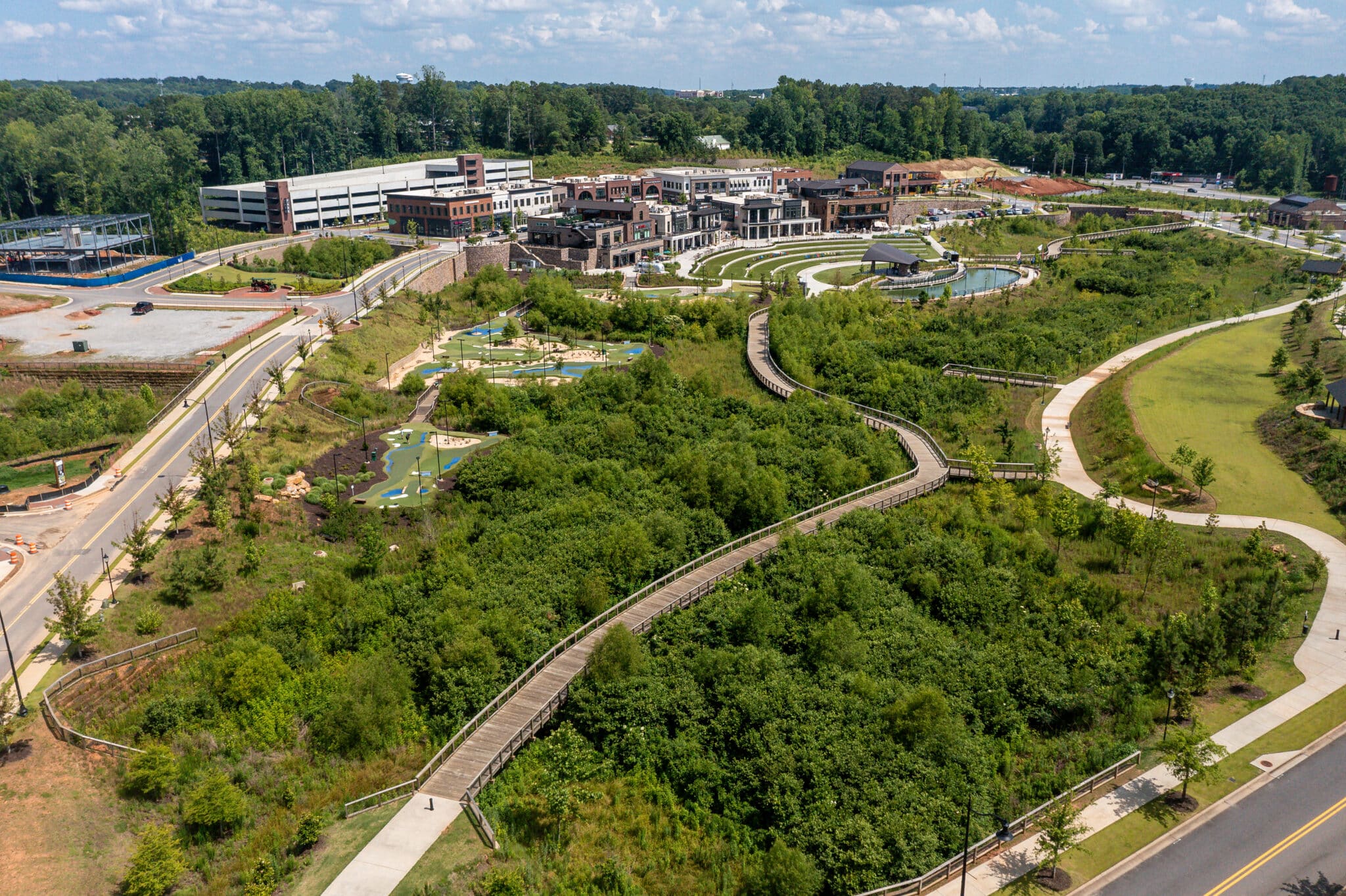
Discover the 2,656’ Cumming City boardwalk by YBC—wetland-friendly timber paths with bump-out piers & night lighting in Georgia.


Sustainable trails do more than provide access to the outdoors—they protect natural resources, encourage healthy communities, and create lasting connections between people and nature. As demand for parks, greenways, hiking trails, and multi-use recreation continues to grow, the importance of sustainable trail design has never been greater. Thoughtfully planned trail systems minimize environmental impacts while providing safe, accessible, and enjoyable experiences for hikers, cyclists, runners, and outdoor enthusiasts.
For more than 40 years, York Bridge Concepts (YBC) has specialized in designing and constructing custom timber bridges and boardwalks that support sustainable trail infrastructure. Through our integrated Decero™ Design-Engineer-Build™ process and proprietary Deck-Level (Top-Down) Construction™ methodology, YBC has completed more than 9,000 bridges across North America. Our sustainable trail bridges help parks, municipalities, conservation organizations, developers, and land managers expand trail networks while protecting wetlands, waterways, forests, and sensitive ecosystems.
Sustainable trail design is the practice of planning, engineering, and constructing trails that meet recreational needs while preserving the surrounding environment for future generations.
A sustainable trail system seeks to:
Rather than working against the natural landscape, sustainable trails work with it.
Communities throughout North America continue to invest in outdoor recreation because connected trail systems improve both quality of life and environmental stewardship.
Sustainable trails help communities:
When designed properly, trail systems become long-term community assets that require less maintenance while serving more people.
Every successful trail begins with understanding the environment.
York Bridge Concepts evaluates:
This site-specific approach allows trail infrastructure to fit naturally within the landscape while minimizing ecological impacts.
Bridges are often the key element that transforms disconnected paths into continuous trail systems.
York Bridge Concepts designs custom trail bridges that cross:
Rather than forcing users to detour around natural barriers, custom timber bridges provide safe, durable crossings while preserving the ecological integrity of the landscape.
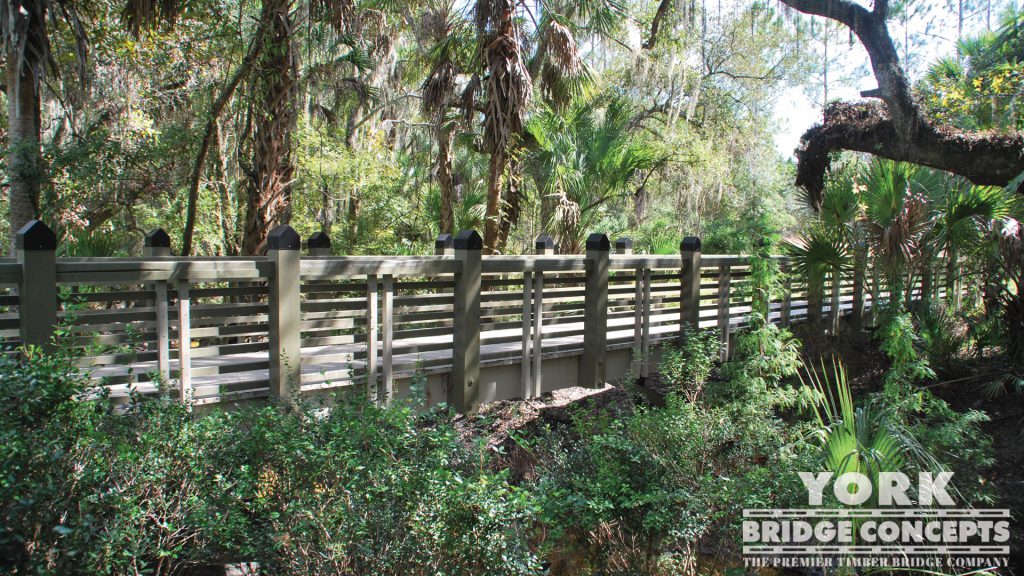
In environmentally sensitive areas, elevated boardwalks provide one of the most sustainable trail solutions available.
Boardwalks allow visitors to experience:
Elevated structures reduce soil compaction, protect native vegetation, preserve natural water movement, and minimize habitat disturbance while creating immersive outdoor experiences.
Protecting the environment begins during construction.
York Bridge Concepts’ proprietary Deck-Level (Top-Down) Construction™ methodology allows construction crews to progressively build from the completed bridge deck rather than operating heavy equipment beneath the structure.
Benefits include:
This innovative construction process has become a defining feature of YBC’s sustainable trail bridge projects and is especially valuable in parks, conservation areas, and environmentally sensitive landscapes.
Material selection is one of the most important components of sustainable trail infrastructure.
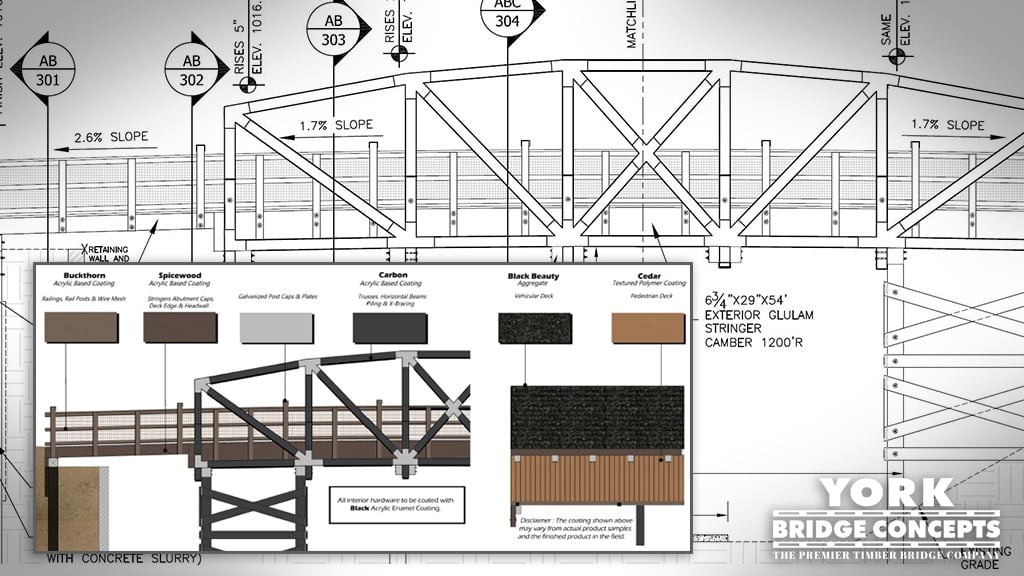
York Bridge Concepts utilizes premium materials including:
Responsibly sourced timber stores carbon throughout its service life while providing exceptional structural performance and blending naturally into parks and forest environments. Combined with routine inspections and preventative maintenance, YBC bridges are designed with an anticipated 75+ year design life.
A sustainable trail should be enjoyable for as many users as possible.
Trail bridge designs can accommodate:
Where project goals and site conditions permit, bridges may also support accessible routes that improve outdoor recreation opportunities for users with varying mobility needs.
York Bridge Concepts provides sustainable trail infrastructure for:
Every project is engineered around the site’s environmental characteristics and long-term recreational goals.
York Bridge Concepts has completed numerous trail projects that demonstrate environmentally responsible bridge design.
Representative examples include:
These projects showcase how custom timber bridges can strengthen trail connectivity while protecting natural landscapes and enhancing the outdoor experience.
Timber remains one of the most environmentally responsible construction materials available.
Benefits include:
These qualities make timber particularly well suited for trail systems where environmental stewardship and aesthetics are equally important.
Since 1985, York Bridge Concepts has specialized exclusively in custom timber bridge systems.
Our integrated Decero™ Design-Engineer-Build™ process includes:
With more than 9,000 bridges completed, YBC has become one of North America’s leading designers and builders of sustainable trail infrastructure. Our expertise in environmentally sensitive construction, premium timber materials, and innovative bridge engineering allows us to create trail systems that strengthen communities while preserving the natural landscapes people come to enjoy.
The best trail systems do more than connect destinations—they preserve landscapes, inspire exploration, and strengthen communities. Whether your project involves a municipal greenway, state park, conservation area, hiking trail, bike path, or master-planned community, York Bridge Concepts delivers sustainable trail design solutions that balance engineering excellence with environmental stewardship, creating infrastructure that benefits both people and nature for generations to come.
This website uses cookies
We use cookies to personalise content and ads, to provide social media features and to analyse our traffic. We also share information about your use of our site with our social media, advertising and analytics partners who may combine it with other information that you’ve provided to them or that they’ve collected from your use of their services.
Cookies are small text files that can be used by websites to make a user's experience more efficient.
The law states that we can store cookies on your device if they are strictly necessary for the operation of this site. For all other types of cookies we need your permission. This means that cookies which are categorized as necessary, are processed based on GDPR Art. 6 (1) (f). All other cookies, meaning those from the categories preferences and marketing, are processed based on GDPR Art. 6 (1) (a) GDPR.
This site uses different types of cookies. Some cookies are placed by third party services that appear on our pages.
You can at any time change or withdraw your consent from the Cookie Declaration on our website.
Learn more about who we are, how you can contact us and how we process personal data in our Privacy Policy.
Please state your consent ID and date when you contact us regarding your consent.