October 17, 2024
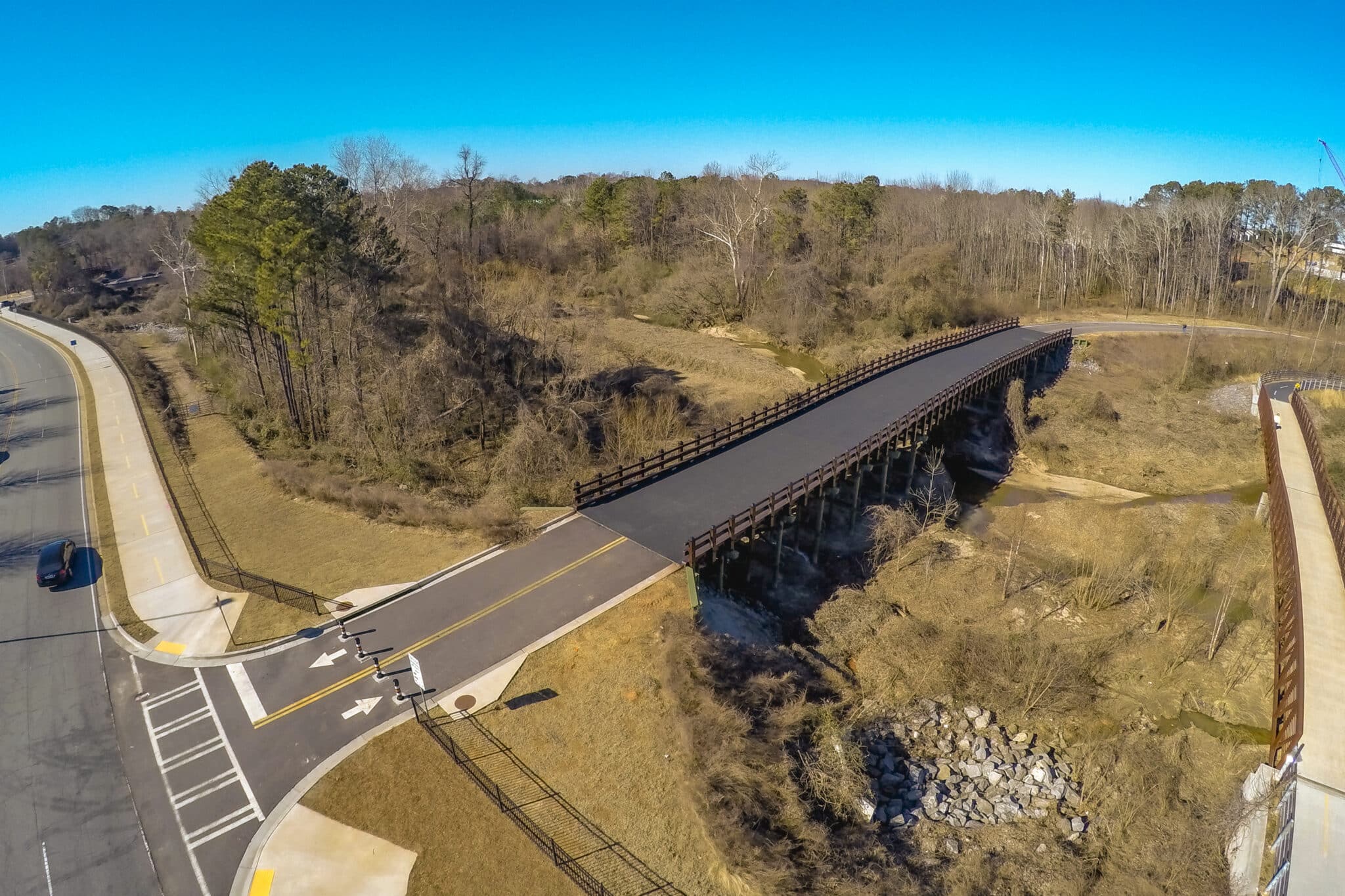

When it comes to the choice between wood bridges and concrete bridges, wooden bridges, particularly those designed by York Bridge Concepts, offer a compelling array of advantages.


When planning a bridge project, one of the first decisions owners, engineers, developers, and municipalities must make is selecting the right structural material. Two of the most common options are timber (wood) and concrete. Both have proven track records, but each offers distinct advantages depending on the project’s goals, site conditions, environmental requirements, budget, and long-term maintenance strategy.
For many pedestrian bridges, vehicular bridges, boardwalks, parks, residential communities, and waterfront developments, engineered timber bridges provide an attractive alternative to concrete by combining structural performance, sustainability, architectural beauty, and construction efficiency.
At York Bridge Concepts, we specialize in designing and constructing custom timber pedestrian bridges, vehicular bridges, boardwalks, golf cart bridges, and covered bridges through our integrated Design-Engineer-Build™ methodology and proprietary Deck-Level Construction™ process. Since 1985, we have designed and built more than 9,000 custom timber bridges throughout North America, demonstrating how modern timber engineering delivers long-lasting infrastructure for a wide variety of applications.
Concrete has long been the material of choice for major highways, interstate overpasses, and heavily traveled transportation infrastructure because of its high compressive strength and ability to support very heavy traffic when reinforced.
Modern engineered timber, however, excels in applications where structural performance, environmental stewardship, aesthetics, and lifecycle value are equally important.
Rather than asking “Which material is better?”, project teams should ask:
“Which material is best suited for this specific bridge?”
For parks, greenways, campuses, residential communities, resorts, and municipal infrastructure, timber often provides significant advantages over conventional concrete construction.
One of the biggest misconceptions is that timber bridges are inherently weaker than concrete.
In reality, modern engineered timber bridges are designed to safely support a wide range of loading requirements, including:
The bridge is engineered around the expected traffic—not simply the material.
York Bridge Concepts custom engineers every bridge based on:
Proper engineering—not material alone—is what determines structural performance.
Construction schedules often influence project success.
Timber bridges generally offer several construction advantages over concrete.
York Bridge Concepts has found that timber bridge construction can often be completed up to 50% faster than comparable concrete bridge projects, depending on site conditions and project complexity.
One of timber’s greatest advantages is sustainability.
Timber offers:
Concrete production, particularly cement manufacturing, requires significantly more energy and produces substantially higher greenhouse gas emissions than sustainably harvested timber.
York Bridge Concepts has documented more than 48,000 tons of carbon savings through its timber bridge portfolio while continuing to advance environmentally responsible bridge construction.
Project budgets involve much more than initial material costs.
Often provide:
May involve:
Lifecycle costs vary by project, but many pedestrian, park, and community bridge applications benefit from timber’s lower overall installation costs and construction efficiency.
Both timber and concrete bridges require routine inspections and maintenance.
Typically includes:
Often includes:
Modern preservation systems have significantly improved timber bridge longevity, while advances in concrete technology continue to improve concrete durability. Both materials perform best with proactive inspection and maintenance programs.
Modern engineered timber bridges are designed for exceptional longevity.
York Bridge Concepts designs timber bridges with an expected design life of 75 years or more when properly maintained. Research by the USDA Forest Service has similarly found that well-designed, treated timber bridge superstructures can remain in service for many decades.
Concrete bridges also have long service lives but may require extensive rehabilitation over time due to:
The actual lifespan of either bridge type depends on design quality, construction practices, environmental exposure, and ongoing maintenance.
Few materials match the warmth and character of natural timber.
Timber bridges naturally complement:
Concrete bridges generally emphasize function, while timber bridges often become architectural landmarks that strengthen community identity and enhance surrounding landscapes.
Many York Bridge Concepts projects occur within:
Our proprietary Deck-Level Construction™ methodology allows construction to progress from the bridge deck itself rather than requiring extensive heavy equipment beneath the structure.
Benefits include:
This innovative construction process provides significant advantages for projects where minimizing environmental impact is a priority.
Engineered timber bridges are particularly well suited for:
Every York Bridge Concepts bridge is engineered specifically for the project’s loading requirements, environmental conditions, and architectural objectives.
For more than four decades, York Bridge Concepts has demonstrated that modern engineered timber bridges deliver outstanding structural performance while providing environmental and architectural advantages that concrete often cannot match.
Clients choose YBC because of our:
Every bridge is designed specifically for its site rather than adapted from a standardized design.
Concrete remains an excellent solution for many heavy transportation projects.
Modern engineered timber offers exceptional value for projects where sustainability, aesthetics, construction efficiency, and environmental stewardship are priorities alongside structural performance.
Whether your project involves a pedestrian bridge, vehicular bridge, boardwalk, community entrance, park, resort, university campus, or mixed-use development, York Bridge Concepts can design and construct a custom timber bridge that provides decades of dependable performance while enhancing the landscape it serves.
This website uses cookies
We use cookies to personalise content and ads, to provide social media features and to analyse our traffic. We also share information about your use of our site with our social media, advertising and analytics partners who may combine it with other information that you’ve provided to them or that they’ve collected from your use of their services.
Cookies are small text files that can be used by websites to make a user's experience more efficient.
The law states that we can store cookies on your device if they are strictly necessary for the operation of this site. For all other types of cookies we need your permission. This means that cookies which are categorized as necessary, are processed based on GDPR Art. 6 (1) (f). All other cookies, meaning those from the categories preferences and marketing, are processed based on GDPR Art. 6 (1) (a) GDPR.
This site uses different types of cookies. Some cookies are placed by third party services that appear on our pages.
You can at any time change or withdraw your consent from the Cookie Declaration on our website.
Learn more about who we are, how you can contact us and how we process personal data in our Privacy Policy.
Please state your consent ID and date when you contact us regarding your consent.