

Regional Training Institute
August 17, 2016
Delight Quarry
August 29, 2016Coe Branch Stream Restoration Pedestrian Bridge
Bespoke Masterpieces Since 1985
Trail Bridge Built By York Bridge Concepts in Falls Church, Virginia
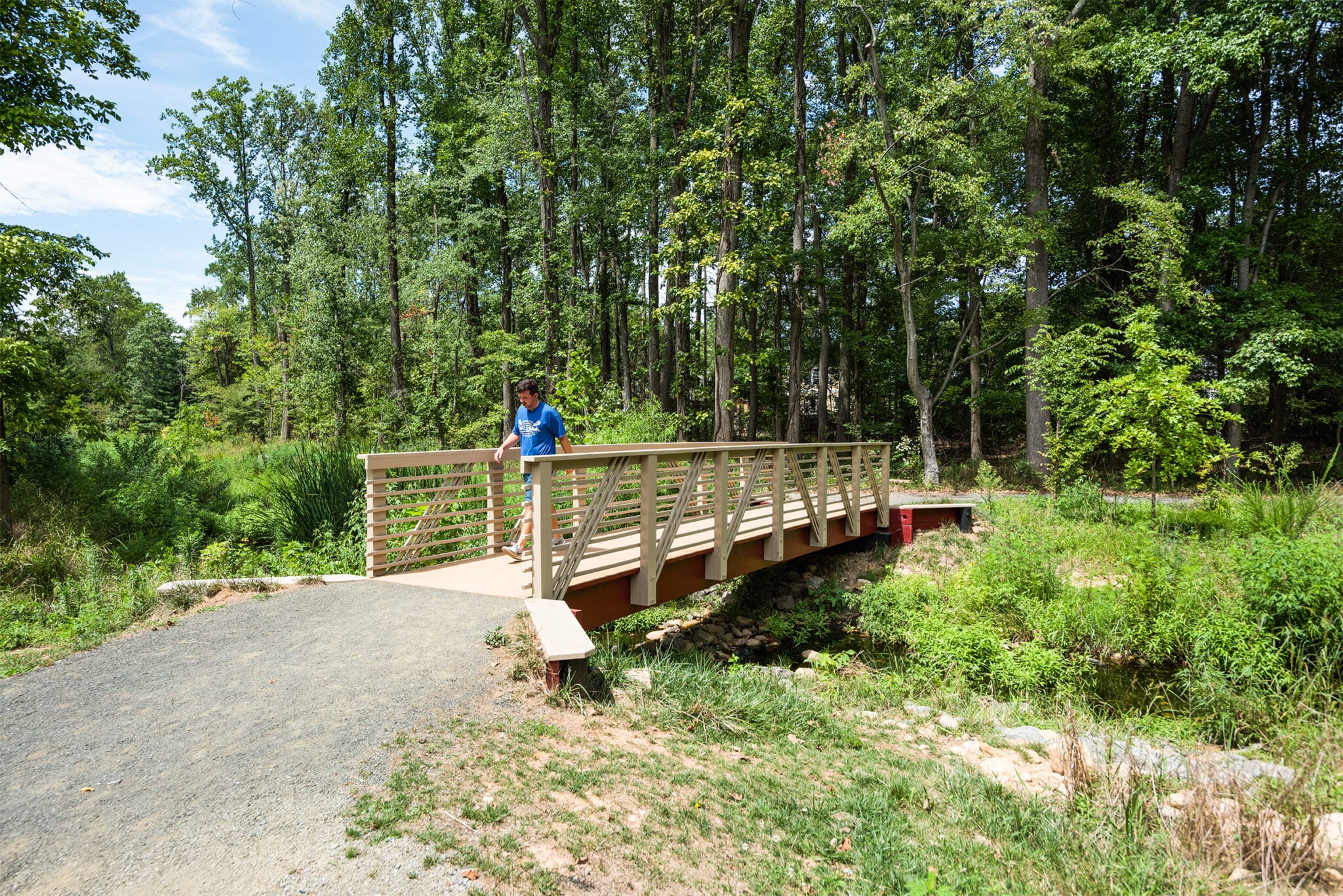
As part of the Coe Branch Stream Restoration initiative in Falls Church, Virginia, York Bridge Concepts partnered with Bulliard Construction Company and Berard, Habetz & Associates, Inc. to design and construct a custom timber pedestrian bridge that complements the environmental restoration efforts while providing safe and attractive public access.
Developed through YBC's Decero™ Design-Engineer-Build process, the bridge was carefully integrated into the stream restoration project to enhance connectivity, support community access, and preserve the natural character of the site. The completed crossing provides residents and visitors with a durable, aesthetically pleasing pathway that contributes to both the environmental and recreational value of the area.
The project demonstrates how thoughtfully designed timber infrastructure can support ecological restoration goals while creating lasting benefits for the surrounding community.
Supporting Stream Restoration Through Thoughtful Design
The Coe Branch Stream Restoration project was developed to improve stream health, reduce erosion, enhance water quality, and strengthen the ecological resilience of the watershed.
As part of these improvements, pedestrian access was needed across the restored stream corridor. York Bridge Concepts designed a crossing that would support public access while respecting the environmental goals of the project.
The bridge creates a safe and convenient connection for:
- Local residents
- Park visitors
- Recreational users
- Nature enthusiasts
- Educational groups
- Tourists exploring the area
By elevating pedestrian traffic above the stream corridor, the bridge helps protect sensitive restoration areas while allowing visitors to experience the natural beauty of the site.
A Custom Decero™ Design Solution
Every environmental restoration project presents unique challenges.
Through the Decero™ Design-Engineer-Build process, York Bridge Concepts developed a bridge solution specifically tailored to the site's environmental conditions and user needs.
The project team considered:
- Stream restoration objectives
- Site topography
- Environmental sensitivity
- Long-term durability
- Public safety
- Community aesthetics
The resulting bridge blends naturally into the surrounding landscape while providing reliable performance for years to come.
Pile-Supported Construction
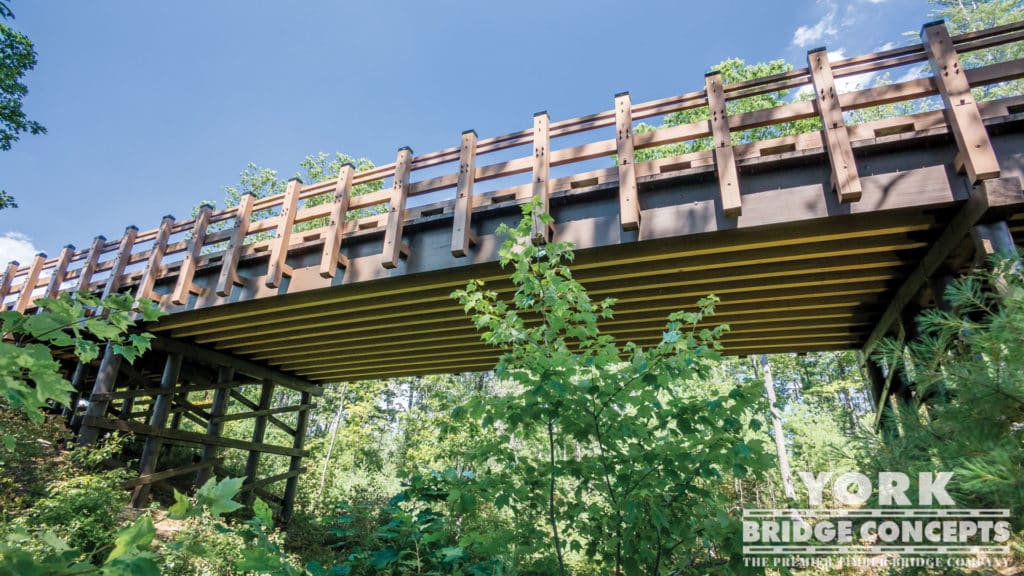
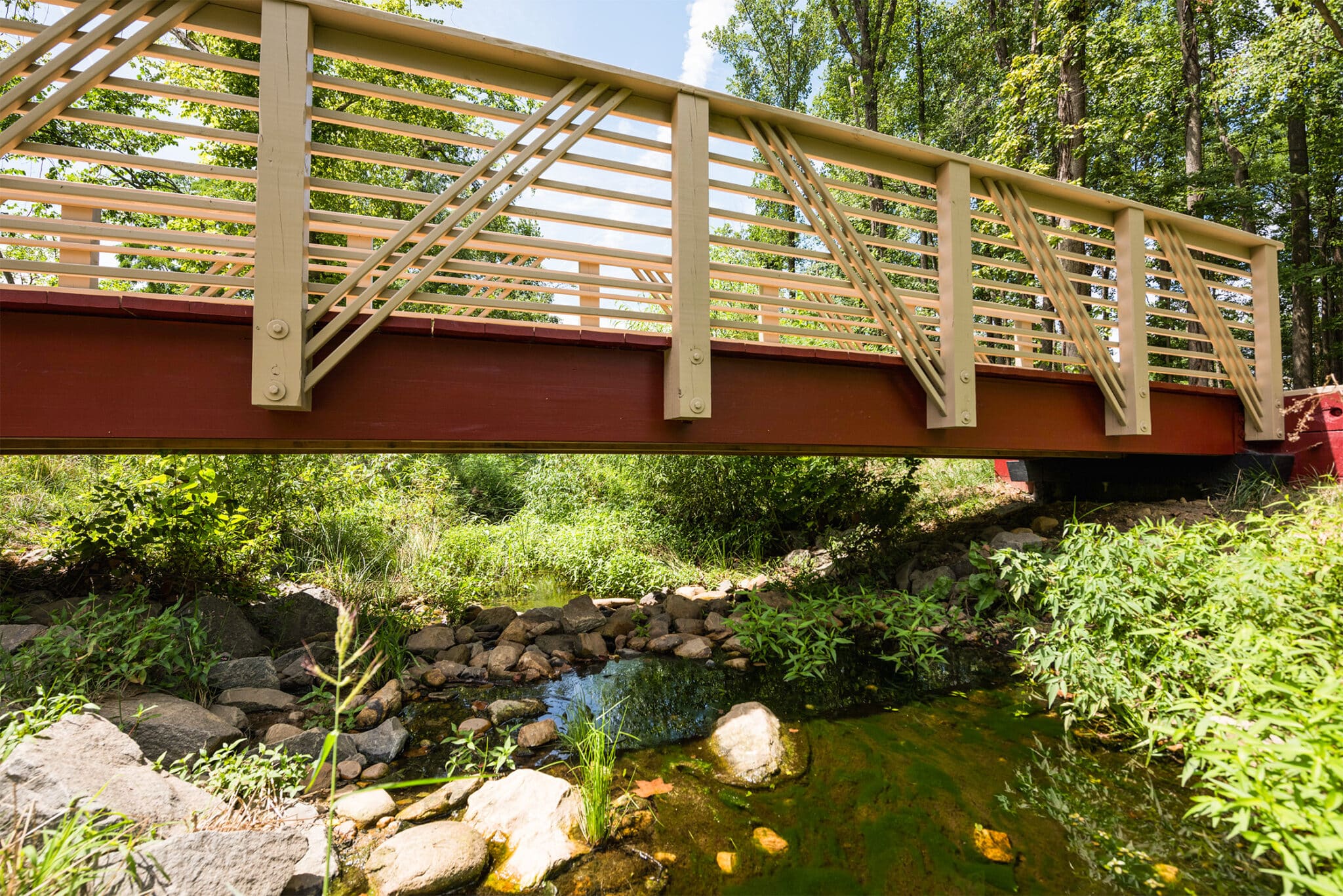
To minimize impacts on the restored stream corridor, the bridge utilizes a pile-supported design.
This construction approach provides several benefits:
Reduced Environmental Disturbance
Pile-supported foundations minimize disruption to the stream and surrounding habitat during construction.
Long-Term Stability
The foundation system delivers reliable structural performance while accommodating site-specific conditions.
Improved Water Flow
Elevating the structure above the stream corridor allows natural hydrology to continue uninterrupted.
Enhanced Habitat Protection
By reducing the need for in-stream supports, the design helps preserve the ecological integrity of the restoration area.
This approach aligns with the broader goals of stream restoration by protecting both water quality and habitat function.
Designed for the Community
While environmental stewardship was a key project objective, user experience remained equally important.
The bridge was designed to provide:
- Safe pedestrian access
- Comfortable crossings
- Attractive aesthetics
- Accessibility for a wide range of users
- Long-term durability
- Low maintenance requirements
Its modest scale and natural materials allow the structure to complement the surrounding landscape without overwhelming it.
The bridge creates a welcoming experience for residents and visitors while supporting the long-term success of the restoration project.
Timber Construction and Sustainability
Timber bridges are particularly well suited for environmental restoration projects because they combine structural performance with natural aesthetics.
Benefits of timber construction include:
Renewable Material
Southern Yellow Pine is a renewable resource that supports sustainable construction practices.
Natural Appearance
Timber blends harmoniously into parks, trails, streams, and natural environments.
Reduced Visual Impact
The warm appearance of wood creates a softer presence than many conventional bridge materials.
Long-Term Performance
When properly designed and maintained, timber bridges provide decades of reliable service.
These characteristics make timber an ideal choice for projects where environmental stewardship and public access are equally important.
Architectural Features
The Coe Branch bridge incorporates design elements that enhance both safety and visual appeal.
K-Style Guide Rail
The K-Style Series guide rail system provides a clean and attractive appearance while maintaining user safety.
Natural Timber Finish
The bridge's timber construction complements the surrounding vegetation and restored stream corridor.
Stream-Oriented Design
The structure was designed to feel integrated into the landscape rather than imposed upon it.
Community-Focused Infrastructure
The bridge serves as a welcoming feature that encourages outdoor recreation and environmental appreciation.
Bridge Specifications
Project Name: Coe Branch Stream Restoration Pedestrian Bridge
Location: Falls Church, Virginia
Type: Pedestrian Bridge
Width: 6' Overall (5' Clear)
Length: 30'
Height: 6' Above Grade
Capacity: 5-Ton GVW
Span Type: Pile-Supported
Material: Southern Yellow Pine
Crossing: Stream
Guide Rail: K-Style Series
Creating Lasting Environmental and Community Value
The Coe Branch Stream Restoration Pedestrian Bridge demonstrates how infrastructure can contribute positively to both environmental restoration and community engagement.
Through collaboration between restoration professionals, engineers, contractors, and community stakeholders, York Bridge Concepts delivered a bridge that supports public access while preserving the natural beauty and ecological function of the stream corridor.
Today, the bridge serves as an important connection within the restoration project, providing safe access while helping residents and visitors experience the benefits of environmental stewardship firsthand. It stands as a lasting example of how thoughtful design and sustainable construction can create meaningful connections between people and nature.