Covered Bridges
Timeless Timber Infrastructure by York Bridge Concepts
Covered Bridges: Where Tradition Meets Modern Engineering
Few structures capture the imagination quite like the covered bridge.
With their distinctive rooflines, timber trusses, and historic character, covered bridges evoke a sense of craftsmanship and permanence that has endured for centuries. Yet while their appearance may reflect traditional architecture, modern covered bridges are sophisticated engineered structures designed to serve communities for generations.
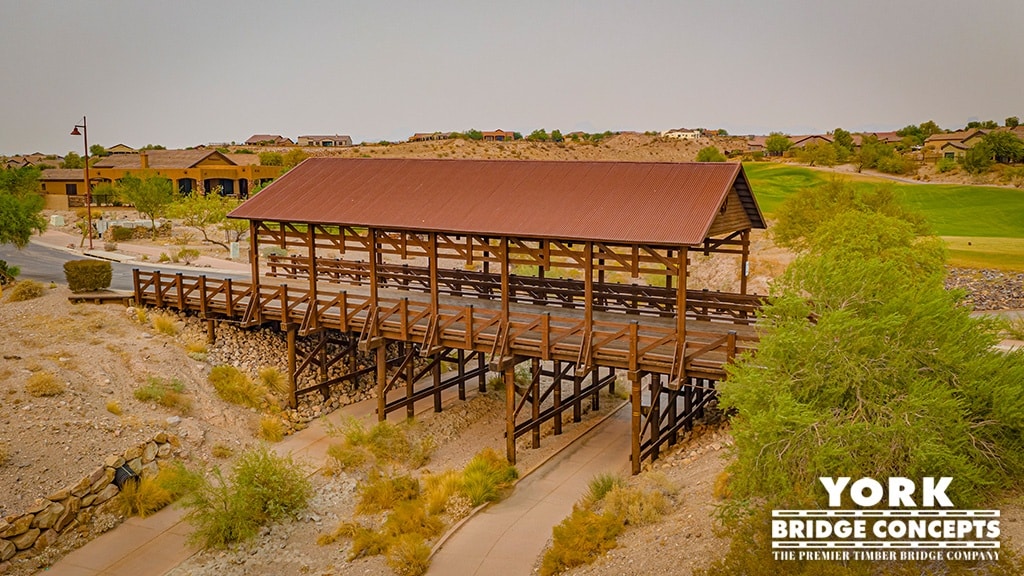
Today, covered bridges are used in a wide variety of settings, from residential developments and parks to golf courses, resorts, and transportation corridors. They provide reliable crossings while creating memorable architectural landmarks that enhance the surrounding environment.
For decades, York Bridge Concepts (YBC) has specialized in designing and constructing timber bridge infrastructure that connects people with the landscapes around them. Covered bridges represent one of the most iconic expressions of this expertise, combining structural engineering, architectural design, and sustainable construction practices.
Modern covered bridges retain the warmth and charm of historic timber structures while benefiting from advanced engineering techniques, durable materials, and innovative construction methods. The result is infrastructure that performs reliably while serving as a visual centerpiece within a community.
The History and Evolution of Covered Bridges
Covered bridges have a long and fascinating history in North America. During the eighteenth and nineteenth centuries, timber bridges were the primary method for crossing rivers and valleys. Early bridge builders discovered that adding a roof and siding dramatically extended the lifespan of timber structures.
The covering protected structural members from rain, snow, and sunlight, which could otherwise cause rapid deterioration of exposed wood. By shielding the bridge’s structural trusses, the roof and walls significantly reduced weathering and extended the life of the bridge.
As a result, covered bridges became a common feature across rural landscapes. Thousands of these structures were constructed throughout the United States during the nineteenth century.
Although many historic covered bridges still stand today, modern bridge engineering has evolved significantly. Advances in structural analysis, material treatments, and construction techniques have made it possible to build covered bridges that meet contemporary load requirements while preserving traditional aesthetics.
York Bridge Concepts builds upon this heritage by designing modern timber covered bridges that combine historical inspiration with advanced engineering performance.
The Architectural Appeal of Covered Bridges
One of the defining characteristics of a covered bridge is its ability to create a memorable architectural experience.
Unlike standard bridge structures, covered bridges transform a functional crossing into an immersive passageway.
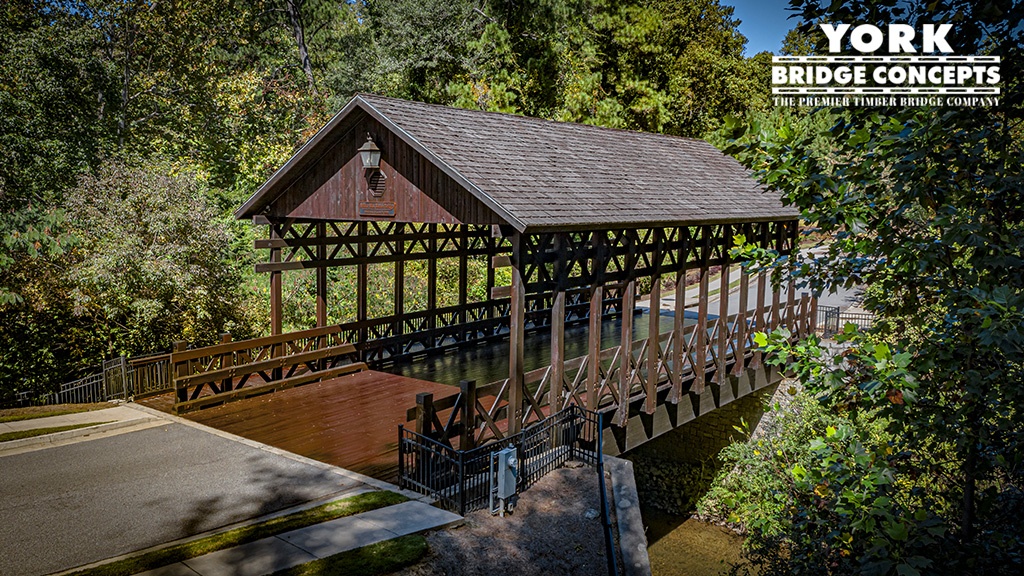
As visitors enter the bridge, they pass beneath a timber roof structure that frames the landscape beyond. Sunlight filtering through the timber elements creates a distinctive atmosphere that connects the user with the structure itself.
Covered bridges also serve as visual landmarks. Their recognizable profiles and warm natural materials make them standout features within parks, residential developments, and recreational destinations.
Developers and community planners often choose covered bridges because they enhance the character of a property. Whether placed along a nature trail or at the entrance to a residential neighborhood, a covered bridge adds a sense of identity and place.
York Bridge Concepts works closely with architects and landscape designers to ensure that each covered bridge complements its surroundings while maintaining structural integrity and long-term durability.
Engineering the Modern Covered Bridge
Although covered bridges appear traditional in form, modern examples are carefully engineered structures designed to meet strict performance standards. Each covered bridge must be designed to safely carry the intended loads while withstanding environmental forces such as wind, flooding, and temperature changes.
At York Bridge Concepts, every covered bridge begins with a comprehensive engineering analysis. Structural engineers evaluate the site conditions, span requirements, foundation conditions, and anticipated traffic loads.
Covered bridges can be designed for a variety of uses, including:
• Vehicular traffic
• Pedestrian and bicycle pathways
• Golf cart crossings
• Maintenance vehicle access
The structural design must account for the maximum expected loads while maintaining safety factors that ensure long-term reliability.
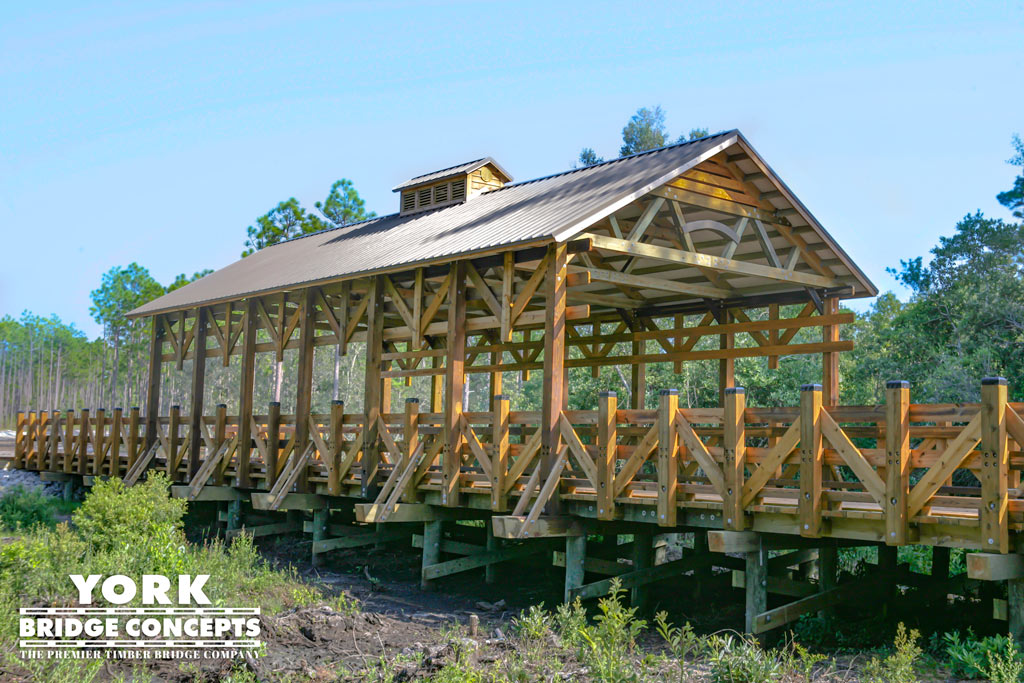
Timber truss systems are commonly used in covered bridge construction because they efficiently distribute loads across the structure. These trusses create a strong yet visually elegant framework that supports the bridge deck while also forming part of the architectural design.
York Bridge Concepts engineers each covered bridge to optimize structural performance while preserving the classic appearance that makes these bridges so iconic.

Timber as the Foundation of Covered Bridge Construction
Timber has long been the material of choice for covered bridges due to its strength, versatility, and natural beauty. When properly engineered and protected, timber structures can provide exceptional longevity.
York Bridge Concepts utilizes high-quality structural timber to construct covered bridges capable of serving communities for decades. Southern Yellow Pine and other durable timber species provide the strength necessary to support structural loads while maintaining the visual warmth associated with wood construction.
Protective coatings and modern treatment processes enhance the durability of timber components by resisting moisture, ultraviolet exposure, and biological deterioration.
In some covered bridge designs, timber structural systems are paired with additional materials such as composite decking, stainless steel connectors, or decorative architectural elements. These hybrid systems combine the natural aesthetics of timber with the durability of modern materials.
The result is a covered bridge that retains its traditional character while meeting the demands of contemporary infrastructure.
Design-Engineer-Build: A Streamlined Approach

One of the key advantages of working with York Bridge Concepts is the company’s integrated Design-Engineer-Build approach. This methodology brings together design, engineering, and construction expertise within a single team.
Traditional infrastructure projects often involve separate firms for architectural design, structural engineering, and construction. This segmented process can create inefficiencies and increase the potential for design conflicts.
York Bridge Concepts streamlines the process by integrating all phases of the project. Architects, engineers, and construction professionals collaborate from the earliest stages of design to ensure that each covered bridge meets both aesthetic and structural requirements.
This coordinated process results in efficient project delivery, clear communication, and exceptional quality control throughout construction.
Vehicular Covered Bridges
One of the most dramatic applications of the covered bridge is in vehicular crossings.
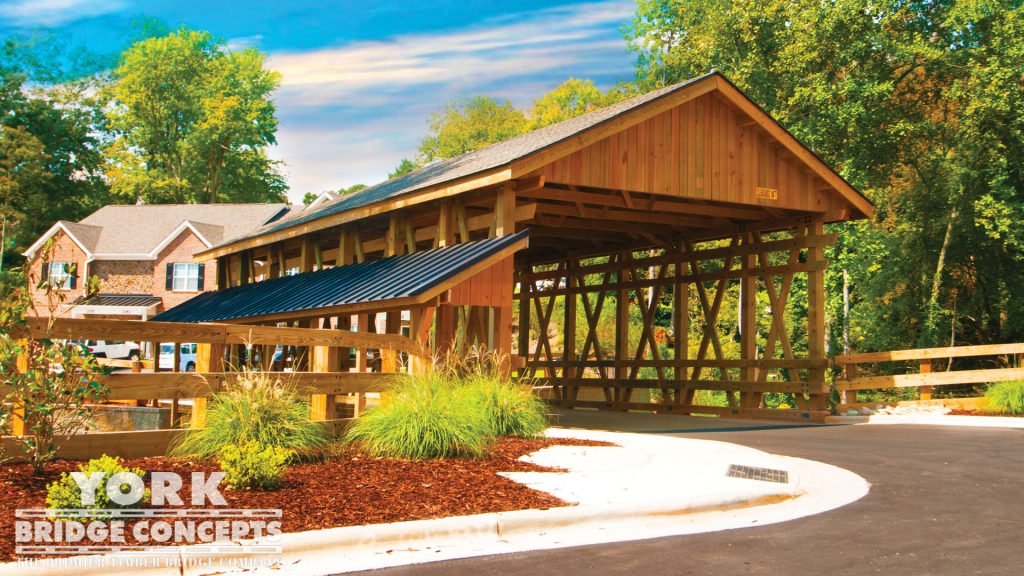
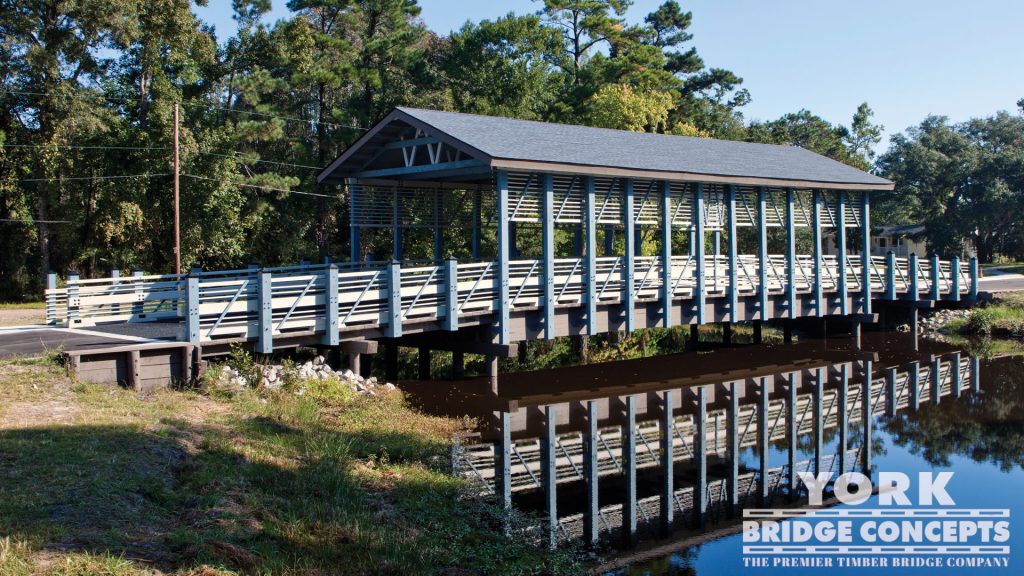
These structures allow automobiles, service vehicles, and residential traffic to cross waterways or natural terrain features while maintaining the charm of traditional timber architecture.
Vehicular covered bridges often serve as entry points into residential communities, golf course developments, or scenic destinations. Their distinctive appearance creates an immediate sense of arrival and identity.
Engineering a vehicular covered bridge requires careful structural design to accommodate heavier loads while maintaining the visual character of the structure. York Bridge Concepts designs these bridges to meet appropriate load requirements while preserving the classic covered bridge aesthetic.
The result is a bridge that provides safe and reliable transportation while becoming a defining architectural element within the community.


Pedestrian Covered Bridges
Covered bridges are equally well suited for pedestrian environments. In parks, trail systems, and recreational areas, these structures provide sheltered crossings that enhance the overall visitor experience.
A pedestrian covered bridge offers protection from sun, rain, and wind while creating a memorable passage through the landscape. Visitors often pause within the bridge to enjoy views of the surrounding environment, making these structures natural gathering points.
York Bridge Concepts designs pedestrian covered bridges for nature trails, greenway systems, botanical gardens, and community parks. These structures blend seamlessly with the surrounding landscape while providing safe and accessible crossings.
The architectural warmth of timber enhances the experience of walking through the bridge, reinforcing the connection between people and nature.
Covered Bridges for Residential Communities
Master-planned residential developments frequently incorporate covered bridges as signature features within the community.
These structures can serve both functional and aesthetic purposes, connecting neighborhoods while reinforcing the architectural identity of the development.
Covered bridges often become iconic landmarks that residents associate with their community. They may appear in marketing materials, signage, and community branding, symbolizing the unique character of the neighborhood.
York Bridge Concepts collaborates closely with developers and planners to ensure that covered bridges complement the overall design vision of the community. Architectural details such as roof styles, trim elements, and color palettes can be customized to match the surrounding architecture.
These bridges provide practical infrastructure while contributing to the sense of place that makes a community memorable.

Covered Bridges for Parks & Nature Preserves
Parks and nature preserves often utilize covered bridges to create scenic crossings that enhance the visitor experience.
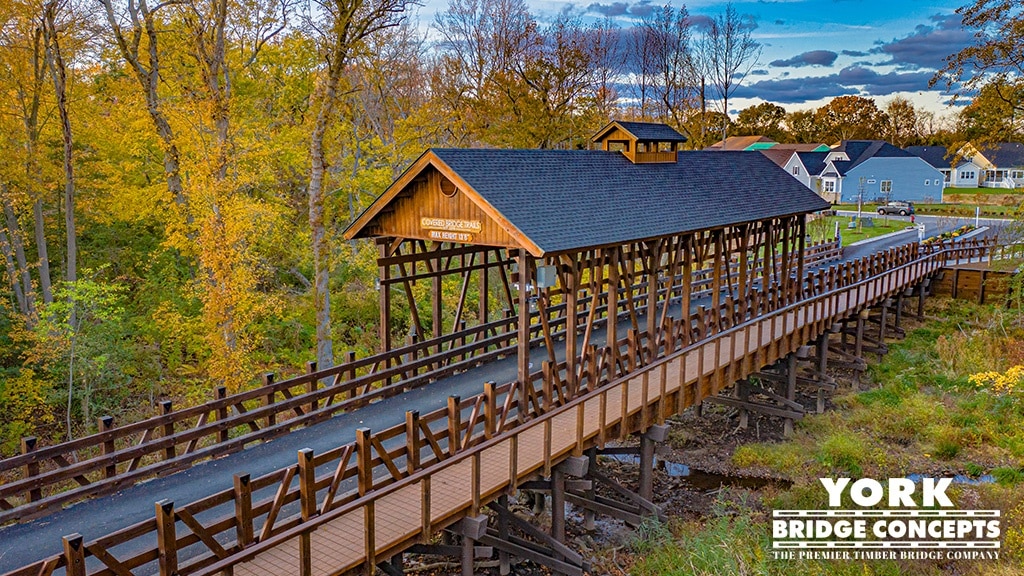
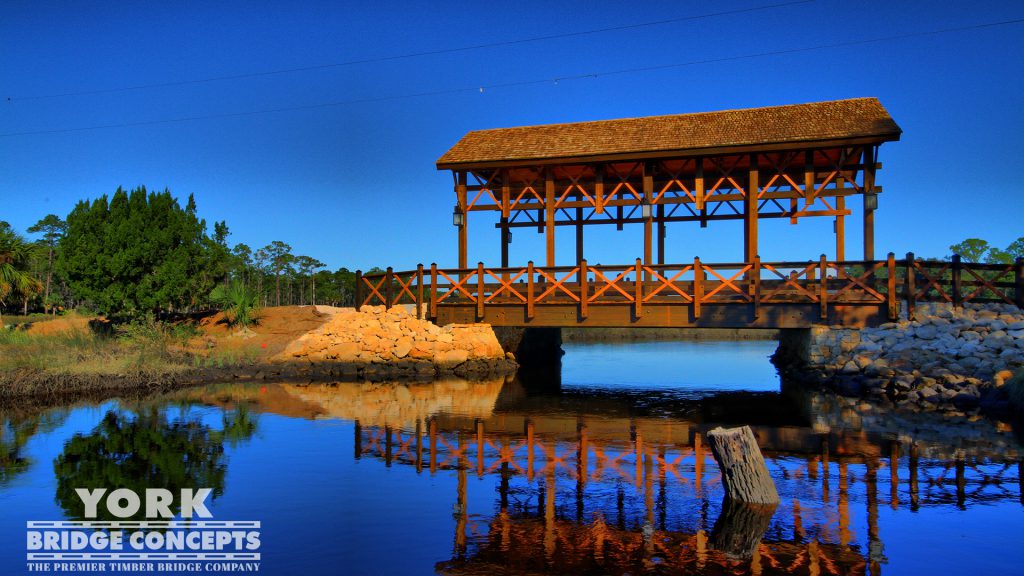
These structures allow trail systems to cross creeks, wetlands, and ravines while maintaining the natural character of the landscape.
In many cases, covered bridges become focal points along hiking or biking trails. Visitors may pause within the structure to enjoy views of the surrounding environment or to learn about local ecosystems through educational signage.
Timber covered bridges integrate naturally into forested landscapes, blending seamlessly with trees, waterways, and wildlife habitats.
York Bridge Concepts works closely with environmental agencies and park planners to ensure that covered bridges are designed and constructed with minimal ecological impact.
Sustainability and Environmental Stewardship
Timber covered bridges provide significant sustainability advantages compared to traditional infrastructure materials
Wood is a renewable resource that stores carbon throughout its lifecycle, reducing the overall environmental footprint of construction projects.
When sourced responsibly, timber construction contributes to sustainable land management while supporting carbon sequestration.
Covered bridges also extend the lifespan of timber structural components by protecting them from weather exposure. The roof and siding reduce moisture infiltration and ultraviolet degradation, helping the structure maintain its integrity over time.
York Bridge Concepts incorporates environmentally responsible materials and construction practices into every covered bridge project, ensuring that infrastructure development aligns with long-term sustainability goals.


Longevity and Maintenance
Modern covered bridges are designed to provide exceptional longevity when properly maintained.
York Bridge Concepts structures are engineered with a 75+ year design lifespan, supported by durable materials and protective coatings.
The covered design itself contributes to longevity by shielding structural elements from direct exposure to weather. This protection reduces deterioration and helps maintain the structural integrity of the bridge.
Routine inspections and maintenance programs ensure that covered bridges continue to perform safely throughout their service life. By addressing minor issues early, communities can extend the lifespan of their infrastructure and preserve the beauty of the bridge.
Custom Design Possibilities
Every covered bridge project presents unique design opportunities.
York Bridge Concepts offers extensive customization options that allow each bridge to reflect the character of its surroundings.
Custom design features may include:
Decorative architectural trim
Observation areas or scenic overlooks
Integrated lighting systems
Unique roof profiles
Specialized railing systems
These elements allow covered bridges to serve as both infrastructure and architectural landmarks within a community.

Building Bridges That Inspire
Covered bridges represent one of the most enduring forms of timber infrastructure. Their distinctive architecture, structural efficiency, and connection to history make them uniquely suited for modern communities seeking both function and beauty.
York Bridge Concepts continues to advance the tradition of covered bridge construction by combining time-honored craftsmanship with modern engineering innovation.
Through thoughtful design, sustainable materials, and expert construction practices, YBC creates covered bridges that connect people, enhance landscapes, and stand as lasting symbols of community identity.
These structures do more than span waterways or terrain. They create experiences, preserve traditions, and demonstrate how infrastructure can blend seamlessly with the natural world.