


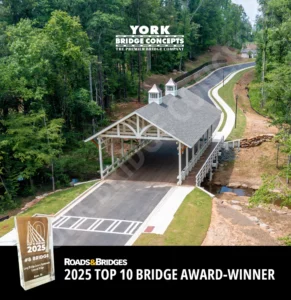

Golf Cart Bridges
Timber Infrastructure for Golf Courses, Communities, and Resorts
Golf Cart Bridges: Purpose-Built
Across golf courses, master-planned communities, resorts, and recreational developments, golf cart transportation has become an integral part of everyday mobility.
What began as a convenience on golf courses has evolved into a preferred transportation method in many residential communities, hospitality developments, and recreational destinations.
As the use of golf carts continues to expand, infrastructure must evolve to support safe and reliable travel across diverse landscapes. This often includes navigating wetlands, creeks, ponds, stormwater systems, or natural terrain features that interrupt cart path connectivity. In these situations, a golf cart bridge provides the ideal structural solution.
Golf cart bridges create seamless connections between cart paths, allowing users to travel safely while preserving the natural landscape beneath. These structures provide efficient crossings while maintaining the visual character of the surrounding environment.
For decades, York Bridge Concepts (YBC) has specialized in designing and building timber infrastructure that connects communities while preserving natural landscapes. Golf cart bridges represent an important part of this expertise, supporting golf courses, resort developments, parks, and residential communities across the United States.
By combining sustainable materials, structural engineering expertise, and innovative construction techniques, York Bridge Concepts delivers golf cart bridges that provide reliable performance and long-term durability.

The Growing Role of Golf Cart Infrastructure
Golf carts are no longer limited to golf courses.
Across the country, many communities have embraced golf carts as an alternative transportation method for short-distance travel. Residents often use carts to reach community amenities, nearby shops, recreational facilities, or neighboring homes.
Master-planned communities frequently incorporate extensive cart path networks that allow residents to travel throughout the development without using traditional vehicles. These pathways provide convenient mobility while enhancing the community’s recreational character.
However, natural landscapes often present obstacles that interrupt these cart paths. Creeks, wetlands, lakes, and drainage systems can create gaps in the network, preventing continuous connectivity.
A well-designed golf cart bridge allows these networks to remain uninterrupted while protecting the landscape beneath. By elevating the crossing above natural terrain or water systems, these structures maintain both accessibility and environmental integrity.
York Bridge Concepts works with developers, municipalities, and golf course designers to integrate golf cart bridges into larger trail systems and transportation networks, ensuring safe and reliable access throughout the property.
Engineering Considerations for Golf Cart Bridges
Although golf cart bridges carry lighter loads than vehicular bridges, they must still meet strict engineering requirements to ensure safety and durability.
Structural engineers must carefully evaluate loading conditions, environmental factors, and site characteristics before finalizing the design.
Golf cart bridges must accommodate several types of loads, including the weight of golf carts, maintenance vehicles, and pedestrians. While individual golf carts typically weigh between 800 and 1,200 pounds, bridges must be designed to support multiple carts simultaneously as well as potential service vehicles used for course maintenance.
York Bridge Concepts engineers each golf cart bridge to meet appropriate load requirements while maintaining efficient structural performance. This involves analyzing several key factors:
• Expected cart traffic and loading conditions
• Span length and structural configuration
• Soil and foundation conditions
• Environmental exposure and moisture levels
• Required bridge width for safe cart passage
These engineering evaluations ensure that each golf cart bridge provides safe and reliable service over its entire design lifespan.

Timber as the Ideal Material for Golf Cart Bridges
The timber golf cart bridge has become the preferred solution for many communities and golf courses due to its natural aesthetics, structural performance, and sustainability benefits.
Timber structures integrate beautifully into landscapes where golf courses and residential communities are typically located. The warm, natural appearance of wood complements natural surroundings, blending seamlessly with fairways, lakes, forests, and wetlands.
Beyond aesthetics, timber provides excellent structural strength relative to its weight. Engineered timber systems distribute loads efficiently while allowing bridges to span creeks, drainage channels, and landscape features.
York Bridge Concepts utilizes high-quality Southern Yellow Pine and other durable timber species to construct golf cart bridges capable of serving communities for decades. Protective coatings and advanced treatment processes enhance resistance to moisture, ultraviolet exposure, and biological deterioration.
In some applications, timber structural framing is paired with composite decking or tropical hardwood wear surfaces, creating hybrid systems that provide both durability and visual appeal.
These material combinations ensure that each golf cart bridge performs reliably while maintaining the timeless character of natural wood.

York Bridge Concepts’ Design-Engineer-Build Approach
One of the defining characteristics of York Bridge Concepts is the company’s integrated Design-Engineer-Build methodology. This approach combines design, engineering, and construction expertise into a unified process that simplifies project delivery.
Traditional infrastructure projects often involve multiple firms responsible for separate phases of the project. This fragmented approach can introduce inefficiencies, communication gaps, and design conflicts.
York Bridge Concepts eliminates these challenges by integrating all disciplines within a single team. Architects, structural engineers, and construction professionals collaborate from the earliest stages of each golf cart bridge project.
This coordinated process ensures that design decisions align with engineering requirements and construction considerations. The result is a streamlined development process that reduces project timelines while maintaining exceptional quality.
For golf course developers and residential community planners, this integrated approach provides confidence that each golf cart bridge will be delivered efficiently and built to the highest standards.
Deck-Level Construction: Minimizing Environmental Disturbance
Many golf cart bridges are constructed in environmentally sensitive locations such as wetlands, drainage corridors, or protected natural areas.
In these environments, minimizing ground disturbance is essential.
York Bridge Concepts has developed a proprietary Deck-Level Construction method that significantly reduces environmental impact during construction. Rather than working from the ground upward, construction crews build the bridge from the deck level downward.
This top-down construction approach allows workers to install structural components without driving heavy equipment across sensitive terrain. The bridge structure itself becomes the working platform as construction progresses.
By minimizing soil disturbance and protecting surrounding vegetation, Deck-Level Construction helps preserve the natural landscape while delivering durable infrastructure.
This method has proven particularly effective for golf cart bridges located in wetlands or other environmentally sensitive environments where traditional construction methods could cause significant disruption.


Golf Cart Bridges for Golf Courses
Golf courses present unique infrastructure challenges. Fairways, water hazards, and natural terrain features often separate sections of the course, requiring bridges to maintain efficient cart circulation.
A golf cart bridge plays a vital role in ensuring smooth transitions between holes and maintaining the overall pace of play. Without properly designed crossings, golfers may face long detours or unsafe pathways around water features.
York Bridge Concepts has designed and constructed numerous golf cart bridges for private clubs, public courses, and resort destinations. These structures allow carts to travel safely across creeks, ponds, and ravines while preserving the natural beauty of the course.
Architectural details often complement the overall design theme of the golf course. Rail systems, stain colors, and structural profiles can be tailored to match the course’s aesthetic vision.
The result is a golf cart bridge that enhances both the functionality and visual appeal of the course.
Residential Golf Cart Bridges
Many master-planned communities have embraced golf carts as a primary mode of transportation.
Residents frequently use carts to travel between neighborhoods, parks, clubhouses, and retail areas.
In these communities, golf cart bridges serve as critical connectors within the transportation network. They allow residents to cross waterways, wetlands, and natural areas while maintaining convenient access to community amenities.
Timber bridges are particularly well-suited for residential environments because of their visual warmth and natural character. These structures enhance community aesthetics while supporting everyday mobility.
York Bridge Concepts collaborates closely with developers and community planners to ensure that golf cart bridges align with the overall architectural character of the neighborhood.
These structures often become iconic features within the community, contributing to both connectivity and visual identity.

Resort & Hospitality Applications
Resorts and hospitality developments often rely heavily on golf cart transportation to move guests across expansive properties. Golf cart bridges enable safe and efficient access between accommodations, restaurants, recreational facilities, and scenic areas.
In resort settings, the design of a golf cart bridge must balance functionality with aesthetics. These structures are frequently located in highly visible areas where they contribute to the overall guest experience.
York Bridge Concepts designs golf cart bridges that complement resort landscapes, often incorporating scenic viewpoints, architectural detailing, and natural finishes that blend with the surrounding environment.
By integrating timber structures into the landscape, resorts create memorable pathways that enhance the overall guest experience while maintaining efficient transportation throughout the property.

Custom Design Features
Every golf cart bridge project presents unique site conditions and design opportunities. York Bridge Concepts offers extensive customization options to ensure that each structure aligns with the surrounding landscape and architectural character.
Common design features include:
Curved bridge alignments that follow natural cart path routes
Scenic overlooks integrated into the bridge structure
Decorative rail systems and architectural trim
Lighting systems for evening use
Composite or hardwood decking options
These features allow golf cart bridges to function as both infrastructure and architectural elements within the landscape.
Durability and Longevity
Golf cart bridges must provide reliable performance over many years of service. York Bridge Concepts structures are engineered with a 75+ year design lifespan, ensuring long-term value for communities and developers.
Durability is achieved through a combination of structural engineering, material selection, and protective finishes. Timber components are carefully treated and coated to resist environmental exposure while maintaining structural integrity.
Stainless-steel connectors and high-quality fasteners further enhance longevity by preventing corrosion and maintaining structural stability.
Regular inspection and maintenance programs ensure that golf cart bridges continue performing safely and efficiently throughout their lifespan.


Environmental Responsibility
Environmental stewardship remains a central priority in the design and construction of golf cart bridges. Timber structures provide several sustainability advantages compared to traditional construction materials.
Wood is a renewable resource that stores carbon throughout its lifecycle. When sourced responsibly, timber construction contributes to reduced embodied carbon compared to steel or concrete alternatives.
Elevated golf cart bridges also help protect sensitive landscapes by minimizing ground disturbance and preserving natural water flow patterns.
York Bridge Concepts works closely with environmental consultants and regulatory agencies to ensure that each golf cart bridge project aligns with environmental best practices.

Building Connections That Last
Golf cart bridges represent more than simple crossings. They are essential infrastructure that supports mobility, recreation, and community connectivity.
By combining structural engineering expertise with sustainable materials and innovative construction techniques, York Bridge Concepts continues to deliver golf cart bridges that stand the test of time.
These structures enable communities, golf courses, and resorts to navigate natural landscapes responsibly while creating memorable pathways that enhance the user experience.
Through thoughtful design and expert craftsmanship, York Bridge Concepts remains committed to building timber infrastructure that connects people, preserves nature, and serves communities for generations.