
Loading & Usage Diagrams
york bridge concepts' timber bridge drawings
Loading & Usage Diagrams Resources Page
At York Bridge Concepts, we understand the critical importance of safety, efficiency, and functionality in bridge design and construction. Our Loading & Usage Diagrams Resource Page is dedicated to providing engineers, architects, and project stakeholders with comprehensive resources and guidance on understanding and implementing loading and usage considerations in bridge projects.
"I didn't know a wooden bridge could do that!"
Vehicular Loading
Load Capacity
Number of Axles
Axle Spread
Gross Vehicle Weight
Load Per Axle
HL93
3 Axles
Min 14', 14' to 30'
Variable Axle Spread
72,000 lbs + 640lbs per linear foot of uniform loading
8k - 32k lbs
HS20 - 44
3 Axles
Min 14', 14' to 30'
Variable Axle Spread
72,000 lbs
8k - 32k lbs
H10
2 Axles
Min 14' Axle Spread
20,000 lbs
4 kips - 16 kips
H5
2 Axles
Min 14' Axle Spread
10,000 lbs
2 kips - 8 kips
5 Ton
2 Axles
Min 7' Axle Spread
10,000 lbs
5 kips - 5 kips
2 Ton
2 Axles
Min 7' Axle Spread
5,000 lbs
2 kips - 2 kips
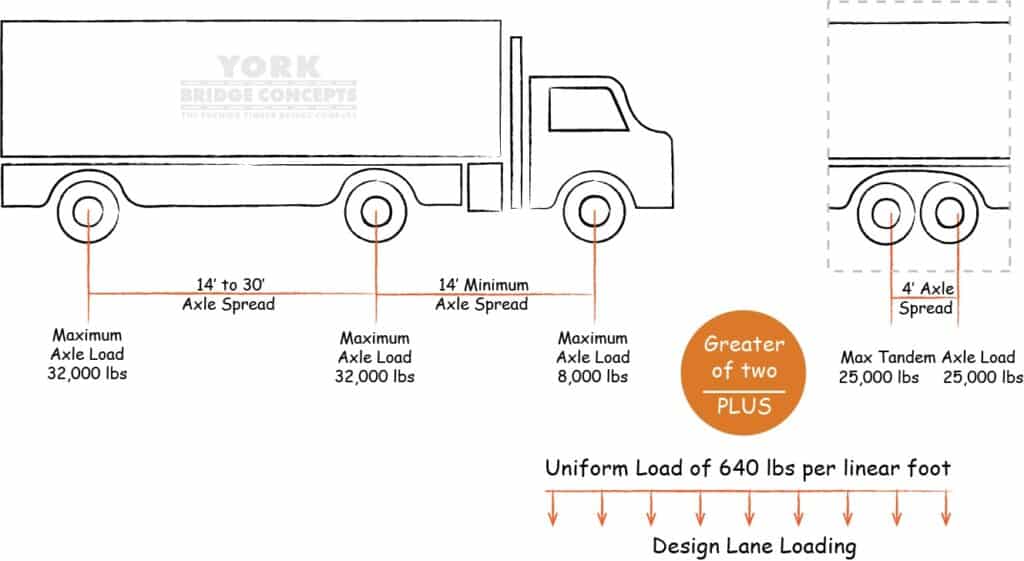
HL93 Loading Diagram

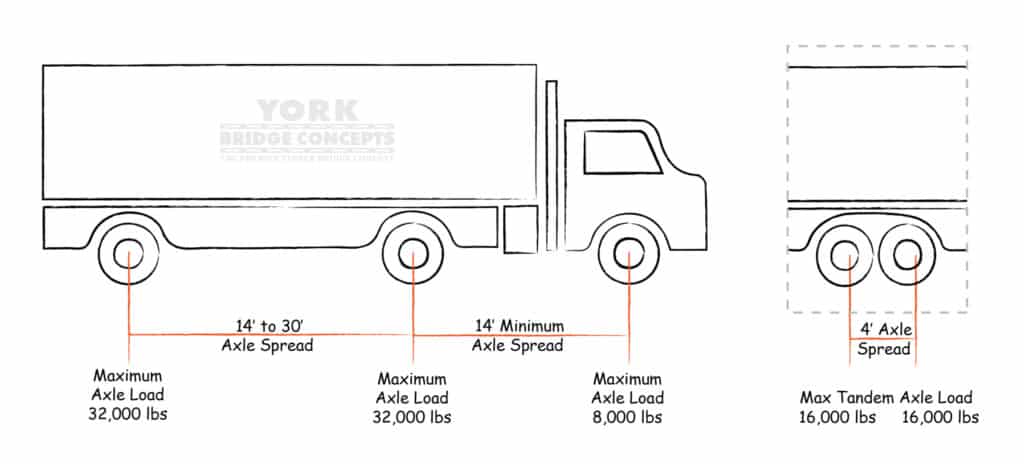
HS20-44 Loading Diagram

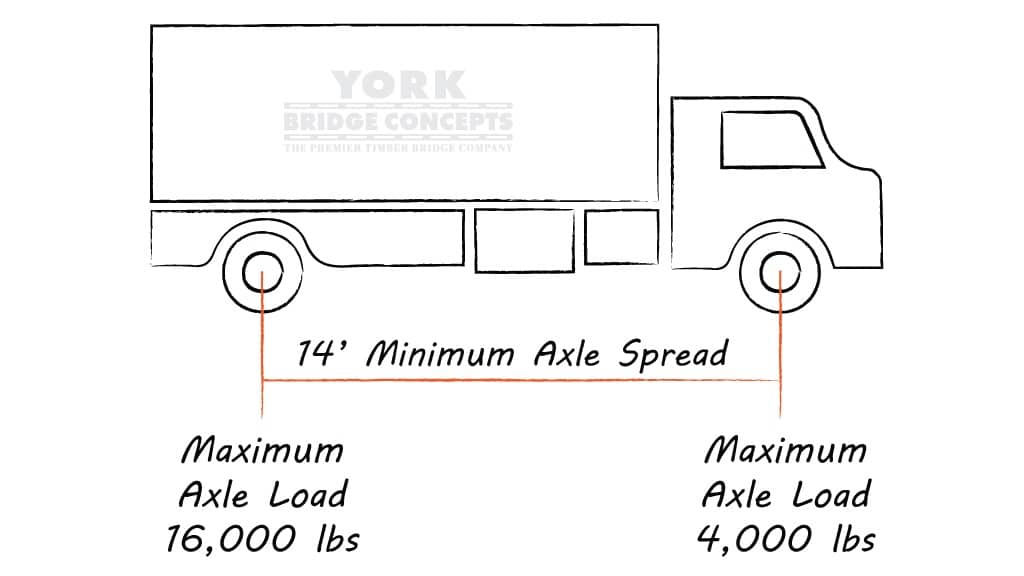
H10 Loading Diagram

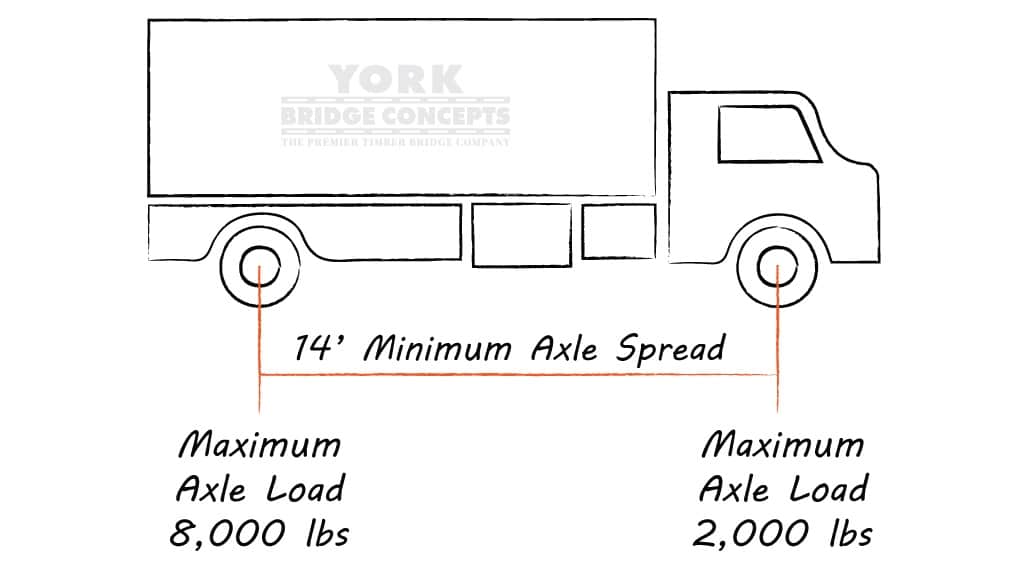
H5 Loading Diagram

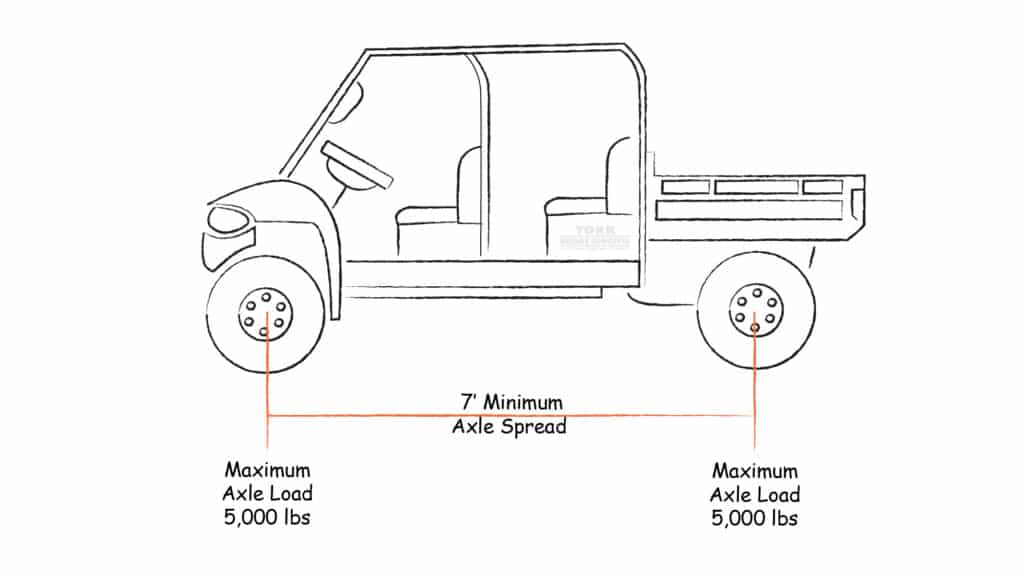
5 Ton Loading Diagram

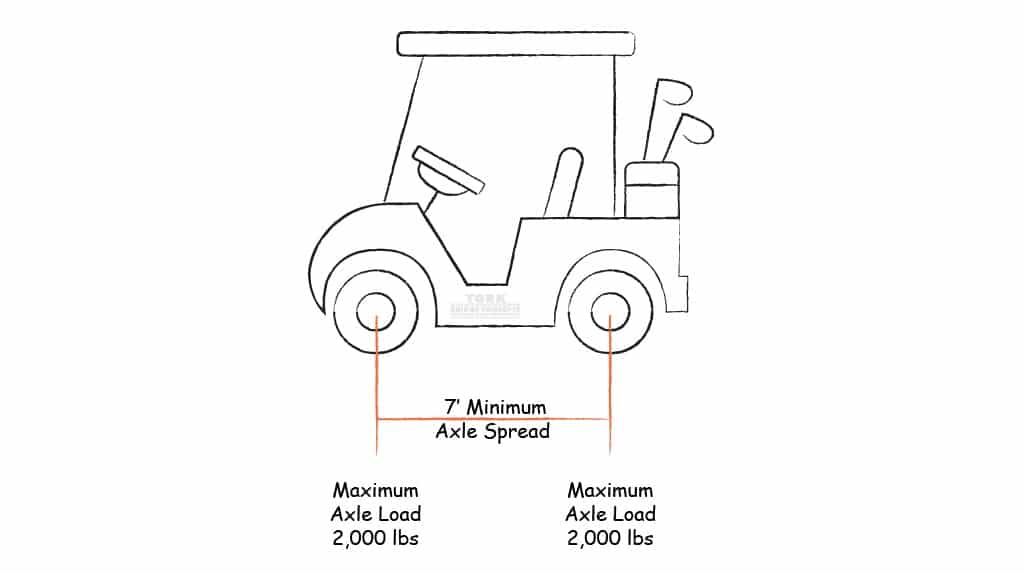
2 Ton Loading Diagram

Heavy Weight Equipment & Large Specialty Vehicle Use
Custom Capacity
Number of Axles
Gross Vehicle Weight
Load Per Axle
70 Ton
3-4 Axles
140,000 lbs
81,831 lbs (Steer Axle & Tandem Axle, lbs/wheel undefined) - 51,123 lbs (Tandem Axle 25,561.5 lbs/wheel)
Volvo A25F Articulated Load
2 Axles (16.44')
101,192.2 lbs
32k - 69k lbs
Low Boy Crane Transport
5 Axles
(14' - 26' variable axle spread; 4.5' - 5' Variable Tridem Axle Spread)
248k lbs
Crane Transport
3 Axles
(Min 16' Axle Spread; 16' to 31'4" Variable Axle Spread; 4.5' - 5' Variable Tridem Axle Spread)
15,500 lbs - (2) 63,750 combined lbs per axle (Tridem Axles 21,250 lbs/wheel)
Pedestrian Usage
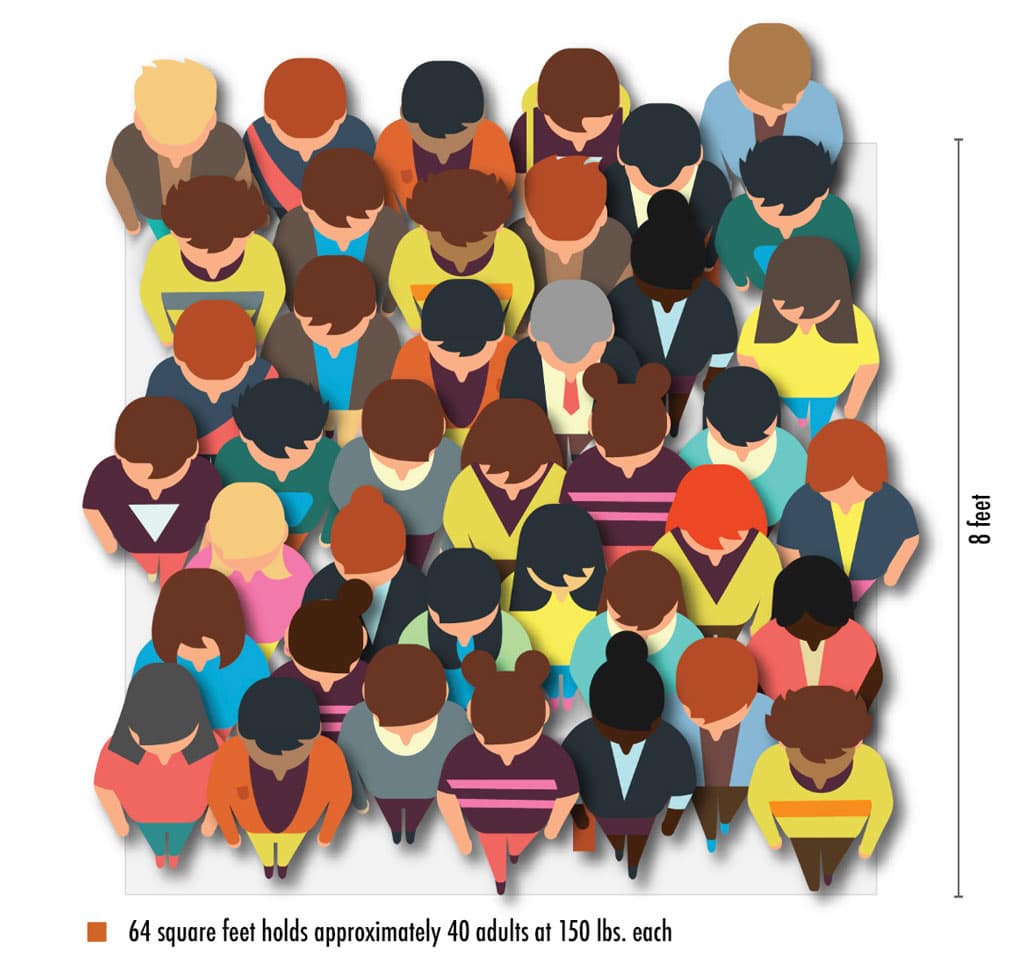
100 PSF Pedestrian

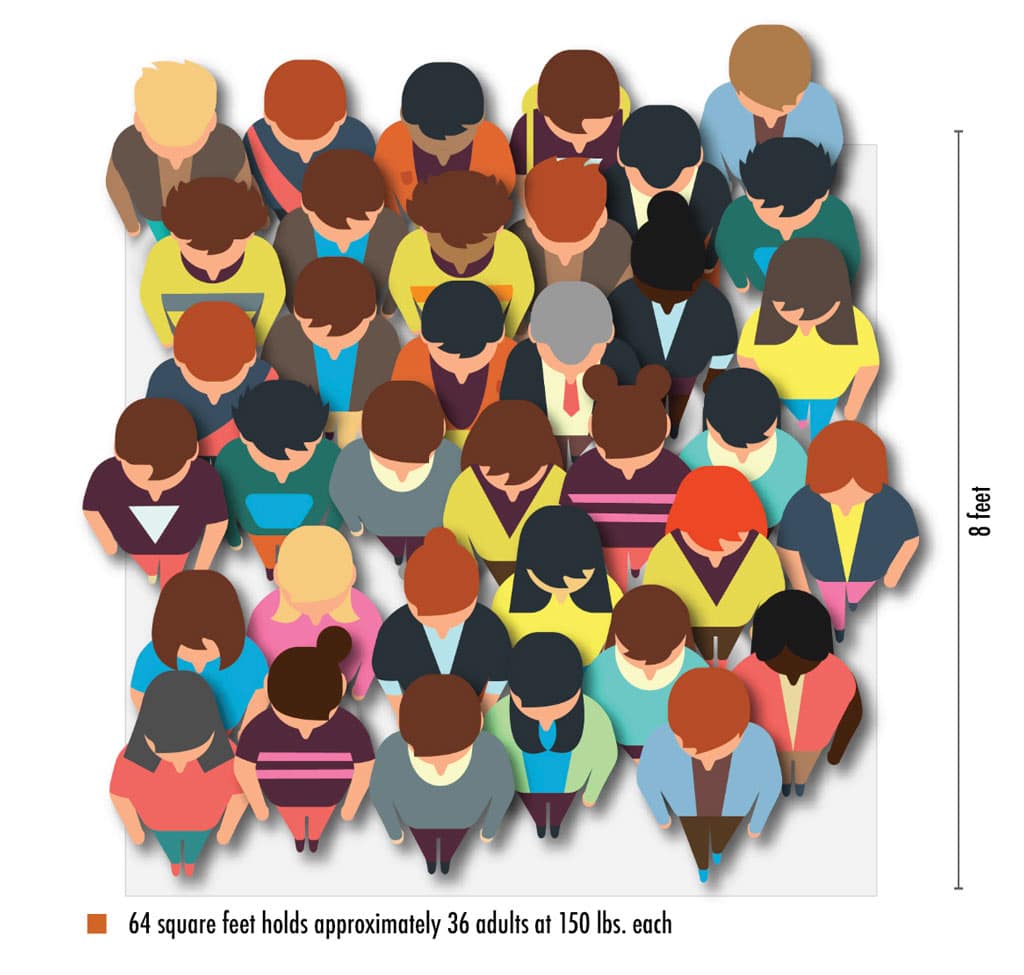
90 PSF Pedestrian

York Bridge Concepts Services
Loading Analysis
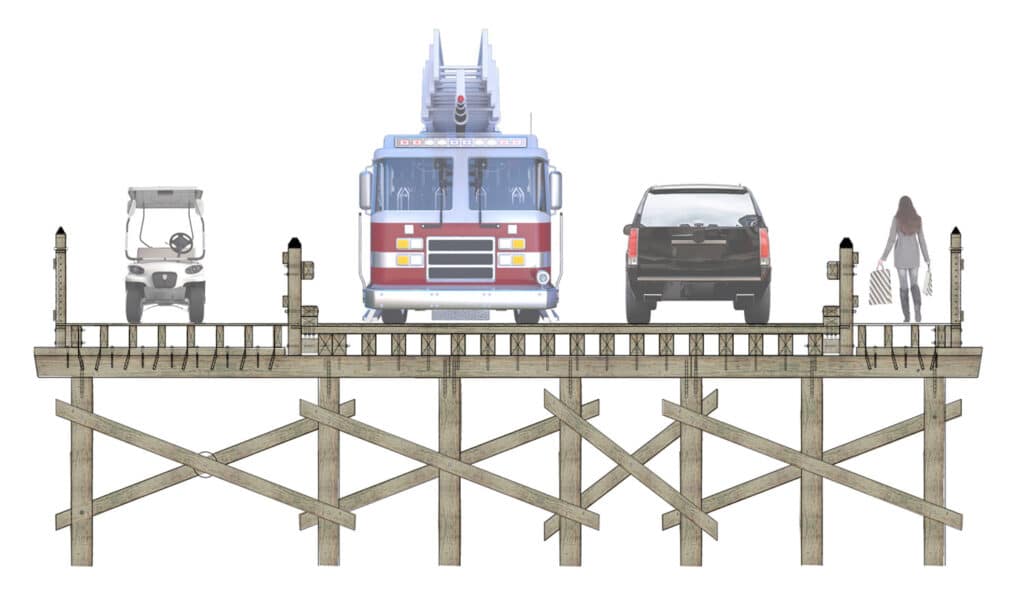
Our team conducts comprehensive loading analysis to determine the design loads and usage patterns that will impact the bridge structure. Through advanced modeling techniques and industry-leading software, we assess various factors such as vehicle weights, traffic volume, environmental conditions, and more to ensure optimal performance and safety.
Usage Studies
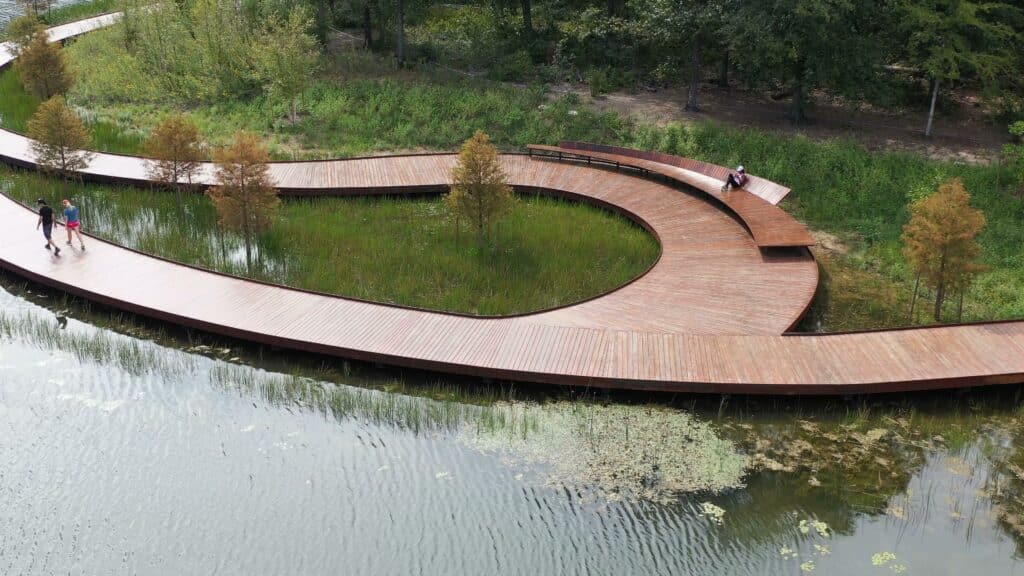
Understanding how a bridge will be used is essential for its design and functionality. We conduct usage studies to analyze traffic flow, pedestrian behavior, loading patterns, and other relevant factors. By gaining insights into user behavior, we can optimize the design and layout of the bridge to enhance safety, accessibility, and user experience.
Consultation Services
Need guidance or support with loading and usage considerations for your bridge project? Our team of experts is here to help. Whether you're facing technical challenges, seeking recommendations, or looking for best practices, we offer consultation services to address your needs and ensure the success of your project.
Vehicular Section Views
Double Lane Vehicular w/ 2 Attached Pedestrian Sections
The double-lane vehicular timber bridge with attached pedestrian sections is engineered to meet precise technical specifications, ensuring optimal performance and safety. Constructed from high-quality timber, the bridge spec sheet is a designed example shown to withstand heavy vehicular loads while maintaining structural integrity.

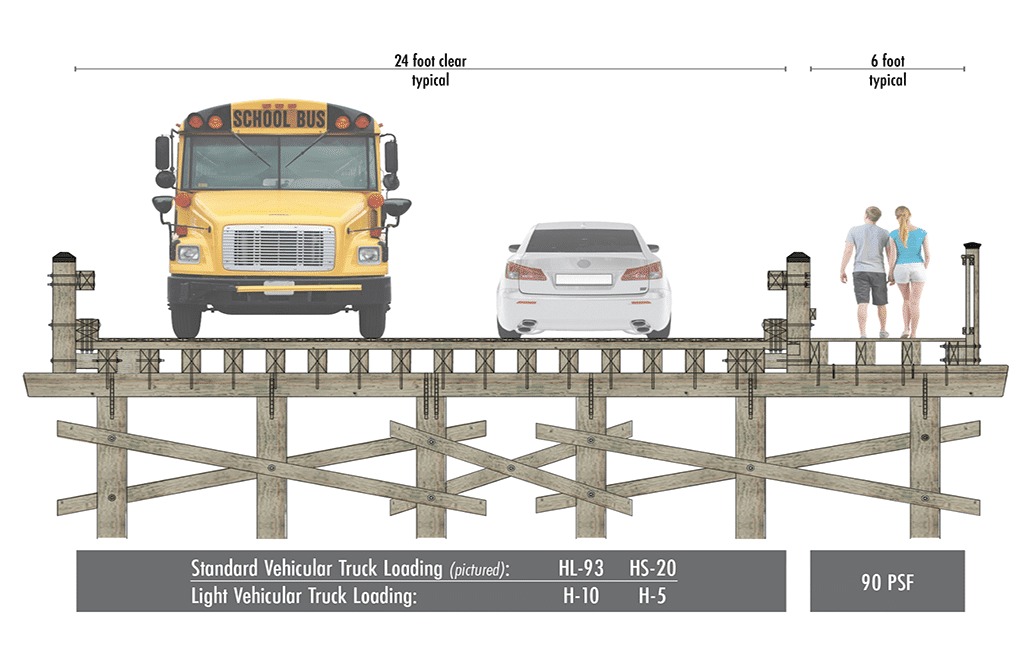
Double Lane Vehicular w/ Attached Pedestrian Section

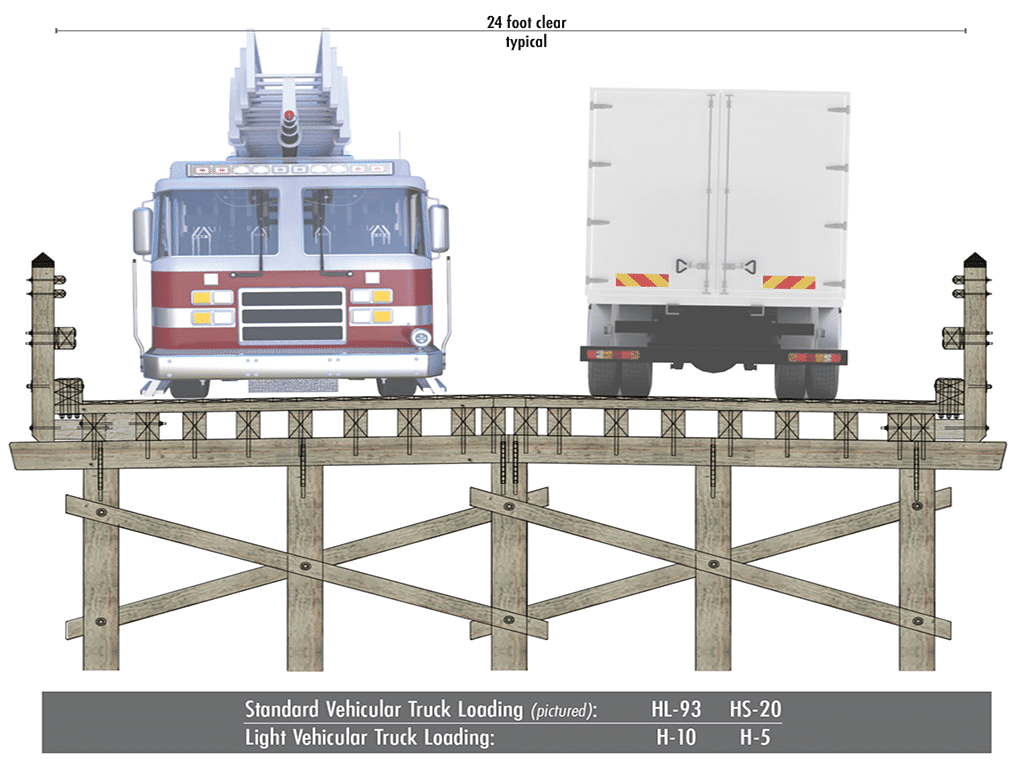
Double Lane Vehicular
Engineered with meticulous attention to detail, this document offers invaluable insights for construction professionals, ensuring accurate implementation of the bridge design.

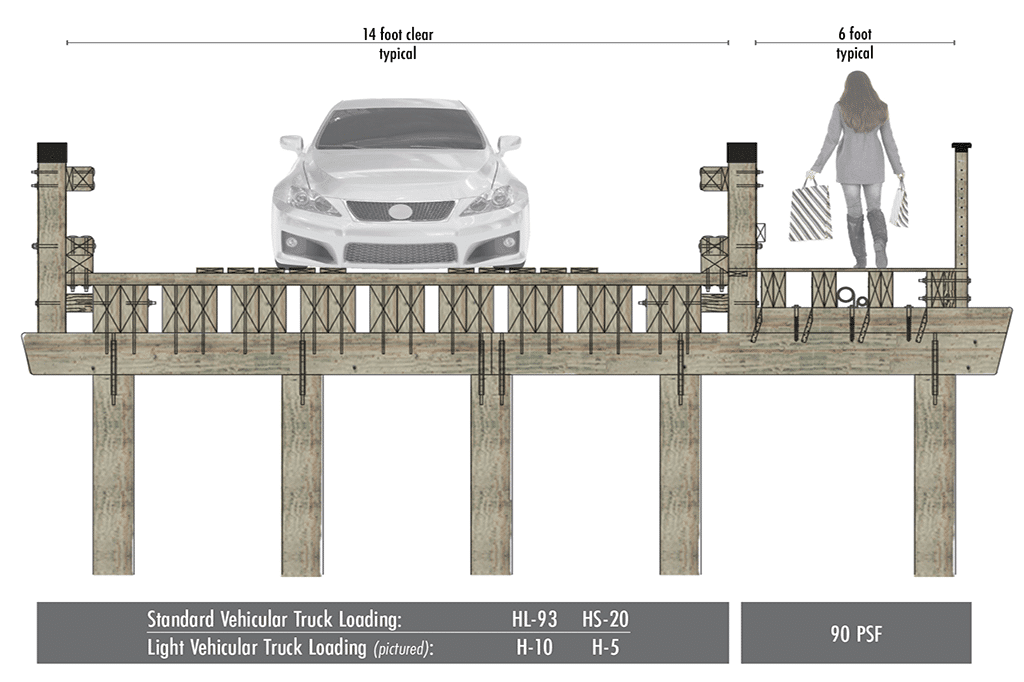
Single Lane Vehicular w/ Attached Pedestrian
Engineered with meticulous attention to detail, this document offers invaluable insights for construction professionals, ensuring accurate implementation of the bridge design.

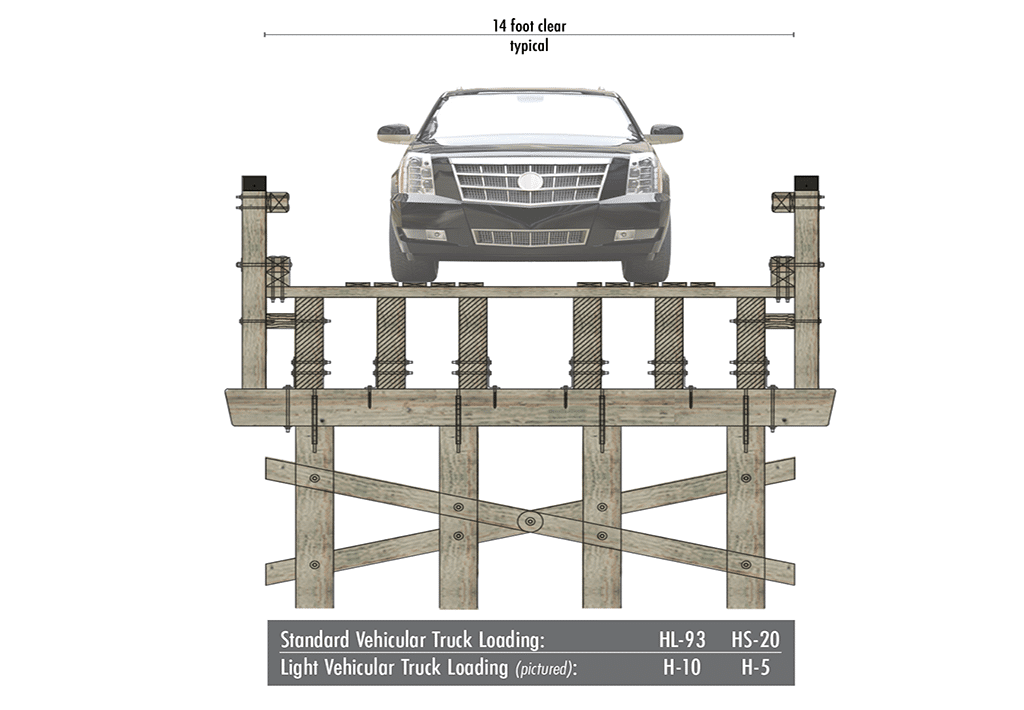
Single Lane Vehicular
Engineered with meticulous attention to detail, this document offers invaluable insights for construction professionals, ensuring accurate implementation of the bridge design.

Why York Bridge Concepts Is Your Premier Choice
Proven Track Record
Delivering exceptional timber-built vehicular bridges that have stood the test of time for decades.
Sustainability
We believe in building bridges to a sustainable future. Our eco-friendly practices set us apart in the industry.
Expertise
With decades of experience, we bring unparalleled expertise to every project. Masterfully creating your icon.
Customization
Your vision is our blueprint. We tailor our solutions to meet your specific needs and aesthetic preferences.
Culvert or Bridge Design Guide Article Download

View Our Timber Bridge Educational Webinar Series

Request a Virtual Lunch & Learn For Your Organization

Create Your Legacy Today
Discover the intersection of strength, durability, and environmental responsibility with York Bridge Concepts. Let's build a bridge to the future together.