


Pedestrian Bridge Design
Concepts, Considerations & Inspiration
Connecting Concept to Completion
Pedestrian bridge design brings together far more than the need to move people from one side of a crossing to another. A successful pedestrian bridge must balance aesthetics, environment, cost, longevity, safety, build time, maintenance, and durability while responding to the people, landscape, and architecture surrounding it.
From park trails and wetlands to resorts, campuses, golf courses, and master-planned communities, every pedestrian crossing presents a different combination of functional and design requirements. Span, width, loading, accessibility, railings, materials, foundations, environmental conditions, and architectural character can all influence the final bridge.
York Bridge Concepts approaches pedestrian bridge design around the needs of the crossing rather than a predetermined structure. The concepts throughout this gallery demonstrate how pedestrian bridges can be customized to create functional infrastructure that also becomes an intentional part of its surroundings.
For a broader understanding of bridge planning, explore our Complete Guide to Bridge Design.
What Is Pedestrian Bridge Design?
Pedestrian bridge design is the process of developing a crossing primarily intended for people traveling by foot while accounting for structural requirements, accessibility, user experience, site conditions, environmental factors, aesthetics, construction, and long-term performance.
Depending on the application, pedestrian bridges may also accommodate bicycles, golf carts, maintenance equipment, utility vehicles, or other limited traffic. Identifying these uses early helps establish important design requirements before the project advances into engineering.
Unlike purely utilitarian infrastructure, pedestrian bridges often exist within environments where the experience of the crossing matters.
A pedestrian bridge may become:
- A gateway into a park
- A connection between neighborhoods
- A feature along a nature trail
- A landmark within a resort
- A link across a campus
- An overlook above a wetland
- A signature element within a development
The strongest pedestrian bridge designs respond to both how the crossing functions and how people experience it.

Key Pedestrian Bridge Design Considerations
Every pedestrian bridge presents different challenges, but several fundamental considerations help establish the direction of the design.
Pedestrian Bridge Span
The distance being crossed is one of the most important factors in pedestrian bridge design.
A relatively short crossing over a drainage feature may require a very different structural approach from a pedestrian bridge extending across a river, roadway, ravine, or large wetland.
Depending on site conditions, pedestrian bridge designs may incorporate:
Short Spans
Short-span pedestrian bridges can provide efficient crossings over smaller waterways, drainage areas, landscape features, and trail obstacles.
Although the crossing may be relatively compact, loading, width, foundations, approaches, railings, and long-term durability still need to be evaluated.
Free Spans
A free-span pedestrian bridge crosses an obstacle without intermediate supports between its primary endpoints.
Free spans can be particularly useful over waterways, ravines, roadways, wetlands, and environmentally sensitive locations where placing foundations within the crossing may be difficult or undesirable.
Repetitive Spans
Repetitive-span pedestrian bridges use a sequence of structural sections supported at intervals along the crossing.
This configuration can work well for longer trails, wetlands, waterfronts, and environments where intermediate foundations are practical.
Multiple Spans
Multiple-span pedestrian bridges can combine different structural sections to respond to changing conditions along a longer crossing.
For example, a project may use a longer primary span across a waterway with shorter approach spans across surrounding terrain.
Learn more about these configurations in our Types of Bridge Designs resource.
Pedestrian Bridge Width
Pedestrian bridge width should be based on how people will actually use the crossing.
A small nature trail may have very different requirements from a busy urban park, resort, campus, or shared-use trail accommodating pedestrians and cyclists.
Design considerations can include:
- Expected pedestrian volume
- Two-way traffic
- Wheelchairs and mobility devices
- Bicycles
- Golf carts
- Maintenance equipment
- Viewing or gathering areas
- Railings
- Emergency access
- Connections to surrounding pathways
The bridge should also feel appropriately proportioned to its environment. A bridge that is technically wide enough may still create congestion or an uncomfortable user experience if anticipated traffic and activities have not been considered.
Pedestrian Bridge Loading
Although the name suggests foot traffic, pedestrian bridge loading can involve more than pedestrians.
The project team should identify everything that could reasonably need to use the crossing throughout its service life.
Depending on the project, this may include:
- Pedestrians
- Runners
- Cyclists
- Mobility devices
- Golf carts
- Landscaping equipment
- Maintenance vehicles
- Utility vehicles
- Emergency access
Designing around anticipated future uses can prevent limitations later.
A bridge serving pedestrians today may eventually need to accommodate maintenance equipment or other vehicles as the surrounding property develops.
Pedestrian Bridge Accessibility
Accessibility should be considered as part of the overall pedestrian bridge design rather than added after the primary structure has been established.
Depending on the project and applicable requirements, considerations may include:
- Approach slopes
- Bridge width
- Changes in elevation
- Walking surfaces
- Clearances
- Landings
- Railings and handrails
- Transitions between the bridge and surrounding pathways
Accessibility decisions can influence bridge elevation, alignment, approaches, structural length, and connections to surrounding trails or sidewalks.
Bringing these considerations into planning early allows accessibility and bridge design to develop together.
Pedestrian Bridge Railings
Railings are an essential safety component, but they are also one of the most visually prominent elements of a pedestrian bridge.
Railing design can significantly change the character of the same underlying bridge structure.
Depending on the project, railing concepts may incorporate:
- Vertical pickets
- Horizontal elements
- Cable infill
- Mesh systems
- Architectural panels
- Custom patterns
- Integrated lighting
- Decorative posts and caps
The appropriate railing should account for safety and applicable requirements while complementing the architectural language of the surrounding property.
In scenic locations, railing design can also influence visibility from the bridge. More visually open systems may help preserve views across waterways, wetlands, landscapes, or golf courses where appropriate.
Pedestrian Bridge Decking & Walking Surfaces
The walking surface plays an important role in pedestrian safety, comfort, durability, appearance, and maintenance.
Designers should consider how the surface will perform under the environmental and operational conditions of the site, including:
- Rain
- Moisture
- UV exposure
- Dirt and debris
- Heavy pedestrian use
- Bicycles
- Maintenance equipment
- Coastal exposure
- Seasonal weather
Surface texture and slip resistance can be particularly important in locations where the bridge is frequently exposed to moisture.
Decking should therefore be evaluated as part of the overall bridge system rather than selected based solely on appearance.
Materials in Pedestrian Bridge Design
Material selection influences the appearance, structural performance, durability, maintenance requirements, construction methodology, environmental impact, and lifecycle value of a pedestrian bridge.
Depending on the project, pedestrian bridge systems may incorporate:
- Timber
- Glulam
- Steel
- Concrete
- Fiber-reinforced polymer
- Recycled materials
- Hybrid material combinations
No single material is universally appropriate for every pedestrian bridge.
Instead, project teams should evaluate which material or combination of materials provides the best balance of aesthetics, environment, cost, longevity, safety, build time, maintenance, and durability for the specific crossing.
This material-agnostic approach provides greater flexibility when developing pedestrian bridge solutions for different environments and applications.
Pedestrian Bridge Foundations
Foundations transfer bridge loads into the supporting ground and can significantly influence the design, cost, environmental footprint, and construction methodology of a pedestrian bridge.
Foundation considerations may include:
- Soil conditions
- Bridge loading
- Span configuration
- Waterways
- Hydrology
- Scour
- Wetlands
- Topography
- Construction access
- Environmental restrictions
Foundation locations can also influence the structural configuration.
For example, reducing intermediate supports may be desirable in a waterway or sensitive wetland, while repetitive foundations may provide an effective solution across other types of terrain.
These decisions should be evaluated as the project progresses through the Bridge Design Process.
Project Showcase
Our pedestrian bridge portfolio demonstrates the versatility of timber bridge design across parks, campuses, municipalities, residential communities, and commercial developments.

Memorial Park Boardwalk & Elevated Trail – Houston, Texas
Spanning environmentally sensitive wetlands within one of the nation's largest urban parks, this elevated timber boardwalk allows visitors to experience nature while minimizing ecological disturbance. Features include slip-resistant decking, copper-capped posts, and a design inspired by the surrounding forest canopy.

River Lights Pedestrian Bridge – Wilmington, North Carolina
This 120-foot multi-span pedestrian bridge connects residential neighborhoods with waterfront amenities along the Cape Fear River. Stainless steel cable infill railings preserve scenic views while enhancing pedestrian safety.

River Lights Pedestrian Bridge – Wilmington, North Carolina
This 120-foot multi-span pedestrian bridge connects residential neighborhoods with waterfront amenities along the Cape Fear River. Stainless steel cable infill railings preserve scenic views while enhancing pedestrian safety.
Why Choose York Bridge Concepts?
1. Expertise in Bridge Design
York Bridge Concepts has spent decades designing bridges that serve both as critical infrastructure and iconic landmarks. Our engineering and design teams understand the unique structural challenges associated with diverse climates, terrain, and environmental conditions across North America.
2. Innovative Crossing Designs
Innovation extends beyond aesthetics.
We continually develop bridge solutions that improve functionality, user experience, and environmental stewardship. From integrated lighting and overlook platforms to hybrid timber systems and contemporary architectural designs, every bridge is thoughtfully engineered for its intended purpose.
3. Custom Solutions for Every Project
No two projects are alike.
Whether you're envisioning a rustic trail bridge, an elegant boardwalk, a modern pedestrian crossing, or a signature architectural landmark, our Design-Build team develops custom solutions tailored to your site's unique requirements, architectural style, and environmental conditions.
4. Commitment to Safety & Durability
Safety remains our highest priority.
Every pedestrian bridge is professionally engineered to meet or exceed applicable loading requirements while incorporating features such as:
- Slip-resistant decking
- Durable guardrail systems
- Long-lasting structural materials
- Advanced protective coatings
- Weather-resistant hardware
These features help ensure decades of dependable performance with appropriate inspection and maintenance.
Designing Pedestrian Bridges for Different Environments
The location of a pedestrian bridge can influence nearly every aspect of its design.
Parks & Recreation
Pedestrian bridges within parks often serve as both infrastructure and part of the visitor experience.
They may connect trails, cross waterways, create overlooks, provide accessible routes, or become visual landmarks within the landscape.
Design should consider visitor volume, surrounding trails, accessibility, maintenance, environmental conditions, views, and how the bridge contributes to the character of the park.
Trails & Greenways
Trail bridges help maintain continuity across waterways, drainage areas, wetlands, roads, and difficult terrain.
Width, anticipated users, bicycles, accessibility, maintenance equipment, railing design, and environmental impact can all influence the crossing.
In natural environments, the architectural goal may be to allow the bridge to blend quietly into the landscape rather than dominate it.
Wetlands
Wetland pedestrian bridges require particularly careful coordination between design and construction.
Foundation locations, water movement, vegetation, habitat, equipment access, material staging, and environmental requirements may all influence the final solution.
For appropriate sites, construction methodology can become an important part of reducing disturbance to the environment surrounding the crossing.
Campuses
Pedestrian bridges can connect academic buildings, residential areas, parking facilities, recreation spaces, trails, and other campus destinations.
Because campuses often experience significant pedestrian traffic, bridge width, accessibility, circulation patterns, visibility, lighting, safety, and architectural integration can become especially important.
Resorts & Hospitality
Within resorts and hospitality properties, a pedestrian bridge can become part of the guest experience.
Rather than treating the crossing as purely functional infrastructure, the design can incorporate architectural details, distinctive railings, lighting, landscaping, viewing areas, covered elements, and other features that reinforce the identity of the destination.
Master-Planned Communities
Pedestrian bridges can strengthen connectivity between neighborhoods, amenities, parks, trails, waterfronts, and commercial areas within master-planned communities.
The bridge can also become a recognizable piece of community architecture, reinforcing the character established through surrounding landscaping, signage, buildings, and public spaces.
Golf Courses
Pedestrian bridges on golf courses must complement carefully designed landscapes while providing dependable access across waterways, drainage features, and difficult terrain.
Some crossings may need to accommodate only pedestrians, while others require golf carts or maintenance equipment. Identifying these uses early ensures the structural and dimensional requirements reflect actual course operations.

The Collaborative Design Process
York Bridge Concepts believes the best bridge designs emerge through collaboration.
Our Design-Build process includes:
Initial Consultation
Understanding project goals, site conditions, budget, and long-term vision.
Concept Development
Creating conceptual designs, renderings, material selections, and preliminary cost estimates.
Engineering & Compliance
Developing professionally engineered bridge solutions that satisfy applicable codes, environmental requirements, and project specifications.
Construction & Installation
Experienced field crews construct each bridge using York Bridge Concepts' proprietary construction techniques for efficiency and environmental protection.
Post-Installation Support
We continue supporting clients through inspection recommendations, maintenance guidance, and long-term bridge stewardship.
Pedestrian Bridge Design Styles
Two pedestrian bridges serving similar functional purposes can look completely different.
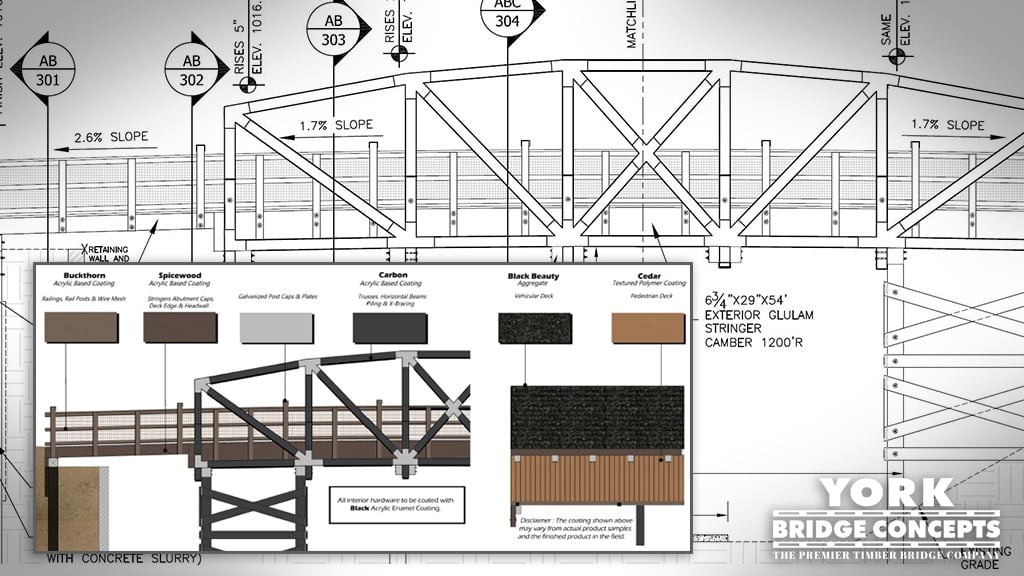
Architectural character can be developed through structural form, materials, railing design, finishes, colors, geometry, rooflines, lighting, and surrounding landscape.
Traditional Pedestrian Bridges
Traditional pedestrian bridge designs use familiar proportions, craftsmanship, railings, finishes, and structural details to create a timeless appearance.
These designs can complement parks, residential communities, golf courses, resorts, historic properties, and natural environments.
Contemporary Pedestrian Bridges
Contemporary pedestrian bridge designs emphasize clean lines, simplified detailing, modern material combinations, and strong relationships with surrounding architecture.
They can be particularly effective for mixed-use developments, campuses, modern resorts, commercial environments, and architecturally driven projects.
Covered Pedestrian Bridges
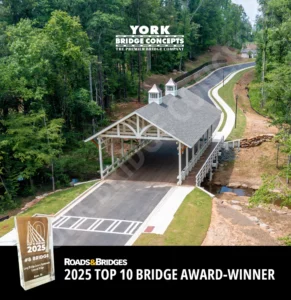
Covered pedestrian bridges combine the crossing with a roofed architectural element that can create a strong sense of arrival and identity.
Rooflines, openings, siding, lighting, finishes, and architectural details can be customized to complement traditional, transitional, contemporary, or destination-oriented environments.
Signature Pedestrian Bridges
Some pedestrian bridges are intended to become destinations themselves.
Signature crossings may incorporate overlooks, gathering spaces, custom railings, architectural lighting, branding elements, covered areas, specialty materials, or other features that create a memorable experience.
These designs can be particularly valuable within parks, resorts, campuses, golf courses, and master-planned communities where the bridge contributes to the identity of the property.
Designing Pedestrian Bridges Around the Landscape
A pedestrian bridge should not feel as though it was selected independently and placed onto the site.
The most successful designs respond to their surroundings.
Alignment can frame a view. Railings can preserve sightlines. Materials and finishes can complement nearby architecture. Structural proportions can respond to the scale of the landscape. Viewing areas can transform the crossing into a destination.
This relationship between bridge and environment becomes particularly important because pedestrians experience a crossing differently from motorists.
People move more slowly.
They notice the details.
They stop.
They look over the railing.
They interact with the structure.
Pedestrian bridge design therefore provides an opportunity to create an experience rather than simply solve a transportation problem.
Environmental Considerations in Pedestrian Bridge Design
Environmental impact extends beyond the footprint of the finished bridge.
Construction access, foundation installation, equipment movement, material staging, vegetation removal, erosion control, and restoration can all affect the surrounding site.
These factors should be considered during design so that the structural system and construction methodology work together.
For appropriate projects, YBC's Deck-Level Construction approach allows crews, equipment, and materials to advance from portions of the completed structure, reducing the need for heavy equipment to continuously operate beneath or alongside the bridge.
This can be particularly valuable for pedestrian crossings through wetlands, waterways, shorelines, and other sensitive environments.
Pedestrian Bridge Design & Constructability
A visually compelling pedestrian bridge still needs to be practical to build.
Before the design is finalized, the project team should understand:
- How crews will reach the crossing
- Where materials will be staged
- How foundations will be installed
- Whether equipment can access the area
- Whether a waterway or wetland restricts access
- How the surrounding property will remain operational
- Whether environmental restrictions affect construction
- How approaches will connect to the completed bridge
Considering these factors during design can help identify potential challenges before construction begins.
YBC's Design-Engineer-Build approach connects design with engineering and construction considerations throughout the development of the bridge.
Learn more about the YBC Design-Engineer-Build Process.
Explore Pedestrian Bridge Design Concepts
Conceptual designs provide a valuable starting point for architects, landscape architects, engineers, developers, municipalities, and owners exploring what a pedestrian crossing could become.
The concepts below demonstrate different approaches to:
- Span configuration
- Railing design
- Architectural style
- Structural expression
- Materials
- Elevation
- Landscape integration
- Covered structures
- Viewing areas
- Custom details
Rather than representing predetermined bridge kits, these concepts can serve as inspiration for developing a crossing around the requirements and character of a particular project.
From Pedestrian Bridge Concept to Custom Design
A concept provides inspiration. Turning that concept into a bridge requires the design to respond to the actual site.
Span, width, loading, accessibility, foundations, structural engineering, environmental conditions, materials, constructability, budget, and applicable project requirements must ultimately shape the crossing.
Through YBC's Decero™ Design Studio, project teams can use initial concepts as a starting point while developing a pedestrian bridge around the functional and architectural objectives of the project.
Explore the Decero™ Design Studio to learn more about YBC's approach to custom bridge design.
Why Work With a Pedestrian Bridge Specialist?
Pedestrian bridges represent a specialized category of infrastructure where structural performance, user experience, architecture, environmental conditions, and construction frequently intersect.
Working with a bridge specialist allows these factors to be considered together rather than treating the bridge as an isolated construction component.
Since 1985, York Bridge Concepts has completed thousands of bridge and boardwalk structures across parks, trails, communities, campuses, resorts, golf courses, waterfronts, and other environments.
That experience allows YBC to bring lessons learned across diverse crossings into the planning and design of each new project.
Learn more about the difference between a Bridge Contractor and Bridge Specialist.
Start Designing Your Pedestrian Bridge
The right pedestrian bridge begins with understanding the crossing.
Who will use it? What does it need to span? How should it interact with the surrounding landscape? What architectural character should it have? How will it be constructed? And how does it need to perform over the decades that follow?
York Bridge Concepts works with architects, landscape architects, civil engineers, developers, municipalities, contractors, and owners to answer those questions and develop custom pedestrian bridge solutions around the needs of each project.
Explore our Complete Guide to Bridge Design or talk with a YBC Bridge Consultant about your pedestrian bridge project.