Bridging Community & Nature
The Heatherwood Golf & Villas Pedestrian Timber Bridge -- Setauket, New York
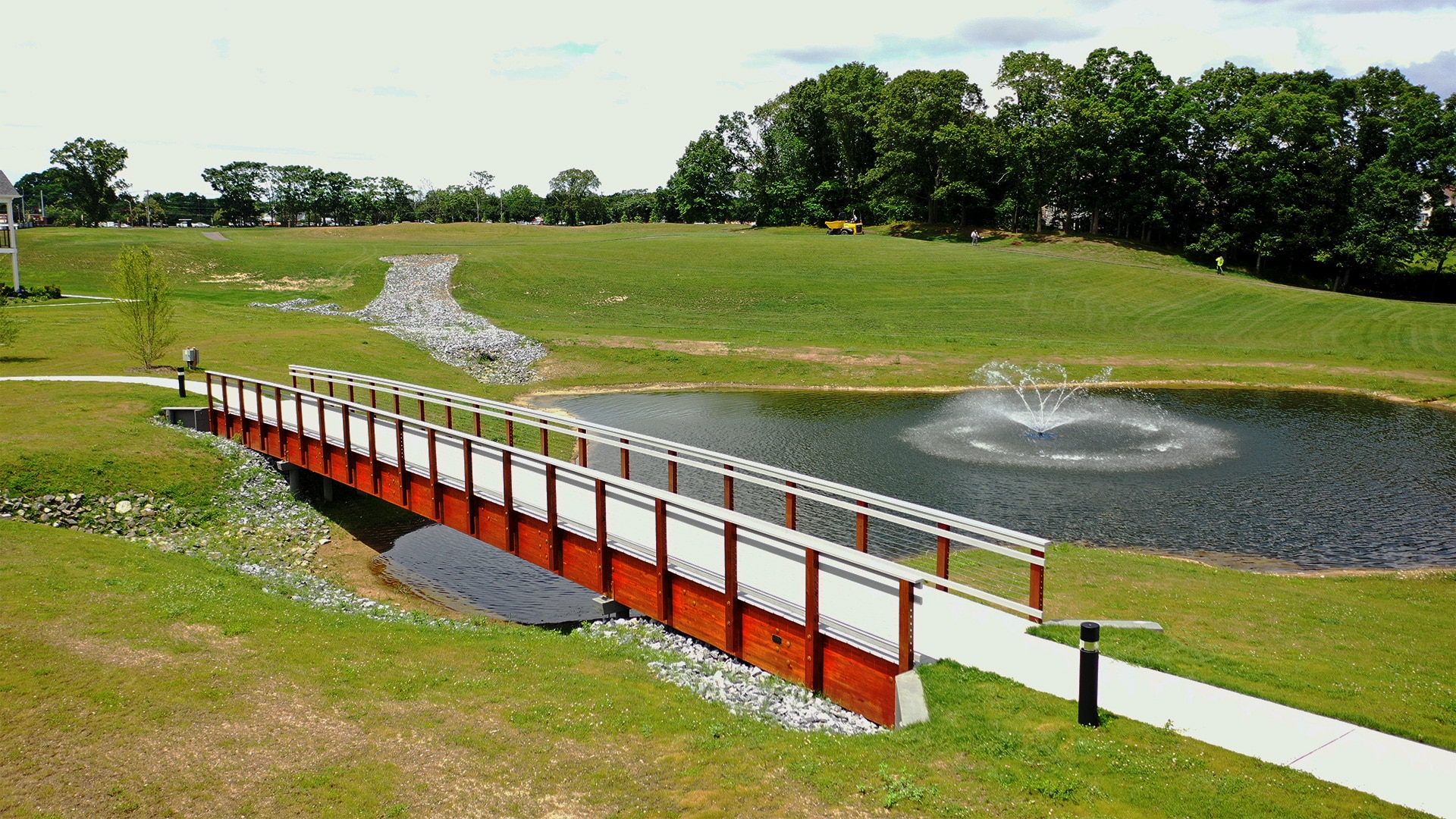
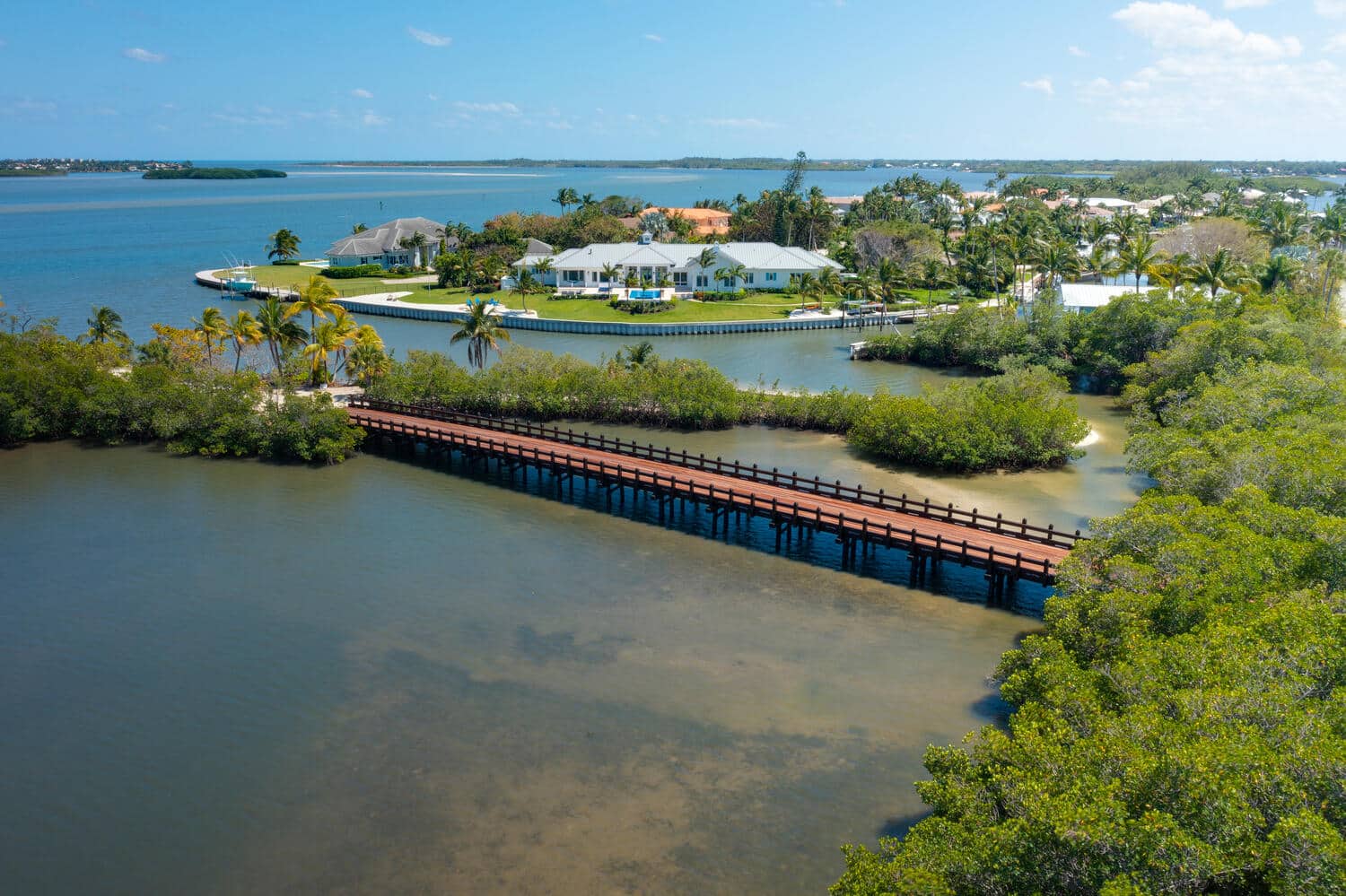
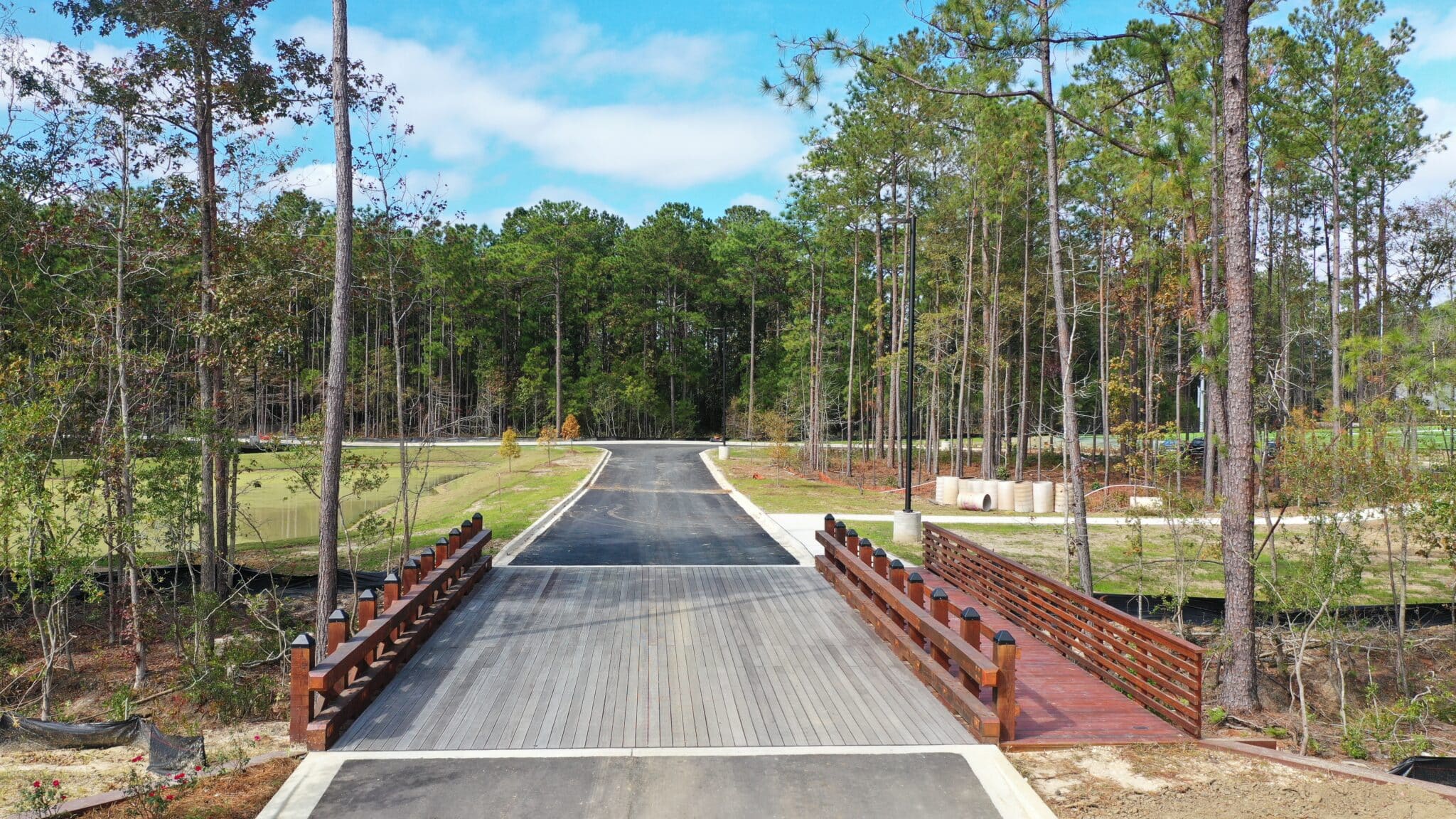
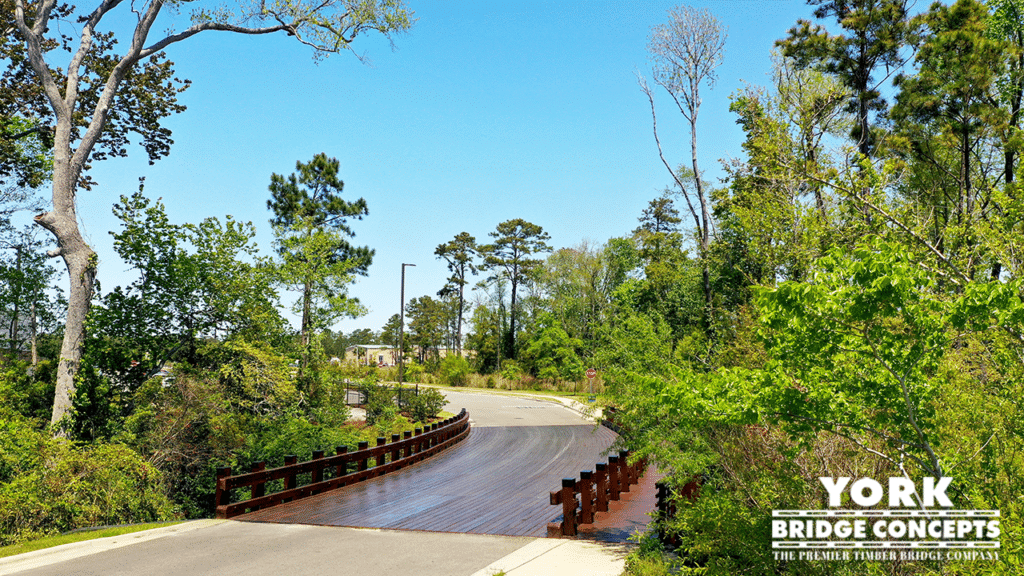
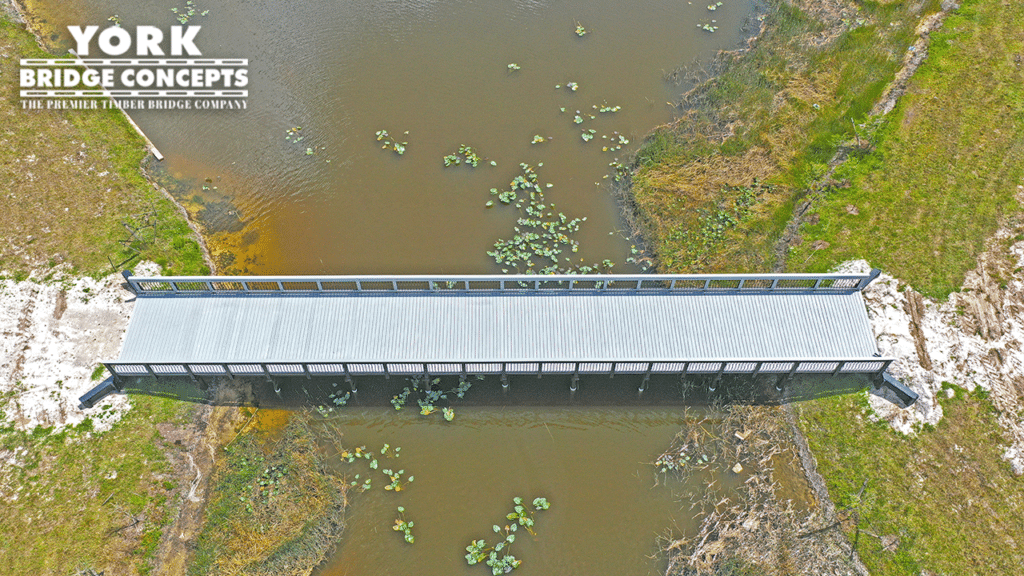
The Heatherwood Spy Ring Golf pedestrian timber bridge connects this 55+ active community in the picturesque Long Island town of Setauket, New York. Pupose-built for walking, it gives residents a graceful, direct path to the clubhouse amenities--especially the tennis and pickleball courts--while preserving the quiet beauty of the surrounding landscape. More than a crossing, it's a daily invitation to move, meet, and enjoy the water's edge.
Specifications
- Width:
- 7’ 10” (7’6” Clear)
- Length:
- 90’
- Height:
- 10.25’ (from ground)
- Capacity:
- 90 PSF
- Construction:
- Ground Level
- Span Type:
- Multiple Long Span
- Span Lengths:
- (1) 50’ & (2) 20’
- Material:
CCA/CA-C Treated SYP
and Reinforced Polymeric
Lumber- Foundation:
Treated Timber Piles
(Acrylic Coated where
exposed)- Stringers:
SYP Glulam Stringers (Oil
Coated where exposed)- Pedestrian Deck System:
1” Reinforced Polymeric
Lumber- Hand Rail System:
Decero™ Wire Rope
Design Series- Crossing:
- Pond
Welcome To A Golf Resort Bridge Designed for Everyday Life
At first glance, a Golf Resort Bridge is an elegant way to cross water or wetlands. In practice, it is infrastructure that hosts daily life--morning walks to the clubhouse, afternoon walks to the tennis and pickleball courts by the clubhouse, and evening strolls at golden hour. The Heatherwood Golf Resort Bridge accomplishes all three with a quiet confidence: it shortens routes, improves safety, and heightens the resort-style experience residents expect from a golf and villa community.
York Bridge Concepts designs golf community crossings as purpose-built pedestrian corridors that also complement resort operations. Sightlines are kept open so residents can track play, rail profiles are tuned to read as light and refined from the fairway, and walking surfaces are engineered to feel stable underfoot in all seasons. The finish palette--warm oil-coated Southern Yellow Pine paired with Cool Gray RPL accents--translates into a timeless neutral that pairs naturally with villa facades, course turf, and wooded edges.
Beyond form, the Heatherwood Golf Resort Bridge reflects modern resort priorities:
- People-first safety through guardrail geometry, clear approach zones, and high-traction walking surfaces.
- Amenity-friendly logistics that keep the bridge light on the land and mindful of tennis, pickleball, and golf play during installation & daily use.
- Durability and low-touch upkeep, essential for communities that value predictable operating costs and pristine presentation.
In resort environments, frictionless movement is the guest experience. The Heatherwood bridge closes the distance between villas, amenities, and course paths--making every step feel like part of the destination.
Project Setting & Sense of Place
Heatherwood's bridge lives at the seam where fairway views, water's-edge habitat, and villa life meet. Setauket's coastal light and wooded edges create a calm, low-contrast backdrop; the bridge reads as a warm, linear accent rather than a focal object. That's intentional. A Golf Resort Bridge succeeds when it becomes a quiet constant: always there, always helpful, never intrusive. Approaches are framed by native grasses and low shrubs so the first step feels intuitive. Mid-span, the deck subtly crowns for drainage and for a barely perceptible sense of arrival--an architectural "breath" that invites a pause, a glance across the water, a greeting to a neighbor headed the other way.
Amenity rhythm also shapes the siting. The alignment respects desire lines between villas, paths, and the clubhouse while keeping approaches predictable around the golf course, tennis and pickleball courts. Clear sightlines at entries reduce hesitation points and make passing effortless. From nearby homes, the bridge turns everyday errands into scenic strolls: a five-minute walk to the courts replaces a loop by car, and evening circuits around the water become a habit. In a 55+ active community, that habit matters--more daylight steps, more face-to-face moments, more reasons to linger outdoors.
The Palette bridges seasons as well as spaces. Oil-coated Southern Yellow Pine warms in winter sun and softens in summer shade; Cool Gray RPL stays crisp through pollen season and salt-on-the-breeze days. In photographs, the composition behaves like a resort postcard--people in motion, light on water, timber rail catching the glow--yet in person it is even simpler: a comfortable, humane line across the landscape that quietly makes daily life feel closer together.
Performance You Can Feel: Stability, Quiet, Confidence
Great resort crossings are felt more than noticed. Underfoot stability, acoustic quiet, and visual calm combine to create trust--especially for multi-generational communities. Heatherwood's bridge leverages engineered timber glulams to keep deflection within tight comfort ranges for pedestrian traffic, so the span feels planted even at mid-section. The deck pattern promotes traction in damp morning conditions without reading as aggressive or industrial; transitions at landings are flush and forgiving for mobility devices, strollers, and golf-cart tires.
Acoustically, the structure avoids the "clang and echo" that can accompany metal deck assemblies. The mass of the timber substructure naturally damps footfall and cart noise, keeping sound levels aligned with the course's tranquil character. Rail geometry supports relaxed posture while walking; top profiles are hand-friendly, with radiused edges that invite a light resting grip during photos or conversation.
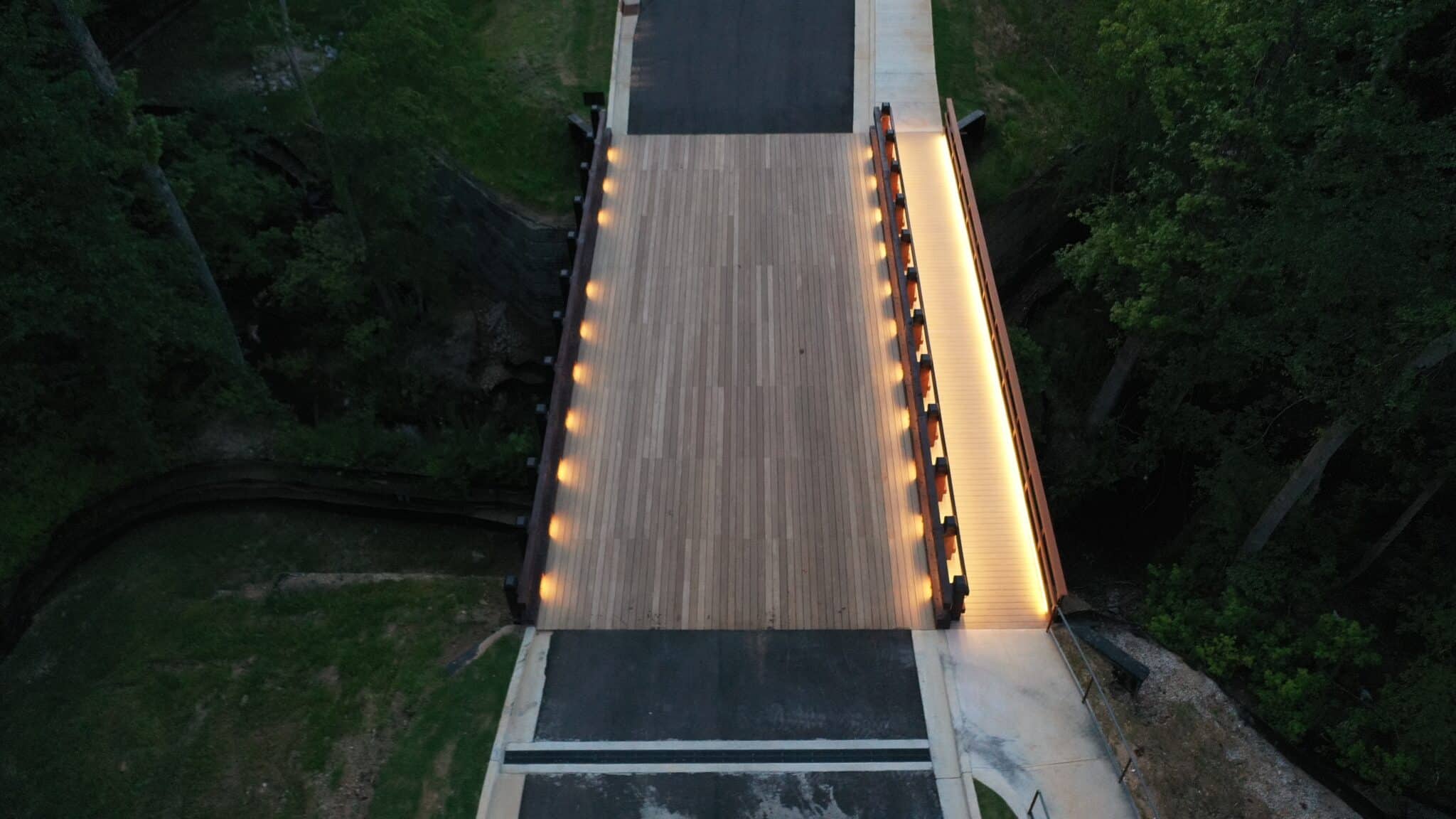
Wayfinding is embedded rather than applied. Approach geometry and rail rhythm lead the eye; mid-span vista points are created by small expansions in perceived width--space for two neighbors to pause without disrupting flow. Where the bridge interfaces with paths, the curvature gently "aims" you toward the next decision point, reducing the need for signage clutter. In the evening, optional low-glare, downcast lighting at rail height maintains night-sky friendliness while making footsteps sure and shadows minimal.
Operationally, the bridge respects course logistics. Clear lines of sight across and beneath the structure allow staff to observe movement, and the handrail picket spacing preserves long views while meeting safety goals. The result is an amenity that carries a resort day with ease: quiet dawn workouts, steady for midday cart traffic, and welcoming for dusk strolls when the water mirrors the last light.
Universal Design for a 55+ Community
Universal design transforms a pretty crossing into an inclusive one. At Heatherwood, the bridge and its approaches are composed for barrier-free movement without announcing themselves as "accessible features." Slopes along approach paths target gentle grades to support residents who walk with companions or devices. Rest areas are placed where views are best--shade from nearby canopy, a breeze over the water,or a sightline back to a familiar landmark--so pauses feel like choices rather than requirements.
Handrail heights, graspability, and continuity are tuned to provide consistent support. Top rails invite a natural hand placement while secondary support occurs where needed along approach sequences. Picket spacing maintains safety for grandchildren while keeping the composition visually open for those who favor expansive views. At the deck, the traction profile is selected for confidence in mixed conditions and for comfortable rolling resistance for carts and mobility aids.
Transitions are friction points in most environments; here they become non-events. Edges at landings are flush to minimize trip risk, and material palette keeps luminance contrast at handrail and deck interfaces so the path reads clearly in varied light. For those who prefer quiet mornings, early light is captured along the rail cap; for those who favor evenings, subtle light at foot level guides steps without glare. Universal design is successful when everyone forgets it's there. The Heatherwood bridge works for first-time guests and lifelong residents alike--calm, legible, and welcoming at every speed.
A Bridge of Unity & Togetherness
This pedestrian bridge isn't just a structure; it's a social seam. Heatherwood Luxury Rentals envisioned a connected neighborhood where daily routines naturally bring people together. The bridge fulfills that vision by providing a welcoming, comfortable route that encourages face-to-face moments on the way to matches, meetups, and events. Neighbors exchange greetings as easily as they cross the water.
Community Life, Elevated
The promise of a Golf Resort Bridge is proximity that feels like privilege: a short walk that becomes a highlight, a gentle crossing that frames views of greens and water, and a natural point of connection where neighbors exchange greetings as easily as they navigate their day. At Heatherwood, the bridge works as a "third place" -- an informal setting between home and amenity where residents gather at sunrise and unwind at dusk.
For 55+ active communities, the value of this link compounds:
- Wellness & walkability: Walkable loops increase daily step counts and reduce reliance on vehicles for short trips.
- Social frequency: More face-to-face moments strengthen the social fabric, which is a known driver of long-term resident satisfaction.
- Wayfinding simplicity: Clear, beautiful connections lower cognitive load--especially helpful for guests and new residents.
From a planning standpoint, this Golf Resort Bridge reorganizes how the community feels at eye level. Instead of disconnected pockets of activity, the bridge sutures the master plan together, stitching villas, trail nodes, and the golf network with one continuous, human-scale path. The outcome is less commute and more community.
Craftsmanship that Resonates
Crafted meticulously with Southern Yellow Pine Glulams and Reinforced Polymeric Lumber, the Heatherwood Bridge has a contemporary design that seamlessly blends with the community. The warm hues of the oil-coated timber and the Cool Gray RPL harmonize perfectly with the changing seasons, mirroring the ebb and flow of life within the community it serves.
Options & Upgrades Palette (Rails, Decks, Lighting, Accents)
Every golf resort community has its own character; the bridge can echo that identity with a focused menu of upgrades:
- Rails & Profiles: Choose between streamlined contemporary pickets, classic timber baluster rhythms, or YBC's Wire Rope insert for better views. Top rails match the deck tone for a monochromatic look and provides beautiful contrast with the deep hues of the natural timber.
- Decking Choices: Composite wear surfaces offer low-touch longevity; timber wear decking provides a soft, natural underfoot feel and warm acoustics. Mixed approaches--composite at pedestrian lanes, timber vertical posts create a balance with aesthetics and performance.
- Lighting: Low-glare, dark-sky-friendly fixtures at handrail height provide intimate light without visible hotspots. Post-cap accents can create subtle nighttime procession without washing the deck. For wildlife sensitivity, amber-spectrum options protect the evening ambiance.
- Color Strategy: Oil-stain timber tones range from light honey to rich umber; Cool Gray RPL stays crisp and modern. Communities often select a tri-tone palette (deck / rail / trim) echoing clubhouse materials or villa exteriors.
- Infill Variations: Wire-rope infill reads maritime and nearly invisible at distance; slender verticals keep a classic resort feel. Both preserve long views across fairways.
- Interpretive Touches: Small, integrated plaques can share the community story--a nod to Setauket's history or the course architect--without clutter.
Upgrades aren't about ornament; they're about coherence. The right combination makes photographs effortless and daily use delightful. The Heatherwood bridge is designed to evolve with the community's taste--refreshes in ten years can shift tone while keeping the structure's quiet confidence intact.
Material Intelligence: Timber Glulam & RPL in Harmony
Resort-caliber durability starts with materials that are intrinsically suited to the site. Southern Yellow Pine glulam members give the structure its muscular yet graceful profile--a strength-to-weight balance ideal for spanning waterways and wetlands while preserving the hand-hewn warmth people associate with retreat environments.
Complementing the timber, Reinforced Polymeric Lumber (RPL) is integrated at wear points and rail elements to resist moisture cycling, reduce maintenance, and preserve visual crispness over time. The Cool Gray RPL tone is more than aesthetic; it helps conceal scuffs and sun exposure, extending the "freshly installed" look of seasons at a time.
Together they deliver:
- Dimensional stability from engineered timber components.
- Weather resilience in exposed conditions.
- Maintenance efficiency through surfaces that clean easily and coatings that stand up to resort-level foot traffic.
The result is a Golf Resort Bridge that reads like architecture and behaves like infrastructure--performing quietly year after year while inviting hands to glide along the rail and eyes to rest on the landscape.
Structural Clarity & Codes Alignment
The calm you feel on the bridge is engineered. Southern Yellow Pine glulam stringers deliver high-strength-to-weight performance with predictable behavior across temperature swings common to Long Island's seasons. Connections are detailed for inspectability; moisture-shedding geometry keeps fasteners and bearing zones dry. Rail loads, pedestrian live loads, and cart considerations are resolved within the structure so the deck feels composed regardless of traffic patterns.
Design alignment with applicable codes and guides for pedestrian/cycle bridges ensures the geometry of safety is baked in--rail heights, openings, transitions, and approach slopes. Where golf-cart access is anticipated, deck width, turning radii and load paths are tuned accordingly so carts and pedestrians can coexist without friction. The glulam system's dimensional stability keeps the walking surface true season after season; coatings protect both appearance and performance.
This structural clarity has practical benefits. Inspection points are accessible without special equipment, and routine observation can be folded into existing groundskeeping rounds. When communities know what to look for and can see it easily, stewardship becomes simple--and simple is sustainable.
A Testament to Community Vision
The Heatherwood Timber Bridge is a tangible testament to the collective vision of a community that values connectedness. Its design, guided by YBC's Design Team, finessed a deep understanding of communal needs.
Placemaking: Programming the Everyday
A bridge can be more than a route; it can be a ritual. Heatherwood's residents are already discovering micro-traditions: sunrise coffee mid-span, a sunset loop with friends, a photo at first snow. To support this, approach landscapes can include a pair of benches tucked into native grasses where paths meet the deck, and a discrete bottle-fill station along a shaded approach for summer walks.
Event programming aligns naturally. A "Walk the Bridge" season-opener brings new residents into the social current; a twilight "Nine & Walk" loop pairs golf with a post-round stroll across the water. For visiting family, scavenger-hunt signage elements hidden in plain sight along the route make the crossing playful without changing its quiet character. The bridge becomes a "third place"--not home and not clubhouse, but the friendly line between them where community happens without planning.
Because the structure is photogenic without being self-conscious, it anchors the community's visual identity. Social posts, resident newsletters, and leasing pages gain an authentic backdrop--light on timber, a hand on rail, water stilled below--capturing a feeling words often chase.
Design-Engineer-Build: Alignment From Day One
Bridges that feel inevitable--like they always belonged--come from a process that aligns vision, engineering, and constructability from the start. York Bridge Concepts' Design-Engineer-Build approach streamlines decisions and ensures the final crossing is both beautiful and buildable.
Key threads of the Heatherwood collaboration:
- Community Insights: Understanding resident routines, peak traffic window, and mobility needs (foot, cart, stroller, and mobility devices) to shape deck width, rail height, and passing zones.
- Course Operations: Coordinating with golf staff to align bridge geometry with cart paths and fairway play, minimizing visual clutter and preserving shot corridors.
- Constructability & Access: Planning delivery routes, staging, and top-down deck-level construction strategies to protect sensitive soils and keep the course open.
- Finish Strategy: Pairing oil-coated timber tones with Cool Gray RPL for a palette that photographs beautifully in every season and under all sky conditions.
This integration reduces change orders, compresses timelines, and produces a Golf Resort Bridge that performs on paper and in daily life.
Beyond Timber: Building Bonds
The Heatherwood Timber Bridge is a conduit for shared moments and memories. As residents stroll across it becomes a natural gathering point— a place for chance encounters and deliberate meet-ups, fostering a sense of belonging that only a tight-knit community can offer.
Light on the Land: Building in Sensitive Environments
Golf resort landscapes are ecosystems--greens and bunkers flow into wetlands, creeks lace through fairways, and woodland edges hos birds and pollinators. The Heatherwood Golf Resort Bridge honors these systems by minimizing disturbance during construction and operation.
Core environmental practices include:
- Deck-Level (top-down) methods that reduce ground disturbance by working from the structure as it advances, keeping heavy equipment off sensitive soils.
- Selective access routes to protect trees and roots while maintaining fairway integrity.
- Erosion and sediment controls matched to creek hydrology to prevent turbidity during work.
- Material choices that are long-lived and coating systems engineered to perform in humidity, sun, and seasonal temperature swings.
By treating the site as an asset to be protected--not an obstacle to be managed--the project safeguards water quality and habitat, ensuring the bridge feels like an extension of nature, not an intrusion.
Hydrology, Resilience & the Water's Edge
Golf communities are shaped by water--creeks, ponds, marsh fingers--and any bridge spanning them must listen to those systems. The Heatherwood crossing is detailed for free-draining performance and long-term resilience. Deck crown and discreet drip edges move water off walking surfaces and away from connections; ventilation pathways in the timber assembly encourage drying after storms. Where the structure meets the banks, abutment strategies protect root zones and minimize hard edges, preserving the natural filter strip that keeps water clear.
Hydraulic events are a planning constant: spring freshets, hurricane remnants moving up the coast, frozen-then-sudden-thaw cycles. The bridge is proportioned to maintain flow capacity and to shed floating debris rather than trap it; hardware and connection detailing resist corrosion and keep maintenance straightforward after weather passes. In scouring events, the foundation strategy is selected to maintain stability while avoiding over-engineering that would burden the site with unnecessary mass.
Resilience also means daily durability. UV exposure, salt on the air, pollen bursts, and leaf litter cycles are all accounted for in the coating system and the RPL placements at high-wear zones. The visual palette assists resilience: Cool Gray rail and trim elements conceal incidental scuffs from carts while oil-coated timber maintains its depth with periodic, predictable care.
The result of this hydrology-first posture is twofold: water moves as it wants to move, and residents keep moving as they want to move. After a rain, the deck sheds quickly and re-opens to daily routines; after a stormy spell, the community returns to normal without the bridge becoming a to-do item. In a resort environment, that is resilience you can measure in uninterrupted walks, on-schedule tee times, and unbroken views of calm water.
Harmony with Nature
Amidst the greens and fairways of the golf course and the tranquil charm of the villa community, the Heatherwood Bridge bridges the gap between engineering and natural beauty. Its design speaks the language of the surrounding environment, making it a part of the landscape as much as the landscape is part of the community.
The Guest Journey: Views, Comfort, & Wayfinding
Exceptional resort moments often happen at transitions: stepping from shadow to light, rising above water, catching a cross-breeze and a panoramic view. The Heatherwood bridge turns an everyday crossing into a sequence of small delights.
- Sightline tuning: Rail geometry and picket spacing preserve long views without sacrificing safety or code compliance.
- Micro-comforts: Gentle gradients, smooth feeling materials, wide enough for mid-span conversation, and pausing for photos.
- Footing confidence: A high-traction deck pattern supports year-round use, including damp mornings and leaf season.
- Intuitive wayfinding: The bridge itself acts as a landmark--clear approach geometry and a distinctive palette make navigation effortless for visitors.
As a Golf Resort Bridge, the structure also respects play: it avoids distracting reflections, keeps silhouettes elegant against the horizon line, and offers sightlines for marshals and staff to observe cart movement where appropriate.
Golf Operations & Construction Logistics
Building inside an active golf environment demands choreography. The Heatherwood delivery plan prioritized continuity of play and course protection alongside speed and safety.
- Tee-time friendly phasing: Heavy work sequenced around course calendars to preserve member experience.
- Just-in-time material staging: Components delivered to minimize on-ground footprint, preventing turf compaction and unnecessary traffic.
- Noise & Visibility management: Work windows and temporary screening adjusted to reduce distraction on adjacent holes.
- Finish protection: Final coatings and touch-ups scheduled to avoid peak pollen, leaf fall, or irrigation windows, ensuring a flawless turnover.
Post-completion, staff training covered seasonal inspections, cleaning routines, and simple monitoring practices so the bridge continues to look day-one ready.
Ground-Based Erection, Sequenced for the Community
Building beside active amenities is choreography. For Heatherwood, the team used a ground-based erection sequence that set multi-span glulam members from prepared bank positions using compact cranes and access mats--maintaining a small footprint and clear, predictable routes for residents headed to the clubhouse, tennis, and pickleball courts.
Amenity-aware phasing. Heavier lifts and noisier tasks were grouped into short, announced windows outside league play and peak clubhouse hours. Quiet work (layout, hardware fit-out, rail assembly) filled shoulder periods so daily rhythms could continue uninterrupted.
Prepared access & protection. Temporary timber/HDPE mats defined tight work zones, protected turf and root zones, and kept equipment off sensitive soils. Banks were stabilized, then restored in sequence so no large stretch of ground remained open for long.
Precision glulam picks. Pre-fabricated glulam spans arrived just-in-time, were rigged, and placed directly from the ground with crane picks. Bearings and primary connections were set and verified immediately, shortening exposure and accelerating the move to decking.
Deck & rail installation. With the primary structure in place, crews installed decking and rails from stabilized, ground-based staging using light equipment and hand-carry methods. This limited encroachment on paths and preserved resident access to the courts.
Environmental controls. Silt fence, wattles, and site-specific turbidity protection (as required) were tuned to the creek's hydrology. Daily housekeeping prevented fines and debris from migrating to the water's edge.
Wayfinding & safety. Discreet screens reduced visual distraction; clear temporary signage maintained intuitive pedestrian routes. Short, ADA-friendly detours were signed where needed, and spotters supported lift windows adjacent to active paths.
Finish protection & turnover. Final coatings and touch-ups were timed around pollen and irrigation cycles for a flawless hand-off. At completion, the team removed access mats, restored vegetation, and oriented staff on simple seasonal inspections and light cleaning routines--so the bridge looked day-one ready and stayed that way.
The result: precise crane work from the ground, minimal disturbance, and uninterrupted access to the amenities that define everyday life at Heatherwood.
Frequently Asked Questions About Golf Resort Bridges
What deck width works best in a golf and villa community?
For pedestrian-focused crossings with occasional cart movement, many communities choose a width that comfortable supports two-way foot traffic plus passing--often 8-10 feet for pedestrian-only use and wider where carts or maintenance vehicles are expected. The right dimension ultimately aligns with anticipated volumes, cart policy, and site constraints.
How does the bridge address accessibility?
Approach geometry, slopes, and transitions are designed to support barrier-free access. Handrail heights, picket spacing, and surface texture aim to balance comfort and code compliance while keeping views open to the landscape.
What maintenance is required on a timber-and-RPL bridge?
Routine visual checks, light cleaning to remove organic material, and scheduled coating evaluations form the core of stewardship. RPL components at high-wear points reduce refinishing frequency, while engineered timber and quality coatings extend intervals between major maintenance events.
Will the bridge affect golf play or course aesthetics?
The Heatherwood Golf Resort Bridge was designed to be course-compatible--maintaining open sightlines, minimizing glare, and complementing the natural palette. During construction, phasing and site protection strategies preserve play continuity and turf health.
Can lighting be integrated without disturbing the night sky?
Yes. Low-glare, dark-sky-friendly lighting integrated into rail elements or posts can deliver safe illumination while protecting the resort's night ambiance and local wildlife.
What makes a Golf Resort Bridge different from a typical community bridge?
Course context, cart movements, spectator visibility, and hospitality standards call for a bridge that behaves like premium amenity infrastructure--quiet in operation, elegant in form, and durable in finish under resort-level use.
How long does installation typically take?
Timelines vary by span count, site access, and environmental conditions. Design-Engineer-Build delivery tightens sequencing, and deck-level construction can compress on-site work while protecting sensitive ground.
Can the finish palette be customized?
Absolutely. Communities often tailor timber tones and RPL accents to align with clubhouse architecture or villa colors, achieving a cohesive identity across the property.
How does the bridge perform in winter freeze-thaw conditions?
Engineered timber glulams and moisture-shedding details help the structure cycle cleanly through freeze-thaw. Deck crown and drip paths move water away from joints; coatings are specified for UV, humidity, and temperature swings typical to coastal Long Island. Routine sweeping after snow events preserves traction as melt-water recedes.
Can golf-cart use be allowed without making the crossing feel "vehicular"?
Even though the bridge is not intended for pedestrian, occasional cart crossing is possible. Width, turning geometry at approaches, and deck pattern can be tuned for shared use. Rail profiles remain elegant and pedestrian-scaled; durability is added where carts track most frequently through composite wear surfaces or RPL reinforcement at edge zones.
Will wildlife be affected by lighting?
Low-glare, downcast fixtures and wildlife-sensitive color temperatures minimize impact on night activity while still supporting safe footing. Many communities pair dusk-to-midnight timers with motion-activated levels during late hours.
What if the community wants a different color palette in the future?
The system supports refreshes. Oil-stain timber can shift tone during a scheduled maintenance cycle; RPL accents can be updated selectively to evolve the look without a full overhaul.
How are inspections handled?
Visual inspections are straightforward and can be folded into existing grounds routines. Key items include checking drainage paths for debris, confirming coating integrity at sun-exposed edges, and verifying that hardware remains tight. A professional review at agreed intervals supports documentation for insurance and long-term planning.
Does a timber bridge last in a coastal-influenced environment?
Yes, when designed, finished, and maintained for the setting. Engineered timber components offer predictable performance; coatings and RPL at wear zones extend intervals between refinishing; and deck-level construction methods reduce installation disturbance, preserving surrounding ecology that helps manage micro-climate around the bridge.
Can the bridge support small events or photo sessions?
Absolutely. The deck's comfort width and mid-span "breathing room" make small group photos and resident portraits effortless. If desired, temporary decor (seasonal planters, modest lanterns) can be added without hardware changes.
What about emergency or maintenance access?
If maintenance carts or utility carts need access, approach geometry and load paths can be integrated at design time. Where emergency access is required, the structure can be evaluated and detailed accordingly during engineering.
How does the bridge impact insurance or liability considerations?
Clear compliance with applicable pedestrian bridge guidelines, plus universal-design best practices, supports risk management. Routine documentation of inspections and maintenance (brief and scheduled) provides a simple paper trail aligned with community standards.
Procurement Confidence: Budgeting, Timeline, Delivery
Hospitality-grade infrastructure succeeds when decisions are clear and schedules hold. A Design-Engineer-Build partner streamlines procurement by aligning vision and constructability from day one, establishing a shared scope that translates directly to fabrication and fieldwork. Budget ranges are developed with lifecycle in mind--finishes, RPL placements, and access strategies chosen not only for first cost but for predictable care across years.
Timeline planning respects the course calendar--major work outside marquee events, quiet tasks slotted into shoulder hours. Fabrication proceeds in parallel with site readiness so that deliveries arrive just-in-time and staging remains compact. Permitting and environmental coordination are bake into the process, with submittals organized to minimize back-and-forth and to keep reviewers focused on site protections and performance outcomes.
For the community, this reads as calm. Residents see steady, purposeful progress with little footprint; staff see a schedule that lives in reality rather than in spreadsheets. And when ribbon-cutting day arrives, the bridge doesn't introduce itself so much as it confirms what everyone already feels: of course it belongs here.
Stewardship & Lifecycle Value
Resort communities succeed when costs are predictable and experiences are consistently excellent. The Heatherwood Golf Resort Bridge was planned for long-term value--materials chosen for their lifecycle performance, detailing tuned to shed water and debris, and finishes specified for durability and ease of care.
- Protective detailing: Drip edges, ventilation, and concealed fasteners where appropriate to reduce moisture traps.
- Service-friendly design: Clear access to critical points makes inspections and touch-ups straightforward.
- Future-ready upgrades: Capacity for discreet conduit runs at the rail for low-voltage lighting or sensors if the community adopts smart monitoring in the future.
Stewardship isn't just upkeep--it's a promise that the daily ritual of crossing the bridge will remain pleasant, safe, and beautiful for years to come.
Stewardship in Practice: A Simple O&M Rhythm
Operations & Maintenance (O&M) should feel like routine wellness--not a repair project. Heatherwood's bridge is set up for a simple, seasonal cadence:
- Weekly light care: Quick visual sweep during grounds rounds--remove leaves from drainage paths, glance at rail caps for debris, confirm that lighting (if installed) operates as intended.
- Quarterly touch points: Rinse pollen and dust from high-touch surfaces; check the first course of deck fasteners and expansion joints; refresh any scuffed RPL edges with a mild clean.
- Seasonal coating check: Spring and fall, review sun-facing edges and top rail for finish integrity. Spot-treat as needed to keep the whole read even and rich.
- Annual documentation: A brief, photo-supported checklist captures condition for insurance and planning; note any minor items for the next maintenance day.
- Multi-year refresh: At planned intervals, apply a comprehensive coat to timber elements, align any aesthetic palette updates, and review lighting performance.
Most of this is housekeeping rather than "maintenance." Because access is clear and details are visible, staff can confirm condition in minutes. Residents experience continuity: the bridge looks the way it did on day one, year after year. that continuity might be the most resort-like attribute of all--it keeps the community's daily rituals unbroken and the setting always photo-ready.
Stewardship is also social. A spring "Bridge Walk & Learn" hosted by staff can pair a short wellness stroll with a look at how the structure works--how water moves, how finishes protect, how universal design shows up in small, human touches. When a community understands its infrastructure, pride and care naturally follow.
A Bridge to Tomorrow
The Heatherwood Timber Bridge isn't just a connection of wood and beams; it's a connection to the beautiful landscape. The pedestrian bridge stands as a reminder of unity and community ties. This bond grows stronger and the beauty of nature continues to be cherished.
In the realm of community architecture, the Heatherwood Timber Bridge stands as an exemplar—a structure that transcends its physical form to become a bridge of memories, laughter, and shared moments. It's a reminder that in a world where connections often seem ephemeral, there are bridges that stand the test of time, nurturing relationships and weaving the tapestry of life.
Would you like a similar bridge for your community?
All Feature Projects
What's Best: A Culvert Or A Timber Bridge?
What Is The Best Span Type For My Project?
Which Load Capacity I Need?
How Do I Cross An Environmentally Sensitive Area?
How Do I Create A Landmark?
How Long Does A Timber Bridge Last?
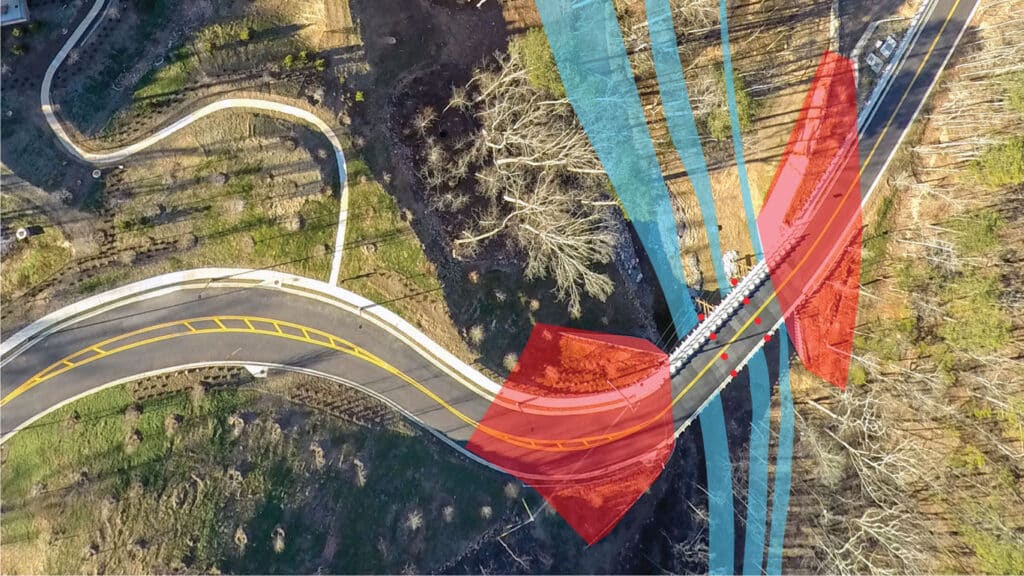
Culvert Or Bridge
If you're considering using a culvert for your crossing project. Click below to understand the best fit for your project.
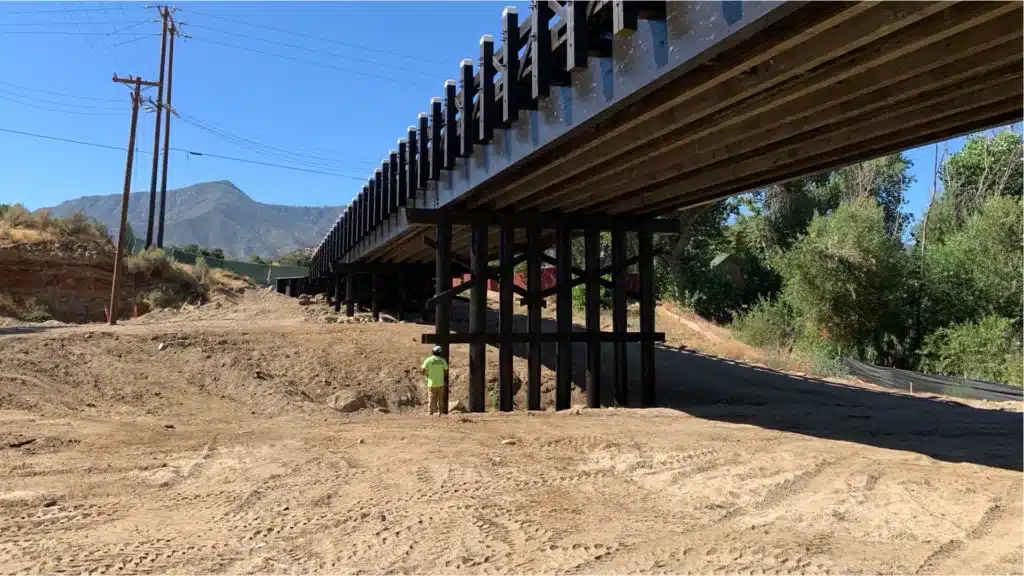
Spanning Solutions
Spanning a crossing is one of the most important aspects of your crossing project. Find the best solution for your crossing needs.
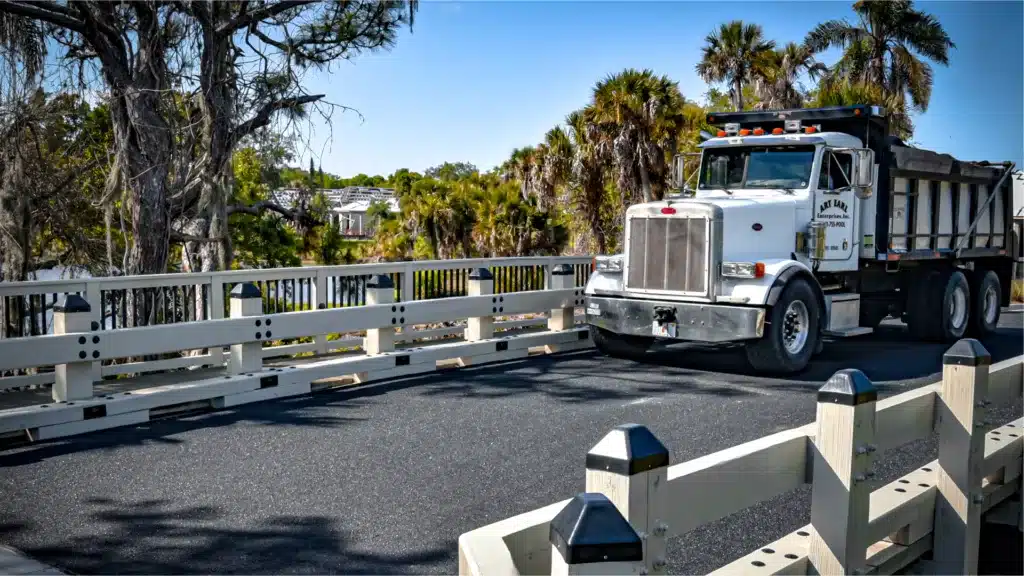
Uses & Capacities
The load capacity of a timber bridge may surprise you. See specs for different loads and uses that will help your decision-making process.