Sustainable Ingenuity
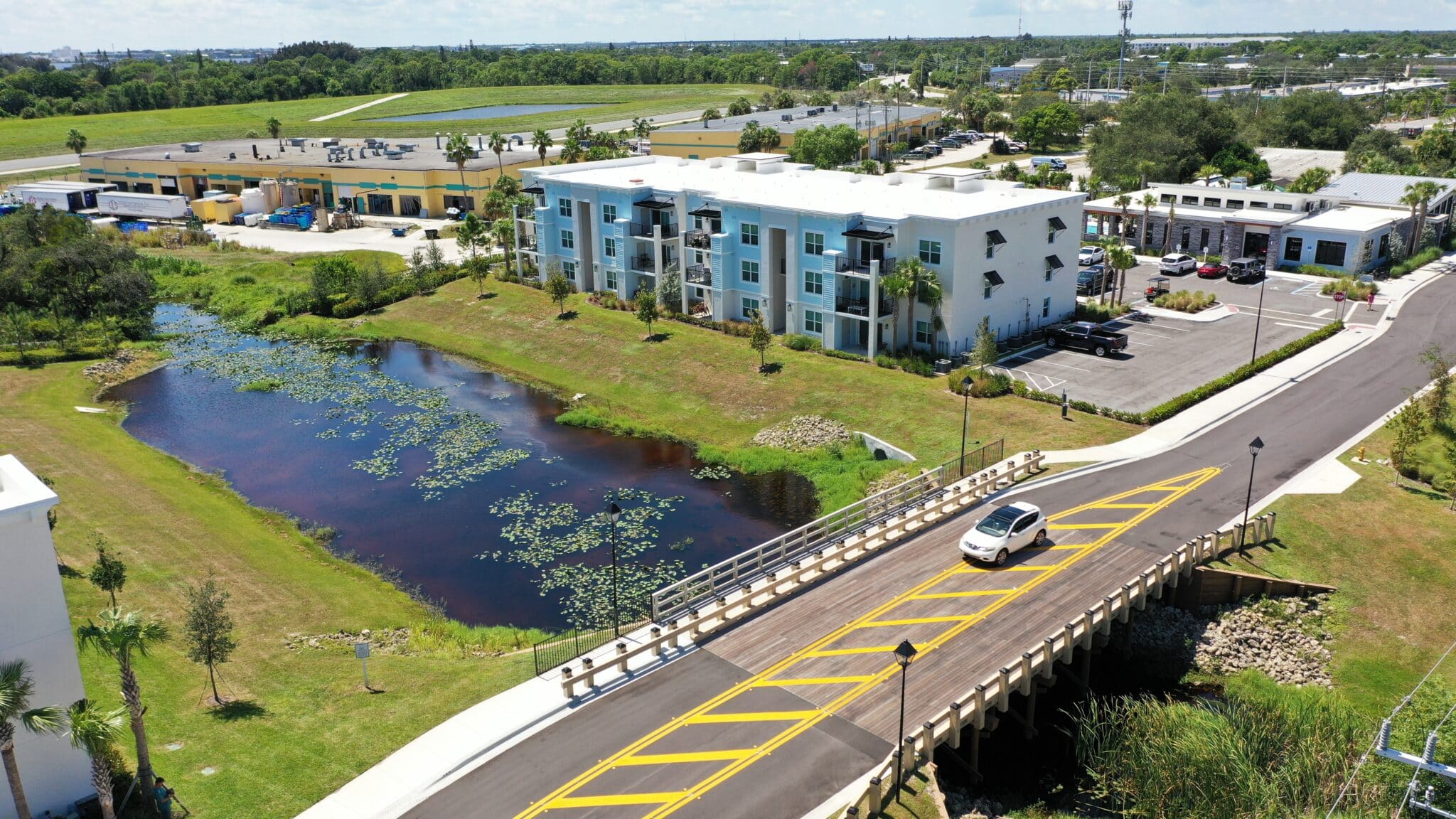
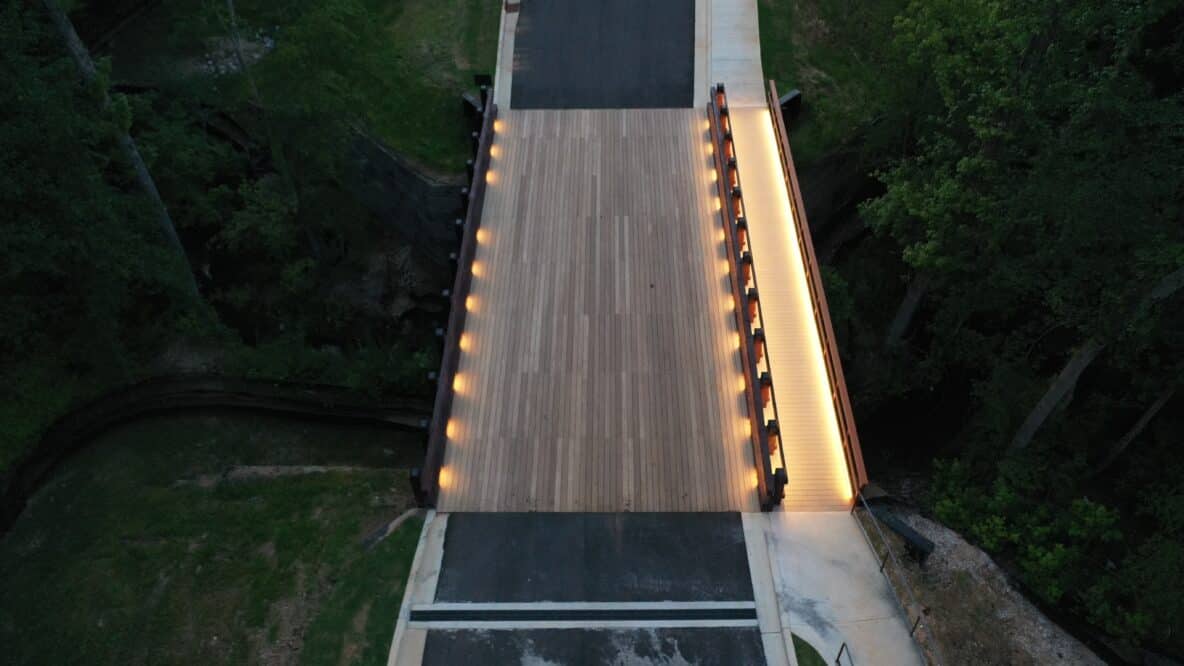
The Vehicular With Attached Pedestrian Timber-Built Bridge at Elan Sweetwater Creek Development
In an era of innovative engineering and sustainable design, the construction industry continually pushes the boundaries of what's possible.
York Bridge Concepts and Greystar are leading an era of sustainable engineering and design. One example is the Timber Built Bridge at the Elan Sweetwater Creek Development by York Bridge Concepts. This ingenuity and commitment came to good with the YBC team and Greystar.
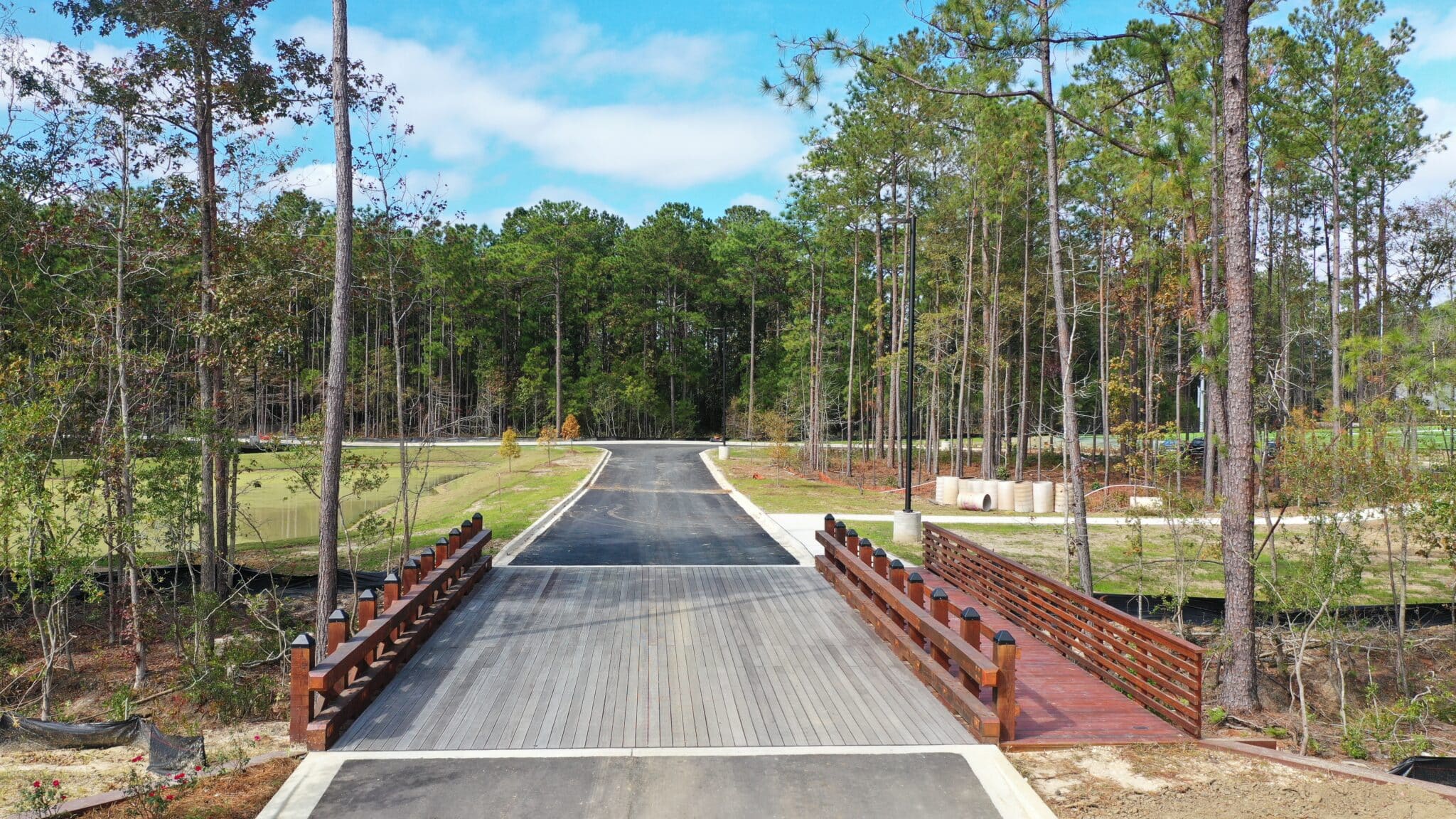
This handsome vehicular with an attached pedestrian timber bridge connects the gap between traditional building materials and modern engineering techniques. Let's delve into the fascinating details of this groundbreaking project and explore how it sets a new standard for both form and function.
Modern Engineering
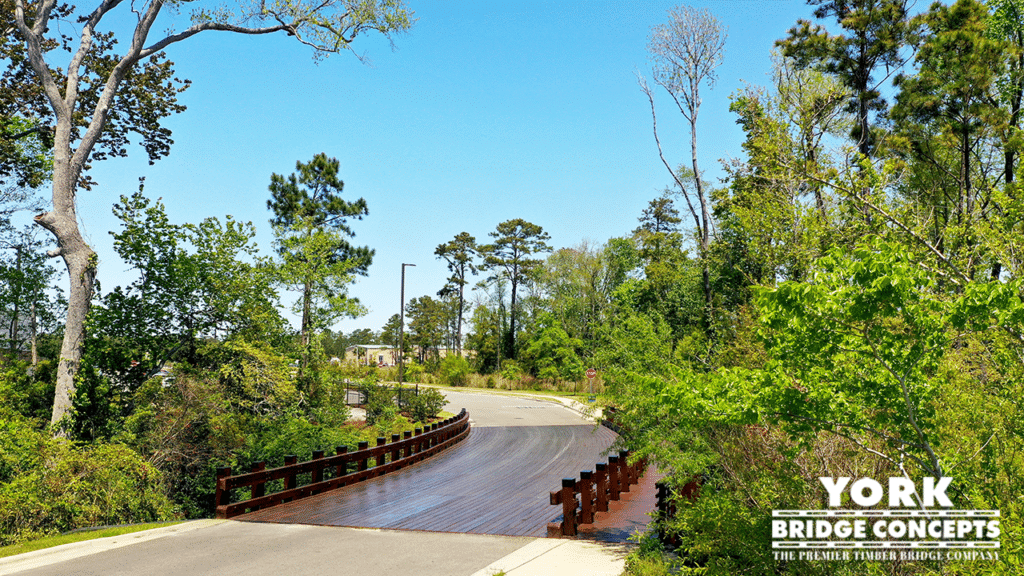
The Vehicular Timber Built Bridge blends the natural beauty of timber & cutting-edge construction to enhance the Sweetwater Creek Development. This bridge isn't merely a functional pathway; it's a work of art that adds to the allure of the surrounding environment.
Specifications
- Vehicular Width:
- 26’ (24’ clear)
- Pedestrian Width:
- 6’ (5’ clear)
- Length:
- 55'
- Height:
- 21’-7 3/4” (from ground)
- Capacity:
- HS20-44 /90 PSF
- Construction:
- Ground Level
- Span Type:
- Free Span
- Material:
CCA/CA-C Treated
SYP, Ipé Hardwood, &
Reinforced Polymeric
Lumber- Foundation:
Treated Timber Piles
(Acrylic Coated where
exposed)- Stringers:
SYP Glulam Stringers (Oil
Coated where exposed)- Vehicular Deck System:
1” Ipé Top Deck
4” SYP Subdeck- Pedestrian Deck System:
1” Reinforced Polymeric
Lumber (Cool Gray)- Guide Rail:
Decero™ Classic Design
Series- Handrail:
- Decero™ Wire Rope Design Series
- Crossing:
- Stream
Dedication To Sustainability
The Vehicular Timber Built Bridge focuses on eco-conscious construction practices. Timber, a renewable resource, serves as the primary material for this bridge, minimizing the project's carbon footprint compared to other materials. YBC's commitment to sustainable practices aligned perfectly with Greystar's dedication to responsible development.

Setting the Vision with Greystar & Site Context
From Vision To Reality: The Development Need
Greystar's broader community vision for Elan Sweetwater Creek required a crossing solution that did more than carry vehicles and pedestrians. The team sought a structure that would knit together amenities, homes, and green spaces--one that felt native to the site's character while meeting the rigorous demands of modern development. A conventional concrete or steel crossing could have solved the mobility problem, but it risked diluting the site's natural appeal and adding embodied carbon. The decision to partner with York Bridge Concepts (YBC) placed design character, environmental performance, and long-term value at the center of the solution.
Why Timber at Sweetwater Creek
Timber, when engineered and protected correctly, delivers an uncommon intersection of structural reliability, aesthetic warmth, and sustainability. Its renewable origin and favorable strength-to-weight ratio reduce both material tonnage and construction disturbance. At Sweetwater Creek, the bridge's timber palette visually blends with the woodland edge, while the strategic use of tropical hardwood decking for the vehicular surface and reinforced polymeric decking for the pedestrian walkway optimizes performance across different use zones. The outcome is a crossing that reads as part of the landscape rather than an imposition upon it.
Program: Two Crossings in One
The bridge's dual purpose--vehicular access and attached pedestrian circulation--simplifies wayfinding, channels movement safely, and creates a daily "gateway experience." Residents and guests encounter the bridge as both an infrastructure asset and a place to linger--a subtle but powerful cue that the development values walkability, safety, and outdoor life.
What the Specs Mean in Practice
The capacity planning is not just a code checkbox--it's a commitment to operational resilience, helping the crossing serve routine traffic and occasional heavier loads without premature wear.
Structural System & Materials
- SYP Glulam Stingers (oil-coated where exposed) carry the primary bending forces across the span. Glulam's engineered layup improves predictability and stiffness compared to sawn timbers, delivering excellent performance in a relatively slim profile that preserves sightlines to the creek.
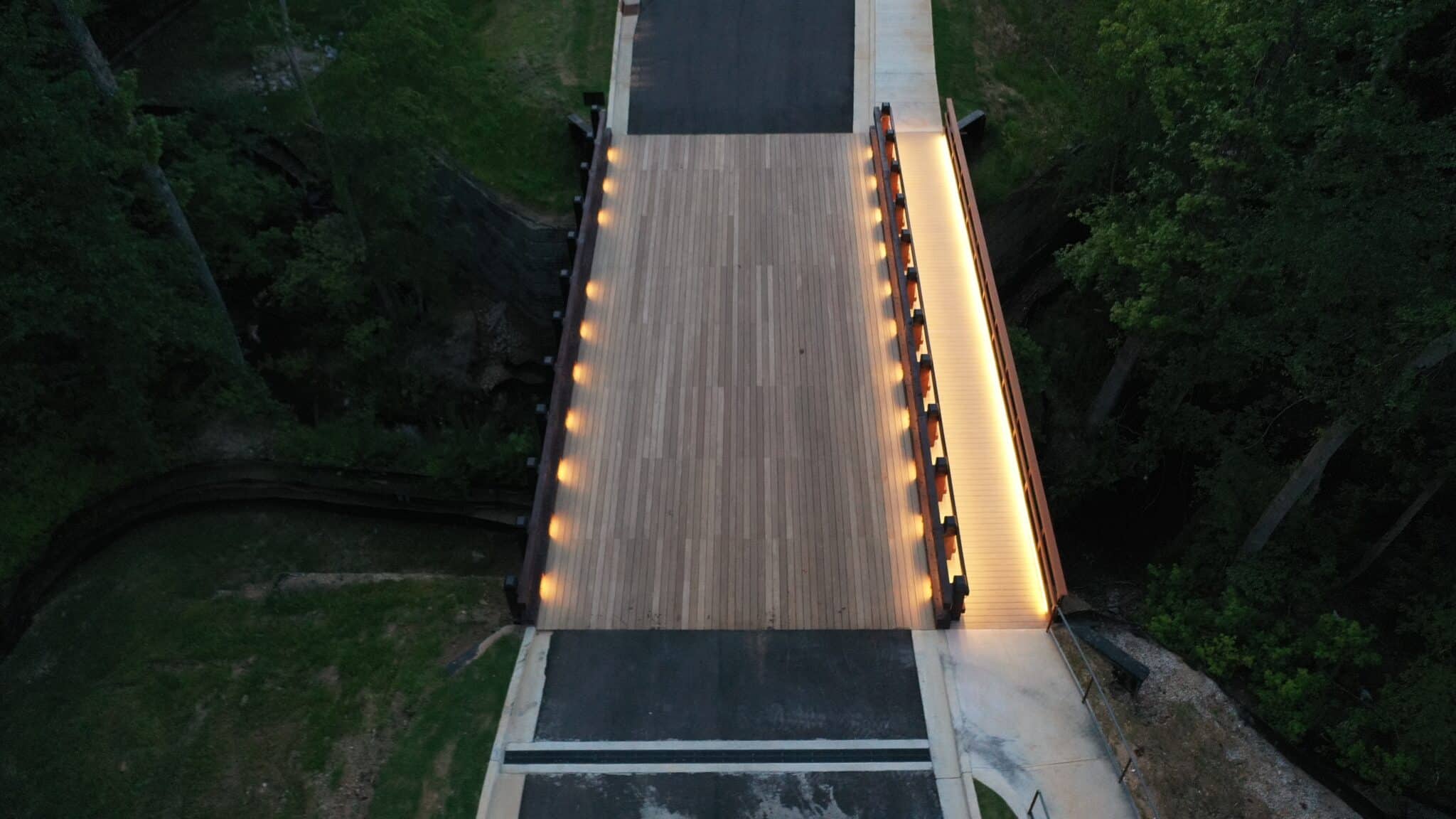
- Vehicular deck: a 4" SYP subdeck topped with 1" tropical hardwood creates a durable, dimensionally stable running surface. The tropical wood density resists abrasion from tires and wind-driven grit while providing a refined finish.
- Pedestrian deck: 1" reinforced polymeric lumber (Cool gray) provides long-term color stability and slip resistance under foot traffic, rain, and morning condensation.
- Guide rail & handrail: The Decero™ Legacy Series guiderail blends clean lines with robust protection, while the Decero™ Wire Rope Design Series handrail maximizes transparency and sightlines to the water and tree canopy.
Foundations & Free-Span Strategy
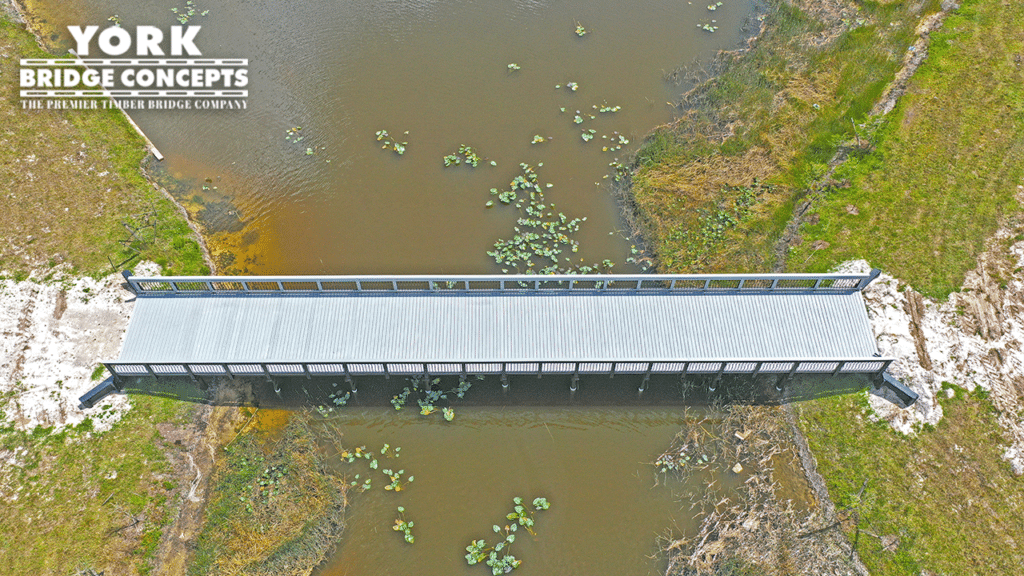
- Treated timber piles (acrylic coated where exposed) elevate the superstructure, eliminating in-channel supports and thereby reducing in-stream disturbance and debris catch points.
- The free-span approach enhances hydraulic performance during storm events, maintaining conveyance and minimizing scour risks at mid-channel.
Coatings & Protection
Acrylic and oil-based protective systems are applied to key components tailored to exposure. The objective is simple: keep moisture exchange controlled, shield UV-exposed elements, and preserve the desired color tone. Proper coating strategy, paired with detail-driven drainage, extends service life and reduces maintenance labor.
Seamless Integration With Nature
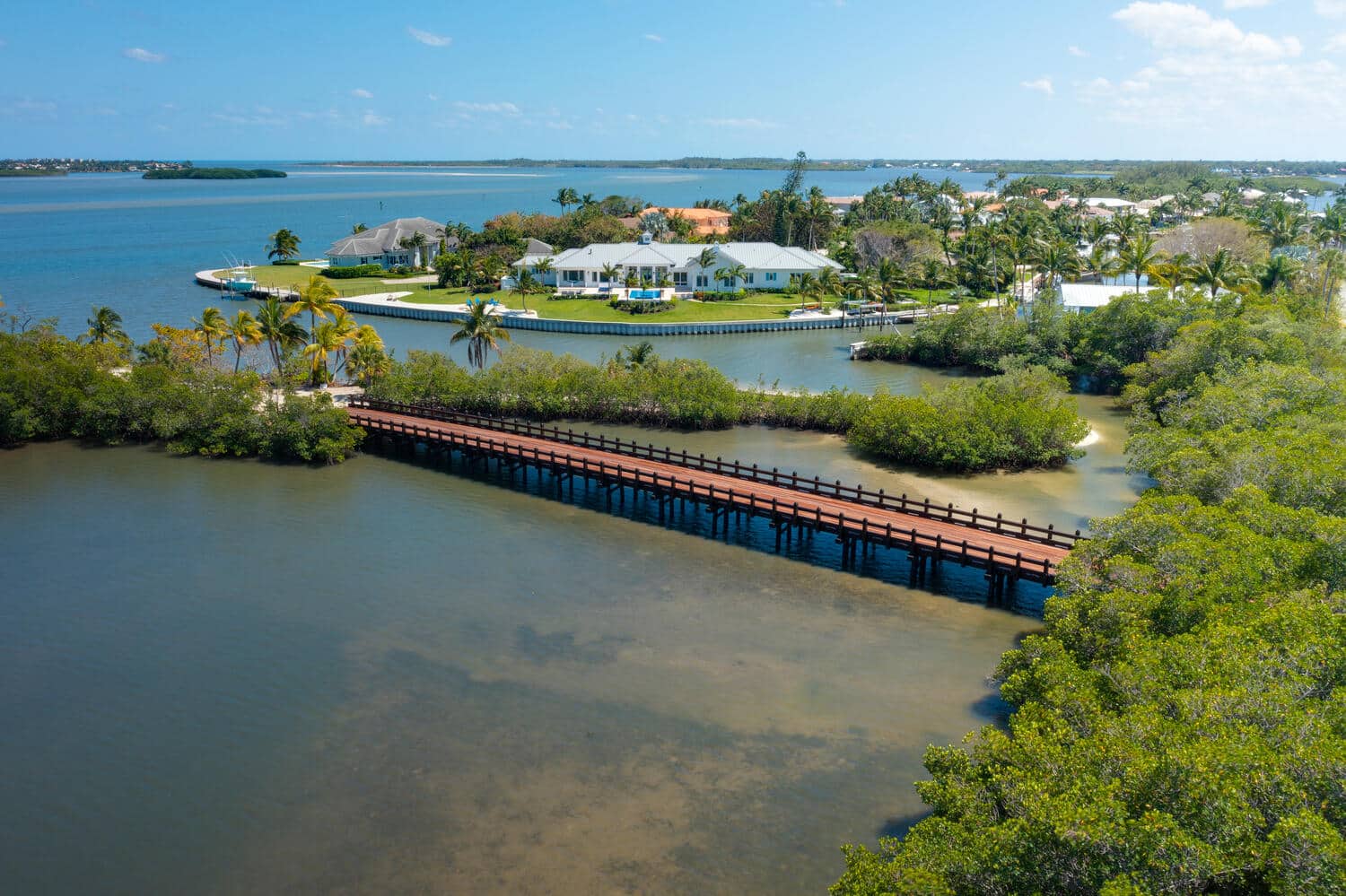
The key feature of this timber built bridge is the seamless integration with the natural surroundings. The timber's warm hues and textures harmonize with the bordering landscape, creating a visual that soothes the senses.
Landscape-Forward Design & Hydrology
The bridge's visual simplicity is the product of site-responsive detailing. The team evaluated vegetation edges, floodplain dynamics, and wildlife movement to locate the crossing where hydraulic efficiency and ecological continuity are best supported. By avoiding in-channel bents, the design discourages drift accumulation and preserves riffle-pool patterns. Abutment geometry and approach profiles were shaped to tie into existing grades with low-mow shoulders and native plantings, reducing maintenance while reinforcing habitat function.
Lighting, if included at approaches, is positioned and shielded to reduce spill into the corridor--supporting nocturnal species and improving resident comfort. Where paths meet the pedestrian lane, transitions are designed to be intuitive and flush, minimizing trip hazards and making the bridge a natural extension of the neighborhood walking networking.
Innovative Construction Techniques
The bridge's design and construction are a testament to the forward-thinking mindset of York Bridge Concepts. Incorporating state-of-the-art engineering principles, the team utilized advanced timber construction methods to ensure the bridge's structural integrity and safety. The result is a bridge that captures the essence of timeless craftsmanship and stands as an example of YBC's constant innovation.
Design-Engineer-Build Workflow
YBC's Design-Engineer-Build approach compresses handoffs and clarifies accountability:
- Discovery & Decero™ Design
The Decero™ process begins "from-zero"--aligning Greystar's development vision, traffic demands, and environmental constraints. Early 3D visualization helps stakeholders understand form, clearances, and rail design options. - Engineering & Detailing
Structural modeling validates stringer sizing, deck behavior, connection stresses, and railing loads. Subtle camber strategies counter anticipated deflections for a level-appearing finished deck under service conditions. - Constructability Planning
The team choreographs access routes, staging, and sequencing to reduce disturbances to soil and vegetation. Logistics planning also anticipates seasonal rain patterns typical to Georgia, protecting critical operations like pile installation and deck closure. - Quality Assurance
Material submittals, coating checks, and torque/fastener verification are tracked in a single workflow so field crews can execute with repeatable precision.
Construction Approach
YBC builds on-site. Instead of relying on pre-assembled segments, the team executes a deck-level construction methodology that minimizes ground impacts and preserves sensitive vegetation around Sweetwater Creek. Pile installation is performed with a vibratory hammer attachment on an excavator, a technique selected to control noise and improve accuracy while limiting excavation and soil sloughing.
With the substructure established, crews stage stringers, diaphragms, and decking from the active deck surface, reducing repeated machine passes over root zones and protecting understory plants. This top-down flow (executed at deck level) also limits compaction near the banks and shortens restoration time after demobilization.
Sediment controls (silt fence, track-out mats, and localized turbidity protection if needed during bank work) are deployed and maintained throughout, and decommissioned in sequence once vegetation is re-established.
Fostering Community Connectivity
Beyond its physical attributes, the Vehicular Timber Built Bridge at Elan Sweetwater Creek Development fosters a sense of community connectivity. By providing a vital link to the development, the bridge creates a warm welcome, enriching the lives of residents and visitors. Its inviting design encourages strolls, creating spaces for spontaneous encounters and shared experiences.
The bridge's attached pedestrian lane invites walking as a default behavior. Key user-first elements include:
- Separation & Clarity: The vehicular and pedestrian realms are clearly distinguished by surface material, railing geometry, and subtle alignment cues.
- Pedestrian Comfort: The reinforced polymeric deck provides reliable footing in damp conditions, and the wire rope handrail maintains visual openness to the creek.
- Approach Transitions: Smooth slopes, comfortable crossfall, and rail returns ensure stroller-, wheelchair-, and cane-friendly access.
- Traffic Calming: Bridge geometry and guiderail rhythm subtly encourage appropriate speeds, elevating pedestrian confidence.
Nighttime use is supported by targeted, cutoff-style lighting at approaches (when part of the project scope), balancing visibility and dark-sky sensitivity. The overall result is a crossing that feels safe without feeling over-engineered, keeping residents engaged with the water and canopy.
York Bridge Concepts team brought Greystar's vision to life. The bridge creates lasting beauty and functionality for years to come.
Are you a developer looking for a unique crossing to up-level your future development? Click here to request a free quote today!
Operations, Maintenance & Lifecycle
A long-lived timber bridge is the product of material selection, detailing, and planned care:
- Inspection Rhythm
A simple annual routine focuses on rail fasteners, deck wear zones, expansion details, and coating touch-ups at high-exposure surfaces. After major storm events, a quick visual confirms no drift has impacted abutment zones. - Surface Performance
The tropical hardwood vehicular deck resists rutting and abrasion from turning movements at the entry zone. Where maintenance vehicles pause periodic checks confirm bearing behavior is within expectation. The pedestrian polymeric decking retains color and grip with basic cleaning. - Coating Stewardship
YBC's coating schedule is designed to be practical and predictable, with greatest attention applied to sun-facing rail and fascia elements. Timely spot maintenance preserves uniform tone and water shedding. - Replaceable Components
Select wear components are detailed for straightforward replacement decades from now, when the community may wish to refresh aesthetics or transition to a new color system--protecting the owner's capital flexibility.
This balanced O&M plan keeps lifecycle costs competitive while preserving the bridge's signature look.
Environmental Stewardship & Compliance
The project approach at Sweetwater Creek is anchored to avoidance, minimization, and mitigation:
- Avoidance through the free-span strategy, which keeps piers out of the channel.
- Minimization via on-site, deck-level construction that reduces machine passes in root zones and limits soil compaction
- Mitigation through rapid stabilization of disturbed soils and re-vegetation with native species that support pollinators and wildlife corridor function.
Coordination with local authorities ensures that stormwater best practices--from silt and turbidity controls to stabilized construction entrances--are tailored to the site's soil and seasonal rainfall profile. The result is a crossing that protects water quality and habitat during construction and operation.
Developer Value & ROI
For Greystar and the Elan Sweetwater Creek community, the bridge functions as both infrastructure and brand asset:
- Place-Making: The bridge frames arrival, creating an identity touchpoint that photographs well for leasing and marketing.
- Walkability: A dedicated pedestrian lane reinforces the site's promise of outdoor living and connected amenities--boosting resident satisfaction.
- Construction Efficiency: The on-site methodology, combined with the material's strength-to-weight advantages, streamlines equipment needs and reduces restoration scopes at demobilization.
- Lifecycle Economics: Thoughtful detailing and coating systems keep inspection and upkeep manageable, preserving value over decades.
- Environmental Credibility: A renewable primary material and minimized disturbance strategy align with modern ESG expectations for residential development.
These factors combine to elevate absorption, retention, and long-term asset value--benefits that extend well beyond the ribbon cutting.
Frequently Asked Questions
Q1: How does a timber bridge achieve HS20-44 capacity?
Through engineered SYP glulam stringers, disciplined connection detailing, and deck systems tuned to transfer loads efficiently. Capacity is verified through structural analysis and checked during construction via inspection and fastener torque verification.
Q2: Why choose tropical hardwood for the vehicular deck and polymeric decking for the pedestrian lane?
The vehicular surface experiences abrasive tire contact; tropical hardwoods provide density and wear resistance. The pedestrian lane benefits from reinforced polymeric decking for slip resistance, color stability, and low maintenance under foot traffic.
Q3: How is durability ensured in Georgia's humid climate?
A combination of coating systems, detail-driven drainage, adequate ventilation at components, and an inspection/touch-up plan that addresses UV-exposed surfaces preserves the structure and finish quality.
Q4: What about construction impacts near the creek?
The free-span eliminates mid-channel supports; deck-level construction reduces ground disturbance; and sediment/turbidity controls protect water quality during bank work and staging.
Q5: Can the railing and color palette be customized?
Yes. The Decero™ Legacy Series guiderail and Wire Rope handrail offer a modular design language. Color tones and cap accents can be tuned to match community branding while maintaining compliance with safety loads.
Q6: How does this bridge support leasing and community identity?
By creating a distinctive arrival sequence and walkable connection, the bridge becomes a signature photographic backdrop and daily amenity--supporting marketing narratives and resident lifestyle.
Developer Resources & Next Steps
From early feasibility and budgeting to final coatings handover, YBC's team partners with developers to optimize aesthetics, approvals, construction logistics, and lifecycle value. If you're exploring a crossing that can elevate place-making while respecting sensitive environments, our Decero™ process will help you map options, costs, and schedules with clarity.
All Feature Projects
What's Best: A Culvert Or A Timber Bridge?
What Is The Best Span Type For My Project?
Which Load Capacity I Need?
How Do I Cross An Environmentally Sensitive Area?
How Do I Create A Landmark?
How Long Does A Timber Bridge Last?
Culvert Or Bridge
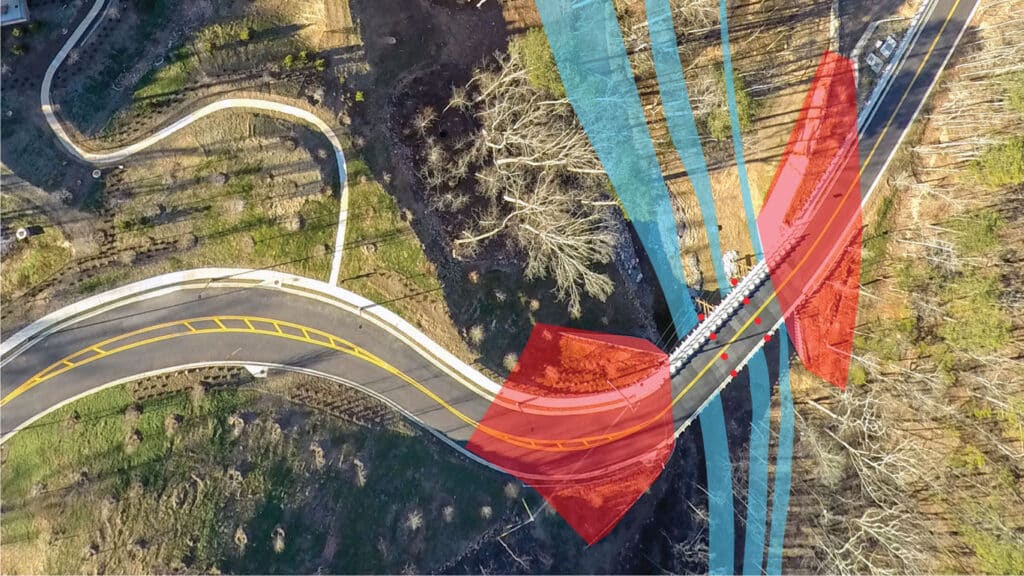
If you're considering using a culvert for your crossing project. Click below to understand the best fit for your project.
Spanning Solutions
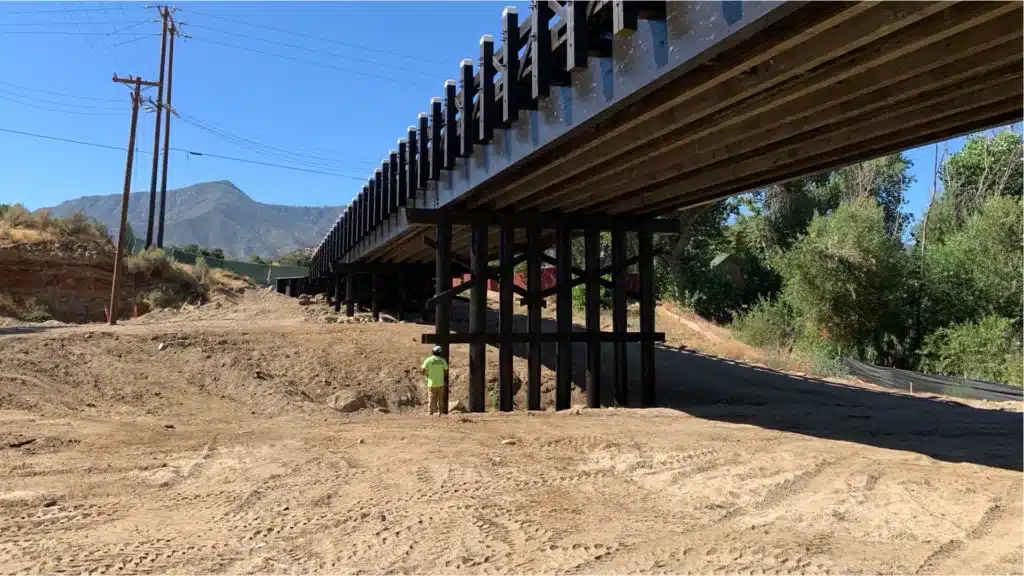
Spanning a crossing is one of the most important aspects of your crossing project. Find the best solution for your crossing needs.
Uses & Capacities
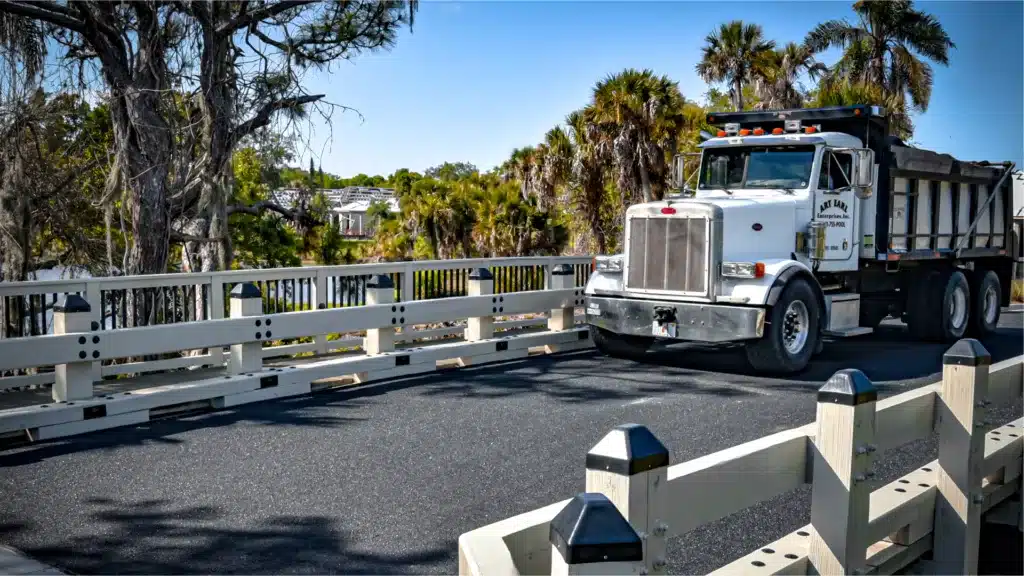
The load capacity of a timber bridge may surprise you. See specs for different loads and uses that will help your decision-making process.