Mandalay Private Residence Vehicular Bridge – Florida

York Bridge ConceptsAvenue Collection, Featured, Florida, Repetitive Span, Vehicular Bridge Designs, Vehicular Bridges

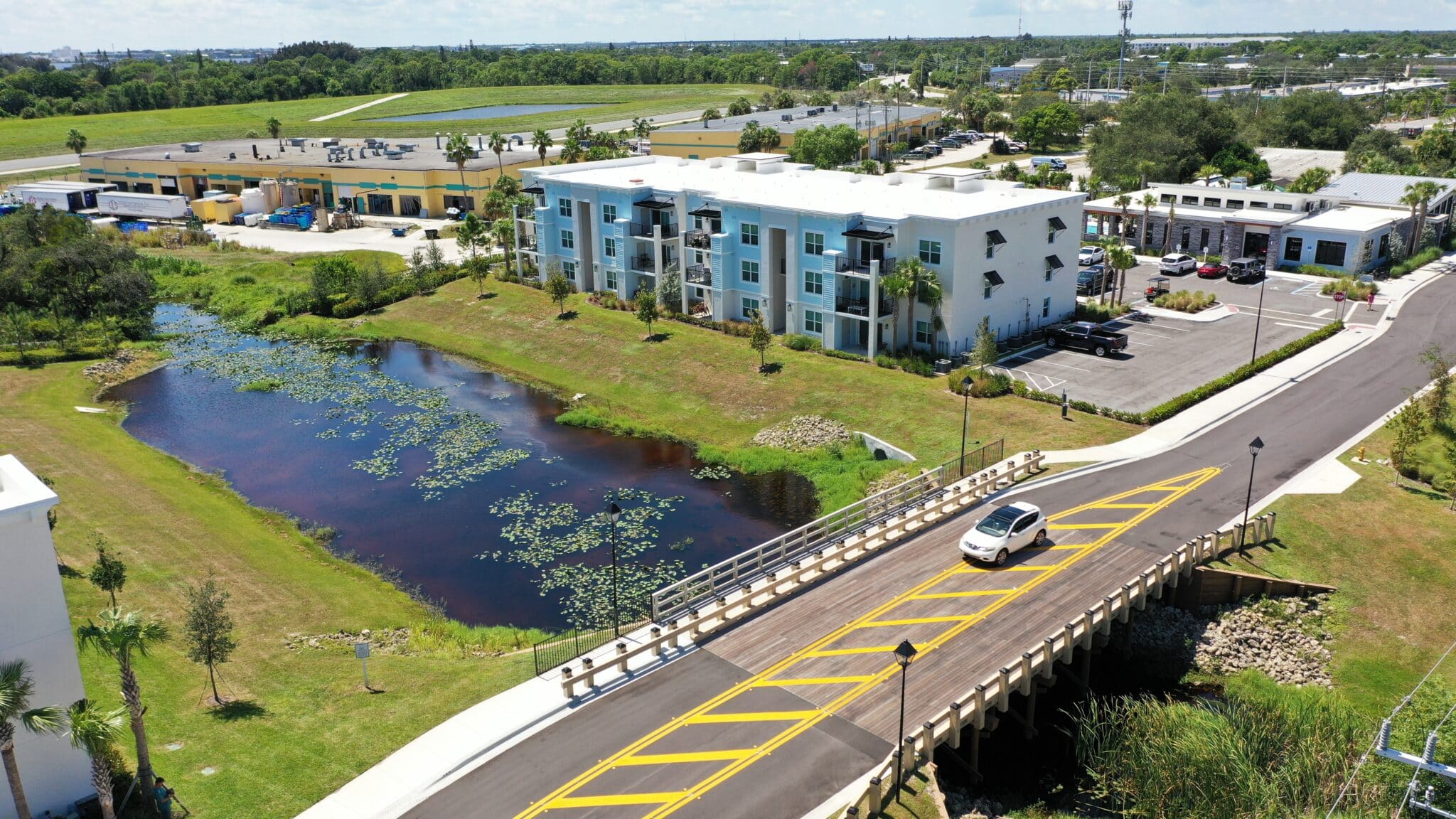
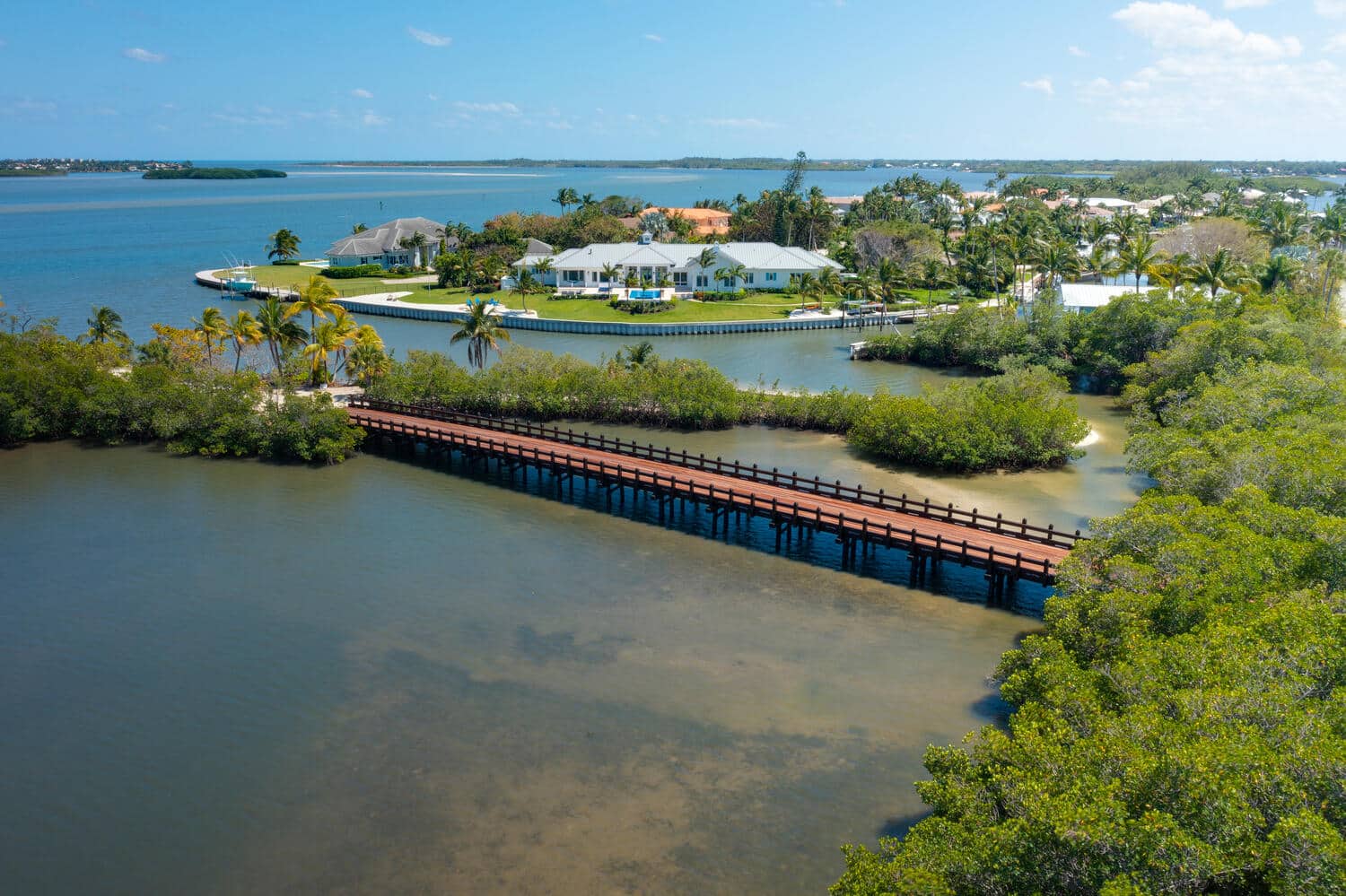
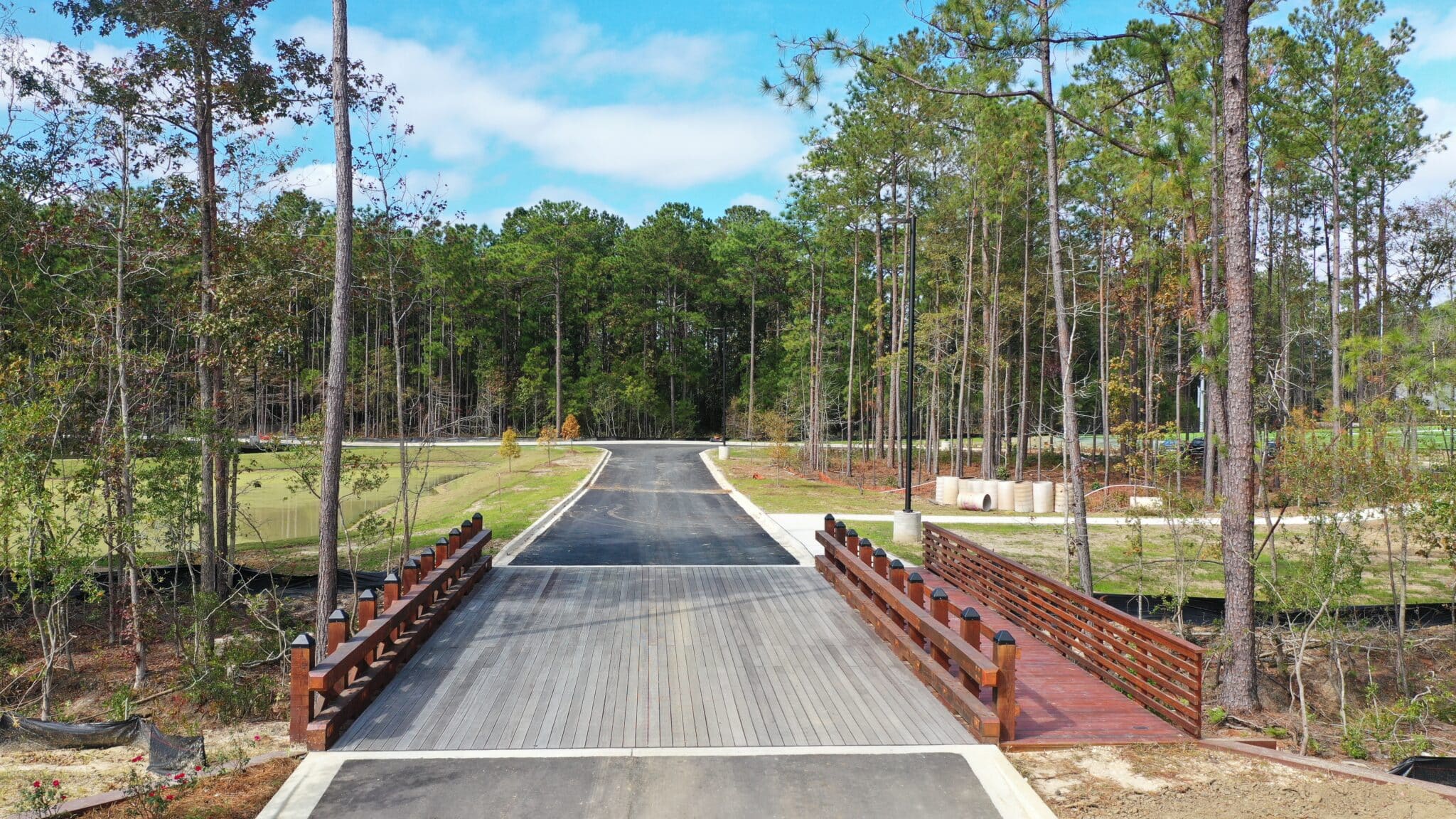
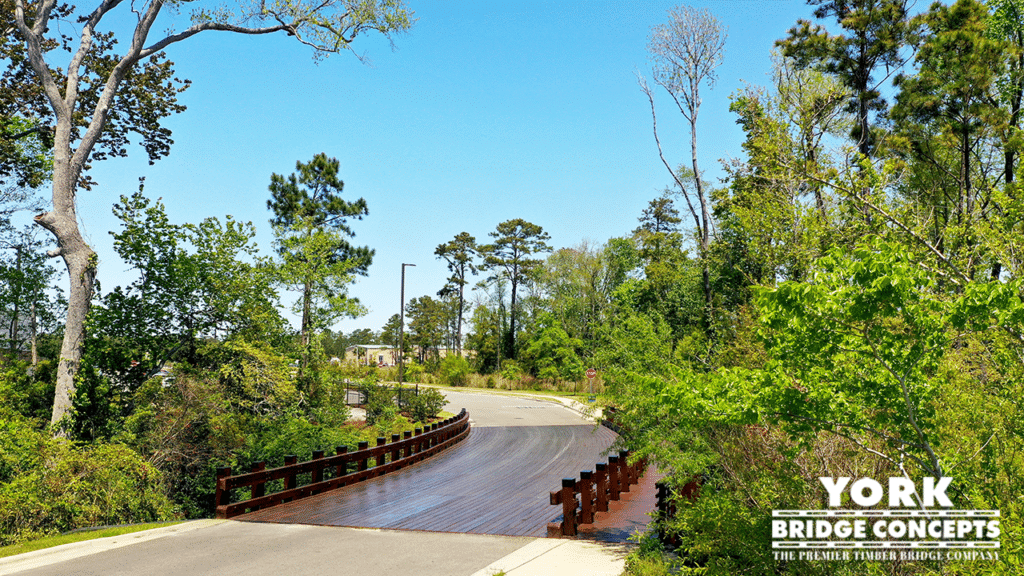
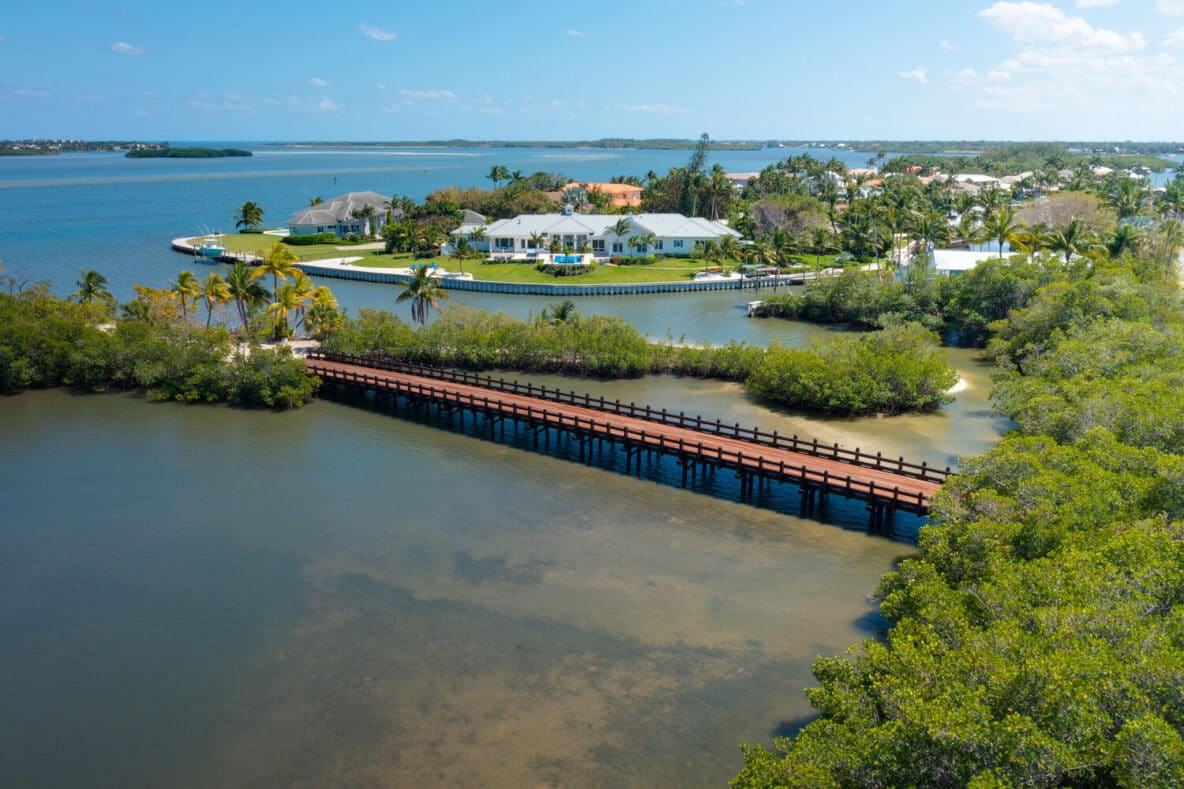
Aerial profile shot of the Mandalay 2-lane timber vehicular bridge project in Southern Florida


Preserving Natural Wetlands

The Mandalay Timber Bridge: An Ecotecture Marvel in Southeast Florida

Nestled in the heart of Florida's beautiful tropical coastal landscape the Mandalay project has been accomplished!

This project presented many challenges, but YBC came prepared. Preserving the estuary with its delicate sea bed, sea grasses, and protected mangroves was paramount and the reason Ferreira Construction Group brought YBC into the project. For York Bridge Concepts' this is where we shine. Using YBC's Deck-Level Construction, we removed the dilapidated crossing structure and built a vehicular timber bridge that not only can handle the harsh saltwater environment but do so with elegance.

Specifications


  • Vehicular Width:
  • 17’ 10” (16’ 6” clear)
  • Length:
  • 262’
  • Height:
  • 9’ (from ground)
  • Capacity:
  • HS25-44
  • Construction:
  • Deck-Level
  • Span Type:
  • Repetitive Span
  • Span Lengths:
  • (18)14.55’
  • Material:
  • CCA Treated SYP, and
    Jatoba Hardwood

  • Foundation:
  • Wrapped Treated Timber
    Piles (Acrylic Coated
    where exposed)

  • Stringers:
  • Rough Sawn SYP Stringers
    (Oil Coated where
    exposed)

  • Vehicular Deck System:
  • 1” Jatoba Top Deck
    4” SYP Subdeck

  • Guardrail:
  • Decero™ Classic Design
    Series

  • Crossing:
  • Lagoon

A Bridge That Respects Its Home

In the heart of Southeast Florida's subtropical estuarine landscape, the Mandalay Timber Bridge stands as a testament to blending human infrastructure with ecological sensitivity. Designed and built by York Bridge Concepts (YBC) in partnership with Ferreira Construction Group, this vehicular crossing project was not simply about connecting two points -- it was an opportunity to manifest a philosophy: that infrastructure can--and should--coexist harmoniously with fragile ecosystems.

With Ferreira Construction engaged YBC, their mandate was exacting: replace a dilapidated crossing while preserving the delicate estuarine environment below--complete with mangroves, sea grasses, native fauna, and shifting tides. What resulted is not merely a structural solution but a narrative in wood, water, and design.

This expanded page delves into every facet of the Mandalay project: from constraints and design decisions to engineering execution, environmental safeguards, and lessons learned. Our goal is to share not just the "what," but the "why" and "how"--to inspire, inform, and invite clients and communities to reconsider what a sustainable bridge can be.

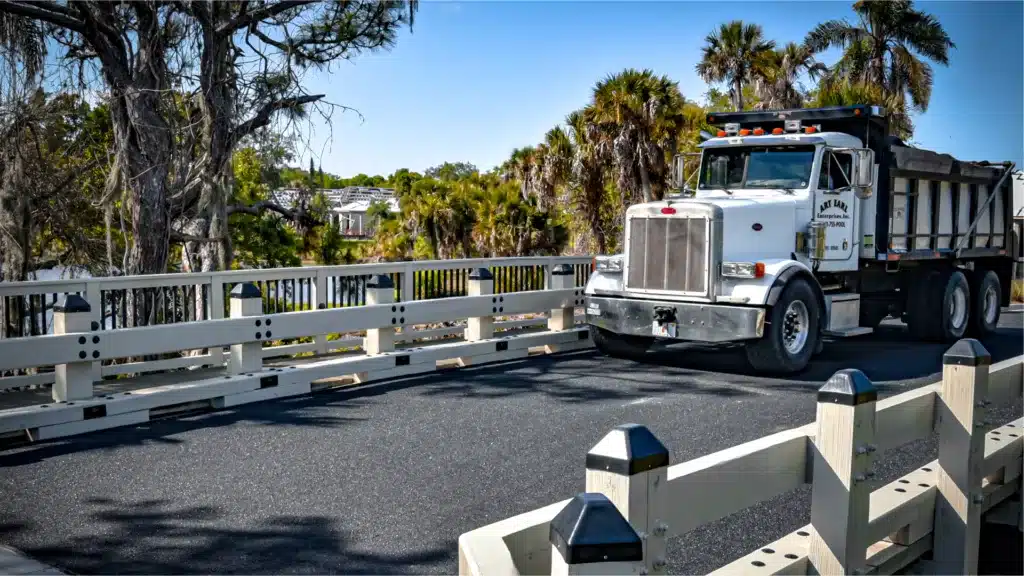
Aerial profile with vehicle on bridge shot of the Mandalay 2-lane timber vehicular bridge project in Southern Florida

Design Philosophy & Strategy

Ecotecture: Architecture Meets Ecology

At the heart of Mandalay is the concept of Ecotecture--design that does not merely tolerate nature but collaborates with it. The bridge isn't just dropped into a creek; it references the sinuous curves of tidal flow, the textures of mangrove roots, and the muted tones of the landscape. In doing so, it seeks to embed its form within the natural scene.

This philosophy compelled us to ask: can the structure's silhouette be softer? Can the footprints be minimized? how to allow light, airflow, and water to pass unimpeded?


Deck-Level Construction: A Strategic Choice

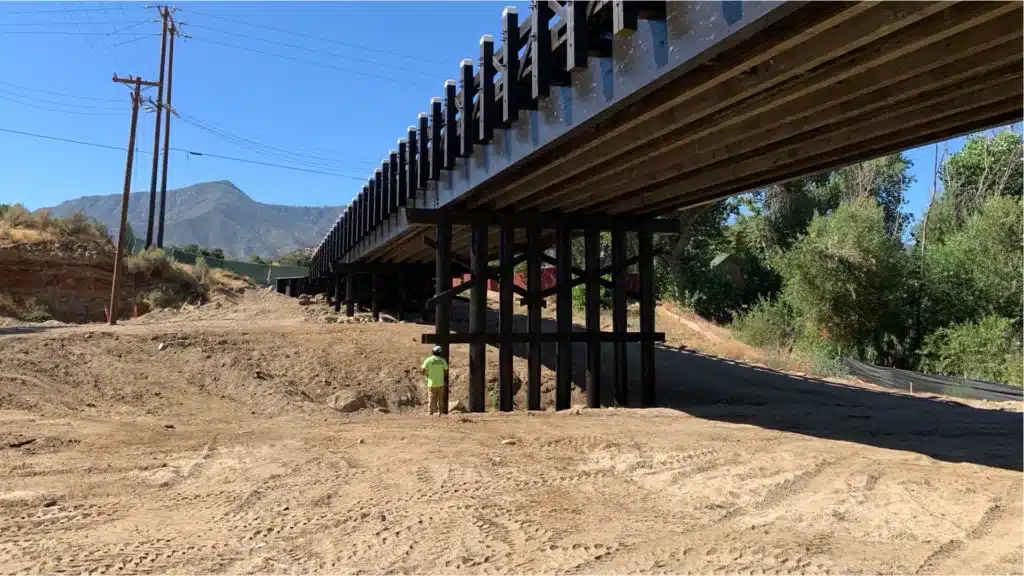
One of YBC's signature techniques, Deck-Level Construction, became central to Mandalay. With this method the new deck is constructed at the same level as existing crossings (if possible), minimizing drop and avoiding large vertical displacements. More importantly, the method allows the bridge to be assembled from above, reducing the need for heavy scaffolding or massive support during erection -- thereby limiting disturbances in the water column.

This approach enabled us to dismantle the old crossing and erect the new bridge with a lighter touch, reducing siltation, turbidity, and damage to benthic flora and fauna.


Material Selection & Sustainability

Choosing materials for Mandalay was not simply about strength and durability--it was about ecological resilience and maintenance economy. Key decisions:

  • Southern Yellow Pine (SYP), CCA-treated: Chosen for core structure owing to strength, availability, and treatment compatibility.
  • Jatoba hardwood top decking: A premium hardwood with excellent wear resistance, used for its aesthetic grain and longevity.
  • Wrapped, treated timber piles, and acrylic coating where exposed: To counter saltwater damage, abrasion, and marine borers.
  • Oil-coating of exposed SYP stringers and protective treatments on surfaces: To optimize decay resistance and minimize moisture ingress.
  • Use of corrosion-resistant fasteners and hardware: Stainless steel, engineered connectors, and specialized coatings ensure integrity in a harsh saltwater environment.

By combining these materials, the bridge achieves a dialogue between indigenous wood textures and engineered resilience.


Geometry, Spans & Structure Logic

The bridge uses a repetitive span system--(18) 14.55 ft spans--optimized for regular load distribution and modularity. This modular approach simplifies construction, maintenance, and component replacement. The alignment allows for graceful curvature to echo estuarine margins, while maintaining structural regularity and clearances.

The vehicular width is 17' 10' (16' 6" clear), with an over-elevation to minimize the number of intermediate supports in the most sensitive zones. The vertical rise is modest (9' from ground), ensuring the structure integrates without soaring above the landscape.

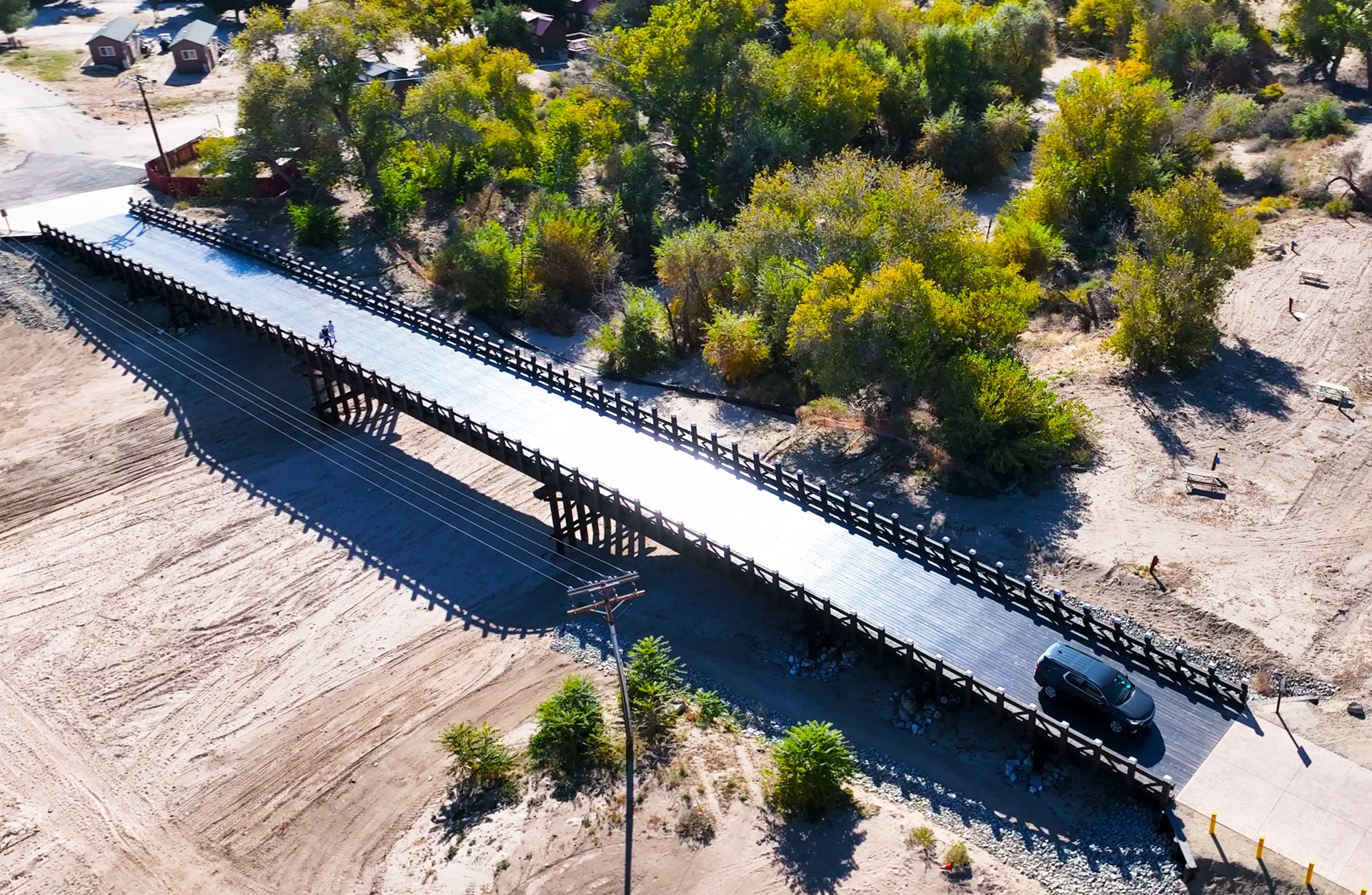
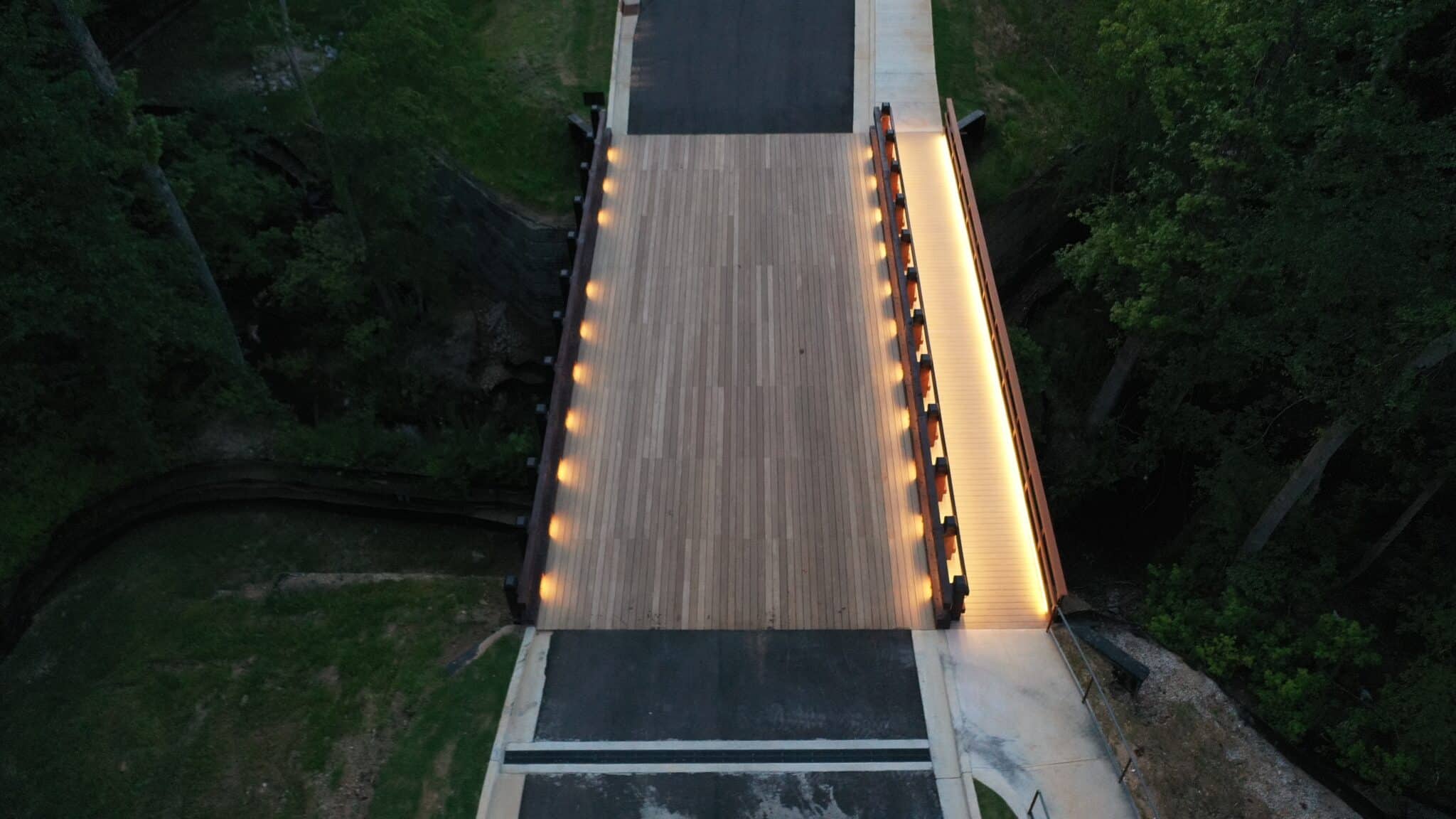
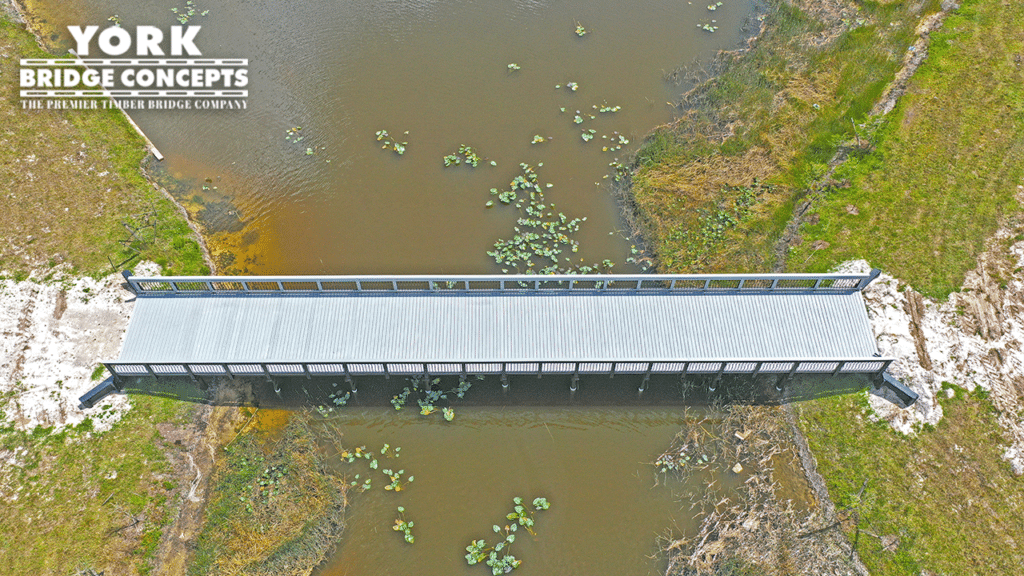
Direct overhead shot of the Mandalay 2-lane timber vehicular bridge project in Southern Florida

Technical Specification & Engineering

Foundations & Piling

The foundations use wrapped treated timber piles, acrylic coated where exposed to water and air. Pile installation was executed with careful vibratory driving, monitored for settlement and vibration thresholds, and sometimes predrilling where necessary to avoid damage to adjoining soils.

Because of variable substrate conditions, some piles were extended deeper into more competent strata (sandstone or denser sediments). Pile spacing, diameter, and embedment depth were determined by geotechnical investigation and structural loading analyses.


Superstructure & Load Path

The superstructure consists of SYP stringers supporting a layered decking system: 4" SYP subdeck and 1" Jatoba hardwood top deck. The Jatoba decking gives a hard, traffic-resistant surfaces with beautiful grain, while the subdeck provides structural rigidity and load transfer.

Load transfers from the deck to stringers, to piles, and finally to the subgrade. The repetitive span layout enables load sharing and redundancy. All connections and fasteners were designed to resist corrosion in the marine environment.


Durability & Protective Measures

The superstructure consists of SYP stringers supporting a layered decking system: 4" SYP subdeck and 1" Jatoba hardwood top deck. The Jatoba decking gives a hard, traffic-resistant surfaces with beautiful grain, while the subdeck provides structural rigidity and load transfer.

Load transfers from the deck to stringers, to piles, and finally to the subgrade. The repetitive span layout enables load sharing and redundancy. All connections and fasteners were designed to resist corrosion in the marine environment.


Deck-Level construction of Mandalay project to preserve estuary in South Florida

Construction Process & Methods

Mobilization & Preparatory Work

Before groundbreaking, staging areas were carefully planned to avoid damage to wetlands or create sediment runoff. Silt curtains, coffer dams, and containment zones were established. Utilities and services were located, and protective fencing was placed to control equipment movement.

Temporary access mats (steel or composite) allowed heavy equipment to cross sensitive soils without rutting. Flagging, erosion control, and a monitoring plan for turbidity and sediment release were implemented.


Dismantling the Old Crossing

The existing (dilapidated) crossing was removed with minimal disturbance. Rather than dropping components into the water, sections were dismantled in reverse order--starting from the ends, removed piece by piece, and hauled away. Debris capture nets and containment ensured fragments did not fall into the water column.


Installing Foundations with Minimal Disturbance

Piling installation prioritized methods that limit soil upheaval. In areas with particularly soft substrate, predrilling and/or static leads were used to avoid fracturing soils. Vibration limits were adhered to; real-time vibration sensors ensured adjacent native soils were not overstressed. Sediment control measures (turbidity curtains, silt curtains) were kept in place during this phase.

Pile caps and transitions were formed above water level where possible, reducing in-water formwork and cofferdam needs.


Erecting the Superstructure

Once the piles and stringers were in place, the decking modules were installed sequentially. The deck-level construction method allowed the deck to be built from above, reducing the need for scaffolding through the water. Segmental installation minimized disruption below, and all operations over the water used diver-supported nets and containment when necessary.

Guardrail and finishing elements were installed last, with touch-up of coatings and integration of hardware.


Quality Control, Monitoring & Mitigation

Throughout construction, environmental monitors measured turbidity, dissolved oxygen, and suspended solids around the work zone. If thresholds were exceeded, work paused until conditions improved. Noise, vibration, and sedimentation logs were kept diligently. Periodic inspections by third-party ecological stewards ensured compliance with permit conditions.

Construction tolerances, alignment checks, and load tests were carried out to validate design assumptions and structural integrity.


Safety & Environmental Stewardship

All work complied with OSHA standards, marine safety, and local permit conditions. Spill prevention, fuel handling protocols, and containment for chemicals and paints were strictly enforced. Equipment refueling and maintenance were restricted to upland areas. Workers were trained in wetland sensitivity, so as not to trample critical vegetation or disrupt fauna.


Guardrail closeup shot of the Mandalay 2-lane timber vehicular bridge project in Southern Florida

Environmental & Ecological Integration

Minimizing Footprint & Hydrologic Impacts

One of the guiding principles: the structure must not interfere with natural water flow or tidal exchange. By limiting the number of piles in critical zones and selecting repetitive spans, the design preserves open waterways beneath. Clearance and spacing were optimized to avoid shading sea grass beds.


Mangrove & Plant Buffer Stewardship

Through our deck-level construction approach, upland staging, and tightly controlled access, the existing mangrove fringe, marsh grasses, and submerged aquatic vegetation were not disturbed. No clearing, regrading, or root-zone intrusion occurred within the regulated buffer, and no replanting was required. Post-construction inspections confirmed that native vegetation, shoreline stability, and site hydrology remained intact.

A licensed third-party environmental firm conducted daily water quality assessments throughout in-water and near-water activities. Parameters such as turbidity, dissolved oxygen, temperature, and salinity were recorded at upstream and downstream reference stations. All readings remained within permit thresholds, reports were logged and submitted per permit conditions, and no exceedances or corrective actions were triggered.

As an added safeguard, turbidity curtains and other best-management practices were installed as precautionary barriers; with the no-disturbance outcome, they served primarily as contingency protection. Final environmental closeout documented zero vegetation loss attributable to construction and verified that the project achieved a net-zero disturbance within the protected wetland corridor.


Wildlife & Aquatic Habitat Considerations

Construction timing avoided fish spawning seasons, bird nesting windows, and migration periods. In-water work windows were restricted. Turbidity screens and fauna exclusion nets were used around sensitive zones. Any displaced fauna (crabs, fish) were carefully relocated by ecological crews during dredging or installation near the waterline.


Long-Term Ecological Monitoring

Post-construction monitoring is integral. Water clarity, benthic vegetation health, aquatic species counts, and sedimentation rates are monitored annually. If indicators show stress, adaptive mitigation plans (e.g. scour pads, additional plantings) can be triggered.


Aesthetic & Community Value

Visual Integration & landmark Character

Rather than dominating the view, the Mandalay Bridge was conceived as an organic continuation of the landscape. The gentle curvature of the span follows tidal contours. The warm timber tones echo tree trunks and mangroves. The structural elements--stringers, railings, deck--maintain refined proportions to avoid appearing overbearing.

By day, the bridge blends into its environment. At dusk and night, subtle accent lighting can highlight lines and guide drivers safely, without overwhelming natural darkness.


User Experience & Ambience

For drivers crossing the bridge, the tactile feel of timber, the shifting light through slats, and the sound of wind and water combine to make the crossing memorable. The visual contrast between the framed views and surrounding marsh gives a sense of transition between built and wild spaces.

Although primarily a vehicular bridge, pedestrian pull-offs or viewing platforms may be integrated in future. Even without formal walkways, the open design encourages passengers to scan the surroundings, connecting them to place.


Public & Stakeholder Engagement

From early design phases, YBC and Ferreira met with local community groups, environmental stakeholders, and permitting agencies to share renderings, material samples, and design rationale. Feedback was incorporated--e.g. reducing shading in sensitive zones, adjusting alignment for sightlines, and adding signage or viewing nodes. The result is not merely a structure but a bridge that carries public pride.


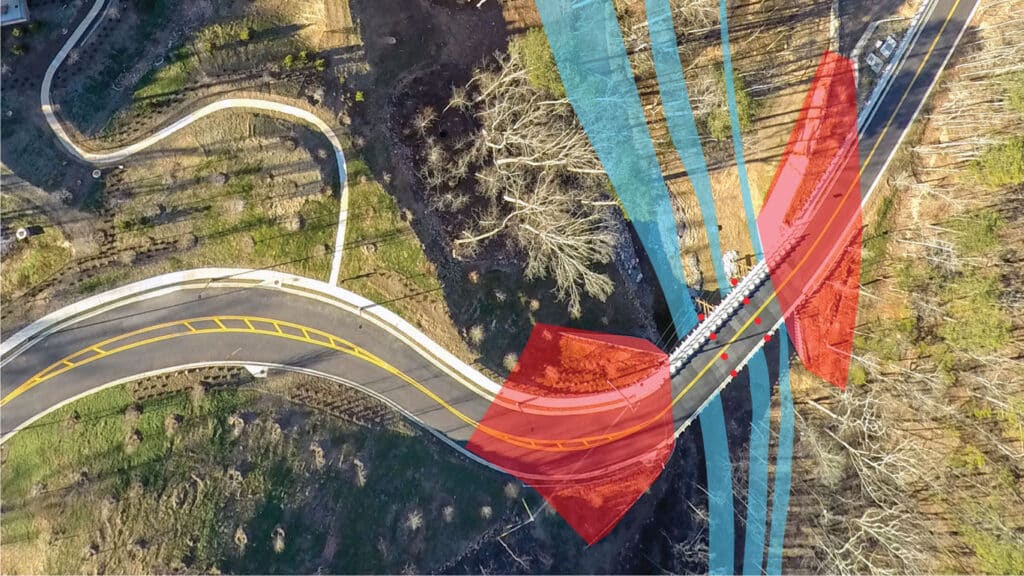
Aerial profile shot of the Mandalay 2-lane timber vehicular bridge project in Southern Florida

Performance, Longevity & Maintenance

Projected Service Life

With careful material selection, protective coatings, and inspection plans, Mandalay is designed for a service life of 75 years or more. Some components (deck planks, guardrail, surface coatings) are expected to be replaced or refurbished periodically, but the core structure is designed for durability in a marine environment.


Maintenance Strategy & Inspections

A maintenance regime will include:

  • Annual inspections: visual, fasteners, coatings, signs of decay or distress
  • Every 5-10 years: non-destructive testing (e.g. moisture probes, ultrasonic scans)
  • Deck resurfacing/replacement: rotating plank replacement to spread wear
  • Hardware replacement: as needed based on corrosion monitoring
  • Re-coating / sealing: of exposed surfaces and pile coatings
  • Vegetation & drainage clearing: to prevent debris accumulation or clogged channels

Clear documentation and as-built drawings help the maintenance team know which components can be replaced and how.


Monitoring & Performance Feedback

Sensors can be embedded (or retrofitted) in strategic locations to monitor moisture, creep, or deformation over time. Data from these sensors inform maintenance scheduling, early detection of decay, or structural adaptation. The bridge thus becomes a living structure whose health is continually gauged.


Lessons Learned & Innovations

Challenges and Resolutions

  • Soil variability: Some piles encountered unexpectedly soft zones; we responded with deeper drives and adaptive pile selection.
  • Turbidity control: Despite strict controls, occasional spikes occurred--paused work, re-anchoring curtains, and pump-out measures mitigated the impact.
  • Hardware sourcing: Some corrosion-resistant connectors were backordered; alternate supplier sourcing while maintaining specification integrity was necessary.
  • Alignment tolerances: Minor field adjustments required small shifts in deck modules; pre-fabricated flexibility in tolerance aided installation.


Innovations & Best Practices

  • Integration of deck-level construction in this setting proved highly effective for sensitive ecosystems.
  • Modular span design simplified inspection, replacement, and component interchangeability.
  • Use of blended wood materials (SYP + Jatoba) optimized cost, performance, and aesthetics.
  • Embedded sensor strategy and maintenance-forward detailing foreshadowed the bridge as a living structure.
  • Stakeholder engagement loop: early visualizations, feedback sessions, and post-construction reporting built trust and community support.


Recommendations for Future Projects

  1. Early environmental modeling: Run hydrologic and sediment transport models before final alignment decisions.
  2. Flexible modular design: allow for component swaps and adjustments in the field.
  3. Protective coatings trials: test exposure samples in situ before full deployment.
  4. Instrumentation planning: embed sensor networks early to capture baseline and trends.
  5. Community integration: use the bridge as a local amenity, with interpretive signage, lighting, or future pedestrian access.


A Bridge to the Future

A Mandalay Timber Bridge is more than a crossing--it is an embodiment of what infrastructure can be when conceived with ecological intelligence, engineering rigor, and aesthetic thought. It demonstrates that even in sensitive estuarine landscapes, we need not sacrifice environment for connectivity. Instead, we can build with tenderness, vision, and purpose.

If you're considering a bridge or crossing project--whether in wetlands, tidal zones, residential developments, or habitats with ecological constraints--York Bridge Concepts welcomes the opportunity to partner. We bring deep experience in timber bridge design, permitting documentation, construction, and long-term stewardship. Let us help you make a crossing that preserves nature, serves functionally, and becomes a symbol of care.

Ready to talk? Reach out to a YBC Consultant today to explore how an Ecotecture-driven timber bridge may elevate your next development or site.

To dive deeper, check out our resources:

All Feature Projects


What's Best: A Culvert Or A Timber Bridge?

Understand the considerations you should make before choosing your crossing method.

What Is The Best Span Type For My Project?

See how creative scoping, design, & usage work to create the perfect spanning solution for your project.

Which Load Capacity I Need?

Understand the different load capacities for usage that are needed for your project.

How Do I Cross An Environmentally Sensitive Area?

Learn how YBC crosses protected areas with our Deck-Level Construction.

How Do I Create A Landmark?

Create a memorable icon for your development project with a YBC Legacy Timber Bridge.

How Long Does A Timber Bridge Last?

Extend the lifespan of your timber bridge to over 75 years using these guidelines, material selection, protection & maintenance practices.


Placeholder Image

Culvert Or Bridge

If you're considering using a culvert for your crossing project. Click below to understand the best fit for your project.
Culvert Or Bridge
Placeholder Image

Spanning Solutions

Spanning a crossing is one of the most important aspects of your crossing project. Find the best solution for your crossing needs.
Spanning Types
Placeholder Image

Uses & Capacities

The load capacity of a timber bridge may surprise you. See specs for different loads and uses that will help your decision-making process.

Bridge Loads & Usages