Flying J Ranch Vehicular Timber Bridge | Evergreen, Colorado

York Bridge ConceptsColorado, Repetitive Span, Uncategorized, Vehicular Bridges

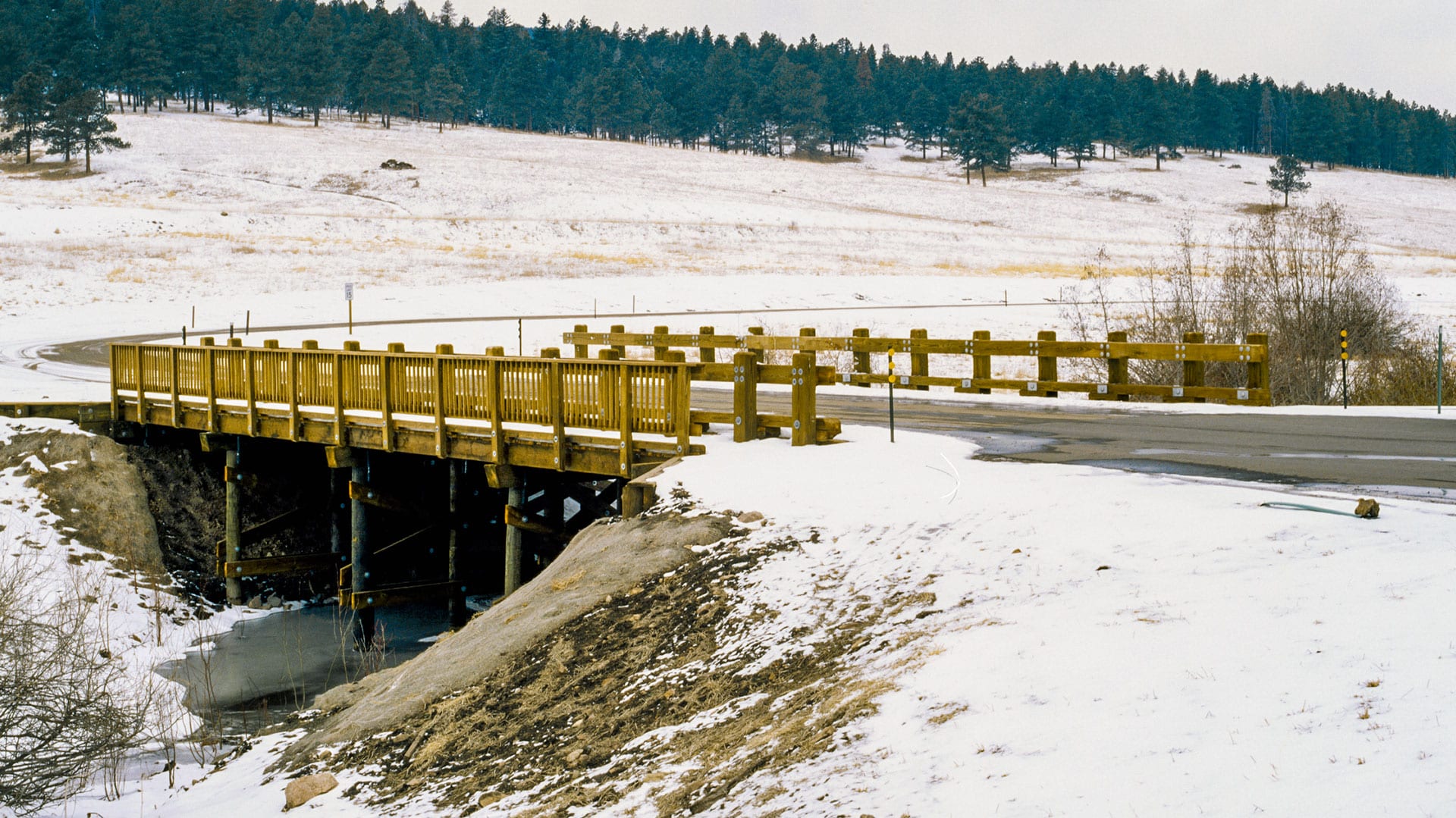
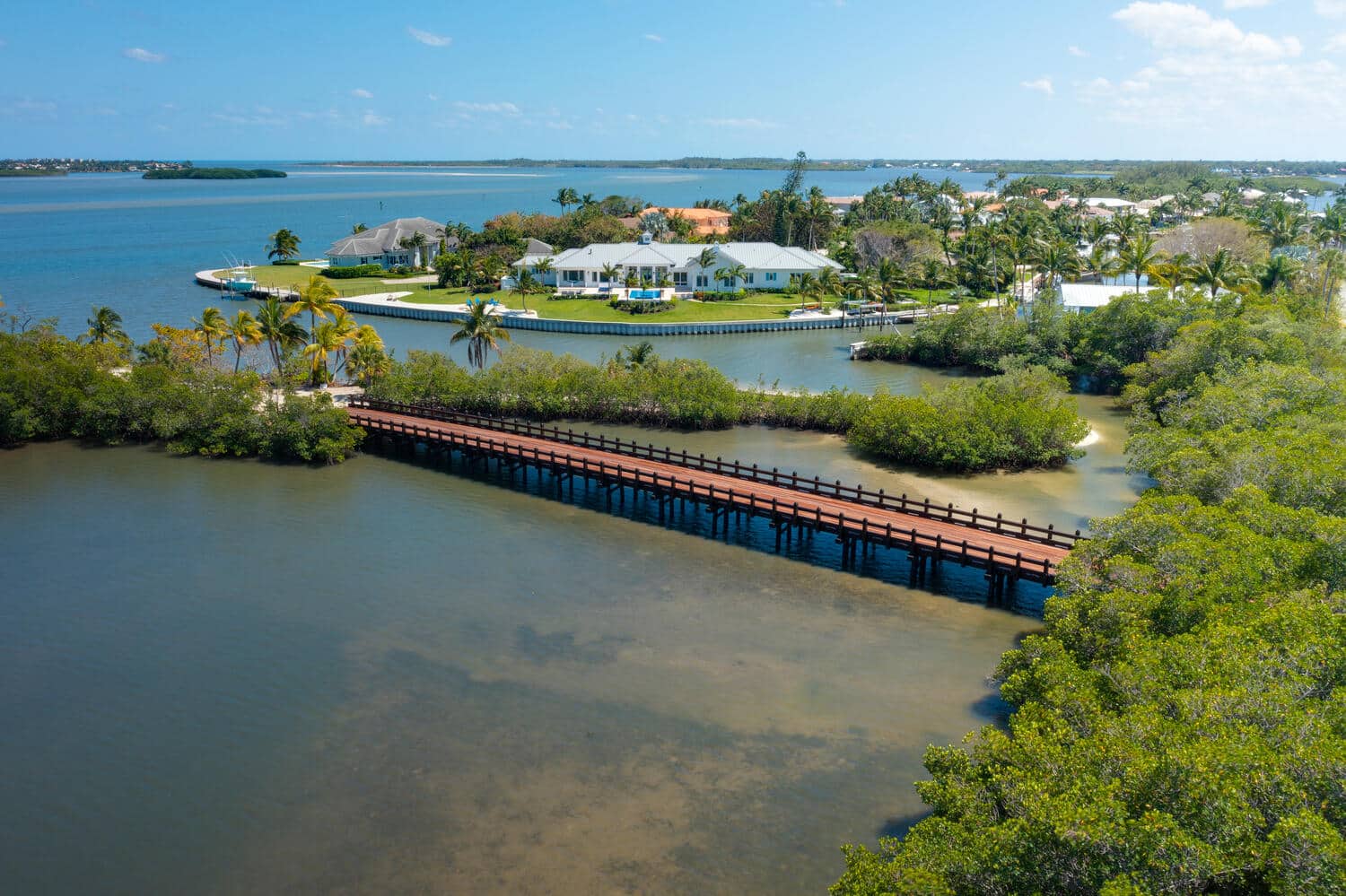
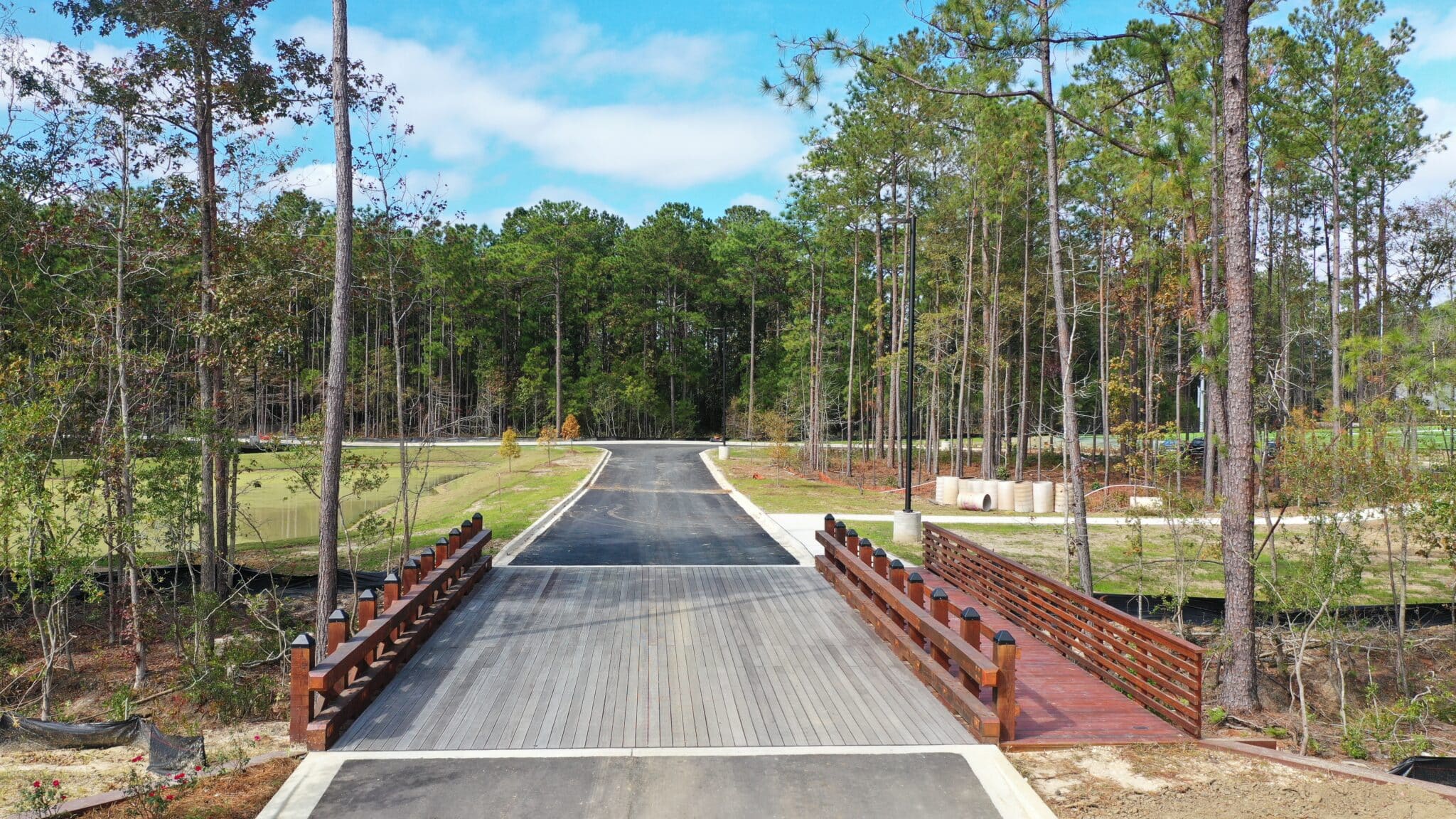
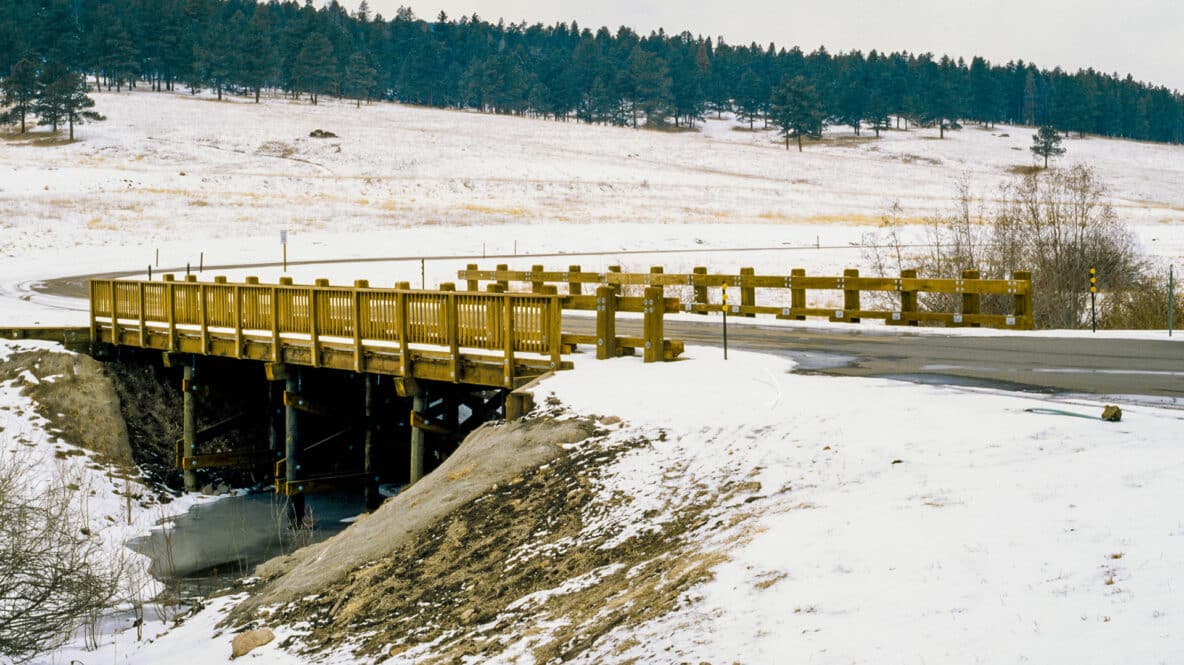
Flying J Ranch timber vehicular bridge angle shot by York Bridge Concepts in Evergreen, CO

Discover the beauty & durability of York Bridge Concepts' masterpiece at the Flying J Ranch

Explore the epitome of craftsmanship and functionality with the Flying J Ranch Timber Vehicular Bridge, proudly crafted by York Bridge Concepts. Nestled within the scenic landscapes of Evergreen, Colorado, this bridge seamlessly combines aesthetic appeal with robust engineering, providing visitors with a safe and picturesque passage across the serene trails of Flying J Ranch.

Why Timber Is the natural Choice for a colorado vehicular bridge

Colorado's mountain parks and open space corridors place a premium on access that feels native to the landscape. A Colorado Vehicular Bridge must handle freeze-thaw cycles, snow loads, storm intensities at elevation, and sensitive drainage patterns--without reading as industrial or out of place. Timber excels in this setting. Its visual warmth and subtle texture complement conifers, meadow edges, and rocky outcrops; its structural performance, when engineered to modern standards, provides dependable capacity for maintenance vehicles, emergency access, and daily park operations.

At Flying J Ranch, the bridge's proportional depth, rail profiles, and finish tones were selected to harmonize with forested views and seasonal color shifts. Timber's carbon-storing attributes further lower the project's embodied footprint relative to many conventional alternatives. When you combine that with York Bridge Concepts' on-site, Deck-Level/Top-Down Construction approach, you get an access solution that is both gentle on the land and robust for long-term use--precisely what a Colorado mountain trailhead requires.

Specifications


  • Vehicular Width:
  • 26’ (24’ clear)
  • Pedestrian Width:
  • 6’ (5’ clear)
  • Length:
  • 60'
  • Height:
  • -- (from ground)
  • Capacity:
  • HS20-44 /90 PSF
  • Construction:
  • Deck Level
  • Span Type:
  • Repetitive Span
  • Material:
  • CCA/CA-C Treated
    SYP

  • Foundation:
  • Treated SYP Timber Piles
  • Stringers:
  • SYP Stringers
  • Vehicular Deck System:
  • 1” SYP Top Deck
    4” SYP Subdeck

  • Pedestrian Deck System:
  • 1” Treated SYP
  • Guide Rail:
  • Decero™ Standard Design
    Series

  • Handrail:
  • Decero™ Wire Rope Design Series
  • Crossing:
  • River

The Flying J Ranch in Evergreen, CO

Flying J Ranch. From its humble beginnings as a homestead to its transformation into a picturesque trailhead loop, discover why this destination is cherished by locals and visitors alike. York Bridge Concepts was chosen for the integration of a natural timber vehicular bridge that blends with the natural splendor of Flying J Ranch. 

The Flying J Ranch in Evergreen, CO

Flying J Ranch is a landscape of quiet transitions: meadow of conifer stand, south-facing warmth to north-facing shade, open sky to enclosed canopy. The vehicular approach to the trailhead must negotiate these shifts with a light touch. A Colorado Vehicular Bridge in this context is more than a structure; it is a threshold--a place where visitors slow down, orient themselves to the rim of the forest, and feel the day's weight lift as the gravel turns to timber.

Before ground broke, York Bridge Concepts (YBC) worked with the owner to map the "first five minutes" of a typical visit. How do service vehicles stage before opening? Where do maintenance trucks turn around without compressing root zones? What does the arrival sequence feel like form the passenger seat of a family car or the cab of an emergency vehicle? These practical questions shape geometry: approach length for gentle grades; curb and rail profiles that guide wheels without visual heaviness; and transitions that reduce bump and sway so crossings feel quiet, composed, and safe.

The resulting bridge meets users at human scale. Proportions are kept deliberately calm--more horizontal than vertical--so the landscape remains the main actor. Rail rhythm echoes the spacing of trunks. Deck tones nod to bark and lichen without becoming theatrical or forced. From a distance the bridge resolves as a slender, carefully shadowed line; up close, the craft becomes legible in joinery, fasteners, and coatings chosen to perform in Colorado's high-sun, freeze-thaw environment.

As a practical matter, the bridge consolidates access impacts. Instead of multiple culverts or ad hoc fords, one clean crossing projects hydrology and simplifies operations. For land managers, that means fewer disturbance points to maintain; for visitors, it means a single, graceful moment of transition that sets the tone for the day.


Context Matters: Setting, Access, & Environmental Sensitivity

Flying J Ranch is beloved for its quiet trails, wildlife corridors, and restorative feel. Any Colorado Vehicular Bridge introduced into a park context must be designed for minimal disturbance. That starts with site reconnaissance and continues through hydrology reviews, soils assessments, and constructability planning that anticipate seasonal windows, trail use patterns, and habitat needs.

York Bridge Concepts (YBC) coordinates closely with owners and agencies to stage work away from high-value vegetation and to protect drainageways with silt fencing, straw wattles, and temporary matting as required by the site's erosion control plan. The outcome is a bridge that reads as if it has always belonged there--visually restrained, technically precise, and tuned to the daily rhythm of the park.


Hydrology & Drainage Strategy

A successful Colorado Vehicular Bridge reads the site's water. Snowmelt pulses differently than warm-season thunderstorms. Shaded ravines hold ice later in the shoulder seasons; south aspects dry more quickly but can deliver flashier runoff. YBC's design-engineer-build process incorporates these patterns from the start. The team reviews contributing area, soil infiltration behavior, channel geometry, and historical maintenance notes to anticipate flows--not just the design event, but the everyday events that truly define performance.

Deck-Level details push water toward the edges and away from high-traffic wheel paths, reducing ice lenses that can persist in cold pockets. Scuppers and drip edges are located to avoid staining, prevent re-entrainment of water onto bearing seats, and keep fasteners drier between storm cycles. Abutment geometry and riprap (if specified by the engineer of record) are set to preserve channel stability and protect water quality by breaking up velocities, minimizing scour, and allowing for natural sediment movement consistent with the site's character.

Stormwater is not only a calculation--it is an experience. The bridge is tuned so visitors hear a soft sheet of runoff rather than a concentrated splash; so operators encounter predictable, easy-to-clear edge drains rather than cluttered pockets. This is hydrology expressed as care for both ecology and the day-to-day work of stewardship.

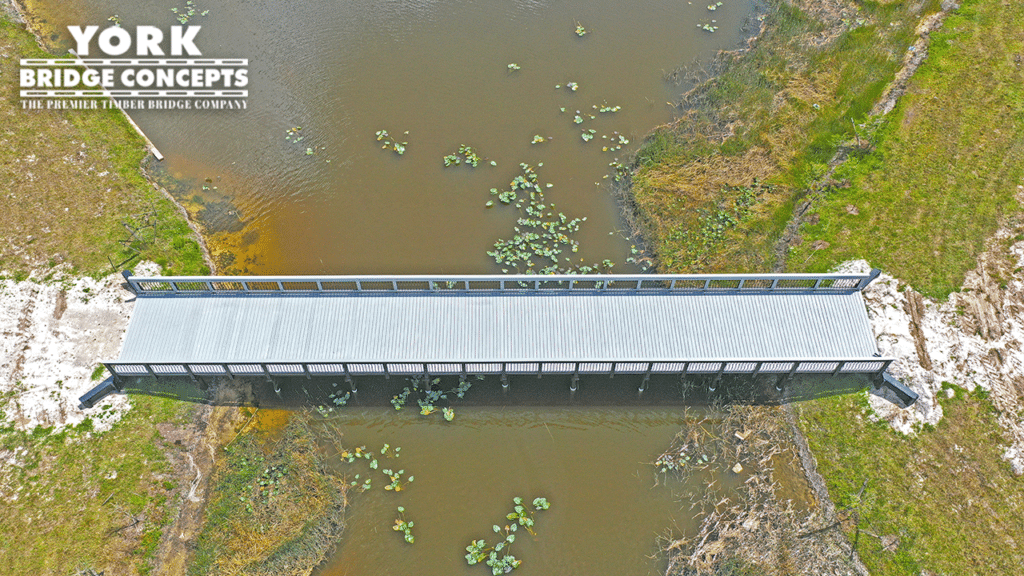
Flying J Ranch timber vehicular bridge span by York Bridge Concepts in Evergreen, CO

The York Bridge Concepts Difference

Delve into the unparalleled expertise and innovation brought forth by York Bridge Concepts. With a legacy of excellence spanning four decades, learn how they have redefined timber bridge construction through their commitment to quality, sustainability, and unmatched craftsmanship.

Team Integration & Owner Coordination

Timber bridges live or die in the seams between disciplines. YBC's project cadence brings owners, engineers, inspectors, and field crews into alignment early. Weekly work-plan huddles, annotated shop drawings, and photo-verified hold points ensure that what is imagined makes it into the field intact.

Where public access must remain open, YBC sequences work to bracket peak use hours and leverages the deck-level method to keep the construction footprint compact. When wildlife windows restrict activity in the early morning or evening, production plans flex accordingly. The outcome is not simply a delivered structure; it is a process that respects how the park actually operates.


Design-Engineer-Build: The Decero™ Pathway from Vision to Field

YBC's Decero™ methodology (from the ground up) ensures that each Colorado Vehicular Bridge is engineered to the site, not pulled from a catalog. That means:

  • Programming: Confirm use cases (maintenance trucks, emergency access, utility carts), turning radii, grade constraints, and rail requirements.
  • Preliminary concepts: Align structure type and span with soils, hydrology, and access geometry.
  • Engineering: Design to the applicable AASHTO LRFD Bridge Design Specifications and local codes; set bearings, connections, and load paths that account for live loads, snow/wind, impact, and seismic as required.
  • Detailing: Select coatings, fasteners, and wear surfaces matched to altitude, sun exposure, and freeze-thaw conditions.
  • Field execution: Build on site with a deck-level approach to reduce ground disturbing activities beneath the structure.

This integrated flow is why YBC bridges look cohesive end-to-end--and why owners trust them to perform in Colorado's mountain climate.


Engineering Deep Dive: Loads, Connections, and Deflection

Designing a Colorado Vehicular Bridge requires more than checking boxes against a standard. The design must feel solid under tire, read cleanly to the eye, and perform through seasons that range from sun-intense August afternoons to January mornings at single digits.

Live Loads & Combinations. The structural system is proportioned for agency-approved vehicular loading and, where relevant, combinations that include snow on the deck. Deflection limits are tuned to deliver a quiet ride--minimizing bounce that can unsettle drivers or rattle service equipment.

Connections. Timber thrives when connections are detailed for drainage and inspection. Bearing seats are accessible; hardware is galvanic-compatible and either galvanized or stainless depending on exposure class. Blocking and sistering at high-load points are arranged to distribute forces while maintaining inspectable geometry. Where aesthetic covers are used, they are vented and removable so the structure remains legible to inspectors.

Redundancy & Inspectability. The system includes clear load paths that remain visible even after years of service. This matters for public owners who rely on periodic inspection rather than constant monitoring. Coating schedules highlight bolt heads and key edges so wear cues are easy to spot, document, and address.

Thermal & Moisture Movement. Details accommodate timber's natural motion: end-grain sealing, expansion allowances for composite deck options, and slotted hardware where the specification calls for controlled slip. The result is a bridge that feels "quiet" across the full annual cycle.


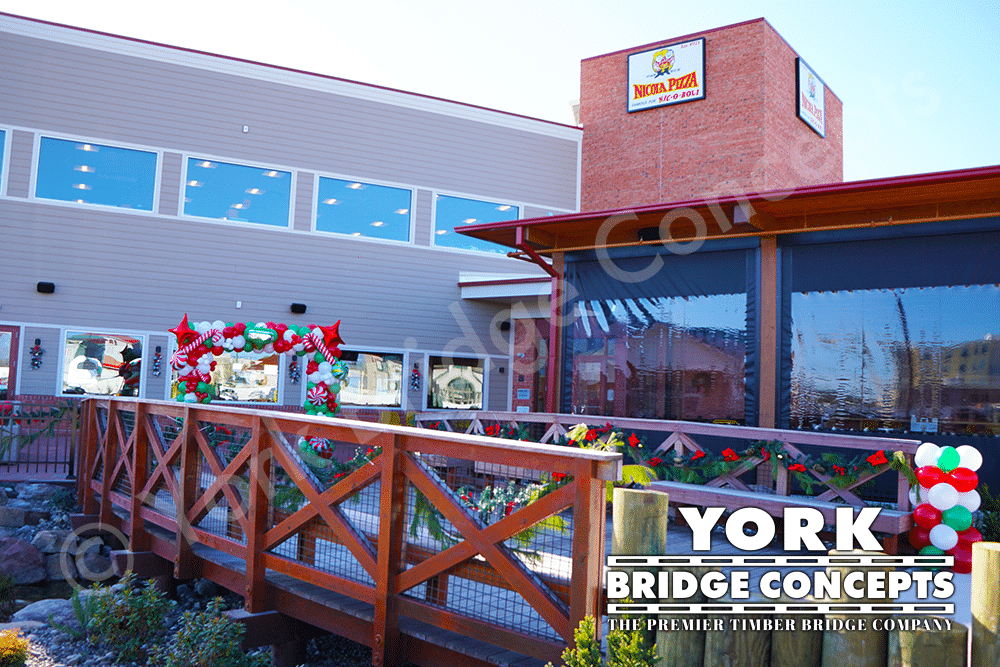
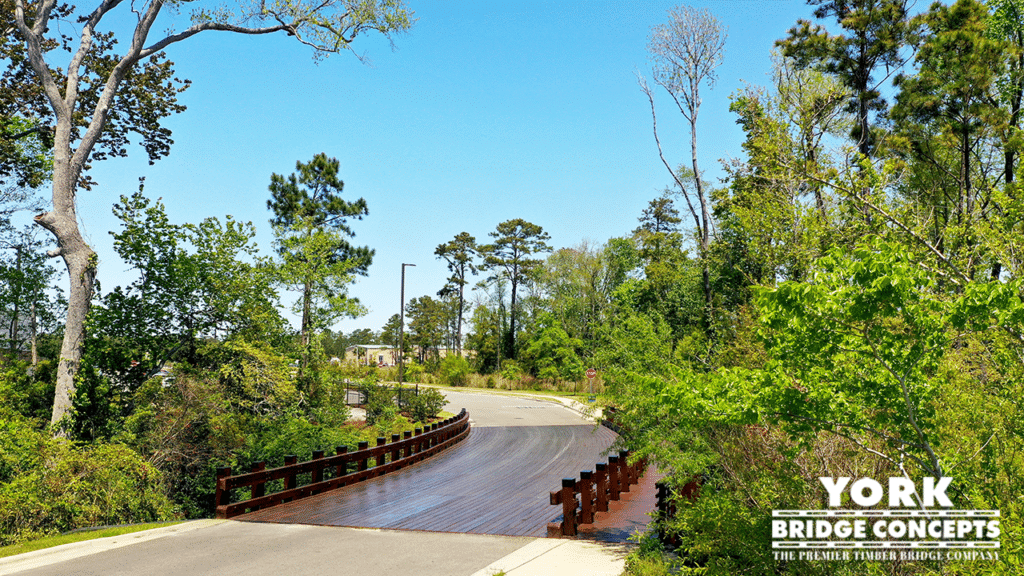
Flying J Ranch timber vehicular bridge pedestrian attachment shot by York Bridge Concepts in Evergreen, CO

Features of the Flying J Ranch Timber Bridge

Experience the artistry and functionality woven into every detail of the Flying J Ranch Timber Vehicular Bridge. From its durable timber construction to its seamless integration with the surrounding environment, explore the features that make this bridge a testament to both form and function.

Structure & Craft: What Sets a Colorado Vehicular Bridge Apart

Not all vehicular bridge are created equal, and the mountain environment elevates requirements. The Flying J Ranch span showcases choices that translate well across Colorado:

Pressure Treated Super & Substructure

Southern Yellow Pine (SYP) members--selected for structural performance--receive advanced pressure treatment for UV stability and moisture management. Where trail maintenance demands high-traffic durability, easy to replace wear decking is integrated to provide stable traction in wet or icy conditions. The SYP creates a quiet ride, a rustic look, and long service life.

Guardrail Geometry for Mountain Views

Rail profiles favor horizontal lines and well-proportioned picket spacing to preserve sightlines without compromising safety. For a Colorado Vehicular Bridge serving a natural area, the goal is to maintain a sense of immersion--seeing the pines, meadow edges, and sky beyond--while guiding users along a safe corridor.

Hardware & Fasteners Built for Freeze-Thaw

Galvanized or stainless components are specified to resist corrosion from moisture cycling and de-icing operations. Detailing considers drainage, drip edges, and fastener shielding to protect connections season after season.

Foundations to Fit the Landscape

Abutments and piers (as required by the site) are designed to match soils and hydrologic behavior, protecting water quality and channel stability. The result is a structure that is both elegant and anchored.


Materials & Detailing Choices for High Country Performance

Timber Selection. Southern Yellow Pine (SYP) is selected for its strength-to-weight ratio and predictable design values. Member are pressure-treated to a retention level aligned with exposure and service category, then finished with coatings chosen for altitude, UV, and colorfastness.

Deck Surfaces. Owners can select treated timber decking for traditional warmth, or composite decking for ultra-low movement and consistent traction. In snow country, texture matters; surface profiles are chosen to balance grip with ease of snow removal, and to avoid trapping meltwater.

Rails & Curbs. A Colorado Vehicular Bridge often operates in mixed-use contexts. Curb and rail geometries are selected to guide vehicle wheels, support pedestrian comfort at overlooks or pull-outs, and preserve sightlines into the canopy. Where wildlife considerations dictate, infill patterns are adjusted to reduce snag risk and visual noise.

Hardware Class. Fasteners and plates are specified to resist corrosion in the face of moisture cycling and de-icing operations. Detailing shields critical connections with drip edges, small stand-offs, and vented trims so drying occurs quickly after storms.


Focused On Sustainable Construction

Discover how York Bridge Concepts prioritizes sustainability in every aspect of our projects. From responsibly sourced materials to eco-conscious design practices, learn how the Flying J Ranch Timber Vehicular Bridge exemplifies their dedication to environmental stewardship.

Carbon & Materials Stewardship

YBC's approach to sustainability focuses on two overlapping themes:

  1. Material Efficiency. Timber stores carbon; efficient spans and right-sized members amplify that benefit. The Decero™ process trims waste by matching system depth to demand and by prefabricating only where it reduces cuts in the field. Offcuts are minimized; packaging is simple and recyclable where possible.
  2. Construction Footprint. Deck-level sequencing keeps equipment on the structure as it grows, limiting repeated ground contact under the alignment. In riparian settings, this approach can dramatically reduce temporary fill and the risk of rutting or compaction in sensitive soils.

Native revegetation flows close behind construction, using seed mixes and plant materials selected for the specific elevation and aspect. The goal is not a perfect green carpet on day one, but a quick return to a stable, resilient edge that reads as belonging to the place.


Environmental Stewardship in Practice

A hallmark of YBC's work is building on site with a Deck-Level/Top-Down method: equipment and materials move forward across completed decking as the bridge advances, limiting disturbance below. In sensitive stretches, this can dramatically reduce the need for temporary access roads or repeated ground contact--an advantage for a Colorado Vehicular Bridge spanning drainages or wildlife habitat.

Additional stewardship measures often include:

  • Selective clearing to preserve canopy cover and understory.
  • Erosion & sediment control tailored to slope and soils.
  • Stormwater detailing at abutments to prevent scour and manage runoff.
  • Native revegetation to stabilize disturbed edges and accelerate habitat recovery.

Safety & Durability For Extreme Climates

At York Bridge Concepts, safety is paramount. Our rigorous standards and quality control measures are implemented in every project to ensure the structural integrity and longevity of the Flying J Ranch Timber Vehicular Bridge, providing peace of mind to all who traverse it.

Safety & Durability For Extreme Climates

Colorado winters are beautiful--and demanding. YBC collaborates with owners to create a simple winter operations plan that aligns with the bridge's details.

  • Snow Management. Deck textures and drainage lines are laid out so plows and blowers have predictable paths. At abutments, return curbs and wingwalls are detailed to avoid snow traps that can refreeze and creep on the deck.
  • De-icing Practices. Where chemical de-icers are used, hardware and coatings are selected to resist corrosion. Drainage directs meltwater away from bearings, and small shields protect exposed connections from splash-back.
  • Risk Controls. High-contrast rail caps, discreet reflectors, or low-profile delineators may be incorporated where agency standards call for enhanced visibility during storm response.

The outcome is a Colorado Vehicular Bridge that remains serviceable and safe even when the forecast turns and crews are stretched thin.


Performance in Colorado Weather: Freeze-Thaw, Snow, Sun, & Elevation

Colorado's climate demands specific strategies for durability and safety:

Moisture Management

Pressure-treated SYP is selected for high-altitude UV exposure and frequent temperature swings. Timber end-grain sealing, controlled drip paths, and ventilated detailing help the structure dry quickly after melt or rain.

Traction Underfoot (and Under Tire)

Deck surfaces can incorporate grooved or textured wear layers that maintain grip during freeze-thaw. Where compact utility vehicles use the bridge, YBC designs for appropriate load and tire contact behaviors, with drainage detail to avoid ice lenses.

Snow & Wind Considerations

Rail Heights, picket spacing, and structural proportions account for local load requirements. Live load combinations consider snow drift where relevant, with deflection limits set for a solid and quiet feel during crossing.

UV & Thermal Cycling

Coating chemistry and color selection are matched to solar intensity at elevation. This reduces thermal movement stress and preserves finish quality over time--key for any Colorado Vehicular Bridge.

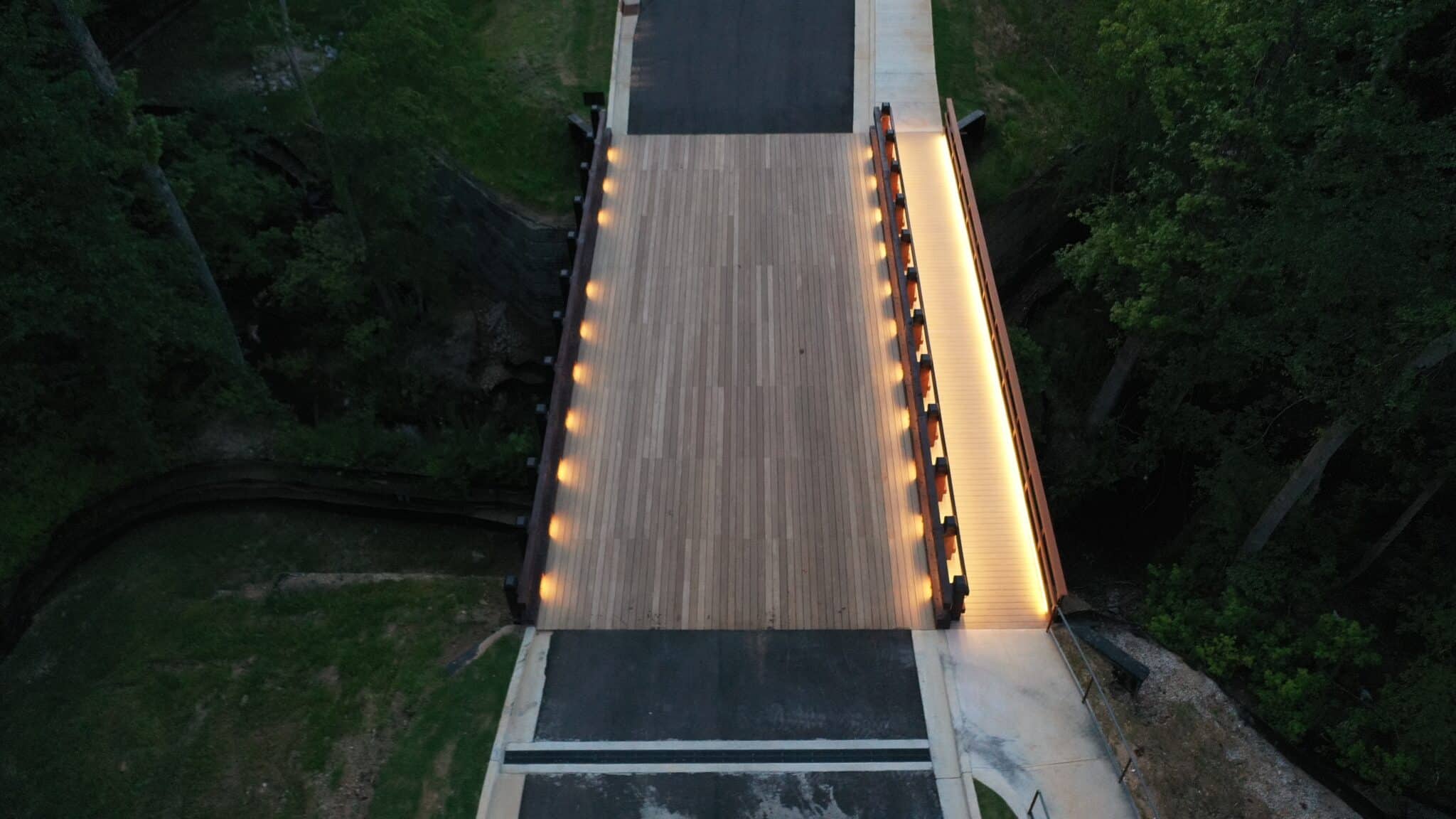
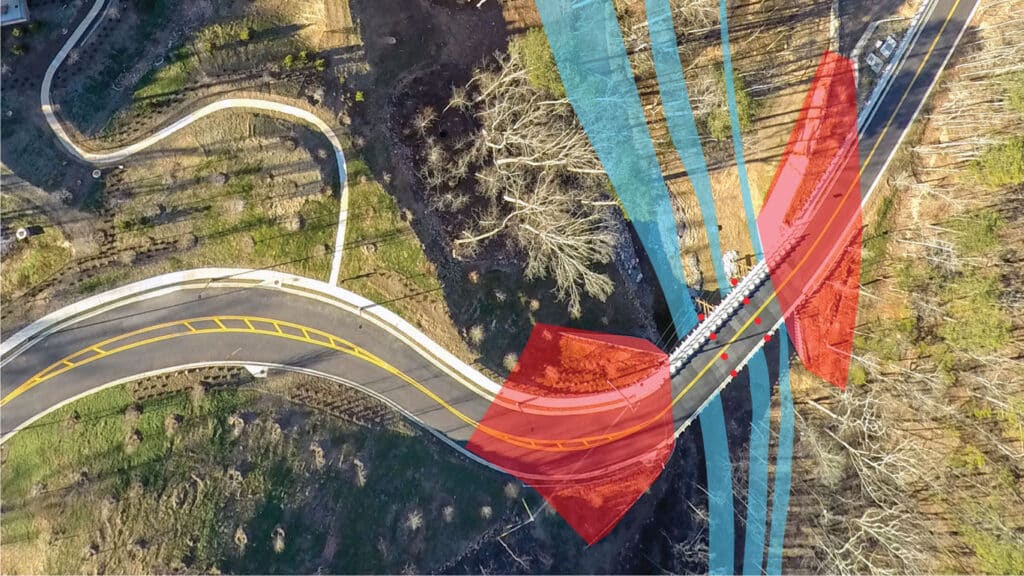
Flying J Ranch timber vehicular bridge decking by York Bridge Concepts in Evergreen, CO

Visit The Flying J Ranch Vehicular Timber Bridge

Visit the Flying J Ranch to experience the beauty of nature firsthand. Whether you're an avid hiker, a nature enthusiast, or simply seeking a tranquil escape, embark on an unforgettable journey across the Flying J Ranch Timber Vehicular Bridge and immerse yourself in the splendor of Evergreen, Colorado.

Wayfinding, Interpretation & Arrival

Great park infrastructure orients without shouting. The bridge is an ideal place to integrate wayfinding cues that remain legible in snow, shade, or bright sun. Modest, non-glare placards can mark distances to trail loops, note elevation, or point to accessible routes. If the owner chooses, interpretive cues can speak briefly to timber as a renewable material, to watershed function, or to the craft visible in the joinery--inviting visitors to notice without lingering in the flow of arrivals.


Access That Enriches Visitor Experience

A park bridge should disappear into the day's memories: you remember the views, the quiet, the sense of arrival at the trailhead--not the structure itself. That is the measure of success for the Flying J Ranch installation. The bridge's approach geometry guides you naturally into the landscape. Soft tonal contrasts in the rails and decking frame the forest without overwhelming it. The superstructure proportions feel balanced; the crossing seems to float above the terrain.

For land managers, the operational benefits are tangible: a reliable, year-round corridor for maintenance vehicles and emergency access that blends into the park. For visitors, the bridge sets the tone for the outing--welcoming, confident, and connected to place. This is what a Colorado Vehicular Bridge should do best: make nature easier to reach without calling attention to itself.

The Owner's Journey: From Idea to Ribbon Cutting

Every YBC project begins with listening. What are the mobility gaps? How will the bridge be used in five, ten, or twenty years? What does success look like for park staff and the community? Those answers inform the Decero™ concept: span strategy, structural depth, rail type, coatings, and decking system. YBC's engineers model loads and deflections to meet the latest codes. Field teams plan staging to minimize disruptions to trail use and habitat.

During construction, YBC's on-site approach keeps decisions close to the workplace. Adjustments for micro-topography, drainage mouths, or tree protection are made with owner input, so the Colorado Vehicular Bridge reflects the realities of the place, not just a plan sheet. Closeout includes training on routine inspections and maintenance so owners feel confident long after opening day.


Permitting & Approvals Support

Each jurisdiction brings its own rhythms and review culture. YBC supports owners by providing clear drawings, concise technical narratives, and product data organized around reviewers' needs. Where the crossing touches regulated watercourses or wildlife habitat, coordination materials are prepared to streamline review--complete with construction sequencing notes that demonstrate how the deck-level method limits disturbance. The aim is to replace uncertainty with clarity, and to help reviewers see how the design meets both the letter and the spirit of applicable requirements for a Colorado Vehicular Bridge.

Materials & Finishes: A Mountain-Informed Palette

Timber: Southern Yellow Pine offers a high strength-to-weight ratio, excellent fastener performance, and predictable engineering behavior. When paired with advanced sealants and coatings, it resists moisture uptake and UV degradation, both critical in Colorado.

Coatings: YBC specifies multi-stage coating systems tuned for altitude and sun exposure, with optional colorways that blend with bark, rock, and meadow tones. Finish schedules align with inspection checkpoints for consistent coverage.

Decking: Composite or treated timber decking can be selected based on traffic profiles and owner preference. Where public and maintenance uses overlap, composite options deliver extra surface stability and reduce life-cycle maintenance for a Colorado Vehicular Bridge.

Hardware: Galvanized or stainless steel hardware provides long-lasting resilience. Detailing shields critical connections and sheds water fast.


Color Science at Altitude

High-elevation sun is relentless. Color selection for bridges in Colorado must anticipate strong UV and the way snow, shade, and forest tones modulate perceived color. Mid-value, low-chroma hues tend to read best year-round--rich enough to hold their own against bright snowfields but restrained enough to disappear into summer shade. Finish schedules pair UV-resistant base coats with sacrificial top layers so maintenance refreshes are efficient and visually consistent.

Safety, Codes, & Quality Assurance

A vehicular bridge serving public lands must meet stringent requirements. YBC designs to applicable AASHTO LFRD Bridge Design Specifications, as adopted by the authority having jurisdiction. Guardrail and curb details are chosen to guide wheels and protect pedestrians where multi-use conditions occur. Fabrication inspections, field fit checks, and proof-rolling (as applicable) confirm performance before turnover. Documentation supports future inspections and maintenance planning, giving owners a clear record of the bridge's construction and as-built details.

In winter conditions, traction strategy and snow management plans are reviewed with the owner. Rail infill patterns, picket spacing, and visibility cues are tuned for safety, especially where the corridor crosses popular paths. The result is a Colorado Vehicular Bridge that marries the beauty of timber with the precision of modern engineering.

Operations & Maintenance: Clear, Practical, Predictable

Timber bridges age gracefully when cared for with simple, routine tasks:

  • Seasonal rinsing and debris removal to keep drainage paths open.
  • Visual inspections of coatings, rails, and connections for early touch-ups.
  • Spot sealing or re-coating at intervals recommended for the site's exposure and traffic.
  • Deck surface checks for traction integrity in high-use or shaded zones.

YBC provides owners with maintenance guidance tailored to altitude, exposure, and traffic patterns--an essential component of any Colorado Vehicular Bridge lifecycle plan.


BridgeCare™ Maintenance Program Overview

YBC's BridgeCare™ philosophy simplifies ownership. It converts "maintenance anxiety" into four predictable practices:

  1. Inspect. Seasonal walk-throughs focus on drainage paths, deck texture, rail connections, and coating edges. Photographs are filed in a simple annual log so trends become visible across years.
  2. Clean. Keep the deck and edges free of leaf mat and grit; clear scuppers and drip lines in fall and spring; rinse when de-icing residue accumulates.
  3. Protect. Touch up coatings at high-wear edges and bolt heads. Replace sacrificial top coats at intervals matched to sun exposure.
  4. Renew. Plan for periodic replacement of wear components--decking surfaces, rail caps, or trim elements--without touching the primary structure.

The more predictable the maintenance calendar, the longer the bridge feels "new" to visitors, and the more confident owners become in life-cycle budgeting for a Colorado Vehicular Bridge.

Image

Community & Aesthetics: A Bridge That Feels Like Colorado

Good civic infrastructure builds pride. At Flying J Ranch, the bridge amplifies what people already love about Evergreen: tall trees, quiet loops, and glimpses of wildlife. The rail rhythm echoes the vertical tempo of trunks; the finish palette sits comfortably against needles and granite. Photographers find a ready frame; families pause for a moment before stepping into the forest. These are not accidental outcomes--they're the product of design discipline and craft.

For donor groups, conservancies, or county partners, the bridge serves as a tangible, long-lived investment in access. It shows stewardship in materials, restraint in form, and care in execution--the aesthetic signature of a well-made Colorado Vehicular Bridge.


Photography, Public Engagement & Pride

Civic infrastructure quietly shapes identity. A well-made timber bridge becomes a landmark for family photos, event flyers, and social posts celebrating the change of the seasons. YBC encourages owners to document these moments because they build support for future stewardship. Thoughtful camera pull-offs or micro-overlooks at the approaches can give visitors a safe place to admire the view without interrupting operations. When the community sees itself reflected in a structure, it protects that structure--graffiti and wear drop when people feel pride in place.

Budget Confidence Through Design Clarity

Budget predictability isn't just about a low number; it's about a well-defined scope that resists surprise. The Decero™ process clarifies the structural system, coatings, rail profiles, decking, hardware class, and construction staging before mobilization. That clarity flows into scheduling and traffic control plans. In sensitive locations, YBC's Deck-Level/top-Down sequence reduces temporary works--often a hidden cost in remote or habitat-rich corridors--supporting a reliable total cost of delivery for a Colorado Vehicular Bridge.

Future-Proofing: Adaptability & Upgrades

Parks evolve. If future vehicle types, lighting needs, or trail connections change, the bridge should accommodate upgrades gracefully. YBC's detailing anticipates conduit pathways, discrete fixture mounting locations (if lighting is pursued by the owner), and replaceable deck surfaces. Handrail systems can be tuned for visibility or wildlife considerations with minimal disruption. This adaptability protects the owner's investment and keeps a Colorado Vehicular Bridge relevant decades.


Technology Options: Counters, Sensors & Lighting

Where owners are interested, the bridge can accommodate low-profile technology. Conduit provisions, junction boxes, and discreet mounting points are planned so future devices--trail counters, temperature sensors, or small guidance lights--can be added without altering the character of the crossing. The rule is simple: technology should support stewardship and safety while remaining visually quiet in a natural setting.

Working with YBC on Your Colorado Vehicular Bridge

If you are a county, land trust, resort, HOA, or trail system operator planning a crossing in Colorado, YBC provides a clear path forward:

  1. Discovery Call: Define goals, traffic, span constraints, and environmental sensitivities.
  2. Concept & Budgeting: Align preferred structure and finishes with target budget.
  3. Engineering: Complete calculations, drawings, and submittals to applicable codes.
  4. Permitting Coordination: Support the owner's path through local approvals.
  5. Construction: On-site, deck-level methods that limit disturbance and deliver quality.
  6. Closeout & Training: O&M guidance tailored to mountain conditions.


Procurement Pathways & Budgeting

Public owners often face tight windows for funding or seasonal construction. YBC helps evaluate procurement options that align with schedule and risk appetite--design-engineer-build with a single accountable partner; traditional design-bid-build where local requirements dictate; or cooperative purchasing pathways where permitted. Early clarity on coatings, decking type, rail profile, and foundation strategy reduces volatility and helps the team hold schedule even when weather compresses work days.

For private owners--resorts, HOAs, conservation trusts-- the same clarity translates into fewer change requests and more predictable total cost of delivery. The shared objective is a Colorado Vehicular Bridge that opens on time, performs as designed, and looks like it belongs.

Frequently Asked Questions (Colorado Vehicular Bridge)

How does timber perform in a high-altitude climate?

Exceptionally well when engineered and detailed for moisture management, UV exposure, and freeze-thaw cycles. Coatings, end-grain protection, and drainage detailing are key.

What loads are considered?

YBC designs to the applicable AASHTO LRFD criteria and the authority's requirements for maintenance and emergency access vehicles.

Can we get composite decking for traction and longevity?

Yes. Composite deck systems are frequently paired with timber substructures for high-traffic or mixed-use conditions on a Colorado Vehicular Bridge.

How disruptive is construction to trails and habitat?

YBC's deck-level, on-site approach limits disturbance by building forward on the installed deck, reducing repeated ground contact beneath the bridge.

What about long-term maintenance?

Routine washing, drainage housekeeping, and periodic coating touch-ups keep the bridge looking great and performing reliably.

Can the bridge support occasional event traffic?

Design loads are established during programming. If events will introduce unusual vehicles or concentrations of people, YBC confirms assumptions and, if needed, incorporates additional measures such as temporary load management or posted guidance.

What about emergency access?

Where the authority requires, geometry and structural checks accommodate emergency vehicles. Turning radii, curb reveal, and rail strength are coordinated so responders can cross confidently without damaging the structure.

Will timber fade or silver?

Uncoated exterior wood will weather naturally; YBC coatings are selected to hold tone and protect fibers at altitude. Maintenance intervals depend on exposure and can be planned as part of BridgeCare™ so color remains within the desired palette.

How loud is the crossing?

Timber's natural damping yields a quiet ride. Deck attachment patterns and deflection limits are tuned to avoid rattle and to minimize the "drum" effect sometimes heard on steel bridges.

Can wildlife move under the bridge?

Clear spans and carefully placed abutments preserve natural movement corridors. Construction staging avoids persistent ground compaction in these zones, and final grading ensures the area under the span is attractive to wildlife rather than a cul-de-sac of debris.

What about bicycles or pedestrians on the deck?

If the crossing will serve mixed traffic, the rail and curb strategy clarifies zones and sightlines. Texture and color contrast support route legibility; optional, very low output guidance lighting can improve safety for early-morning maintenance trips without altering the night sky.

How does snow removal interact with the deck?

Edge details and fastener patterns are set to accommodate plow blades and blowers. Operators receive simple guidance on preferred blade shoes and speeds to protect both surface texture and fasteners.

Can the bridge be lengthened later?

Where the site suggests future span changes, YBC can plan abutments and approaches for modular growth. Rail profiles and coatings are specified so new work blends with old without calling attention to the seam.

Why the Flying J Ranch Bridge Works (Design Takeaways)

  • Contextual Scale: Structure depth and rail rhythm match the forest's visual cadence.
  • Material honesty: Timber leads; composites and hardware support performance unobtrusively.
  • Climatic tuning: Coatings, drainage, and deck traction align with Colorado weather.
  • Constructability: On-site, top-down methods reduce impact and deliver precision.
  • Visitor experience: The crossing frames nature rather than competing with it.

These tenets transfer to any Colorado Vehicular Bridge, whether it serves a county road spur, a resort arrival sequence, or a conservation trail network.

Call to Stewardship

Bridges are commitments. They connect people to the places they care about most and signal how we intend to care for those places in return. Choosing a well-crafted timber solution says that access and ecology can coexist; that durability and beauty can be the same choice; and that the investment will age with grace. The Flying J Ranch projects reflects this value set--and provides a blueprint for Colorado Vehicular Bridge projects statewide.


Summary Metrics Snapshot

  • Contextual Fit. Proportions and palette tuned to forest and meadow edges; rail rhythm echoes canopy spacing.
  • Durability. Pressure-treated SYP, altitude-appropriate coatings, stainless/galvanized hardware, inspectable connections.
  • Hydrology. Clean edge drainage, scuppers, and abutment protection aligned to melt and storm events.
  • Constructability. Deck-level sequencing minimizes ground disturbance; staging coordinated with park operations.
  • Maintainability. BridgeCare™ tasks packaged into inspect-clean-protect-renew, enabling predictable budgeting.
  • Future-Readiness. Conduit and mounting provisions for optional counters, sensors, or guidance lighting--kept visually discreet.


A Bridge That Teaches Care

Every well-made crossing teaches something about its place. The Flying J Ranch vehicular bridge teaches restraint--how to meet the demands of access without drowning out the quiet music of trees and water. It teaches maintenance as a gentle, regular craft rather than a crisis. And it teaches that in Colorado, beauty and durability are not tradeoffs but twins, joined by design discipline and field skill. That is the promise of a Colorado Vehicular Bridge shaped by YBC's Decero™ approach: a structure that feels inevitable the first time you cross it and indispensable every time after.


GET YOUR QUOTE

All Feature Projects


What's Best: A Culvert Or A Timber Bridge?

Understand the considerations you should make before choosing your crossing method.

What Is The Best Span Type For My Project?

See how creative scoping, design, & usage work to create the perfect spanning solution for your project.

Which Load Capacity I Need?

Understand the different load capacities for usage that are needed for your project.

How Do I Cross An Environmentally Sensitive Area?

Learn how YBC crosses protected areas with our Deck-Level Construction.

How Do I Create A Landmark?

Create a memorable icon for your development project with a YBC Legacy Timber Bridge.

How Long Does A Timber Bridge Last?

Extend the lifespan of your timber bridge to over 75 years using these guidelines, material selection, protection & maintenance practices.


Placeholder Image

Culvert Or Bridge

If you're considering using a culvert for your crossing project. Click below to understand the best fit for your project.
Culvert Or Bridge
Placeholder Image

Spanning Solutions

Spanning a crossing is one of the most important aspects of your crossing project. Find the best solution for your crossing needs.
Spanning Types
Placeholder Image

Uses & Capacities

The load capacity of a timber bridge may surprise you. See specs for different loads and uses that will help your decision-making process.

Bridge Loads & Usages