Ground-Level Bridge Construction
Traditional bridge construction often depends on extensive ground-level construction activities, including temporary access roads, heavy equipment operating beneath the bridge, excavation, vegetation clearing, and staging areas. While these methods have been used for decades, they can create significant environmental impacts—especially when projects are located in wetlands, floodplains, streams, coastal environments, parks, and other environmentally sensitive areas.
At York Bridge Concepts, we’ve reimagined how bridges are built.
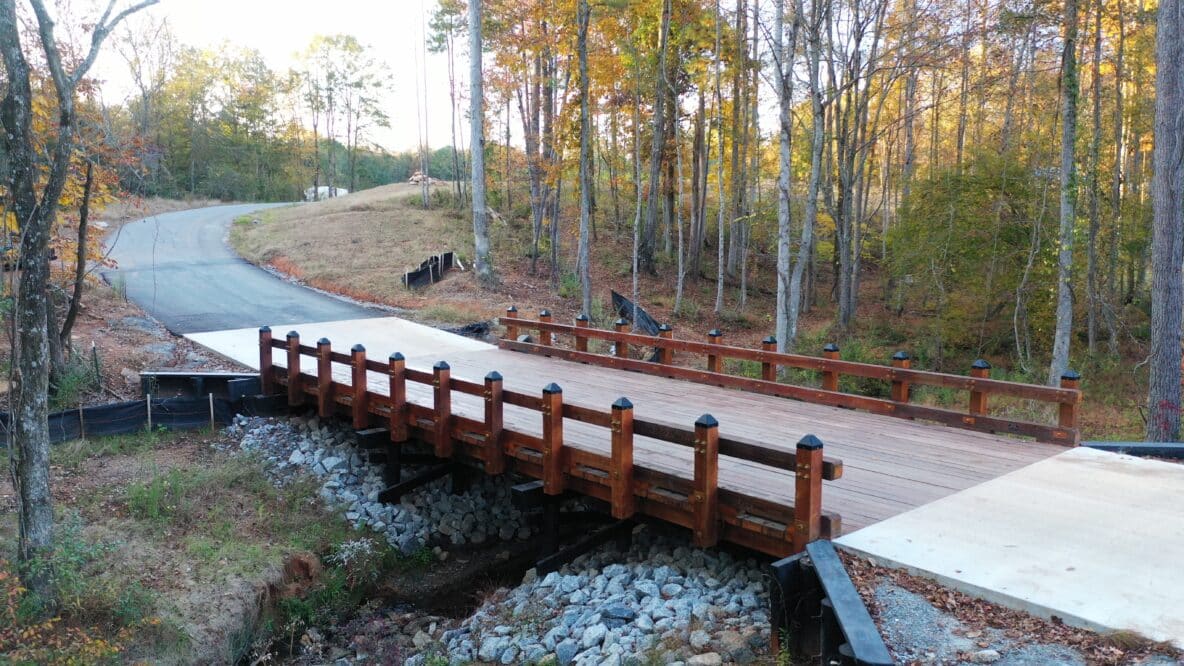
Rather than relying solely on conventional ground-level construction methods, we utilize our proprietary Deck-Level Construction™ methodology, also known as Top-Down Bridge Construction. This innovative approach allows construction to advance from the completed bridge deck itself, significantly reducing impacts on the landscape below while improving project efficiency and environmental stewardship.
Since 1985, York Bridge Concepts has designed and built more than 9,000 custom timber bridges throughout North America, helping municipalities, developers, engineers, architects, and park systems construct infrastructure that protects natural resources while delivering exceptional long-term performance.
What Is Ground-Level Bridge Construction?
Ground-level bridge construction refers to traditional construction methods where equipment, materials, and crews operate primarily from the ground beneath and around the bridge.
This often requires:
- Temporary access roads
- Heavy construction equipment
- Clearing vegetation
- Soil excavation
- Equipment staging areas
- Temporary work platforms
- Increased site disturbance
While effective for many projects, these methods may present challenges when working in environmentally sensitive locations.
Challenges of Traditional Ground-Level Construction
Many bridge projects are located within fragile ecosystems that require careful environmental protection.
Ground-level construction can increase the potential for:
- Wetland disturbance
- Soil compaction
- Habitat disruption
- Vegetation removal
- Erosion
- Sediment entering waterways
- Additional restoration work
- Longer permitting reviews
For projects located within protected environments, minimizing these impacts often becomes a critical project objective.
A Better Alternative: Deck-Level Construction™
York Bridge Concepts developed Deck-Level Construction™ to reduce many of the challenges associated with conventional ground-level construction.
Rather than advancing construction from the terrain below, crews work from the completed bridge deck as the structure progresses across the site.
This innovative methodology helps:
- Minimize environmental impacts
- Reduce disturbance beneath the bridge
- Protect wetlands and waterways
- Preserve existing vegetation
- Reduce soil compaction
- Improve construction efficiency
The bridge itself becomes the construction platform, eliminating the need for much of the temporary infrastructure required by conventional construction methods.
Ideal Applications
Low-impact construction methods are especially valuable for projects involving:
- Wetlands
- Marshes
- Floodplains
- Streams
- Rivers
- Coastal environments
- Mangrove habitats
- Nature preserves
- State parks
- Municipal parks
- Greenway trail systems
- Conservation lands
These environments often require construction techniques that balance infrastructure needs with environmental protection.
Protecting Sensitive Landscapes
Many bridge projects cross areas that provide important ecological functions.
These may include:
- Wildlife habitat
- Stormwater management systems
- Wetlands
- Riparian corridors
- Protected vegetation
- Coastal ecosystems
- Natural drainage channels
Reducing ground-level disturbance helps preserve these systems while allowing necessary infrastructure improvements to move forward.
Sustainable Construction Practices
York Bridge Concepts believes construction methods should be as sustainable as the materials used.
In addition to renewable timber construction, our approach supports sustainability by helping reduce:
- Site clearing
- Heavy equipment traffic
- Soil disturbance
- Habitat disruption
- Construction waste
- Restoration requirements
Combined with engineered timber, these practices create infrastructure with a lower overall environmental footprint.
York Bridge Concepts has documented more than 48,000 tons of carbon savings through its portfolio of custom timber bridge projects while continuing to advance sustainable infrastructure solutions.
Custom Bridge Solutions
Every bridge project presents unique engineering challenges.
York Bridge Concepts evaluates:
- Topography
- Hydrology
- Soil conditions
- Environmental permitting
- Span requirements
- Structural loading
- Site accessibility
- Long-term maintenance goals
Rather than relying on standard bridge systems, every structure is custom engineered specifically for its environment.
Bridges Built for Diverse Markets
Our construction methodology supports projects across numerous industries.
Applications include:
- Municipal parks
- Universities
- Residential communities
- Mixed-use developments
- Golf courses
- Resorts
- Waterfront developments
- Healthcare campuses
- Corporate headquarters
- Public trail systems
Whether the project requires a pedestrian bridge, vehicular bridge, boardwalk, or waterfront crossing, protecting the site remains a priority throughout construction.
The Design-Engineer-Build™ Advantage
Every York Bridge Concepts project is delivered through our integrated Design-Engineer-Build™ process.
Our team manages:
- Site evaluation
- Structural engineering
- Environmental coordination
- Permitting support
- Construction planning
- On-site installation
Managing every phase under one experienced team streamlines communication while ensuring every bridge balances engineering excellence, sustainability, constructability, and architectural beauty.
Why Choose York Bridge Concepts?
For more than four decades, York Bridge Concepts has specialized exclusively in custom timber bridge systems.
Clients choose YBC because of our:
- More than 9,000 bridges built
- Design-Engineer-Build™ methodology
- In-house engineering expertise
- Proprietary Deck-Level Construction™ methodology
- Sustainable construction practices
- Premium architectural customization
- Nationwide and international experience
From wetlands and waterfronts to parks, campuses, resorts, and master-planned communities, every York Bridge Concepts bridge is engineered to minimize environmental impacts while creating lasting value.
Building Smarter from the Ground Up
Construction methods matter.
Choosing the right approach can reduce environmental impacts, simplify permitting, preserve sensitive landscapes, and improve long-term project success.
Whether your project involves wetlands, rivers, parks, universities, residential communities, or waterfront developments, York Bridge Concepts can design and construct a custom timber bridge using innovative construction methods that prioritize both engineering excellence and environmental stewardship.
- All
- Alabama
- Architectural-Design
- Arizona
- Avenue Collection
- Boardwalks
- Bridge Education
- Bridge Types
- California
- Case Study
- Classic
- Colorado
- Commercial Bridges
- Community Designed Projects
- Connecticut
- Construction Techniques for Wood Bridges
- Contemporary Series
- Covered Bridges
- Culvert vs Bridge
- Delaware
- Eco-Tourism Bridges
- Environmental Benefits of Wooden Bridges
- Environmental Mitigation
- Extreme Grades
- Featured
- Floodplain
- Florida
- Free Span Bridge
- Georgia
- Golf Cart Bridge Designs
- Golf Cart Bridges
- Idaho
- Illinois
- International
- Lakes
- Locations
- Louisiana
- Maine
- Maryland
- Massachusetts
- Master Planned Community
- Michigan
- Missouri
- Mixed-Use Development
- Montana
- Multiple Crossings
- Multiple Span
- New Hampshire
- New Jersey
- New York
- North Carolina
- Ohio
- Oklahoma
- Overpasses
- Pedestrian Bridge Designs
- Pedestrian Bridges
- Pennsylvania
- Popular Articles
- Prefabricated Bridges For Sale
- Private Collection
- Repetitive Span
- Retail Developments
- Short Span Timber Bridges
- South Carolina
- Span Types
- Streams
- Tennessee
- Texas
- The LiNK
- Timber Bridge Designs
- Timber vs Steel
- Types of Wood Bridges
- Uncategorized
- Vehicular Bridge Designs
- Vehicular Bridges
- Virginia
- Waterside Collection
- West Virginia
- Wetland Conservation Conservation Bridges


