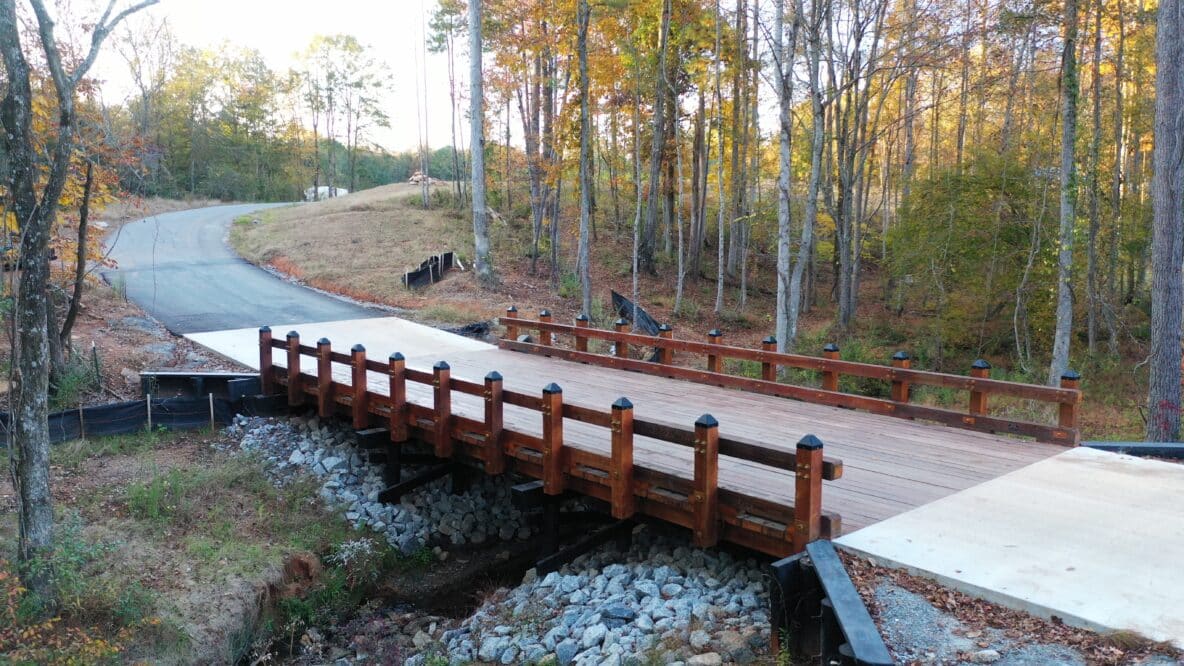
Connecting The Serenbe Community
York Bridge Concepts: Crafting Serenbe Prom's Vehicular Timber Bridge in Chattahoochee Hills, GA
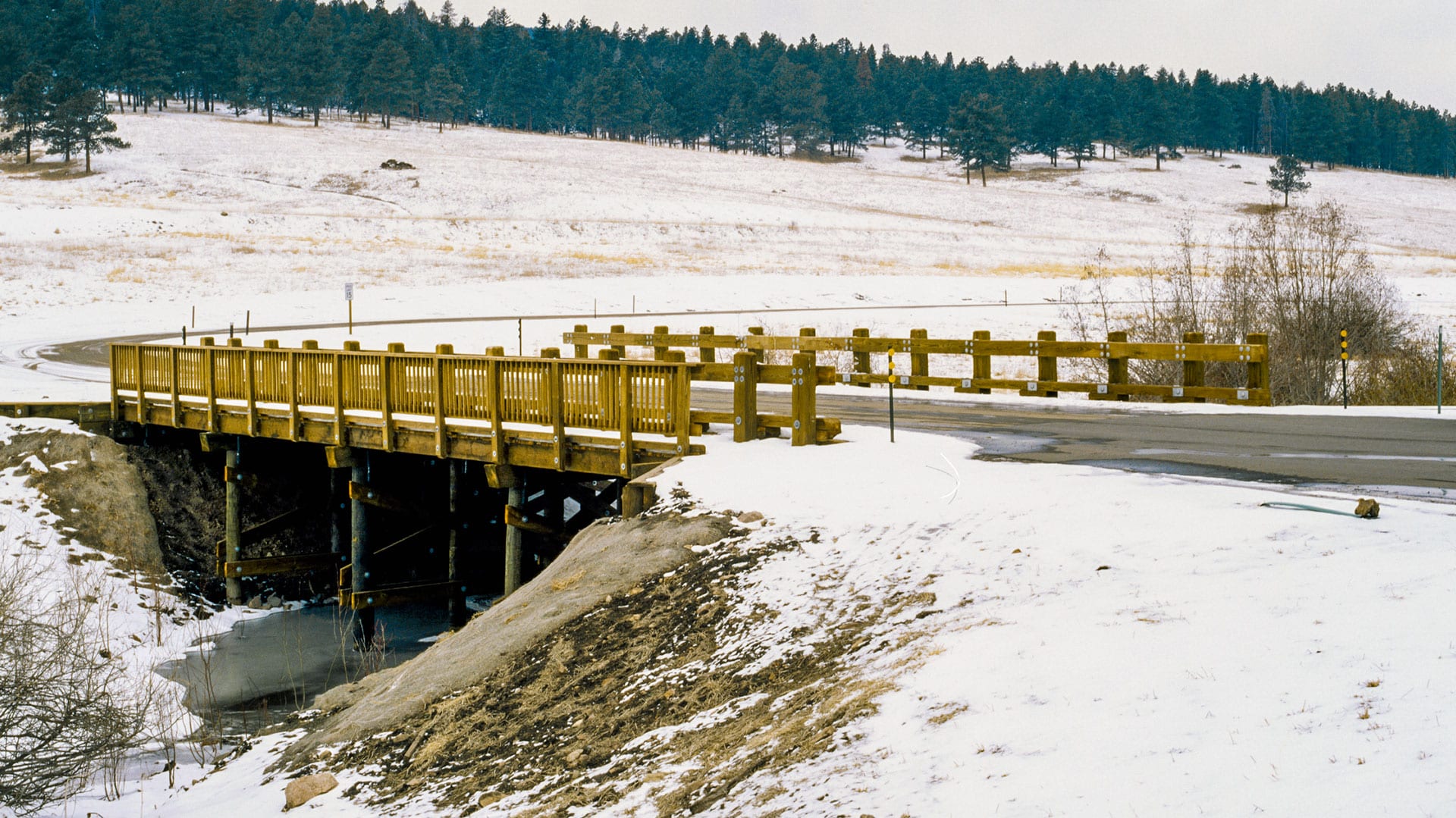
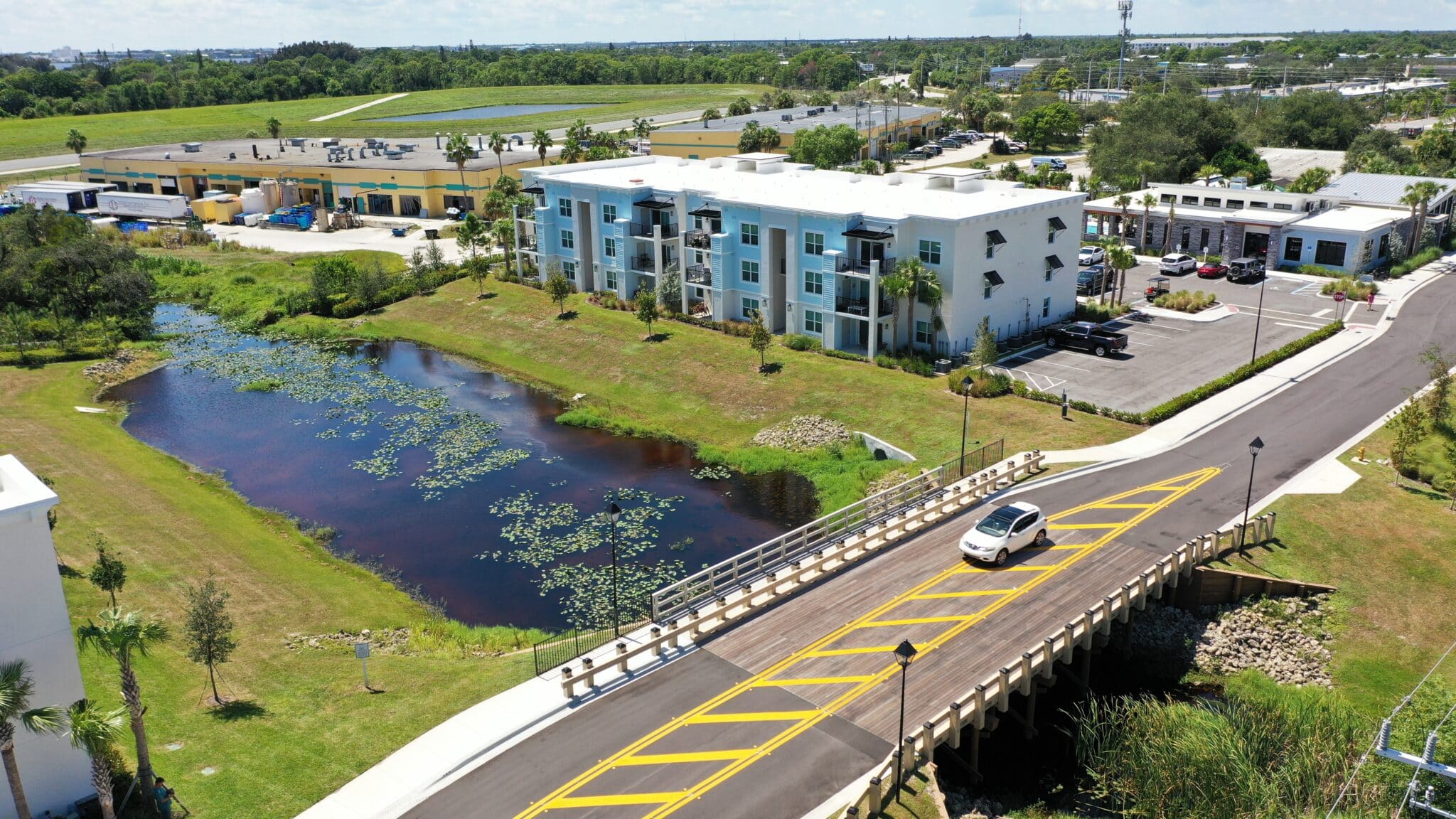
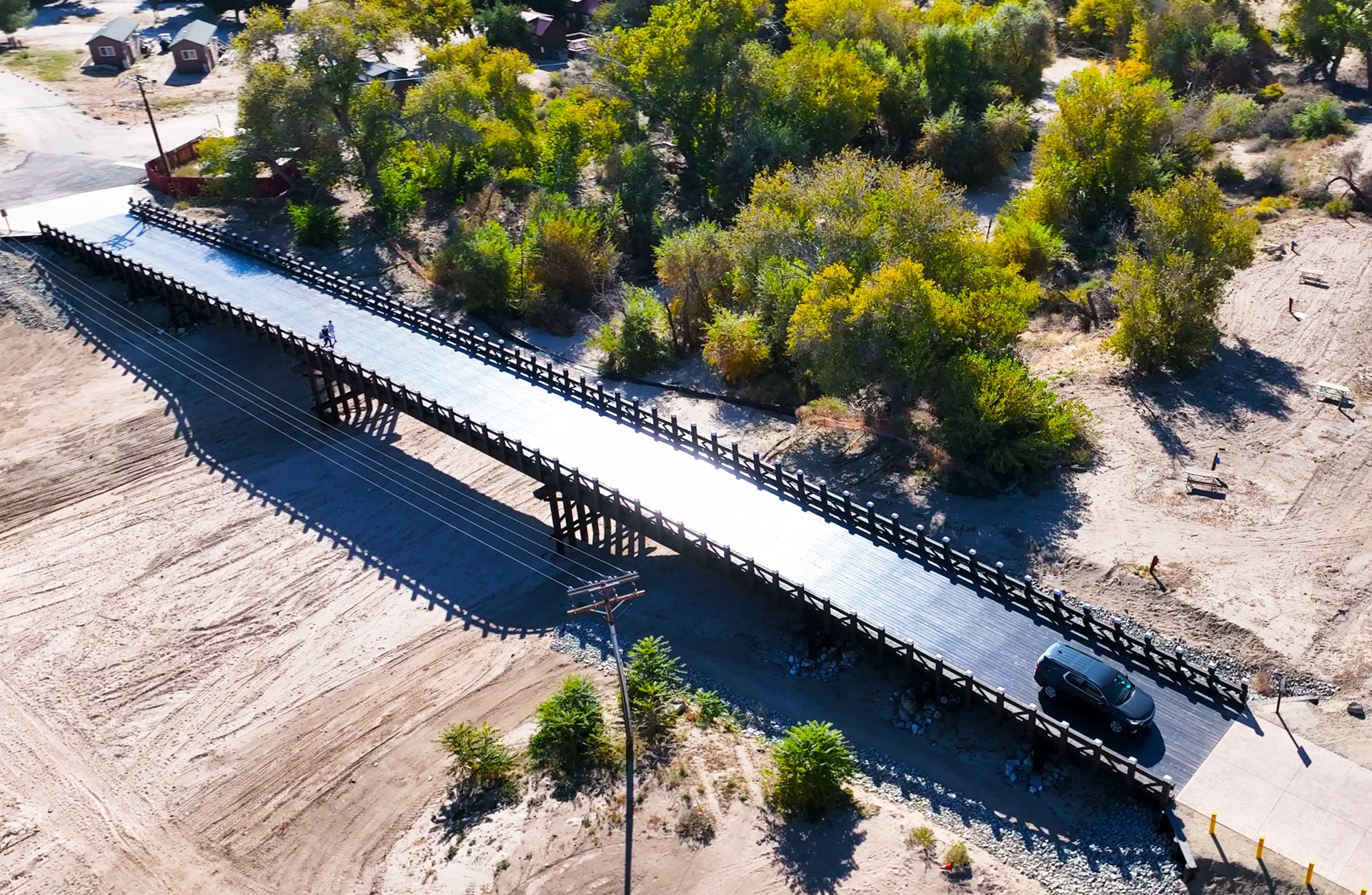
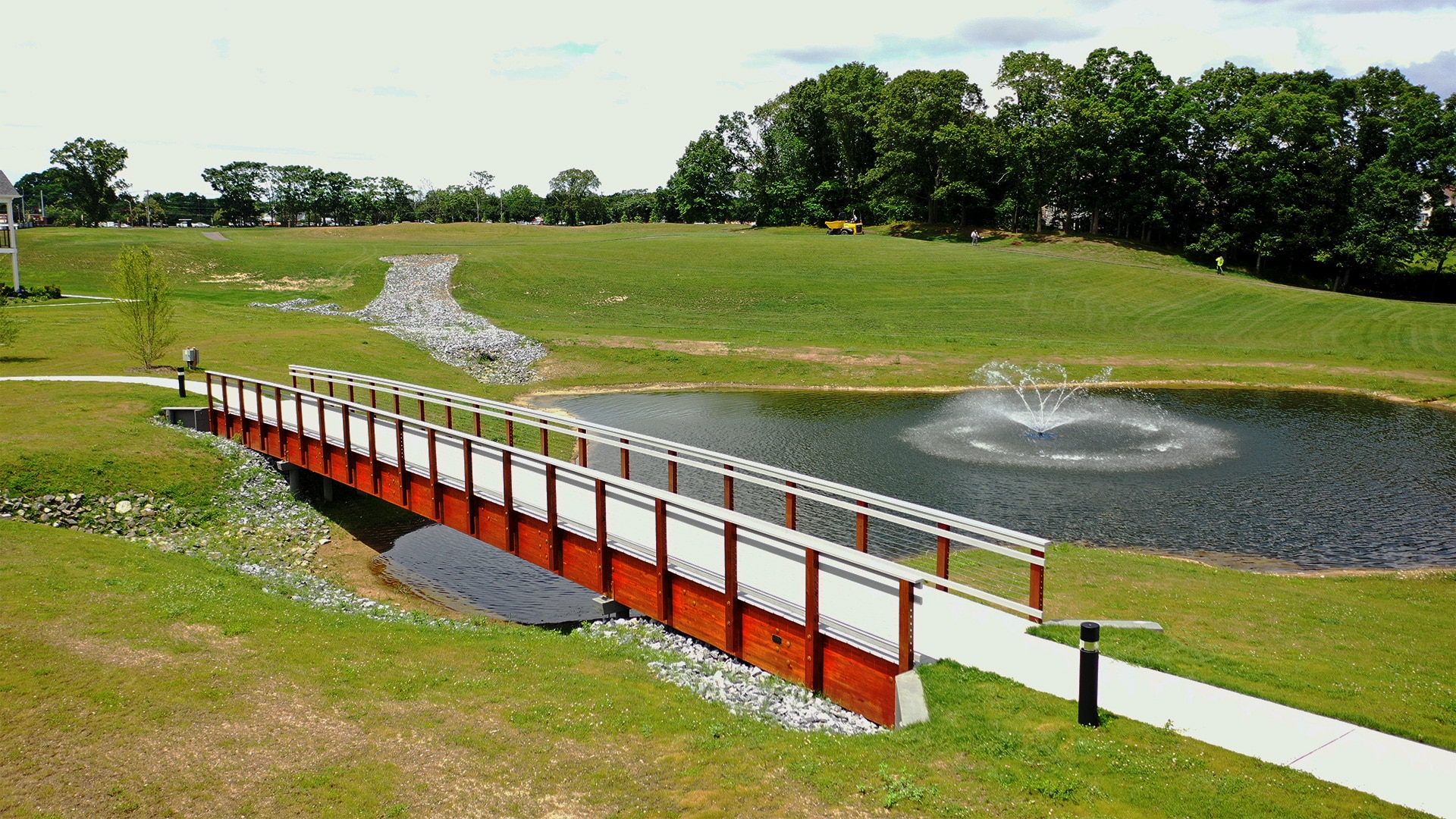
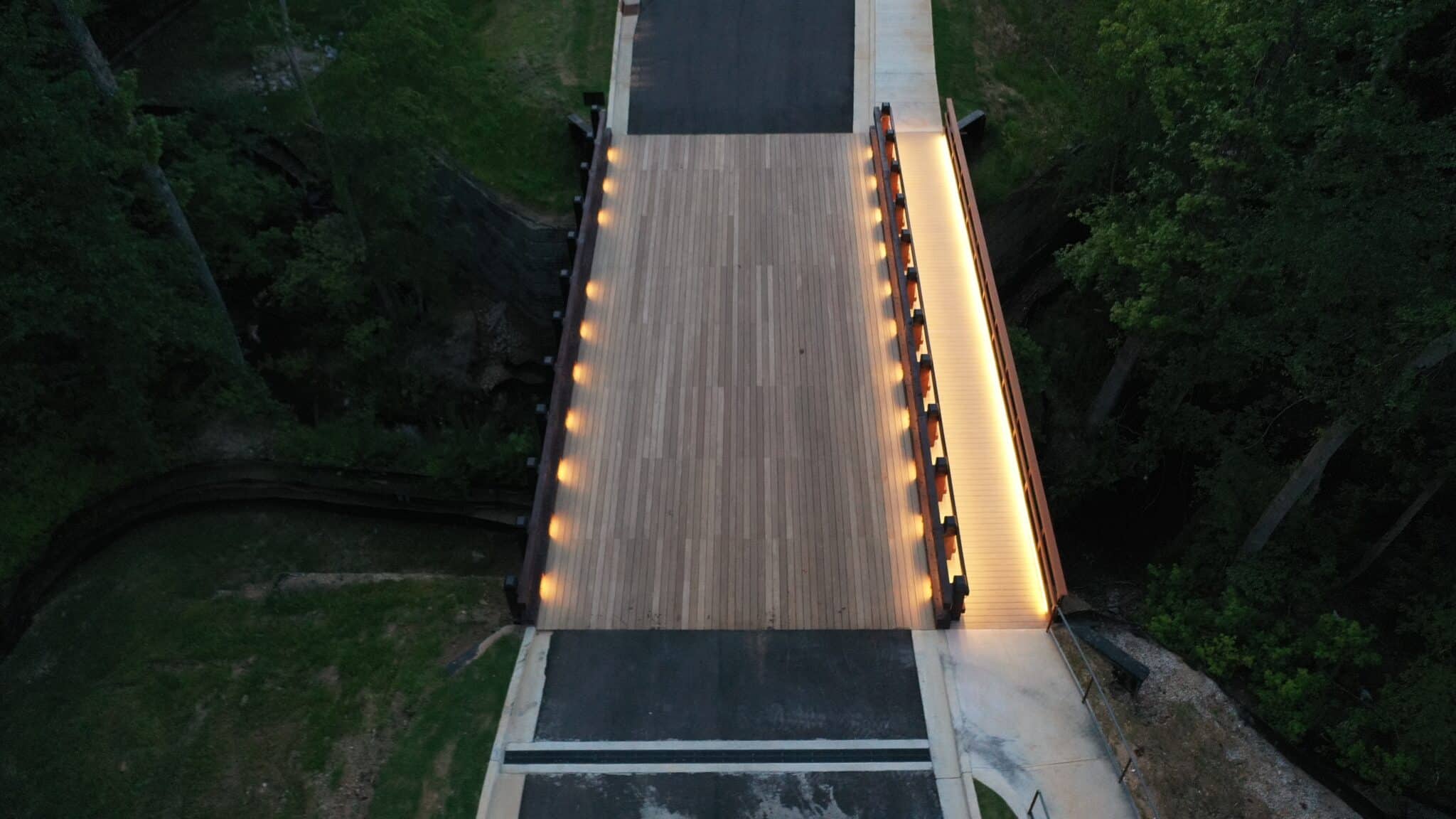
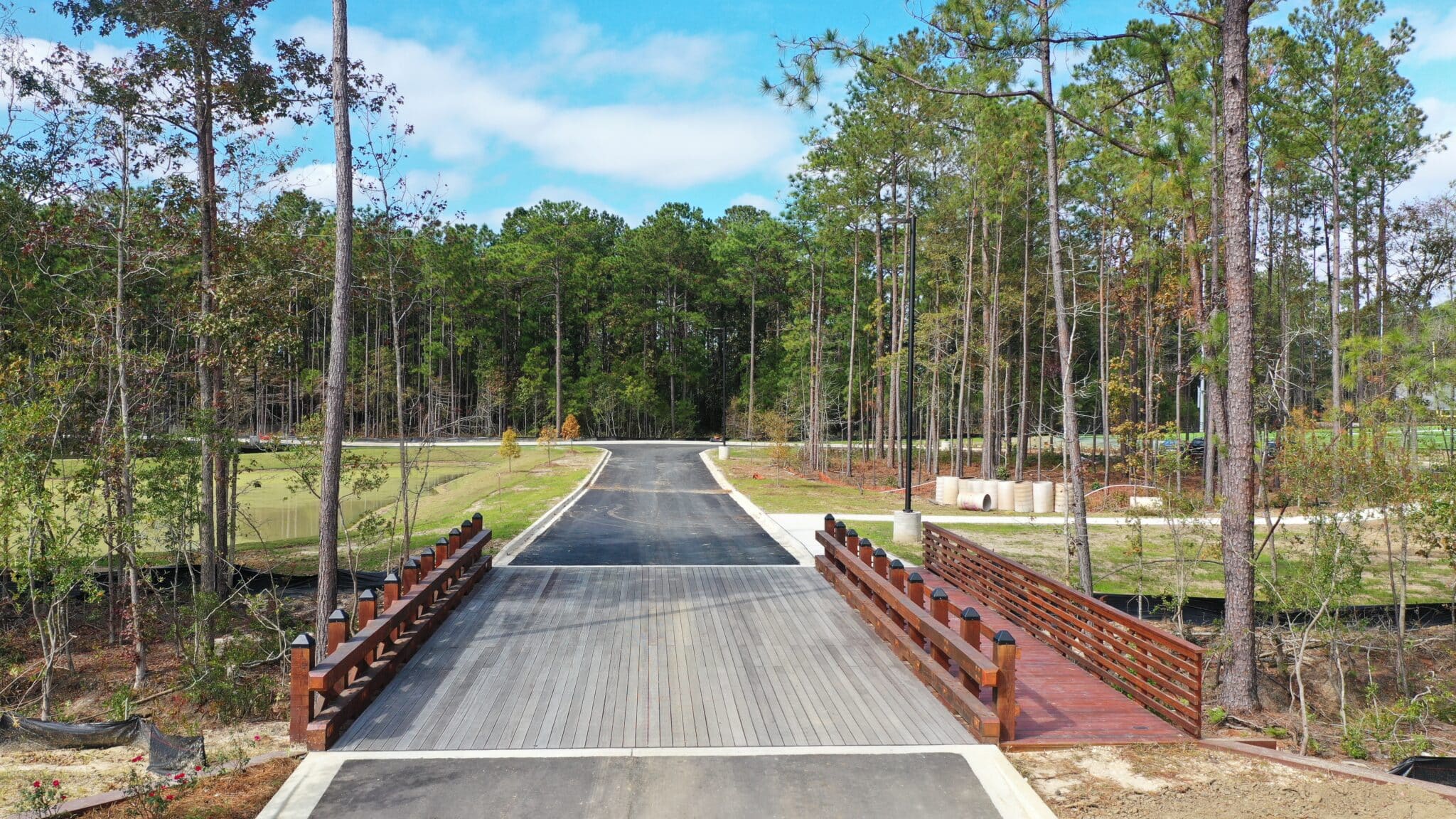
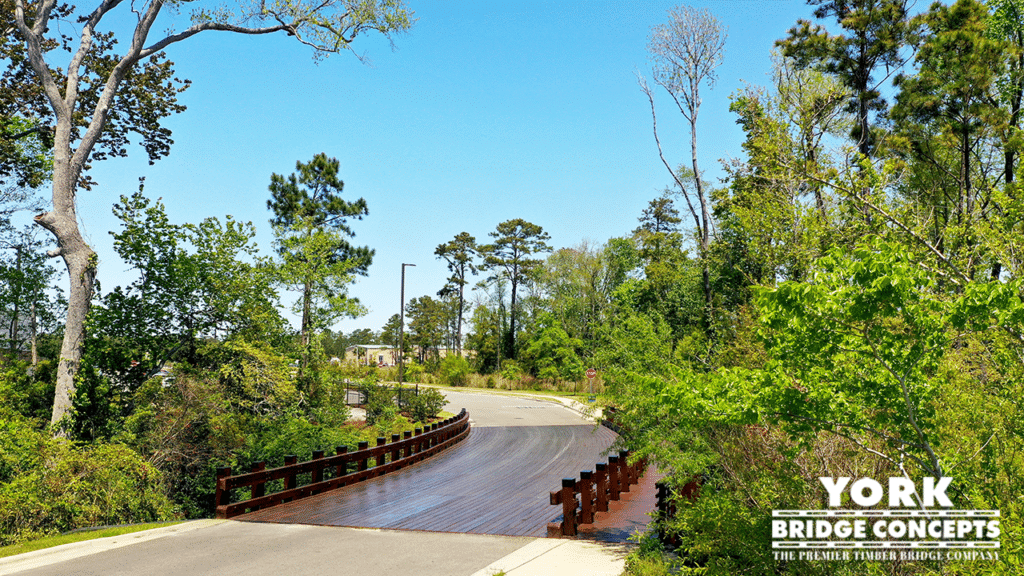
In the heart of the picturesque Chattahoochee Hills, Georgia, the Serenbe community is known for its serene landscapes and commitment to harmonious living. This community recently unveiled an iconic addition, the Serenbe Prom Field Road Vehicular Timber Bridge, brought to life by the renowned craftsmen at York Bridge Concepts. This 50-foot timber bridge serves as a testament to the fusion of artistry, engineering, and environmental responsibility, elevating the essence of Serenbe Prom to new heights.
Specifications
- Vehicular Width:
- 22’ (20’ 8” clear)
- Length:
- 50’
- Height:
- 10’ 9” (above ground)
- Capacity:
- HS20-44
- Construction:
- Ground Level
- Span Type:
- Repetitive Span
- Span Lengths:
- (3)16’ 1.25”
- Material:
CCA Treated Southern
Yellow Pine- Foundation:
Treated Timber Piles &
Abutments (Acrylic Coated
where exposed)- Stringers:
SYP Rough Sawn Stringers
(Acrylic Coated where
exposed)- Vehicular Deck System:
2” SYP Oil Treated
Top Deck
4” SYP Subdeck- Guide Rail System:
Decero™ Design Classic
Series- Crossing:
- Stream
Project Story & Site Context
A Bridge Shaped by Place: Site, Program, and Community Vision
Serenbe is celebrated for walkable hamlets, conservation-minded design, and the quiet drama of meadows and woodlands unfolding at a human pace. A vehicular crossing in a place like this must do more than move cars: it has to belong. The Serenbe Prom Field Road Timber Bridge was conceived as that kind of gateway--subtle, warm, and unmistakably of its setting. The structure's proportion and palette of Southern Yellow Pine create an immediate conversation with the tree canopy and stream corridor below, so arrival feels less like an interruption of nature and more like a continuation of it. Vehicles pass, neighbors wave, and the crossing recedes into the rhythm of daily life--present, capable, and composed.
In shaping this gateway, the design team balanced strength and softness. There's the strength of a repetitive-span system tuned for HS20-44 loading, giving the community reliable service and emergency access; and there's the softness of timber grain, low-sheen protective coatings, and a Classic Series guide rail that keeps lines clean and sightlines open. The result is infrastructure that doesn't insist on attentions, yet rewards a second look--the bolts neatly tucked, the post caps aligned, the rail rhythm echoing the creek's edges. It's a functional crossing, yes, but also a small piece of place-making that elevates the everyday.
Repetitive-Span Logic for Beauty and Maintainability
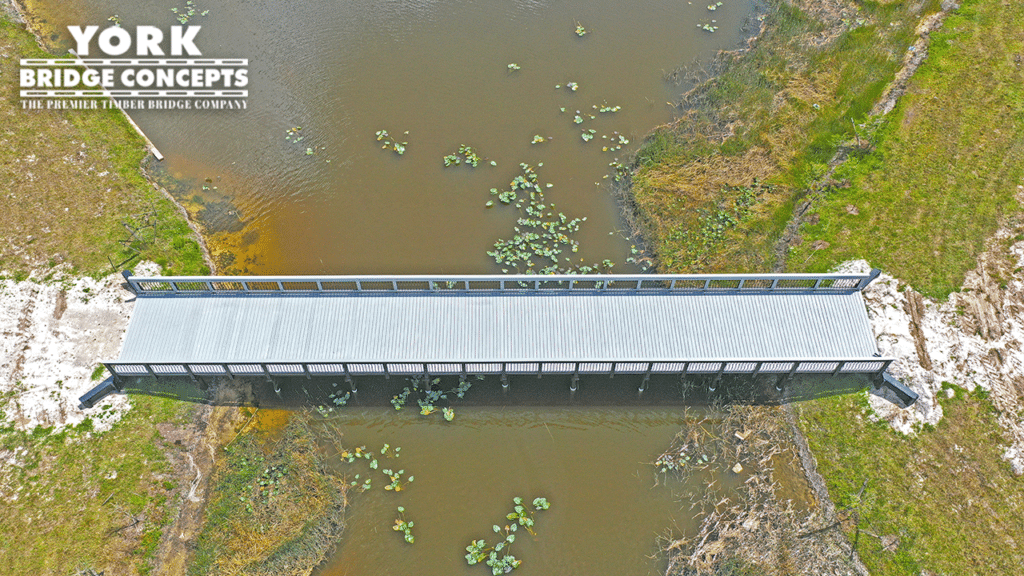
A repetitive-span solution--three spans at approximately 16' 1.25" each--does more than meet performance requirements; it creates a rhythmic, human-scale cadence as you approach the bridge. That cadence is amplified by the board pattern of the deck, the spacing of the Classic Series guide rail members, and the visual "breathing room" around each pile group. Repetition reduces custom fabrication points, streamlines inspection routines, and allows for targeted maintenance over time--practical advantages that translate into lifecycle value for the community association.
Material Palette: Natural Warmth, Engineered Durability
The bridge relies on CCA-treated Southern Yellow Pine (SYP) for primary structure--stringers, piles, and abutments--augmented with acrylic coatings on exposed elements for added protection and cleanability. On the driving surface, the deck system pairs a 4" SYP subdeck with a 2" oil-treated SYP top deck. The result is a warm, tactile surface that feels appropriate in a wooded setting while standing up to turning movements, light utility traffic, and seasonal moisture. The Decero™ Design Classic Series guide rail system introduces a fine, architectural detail that frames views without enclosing them--important for a community that values transparency to nature.
Ground-Level Construction: Minimal Profile, Maximum Fit
Because this is a ground-level construction approach, the team could knit the structure into the approach grades without extensive retaining elements, keeping transitions smooth and intuitive for drivers and emergency vehicles. A ground-level profile also helps maintain horizontal sightlines across the stream corridor, preserving the visual connection that makes Serenbe special.
How Residents Experience the Crossing
Approaching the bridge, drivers encounter a subtly framed view--classic guide rail rhythm to either side, deck lines leading across the water, and vegetation that softens the threshold. Crossing at neighborhood speeds, the texture of the timber top deck cues attentiveness without harshness; it's a sensory reminder that you are moving through an ecologically sensitive place. At night, low-glare lighting can be integrated along approaches or adjacent landscape (per community standards), supporting safety while protecting dark-sky quality for stargazing and nocturnal habitat.
Value Beyond the Span
Structurally, the bridge delivers clear capacity (HS20-44) and dependable geometry; civically, it functions like a neighborhood gateway. As Serenbe grows and programs its outdoor spaces--farmers' markets, wellness events, nature-based education--the bridge stands ready as a durable connector that feels handcrafted for the setting.
Why York Bridge Concepts Was Chosen
York Bridge Concepts (YBC) has been at the forefront of the timber bridge industry. Renowned for our craftsmanship and innovation, we specialize in creating breathtaking timber structures that seamlessly blend with their natural surroundings. Our team of skilled artisans, engineers, and visionaries have transformed countless landscapes into stunning works of art. The Serenbe Prom Vehicular Timber Bridge is a testament to our dedication to excellence.
Aesthetic Detailing & the Classic Series Guide Rail
Why Classic Matters: The Rail as Architectural Language
Rails are the "face" of a bridge at pedestrian scale. The Decero™ Design Classic Series guide rail chosen here balances mass and transparency, with member spacing that preserves sightlines to the stream while reading as robust and safe to drivers and maintenance crews. In practice, this means the rail doesn't just protect--it frames views, echoes the verticals of surrounding trees, and provides a crisp edge to the roadway.
Color, Coating, and Grain
Acrylic coatings on exposed timber elements keep surfaces brighter and more uniform over time, reducing UV degradation and wash-off staining while allowing the grain to remain visible at close range. The oil-treated top deck retains a rich, natural tone that deepens slightly as it weathers, harmonizing with the mixed hardwood understory along the stream. Paired with the Classic rail, the palette reads as intentionally "Serenbe": refined, natural, and warm.
Proportions at Vehicle Speed
At 20-25 mph neighborhood speeds, repeated verticals and deck lines become the primary visual cues. The Classic rail modules are scaled so those cues feel consistent from approach to midspan to exit, which reduces visual fatigue and reinforces driver confidence. This is more than aesthetics; it's environmental graphic design translated into timber geometry.
Edges that Invite Stewardship
When details look cared for, people tend to care for them. The crispness of the rail terminations, the alignment of stringers, and the uniform decking reveal craftsmanship that signals "this is maintained." Over time, that perception encourages residents and grounds crews to report small issues early, sustaining the bridge's condition and reducing total cost of ownership.
Designed To Compliment Nature
The design of the Serenbe Prom Vehicular Timber Bridge is a harmonious blend with the natural landscapes. Crafted to complement the lush Chattahoochee Hills, the bridge's repetitive design incorporates both structural strength and visual appeal. Every angle and detail has been carefully considered to create a structure that not only serves its purpose but also enhances the natural beauty of its surroundings.
Construction Approach & Environmental Protections
Building in a Stream Corridor: Controls, Sequencing, and Clean Work Zones
Working adjacent to water requires discipline. On projects like Serenbe Prom, YBC's field teams choreograph staging to keep equipment and materials on stabilized pads, implement silt fencing and inlet protections, and time operations around forecasted weather windows. Material laydown is consolidated away from the channel, and decking is installed in a way that limits drop-through debris. Where cutting or drilling is required near exposed timber, teams deploy catchment to prevent shavings from entering the water. These practices uphold the project's sustainability goals through the build, not just in the finished product.
Pile and Abutment Practices
Treated timber piles establish axial and lateral capacity with minimal embodied carbon compared to many alternatives. Where abutments are exposed, acrylic coatings help resist splash-zone wear and simplify periodic cleaning. The interface between abutment and approach fill is compacted in controlled lifts to create a smooth transition, limiting settlement that can otherwise generate early-life maintenance.
Stormwater & Erosion
Although the bridge deck is a driving surface, it's also a roof of sorts for the stream. Good detailing sheds water cleanly to the sides, where stabilized shoulders or vegetation can slow, filter, and absorb runoff. Temporary erosion controls remain until vegetative cover is re-established, and any disturbed areas are restored with native seed mixes that match Serenbe's ecological palette.
Quality Assurance in the Field
A simple rule guides YBC crews: measure twice, drill once. In practice, field QA/QC checklists track pile alignment, stringer elevations, deck fastening patterns, rail plumbness, and hardware torque. Combined with photographic documentation and commissioning sign-off, these steps create a clear handover record for community asset management.
Performance & Engineering: HS20-44, Reptitive Span, and Ground-Level Geometry
Capacity in Context: Why HS20-44 Matters
HS20-44 capacity can accommodate typical community vehicles, delivery trucks, moving vans, and emergency response apparatus within the designed limits and approach geometry. For a community like Serenbe, that means residents won't encounter weight-restricted headaches on routing days or during special events. The structural system--timber stringers, subdeck, and top deck--works as an integrated assembly, transferring loads efficiently to piles and abutments.
Repetitive Span = Predictable Response
Repetition isn't just elegant; it's analytically advantageous. Consistent span lengths and member sizes simplify modeling assumptions, create uniform deflection patterns, and make field inspections more straightforward. Inspectors and maintenance crews can compare like-to-like conditions across the three spans, spotting deviations quickly and addressing them proactively.
Deck System: Working from the Top Down
Under wheel loads and turning forces, the 2" oil-treated SYP top deck provides the "sacrificial" wear layer that can be spot-replaced in future maintenance cycles without disturbing the 4" SYP subdeck below. This layered approach reduces long-term cost because the structural subdeck--more complex and labor intensive to replace--remains protected.
Serviceability & Comfort
Beyond ultimate strength checks, YBC designs for serviceability--controlling vibrations and deflections so the crossing feels solid at neighborhood speeds. Timber's inherent damping characteristics provide a comfortable ride experience--quiet, with subtle compliance--reinforcing the community's tranquil identity.
Environmental Responsibility: A Guiding Principle
York Bridge Concepts takes environmental responsibility seriously. The Serenbe Prom Vehicular Timber Bridge is a prime example of our commitment to sustainability. Constructed using sustainably sourced timber Southern Yellow Pine, this bridge embodies our dedication to preserving nature while creating functional art. Our eco-friendly practices extend to the construction process, where we employ best practices for construction debris management to protect the local ecosystem.
Seamless Integration with Nature
One of the key features of the Serenbe Prom Vehicular Timber Bridge is its ability to seamlessly integrate with the environment. The use of timber in construction creates a natural and inviting appearance, allowing the bridge to become an integral part of the landscape. The bridge serves not only as a means of transportation but also as a pathway for residents and visitors to immerse themselves in the beauty of Chattahoochee Hills.
Enhanced Accessibility
The Serenbe Prom Vehicular Timber Bridge was designed with accessibility in mind. It provides easy passage for vehicles of all sizes, ensuring that residents and guests can move effortlessly through the community.
Craftsmanship Beyond Compare
At York Bridge Concepts, we take pride in our unparalleled craftsmanship. Our team of artisans meticulously crafts every timber, post, and railing, ensuring that each element aligns with our high standards of quality. The result is not just a bridge but a work of art that will stand the test of time, enchanting generations to come.
A Community Symbol
The Serenbe Prom Vehicular Timber Bridge is more than just a structure; it is a symbol of community spirit and progress. It embodies the unity and vision of Serenbe Prom residents and serves as a reminder of their commitment to preserving nature while enhancing their quality of life. This bridge will continue to be a cherished landmark, drawing residents and visitors alike to its beauty and charm.
Collaboration In The Community
The Serenbe Prom Vehicular Timber Bridge is a testament to the power of collaboration and artistry. York Bridge Concepts is honored to have been a part of this transformative project, creating a bridge that connects the community, and enhances the natural beauty of Chattahoochee Hills.
As we look to the future, we are excited to continue our journey, creating timeless structures that harmonize with nature and elevate the human experience.
Community Impact, Operations, and Lifecycle Stewardship
A Neighborhood Gateway with Everyday Utility
The bridge's siting creates a natural gateway sequence: approach, threshold, and release back into the street network. That sequence is read by residents as "home," by guests as "arrival," and by service providers as a clear route to their destination. It's infrastructure that pulls triple duty--functional, symbolic, and wayfinding.
Programming & Events
Serenbe's calendar spans markets, wellness activations, and seasonal gatherings. The bridge's geometry and guide rail transparency help event planners with logistics--clear sightlines for volunteer marshals, intuitive crowd movement, and defined edges that keep vehicles where they belong. On-call signage can be affixed at approaches without marring the rail system, and removable bollards can be coordinated if the community wishes to limit vehicular access during special programming.
Operations: The Practical Details
- Snow & Ice: Timber's lower thermal conductivity means icing can differ from adjacent pavements. Local SOPs can include early salting/sanding at the deck edges and periodic checks at dawn during freeze-thaw cycles.
- Debris: Leaf litter near streams is expected; quarterly sweeping (or as needed in fall) keeps drainage paths clear.
- Fastener Checks: Annual torque checks at rail connections and representative deck fasteners are quick wins that sustain performance.
- Cleaning: Mild detergent and low-pressure rinsing preserve acrylic coatings on exposed components; avoid harsh solvents.
Lifecycle Planning
A simple asset plan might schedule:
- Year 1-2: Baseline inspection and photo log; touch any abrasions on coated elements
- Year 5: Spot replacement of high-wear top-deck boards at turn-in/turn-out areas.
- Year 10-12: Broader surface refresh on top deck, contingent on traffic and maintenance history.
- Ongoing: Keep vegetation pruned 3-5 feet from rails for airflow and visibility, reducing dry-leaf accumulation and promoting even drying after rain.
Sustainability That Endures
Timber sequesters carbon throughout its service life. Pairing that with durable detailing, protective coatings, and a maintenance culture extends the period in which the bridge remains a net carbon store. In a community that highlights regenerative practices, that narrative means--not just at ribbon-cutting but decades later.
FAQs
Frequently Asked Questions About the Serenbe Prom Vehicular Timber Bridge
What vehicle loads can the bridge handle?
It's designed for HS20-44, covering standard community vehicles, delivery trucks, and emergency response apparatus within the project's approach geometry.
Why use a repetitive-span timber solution here?
Three near-equal spans create structural efficiency, simplify inspection, and deliver a calm visual rhythm that suits a natural setting.
What's the deck made of, and how is it maintained?
A 4" SYP subdeck supports a 2" oil-treated SYP top-deck--the top layer takes the wear and can be spot-replaced, preserving the subdeck for long-term value.
Are the exposed structural elements protected?
Yes--exposed abutments and stringers receive acrylic coatings for added durability and easier cleaning over time.
How does the guide rail design support aesthetics and safety?
The Decero™ Design Classic Series guide rail balances transparency and protection, framing views while maintaining robust containment at vehicular scale.
What's the overall size of the bridge?
Length is 50', with a vehicular width of 22' (20' 8" clear) and a height about 10' 9" above grade--proportions tuned to the corridor and approach geometry.
Why ground-level construction here?
Ground-level construction allows for the equipment to work around the structure for quicker assembly.
How were environmental protections addressed during construction?
Stabilized staging, erosion controls, debris catchment, and careful sequencing help protect the stream corridor from start to finish.
How long will the bridge last?
With routine inspection, timely deck upkeep, and coating maintenance, timber vehicular bridges like this are designed for decades of service, sustaining both performance and appearance.
Can the bridge accommodate future community needs?
Yes. The modular deck and rail assemblies support localized upgrades, and the repetitive-span framework makes targeted maintenance straightforward as traffic patterns evolve.
Does the bridge require special winter operations?
Not special--just attentive. Early morning checks in freeze-thaw periods, conservative de-icing practices, and periodic sweeping keep traction and drainage optimal.
How does the bridge contribute to Serenbe's identity?
It's an everyday connector that doubles as a crafted gateway--its materials, proportions, and transparency echo the community's commitment to nature and design.
Experience the Serenbe Prom Vehicular Timber Bridge
We invite you to witness the elegance and craftsmanship of the Serenbe Prom Vehicular Timber Bridge and our other Serenbe Community bridge projects firsthand. Experience the artistry and expertise of York Bridge Concepts that has transformed a vision into an enduring masterpiece.
All Feature Projects
What's Best: A Culvert Or A Timber Bridge?
What Is The Best Span Type For My Project?
Which Load Capacity I Need?
How Do I Cross An Environmentally Sensitive Area?
How Do I Create A Landmark?
How Long Does A Timber Bridge Last?
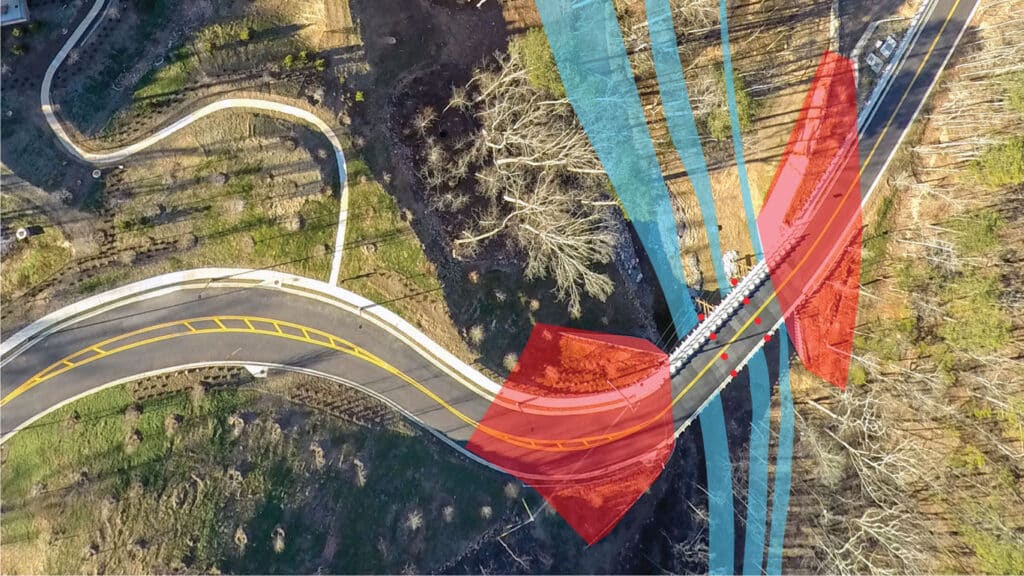
Culvert Or Bridge
If you're considering using a culvert for your crossing project. Click below to understand the best fit for your project.
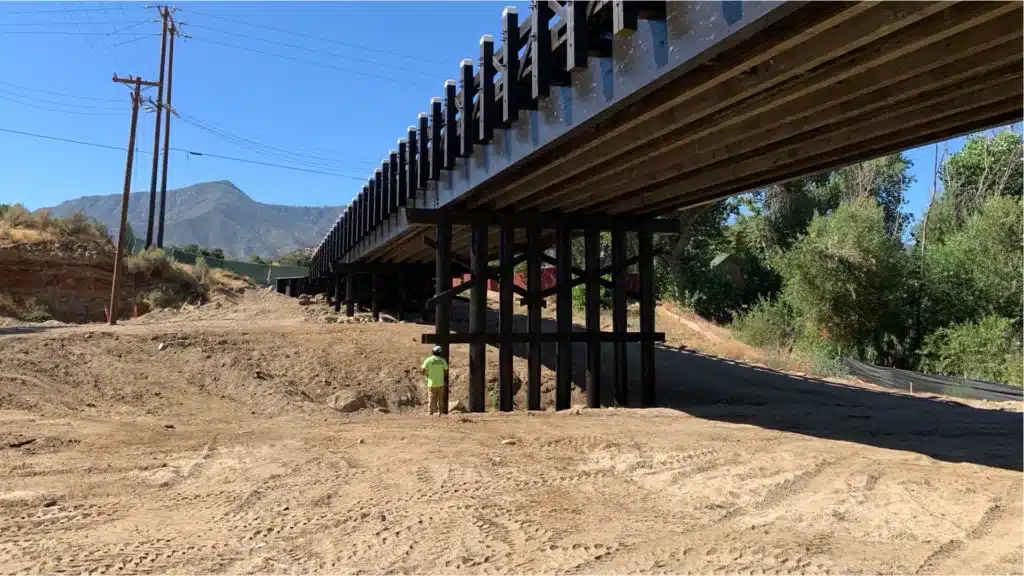
Spanning Solutions
Spanning a crossing is one of the most important aspects of your crossing project. Find the best solution for your crossing needs.
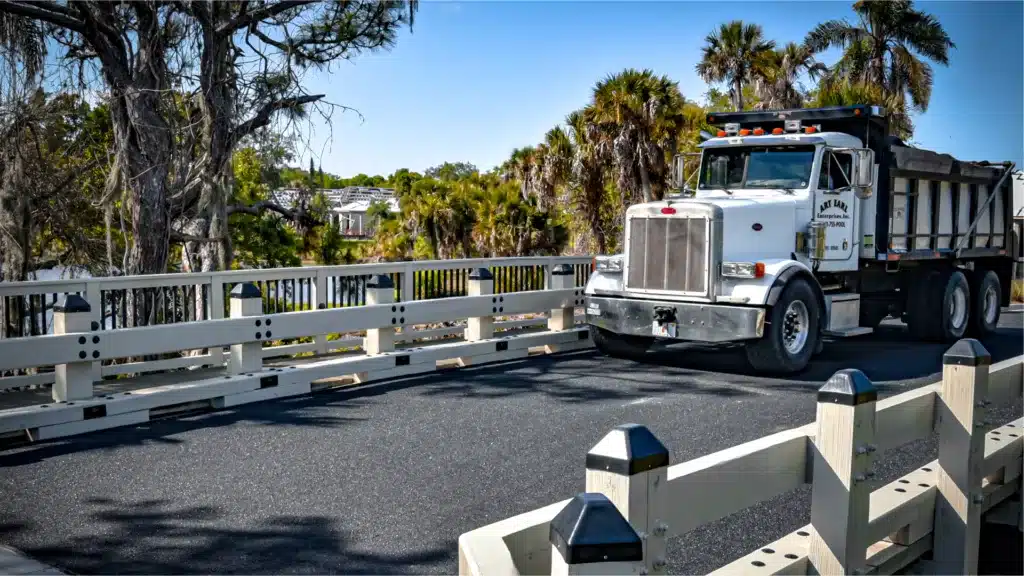
Uses & Capacities
The load capacity of a timber bridge may surprise you. See specs for different loads and uses that will help your decision-making process.