

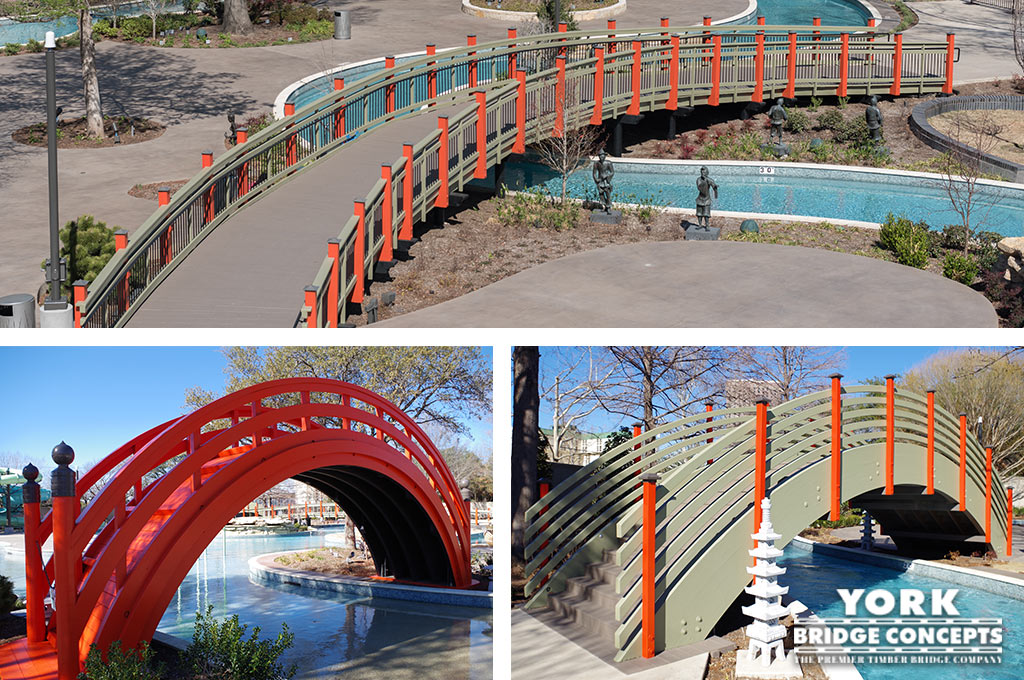
Hilton Anatole Hotel Pedestrian Bridges – Dallas, TX
June 19, 2018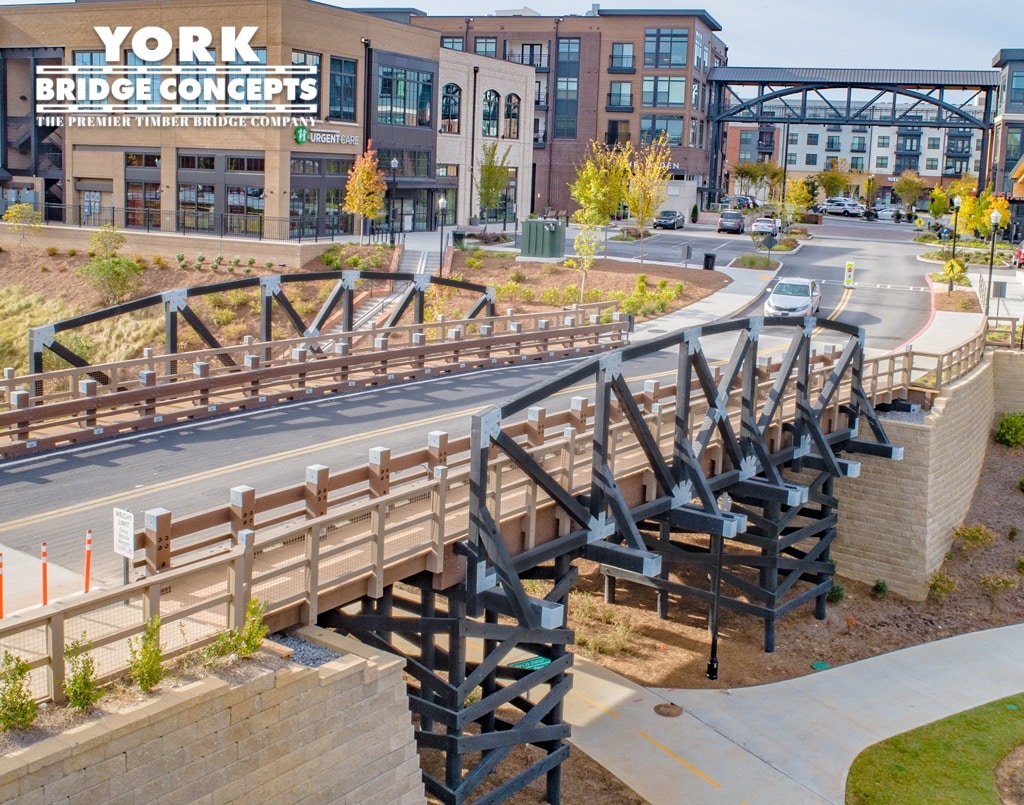
Parkview on Peachtree Vehicular Bridge – Chamblee, GA
June 19, 2018

Beauty & Durability With Timber Bridges in Saltwater Environments
Whitney Wharf Pedestrian Bridge – Saltwater Timber Bridge Design in Hingham, Massachusetts
A Waterfront Timber Bridge Designed for Coastal Resilience
The Whitney Wharf Pedestrian Bridge in Hingham, Massachusetts represents the intersection of waterfront accessibility, environmental stewardship, and long-term timber bridge engineering. Designed and constructed by York Bridge Concepts (YBC), this saltwater pedestrian bridge connects the Hingham Maritime Center at Barnes Wharf with Veteran’s Memorial Park, the public beach, boat ramp, and waterfront amenities through a thoughtfully engineered multiple-span timber crossing.
Positioned directly within a challenging coastal environment, the Whitney Wharf project demonstrates how modern timber bridge construction can successfully perform in tidal and saltwater conditions while enhancing the surrounding character of a historic maritime community. The bridge was designed to accommodate large pedestrian volumes, support maintenance vehicles, and withstand the demanding realities of fluctuating tides, marine exposure, and waterfront weather conditions.
As coastal communities continue investing in waterfront revitalization, boardwalk systems, marina access, and pedestrian connectivity, timber bridges are becoming an increasingly attractive solution for municipalities, developers, parks departments, and waterfront planners. Timber’s natural appearance, sustainable properties, and adaptability make it ideal for projects where aesthetics, environmental sensitivity, and long-term durability must work together.
The Whitney Wharf Pedestrian Bridge serves as a leading example of how engineered timber infrastructure can thrive in saltwater environments while preserving the identity and functionality of a coastal destination.
Specifications
| Width: | 12’ (11’-7” Clear) |
| Length: | 270' |
| Height: | 17' above grade |
| Capacity: | 90 PSF |
| Construction: | Deck Level |
| Span Type: | Multiple Span |
| Material: | CCA/CA-C Treated Southern Yellow Pine |
| Foundation: | Timber Piles & Abutments (Acrylic/Polymer Coated where exposed) |
| Stringers: | SYP S4S Stringers and Rough Sawn Timber Stringers (Acrylic/Polymer Coated where exposed) |
| Deck System: | 1-1/2” Timber Deck |
| Handrail: | Decero™ Wharf Design Series |
| Crossing: | Saltwater Inlet |
“During the summer of 2016, our community celebrated the completion of the Whitney Wharf Pedestrian Bridge. The bridge had been a long-envisioned ambition of ours and the Town is pleased to see this goal become reality. We want to thank the YBC crews and their overall team for the excellent job they did – if we have another opportunity like this, we would be delighted to work with your firm again. YBC is a great team!”
Project Overview: Whitney Wharf Waterfront Bridge
Located in Hingham, Massachusetts, the Whitney Wharf Pedestrian Bridge was developed as a grant-funded infrastructure improvement designed to reconnect the waterfront experience for residents and visitors alike. The crossing links several important community amenities while improving pedestrian accessibility along the shoreline.
This fully ADA-compliant timber pedestrian bridge spans the saltwater channel with a multiple-span configuration designed to minimize disruption to the marine environment while providing a safe and visually striking connection.
The project required a durable structure capable of supporting H-5 loading criteria to accommodate pedestrian traffic along with facility management and maintenance vehicles. YBC’s Decero™ Design Team developed a bridge solution that blended waterfront aesthetics with practical engineering requirements.
Key project features include:
- Multiple-span timber pedestrian bridge design
- Saltwater and tidal environment construction
- Fully ADA-compliant access
- Deck-Level Construction® methodology
- Coastal-inspired architectural detailing
- H-5 load-rated pedestrian bridge system
- Timber pile-supported foundation system
- Acrylic/polymer-coated exposed structural components
- Nautical gray waterfront color palette
- Decorative lighting and custom railing elements
The finished structure provides more than simple connectivity. It creates a welcoming waterfront experience that complements the maritime heritage of Hingham while offering long-term durability within a demanding coastal setting.

Why Timber Bridges Are Ideal for Saltwater Environments
Coastal infrastructure projects require materials and construction systems capable of withstanding moisture, wind, UV exposure, tidal fluctuations, and corrosive marine conditions. While many people assume concrete or steel are the only viable options for waterfront structures, engineered timber bridges have become a proven and highly effective solution for saltwater applications.
Modern timber bridge engineering combines pressure-treated structural timber, advanced coating systems, corrosion-resistant fasteners, and environmentally conscious construction methods to deliver exceptional longevity and performance.
Natural Compatibility with Waterfront Environments
One of timber’s greatest advantages in coastal environments is its ability to blend naturally with surrounding landscapes and waterfront architecture. Unlike large concrete structures or heavily industrial steel systems, timber bridges soften the visual impact of infrastructure within natural and recreational settings.
At Whitney Wharf, the bridge’s nautical gray palette and traditional detailing integrate seamlessly with the surrounding marina, shoreline, and public gathering spaces. This architectural harmony enhances the waterfront experience rather than overwhelming it.
For municipalities and waterfront developers, this aesthetic advantage is especially important in:
- Coastal parks
- Marinas and piers
- Harbor districts
- Nature preserves
- Public beaches
- Mixed-use waterfront developments
- Resort communities
- Historic waterfront districts
Timber bridges create a warm and inviting atmosphere while still delivering structural performance and durability.
Saltwater Timber Bridge Engineering
Saltwater bridge engineering requires specialized detailing and material selection. Marine environments accelerate corrosion, expose structures to constant moisture cycles, and create unique maintenance demands.
York Bridge Concepts addresses these challenges through carefully engineered systems specifically developed for waterfront and coastal infrastructure.
Pressure-Treated Structural Timber
The Whitney Wharf Bridge utilizes pressure-treated Southern Yellow Pine structural components designed for long-term exposure in marine and wetland conditions.
Pressure treatment penetrates the wood fibers with preservative systems that help protect against:
- Rot
- Fungal decay
- Moisture intrusion
- Insect activity
- Marine exposure deterioration
This treatment process dramatically increases the lifespan and performance of timber structures operating in demanding environments.
Acrylic/Polymer Protective Coatings
Exposed structural members on the Whitney Wharf project utilize acrylic/polymer coating systems to further enhance protection against moisture and UV degradation.
These coating systems help:
- Reduce moisture absorption
- Protect against weathering
- Preserve the timber appearance
- Extend maintenance cycles
- Improve durability in marine climates
- Maintain architectural consistency over time
By combining pressure treatment with advanced coatings, YBC creates waterfront bridge systems capable of long-term performance in harsh saltwater conditions.
Corrosion-Resistant Fasteners & Components
One of the most critical aspects of marine bridge engineering is preventing corrosion within connection systems and hardware.
Saltwater environments can rapidly deteriorate standard metal fasteners and structural connections. Coastal timber bridges therefore require carefully selected corrosion-resistant materials such as:
- Stainless steel fasteners
- Marine-grade hardware
- Hot-dipped galvanized components
- Specialized protective coatings
These systems help preserve structural integrity while minimizing long-term maintenance requirements.
Designing Bridges for Tidal Conditions
One of the unique engineering challenges of the Whitney Wharf project was constructing within a tidal environment featuring more than ten feet of fluctuating water levels.
Tidal construction introduces complex logistical and engineering considerations that must be addressed throughout both design and construction phases.
Understanding Tidal Infrastructure Challenges
Saltwater tidal crossings experience continual changes in water elevation and environmental conditions. These changes affect:
- Foundation installation
- Construction access
- Structural loading
- Erosion considerations
- Material exposure
- Maintenance accessibility
- Long-term durability
For the Whitney Wharf Bridge, YBC’s construction team coordinated installation activities around changing tidal conditions while utilizing Deck-Level Construction® methodologies to reduce environmental impact.
Timber Pile Foundation Systems
The bridge foundation system utilizes timber piles and abutments engineered to support the multiple-span crossing while adapting to the coastal environment.
Pile-supported systems are commonly used for waterfront infrastructure because they:
- Reduce environmental disturbance
- Minimize excavation requirements
- Adapt to varying subsurface conditions
- Perform well in marine environments
- Support elevated bridge systems over tidal waterways
Timber piles have been successfully utilized in waterfront infrastructure for generations and remain an effective foundation solution when properly engineered and protected.

Deck-Level Construction® for Sensitive Waterfront Environments
Traditional bridge construction methods can create significant disruption to wetlands, tidal channels, marine habitats, and shoreline ecosystems. York Bridge Concepts utilizes its proprietary Deck-Level Construction® approach to reduce these impacts.
What Is Deck-Level Construction?
Deck-Level Construction® is a methodology where bridge construction activities are performed from the deck level itself rather than relying heavily on intrusive ground-based equipment access.
This process offers several environmental advantages:
- Reduced disturbance to wetlands
- Minimized shoreline disruption
- Less environmental compaction
- Reduced need for temporary access roads
- Lower impact on sensitive ecosystems
- Improved construction efficiency in difficult terrain
For waterfront projects like Whitney Wharf, this construction approach allows YBC to work more effectively within environmentally sensitive areas while maintaining project quality and efficiency.
ADA-Compliant Waterfront Accessibility
Modern waterfront infrastructure must prioritize accessibility for all visitors.
The Whitney Wharf Pedestrian Bridge was designed as a fully ADA-compliant structure, ensuring safe and comfortable access for pedestrians of varying mobility levels.
The Importance of Accessible Waterfront Design
Accessible pedestrian bridges improve inclusivity while helping communities maximize public access to waterfront amenities.
ADA-compliant design considerations include:
- Appropriate slopes and grades
- Safe walking surfaces
- Accessible bridge widths
- Continuous handrail systems
- Proper transitions and approaches
- Slip-resistant decking systems
- Adequate turning clearances
For municipalities and public waterfront developments, accessible infrastructure expands usability while enhancing overall community value.
Architectural Character Inspired by Maritime Heritage
The Whitney Wharf Pedestrian Bridge was designed to reflect the surrounding coastal character of Hingham’s waterfront district.
Rather than introducing an overly industrial structure, the bridge incorporates architectural detailing that complements the maritime setting.
Nautical-Inspired Design Elements
The bridge features:
- Soft nautical gray tones
- Classic picket railing systems
- Peaked diagonal handrails
- Decorative lighting accents
- Contrasting structural elements
- Traditional waterfront detailing
These design choices help the bridge feel integrated into the surrounding environment while creating a welcoming pedestrian experience.
Timber’s versatility allows waterfront bridges to achieve a customized architectural appearance that aligns with community identity, marina aesthetics, or resort branding.
Sustainability Benefits of Timber Bridges
Sustainability has become a growing priority in modern infrastructure development.
Timber bridges offer several environmental advantages compared to more energy-intensive materials.
Renewable Building Material
Wood is a renewable resource when responsibly sourced from managed forestry operations.
Unlike concrete and steel, timber stores carbon throughout its lifecycle, helping reduce the embodied carbon associated with infrastructure construction.
This makes timber bridges attractive for:
- Parks departments
- Conservation projects
- Greenway trail systems
- Sustainable developments
- Coastal resiliency projects
- Eco-conscious municipalities
Lower Environmental Impact Construction
Timber bridge construction often requires:
- Smaller equipment
- Reduced excavation
- Less intensive site disruption
- Faster installation timelines
- Lower transportation energy demands
These benefits are especially important within waterfront and wetland environments where preserving existing ecosystems is critical.
Timber Bridges for Coastal Municipalities
Coastal communities across the United States continue investing in waterfront revitalization projects designed to improve tourism, recreation, and public accessibility.
Timber pedestrian bridges are increasingly selected for these initiatives because they:
- Complement natural waterfront settings
- Improve pedestrian connectivity
- Support tourism infrastructure
- Enhance parks and marina districts
- Reduce environmental impact
- Deliver long-term value
- Create iconic visual landmarks
Projects like Whitney Wharf demonstrate how engineered timber structures can transform underutilized shoreline areas into vibrant public spaces.
Long-Term Durability in Marine Conditions
One of the most common questions surrounding timber bridges in coastal environments concerns durability.
Modern engineered timber bridges are designed for long-term performance through integrated material protection systems and proactive engineering strategies.
Factors That Influence Marine Timber Bridge Longevity
The lifespan of a saltwater timber bridge depends on several critical variables:
Material Selection
High-quality structural timber species and treatment systems provide the foundation for long-term durability.
Protective Coatings
Coatings help shield exposed timber from moisture, UV exposure, and weathering.
Hardware Systems
Marine-grade fasteners and corrosion-resistant connections are essential in coastal environments.
Drainage & Ventilation
Proper detailing helps reduce trapped moisture and promotes airflow throughout the structure.
Maintenance Planning
Routine inspections and preventative maintenance extend service life and preserve appearance.
Through integrated engineering and maintenance strategies, waterfront timber bridges can achieve decades of reliable service.
Timber vs. Concrete & Steel in Waterfront Applications
While concrete and steel remain common in marine construction, timber offers several unique advantages in waterfront pedestrian applications.
Timber Bridges
Benefits include:
- Warm natural aesthetics
- Sustainable material profile
- Reduced environmental impact
- Faster installation potential
- Easier customization
- Better integration into natural environments
Concrete Bridges
Concrete structures may provide durability but often introduce:
- Larger environmental footprints
- More industrial visual appearances
- Heavier construction processes
- Increased shoreline disruption during construction
Steel Bridges
Steel systems offer strength but may require extensive corrosion protection in marine environments.
Without proper maintenance, saltwater corrosion can become a significant long-term challenge.
For parks, waterfront promenades, marinas, and pedestrian applications, timber bridges often provide the ideal balance of performance, sustainability, and aesthetics.
Waterfront Connectivity & Community Development
Pedestrian bridge infrastructure does more than move people from one location to another.
Projects like Whitney Wharf help communities:
- Improve public waterfront access
- Increase pedestrian safety
- Encourage tourism and recreation
- Connect parks and trails
- Enhance economic development
- Create gathering destinations
- Support healthy outdoor lifestyles
The Whitney Wharf Bridge transformed disconnected waterfront amenities into a unified public experience.
This type of infrastructure investment contributes to stronger community identity and more vibrant public spaces.
The Importance of Custom Timber Bridge Design
No two waterfront environments are identical.
Coastal bridge projects must account for:
- Tidal fluctuations
- Shoreline conditions
- Environmental regulations
- User traffic requirements
- Architectural goals
- Marine exposure levels
- Foundation conditions
- Permitting requirements
YBC’s custom Decero™ Design process allows every bridge to be tailored specifically to the project environment and client objectives.
This design flexibility enables:
- Customized railing systems
- Specialized finishes
- Site-specific engineering
- Adaptive span configurations
- Integrated lighting systems
- Unique architectural detailing
The Whitney Wharf Bridge reflects this customized approach by combining structural performance with waterfront architectural identity.
Timber Bridges for Marinas & Harbors
Marinas and harbor districts require infrastructure that balances durability, aesthetics, and functionality.
Timber bridges and boardwalk systems are particularly effective within:
- Marina developments
- Harbor walkways
- Fishing piers
- Coastal parks
- Waterfront mixed-use districts
- Resort waterfronts
- Boat launch facilities
- Public shoreline access points
The natural warmth of timber complements boating and maritime environments while creating a more inviting public experience.
Enhancing Tourism Through Waterfront Infrastructure
Well-designed pedestrian infrastructure contributes significantly to tourism and waterfront revitalization efforts.
Communities investing in waterfront access often experience:
- Increased visitor engagement
- Improved walkability
- Expanded recreational opportunities
- Higher property values
- Greater economic activity
- Stronger public identity
The Whitney Wharf Bridge serves as both functional infrastructure and a destination feature that enhances Hingham’s coastal experience.
Marine Environment Maintenance Considerations
All waterfront infrastructure requires routine maintenance and inspection.
Timber bridges are no exception.
However, modern timber systems are designed to simplify maintenance and preserve long-term performance.
Recommended Maintenance Practices
Typical maintenance programs may include:
- Routine structural inspections
- Hardware evaluation
- Surface cleaning
- Coating touch-ups
- Drainage monitoring
- Deck evaluations
- Environmental exposure assessments
Preventative maintenance strategies help maximize service life while protecting the bridge’s appearance and structural integrity.
Why Communities Continue Choosing Timber Bridges
Timber bridges continue growing in popularity because they offer a rare combination of:
- Engineering performance
- Environmental sensitivity
- Architectural flexibility
- Sustainability benefits
- Long-term value
- Natural aesthetics
For waterfront communities seeking infrastructure that enhances the environment rather than competing with it, timber bridges provide an ideal solution.
The Whitney Wharf Pedestrian Bridge illustrates how timber infrastructure can thrive in demanding saltwater environments while delivering beauty, accessibility, and durability.
Building Timber Bridges for the Future of Coastal Communities
As coastal communities continue evolving, the demand for resilient, sustainable, and visually compelling infrastructure will only increase.
Timber pedestrian bridges provide an opportunity to reconnect communities with their waterfronts while preserving the character and ecological value of coastal environments.
The Whitney Wharf Pedestrian Bridge stands as an example of how modern timber bridge engineering can:
- Adapt to marine conditions
- Support public accessibility
- Enhance waterfront aesthetics
- Reduce environmental disruption
- Create lasting community value
Through innovative engineering, sustainable construction methodologies, and customized architectural detailing, waterfront timber bridges continue redefining what is possible in modern coastal infrastructure.
Whether spanning tidal channels, connecting marina districts, or linking coastal parks and trails, timber bridges offer a timeless and durable solution designed to complement both people and the environment.
For communities seeking to create meaningful waterfront connections while embracing sustainability and long-term resilience, projects like Whitney Wharf demonstrate the enduring value of engineered timber bridge systems.


