New England Timber Bridges

Custom Timber Bridges Designed for the Landscapes, History & Communities of New England

Few regions embrace timber bridge construction quite like New England.

From the covered bridges of Vermont and New Hampshire to the coastal boardwalks of Maine, the historic crossings of Massachusetts, and the scenic community bridges found throughout Connecticut and Rhode Island, timber bridges have been an integral part of New England’s identity for centuries. The region’s rich history of craftsmanship, natural beauty, and environmental stewardship makes timber a natural fit for modern infrastructure projects. Historic New England bridges such as Sewall’s Bridge in Maine demonstrate the region’s longstanding relationship with timber bridge engineering.

At York Bridge Concepts, we continue that tradition by designing and constructing custom timber bridges that blend timeless architecture with modern engineering. Through our Design-Engineer-Build™ process, we help municipalities, developers, parks departments, schools, resorts, golf communities, and private property owners create crossings that respect New England’s heritage while meeting today’s performance standards.

For more than four decades, York Bridge Concepts has delivered pedestrian bridges, vehicular bridges, covered bridges, boardwalks, trail crossings, and waterfront structures throughout New England and across North America. Projects throughout Massachusetts, Maine, New Hampshire, and Connecticut demonstrate how timber bridges continue to shape the region’s communities and landscapes.

Why Timber Bridges Belong in New England

New England’s landscape presents unique opportunities and challenges.

The region is known for:

  • Coastal shorelines
  • Rivers and streams
  • Wetlands and marshes
  • Historic town centers
  • Mountain terrain
  • Parks and conservation lands
  • College campuses
  • Resort destinations

Timber bridges naturally complement these environments.

Unlike steel or concrete structures that can feel industrial and disconnected from their surroundings, timber bridges integrate seamlessly into New England’s forests, waterways, villages, and recreational destinations.

Their architectural warmth, sustainability, and design flexibility make them a preferred solution for projects seeking both functionality and character.

A Legacy of Timber Bridge Craftsmanship

Timber bridges have played a vital role in New England transportation and community development for hundreds of years.

Many of the region’s most iconic structures were originally constructed from wood because of its availability, strength, and adaptability. Covered bridges became particularly common because the roof systems protected structural members from weather, helping extend the life of the bridge. Historic examples throughout New England continue to demonstrate the durability and ingenuity of timber bridge engineering.

Today, modern engineered timber systems build upon that legacy with:

  • Advanced structural engineering
  • Modern preservative treatments
  • Glulam technology
  • Sustainable material sourcing
  • Enhanced durability
  • Improved load capacities

The result is infrastructure that honors tradition while delivering modern performance.

Timber Bridges Throughout Massachusetts

Massachusetts has become one of York Bridge Concepts’ most active regions for timber bridge construction.

Projects throughout the state showcase how timber bridges can enhance schools, parks, trails, commercial developments, and waterfront destinations.

Notable Massachusetts projects include:

Douglas Gates Covered Pedestrian Bridge – Acton, Massachusetts

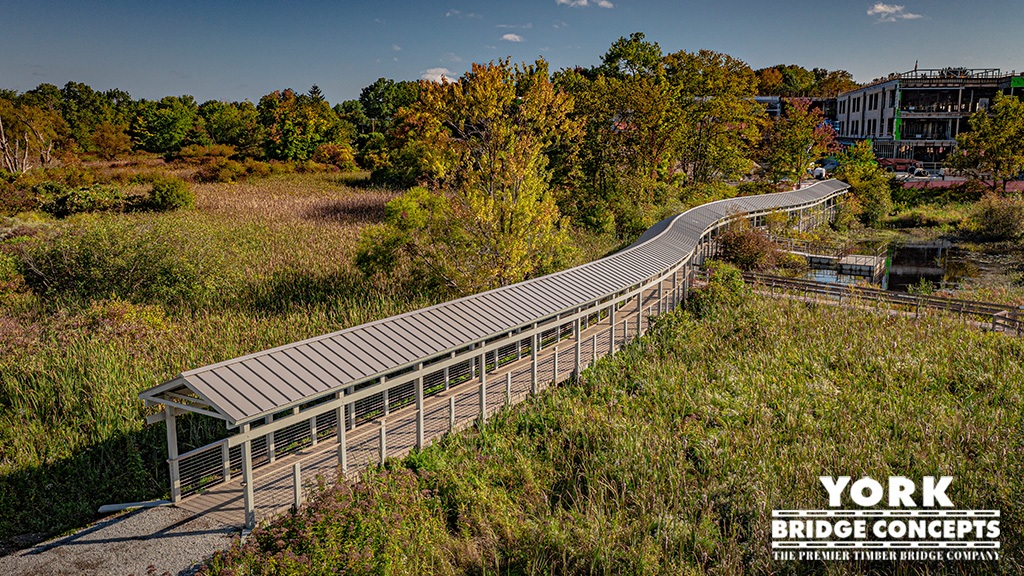
A covered pedestrian bridge and boardwalk system that connects school facilities while crossing environmentally sensitive wetlands. The project demonstrates how covered bridge architecture and sustainable construction can work together to create a memorable educational asset.

Minuteman High School Bridges – Lexington, Massachusetts

Inspired by the region’s historic bridge heritage, this project includes both vehicular and pedestrian crossings designed to support campus circulation while reflecting New England’s architectural traditions.

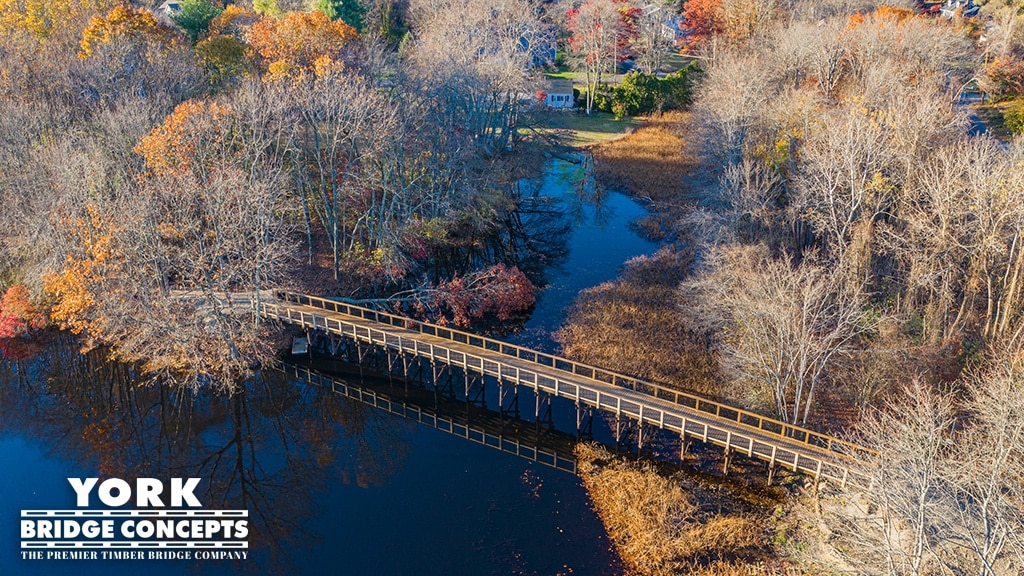
Sudbury Inlet Trail Bridge – Ashland, Massachusetts

A contemporary pedestrian bridge connecting trails and recreation opportunities while preserving ecological resources and enhancing public access.

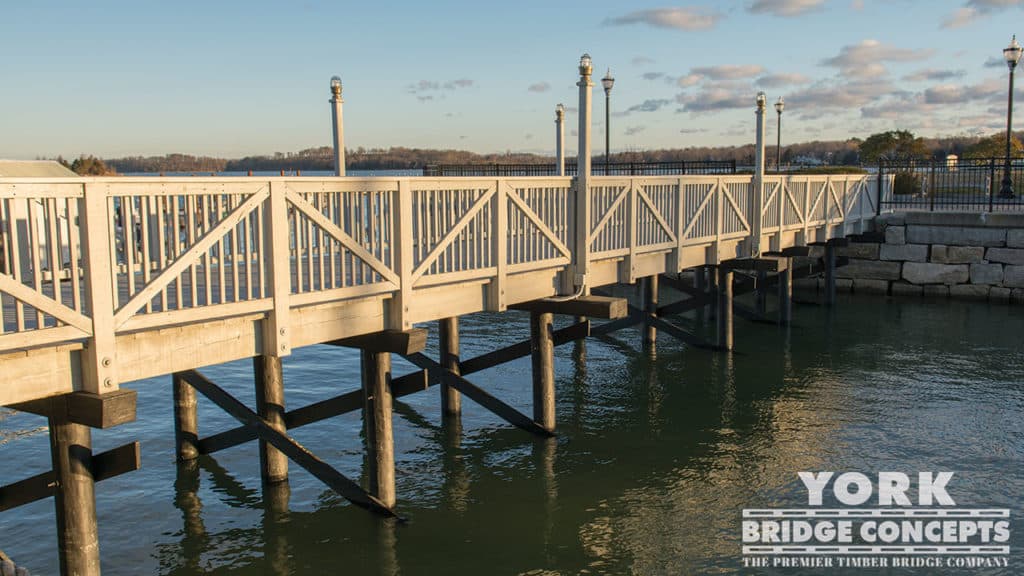
Whitney Wharf – Hingham, Massachusetts

A waterfront pedestrian bridge demonstrating how timber infrastructure can enhance commercial and public spaces while preserving scenic views and coastal character.

Timber Bridges in Maine

Maine’s rugged coastline, forests, and conservation-focused communities make it an ideal setting for timber bridge construction.

York Bridge Concepts has delivered projects that balance environmental stewardship with visitor experiences throughout the state.

Coastal Maine Botanical Gardens Discovery Bridge

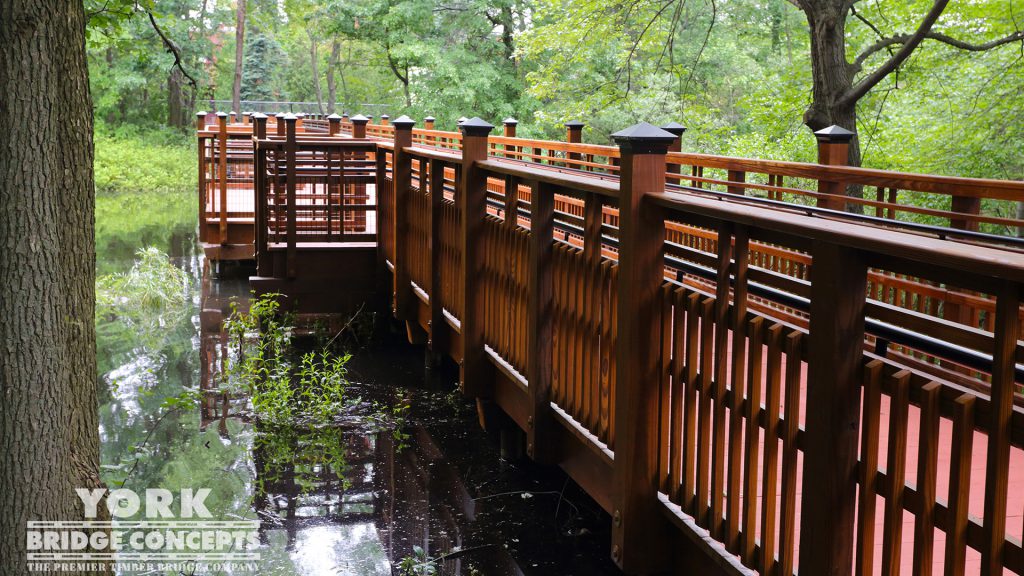
Located in Boothbay, Maine, this pedestrian bridge creates a dramatic crossing over wetlands while maintaining the natural beauty and ecological integrity of the site.

The bridge demonstrates how timber infrastructure can support tourism, environmental education, and recreation while complementing the surrounding landscape.

Timber Bridges in New Hampshire

New Hampshire’s mountain landscapes, rivers, and resort destinations create unique opportunities for timber bridge applications.

York Bridge Concepts has delivered both pedestrian and vehicular crossings throughout the Granite State.

Mt. Washington Resort Bridge

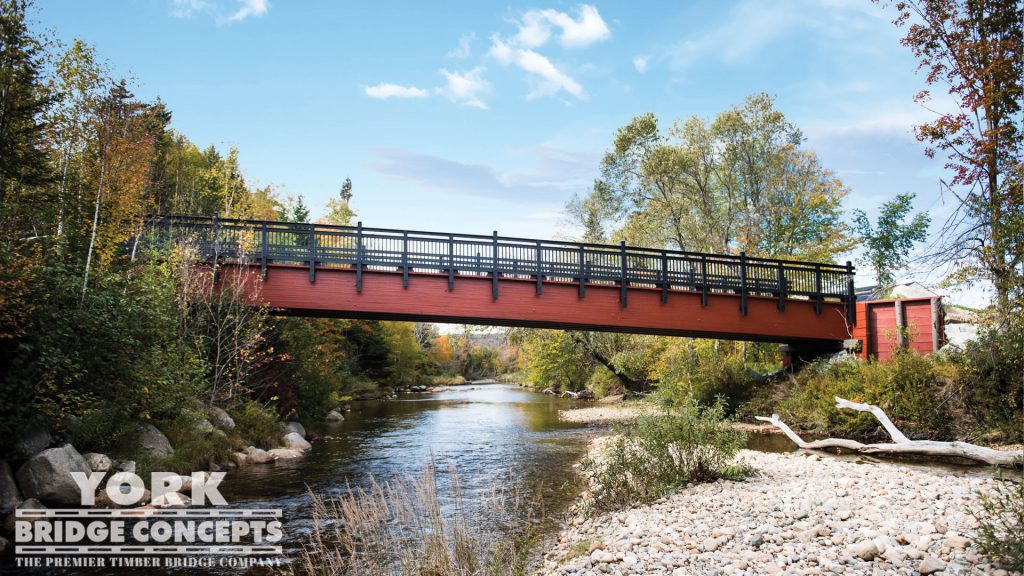
Located in Bretton Woods, this free-span vehicular bridge crosses the Ammonoosuc River while complementing the architectural character of one of New England’s most iconic resort destinations.

Regional Training Institute Bridge

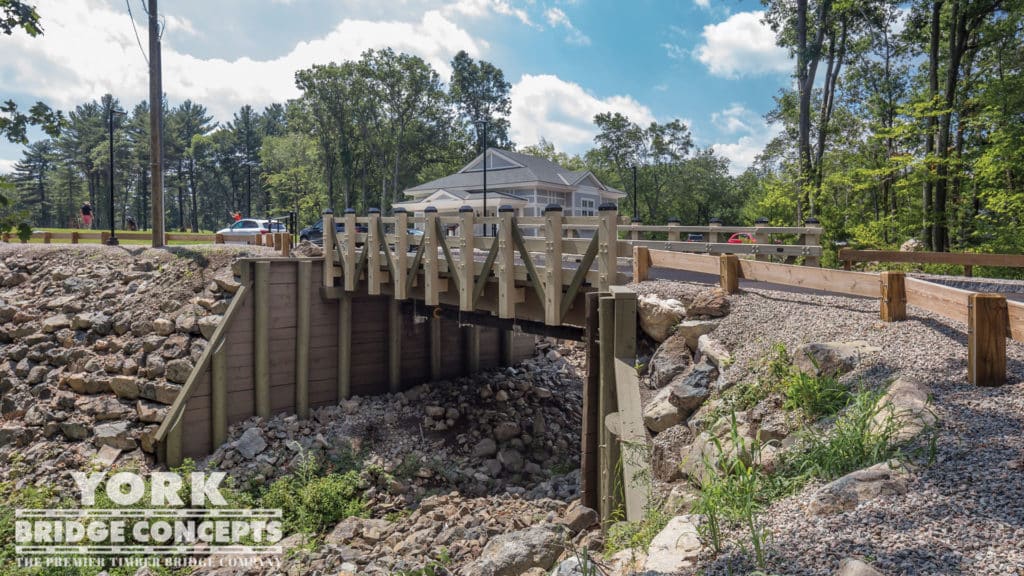
Designed to support heavy vehicular traffic and operational demands, this project demonstrates the versatility and strength of modern timber bridge engineering while blending into the natural New Hampshire landscape.

Covered Bridges and New England Heritage

When many people think of New England bridges, they think of covered bridges.

Covered bridges remain beloved throughout the region because they combine functionality, architectural beauty, and historical significance. Community discussions frequently cite their durability, protection from harsh weather, and iconic appearance as reasons they remain treasured landmarks today.

Modern covered bridges provide:

  • Structural protection
  • Extended service life
  • Architectural distinction
  • Community identity
  • Tourism appeal
  • Memorable visitor experiences

York Bridge Concepts continues this tradition by designing custom covered vehicular and pedestrian bridges that reflect New England’s historic character while meeting modern engineering standards.

Sustainable Infrastructure for New England

Environmental stewardship has become increasingly important throughout New England.

Communities seek infrastructure solutions that:

  • Preserve wetlands
  • Protect waterways
  • Reduce environmental impacts
  • Support conservation efforts
  • Enhance recreational access
  • Promote sustainability

Timber bridges align naturally with these objectives.

Benefits include:

  • Renewable materials
  • Carbon storage
  • Lower embodied carbon
  • Reduced site impacts
  • Long-term sustainability

These advantages make timber an increasingly attractive solution for municipalities, developers, and environmental organizations throughout the region.

Deck-Level Construction™ for Sensitive Sites

Many New England bridge projects involve environmentally sensitive locations such as:

  • Wetlands
  • Floodplains
  • Coastal environments
  • Streams
  • Conservation lands

York Bridge Concepts utilizes its proprietary Deck-Level Construction™ methodology, allowing construction to advance from the bridge deck itself rather than requiring extensive ground access beneath the structure.

This approach helps:

  • Preserve vegetation
  • Protect wildlife habitat
  • Reduce soil disturbance
  • Minimize environmental impacts
  • Improve project efficiency

The result is a construction process that aligns with the environmental priorities shared by many New England communities.

Applications for New England Timber Bridges

York Bridge Concepts designs bridges for a wide range of New England applications.

Municipal Infrastructure

Enhancing public access, parks, and transportation networks.

Schools & Universities

Connecting campuses while creating memorable educational environments.

Parks & Recreation

Improving trail systems, boardwalks, and outdoor experiences.

Resorts & Hospitality

Creating signature guest experiences throughout mountain and coastal destinations.

Residential Communities

Supporting walkability and community connectivity.

Waterfront Developments

Enhancing access while preserving coastal character.

Conservation & Eco-Tourism

Providing access while protecting sensitive environmental resources.

Why New England Communities Choose York Bridge Concepts

Clients throughout New England choose York Bridge Concepts because of our:

  • More than 9,000 bridges built
  • Design-Engineer-Build™ methodology
  • In-house engineering expertise
  • Sustainable construction practices
  • Deck-Level Construction™ process
  • Covered bridge expertise
  • Custom architectural design capabilities
  • Nationwide project experience

Our bridges are designed to reflect the character of the communities they serve while delivering exceptional long-term performance.

Continuing New England’s Bridge-Building Tradition

For generations, timber bridges have connected New England communities to their landscapes, waterways, and history.

Today, York Bridge Concepts continues that tradition through innovative design, sustainable construction, and a commitment to craftsmanship that respects both the past and the future.

Whether your project involves a covered bridge, pedestrian crossing, vehicular bridge, waterfront boardwalk, trail bridge, campus connection, or resort amenity, York Bridge Concepts can create a custom timber bridge solution tailored to your vision.

New England’s landscapes deserve infrastructure that belongs within them.

And timber bridges remain one of the most beautiful and sustainable ways to make that connection.

October 4, 2021

Douglas Gates Covered Pedestrian Bridge – Acton, MA

Covered, wetland-sensitive boardwalk linking Indian Hills to Douglas & Gates Elementary in Acton, MA—by York Bridge Concepts.
November 19, 2019

Minuteman High School Vehicular & Pedestrian Bridges – Lexington, MA
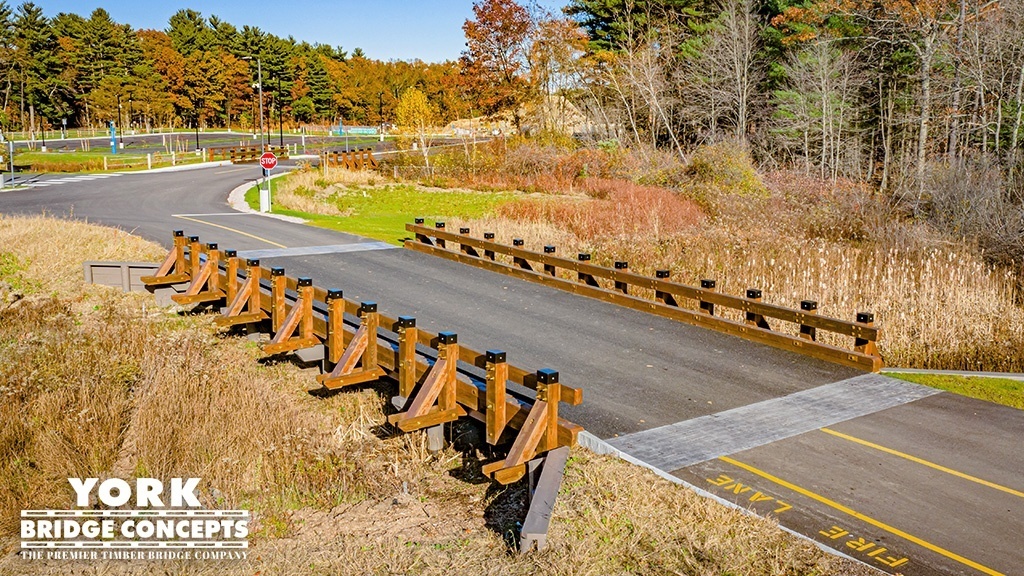
Discover the timber public school bridge at Minuteman High School—AASHTO-rated, low-impact, and inspired by the Old North Bridge.
November 14, 2019

Sudbury Inlet Massachusetts Trail Bridge in Ashland, MA

The Sudbury Inlet Pedestrian Trail Bridge is more than a path across water—it’s a testament to what’s possible when design, craftsmanship, and ecological integrity converge. As Massachusetts continues to invest in green infrastructure and recreational access, this trail bridge will serve as a beacon of what future-forward, environmentally conscious design can look like.
November 13, 2019

Emery Flats Pedestrian Bridge – Woburn, MA

With York Bridge Concepts leading the charge, municipalities, architects, and developers have the opportunity to incorporate sustainable eco-friendly bridges into their master plans, creating greener, more connected cities for future generations.
October 23, 2019

Coastal Maine Botanical Gardens Pedestrian Bridge – Boothbay, ME
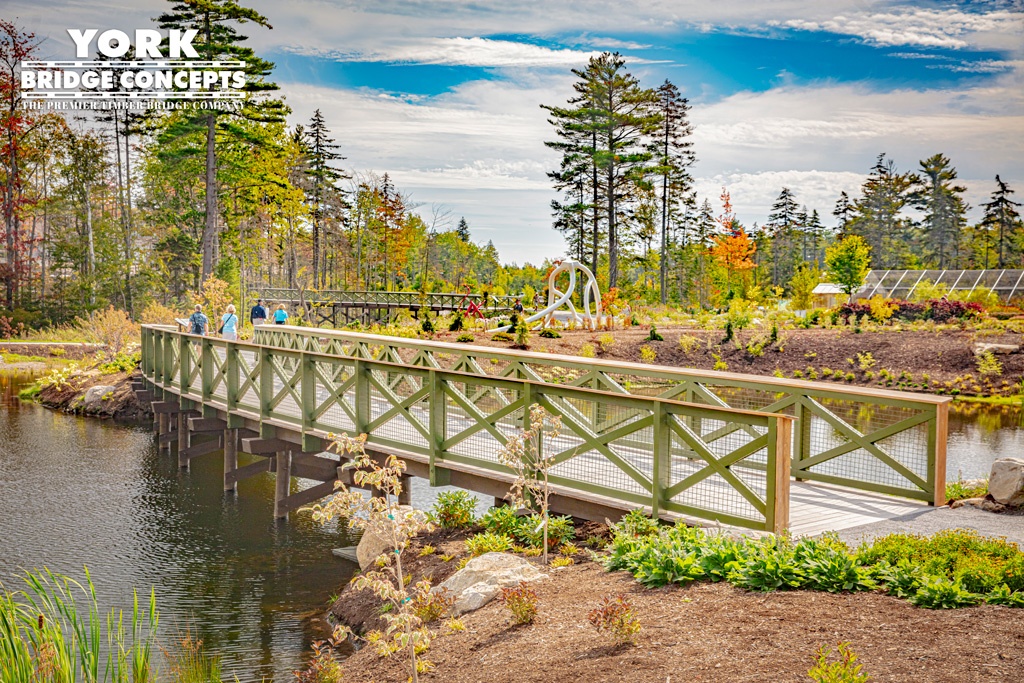
York Bridge Concepts’ Discovery Bridge at Coastal Maine Botanical Gardens redefines park infrastructure with a stunning timber span over wetlands.