Discovery Bridge at Coastal Maine Botanical Gardens:
A Showcase of Innovative Park Infrastructure
Nestled in the coastal town of Boothbay, Maine, the Coastal Maine Botanical Gardens has long been a sanctuary for nature lovers, horticulturists, and travelers seeking to experience the restorative power of the natural world. As the state's premier botanical destination, the Gardens welcome nearly 200,000 visitors annually to its 295 acres of waterfront, woodlands, and ornamental gardens.
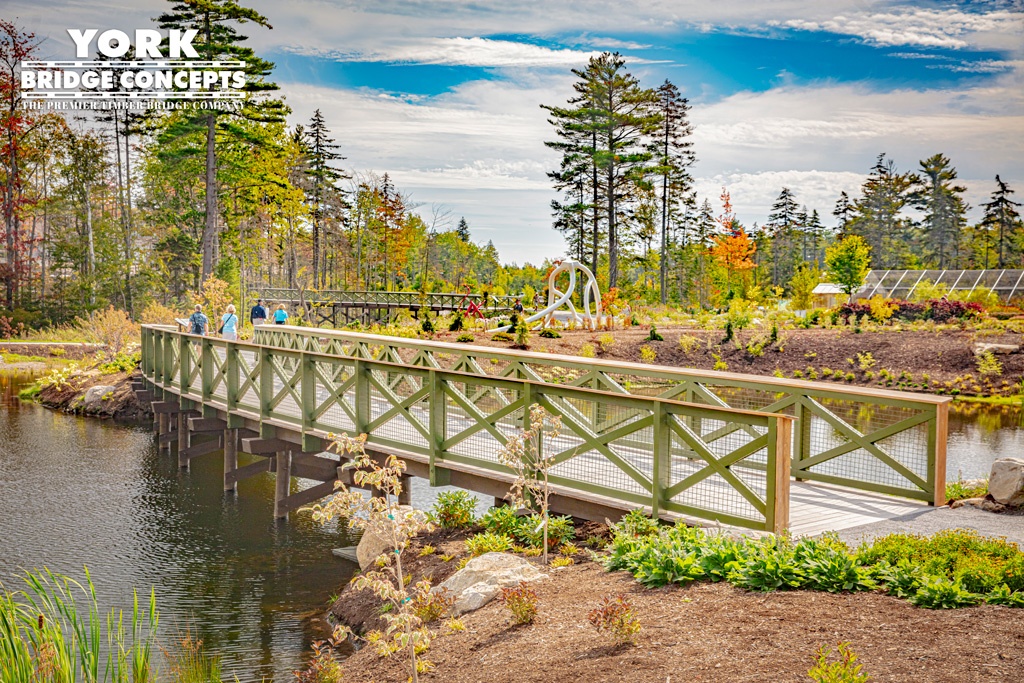
To further its ambitious 20-Year Master Plan--centered on innovation, education, sustainability, and responsible growth--the Gardens turned to York Bridge Concepts™ (YBC) to help bring to life one of its most essential access and aesthetic elements: the Discovery Bridge.
This transformative timber pedestrian bridge is more than just a crossing--it is a bold architectural and ecological statement that advances sustainable park infrastructure in one of New England's most cherished green spaces.
A Vision Rooted in Sustainability & Accessibility
At the heart of the Coastal Maine Botanical Garden's Master Plan was the need for improved accessibility. One particular challenge was creating a seamless, inclusive route for guests to reach the Gardens' new visitor center, perched at a higher elevation across protected wetlands and a service road. The solution? A bridge that not only enabled access but elevated the experience of arrival.
YBC's Decero™ Design Studio worked closely with the Garden's landscape architects, staff, and ecological stewards to ensure that every aspect of the Discovery Bridge aligned with the garden's commitment to ecological balance and environmental stewardship.
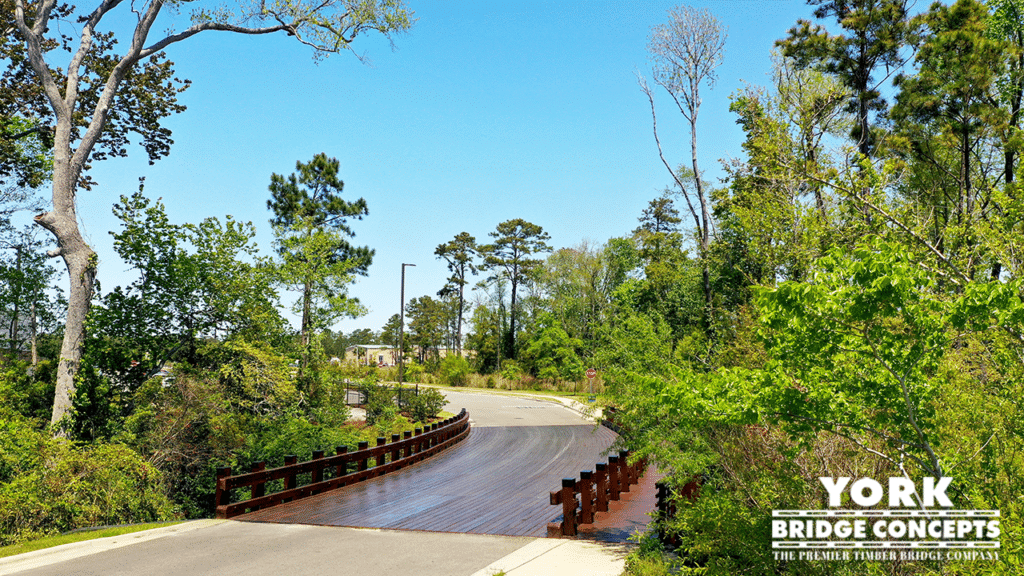
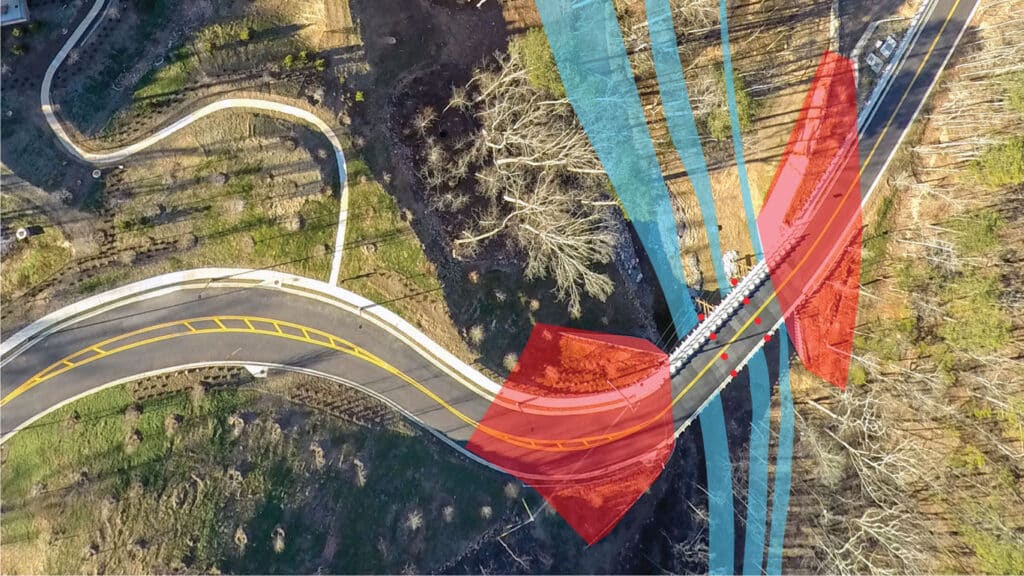
Rather than a straight-line solution, the bridge was envisioned as a graceful curve, weaving through the canopy and gently rising above the terrain. This meandering path allows visitors to take in the sights and sounds of the Gardens from above the terrain. This meandering path allows visitors to take in the sights and sounds of the Gardens from above, turning what could have been a utilitarian crossing into a moment of serenity and wonder.
Specifications
Bridge #1
- Width:
- 13’ (12’ clear)
- Length:
- 225’
- Height:
- 13’6” above grade
- Capacity:
- 85 PSF
- Construction:
- Deck Level
- Span Type:
- Multiple Span
- Span Lengths:
- (1) 16’4”, (2) 20', (17) 10’2”
- Material:
- CCA/CA-C Treated Southern Yellow Pine & Black Locust
- Foundation:
- Timber Piles & Abutments (Acrylic/Polymer Coated where exposed)
- Stringers:
- SYP S4S & Rough Sawn Stringers (Acrylic/Polymer Coated where exposed)
- Deck System:
- 1” Black Locust Timber Deck
- Handrail:
- Decero™ X-Style Design Series
- Crossing:
- Wetlands & Roadway
Bridge #2
- Width:
- 9'10" (8'5" clear)
- Length:
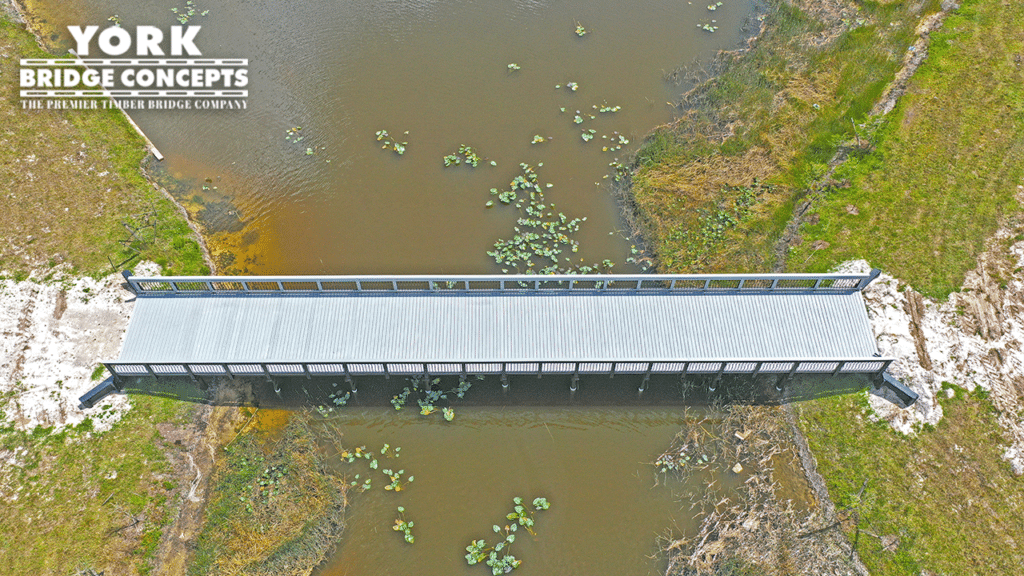
- 100'
- Height:
- 10' above grade
- Capacity:
- 85 PSF
- Construction:
- Ground Up
- Span Type:
- Repetitive Span
- Span Lengths:
- (10) 9'-10'
- Material:
- CCA/CA-C Treated Southern Yellow Pine & Black Locust
- Foundation:
- Timber Piles & Abutments (Acrylic/Polymer Coated where exposed)
- Stringers:
- SYP Rough Sawn Stringers (Acrylic/Polymer Coated where exposed)
- Deck System:
- 1” Black Locust Timber Deck
- Handrail:
- Decero™ X-Style Design Series
- Crossing:
- Pond
Park Infrastructure Meets Artful Engineering
Designing a bridge to serve as both functional park infrastructure and a visual icon requires careful attention to both from and function. York Bridge Concepts specializes in context-sensitive timber bridge solutions that honor the landscapes they inhabit, and the Discovery Bridge is a prime example.
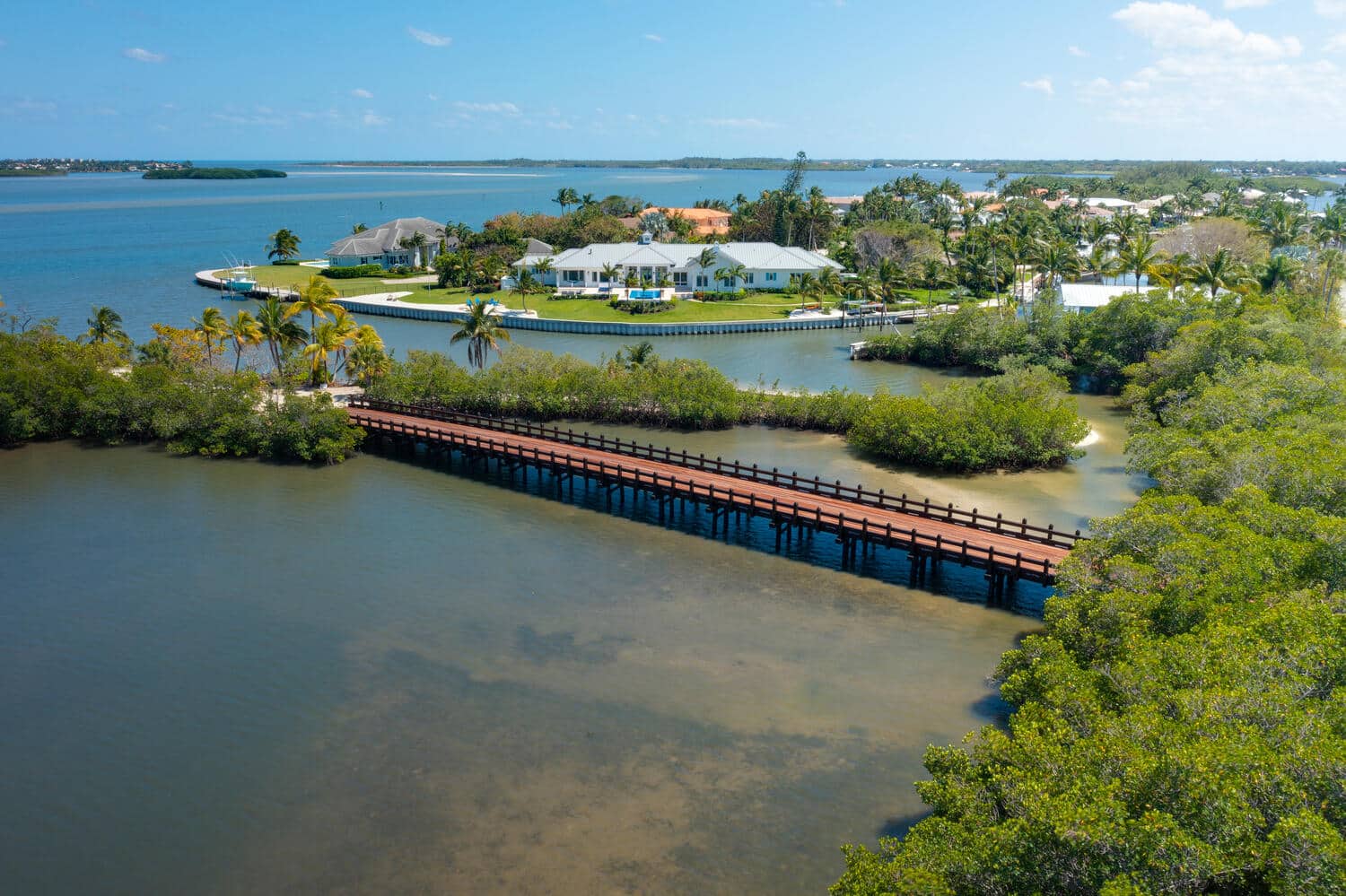
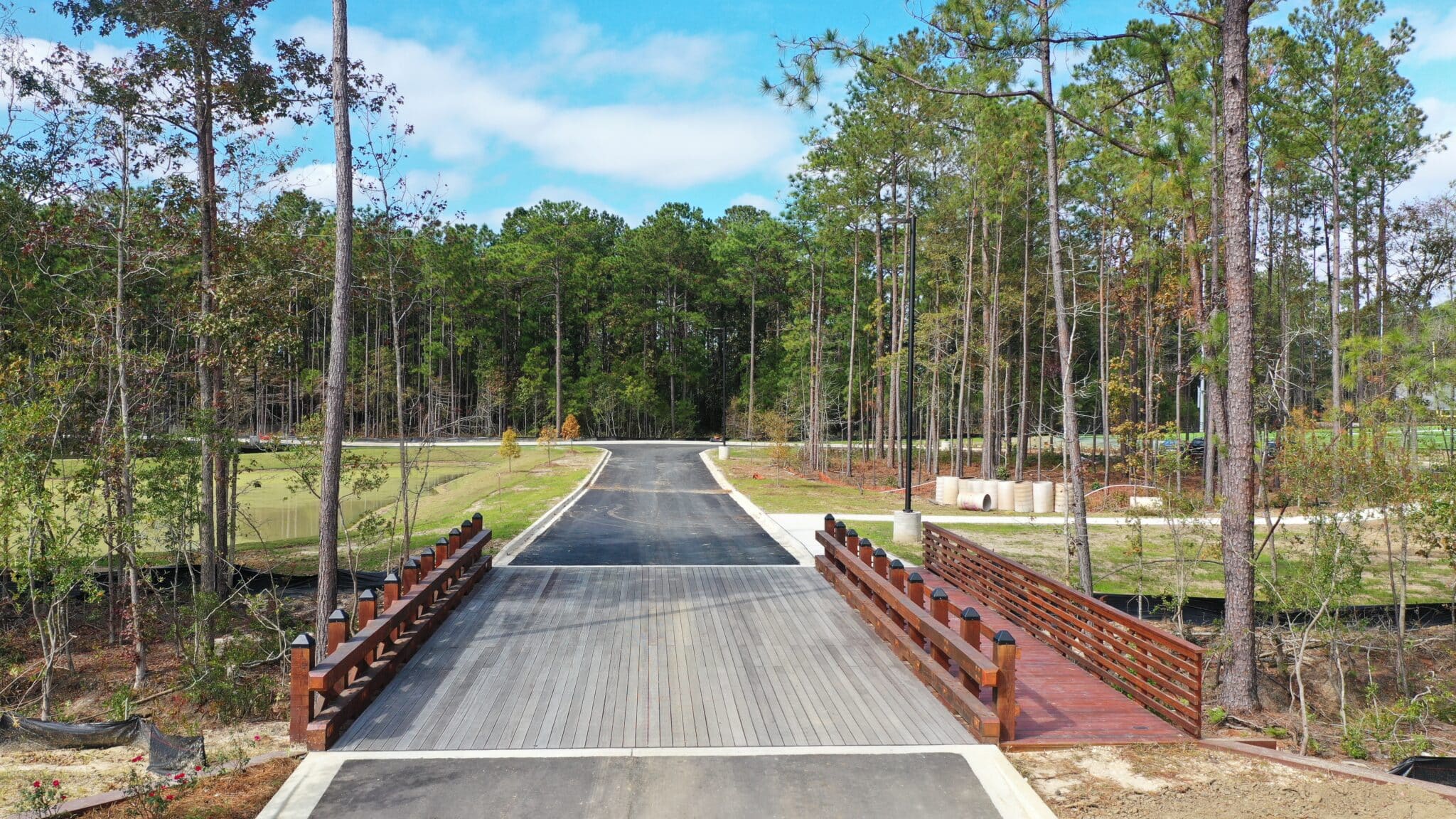
Spanning across wetlands and sloping terrain, the multiple-span bridge was carefully sited to avoid disturbing the mature tree canopy and sensitive ecological features below. Working with the natural topography, YBC's engineers created a layout that minimized environmental impact while maximizing scenic views and visitor comfort.
The result is a 360-degree immersive experience--the bridge doesn't dominate the landscape; it coexists with it.
Materiality: Durable, Renewable, Beautiful
Material selection was paramount for the Discovery Bridge--not only to meet the Garden's sustainable ethos but to ensure longevity, resilience, and visual harmony.
YBC's solution blends Black Locust Hardwoods--one of the most durable and naturally rot-resistant woods available--with Acrylic Polymer Coated Southern Yellow Pine. The black locust provides a warm, naturally weathering appearance without the need for chemical treatment, while the coated pine offers structural reliability with advanced protection against moisture, UV, and fungal decay.
The palette was carefully curated to reflect the surrounding landscape. The foundation are stained in a deep chocolate tone, allowing them to visually disappear into the wooded wetlands below. Above, the railing system features a combination of natural hardwood and a soft "garden green" structure, tying the bridge seamlessly into the color scheme of the surrounding gardens.
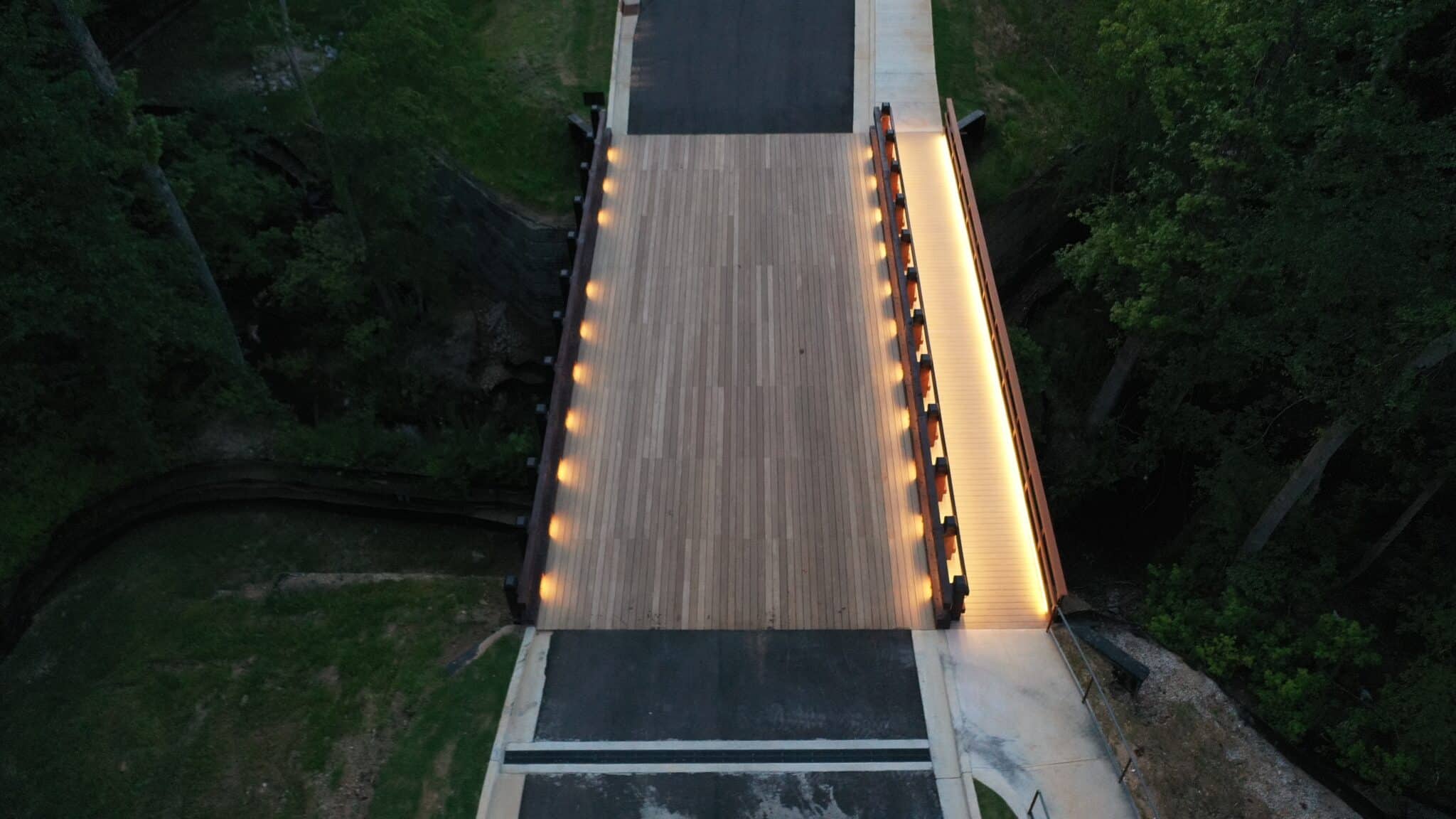
To enhance safety and aesthetic continuity, YBC incorporated coated wire mesh infill panels--providing a transparent barrier that preserves views while adding a modern flair.
Construction Excellence Amidst Environmental Sensitivity
Building a bridge in a location as ecologically sensitive as a botanical garden requires more than engineering--it requires a commitment to precision, patience, and preservation. The YBC field team rose to the challenge.
The site presented physical hurdles such as rocky substrates, dense tree roots, and limited access for construction equipment. To navigate these obstacles, YBC implemented its Deck-Level Construction methodology, which eliminates the need for heavy equipment below the bridge deck. This approach protects root systems, preserves wetland integrity, and maintains the undisturbed quality of the land.
Despite the complexity of the site, YBC delivered a bridge that not only met ADA accessibility guidelines but also elevated the visitor experience, providing an effortless and inviting path to discovery.
A Bridge For The Next 100 Years
Unlike traditional pedestrian infrastructure that often prioritizes short-term functionality, the Discovery Bridge was built for generational use. The materials, coatings, and construction methods used in the bridge's assembly were chosen not only for beauty but for long-term durability.
- Black Locust decking can last over 80 years untreated.
- Southern Yellow Pine timbers, with their advanced polymer coating, resist rot and weathering in harsh climates.
- Wire mesh rail infills offer both visibility and security without degrading the visual connection to the landscape.
In all aspects, this project exemplifies how modern park infrastructure can merge sustainability with design-forward thinking.
Enhancing the Visitor Experience
The journey across the Discovery Bridge is more than a transition from point A to B--it's a transformative element in the visitor's arrival experience. From the moment guests step onto the softly curving deck, they are immersed in the natural environment--surrounded by wetlands, shaded by trees, and treated to a birds-eye view of the rich ecological tapestry below.
This deliberate emphasis on experiential design helps Coastal Maine Botanical Gardens deliver on its mission of education and inspiration. The bridge serves as a quiet educator-showcasing sustainable forestry, wetland preservation, and mindful design without the need for signage or interpretation. It communicates through craftsmanship.
Supporting the Mission of Botanical Education
By choosing York Bridge Concepts as their timber bridge partner, Coastal Maine Botanical Gardens extended their mission beyond the greenhouse and garden path. They created a living case study in sustainable infrastructure.
For school groups, university programs, and eco-conscious visitors, the Discovery Bridge offers a powerful example of how thoughtful engineering and renewable materials can solve complex access challenges without compromising the natural world.
The bridge can even become a teaching tool for students of environmental science, civil engineering, architecture, and landscape design--demonstrating how infrastructure can embody ecological values without sacrificing performance.
Why This Project Matters For Park Infrastructure Nationwide
While every park has its unique topography, climate and visitor needs, the Discovery Bridge sets a national example for what can be achieved when a forward-thinking institution partners with a company that understands both structural engineering and environmental stewardship.
Across the country, parks, nature preserves, and botanical institutions face growing pressure to improve accessibility, accommodate increasing foot traffic, and minimize environmental disruption. This project shows that it's possible to achieve all of these objectives simultaneously without compromise.
York Bridge Concepts' approach--defined by its Decero™ Design Methodology, its use of sustainable materials, and its field expertise--has redefined what it means to build in a park setting.
A Gateway To A Greener Future
The Discovery Bridge at Coastal Maine Botanical Gardens is more than a feat of timber engineering--it is a symbol. A symbol of how infrastructure can serve without scarring, guide without obstructing, and inspire while blending into its surroundings.
For park planners, land developers, architects, and engineers seeking to build better bridges in natural settings, this project offers a replicable model of eco-conscious design paired with expert execution.
York Bridge Concepts continues to lead the way in timber bridge construction--and in Boothbay, Maine, the legacy lives on in every step taken across the Discovery Bridge.
All Feature Projects
What's Best: A Culvert Or A Timber Bridge?
What Is The Best Span Type For My Project?
Which Load Capacity I Need?
How Do I Cross An Environmentally Sensitive Area?
How Do I Create A Landmark?
How Long Does A Timber Bridge Last?
Culvert Or Bridge
If you're considering using a culvert for your crossing project. Click below to understand the best fit for your project.

Spanning Solutions
Spanning a crossing is one of the most important aspects of your crossing project. Find the best solution for your crossing needs.

Uses & Capacities
The load capacity of a timber bridge may surprise you. See specs for different loads and uses that will help your decision-making process.