Garden Bridges
Gardens are designed to inspire, educate, and reconnect people with nature. Whether spanning tranquil ponds, winding streams, wetlands, or botanical landscapes, a thoughtfully designed garden bridge becomes more than a crossing—it becomes an architectural focal point that enhances the beauty and character of the entire landscape. Custom timber garden bridges create memorable experiences by blending seamlessly into their surroundings while providing safe, durable, and environmentally responsible access.
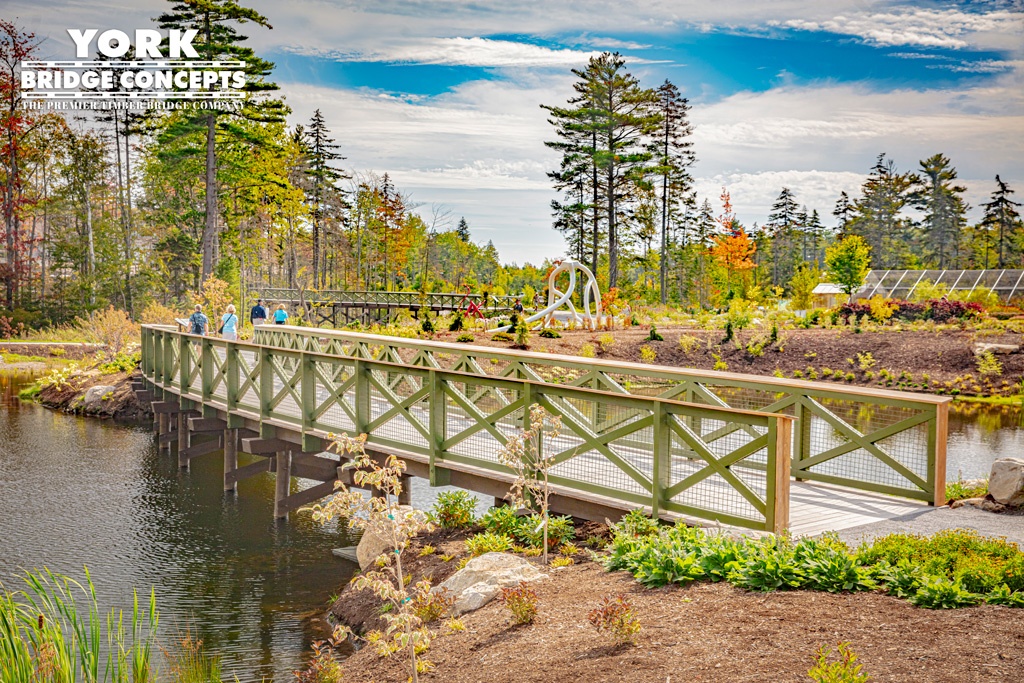
For more than 40 years, York Bridge Concepts (YBC) has specialized in designing and constructing custom timber bridges for botanical gardens, public parks, private estates, arboretums, nature preserves, and destination landscapes throughout North America. Through our integrated Decero™ Design-Engineer-Build process and proprietary Deck-Level (Top-Down) Construction™ methodology, every bridge is engineered to complement the landscape while delivering exceptional structural performance and long-term durability. Projects such as the Discovery Bridge at Coastal Maine Botanical Gardens demonstrate how timber bridges can become signature attractions while preserving sensitive natural environments.
What Is a Garden Bridge?
A garden bridge is a custom-designed pedestrian bridge that enhances both accessibility and the visual experience within landscaped environments. Unlike standard pedestrian crossings, garden bridges are carefully integrated into the surrounding landscape to complement gardens, water features, plant collections, and walking paths.
Garden bridges are commonly used in:
- Botanical gardens
- Arboretums
- Public parks
- Estate gardens
- Nature preserves
- Japanese gardens
- Sculpture gardens
- Resort landscapes
- Community parks
- Residential developments
- University campuses
- Historic properties
Each bridge is custom engineered to fit the site’s terrain, architecture, and visitor experience.
Blending Architecture with Nature
The best garden bridges become part of the landscape rather than competing with it.
Timber naturally complements:
- Flower gardens
- Native landscapes
- Lakes
- Streams
- Wetlands
- Waterfalls
- Woodland trails
- Reflection ponds
- Meadow gardens
- Formal landscapes
Its warm appearance and natural texture allow bridges to integrate beautifully with plantings, stonework, and surrounding vegetation.
Garden Bridges That Create Memorable Experiences
Visitors often remember the moments they pause on a bridge to admire a garden, photograph a landscape, or observe wildlife.
Custom garden bridges create opportunities for:
- Scenic overlooks
- Photography locations
- Quiet reflection
- Educational experiences
- Wildlife observation
- Garden exploration
- Event spaces
- Accessible circulation
Rather than simply connecting two pathways, these bridges encourage visitors to engage more deeply with the landscape.
Custom Garden Bridge Designs
Every landscape is unique.
YBC designs each bridge around the specific character of the project by evaluating:
- Garden layout
- Water features
- Existing vegetation
- Visitor circulation
- Topography
- Architectural style
- Environmental conditions
- Long-term maintenance goals
This collaborative approach allows every bridge to become a natural extension of the surrounding design.
Applications for Garden Bridges
Timber garden bridges enhance a wide variety of public and private landscapes.
Botanical Gardens
Connect themed gardens while preserving wetlands, ponds, and natural habitats.
Public Parks
Improve pedestrian circulation while adding architectural beauty to lakes, streams, and recreational spaces.
Nature Preserves
Provide environmentally responsible access through sensitive ecosystems while minimizing site disturbance.
Residential Communities
Create signature landscape features that increase curb appeal and connect community amenities.
Resorts & Hospitality
Enhance outdoor guest experiences with elegant crossings that reinforce the property’s architectural identity.
Sustainable Construction for Sensitive Landscapes
Many garden environments include wetlands, streams, ponds, and protected vegetation where traditional construction methods can disturb valuable natural resources.
YBC’s proprietary Deck-Level (Top-Down) Construction™ methodology allows crews to progressively build from the completed bridge deck rather than requiring extensive access beneath the structure.
This innovative approach helps reduce:
- Soil compaction
- Vegetation removal
- Wetland disturbance
- Temporary construction roads
- Root zone disruption
- Habitat impacts
The result is a construction process that protects the very landscapes the bridge is designed to showcase.
Premium Materials for Garden Environments
Every garden bridge is built using carefully selected materials designed for beauty and longevity.
Available options include:
Structural Timber
- Southern Yellow Pine
- Douglas Fir
- Engineered glulam members
Decking Options
- Premium timber decking
- Tropical hardwood decking
- Composite decking
- Recycled Plastic Lumber (RPL)
Architectural Features
- Decorative timber rail systems
- Horizontal railing designs
- Scenic wire mesh panels
- Custom stains
- Acrylic polymer coatings
- Decorative lighting
- Observation platforms
Each bridge is customized to reflect the landscape architect’s vision and the character of the property.
Built for Long-Term Performance
Outdoor environments expose bridges to changing weather, moisture, sunlight, and continuous pedestrian traffic.
YBC designs garden bridges using:
- Engineered structural systems
- Corrosion-resistant hardware
- Advanced protective coatings
- Moisture management detailing
- Durable wear surfaces
- Site-specific engineering
Combined with routine inspection and preventative maintenance, these bridges are designed with an anticipated 75+ year design life, providing lasting value for public and private landscapes.
Garden Bridges That Support Accessibility
Beautiful landscapes should be welcoming to everyone.
Where project requirements apply, YBC designs garden bridges that can support accessible pathways through considerations such as:
- Comfortable bridge widths
- Smooth transitions
- Slip-resistant walking surfaces
- Appropriate grades
- Continuous handrails
- Resting and viewing areas
These features help create inclusive outdoor environments for visitors of all ages and abilities.
Why Timber Is Ideal for Garden Bridges
Timber remains one of the preferred materials for garden bridge construction because it combines engineering performance with natural beauty.
Benefits include:
- Renewable building materials
- Natural carbon storage
- Lower embodied carbon
- Warm architectural appearance
- Design flexibility
- Reduced visual impact
- Long service life
- Seamless integration with landscaped environments
These characteristics make timber especially well suited for projects where aesthetics and environmental stewardship are equally important.
Why Choose York Bridge Concepts?
Since 1985, York Bridge Concepts has specialized exclusively in custom timber bridge systems.
Our integrated Decero™ Design-Engineer-Build process includes:
- Site evaluation
- Landscape collaboration
- Structural engineering
- Custom bridge design
- Environmental coordination
- Material selection
- On-site construction
- Quality assurance
- Long-term maintenance support
With more than 9,000 bridges completed, YBC has partnered with botanical gardens, municipalities, landscape architects, developers, and private organizations to create bridges that enhance natural environments while delivering decades of dependable performance. From the Discovery Bridge at Coastal Maine Botanical Gardens to park and estate landscapes across North America, our bridges demonstrate how thoughtful engineering and craftsmanship can enrich the visitor experience.
Create a Bridge That Completes the Landscape
A garden bridge should feel as though it has always belonged in its surroundings. Whether your project includes a botanical garden, public park, private estate, resort, or community greenspace, York Bridge Concepts designs custom timber garden bridges that combine timeless craftsmanship, sustainable construction, and exceptional architectural beauty.
- All
- Alabama
- Architectural-Design
- Arizona
- Avenue Collection
- Boardwalks
- Bridge Education
- Bridge Types
- California
- Case Study
- Classic
- Colorado
- Commercial Bridges
- Community Designed Projects
- Connecticut
- Construction Techniques for Wood Bridges
- Contemporary Series
- Covered Bridges
- Culvert vs Bridge
- Delaware
- Eco-Tourism Bridges
- Environmental Benefits of Wooden Bridges
- Environmental Mitigation
- Extreme Grades
- Featured
- Floodplain
- Florida
- Free Span Bridge
- Georgia
- Golf Cart Bridge Designs
- Golf Cart Bridges
- Idaho
- Illinois
- International
- Lakes
- Locations
- Louisiana
- Maine
- Maryland
- Massachusetts
- Master Planned Community
- Michigan
- Missouri
- Mixed-Use Development
- Montana
- Multiple Crossings
- Multiple Span
- New Hampshire
- New Jersey
- New York
- North Carolina
- Ohio
- Oklahoma
- Overpasses
- Pedestrian Bridge Designs
- Pedestrian Bridges
- Pennsylvania
- Popular Articles
- Prefabricated Bridges For Sale
- Private Collection
- Repetitive Span
- Retail Developments
- Short Span Timber Bridges
- South Carolina
- Span Types
- Streams
- Tennessee
- Texas
- The LiNK
- Timber Bridge Designs
- Timber vs Steel
- Types of Wood Bridges
- Uncategorized
- Vehicular Bridge Designs
- Vehicular Bridges
- Virginia
- Waterside Collection
- West Virginia
- Wetland Conservation Conservation Bridges