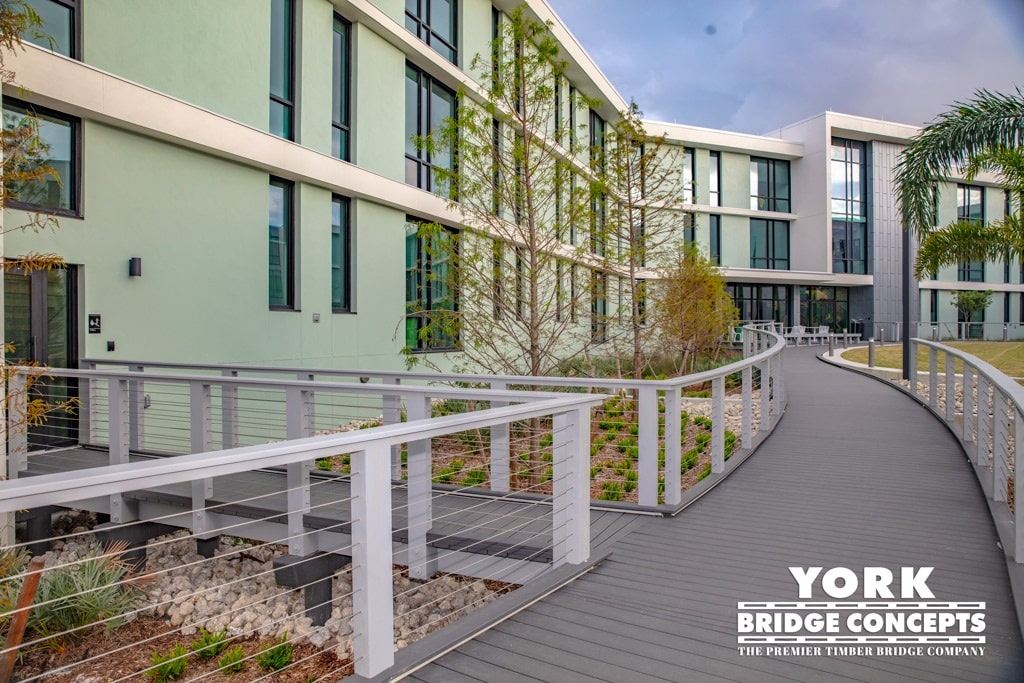
Ringling College Timber Boardwalk & Free Span Bridge – Sarasota, FL

York Bridge ConceptsBoardwalks, Florida, Multiple Span, Pedestrian Bridges

Ringling College Timber Boardwalk with Free Span Pedestrian Bridge | York Bridge

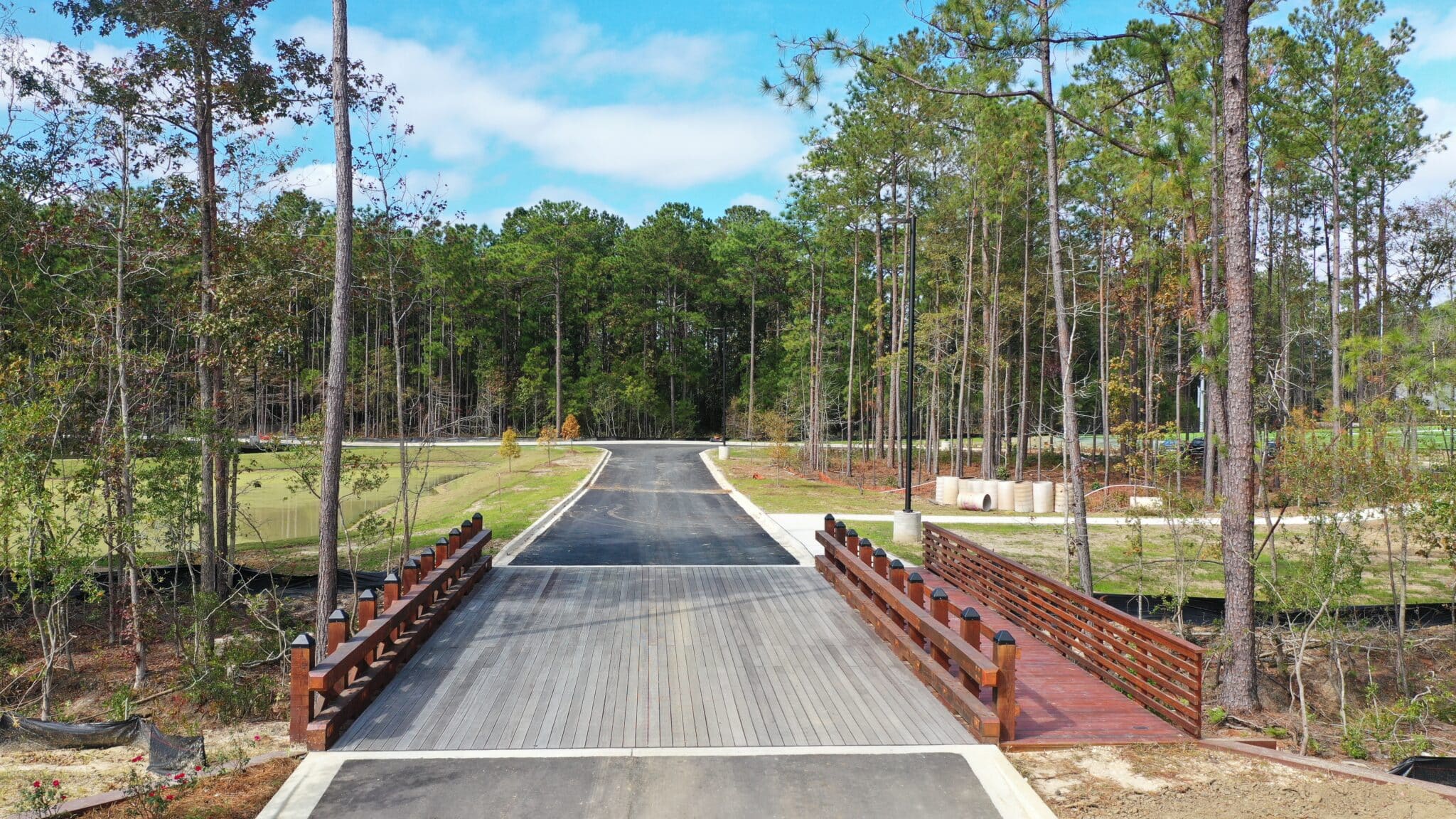
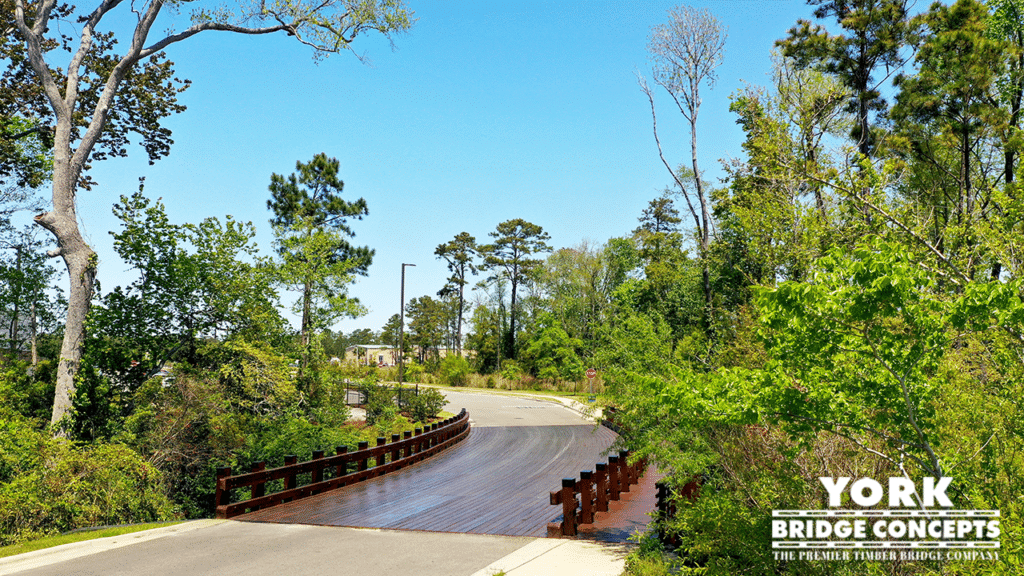
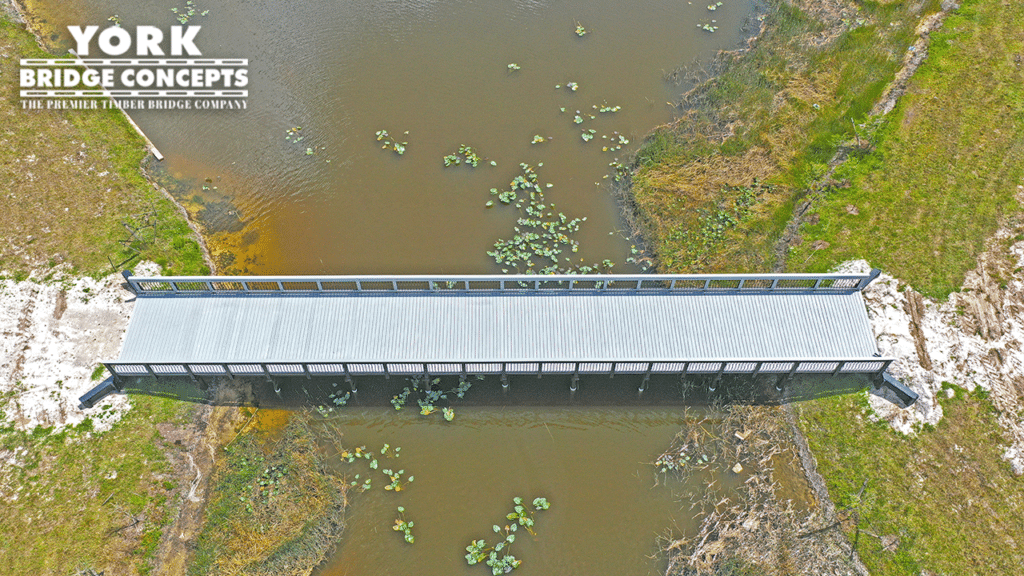
Ringling College of Art & Design, nestled in Sarasota, Florida, has long been a beacon for aspiring artists and designers. As the institution expanded, so did its need for infrastructure that harmoniously blends functionality with aesthetic appeal. Willis Smith Construction, LLC & York Bridge Concepts collaborated together to bring this boardwalk and free-span bridge that not only enhances campus connectivity but also reflects the college's commitment to innovative design to life.

Ringling College Boardwalk & Bridge Project Overview

In response to the growing student population and the addition of new dormitories, Ringling College sought to develop a network of boardwalks, gathering spaces, and a bridge that would integrate seamlessly with the campus's landscape and architecture. The objective was to craft pathways that encourage interaction, creativity, and a sense of community among students and faculty.

A Harmony of Function and Imagination

Where Art Meets Utility

Ringling College of Art & Design, nestled in the vibrant cultural hub of Sarasota, Florida, is more than a school--it is an ecosystem of creativity, inspiration, and collaboration. As the campus expanded, it became clear that the infrastructure needed to evolve too--not merely to meet practical demands, but to express the college's spirit. The result: a beautifully crafted timber boardwalk and free-span pedestrian bridge that do more than move people from point A to B. They weave together landscape, architecture, and human experience into a seamless campus narrative.

Through collaboration between Willis Smith Construction and York Bridge Concepts, this project underscores the belief that infrastructure can--and should--be as thoughtfully designed as any work of art. On this page, you'll find the story, technical details, design philosophy, sustainability features, and community impact of the Ringling College boardwalk & bridge.

Boardwalk & Bridge


  • Width:
  • 8’ - 20’
  • Length:
  • 648’
  • Height:
  • Up to 11' above grade
  • Capacity:
  • 85 PSF
  • Construction:
  • Ground Up
  • Span Type:
  • Multiple Span
  • Material:
  • CCA Treated Southern Yellow Pine, Composite, & IPE Hardwood
  • Foundation:
  • Timber Piles & Abutments (Acrylic / Polymer Coated where exposed)
  • Stringers:
  • SYP S4S & Glulam Stringers (Acrylic / Polymer Coated where exposed)
  • Deck System:
  • Composite 1.5” Deck
  • Handrail:
  • Decero™ Wire Rope Design Series
  • Crossing:
  • Inlet

New call-to-action

Deck & Bench Area


  • Deck Area:
  • 2766 sq. ft.
  • Bench Area:
  • 2 Custom Benches at 793 sq. ft. each
  • Height:
  • 1' above grade
  • Capacity:
  • 85 PSF
  • Construction:
  • Ground Up
  • Span Type:
  • Repetitive Span
  • Material:
  • CCA Treated Southern Yellow Pine & Composite
  • Foundation:
  • Timber Piles
  • Stringers:
  • SYP S4S Stringers
  • Deck System:
  • Composite 1” Deck & Benches

New call-to-action

Project Vision & Goals

Responding to Campus Growth

With new dormitories, art studios, and creative facilities coming online, Ringling College needed more than sidewalks. It needed connective tissue--pathways that would integrate new and existing spaces and invite interaction. The boardwalk--and the bridge--were conceived to:

  • Facilitate circulation across wetland and complex terrain zones
  • Activate gathering spaces that provoke chance encounters
  • Reflect the college's creative energy in material, form, and detail
  • Support longevity and low maintenance so the structure remain as timeless as the campus itself

In short, the goals were equally aesthetic and pragmatic.


Aesthetic Integration

Rather than imposing a rigid utilitarian structure, the design sought to harmonize with the campus environment. The boardwalk meanders through the landscape, curving around greenery, embracing vistas of the bayou, and gradually rising to meet plazas and entry thresholds. In this way, the structure becomes not a barrier but an invitation to explore and linger.

A key design philosophy was to let the structure feel "of the campus," not merely on it. Materials, proportions, and detailing were selected to echo the tones, textures, and sensibilities of the existing buildings and site elements.


Art Over The Ordinary

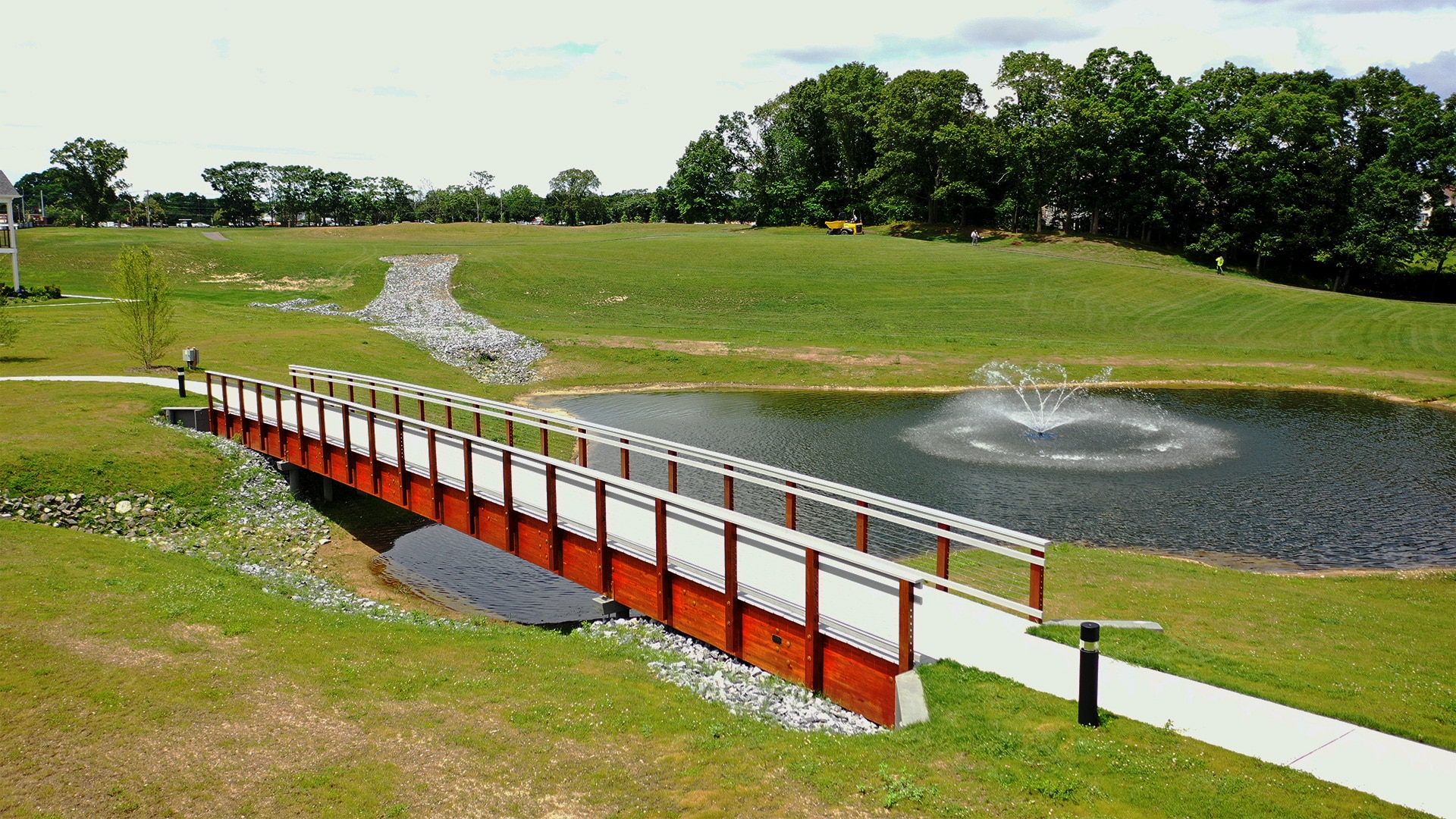
YBC's Decero™ Design Studio's approach was pivotal in realizing this vision. The design features stylish, low-lying paths that intertwine with communal spaces and artistically rise to meet social plazas at various entry points. A thin ribbon of handrail floats above a composite deck, saturated in modern greys and silvers, creating a fluid motion along the path to the bridge. The design perfectly complements the modernly clad structures bending around a courtyard overlooking the bayou. The finished project mirrors the craft of creativity taught throughout the institution's campus.


Decero™ Design Studio’s Signature Touch

YBC's in-house Decero™ Design Studio played a central role in elevating the structure beyond mere infrastructure. The walkway was treated as a visual gesture: a thin ribbon that winds and floats, sometimes hugging the terrain, sometimes gently lifting toward plazas. The handrail appears to hover, with wire rope tensioning that gives it lightness and transparency.

The color palette--modern greys and silvers--ensures that the boardwalk complements the campus architecture rather than compete with it. Every curve, elevation shift, and transition was evaluated not only for structural integrity, but for spatial effect and experiential flow.


Seamless Transitions & Spatial Influence

The boardwalk doesn't just connect endpoints--it shapes the journey. As the path travels, it negotiates mild grades, curves around plantings, and transitions naturally to gathering spaces or vantage points. The bridge segment itself becomes a moment of pause: a vantage point over the bayou, a place to breathe, reflect, or see the campus in a new frame.

In this way, the infrastructure participates in the spatial choreography of the campus. It's not a path that interrupts; it's a path that enhances.


Integration With The Ringling College Landscape

The boardwalk and bridge are strategically positioned to enhance the natural beauty of the campus while providing functional connectivity. The pathways meander through lush landscapes, offering scenic views of the bayou and creating serene spots for reflection and inspiration. This integration ensures that the infrastructure serves both practical purposes and contributes to the overall aesthetic and environmental harmony of the campus.


Responding to the Site

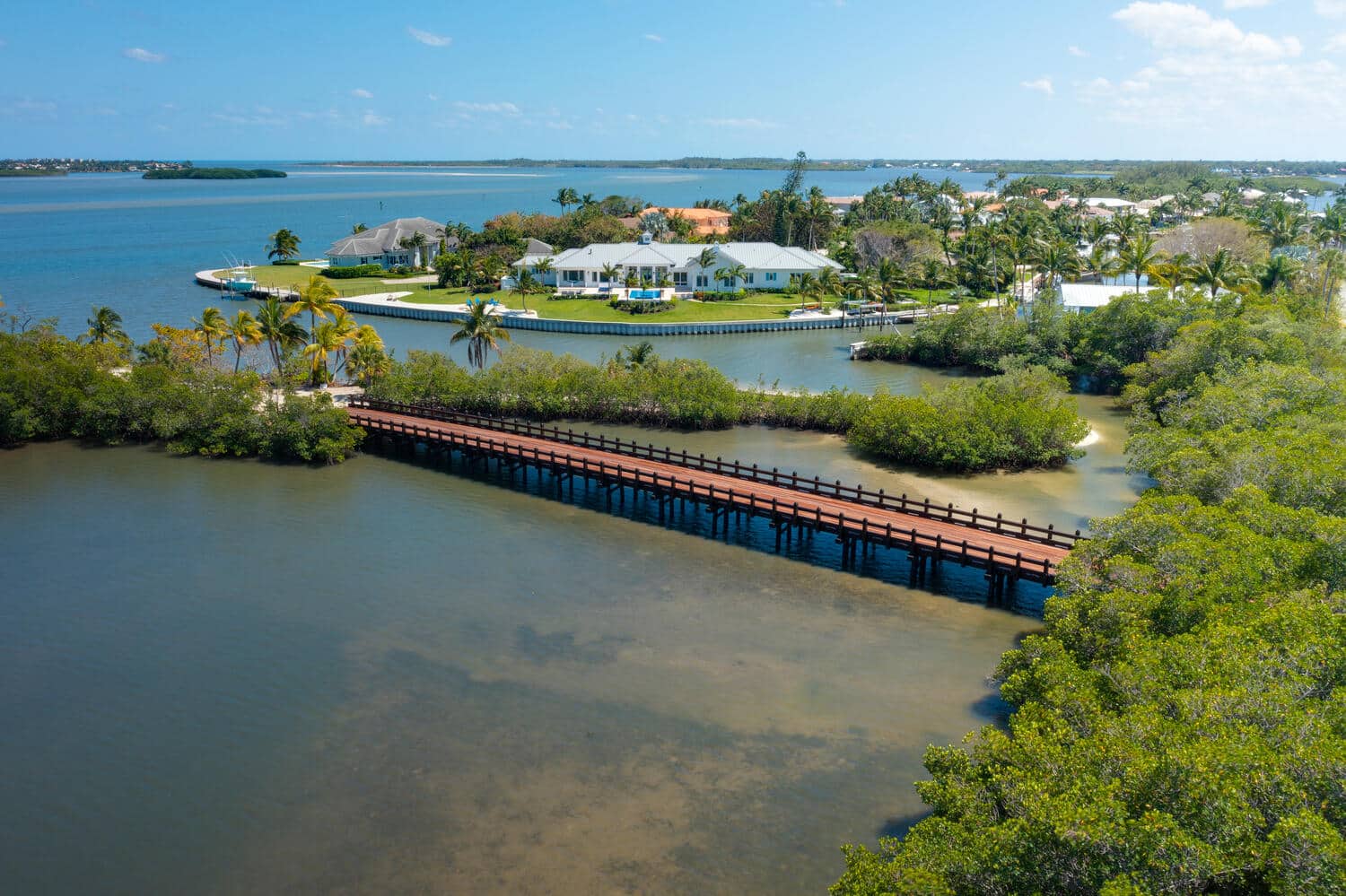
One of the defining challenges was the delicate balance between intervention and preservation. The boardwalk skirts wetland areas, meanders under trees, and adapts to creek crossings. Rather than flattening, it responds to grade changes, pivoting when needed and rising gently when required. The bridge crosses where the inlet demands span, allowing water flow beneath while maintaining a light presence above.

This responsiveness ensures minimal disturbance, allowing flora and fauna to remain intact wherever possible. The path feels grounded--part of the ecosystem--rather than superimposed on it.


Scenic Vistas & Moments of Pause

Along the route, carefully considered "pause points" were introduced--slight widenings, benches, vantage spots. Here, students and faculty can pause, sit, sketch, chat, or simply watch water flow. Views toward the campus and toward the bayou are framed by the structure itself; the handrail becomes a visual device, guiding eyes outward.

These moments are essential. They reinforce that this is more than a circulation system--it's a spatial narrative inviting reflection, social connection, and creative thought.


Ringling School of Design Hybrid Bridge Design-Build

Sustainability & Environmental Considerations

YBC's commitment to sustainability is evident in the choice of materials and construction methods. The use of pressure treated Southern Yellow Pine and IPE hardwoods ensures durability while minimizing environmental impact. The acrylic coatings on exposed foundations and stringers provide added protection against the elements, extending the lifespan of the structures and reducing the need for frequent maintenance.


Material Choices & Protective Treatments

From the outset, YBC committed to environmentally conscious selections. Key elements include:

  • CCA-treated Southern Yellow Pine, chosen for durability and cost-effectiveness
  • IPE hardwood accents, providing longevity and visual richness
  • Composite decking, reducing maintenance and weathering over time
  • Acrylic/polymer coatings on exposed stringers and foundations to shield from moisture, decay, and UV exposure

By selecting materials suited to Florida's climate and applying protective treatments, the goal was to extend the lifespan and reduce maintenance needs.


Ecological Sensitivity & Minimal Disturbance

Construction methods prioritized top-down techniques where feasible, reducing ground disturbance. Timber pile foundations were driven carefully, and minimal tree removal or regrading was contemplated. The alignment preserves existing wetland zones and drainage paths, allowing the site's hydrology to remain largely intact.

Beneath the structure, ground and plant life continue to function as before. Wildlife corridors remain unbroken, and the structure seems to float lightly over the ecosystem.


Lifecycle & Maintenance Strategy

To ensure that the boardwalk and bridge age gracefully, the design anticipates periodic inspections and maintenance. Protective coatings may be reapplied, composite deck boards need routine cleaning instituted. Because the system was conceived with durability in mind, these interventions are minimal and infrequent.

In optimal conditions, a timber-composite structure like this can be expected to serve the campus for 50 to 75 years with proper upkeep. (For more on expected lifespan, see YBC's broader guidance on How Long Does a Timber Bridge Last?


Construction & Collaboration

Project Timeline & Phases

  1. Site investigation & alignment - mapping wetland zones, grade transitions, and planting zones
  2. Foundations & pile driving - precise placement to support spans
  3. Stringer & substructure erection - setting longitudinal structure
  4. Deck installation - composite and timber components
  5. Handrail & finishing - Decero™ wire rope systems, lighting, staining/coating
  6. Landscaping & restoration - replanting, grading finalization, erosion control by client

Every phase required tight coordination among architects, landscape designers, engineers, subcontractors, and environmental specialists. The collaboration between Willis Smith Construction and York Bridge Concepts allowed seamless execution across disciplines.


Quality Assurance & Monitoring

Periodic on-site inspections, material testing, and alignment checks were integral. Because of the meandering alignment and multiple intersections with terrain features, tolerances had to be managed carefully. The finished result speaks to disciplined process control and expertise in hybrid timber-composite construction.


Ringling College of Art & Design bench system with lighting in Sarasota, FL built by York Bridge Concepts

Impact On The Campus Community

Activating Social Spaces

Since its completion, the timber boardwalk and bridge have become integral parts of the Ringling College experience. They serve as conduits for movement across campus and as spaces where students can gather, collaborate, and draw inspiration from their surroundings. The thoughtful design encourages spontaneous interactions and fosters a sense of community, aligning with the college's mission to provide a nurturing environment for creative minds.


Enhancing Connectivity

The boardwalk shortens routes between dormitories, studios and gathering areas--especially in inclement weather. The bridge eliminates problematic wet zones or poorly drained areas. Overall, it streamlines circulation while respecting the site.


Symbolic & Educational Value

This project offers a subtle but powerful message: infrastructure, when thoughtfully designed, embodies the values of the institution. For a college dedicated to art and design, it matters that paths themselves exemplify beauty, integrity, and care. In this sense, the boardwalk and bridge become silent pedagogues--teaching by example.


Image

Contributing To The Educational Journey

The collaboration between Ringling College of Art and Design, Willis Smith Construction, and York Bridge Concepts exemplifies how functional infrastructure can be elevated to art. The timber boardwalk and bridge not only meet the practical needs of a growing campus but also embody the creative spirit and commitment to excellence that define Ringling College. This project stands as a model for institutions seeking to blend utility with aesthetic brilliance, ensuring that every aspect of the campus environment contributes to the educational journey.


Lessons & Best Practices

From this case study, several key takeaways emerge--both for YBC and for other institutions considering similar infrastructure ventures.

  1. Start with site sensitivity
    Instead of forcing a geometry, let the path respond to terrain, water, existing plantings, and vistas. A route that negotiates the site gracefully tends to age more gracefully too.

  2. Balance structure and lightness 
    The Decero™ handrail system, with its wire rope elements, demonstrates that bridging safety and transparency is possible. Heavy, opaque railings were deliberately avoided.

  3. Anticipate maintenance from the start 
    Material choices and protective coatings were selected not just for today's look but for longevity. A structure that is easier to maintain is more likely to remain well-cared-for over decades.

  4. Provide spatial variety 
    Slight widenings, curves, and pause areas transform long walks into an experience. These "moments" invite people to linger and to see the campus from new lenses.

  5. Use hybrid materials wisely 
    Combining timber, composite, and hardwood wisely allows you to square durability, visual warmth, and structural demands.
  6. Forge strong interdisciplinary collaboration 
    Because the bridge intersects architecture, landscape, civil engineering, and construction, success depends on coherent teamwork from concept through execution.

Visual & Experiential Narrative

While images on this page capture static moments, the lived experience of walking this path is deeper and more nuanced. Imagine:

  • Stepping onto boardwalk decking in the golden Florida morning, which feels solid yet responsive underfoot
  • The whisper of water and the scent of foliage just below, reminding you that human paths are overlaid on nature
  • The subtle rise toward the bridge, which frames a view of the campus and bayou as you ascend
  • Pausing at one of the integrated benches to converse, sketch, or simply observe
  • Seeing the handrail's tensioned wires crisscrossing the view, framing the sightscape but not blocking it
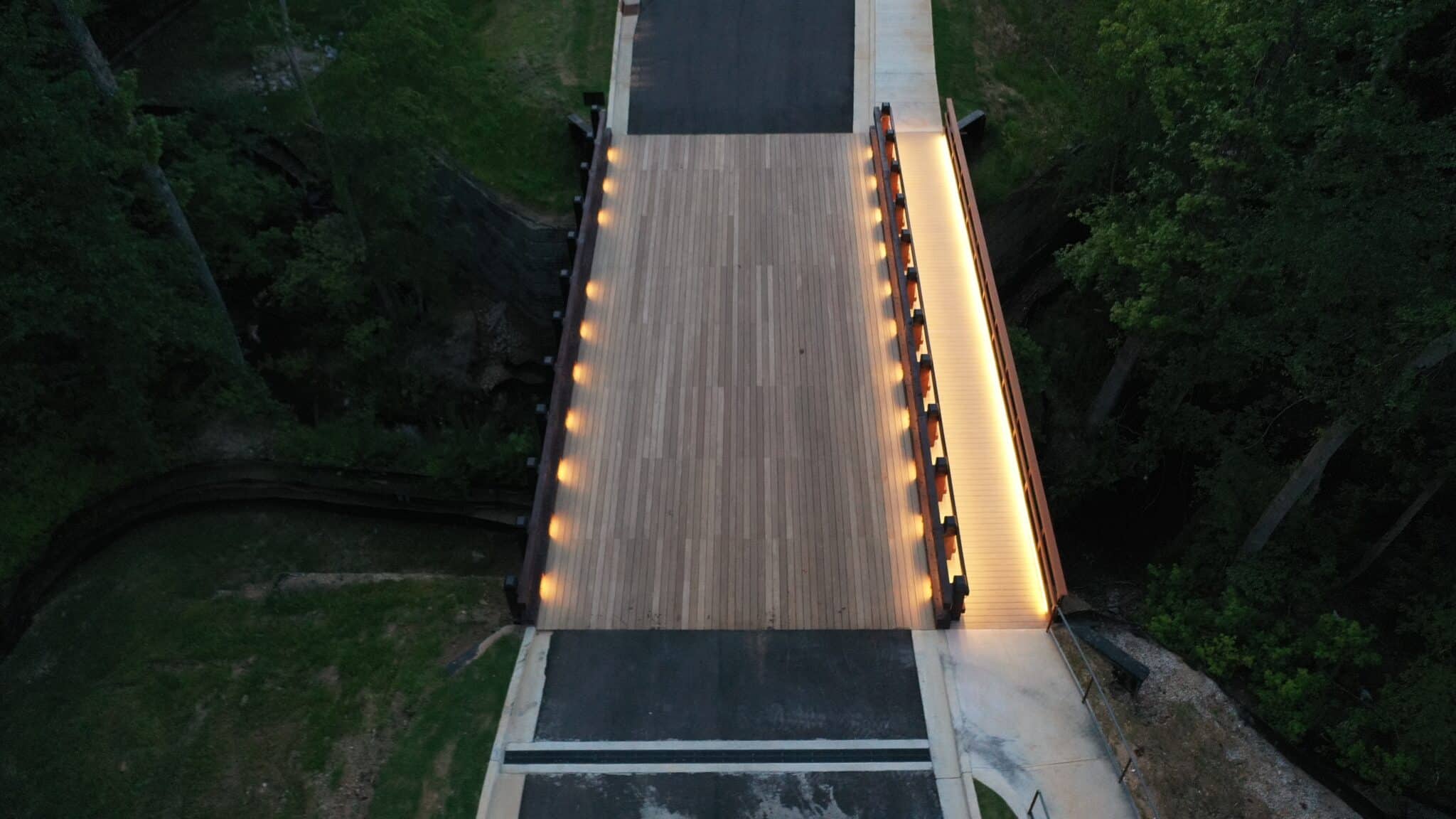
  • A twilight walk when subtle LED lighting highlights edges, turning the path into a glowing sculpture

In this way, the boardwalk participates in daily life, not just infrastructure. It is the backdrop to conversations, the stage for reflection, and the path that threads together academic, social, and ecological spaces.


Why This Project Matters

For Ringling College, this boardwalk & bridge project is not simply a functional enhancement--it is an expression of identity. It reinforces the message that creativity permeates every corner of campus, that infrastructure need not be lifeless, and that durable, thoughtful design is part of the educational mission.

For YBC and prospective clients, this project stands as a proving ground: weaving engineering, aesthetics, sustainability, and community. It shows how institutions can invest in infrastructure that elevates rather than merely accommodates.

If your campus, park, or community is considering a timber boardwalk or pedestrian bridge--especially in sensitive or creative environments--this project offers lessons, inspiration, and evidence of what's possible.


GET YOUR QUOTE

All Feature Projects


What's Best: A Culvert Or A Timber Bridge?

Understand the considerations you should make before choosing your crossing method.

What Is The Best Span Type For My Project?

See how creative scoping, design, & usage work to create the perfect spanning solution for your project.

Which Load Capacity I Need?

Understand the different load capacities for usage that are needed for your project.

How Do I Cross An Environmentally Sensitive Area?

Learn how YBC crosses protected areas with our Deck-Level Construction.

How Do I Create A Landmark?

Create a memorable icon for your development project with a YBC Legacy Timber Bridge.

How Long Does A Timber Bridge Last?

Extend the lifespan of your timber bridge to over 75 years using these guidelines, material selection, protection & maintenance practices.


Placeholder Image

Culvert Or Bridge

If you're considering using a culvert for your crossing project. Click below to understand the best fit for your project.

Culvert Or Bridge
Placeholder Image

Spanning Solutions

Spanning a crossing is one of the most important aspects of your crossing project. Find the best solution for your crossing needs.

Spanning Types
Placeholder Image

Uses & Capacities

The load capacity of a timber bridge may surprise you. See specs for different loads and uses that will help your decision-making process.

Bridge Loads & Usages

Create Your Legacy Today

Discover the intersection of strength, durability, and environmental responsibility with York Bridge Concepts. Let's build a bridge to the future together.