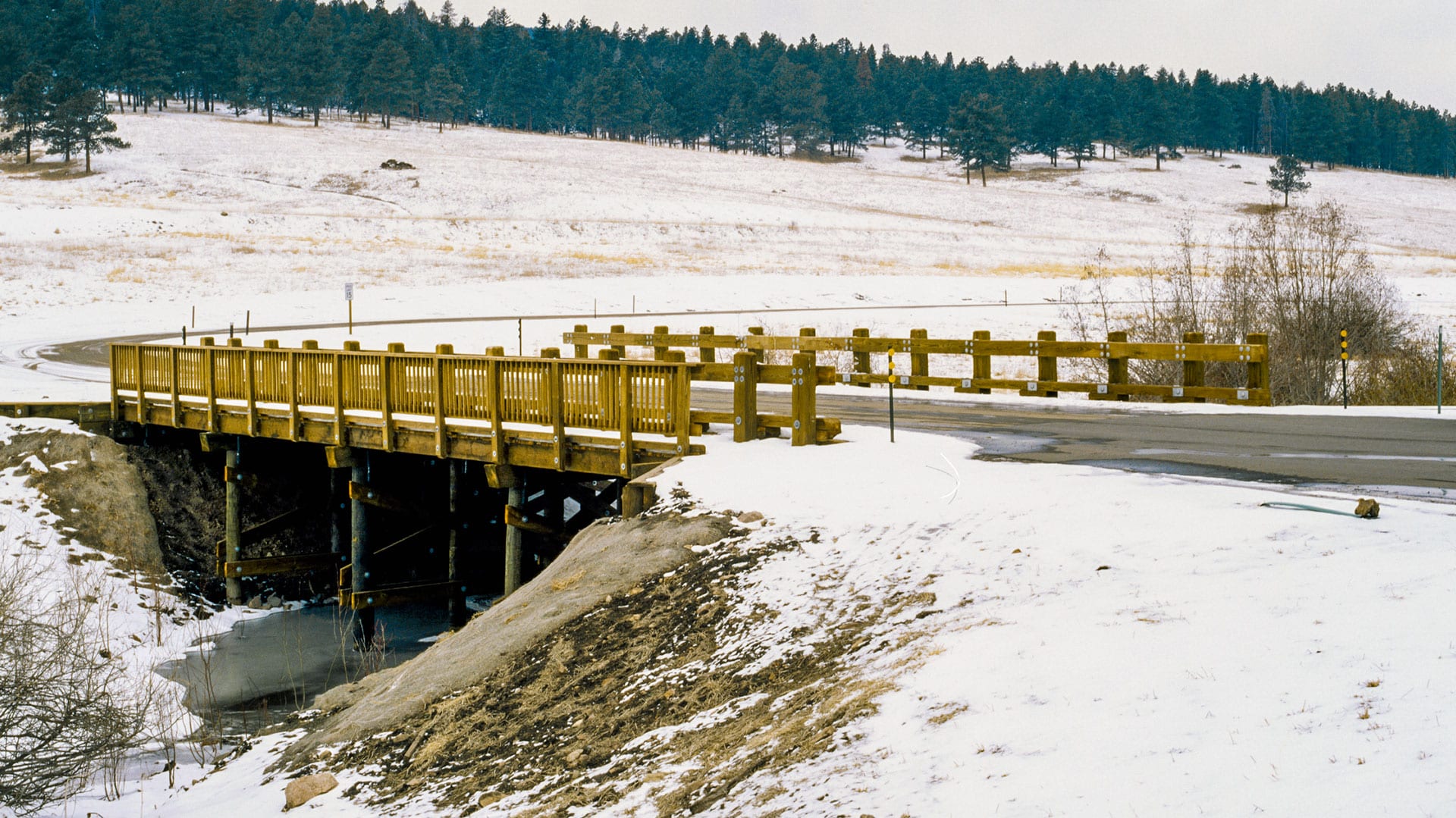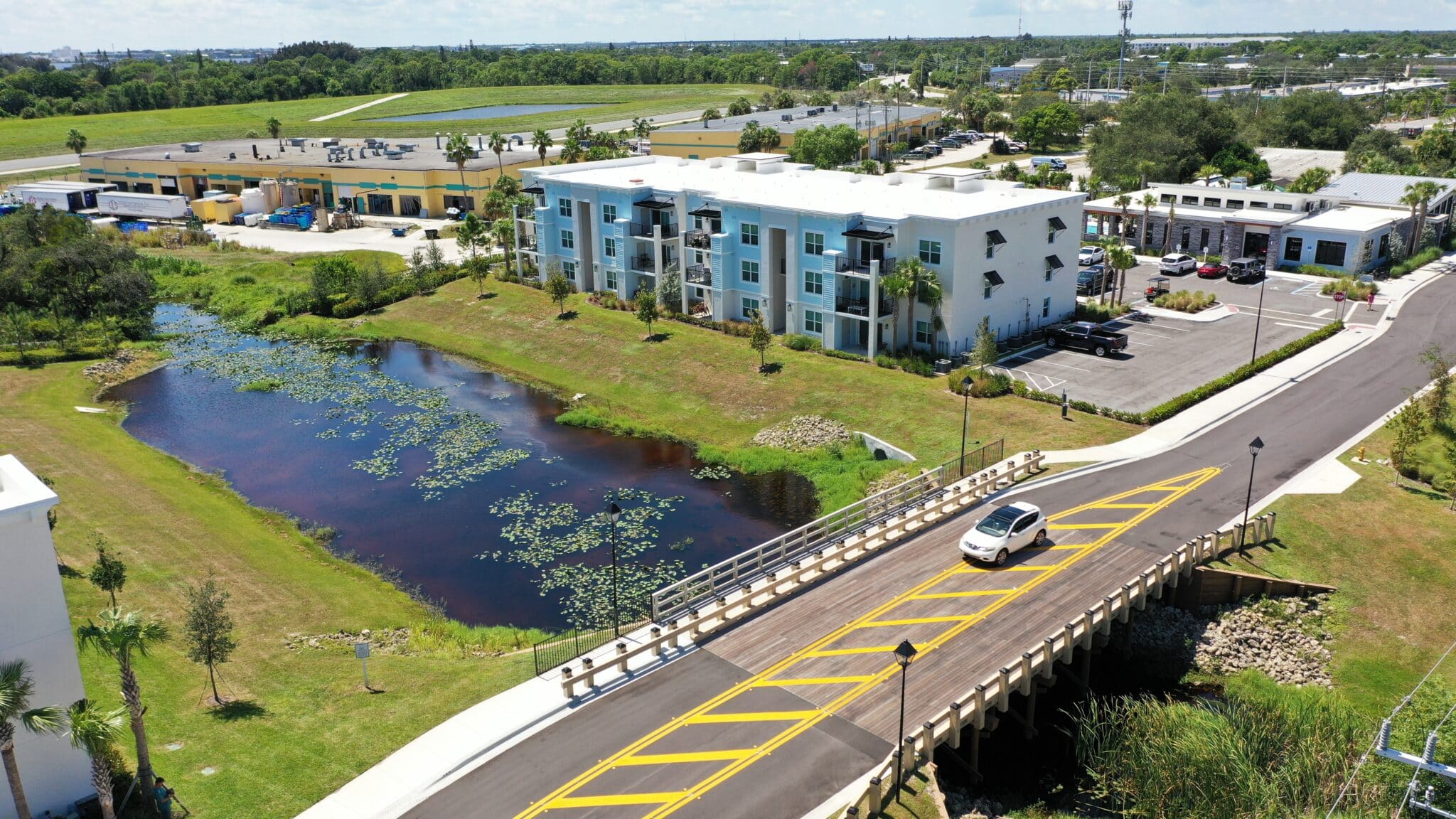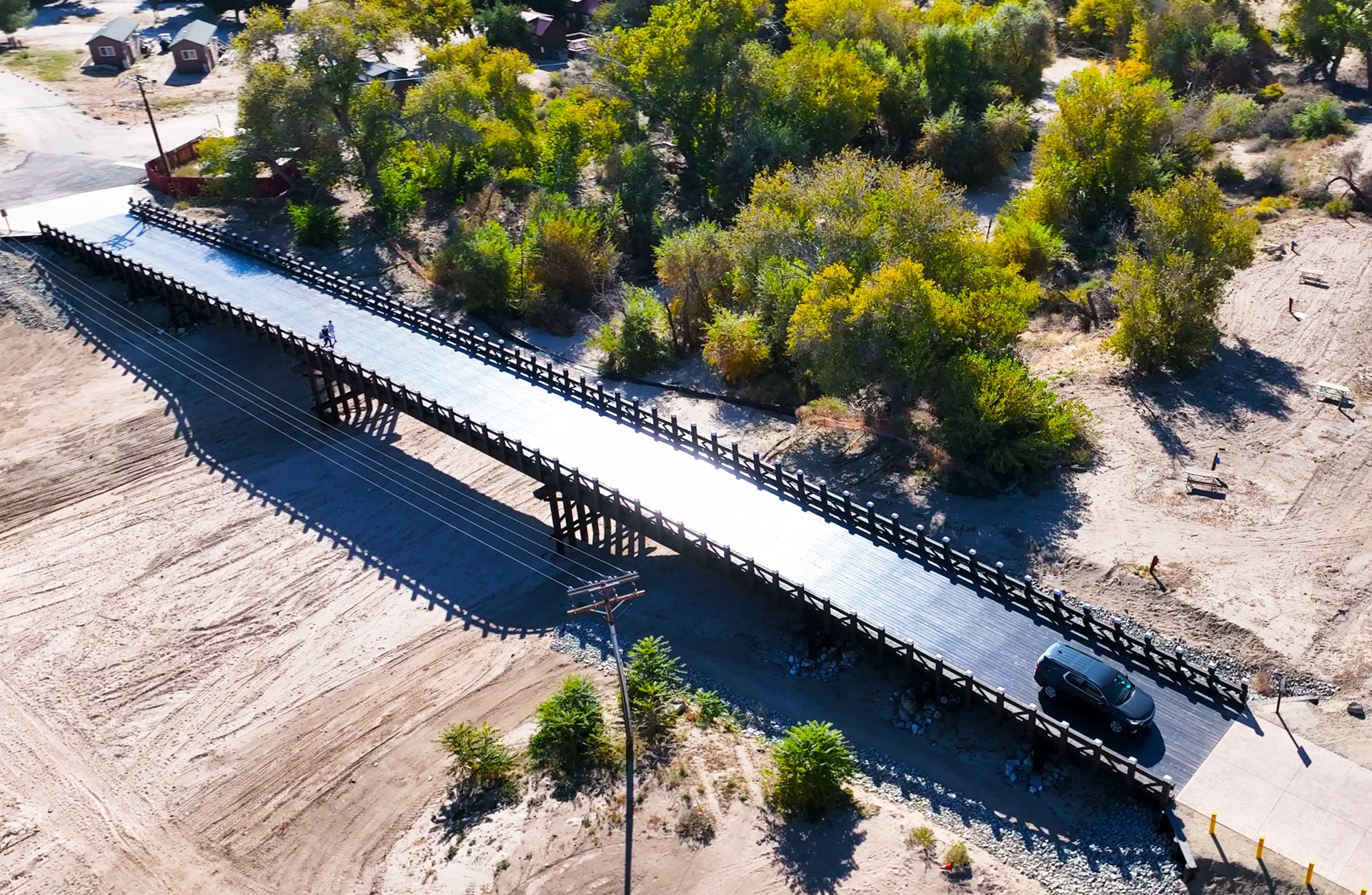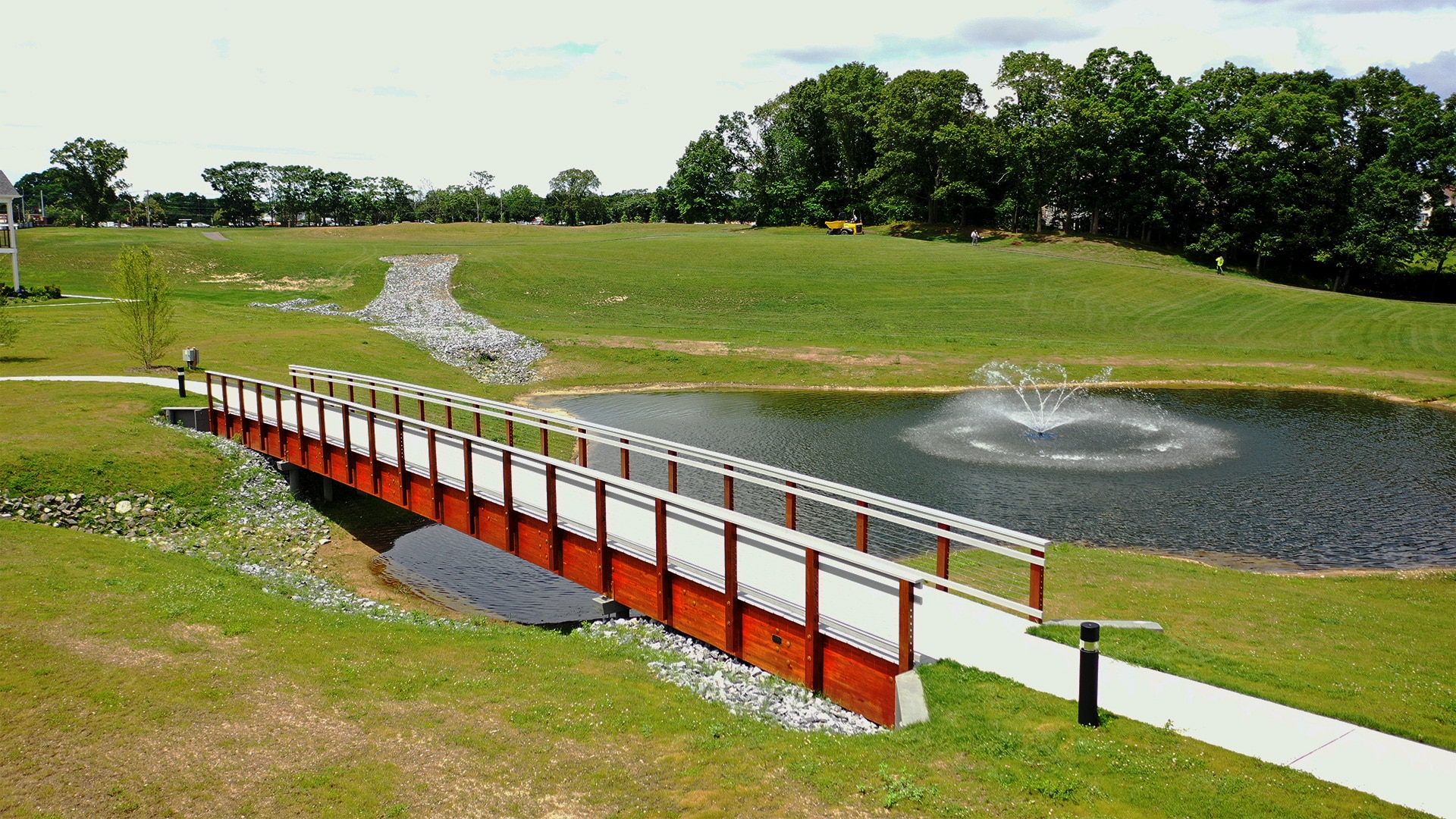
Starkey Ranch Pedestrian Bridges – Odessa, FL

York Bridge ConceptsFlorida, Multiple Crossings, Pedestrian Bridges, Repetitive Span

Starkey Ranch Pedestrian Bridges – Odessa, FL | York Bridge Concepts - Timber Bridge Builders

Project Overview

The Pedestrian Bridge at starkey Ranch, Odessa, FL

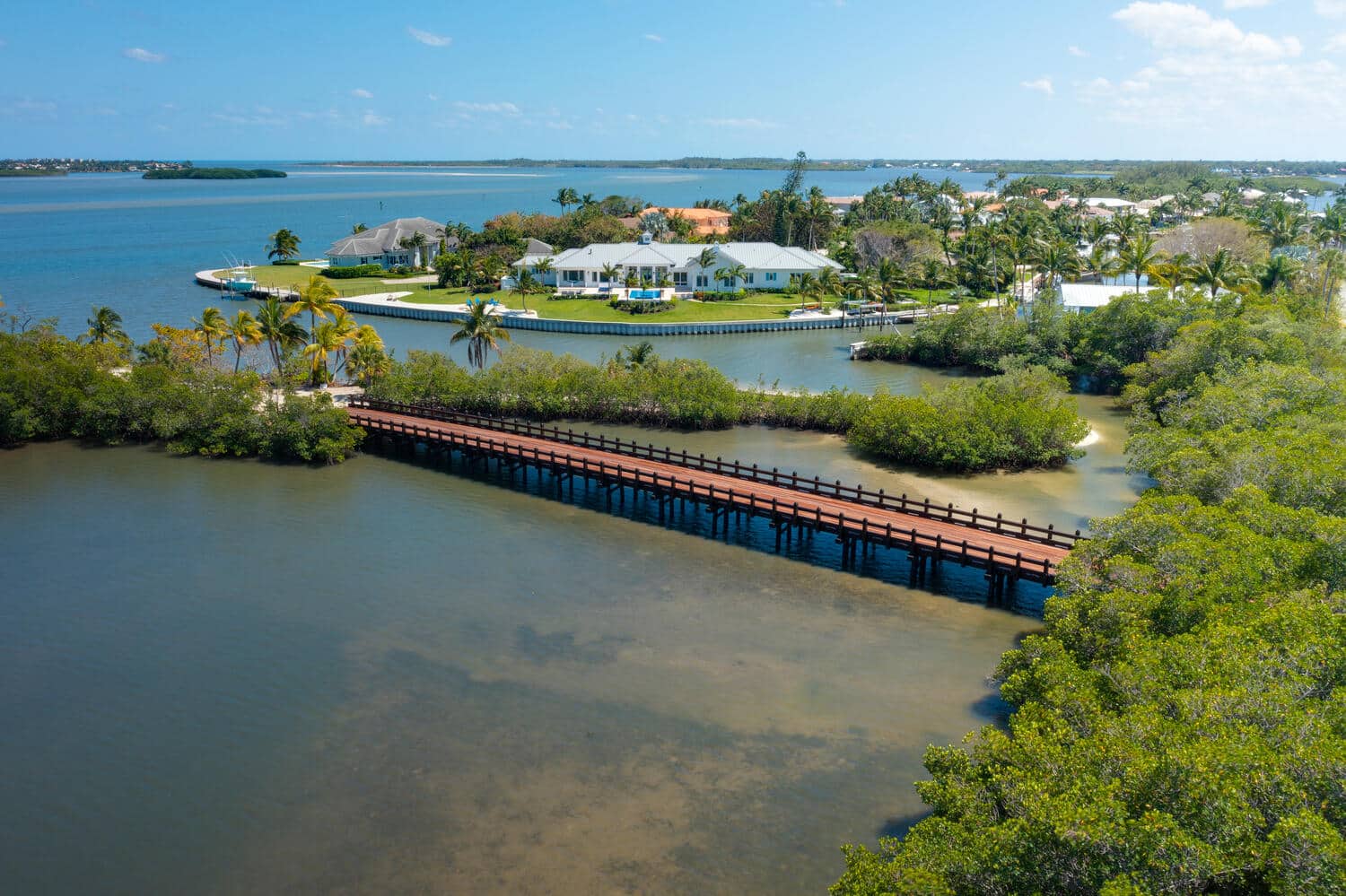
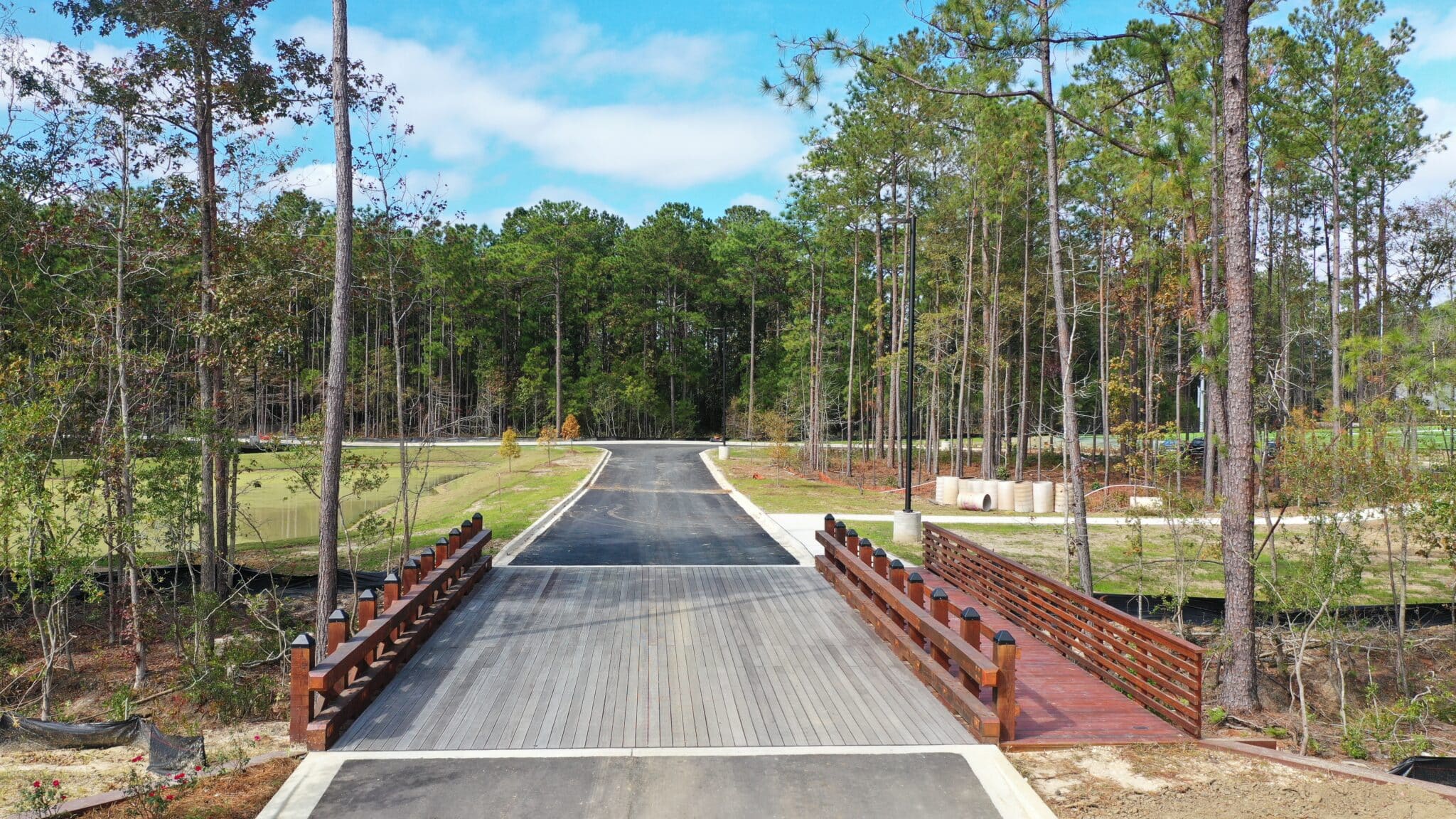
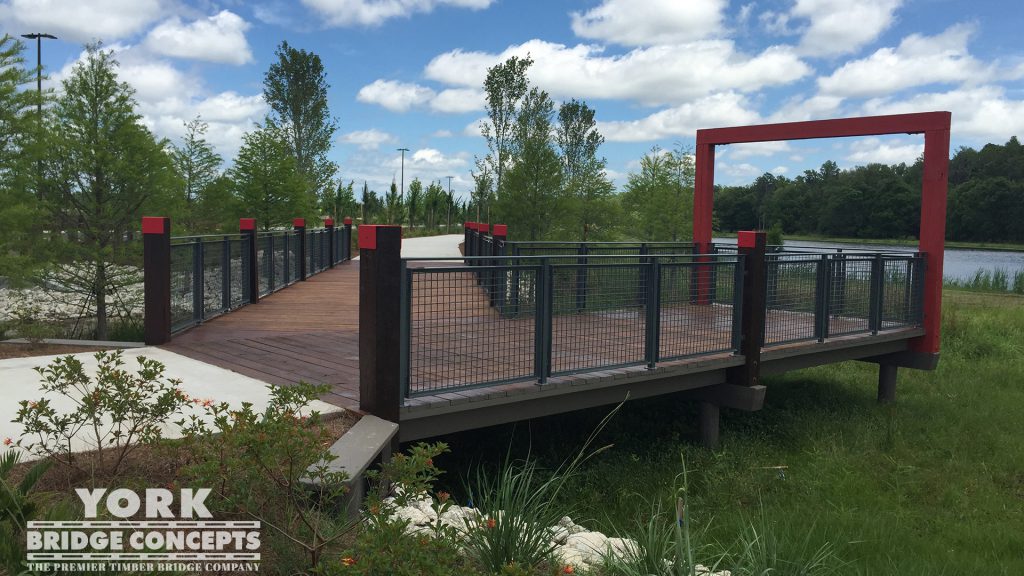
Starkey Ranch greenway pedestrian bridge built by York Bridge Concepts in Odessa, FL

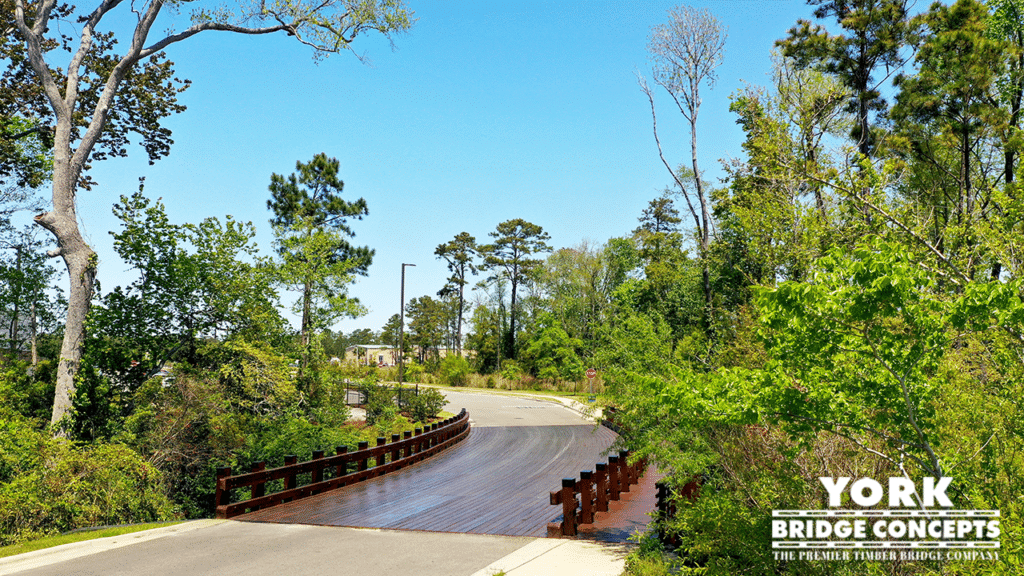
In the heart of 2,400-acre family-friendly community of Starkey Ranch in Odessa, Florida, a landmark pedestrian crossing has been brought to life by York Bridge Concepts (YBC). This bridge is not just a functional connector--it is a design statement. It links the community's greenway trail system, spans protected wetlands, and adds a modern, industrial-chic aesthetic via YBC's "Decero™ Contemporary Series" design. Built to last and built with sensitivity to the environment, the bridge exemplifies how infrastructure in a master-planned community can be both beautiful and sustainable.

Below we explore every facet of the project: context and community need, design inspiration and materials, construction methodology (including deck-level construction over sensitive wetlands), integration into the greenway trail network, and the benefits for the residents of Starkey Ranch. We also address maintenance, longevity, and how this bridge becomes part of the identity of the community

Specifications


  • Width:
  • 6’ 10’ (5’ 10’ clear) 12’ 10” (11’ 10” clear)
  • Length:
  • 48’ & 94’
  • Height:
  • 4' above grade
  • Capacity:
  • 85 PSF
  • Construction:
  • Deck Level
  • Span Type:
  • Repetitive Span
  • Material:
  • CCA/CA-C Treated Southern Yellow Pine
  • Foundation:
  • Timber Piles & Abutments (Acrylic/Polymer Coated where exposed)
  • Stringers:
  • SYP Timber (Acrylic/Polymer Coated where exposed)
  • Deck System:
  • Translucent Coated 1-½” Timber Deck
  • Handrail:
  • Decero™ Horizontal Rail Design Series
  • Crossing:
  • Flood Plain

New call-to-action

Community Context: Starkey Ranch & The Need for Connectivity

Starkey Ranch is a sprawling 2,400-acre master-planned community in Odessa, Florida. It is designed to be family-friendly, offering top-rated schools, parks, trails, and open space for its residents. Within such a community, the pedestrian and trail network plays a vital role--not just for recreation but for everyday movement: walking, biking, connecting parks and homes, accessing schools, and integrating nature with living.

A key component of this network is the greenway trail system that winds through the community, often encountering natural features--wetlands, protected habitats, and tree-canopied corridors. To maintain continuity of the trail, provide safe passage, and create an amenity rather than a barrier, YBC was tasked with designing a bridge that spans one of the wetlands crossings in a way that reflects the high standards of Starkey Ranch.

By constructing a signature pedestrian bridge, the developers delivered:

  • A safe, accessible path for residents of all ages including kids, families, and seniors - allowing comfortable traversal across the wetland feature without disturbing the environment.
  • A design element that elevates the experience of the greenway, making it not just a utilitarian path but a memorable moment in the trail network (an architectural vista, a place to pause).
  • Added value to the community: the presence of a premium pedestrian bridge built with high-end materials and design signals the quality of the place and that residents live in a thoughtfully designed environment.
  • A seamlessly integrated amenity: The bridge aligns with the theme of parks, trails, views and nature that Starkey Ranch emphasizes.

In short: the bridge is both functional and symbolic, anchoring the greenway network while enhancing the sense of place.


Starkey Ranch greenway pedestrian bridge built by York Bridge Concepts in Odessa, FL

Design Approach: Decero Contemporary Series & Architectural Intent

YBC's Decero™ Design Studio describes its approach as "where vision becomes timeless bridge design." The "Contemporary Design" or "Contemporary Series" bridges from YBC lean into modern aesthetics, premium finishes, and blends of materials such as timber, metal, and wire rail systems.

Key Design Features at Starkey Ranch
  • Galvanized metal handrails with metal wire inserts - The choice of galvanized metal provides durability against Florida's humid, coastal-adjacent conditions, while the wire inserts allow transparency and openness, preserving the view of the wetland and natural landscape beyond.
  • Bright red timber frame at the wide-out - In the wide-out (the expanded area of the trail/bridge where users can pause, view, rest), a bold red timber frame acts both as a visual landmark and a framing device for the picturesque view beyond the wetlands toward the community and green space. This creates an architectural finish reminiscent of a "portal" or "frame" that invites users to view the landscape.
  • Deck-level (top-down) construction technique - Especially important here because the wetland environment below is protected. By building from deck level rather than disturbing the ground beneath, the construction impact is minimized (more on this in the next section).
  • Modern industrial-timber aesthetic - The combination of metal, wire, and bright timber creates a pairing of warmth (wood) and industrial minimalism (metal/wire). This fits well with a community that emphasizes modern living, clean lines, and connection to nature, rather than purely rustic or traditional bridge treatments.
  • Integration with the greenway trail - The bridge isn't an afterthought; it is fully integrated within the trail system. That means alignment, grade, width, user comfort (pedestrian, stroller, bide) and seamless transition from land to structure.
Design Process

The design process for Decero™ begins with concept, then engineering, then materials selection and construction. For a site like Starkey Ranch, this would include:

  • A site visit to assess the wetland, grade, soil and hydrology.
  • Collaboration with the community/developer on design goals (visual impact, community brand, user experience).
  • Structural analysis for pedestrian load, stacking of foot/bike users, wind loads (particularly in Florida), and longevity considerations in humid, possibly inundation conditions.
  • Material selection - for example, deciding on galvanized vs. stainless handrails; timber species and finish; deck material; rail infill; protective coatings.
  • Environmental coordination - given wetland, there may be permitting with Florida's water and environmental agencies. The low-impact methodology (deck-level construction) is aligned with YBC's wetland/eco-sensitive design capabilities.
Aesthetic & Brand Fit

For residents at Starkey Ranch, the bridge becomes a landmark. The use of bold red timber frame at the wide-out provides a color accent that complements the community's palette and acts as a recognizable feature. The modern, sleek, metal and wire rail system avoids overly traditional styling (which might have made it feel like a park bridge of decades past) and instead fits a more contemporary lifestyle. It invites use, exploring, pausing and connecting.


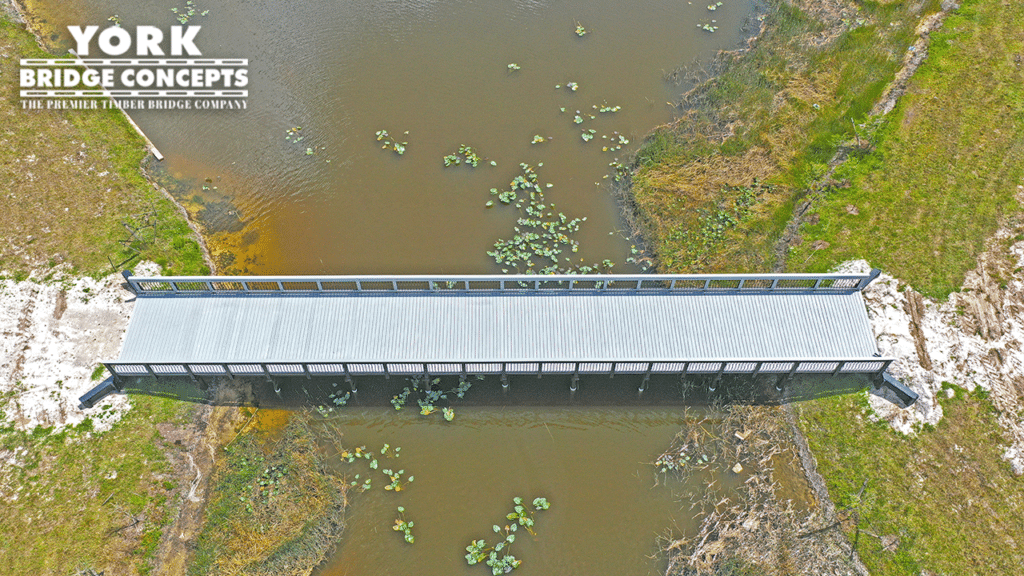
Starkey Ranch Deck-Level Construction of pedestrian boardwalk over protected wetlands built by York Bridge Concepts in Odessa, FL

Construction Methodology: Deck-Level Construction & Wetland Sensitivity

One of the stand-out features of this project is the construction methodology used: deck-level construction (top-down) over a protected wetland. YBC emphasizes minimal site disturbance and sustainable construction practices.

Why Deck-Level/Top-Down Construction?

In sensitive wetlands, heavy equipment, excavation and rooting can disrupt hydrology, vegetation, root systems and the ecosystems and the ecosystem overall. By constructing at deck level, YBC's crews can:

  • Avoid entering the wetland surface with heavy machinery.
  • Place piles or piers a strategic points with minimal undermining of the wetland floor.
  • Assemble deck and superstructure without disturbing the ground beneath.
  • Minimize erosion, siltation and runoff into the wetlands.
  • Preserve the natural landscape, water flow and vegetation beneath the bridge, thus satisfying regulatory and environmental stewardship requirements.

YBC's website emphasizes that they use pile-supported construction and top-down techniques to maintain hydrologic flow and minimize site disturbance.

Construction at Starkey Ranch

While we don't have every field detail, based on YBC's methodology and the stated features of the project, a likely sequence is:

  1. Site mobilization: Surveying, locating piles/footings that meet wetland permitting.
  2. Installation of piles/footings: Driving or placing minimal impact piling into ground beneath the wetland perhaps using vibratory or low-impact techniques.
  3. Installing stringers/beams/pile caps: Raised above the wetland grade to support the deck.
  4. Deck level construction: Building the walking deck and sub-structure at the elevated level, rather than building from below.
  5. Installing the rail system: Galvanized metal handrails, metal wire inserts.
  6. The wide-out timber frame: Installing the bright red timber frame at the designated spot. The frame likely consists of treated timber or tropical hardwood, finished in the red stain/paint as specified, and carefully installed to align with the corridor.
  7. Finishing touches: Lighting, signage (if any), protective coatings, perhaps seating or benches at the wide-out.
  8. Inspections and commissioning: Checking structural integrity, handrail/guardrail safety, compliance with codes, ADA access (if part of trail).
  9. Handover and trail integration: Opening the bridge to pedestrian/bicycle traffic, linking seamlessly into the greenway trail.
Advantages of This Approach
  • Reduced environmental impact: Preserves the wetland underneath the bridge -- vegetation, hydrology and wildlife movement.
  • Speed: On-site build avoids long prefabrication and heavy equipment staging over sensitive ground.
  • Customization: Because YBC builds on-site, alignment, finishes, and rail details can be tailored to the community vision.
  • Durability: YBC claims their structures are built to last 75+ years when properly maintained.


Starkey Ranch pedestrian boardwalk materials used built by York Bridge Concepts in Odessa, FL

Materials & Finishes: Balancing Durability & Design

For a project in Florida--especially near wetlands and under humid conditions--material choice is critical. The project at Starkey Ranch utilizes a combination of timber, galvanized metal, and metal wire inserts to achieve both aesthetics and performance.

Timber Elements
  • The bright red timber frame at the wide-out serves both structuring and aesthetic framing functions. The choice of timber (likely tropical hardwood or treated Southern Yellow Pine as per YBC's typical practice) gives warmth, texture and visual richness.
  • Timber must be protected from moisture, insects, UV exposure and rot. YBC notes their use of premium finishes, high-performance coatings and materials selection in their Contemporary Series.
  • The color red: The timber frame, finished in bold red, helps establish it as a signature element--drawing attention, framing the view, and creating a "destination" moment along the trail rather than just transit.
Metal Handrails & Wire Inserts
  • Galvanized metal is chosen rather than bare steel for corrosion resistance in Florida's humid, potentially salt-laden air.
  • Metal wire inserts provide minimal visual obstruction so trail users can retain sightlines across the wetland, toward the greenway and surrounding landscape.
  • The combination metal/wire gives a modern industrial aesthetic--aligning with the community's design ethos (modern, clean lines).
  • From a safety perspective, the rail system must meet pedestrian/ADA code requirements (height, spacing, durability). YBC's engineering capacity assures compliance.
Decking & Support
  • The walking deck likely uses treated timber or composite decking (YBC mentions high-quality composites in their Contemporary Series) to provide a long-life surface with minimal maintenance.
  • Support structure (stringers, beams, pile caps) will be engineered to handle pedestrian and bicycle loads, dynamic loading from groups of users, wind, possible flood events. YBC's load-rating approach ensures safe long-term performance.
Finishes & Maintenance Considerations
  • Finishes are chosen to resist UV, moisture, insects, and everyday wear and tear. YBC emphasizes "premium finishes and coatings" in the Contemporary Series.
  • Maintenance plan likely includes periodic inspection of handrails/wire, cleaning of deck, checking for timber weathering or corrosion of metal components, and ensuring drainage and runoff are functioning to avoid water pooling or vegetation encroachment.
  • The long-life span (75+ years) claim implies major structural components are over-engineered and maintenance-friendly.


Starkey Ranch as an integral part of the community greenway trail built by York Bridge Concepts in Odessa, FL

Greenway and Trail integration: Bringing Users Through Nature

The bridge doesn't exist in isolation-it is part of the larger greenway trail network at Starkey Ranch. this network serves multiple functions: recreation (walking, jogging, biking), everyday mobility (kids biking to school, families strolling), nature immersion (boardwalks over wetlands, scenic viewpoints), and community gathering.

Alignment & User Experience
  • The bridge alignment must match the trail grade, width and design so users transition smoothly from land to structure. For dual use (pedestrian & bike), width and clearance are key.
  • Approach areas: The wide-out part of the bridge with the red timber frame invites users to pause and enjoy the view -- turning the bridge from simply a crossing to a viewing platform.
  • Trail surfacing, lighting, signage: These elements support safe and comfortable use at dawn, dusk and day, and promote way-finding.
  • Landscaping integration: The bridge's design allows minimal intrusion into the wetland below, so the trail experience remains "nature-immersive" with views of the protected habitat.
  • Access for all ages: Since Starkey Ranch is family-oriented, the bridge supports strollers, children, adults, seniors and bikers--so universal design principles apply.
The View & Sense of Place

The bright red timber frame acts as a "gateway" to the view. As users emerge from the wooded trail or greenway path, they arrive on the bridge, pause at the wide-out, framed by the red timber structure, and look out over the protected wetland and toward the community beyond. That experience strengthens the sense of place and pride in the community.

Community Connectivity & Amenity
  • For residents of Starkey Ranch, the bridge becomes part of daily life--walks with children, jogs, bike rides, or simply a scenic stroll through the park.
  • The amenity value: having a high-quality pedestrian bridge enhances the appeal of the community, increases property value, and contributes to the overall brand of Starkey Ranch as a thoughtfully designed place to live.
  • It may also serve as a "destined path" for events: community walks, nature tours, or simply a landmark for meeting friends along the trail.


Starkey Ranch pedestrian boardwalk Contemporary Series that honors the environment built by York Bridge Concepts

Environmental & Regulatory Considerations

Given the presence of protected wetlands, the project at Starkey Ranch required environmental sensitivity, regulatory compliance, and a design that minimizes ecological impact.

Wetland Protection & Hydrology
  • The deck-level (top-down) construction ensures minimal disturbance of the wetland floor, root systems and hydrologic flow.
  • Pile-supported bridging keeps structure elevated, allowing vegetation and water to thrive beneath the deck. YBC emphasizes this approach in their sustainability narrative.
  • Erosion control, sedimentation control, and runoff management are typical parts of the construction process in wetland projects: silt fences, turbidity barriers, preserving native vegetation.
  • Re-vegetation or restoration of any disturbed area would be part of permit conditions.
Permitting & Compliance
  • In Florida, wetland crossings often involve coordination with agencies such as the Florida Department of Environmental Protection (FDEP) and U.S. Army Corps of Engineers (for federal wetlands). The design must meet statutory requirements for minimizing impact, maintaining water flow and preserving habitat.
  • YBC's wetland/eco-sensitive bridge expertise positions them well to handle permitting and construction monitoring.
  • Accessibility: The trail and bridge must meet ADA standards for access (grade, width, ramping, handrail design).
  • Safety & Codes: Handrail height, guardrail spacing, load-rating, lighting and drainage must meet municipal and state codes for pedestrian bridges.
Sustainability & Longevity
  • Use of timber (a renewable resource) and low-impact construction techniques adds sustainability value. YBC's "Sustainable Construction" narrative emphasizes minimal environmental footprint while achieving long life.
  • The long lifespan (75+ years) claim means fewer rebuilds and less material consumption over time.
  • The material selection, protective coatings, and structural design all contribute to reduced maintenance and improved long-term performance.


Focus on Craftsmanship: the YBC Advantage

Why was YBC selected for this project at Starkey Ranch? Several factors make them a strong fit for pedestrian/greenway spanning in sensitive environments.

In-House Design-Engineer-Build
  • YBC operates a design-build process (Design-Engineer-Build) which means fewer hand-offs and more integrated control over schedule, cost and quality.
  • On-site construction (rather than off-site prefabrication) allows adaptation to specific site conditions encountered during build (especially helpful in wetland terrain).
  • Their portfolio includes pedestrian bridges, boardwalks and trail crossings in wetland and sensitive environments, giving them tested methods for this context.
Premium Materials & Finishes
  • YBC's Contemporary Series emphasizes premium finishes, modern aesthetics, and durability.
  • The combination of industrial metal/wire and timber, the bold aesthetics (like the red timber frame) show an intent beyond mere function--toward creating a refined community asset.
Longevity & Low Maintenance
  • A key selling point: structure designed to last 75+ years when maintained.
  • For a master-planned community like Starkey Ranch, long-life infrastructure adds value and reduces lifecycle costs.
Environmental Sensitivity
  • YBC's narrative highlights wetland mitigation, minimal disturbance, hydraulic/habitat preservation. This aligns intimately with the needs of a project spanning protected wetlands.


Role in Community Branding & Experience

A bridge like this is more than a piece of infrastructure; it's a branding and experience element for the community.

Creating a Destination Moment

When residents walk the greenway and arrive at the bright red timber frame set out on the bridge, they are met with a view, a pause, a moment of reflection. The bridge becomes a destination within the trail--not just a crossing. This elevates the resident experience and helps transform the trail into an amenity rather than a path of transit.

Enhancing Walkability & Connectivity

Walkability and trail connectivity are key selling points for modern master-planned communities. The bridge closes a gap in connectivity, ensures that the greenway is continuous, and reinforces the concept of a community built around nature, trails, parks--and safe, pleasant walking/biking infrastructure.

Value Add & Property Appeal

From a real estate perspective, features such as signature pedestrian bridges, well-designed trails, scenic overlooks, protected natural areas increase the perceived value of the homes and the lifestyle offered in the community. Starkey Ranch differentiates itself by offering top-rated schools, parks and this kind of thoughtful infrastructure. The presence of a high-quality bridge enhances that differentiation.

Identity & Way-finding

The bright red timber frame acts as a visual marker in the trail network. It allows residents to say "meet me at the red-timber bridge" or "we'll hang out at the wide-out section." Such features help with way-finding, orientation, and building collective memory within the community--important for large developments like 2,400 acres.


Starkey Ranch pedestrian boardwalk walkway built by York Bridge Concepts in Odessa, FL

User Experience & Safety

A pedestrian bridge must perform not just structurally, but in terms of user comfort, safety and passage

Accessibility & Pedestrian/Bike Use
  • The bridge must accommodate pedestrians, strollers, children on bikes, possible joggers. Its width and grade must reflect that multi-use function.
  • Handrails must be continuous, meet code for height and spacing, be smooth and safe. the metal handrails and wire inserts meet that requirement while retaining openness.
  • The wide-out provides space for pause and viewing without obstructing flow of greenway users.
  • The deck surface should provide slip resistance, drainage and smooth transition from trail to structure.
Lighting & Visibility
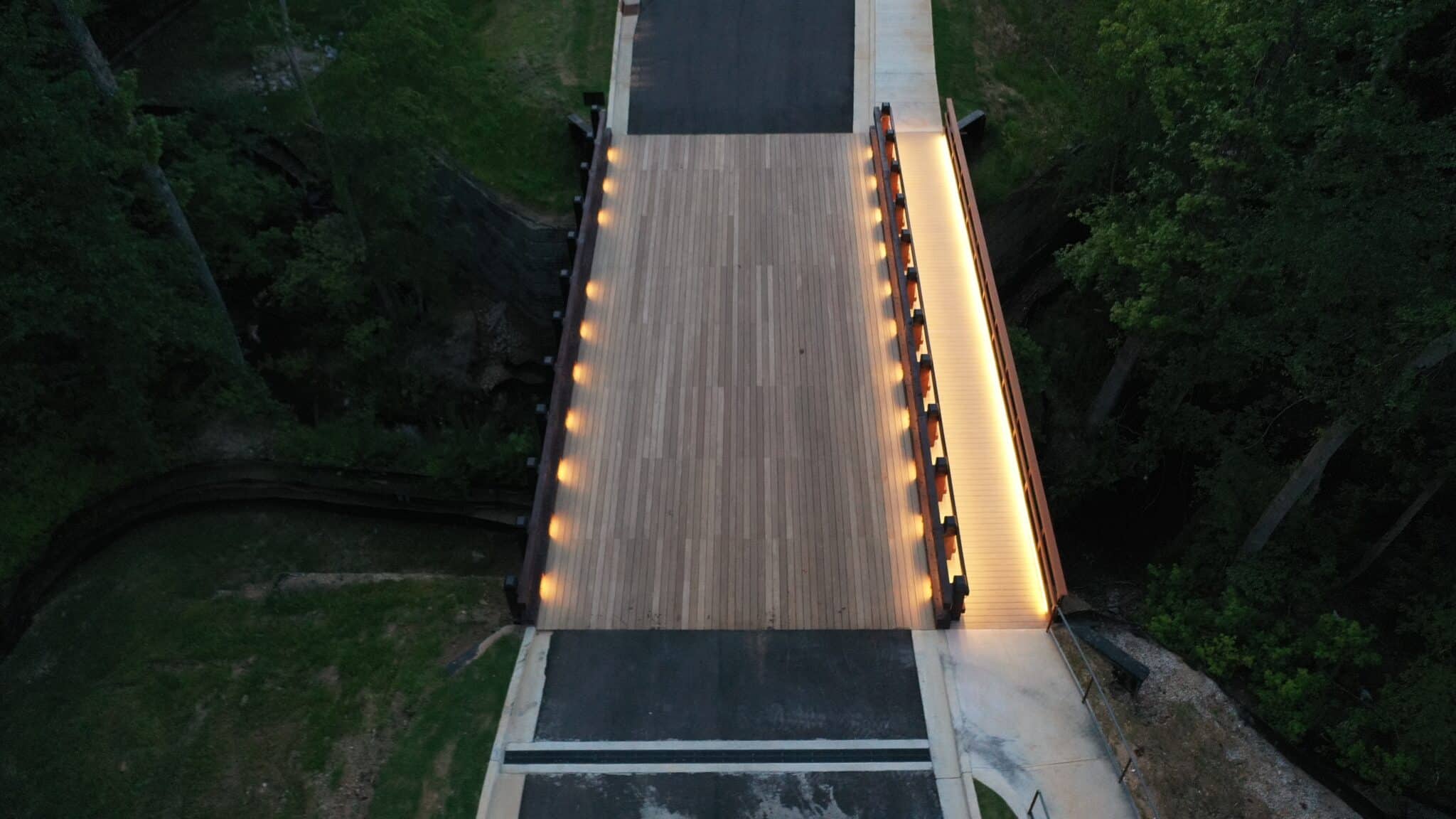
  • To serve early-morning or evening users, appropriate lighting (integrated into rails or deck) is likely provided. Good lighting enhances safety, usability and event signage.
  • Visibility (open rail/wire) ensures users feel safe, can see across the wetlands, can view surroundings, and sense connectivity.
Maintenance Considerations for Users
  • Low-maintenance materials reduce risk of hazards: corroded railings, loose deck boards, slippery surfaces.
  • Regular inspections by the community/HOA/trail manager will preserve safety and appearance. YBC likely provides maintenance guidance.


Construction Challenges & Mitigation

Every bridge project has challenges; in this case, features such as wetlands, site access, environmental regulation, and integration into a greenway present specific considerations.

Wetland Construction Constraints
  • Site access restrictions: machinery must minimized toe-of-slope disturbance, vegetation removal, ground compaction.
  • Piling in soft soils: wetlands often have high water tables and compressible soils; design must account for that (deep piles, appropriate bearings).
  • Hydrology and permitting: Flow of water beneath the deck must be maintained; design must comply with wetland cross-section requirements.
  • Environmental monitoring: Sediment control, disturbance to flora/fauna, possibly timing of work to avoid certain seasons for wildlife.
Integration with the Greenway Trail
  • Grade transitions: Must align seamlessly with existing trail.
  • Temporary closures: While constructing the bridge, safe detours for trail users must be provided or staged construction executed.
  • Aesthetics yet durability: The desire for a bold red timber frame, modern rail design, etc., must still meet structural and maintenance demands.
Scheduling & Phasing
  • Construction likely required coordination with the community's development timeline (housing build-out, park/trail installation).
  • Weather risks: Florida thunderstorms, heavy rainfall, and potential flood conditions mean scheduling must incorporate contingency.
  • Logistics of material delivery without impacting the wetland or trail area.
Mitigation Strategies
  • Use of deck-level (top-down) construction to reduce disturbance.
  • Careful staging and access paths to minimize soil compaction.
  • Use of prefabricated material where possible, but YBC builds on-site to adjust to terrain.
  • Robust coordination with community/HOA, environmental agencies, and trail planners.


Long-Term Performance & Community Benefit

The true measure of success is how the bridge performs over time and how it benefits the community for years to come.

Durability & Lifecycle Considerations
  • With YBC's stated long life (75+ years) in their Contemporary Series, residents of Starkey Ranch can anticipate minimal major upkeep for decades.
  • The galvanized metal, wire inserts, protected timber finishes, and elevated deck design all contribute to reduced maintenance.
  • A robust maintenance plan (periodic inspections, cleaning, protective coat refresh, deck cleaning) will keep the structure looking and functioning like new.
Community Impact Over Time
  • The trail network: As the greenway expands, the bridge will form an enduring link--helping turn the trail into a loop or extended system for recreation, nature, and mobility.
  • Usability: Families will stroll over the bridge, kids will bike across, community events may gather at the wide-out moment. The bridge becomes a social asset.
  • Sense of place: Over time, the bridge becomes part of the identity of Starkey Ranch--literally the "timber bridge" on the greenway that residents point to.
  • Value proposition: As the community matures, amenities such as this bridge contribute to property value, desirability to new buyers, and the sense of a fully built-out, high-quality development.


Integration with Starkey Ranch's Vision & Development

Starkey Ranch emphasizes parks, trails, schools, family lifestyle, and open space. The pedestrian bridge aligns with this vision in multiple ways.

Family-Friendly Connectivity

The bridge supports safe, walkable access for children and families: from home to park, to play area, to trail. It supports the community's aim of being "family-friendly" by offering infrastructure that is comfortable and safe for all ages.

Nature & Parks Interface

By spanning protected wetlands rather than diverting around them, the community preserves natural habitats and enhances aesthetic value. The trail and bridge sequence encourage residents to engage with nature--from the shade of trails to vantage points over the wetland. The red timber frame wide-out invites pause, nature-viewing, and appreciation of the green infrastructure.

Schools, Parks & Destination Trails

With top-rated schools and beautiful parks, the community's trail and bridge network connect these amenities. The bridge acts as a link--not just between land parcels, but between daily living and recreation. That fosters the idea of living within a community designed around movement, healthy living and access to amenities.

Marketing & Resident Experience

As homes sell and families move in, the presence of signature infrastructure such as this pedestrian bridge helps differentiate the community. Visuals of the bridge, the trail experience, and the wetland views become part of marketing collateral, resident orientation, and community storytelling.


Lessons & Best Practices from the Project

For other developers, trail planners or communities considering a similar crossing, the Starkey Ranch project offers several take-aways.

  1. Start early with design and integration. By including the pedestrian bridge in the planning of the greenway, rather than as an afterthought, the alignment, grade and aesthetics can be optimized.
  2. Select materials and design that match the community brand. The modern industrial/wood combination in this project helps align the infrastructure with the community's architectural language.
  3. Use low-impact construction methods in sensitive environments. This project's deck-level build minimized impact to wetlands and likely eased permitting and environmental approval.
  4. Make the pedestrian experience memorable. The wide-out with a red-timber frame creates a signature moment, not just a crossing. That enhances resident engagement and place-making.
  5. Plan for long-term performance and maintenance. Choosing premium materials and a builder with experience (like YBC) ensures longevity and reduces lifecycle costs.
  6. Integrate with trails, parks and everyday use. The bridge functions not just for recreation but for everyday mobility. That enhances usability and justifies the investment.
  7. Coordinate with community amenities and landscaping. The view framing, trail context, landscaping around the bridge all contribute to the end experience.
  8. Communicate value to residents and buyers. A signature bridge becomes a selling point, a photo moment, a way to connect people to the place.


Conclusion

The pedestrian bridge at Starkey Ranch, built by York Bridge Concepts, transcends mere infrastructure. It marries design, engineering, community planning and environmental stewardship into a piece of the built-environment that resonates with residents, trail users and the natural world beneath. The use of YBC's Decero™ Contemporary Series - with galvanized metal handrails, wire infill, a bold red timber frame and deck-level construction over wetlands - creates an asset that is durable, modern, functional and beautiful.

For the community of Starkey Ranch, the bridge ties together their greenway trail system, enhances walkability, supports family lifestyle, frames nature views and anchors the identity of the place. Over the long term, it offers value not just in function but in experience, brand, and connectivity.

If your community or trail project is considering a pedestrian crossing, this project stands as a compelling example of how to do it right--from design aesthetic to construction methodology to environmental sensitivity and user experience.


REQUEST YOUR QUOTE

All Feature Projects


What's Best: A Culvert Or A Timber Bridge?

Understand the considerations you should make before choosing your crossing method.

What Is The Best Span Type For My Project?

See how creative scoping, design, & usage work to create the perfect spanning solution for your project.

Which Load Capacity I Need?

Understand the different load capacities for usage that are needed for your project.

How Do I Cross An Environmentally Sensitive Area?

Learn how YBC crosses protected areas with our Deck-Level Construction.

How Do I Create A Landmark?

Create a memorable icon for your development project with a YBC Legacy Timber Bridge.

How Long Does A Timber Bridge Last?

Extend the lifespan of your timber bridge to over 75 years using these guidelines, material selection, protection & maintenance practices.


Placeholder Image

Culvert Or Bridge

If you're considering using a culvert for your crossing project. Click below to understand the best fit for your project.

Culvert Or Bridge
Placeholder Image

Spanning Solutions

Spanning a crossing is one of the most important aspects of your crossing project. Find the best solution for your crossing needs.

Spanning Types
Placeholder Image

Uses & Capacities

The load capacity of a timber bridge may surprise you. See specs for different loads and uses that will help your decision-making process.

Bridge Loads & Usages