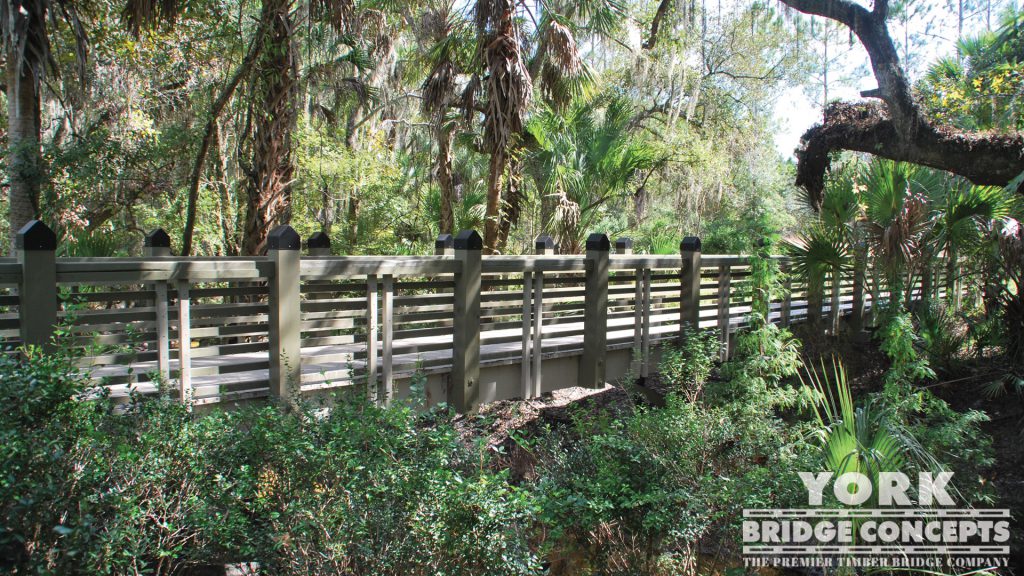
Alafia Creek Trail Pedestrian Bridge – Lithia, FL

York Bridge ConceptsFlorida, Multiple Span, Pedestrian Bridges

Alafia Creek Trail Pedestrian Bridge – Lithia, FL | York Bridge Concepts -Timber Bridge Builders

Bridging Nature

The Alafia Creek Trail Bridge In Lithia, FL

Alafia Creek Trail Bridge Design-Engineered-Built by York Bridge Concepts in Hillsborough County, FL

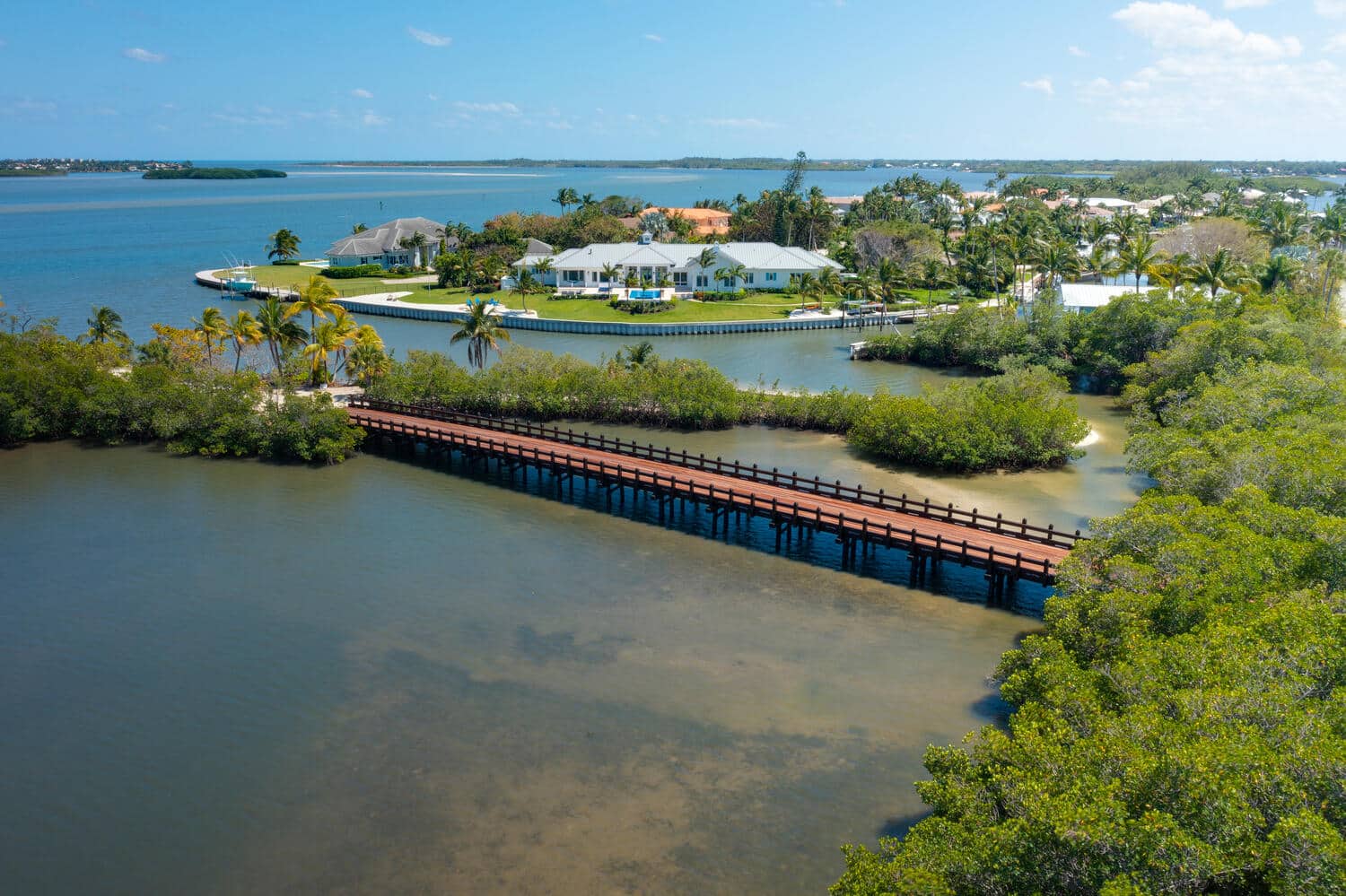
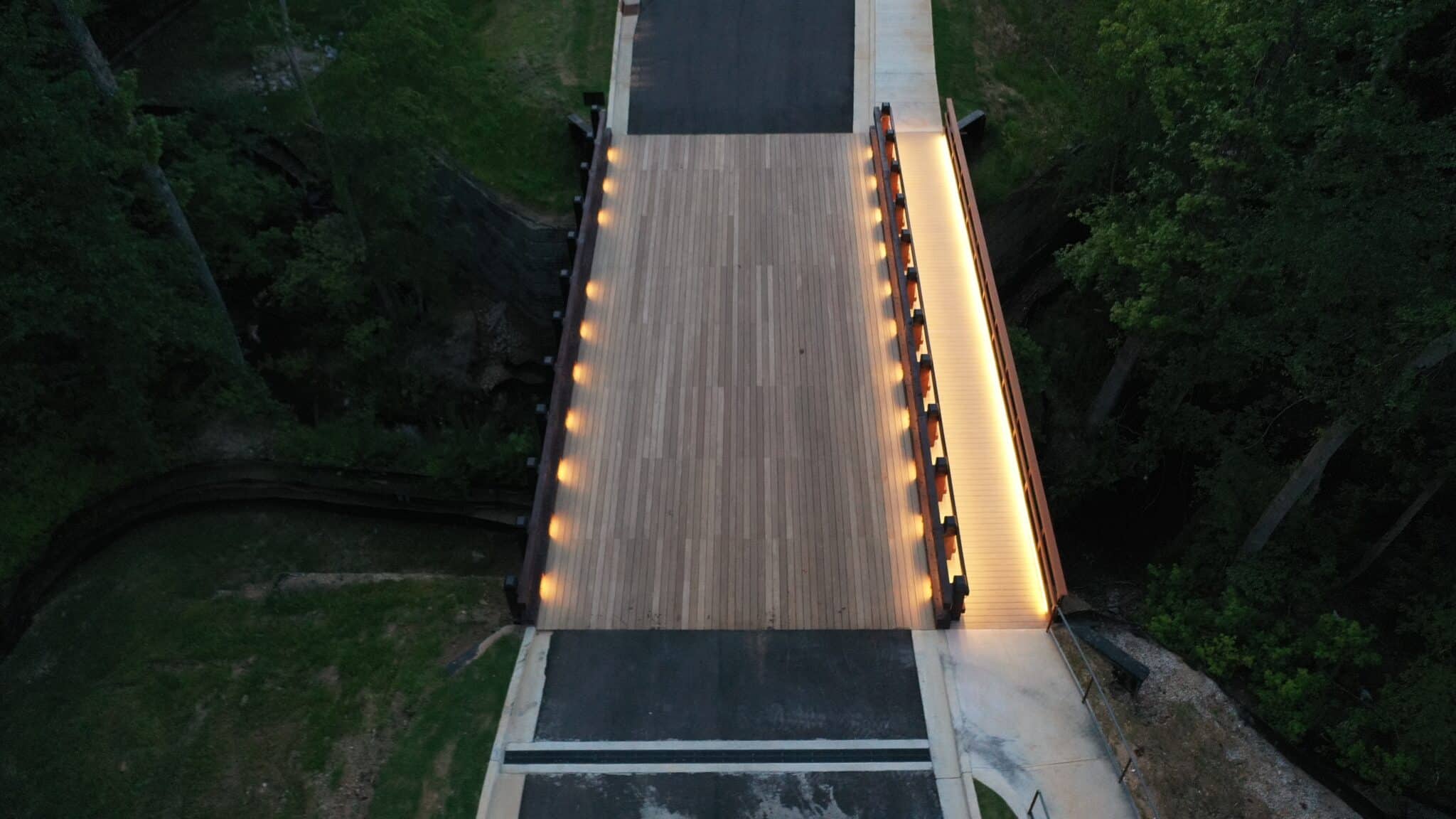
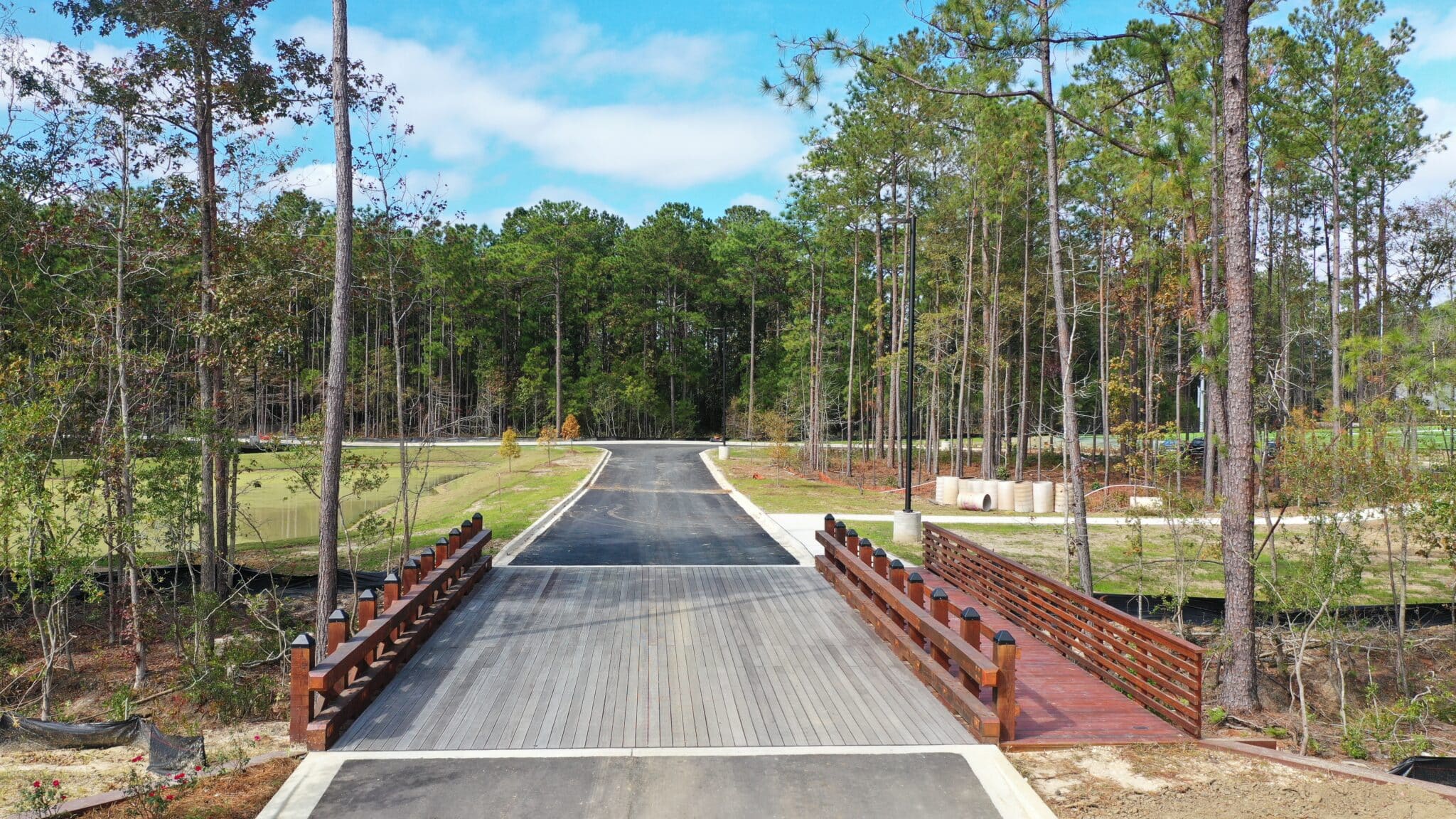
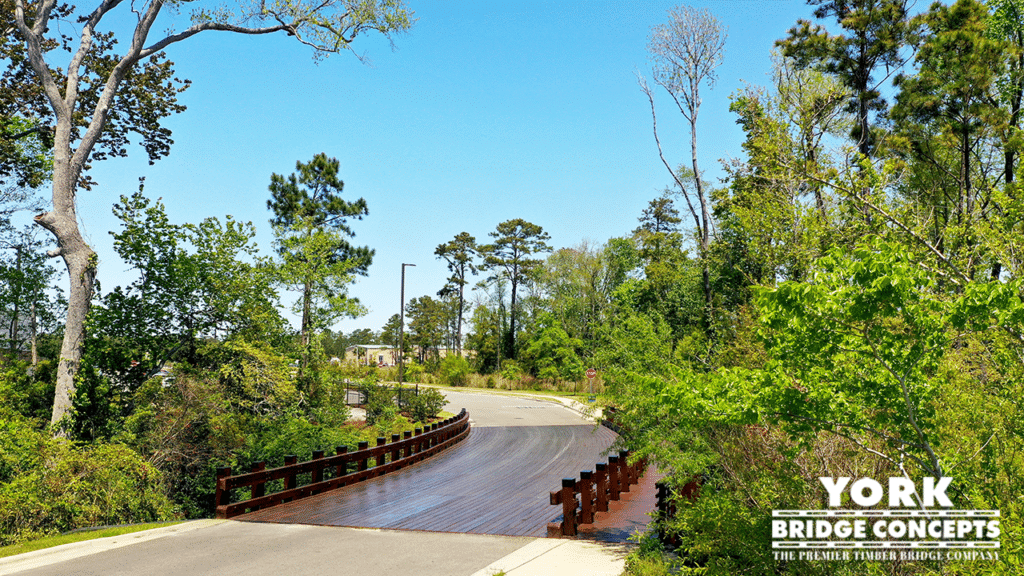
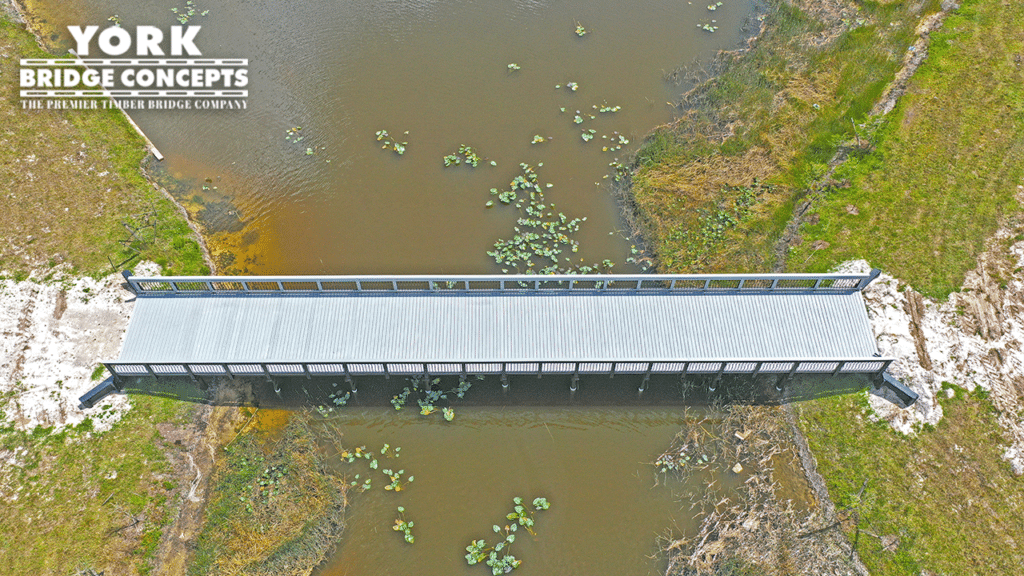
Tucked within the untouched beauty of Fishhawk Creek Preserve North, the Alafia Creek Trail Bridge stands as a testament to the harmony between thoughtful engineering and environmental stewardship. Designed, engineered, and built by York Bridge Concepts (YBC), this 86-foot Florida Trail Bridge invites bird-watchers, wildlife enthusiasts, and hikers to cross into an immersive natural world of river cypress swamps and hardwood hammocks--without disturbing the ecosystem it protects.

Specifications


  • Width:
  • 8’
  • Length:
  • 86’
  • Height:
  • 8' above grade
  • Capacity:
  • 85 PSF
  • Construction:
  • Ground Up
  • Span Type:
  • Multiple Span
  • Span Lengths:
  • (1) 26’, (3) 13’, (1) 8’
  • Material:
  • CCA/CA-C Treated Southern Yellow Pine
  • Foundation:
  • Timber Piles & Abutments (Acrylic/Polymer Coated where exposed)
  • Stringers:
  • SYP Timber (Acrylic/Polymer Coated where exposed)
  • Deck System:
  • 1-½” Timber Deck
  • Handrail:
  • Decero™ Horizontal Rail Design Series
  • Crossing:
  • Creek

New call-to-action

Site & Context: Why This Crossing Matters

The Alafia Creek Trail Bridge's placement within Fish Hawk Creek Preserve North is as strategic as it is scenic. Set amidst riverine cypress swamps, seepage wetlands, and hardwood hammocks, this crossing resolves a fundamental access challenge: how to move people safely and comfortably across a dynamic, seasonally inundated corridor without degrading the very habitats visitors come to experience. The site's hydrology fluctuates with rainfall patterns, pushing water slowly through sinuous channels that recharge local aquifers and sustain biodiverse edges where wading birds feed, amphibians breed, and hardwoods anchor the soil. Any intervention here must therefore be light-touch, resilient, and reversible in spirit--able to withstand storm cycles while leaving a minimal footprint.

Community context further elevates the bridge's value. Hillsborough County has expanded nature-based recreation opportunities in the greater Tampa area to meet rising demand for shaded trails, wildlife observation, and family-friendly outdoor experiences. The Alafia Creek Trail Bridge is a keystone in that network: it knits together trail segments, shortens loops, and supports educational programming by creating an intuitive, safe route through a sensitive area. For nearby neighborhoods, the bridge also reinforces a sense of place; it makes daily access to nature easy, allowing residents to adopt the preserve as part of their wellness routines--morning walks, after-school explorations, and weekend photography.

From an engineering perspective, the crossing site presented a complex matrix of constraints: limited construction access, soft soils subject to seasonal saturation, and ecological edges where compaction can harm root systems and alter flow. YBC's design-engineer-build approach transformed those constraints into design drivers. Instead of fighting the wetland's logic, the bridge follows it--spanning above the active zone, concentrating loads on discreet foundations, and employing a superstructure that is both robust and visually quiet in the canopy.

The result is not simply an 86-foot passage but an experience corridor: a measured approach onto timber, a soft acoustic underfoot, filtered light through handrails, and a framed overlook where visitors slow down to observe the creek's movement. In a region where development pressure can push infrastructure toward maximized capacity alone, this bridge demonstrates a different value proposition: capacity for wonder.

A Florida Trail Bridge Designed for Discovery

The Fish Hawk Creek Trail Bridge serves as a vital connector through the 3,286-acre Fish Hawk Nature Preserve North, located just east of Tampa in Lithia, Florida. The bridge spans the serene waters and biologically rich floodplains of the Alafia River, opening up access to the park's pristine trails and diverse wildlife habitats.

With the park's dense tree canopies, clear natural springs, and thriving bird population, it's easy to see why Hillsborough County selected this area for preservation and public enjoyment. However, creating infrastructure in such a fragile ecosystem requires more than traditional bridge-building techniques--it demands an approach that safeguards every inch of the environment.

That's where YBC's Deck-Level Construction™ and Decero™ Legacy Series design came into play.


Deck-Level Construction™: Sequencing, Controls & Fieldcraft

YBC's Deck-Level Construction™ (DLC) is the critical method that allowed this project to succeed in a fragile wetland with minimal disturbance. Built "from the top down," DLC eliminates the need for heavy machinery inside the sensitive area. Below is the distilled sequence and the controls that ensure quality, safety, and compliance:

  1. Staging & Access Planning
    - Establish upland staging areas outside jurisdictional boundaries.
    - Pre-engineer material lengths and lift plans to minimize handling.
    - Install temporary surface protection (e.g., timber mats) at upland edges as needed to protect roots and soils.

  2. Foundation Installation
    - Layout foundations with total station control to preserve canopy trees and cypress knees.
    - Use small, highly maneuverable equipment positioned on stable ground or temporary mats; where feasible, hand-assist operations.
    - Verify embedment and bearing per geotechnical guidance; record as-built elevations to align superstructure with floodplain freeboard targets.

  3. Bents, Caps & Stringers
    - Erect bents and caps using light picks from upland positions; no tracked equipment enters wetlands.
    - Install primary stringers and blocking to establish a working platform; all subsequent work proceeds from the growing deck surface--this is the essence of DLC.

  4. Decking as Work Surface
    - Lay initial decking courses to create a safe, clean platform.
    - Implement edge protection and tie-off points; install waste capture (debris nets/containment) beneath active work zones spanning water.

  5. Handrails & Details
    - Fit Decero™ horizontal picket handrails in field for exact alignment with sightlines and code-compliant heights.
    - Pre-drill and fasten with stainless or coated hardware; torque-check logs are maintained.

  6. Finishes & Coatings
    - Apply field touch-ups to acrylic-coated members under dry-time windows; moisture meters verify acceptable surface conditions.
    - Install composite post caps and moisture-defense details to extend service life.

  7. Restoration & Closeout
    - Remove all temporary protection; restore upland staging with seed/mulch/stabilization as required.
    - Final QA/QC walkthrough ensures fastener counts, rail alignment, deck evenness, and signage/wayfinding placement all meet spec.

Environmental Controls Embedded in DLC 

  • No in-channel equipment: protects benthic habitat and water clarity.
  • Debris capture: prevents sawdust and shavings from entering waterways.
  • Noise/time windows: reduce disturbance to nesting or roosting birds.
  • Compaction avoidance: keeps soil structure intact around feeder roots and pneumatophores (cypress knees).

This disciplined fieldcraft turns a delicate site into a safe workshop in the canopy--precisely what preserves the preserve.

“It was a pleasure working with York Bridge Concepts on the recently completed project at Lithia Springs State Park as well as Cone Ranch. York Bridge continues to deliver quality projects and I would recommend them for any of your future needs.”

– Bo Dring, Project Manager, Walbridge
Image

Built to Blend with the Land: The Decero Legacy Series

York Bridge Concepts' Decero Legacy Series isn't just about beauty--it's about building bridges that look at home in their environment and stand the test of time. The Fishhawk Creek Trail Bridge exemplifies this approach through:

Acrylic-Coated Southern Yellow Pine

This sustainably harvested wood forms the substructure and superstructure of the bridge. Coated in an acrylic finish, it offers weather protection and longevity while retaining the natural warmth and tone of the timber.

Decero Horizontal Picket Handrails

The custom-designed handrail system adds safety and aesthetic appeal. Its horizontal picket design enhances visibility for wildlife viewing while maintaining code compliance and user safety. 

Composite Post Caps

These caps protect the tops of the timber posts from moisture intrusion, further enhancing the bridge's long-term durability in Florida's humid environment.

Each of these elements contributes to a bridge that not only performs well structurally but also enhances the experience of those who use it.


Material, Coatings & Connections: Built for Climate and Use

Florida's heat, humidity, and biologically active environments demand a material palette that balances warmth and toughness.


Structural Timber (Southern Yellow Pine, Pressure-Treated)

Chosen for its strength-to-weight ratio and compatibility with coatings, SYP performs admirably in outdoor load-bearing roles. Treatment and detailing mitigate decay risk, while YBC's joinery and drainage paths move water off the structure quickly.


Acrylic Protective Coating

The acrylic system used on both substructure and superstructure offers UV resistance, color stability, and moisture defense. Beyond durability, the coating visually harmonizes the bridge with the woodland palette, lowering reflectivity so wildlife viewing feels natural.


Decking & Wear Surface Strategy

Deck boards are oriented and gapped for rapid drainage and slip-resistance. Edge chamfers reduce splintering at high-traffic zones. Where appropriate during adjacent construction phases, YBC protects finished decking with temporary plywood sheathing so authorized maintenance carts can traverse without scuffing or point-loading new wear surfaces.


Handrail System (Decero™ Horizontal Picket)

Horizontal pickets provide a calm, linear rhythm that recedes from view, creating wide "view windows" for spotting waders and raptors. Posts and rails are engineered for code compliance and crowd loading, with concealed fasteners where feasible to reduce snag points.


Hardware & Connectors

Fasteners and brackets are specified for corrosion resistance in humid, high-chloride conditions. Hidden or low-profile connection strategies improve tactile comfort and aesthetics while facilitating inspection.


Moisture Management Details

Composite post caps, end-grain sealing, drip edges, and venting gaps all contribute to keeping water out of vulnerable zones. In Florida, moisture management is longevity.

Together, these details create a bridge that looks elegant on opening day and remains that way under real-world use.


Alafia Creek Trail Bridge in Fish Hawk Creek Nature Preserve built by York Bridge Concepts in Lithia, FL

Florida's Natural Beauty, Left Untouched

The most defining feature of this Florida Trail Bridge isn't something you can see--it's what's missing: heavy machinery tracks, torn-up riverbanks, and disturbed habitats. Thanks to YBC's sustainable Deck-Level Construction™ method, the Fish Hawk Creek Trail Bridge was built without compromising the surrounding ecosystem.

Rather than using intrusive construction methods that require earthmoving equipment to enter sensitive areas, YBC's team builds from the top down--literally. All work is conducted from above the deck, eliminating the need to drive machinery into wetlands or across creek beds. This means:

  • Zero soil compaction around the bridge foundation.
  • No damage to cypress knees or hardwood root systems.
  • Minimal disruption to wildlife during construction.

For a park that prides itself on natural preservation, this method was not just ideal--it was essential.


Environmental Safeguards, Permitting & Monitoring

Building in a preserve is a responsibility, not a convenience. YBC's process layers environmental stewardship form early design through closeout.

Pre-Design Coordination

  • Desktop review of wetlands mapping, floodplain data, and listed species occurrences.
  • Field reconnaissance to locate cypress knees, rookeries, and sensitive understory.
  • Design alignment refined to avoid specimen trees and maintain hydrologic connectivity under the span.

Permitting Pathway 

  • Jurisdictional delineation informs setback and foundation placement.
  • Submittals address erosion control, debris containment, and construction access.
  • Stakeholder coordination integrates county goals for recreation with preserve-level protections.

Construction-Phase Protections 

  • Silt controls at upland staging; no in-channel work.
  • Waste capture systems; prohibited materials kept off site.
  • Tool discipline: no fluids or refueling near wetlands; spill kits staged.

Post-Construction Stewardship

  • Vegetation monitoring for trampling or compaction at approaches.
  • Trail edge restoration with native seed mixes where appropriate.
  • Public education signage that explains why the bridge "floats" above the system and how visitors can help keep it that way.

The payoff is visible: intact banks, clear water, unbothered wildlife--and a bridge that feels like it was always meant to be here.

Image

A Gateway for Nature Enthusiasts

Spanning 86 feet, the Fish Hawk Creek Trail Bridge creates access to some of the park's most scenic and biologically rich zones. With elevated views over the slow-moving creek and shaded trails winding through the forest, the bridge offers a front-row seat to Florida's ecological splendor.

Visitors now enjoy:

Bird-Watching Access

With horizontal picket handrails, guests have clear lines of sight to observe woodpeckers, herons, warblers, and more.

Nature Photography Opportunities

Elevated perspectives and rustic finishes frame perfect shots without disrupting the view.

Accessible Pathways

Smooth transitions at both ends of the bridge ensure comfortable access for parkgoers of all ages and mobility levels.

The trail bridge doesn't just get people from one side of the creek to the other--it provides a transformational experience, allowing them to connect with Florida's natural environment in a deeper, more intimate way.


Visitor Experience, Wayfinding & Interpretation

Great trail bridges do more than span--they choreograph experience.

Approach Geometry & Sightlines
Subtle approach ramps align walkers with the creek's flow, encouraging a natural deceleration as views open. Handrail transparency lets parents keep track of kids and gives wildlife watchers unobstructed vantage points.

Wayfinding Touches 
Low-profile trail blades and discrete distance markers help visitors orient without cluttering the landscape. Materials and colors echo the bridge palette to maintain a unified visual language.

Interpretive Moments
Optional interpretive panels--kept minimal and placed at widened nodes--can describe floodplain ecology, seasonal migrations, or the cultural history of the Alafia. The goal is to add meaning without turning the walk into homework.

Universal Design 
Grade transitions, surface evenness, and handrail continuity support users of all ages and abilities. Restable pacing and a comfortable rail height make the bridge welcoming for strollers, seniors, and mobility-assist devices.

Photography & Birding Etiquette 
Narrow pull-outs (not full overlooks) offer courteous step-aside zones for tripods or binocular groups, maintaining through-movement while accommodating lingering.

The sum is a crossing that feels inevitable--like the trail always intended to pass exactly here.

Preserving the Past, Building for the Future

The Alafia River and its surrounding ecosystems have long served as a refuge for native species, and the adjacent springs offer recreational swimming in clear, 72-degree waters year-round. With this new pedestrian connection, more visitors can explore the park sustainably and safely.

For Hillsborough County and the park's caretakers, this Florida Trail Bridge represents more than infrastructure--it's an investment in eco-tourism and outdoor education. By choosing York Bridge Concepts, the county aligned itself with a builder that shares its environmental values and long-term vision.

YBC's timber bridges have a proven track record of longevity, even in the harsh climates of coastal and swampy regions. With minimal maintenance, the Fish Hawk Creek Trail Bridge is built to last for generations--ensuring that children, families, birders, and hikers can all enjoy this connection to nature for decades to come.


Lifecycle, O&M, and Long-Term Stewardship

Sustainable infrastructure isn't just low-impact to build; it is economical and predictable to maintain.

Preventive Maintenance Rhythm 

  • Seasonal: Clear debris, inspect drainage paths, spot-check fastener torque, and verify handrail integrity.
  • Annual: Assess coating condition on sun-exposed faces; re-seal end grain as needed.
  • Multi-Year: Plan for periodic cleaning and recoating intervals aligned with Florida UV exposure profiles.

Wear Deck Protection During Nearby Work 
When the finished bridge must serve as a temporary access path for park maintenance carts during nearby site work, YBC's practice is to overlay the deck with plywood protection and distribute point loads. This preserves the wear surface and prevents gouging or crushing at fastener lines.

Asset Management Documentation 
YBC provides as-builts, material schedules, and a maintenance checklist that dovetails with parks' CMMS or spreadsheet-based programs. Clear scopes make budgeting straightforward and help small items stay small.

Resilience & Recovery 
After storm events, inspection protocols target scour signs at foundations, rail alignment, deck uplift, and debris accumulation, DLC's minimal-disturbance foundations are easier to inspect because they leave the surrounding groundcover intact as a reference.

Service Life Outlook 
With coatings maintained and moisture managed, timber bridges in humid climates deliver long, reliable service. Protective details--post caps, drip edges, ventilation--extend replacement cycles and protect public dollars.

Stewardship is a partnership: good design, good documentation, and a maintenance team equipped with clear steps.


Image

A Bridge Built with Purpose

York Bridge Concepts approaches every project with a clear mission: to design bridges that are structurally sound, visually stunning, and environmentally responsible. The Alafia Creek Trail Bridge is the embodiment of that mission. From concepts to completion, every decision was made with ecological preservation and user experience in mind.

Key Components of this purpose-driven approach included:

Custom Design from YBC's Decero™ Design Studio
No off-the-shelf solutions. Every bridge begins from zero--designed specifically to suit its environment, usage requirements, and aesthetic goals.

Built On-Site by Master Craftsmen
No prefabrication warehouses or preassembled elements. YBC's Deck-Level Construction™ allows skilled builders to bring the design to life directly in the field, minimizing transport emissions and construction impact.

Legacy Timber Aesthetics with Modern Coatings
The beauty of real wood enhanced with modern protective coatings ensures timeless appeal and durability in the Florida climate.

Material Selection with the Ecosystem in Mind
From eco-friendly finishes to pressure-treated southern yellow pine sourced from sustainable forests, every material was chosen for performance and responsibility.


From Concept to Completion: YBC's Integrated Delivery

The Alafia Creek trail Bridge showcases YBC's integrated model--design, engineering, and construction under one roof--so decisions are made holistically.

Decero™ Design Studio 
Every project begins at zero--no catalog shortcuts. The team models hydrology, user flows, and canopy constraints to shape an alignment that fits the land first, then the drawings.

Engineering That Serves Experience 
Load paths, member sizes, and handrail spans are engineered to code while preserving the slender, quiet profile visitors love. The 86-foot span distributes loads through a rhythm of bents sized for stability without visual heaviness.

Procurement & fabrication Logistics 
Material lengths and connection strategies are optimized for minimal handling and efficient field assembly. This reduces deliveries, emissions, and staging footprints.

Field Execution 
The same team that designed the details builds them. Tolerances hold, Fasteners match the specification. QA/QC isn't a handoff--it's continuous.

Closeout, Training & Handoff 
Operators receive practical O&M guidance, inspection checklists, and coating schedules. the county inherits an asset, not a mystery.

Integrated delivery means fewer surprises and a bridge that expresses one coherent intent--from first sketch to first footsteps.


Inspiring Future Projects Across Florida

As communities throughout the state seek more sustainable infrastructure solutions, the Alafia Creek Trail Bridge sets a new standard for Florida Trail Bridges. It shows that functionality, sustainability, and aesthetics can --and should--go hand-in-hand.

Whether in regional parks, greenways, nature preserves, or mixed-use developments, the principles behind this bridge can be replicated across Florida's diverse landscapes. With a focus on preservation and access, York Bridge Concepts is proud to support local governments, developers, and conservation groups in making responsible choices for pedestrian infrastructure.


Replicability Across Florida & Lessons Learned

Florida's greenways and preserves often share constraints: soft soils, floodplain hydrology, and sensitive biota. The Alafia Creek Trail Bridge offers replicable patterns:

  • Top-Down Builds in wetlands protect soils and roots--standardize this approach where access is constrained.
  • Transparent Rails balance safety with wildlife viewing--improve visitor satisfaction without enlarging platforms.
  • Moisture-First Detailing outperforms heavier structures with poor drainage--durability is a detail decision.
  • Small Footprints, Big Experiences: Concentrate foundations, elongate views, minimize clearing.
  • Interpretation Without Clutter: Place minimal, high-value panels at natural pause points; keep the rest immersive.

Lessons Learned 

  • Early alignment walks with ecologists save weeks of redesign later.
  • Debris capture under cutting zones is simple insurance for water quality.
  • Handrail mockups on site prevent iterative re-fabrication and ensure sightlines are perfect.

This project is a template-adjustable to length, loading, and context--without sacrificing the core ethic of preservation.


FAQ: Florida Trail Bridges (Public & Owner Focus)

Why choose timber for a Florida preserve?

Properly detailed, treated, and coated timber performs exceptionally in humid climates. It's lighter to install (less disturbance), visually warm, and maintainable with predictable, low-impact tasks.

How does Deck-Level Construction™ protect wetlands?

By building from the span outward, crews avoid driving equipment into wetlands or creek beds. Foundations are installed from controlled access points; decking quickly becomes the work platform, keeping soils and vegetation intact.

Is the bridge ADA-friendly?

Approach transitions and surface evenness are designed for comfortable use by a wide range of visitors. Final grading and handrail continuity support accessible movement.

What about flood events?

Freeboard and flow paths are considered in design. Post-storm inspections focus on debris accumulation, rail alignment, and foundation surrounds--quick checks that keep the asset resilient.

How often will coatings need attention?

Exposure drives intervals, but annual inspections and periodic recoats on sun-facing sides are typical. End-grain sealing an post caps reduce moisture ingress and extend service life.

Can maintenance carts use the bridge?

Where permitted by owners, temporary plywood protection and load distribution protocols allow light carts to cross without damaging the wear deck. Policies are documented in the O&M guide.

How does the handrail design aid wildlife viewing?

The horizontal picket rhythm minimizes visual obstruction, opening view windows for binoculars and camera while maintaining required guard and handrail performance.

What makes this project "replicable"?

It combines a proven top-down method, a durable timber/coating system, and a visitor-first handrail/decking detail set--elements adaptable to many Florida sites with minimal customization.

A Model for Trail Connectivity in Florida

The Alafia Creek Trail Bridge is more than a physical structure--it's a symbol of what can be accomplished when sustainability, design, and functionality converge. York Bridge Concepts has once again demonstrated that it's possible to build access into sensitive environments without sacrificing the very ecosystems those bridges are meant to connect.

As more visitors step onto this 86-foot span and gaze across the lush cypress swamps and hardwood hammocks, they'll find themselves not only closer to nature--but part of a story about how we can all protect it, one bridge at a time.

GET YOUR QUOTE

All Feature Projects


What's Best: A Culvert Or A Timber Bridge?

Understand the considerations you should make before choosing your crossing method.

What Is The Best Span Type For My Project?

See how creative scoping, design, & usage work to create the perfect spanning solution for your project.

Which Load Capacity I Need?

Understand the different load capacities for usage that are needed for your project.

How Do I Cross An Environmentally Sensitive Area?

Learn how YBC crosses protected areas with our Deck-Level Construction.

How Do I Create A Landmark?

Create a memorable icon for your development project with a YBC Legacy Timber Bridge.

How Long Does A Timber Bridge Last?

Extend the lifespan of your timber bridge to over 75 years using these guidelines, material selection, protection & maintenance practices.


Placeholder Image

Culvert Or Bridge

If you're considering using a culvert for your crossing project. Click below to understand the best fit for your project.

Culvert Or Bridge
Placeholder Image

Spanning Solutions

Spanning a crossing is one of the most important aspects of your crossing project. Find the best solution for your crossing needs.

Spanning Types
Placeholder Image

Uses & Capacities

The load capacity of a timber bridge may surprise you. See specs for different loads and uses that will help your decision-making process.

Bridge Loads & Usages