Islip High School Pedestrian Bridge: Enhancing Safe & Sustainable Connectivity
A Legacy In Eco-friendly Bridges: York Bridge Concepts' Contribution to Islip High School
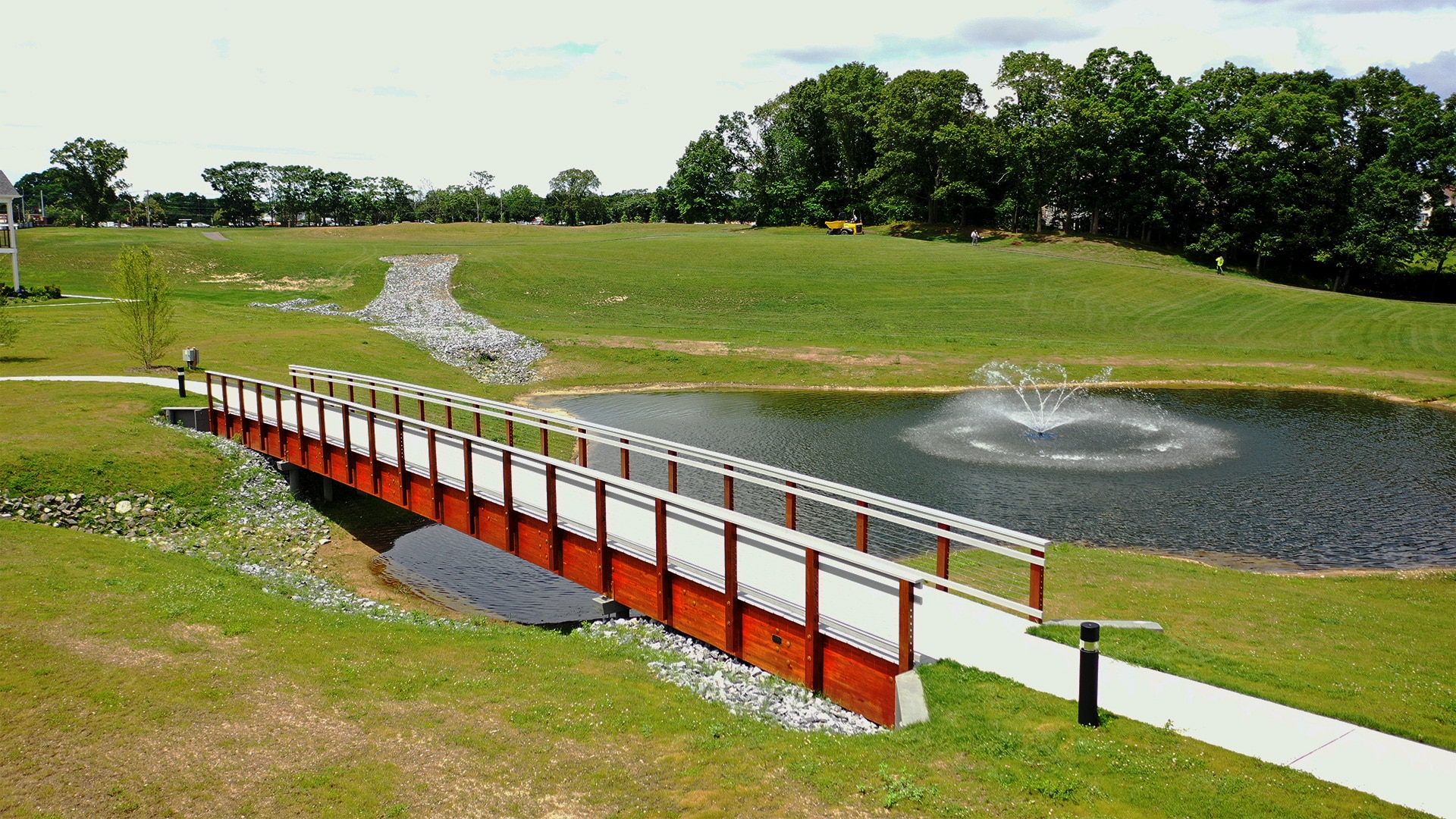
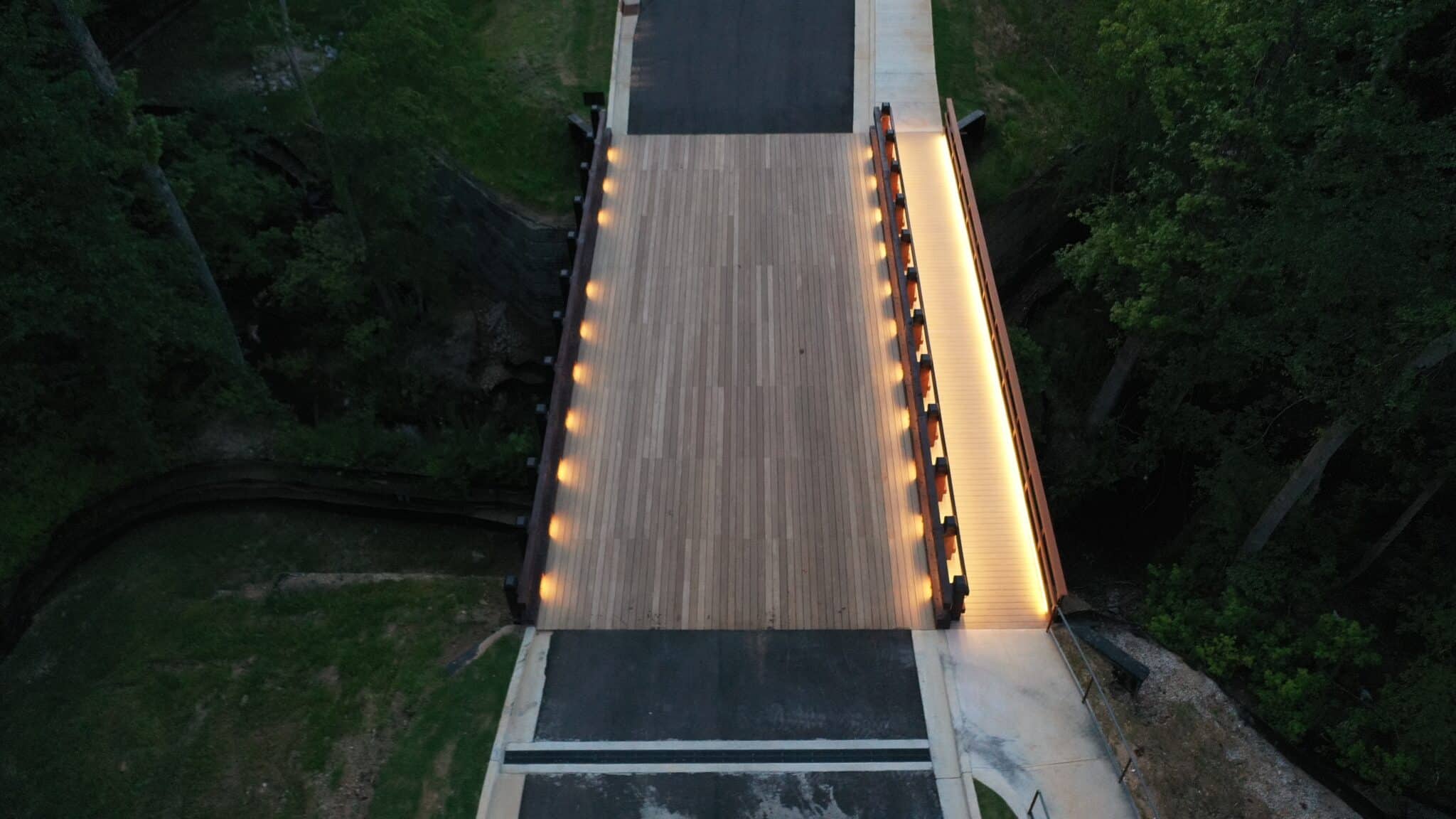
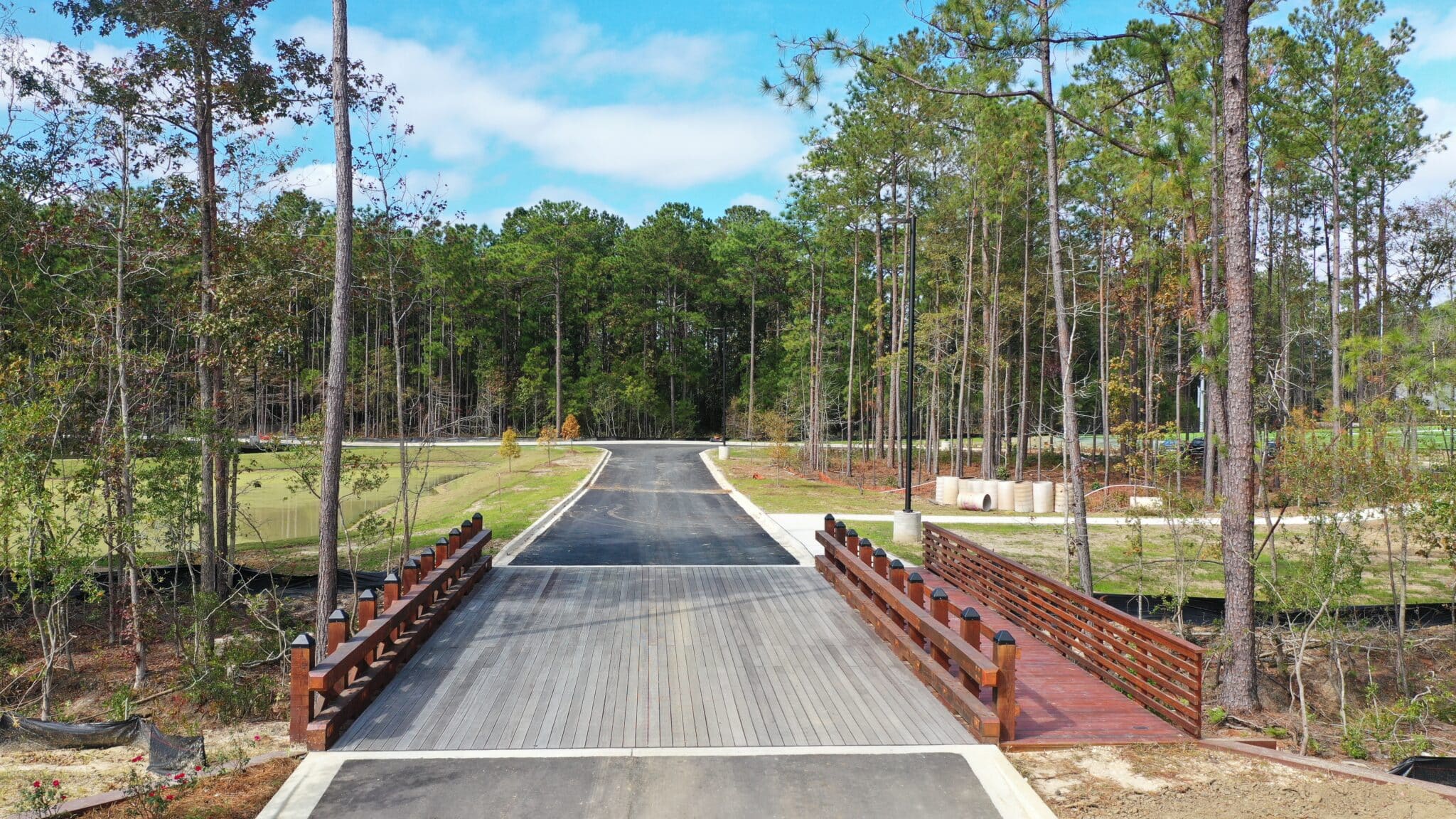
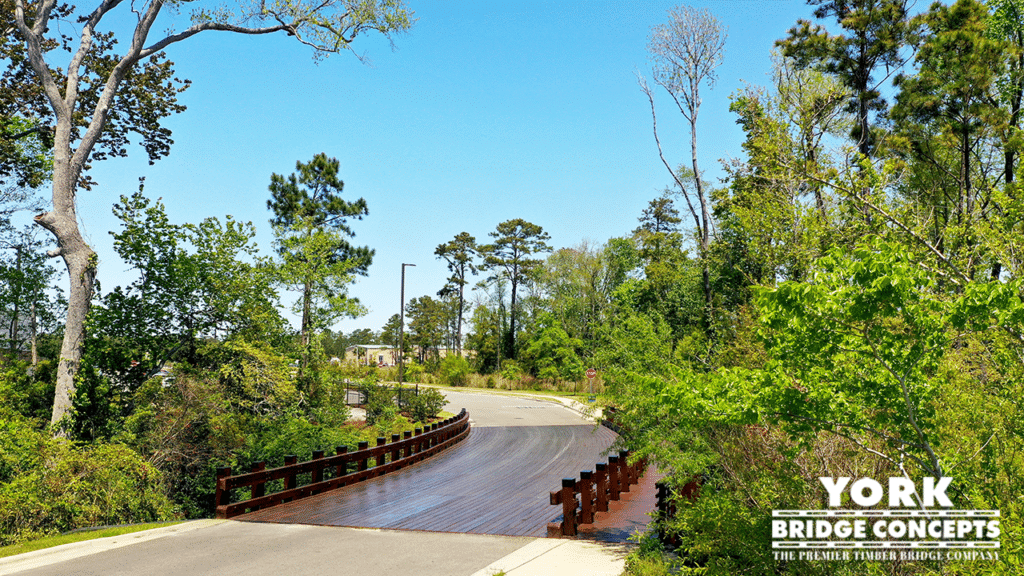
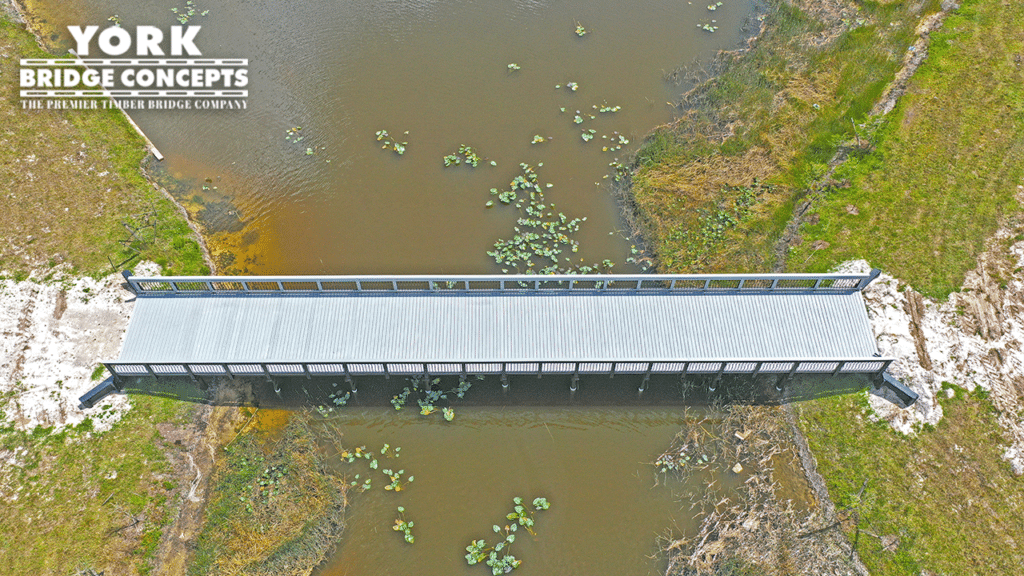
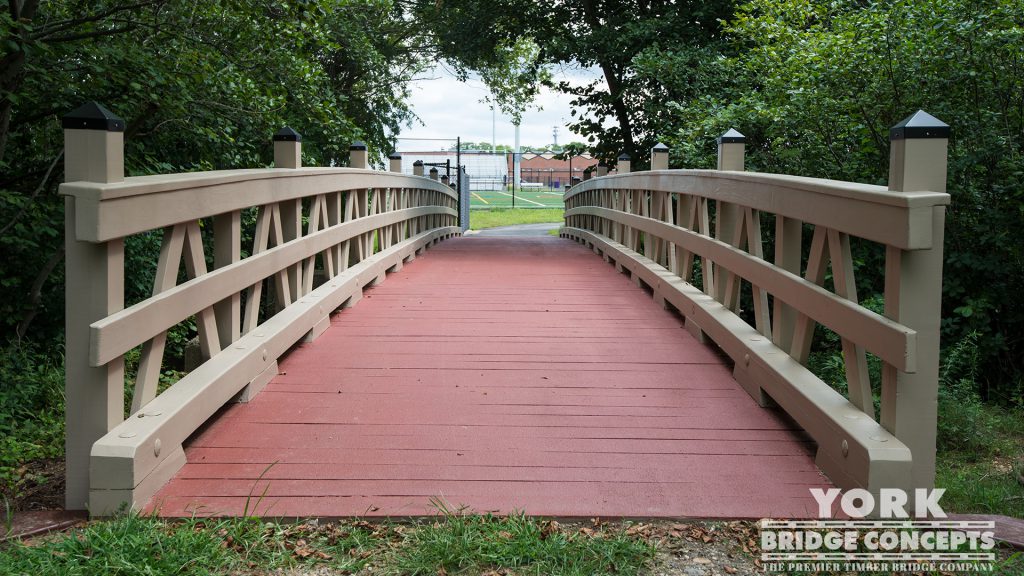
Partnering with LandTek Group Inc., York Bridge Concepts (YBC) is proud to have designed and built the Islip High School Pedestrian Bridge that enhances connectivity, safety, and aesthetic value for students and faculty. This eco-friendly bridge, constructed with precision engineering and sustainable materials, serves as a critical passageway over a creek, ensuring safe pedestrian access across campus.
As the nation's premier pedestrian course bridge builder, YBC crafted this structure to provide long-lasting durability, seamlessly blending with the surrounding environment while maintaining the architectural integrity of Islip High School.
Specifications
- Width:
- 9’ (8’ Clear)
- Length:
- 70’
- Height:
- 6' above grade
- Capacity:
- 10 Ton GVW/85 PSF
- Construction:
- Deck Level
- Span Type:
- Multiple Span
- Span Lengths:
- (1) 22’, (5) 9.5’
- Material:
- CCA/CA-C Treated Southern Yellow Pine
- Foundation:
- Timber Piles & Abutments (Acrylic/Polymer Coated where exposed)
- Stringers:
- SYP S4S Timber Stringers(Acrylic/Polymer Coated where exposed)
- Deck System:
- 3” Timber Deck
- Handrail:
- Decero™ K-Style Design Series
- Crossing:
- Creek
Campus Context, Purpose & Stakeholders
Project Context & Campus Circulation
The Islip High School Pedestrian Bridge was conceived to solve a deceptively simple problem that every busy campus faces: getting large numbers of people from point A to point B safely, quickly, and pleasantly--without interrupting the natural systems that make the site unique. The creek bisecting the circulation route is a cherished landscape feature as well as a sensitive ecological corridor. Prior to the bridge, peak-period foot traffic frequently funneled toward the few safe crossing points, creating bottlenecks, schedule friction between periods, and occasional conflicts at drive aisles. By introducing a dedicated, clearly legible pedestrian path over the water, York Bridge Concepts and LandTek Group provided a direct connection that reduces travel time between buildings and co-curricular spaces while keeping people out of vehicle zones and wetland edges.
Stakeholder alignment
Successful school infrastructure depends on coordination. From the start, YBC collaborated with district facilities leadership, the school administration, grounds and custodial teams, and LandTek's site specialists to sequence work during low-impact windows and to align on details such as approach paths, handrail profiles, and surface finishes that are comfortable for daily student use. Parents and coaches emphasized safe routes to practice and events; teachers underscored predictable passing times; maintenance staff asked for durable, easy-to-care-for materials. The final design answers each of these inputs with a bridge that is purpose-built for a school day's rhythm.
Environmental stewardship on an educational site
Building in and around riparian zones demands restraint. The project team prioritized a footprint that avoids unnecessary encroachment, select-cutting only where needed and protecting root zones with temporary matting during construction. Silt fencing and staged stockpiles limited turbidity risks, while the bridge's spans and foundations were configured to keep the waterway's natural conveyance unobstructed. Students witnessed a living example of how civil works can respect ecology--an applied sustainability lesson embedded in everyday campus life.
A Campus Asset, Not Just A Crossing
Because students and staff cross multiple times per day, perceived comfort matters. Warm timber textures, a human-scaled rail, and a walking surface designed for all-weather traction transform a utilitarian crossing into a place that encourages calm, orderly movement. The structure frames small moments--a glimpse of water after a test, leaves turning with the seasons, snow lining the rails in winter--that subtly enrich school culture and sense of place.
Steve Kuzmiskas, Project Manager, The LandTek Group, Inc."Thank you for partnering with us on the design and build of Islip High School’s new Timber Pedestrian Bridge, structured to transport students from the school to the ball fields. LandTek Group, ‘the leader in our field’, with a specialization in sports facility design and construction, is thrilled to have worked with a like-minded corporation such as yours, where creative minds and swift hands design - and successfully build - exceptional structures.
Design-Engineer-Build Methodology & Construction Approach
Decero™ thinking for a school environment
YBC's Decero™ approach--designing from "zero" to match the site and users--guided every decision. Rather than forcing a catalog solution into a sensitive campus, the bridge was engineered around on-the-ground realities: existing grade transitions, adjacent plant communities, desire lines formed b daily student habits, and maintenance access routes. This bespoke process allowed the team to right-size the structure, align approaches to natural topography, and minimize handrail visual bulk while preserving code safety margins.
Deck-Level (Top-Down) Construction Techniques
To protect the creek corridor and maintain campus operations, YBC leveraged its deck-level methodology. By advancing construction from the structure itself rather than relying on heavy equipment in the waterway, the team reduced disturbance and shortened the period of site exposure. Temporary access solutions--such as lightweight matting and narrow staging-kept soils intact and helped the site rebound quickly after completion. This approach is uniquely well-suited to active schools where safety perimeters and noise windows matter.
Foundations tailored to subsurface realities
School grounds often exhibit varied subsurface conditions: legacy fills near fields, native soils near waterways, and localized soft zones along banks. YBC's engineers evaluated these factors to select foundation strategies that deliver long-term performance with a restrained footprint. Depending on geotechnical findings, solutions may include driven timber piles, or boring. The objective is consistent: transmit loads safely while preserving hydrologic function and bank stability.
Hydrologic respect & Freeboard
The bridge geometry considers seasonal flows and storm events typical for Long Island's South Shore climate. By providing appropriate freeboard and unobstructed under-bridge conveyance, the design avoids creating debris snags and reduces backwatering risk during high-intensity rainfall. Abutments and wing walls are shaped to guide flows, discourage scour at the toe, and keep velocities from concentrating at sensitive banks.
Constructability on an active campus
Campuses are logistical puzzles. Deliveries are staged around arrival/dismissal windows, pedestrian detours are signed for clear wayfinding, and noise-intensive activities are scheduled to avoid testing or performances. YBC's field leadership coordinated tightly with LandTek to phase foundation work, superstructure placement, and finish operations so that daily school life could continue with minimal interruption. The result was a tightly choreographed build that felt nearly invisible to most of the community--until the opening day ribbon was cut.
Bridging Safety & Sustainability: Why the Islip Pedestrian Bridge Stands Out
1. Engineered For High-Traffic Pedestrian Flow
Designed to support an 85 PSF live load, this bridge accommodates high volumes of students and staff throughout the school day. Whether it's morning rush hour, midday movement between classes, or after-school activities, the bridge remains structurally sound and safe.
2. Sustainable Timber Construction
York Bridge Concepts specializes in crafting sustainable bridges that align with eco-conscious building practices. The Islip Pedestrian Bridge was built using sustainably sourced timber, reducing environmental impact while maintaining structural resilience against heavy foot traffic and seasonal weather conditions.
3. Custom Aesthetic Appeal & Durability
YBC designed this pedestrian bridge to complement Islip High School's architectural aesthetic, featuring a color palette that blends with the surrounding landscape and architectural. The high-quality timber used in the structure is treated to withstand moisture, UV exposure, and natural wear, ensuring longevity with minimal maintenance.
Why YBC Pedestrian Bridges Are Ideal For Schools
Promote Safe Walkways
Pedestrian bridges prevent students from navigating dangerous roadways, ensuring a dedicated, hazard-free walking path.
Offer Cost-Effective Longevity
With the Legacy Series upgrades, YBC bridges provide a longer lifespan while requiring fewer costly repairs.
Support Sustainable Development
Schools committed to eco-friendly initiatives benefit from timber's renewable and carbon-sequestering properties.
Materials, Finishes & Detailing For Longevity
Timber that Works hard--and looks good doing it
The bridge's primary structure utilizes sustainably sourced, strength-rated timbers engineered for predictable performance under the school's 85-PSF pedestrian loading. Timber's cellular structure disperses vibration, creating a comfortable footfall feel during peak passing times. Members are detailed to shed water, with drip edges and reveals that prevent moisture traps and extend service life.
Surface performance & slip resistance
Student safety in wet and winter conditions is paramount. The walking surface provides high-friction traction and channels water away from the travel way. Anti-slip textures remain effective even when fine debris accumulates between sweeping cycles. Edge transitions at the approaches are flush to reduce trip potential and to accommodate utility carts or small equipment used by grounds crews.
Coatings crafted for the coastal-humid climate
Long Island weather cycles demand coatings that flex with timber movement, resist UV, and fend off moisture. YBC specified a multi-layer protective system--penetrating sealers to stabilize the wood fiber and film-forming finishes to guard against ultraviolet degradation. Color selections were tuned to harmonize with campus architecture and the creek corridor, yielding a palette that reads as both refined and natural. Touch-up procedures are simple and repeatable by facility teams.
Hardware, Fasteners & Concealed Protections
Hardware receives the same durability attention. Hot-dip galvanized or stainless components are used in locations where exposure is highest, while concealed critical connections are detailed to breathe and drain. Countersunk fasteners at the deck help protect walkers and simplify winter shoveling or light snow-blower operations where allowed.
Handrails that invite safe movement
Rails do more than satisfy code--they set the experience. The profile was shaped for a confident grip, comfortable at both child and adult hand sizes, and paired with infill that preserves outward views. Rail heights, returns, and terminations align with accessibility requirements and reduce entanglement risks with backpacks and athletic gear. Corners are eased so the system feels friendly, never institutional.
Drainage Integration at approaches
Approach pavements and trail segments are graded to keep runoff moving past the bridge ends, preventing ice sheets in freeze/thaw cycles. This detail alone can dramatically improve winter safety, saving maintenance crews repeated re-treatments.
How York Bridge Concepts Leads As A Pedestrian Bridge Builder
As a leader in premium pedestrian bridge construction, York Bridge Concepts continues to set the industry standard in design, engineering, and sustainability. Our team carefully considers the needs of each project, ensuring a custom-built bridge that enhances both function and form.
✔ Custom engineering solutions tailored to pedestrian movement patterns
✔ Weather-resistant coatings that enhance bridge longevity
✔ Minimal environmental impact construction techniques
Accessibility, User Safety & Student-Centered Design
Universal access as a design first principle
From the earliest sketches, the Islip bridge and its approaches were planned to welcome every user. Slopes are gentle and consistent; transitions are free of abrupt grade breaks. Rest-area logic at nearby landings and benches supports students who benefit from short pauses. The outcome is a route that doesn't merely "comply"--it feels effortless.
Sightlines & Supervision
Safe school design anticipates real behaviors. Rail geometry and approach alignment preserve clear sightlines from staff vantage points and cameras where present. The bridge's open views discourage crowding, reduce hiding spots, and allow adults to monitor movement patterns at a glance during passing periods or after events.
Lighting strategy for shoulder hours
While daytime crossings dominate, the bridge is ready for early-morning practices and evening rehearsals. Where campus lighting extends to the corridor, fixtures provide even, low-glare illumination with full cutoffs to protect the creek's nocturnal habitat. Lighting control integrates with existing campus schedules, conserving energy and keeping the night sky dark.
Wayfinding & Behavior Cues
Small design touches guide positive use. Tapered approaches naturally sort flow and reduce counter-movements. Handrail returns "point" walkers toward destinations. Where appropriate, embedded directional markers or color accents reinforce the preferred side of travel--soft nudges that reduce congestion without signage clutter.
Winter operations Compatibility
The bridge and deck system were detailed with winter operations in mind. Drainage patterns keep meltwater moving, and the wear surface is compatible with maintenance practices approved by the district. Mechanical snow removal on timber decks requires care; where used edge guards and fastener detailing help protect the surface. Operational guidance accompanies turnover so crews know exactly which treatments are recommended.
Emergency planning integration
Although designed for pedestrians, the bridge's role in emergency egress planning was considered in collaboration with school leadership. Clear alternate routes, unobstructed approaches, and predictable surface performance help administrators plan safe dispersal after large events. The bridge's openness also support quick visual assessments by security personnel.
Seamless Integration into Campus Life
Beyond its technical specifications, the Islip High School Pedestrian Bridge plays an integral role in improving daily life on campus. Students and staff benefit from:
- Reduced congestion and improved safety - A dedicated walking path minimizes cross-campus travel risks.
- Scenic and enjoyable crossings - The natural aesthetic creates a calming and visually appealing route.
- Year-round reliability - Engineered to withstand harsh winters and humid summers in Islip, New York.
Maintenance, Life-Cycle Economics & BridgeCare™
Designing for low effort, long life
Total cost of ownership matters in public education. The Islip pedestrian bridge was specified to require straightforward upkeep with long maintenance cycles. Timber structures reward basic, regular care--keep surfaces clean, allow assemblies to dry, and renew protective finishes at the right interval--and they last for decades while retaining their warmth and character.
Simple, Schedule tasks
A school-friendly care plan typically includes:
- Seasonal rinsing and sweeping to remove organics and grit that hold moisture.
- Annual inspection walks by facilities staff to check rails, fasteners, and surface conditions.
- Coating refreshes on a multi-year cadence driven by exposure; high-sun rails may be refreshed more frequently than shaded substructure.
- Drainage housekeeping at approaches to keep inlets clear and runoff moving.
Each of these tasks can be performed by in-house teams; YBC's handover documentation translates technical recommendations into practical checklists.
BridgeCare™ partnership
For districts that prefer professional support, YBC's BridgeCare™ program offers scheduled inspections, condition reporting, and proactive service--from tightening hardware and addressing early wear to planning future renewals years in advance. This predictability is valuable in school budgeting cycles, allowing administrators to forecast spend and avoid reactive repairs.
Resilience & Renewability
Unlike materials that tend to fail abruptly or require disruptive replacements, timber systems age gracefully and can be selectively renewed. If a component experiences unexpected wear, it can be replaced surgically without dismantling the whole structure. This modularity is a sustainability advantage: fewer resources consumed, less waste generated, and shorter downtime.
Life-cycle value & embodied carbon
Timber's carbon-sequestering properties and comparatively low manufacturing energy footprint support district sustainability goals. When paired with smart maintenance, the bridge's long service life amplifies that benefit by spreading the initial embodied impacts over decades of daily utility. The result is a crossing that is both fiscally responsible and environmentally sound.
Vandal resistance & quick recoveries
School infrastructure must be durable against everyday scuffs and occasional mischief. Protective coatings resist tagging and make cleaning fast. Robust rail details and concealed fasteners discourage tampering while keeping the bridge's appearance tidy and welcoming.
Elevating School Infrastructure with Sustainable Bridges
York Bridge Concepts understands the unique challenges and opportunities that come with constructing pedestrian bridges for schools. The Islip Pedestrian Bridge showcases our expertise in creating high-performance, low-maintenance, and visually striking structures that serve generations of students.
For schools, universities, and municipalities looking to enhance their infrastructure, YBC pedestrian bridges offer an efficient, eco-friendly, and aesthetically pleasing solution.
Educational Value, Community Impact & Future-Readiness
A Living Classroom
Beyond transportation, the Islip High School Pedestrian Bridge serves as an interdisciplinary teaching tool. Environmental science classes can observe riparian plant communities from a stable vantage; art students sketch textures and light patterns on timber; technology and engineering clubs study structural systems, connections, and inspection processes. The bridge transforms a site constraint into an on-campus lab.
Community Connectivity & Events
On game days, concerts, and community nights, the bridge helps manage flows and keeps visitors separated from service drives. The predictable pathfinding reduces stress for families new to campus and improves arrival/departure sequencing. Over time, this consistent experience becomes part of the school's brand--organized, safe, and welcoming.
Future campus planning
Districts evolve. The bridge's alignment and abutment siting anticipate potential future paths or outdoor learning areas along the creek corridor. If the master plan adds a nature trail, outdoor classroom, or wellness loop, the bridge is already in the right place to serve as a gateway. Handrail modules and finishes can also be echoed in future site furnishings for visual continuity.
Durability under changing climates
School infrastructure must perform through hotter summers, intense rain events, and freeze/thaw swings. Timber's thermal behavior and engineered coatings help the bridge ride out these cycles without becoming uncomfortably hot in summer or dangerously slick in winter. Drainage details, freeboard, and foundation strategies were chosen to handle variability with confidence.
Replication across the district
One successful crossing often unlocks a pattern language for others. The Islip project demonstrates how a timber pedestrian bridge can be tailored to specific constraints, built quickly with minimum disturbance, and maintained simply by in-house teams. Those lessons scale to middle schools, parks, and community paths, creating a cohesive, sustainable infrastructure vocabulary district-wide.
A quiet Landmark
Finally, the bridge's greatest achievement may be its unobtrusiveness. It solves a real problem every single day without calling attention to itself--an elegant piece of civic infrastructure that does its job with grace. Students cross, conversations continue, the creek flows, seasons change--and the bridge quietly keeps the campus connected.
Create Your Legacy Today
Discover the intersection of strength, durability, and environmental responsibility with York Bridge Concepts. Let's build a bridge to the future together.
All Feature Projects
What's Best: A Culvert Or A Timber Bridge?
What Is The Best Span Type For My Project?
Which Load Capacity I Need?
How Do I Cross An Environmentally Sensitive Area?
How Do I Create A Landmark?
How Long Does A Timber Bridge Last?
Culvert Or Bridge
If you're considering using a culvert for your crossing project. Click below to understand the best fit for your project.
Spanning Solutions
Spanning a crossing is one of the most important aspects of your crossing project. Find the best solution for your crossing needs.
Uses & Capacities
The load capacity of a timber bridge may surprise you. See specs for different loads and uses that will help your decision-making process.