Dulles South Multipurpose Center Pedestrian Bridge – Fairfax, VA

York Bridge ConceptsFree Span, Pedestrian Bridges, Virginia

Dulles South Multipurpose Center Pedestrian Bridge - Fairfax, VA | York Bridge Concepts - Timber Bridge Builders

A Virginia Pedestrian Bridge that Connects Community, Nature, & Everyday Life

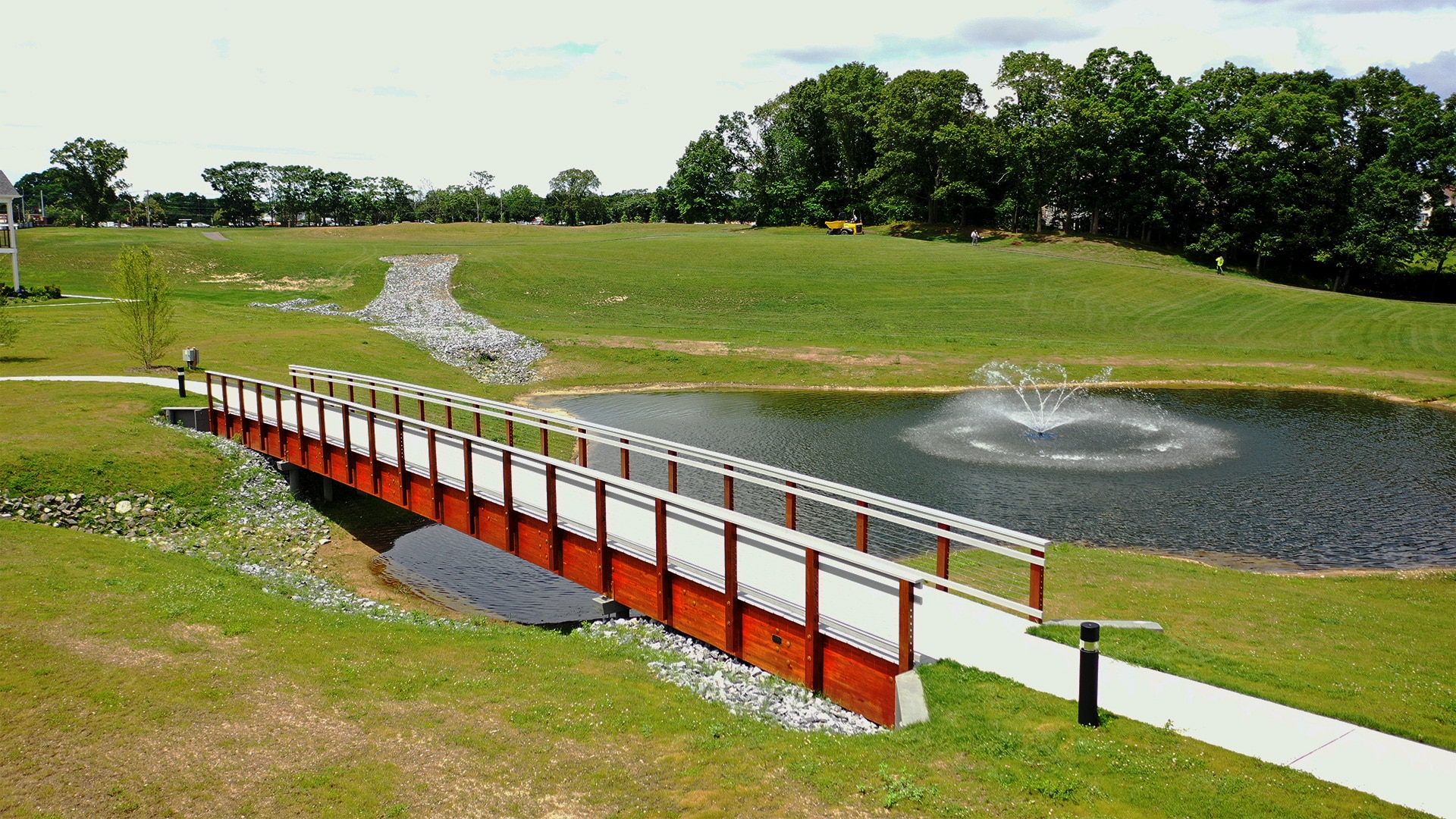
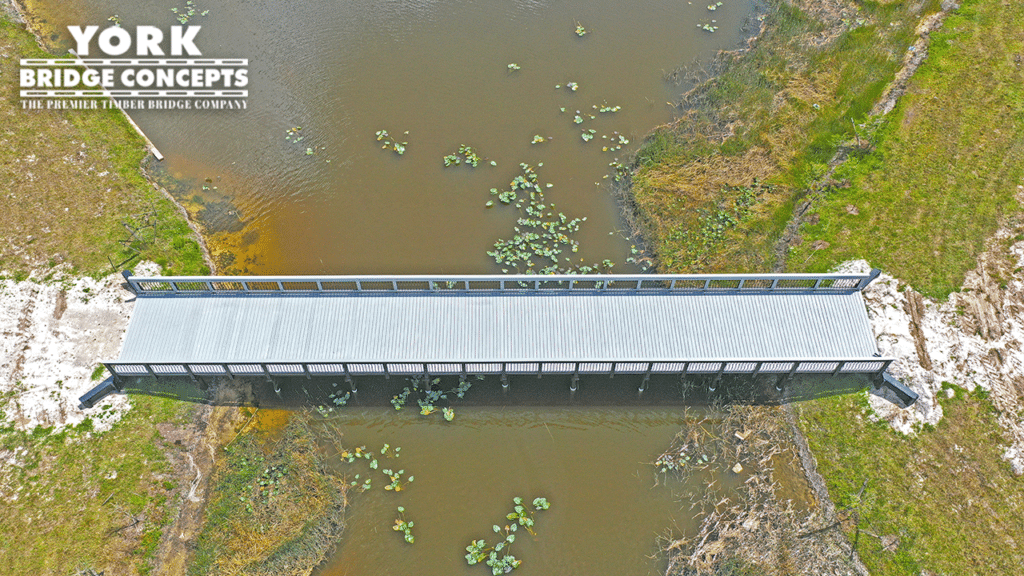
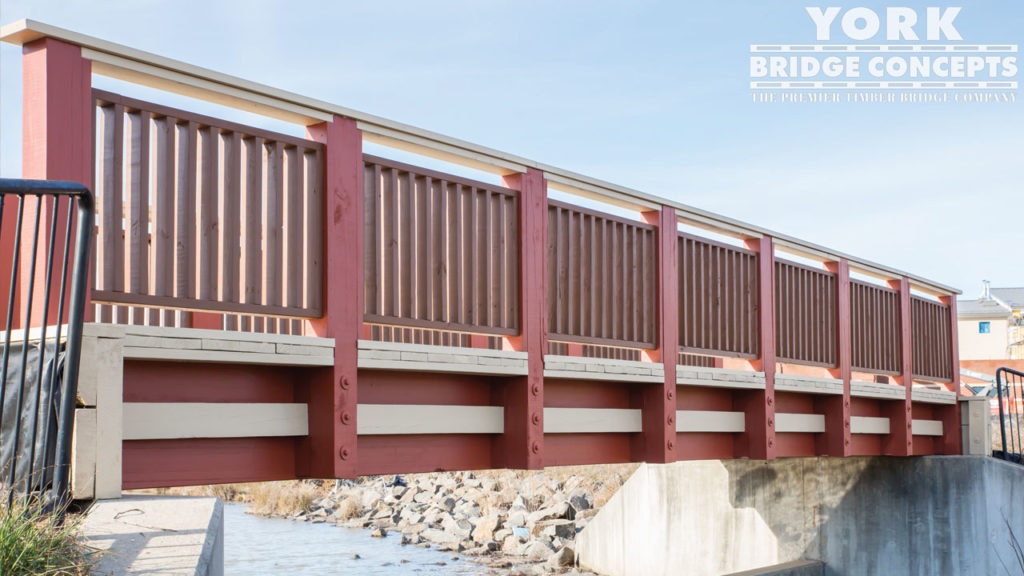
York Bridge Concepts (YBC) designed and built a free-span pedestrian bridge for the Dulles South Multipurpose Center in Fairfax, VA--an accessible, durable, and visually cohesive crossing that complements one of Northern Virginia's most active community hubs. As a Virginia pedestrian bridge serving families, seniors, and recreation-goers, the structure balances architectural clarity with long-term performance: acrylic-coated Southern Yellow Pine for the superstructure and rails, tropical hardwood decking for a resilient walking surface, and reinforced concrete abutments that anchor the span securely over a meandering creek. The result is a quiet, confident crossing that looks good from day one and keeps its composure through four seasons of heavy foot traffic, heat, humidity, and freeze-thaw cycles.

From the start, this project was about connection--linking parking and pathways, indoor programs and outdoor greenspace, and daily routines with restorative moments in nature. The bridge's free-span configuration keeps the waterway clear, improves flood conveyance, and reduces maintenance by  eliminating in-stream supports. At deck level, a warm timber palette, smooth sightlines, and generous hand-feel details encourage users to slow down, look out across the creek, and enjoy the landscape.

Specifications


  • Width:
  • 9'1" (8'clear)
  • Length:
  • 64'
  • Height:
  • 7' above grade
  • Capacity:
  • 85 PSF
  • Construction:
  • Ground Up
  • Span Type:
  • Free Span
  • Material:
  • CCA/CA-C Treated Southern Yellow Pine & IPE Rail Cap & Top Rail
  • Foundation:
  • Concrete & Timber Abutments (Acrylic/Polymer Coated where exposed)
  • Stringers:
  • SYP S4S & Glulam Timber Stringers (Acrylic/Polymer Coated where exposed)
  • Deck System:
  • 1-½” Timber Deck
  • Handrail:
  • Decero™ Picket Design Series
  • Crossing:
  • Creek

New call-to-action

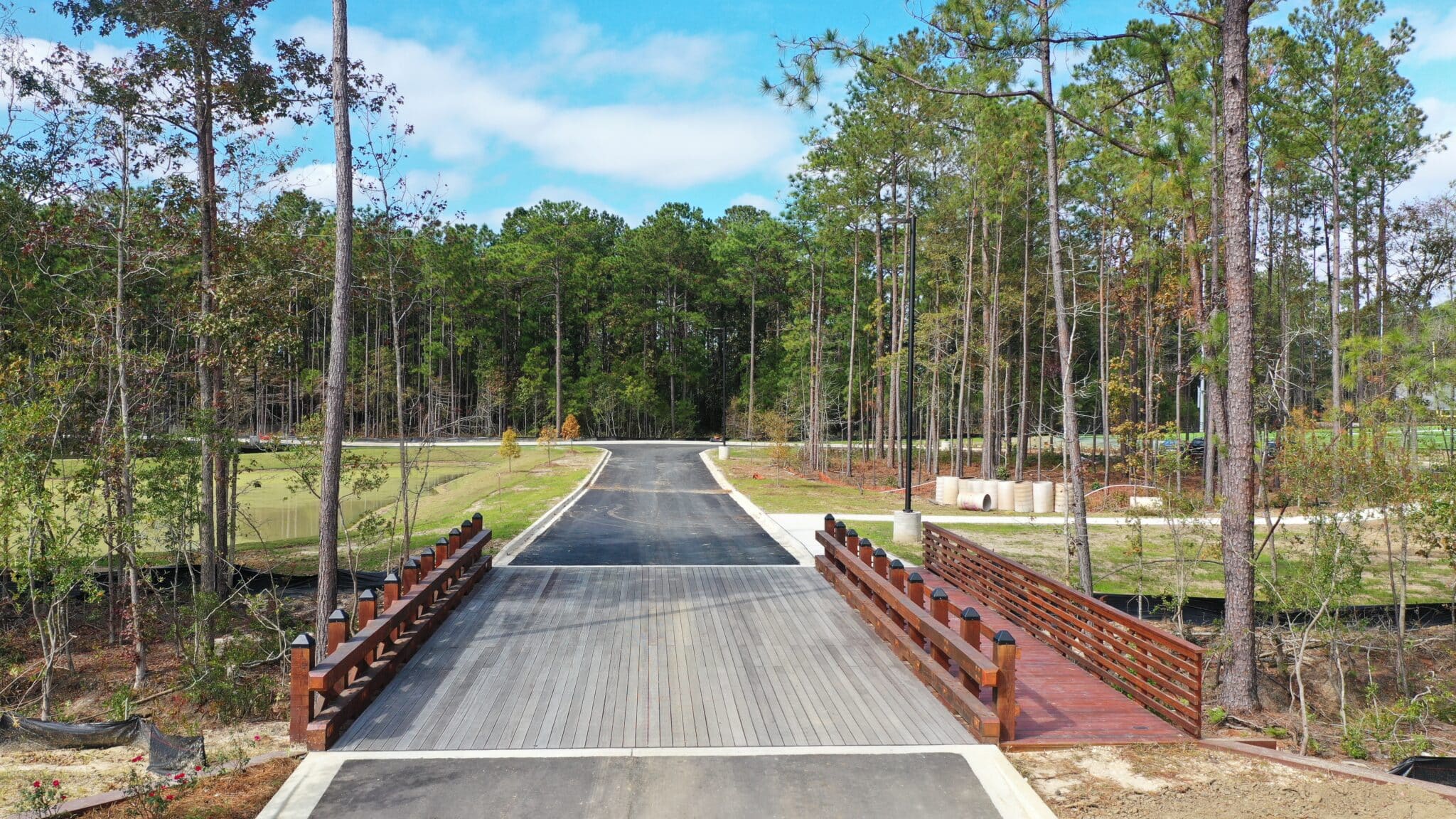
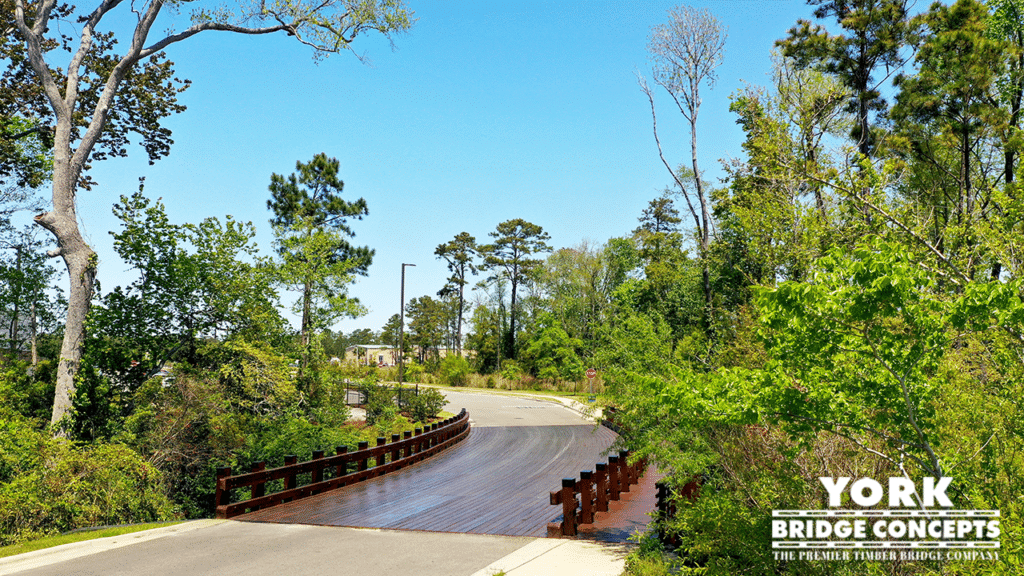
Dulles Virginia Pedestrian Bridge built by York Bridge Concepts in Fairfax, VA

setting & Purpose

The Dulles South Multipurpose Center is a community anchor: aquatics, fitness, childcare, senior activities, leagues, and programs move people in and out all day. That varied use profile calls for infrastructure that is at once robust, intuitive, and comfortable. The new bridge:

  • Creates a direct, ADA-friendly connection between sidewalks, trails, and amenities.
  • Provides a safe, well-defined crossing separated from vehicles.
  • Enhances the Center's outdoor environment with a material palette that belongs in a natural corridor.
  • Keeps the creek open and healthy by avoiding mid-channel supports or intrusive construction techniques.

In short, this Virginia pedestrian bridge does more than get people across. It contributes to the daily experience of the campus, turning an ordinary footpath into a curated sequence--a brief transition from program to park, form task to respite.

Why A Free-Span Timber Bridge?

YBC proposed a free-span configuration for both environmental and operational advantages:

Hydraulic performance. With no piers in the channel, the bridge maintains natural conveyance during storm events. Debris has nowhere to snag; energy moves under the deck and out of the floodplain.

Environmental stewardship. A clear span minimizes in-stream disturbance, simplifying permitting and reducing risk to aquatic habitat. It also protects root zones and riparian vegetation along banks.

Maintenance efficiency. Eliminating substructure elements in the creek avoids scour monitoring and pier repairs. Long term, the owner manages one span and two abutments--fewer touchpoints, fewer surprises.

User experience. From the deck, views are open. Users aren't looking past posts or upriver pylons; they're looking at water and trees. The crossing feels natural, spacious, and calm.

Virginia Pedestrian Bridge built by York Bridge Concepts in Fairfax, VA

Materials & finish Strategy

Acrylic-Coated Southern Yellow Pine (SYP) 
Southern Yellow Pine is the backbone of YBC's timber superstructures because it pairs excellent structural properties with predictable availability and value. For the Dulles South bridge, the SYP components are protected with an acrylic/polymer coating system that:

  • Seals the timber against moisture intrusion while allowing the wood to breathe, mitigating internal stresses.
  • Shields against UV degradation, keeping color consistent and reducing checking and surface fiber lift.
  • Sheds rain and dirt, making periodic wash-downs effective and fast.
  • Stabilizes dimensional movement, helping connections remain tight and rails stay true.

The coating's satin sheen reads as refined rather than glossy. It's resilient in high-touch areas such as handrails, guard posts, and top rails--places where oils from hands and weather exposure are concentrated.

Tropical Hardwood Decking
The walking surface is tropical hardwood decking selected for density, hardness, and long-term wear. For community bridges with steady daily traffic, tropical hardwood is a pragmatic luxury:

  • High abrasion resistance preserves traction and keeps edges crisp over time.
  • Natural durability resists decay, insects, and surface abrasion without relying solely on film-forming coatings.
  • Stable fastener engagement reduces "nail pop" or screw lift.
  • Weathering gracefully to a silvery patina, or maintaining a richer tone if oiled per the maintenance plan.

Deck boards are oriented and gapped to shed water quickly. End sealing and pre-drilling control micro-splits, and a controlled fastener pattern ensures each board seats snug against the supporting timbers.

Concrete Abutments
At each bank, the bridge bears on reinforced concrete abutments cast outside the ordinary high-water mark. Abutments are designed for vertical reactions, horizontal forces, and uplift/overturning from flood conditions. Wingwalls tie into grading to prevent approach erosion, and seepage/drainage details relieve hydrostatic pressure. Because abutments are set back from active flow, long-term scour risk is low and inspection is simple--visual checks and occasional cleaning are typically all that's needed.

Architecture & Detailing

The best pedestrian bridges are legible at a glance and comfortable to use. YBC composed the Dulles South span with that principle in mind:

  • Clean, horizontal lines. The superstructure's geometry creates a calm visual vocabulary that mirrors the water's line and the campus' modern edges.
  • Continuous top rail. A smooth handhold at a consistent height invites natural use the improves wayfinding, especially for children and seniors.
  • Balanced transparency. The guard/handrail profile allows sightlines to the creek while still feeling enveloping and secure.
  • Warm-cool contrast. Acrylic-coated timbers read warm; the hardwood deck introduces a subtle tonal shift. Together they complement concrete paths, steel fixtures, and planted edges.
  • Foot-friendly deck. Tight grain and a fine surface finish keep splinters at bay. The deck drains fast and remains comfortable underfoot in both sneakers and sandals.

Lighting-ready provisions--concealed pathways for wiring and attachment points--allows the owner to add low-glare fixtures later without modifying structural members.

Accessibility, Safety, & Code Conformance

YBC designs pedestrian bridges to meet or exceed applicable standards for live load, guard/handrail geometry, and accessibility. At Dulles South:

  • Approach grades and transitions are tuned for smooth rolling access with mobility devices, strollers, and carts.
  • Rail geometry respects graspability, reach ranges, and guarding height.
  • Tactile contrasts at approach edges and subtle visual cues (like color contrasts at transitions) make the crossing intuitive.
  • The deck's drainage and surface texture support slip resistance in wet and dry conditions.

Where campus standards call for security or maintenance access, the design accommodates discrete, lockable features without altering the bridge's public-facing simplicity.

Structural Strategy & Connections

As a free-span system, the bridge resolves loads through a continuous timber superstructure bearing only at the abutments:

  • Primary members carry bending and shear across the creek, braced laterally to remain stiff under crowd loading and wind.
  • Secondary framing supports deck boards and transfers distributed loads efficiently, preventing localized deflection under carts or maintenance equipment.
  • Connection design relies on concealed or neatly expressed steel hardware, hot-dip galvanized or stainless where exposure warrants. Hardware is protected from standing water and detailed for inspection access.

Because timber is elastic and forgiving, the structure feels comfortably solid underfoot without being acoustically harsh. Vibrations from synchronized walking dissipate quickly--a natural advantage of properly detailed timber spans.

Construction Approach: Built On-Site, Minimal Disturbance

YBC's field teams executed the bridge with a site-sensitive approach:

  1. Staging & protection. Access mats and fencing separated construction activities from root zones and the creek corridor.
  2. Abutment work outside flow. Formwork and pours were timed for favorable weather; erosion and sediment controls remained in place until full stabilization.
  3. Deck-level assembly. Superstructure components were assembled and aligned at grade, then set accurately onto abutments to avoid extended work over water.
  4. Finish & tune. Deck boards, rails, and transitions, were installed with tight tolerances. Coated surfaces received touch-ups, and all penetrations were sealed.
  5. Restoration by others. Disturbed soils were re-graded, stabilized, and seeded/landscaped to re-knit the corridor.

The result is a free-span bridge that reads as if it's always belonged--light on the land, kind to the creek, and immediate in its usefulness.

Operations & Maintenance

Timber bridges reward light, regular care. The Dulles South bridge was delivered with an owner-friendly plan focused on prevention rather than repair:

  • Quarterly walk-throughs to remove debris, inspect rails, and verify that surface water continues to drain as intended.
  • Annual wash-down with low-pressure water to remove pollen film and organic dust from shaded surfaces.
  • Coating check for high-touch rails and sun-exposed members; touch-ups are straightforward and localized.
  • Deck review for fastener tension and any localized surface wear; hardwood standing up well to repeated foot traffic is the norm.
  • Vegetation trimming at approaches to maintain sightlines and reduce organic litter accumulation.

Because there are no in-stream piers, there's no scour monitoring or debris wrangling mid-channel. The owner's crew can spend maintenance time where it matters: keeping the deck clean and the experience welcoming.

Sustainability & Carbon Perspective

Timber is a renewable material that stores carbon for the life of the bridge. When combined with durable coatings and hardwood decking, the structure achieves a long service life with modest intervention.

Additional sustainability wins include:

  • Free-span from  that preserves aquatic habitat and reduces sediment disturbance.
  • Small disturbance footprint and efficient construction sequencing that limit emissions from equipment and hauling.
  • Repairability. Should a rail or deck board need replacement years down the line, it's a component-level swap, not a system overhaul.

Beyond metrics, material authenticity matters. The sensory experience-wood under hand, trees in view, water audible below--encourages walking and time outdoors. That behavior shift is itself a community-scale sustainability asset.

Handrail and insert of the Dulles Virginia Pedestrian Bridge built by York Bridge Concepts in Fairfax, VA

Aesthetic Integration with The Campus

A multipurpose center collects many architectural languages under one roof: glass and metal at the pool, textured masonry at entrances, crisp striping at courts, colorful wayfinding panels. The bridge threads a complementary story:

  • Timber acts as a neutral protagonist, letting surrounding elements shine while softening the transition into the natural corridor.
  • Simple profiles and a restrained color palette keep the focus on people and landscape, not on the bridge itself.
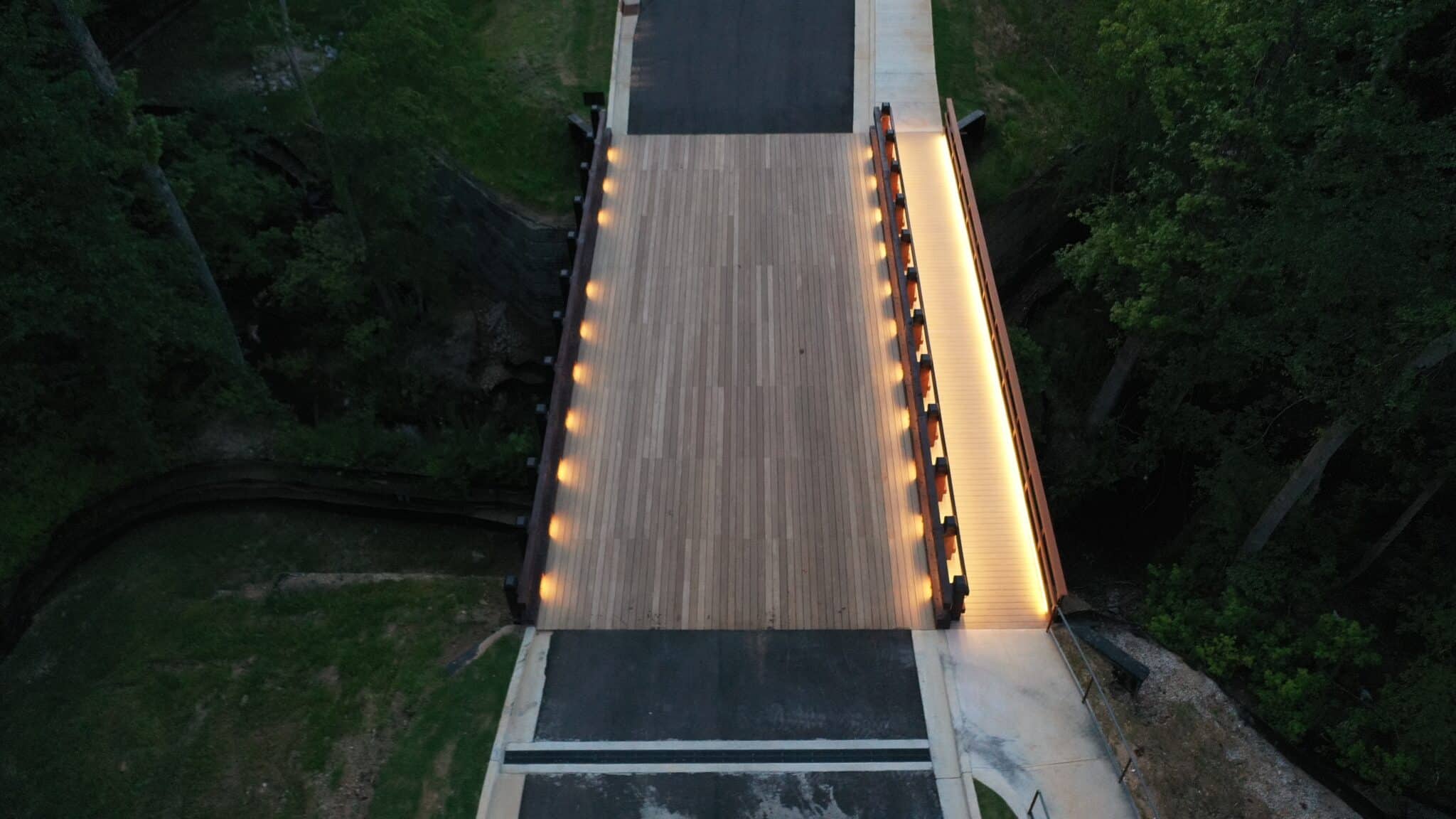
  • At dusk, the span reads as a warm line between shaded trees and lit interiors--a subtle invitation to cross.

The net effect is a piece of infrastructure that belongs to the place and the people who use it.

Risk Management & Resilience

Performance is about more than capacity--it's about recovering quickly from the unexpected:

  • Flood resilience. Free-span geometry and open underclearance limit debris impact and reduce pressure against the superstructure during storm surges.
  • Material toughness. Coated SYP shrugs off UV and moisture swings; hardwood deck boards resist gouging and rutting from carts and equipment.
  • Inspection access. Clear sight lines to connections and bearing points allow fast assessment after extreme weather.
  • Future adaptability. If use patterns evolve (e.g., events, public art, or lighting needs), the bridge can accept small upgrades without redesign.

Community Value

This Virginia pedestrian bridge improves daily life in small, compounding ways:

  • Parents with strollers no longer need to detour.
  • Seniors gain a secure, comfortable route with great visibility and easy wayfinding.
  • Program staff can move equipment efficiently.
  • Trail users get a scenic connector that makes walks and runs feel continuous.

The structure quietly lifts the experience of being on campus. That matters--amenities that feel good to use invite repeated use, and repeated use builds community.

What Sets York Bridge Concepts Apart

YBC's Design-Engineer-Build approach puts one accountable team behind every decision and detail. For Dulles South, that meant:

  • Early collaboration to set goals for accessibility, maintenance, and aesthetics.
  • An integrated design that reconciled hydraulic considerations with a strong, comfortable deck-level experience.
  • Field leadership that kept the corridor protected and the schedule predictable.
  • A handover anchored by clear maintenance guidance, so the owner's crews step into success, not guesswork.

We've built timber bridges across Virginia for parks, campuses, residential communities, and civic spaces. Each crossing is custom, but they share a through-line: longevity, ease, and a look that belongs to the land it spans.

Owner Experience: Simple to Own, Easy to Love

The most telling metric of a bridge's success isn't a load table--it's how people use it and how owners feel about it five, ten, and twenty years on. The Dulles South team can expect:

  • Predictable upkeep concentrated on cleaning and small touch-ups.
  • Stable appearance that weathers gracefully without looking tired.
  • Reliability during the heaviest foot-traffic weeks--summer camp, swim meets, community events--when everything has to work.
  • Confidence after storms, thanks to a clear channel and easy inspections.

From Vision to Crossing

The Dulles South Multipurpose Center Pedestrian Bridge began as a straightforward need-get people across the creek safely--and became an opportunity: make the walk a moment worth having. By choosing a free-span timber solution with acrylic-coated SYP, tropical hardwood decking, and concrete abutments, YBC delivered a crossing that hits every note: performance, comfort, longevity, and an understated beauty that feels natural in this setting.

It's a bridge you notice the first time you cross it because it's new--and then stop noticing because it just works. That's the highest compliment we can earn in public infrastructure.

Planning A Virginia Pedestrian Bridge?

If you're considering a pedestrian bridge anywhere in Virginia--park, campus, community, or private development--York Bridge Concepts can help you evaluate alignments, span strategies, materials, and maintenance plans tailored to your site. We'll bring the same clarity of purpose and craft that shaped the Dulles South crossing, and we'll leave you with an asset that looks right and lives easy.


GET A QUOTE

All Feature Projects


What's Best: A Culvert Or A Timber Bridge?

Understand the considerations you should make before choosing your crossing method.

What Is The Best Span Type For My Project?

See how creative scoping, design, & usage work to create the perfect spanning solution for your project.

Which Load Capacity I Need?

Understand the different load capacities for usage that are needed for your project.

How Do I Cross An Environmentally Sensitive Area?

Learn how YBC crosses protected areas with our Deck-Level Construction.

How Do I Create A Landmark?

Create a memorable icon for your development project with a YBC Legacy Timber Bridge.

How Long Does A Timber Bridge Last?

Extend the lifespan of your timber bridge to over 75 years using these guidelines, material selection, protection & maintenance practices.


Placeholder Image

Culvert Or Bridge

If you're considering using a culvert for your crossing project. Click below to understand the best fit for your project.
Culvert Or Bridge
Placeholder Image

Spanning Solutions

Spanning a crossing is one of the most important aspects of your crossing project. Find the best solution for your crossing needs.
Spanning Types
Placeholder Image

Uses & Capacities

The load capacity of a timber bridge may surprise you. See specs for different loads and uses that will help your decision-making process.

Bridge Loads & Usages