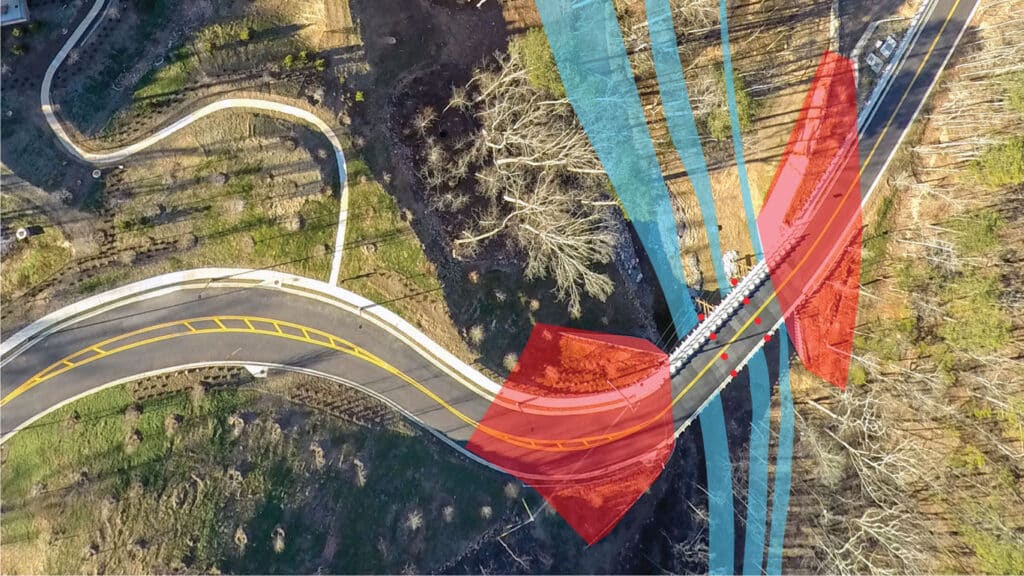
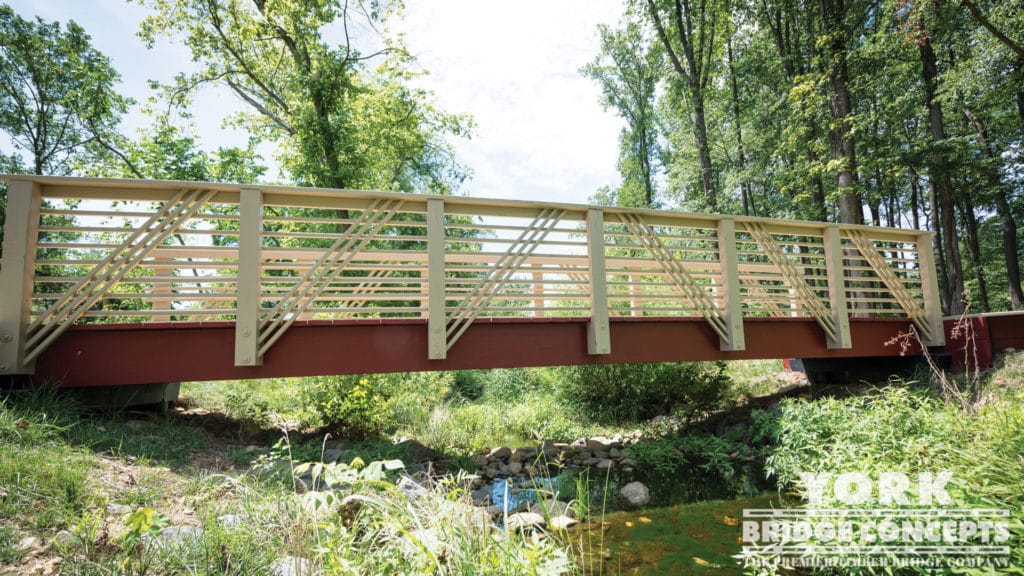
Coe Branch Stream Pedestrian Bridge – Falls Church, VA

York Bridge ConceptsFree Span, Pedestrian Bridges, Virginia

Coe Branch Pedestrian Bridge - Falls Church, VA | York Bridge Concepts - Timber Bridge Builders

Coe Branch Stream Timber Pedestrian Bridge, Falls Church, VA

Nestled in the heart of Falls Church, VA, the Coe Branch Stream Timber Pedestrian Bridge stands as a testament to innovative design and environmental stewardship. Developed by York Bridge Concepts, this charming timber bridge is a pivotal component of the broader Coe Branch Stream restoration project. It not only facilitates safe and scenic crossings for pedestrians but also enhances the ecological integrity of the area. Join us on a journey to explore the features, benefits, and unique aspects of this exceptional structure.

Creating The Purpose & Vision

The Coe Branch Stream Timber Pedestrian Bridge was conceived with dual objectives: restoring the environmental health of the stream and connecting the community more closely with nature. This project aligns with Falls Church's commitment to sustainability and accessibility, offering residents and visitors alike a serene pathway through one of the city’s most picturesque locales.

As urbanization continues to expand, the preservation and restoration of natural landscapes have become critical components of city planning. The Coe Branch Stream project was designed not only to mitigate erosion and improve stormwater management but also to act as a catalyst for community engagement with local green spaces. The addition of a timber pedestrian bridge offers both symbolic and literal access to these efforts, inviting people to experience the intersection of ecological restoration and human enjoyment.

By prioritizing low-impact development and emphasizing long-term stewardship, Falls Church has demonstrated that infrastructure doesn't have to come at the expense of nature. The bridge project is a living example of how cities invest in sustainable growth while protecting the watersheds and wildlife that define their character. 


Specifications


  • Width:
  • 5'10" (5'7" clear)
  • Length:
  • 30'
  • Height:
  • 3' above grade
  • Capacity:
  • 85 PSF
  • Construction:
  • Ground Up
  • Span Type:
  • Free Span
  • Material:
  • CCA/CA-C Treated Southern Yellow Pine
  • Foundation:
  • Timber Piles & Abutments (Acrylic/Polymer Coated where exposed)
  • Stringers:
  • SYP Timber & Glulam Stringers (Acrylic/Polymer Coated where exposed)
  • Deck System:
  • 1-½” Timber Deck
  • Handrail:
  • Decero™ Horizontal Rail Design Series
  • Crossing:
  • Stream

New call-to-action
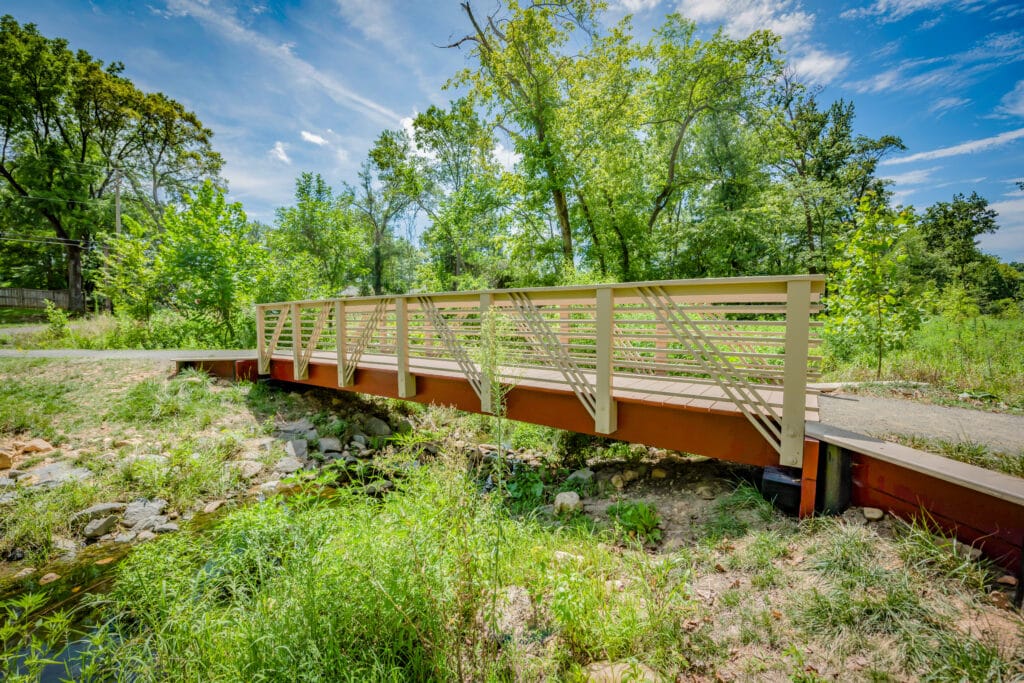
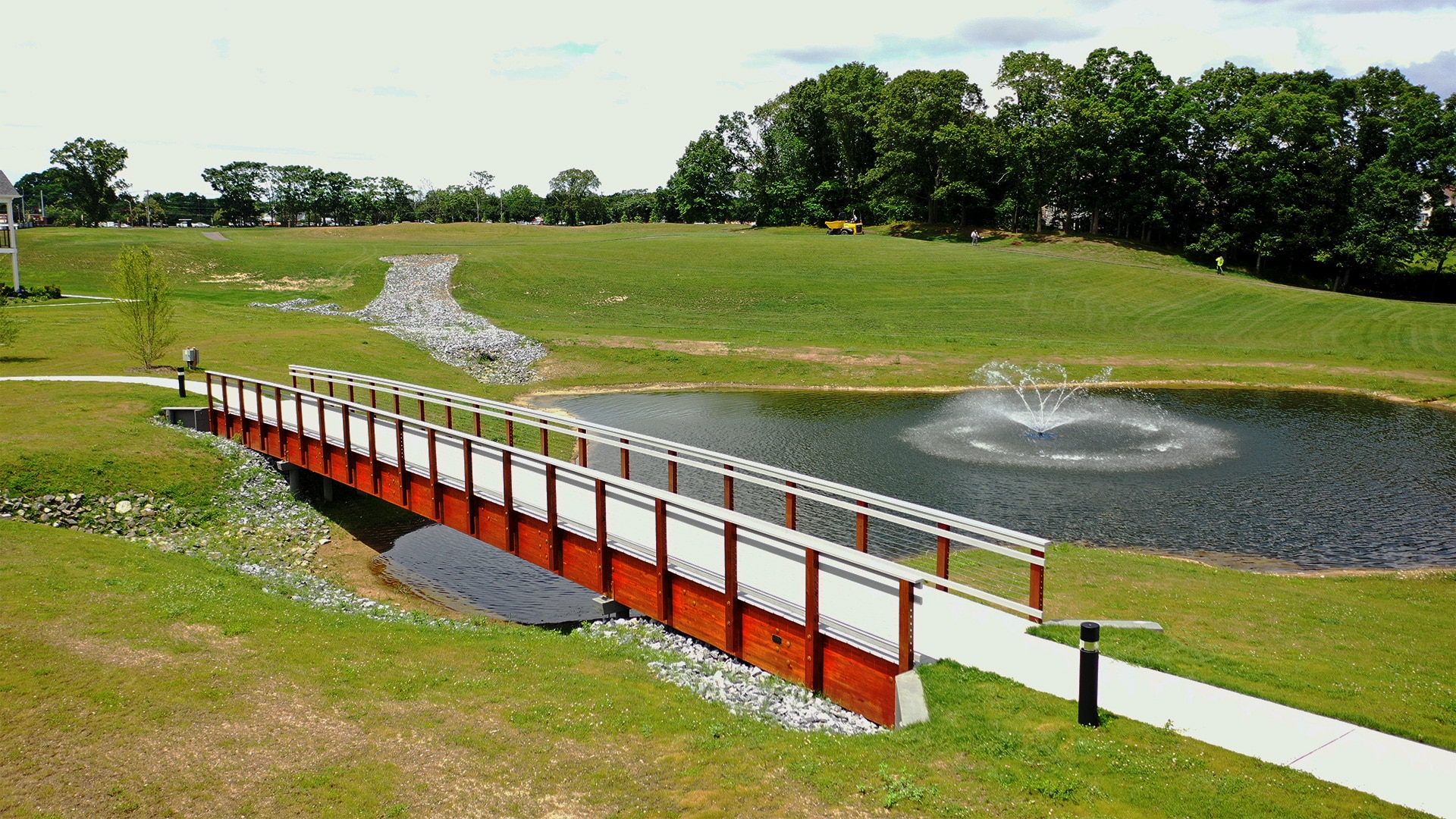
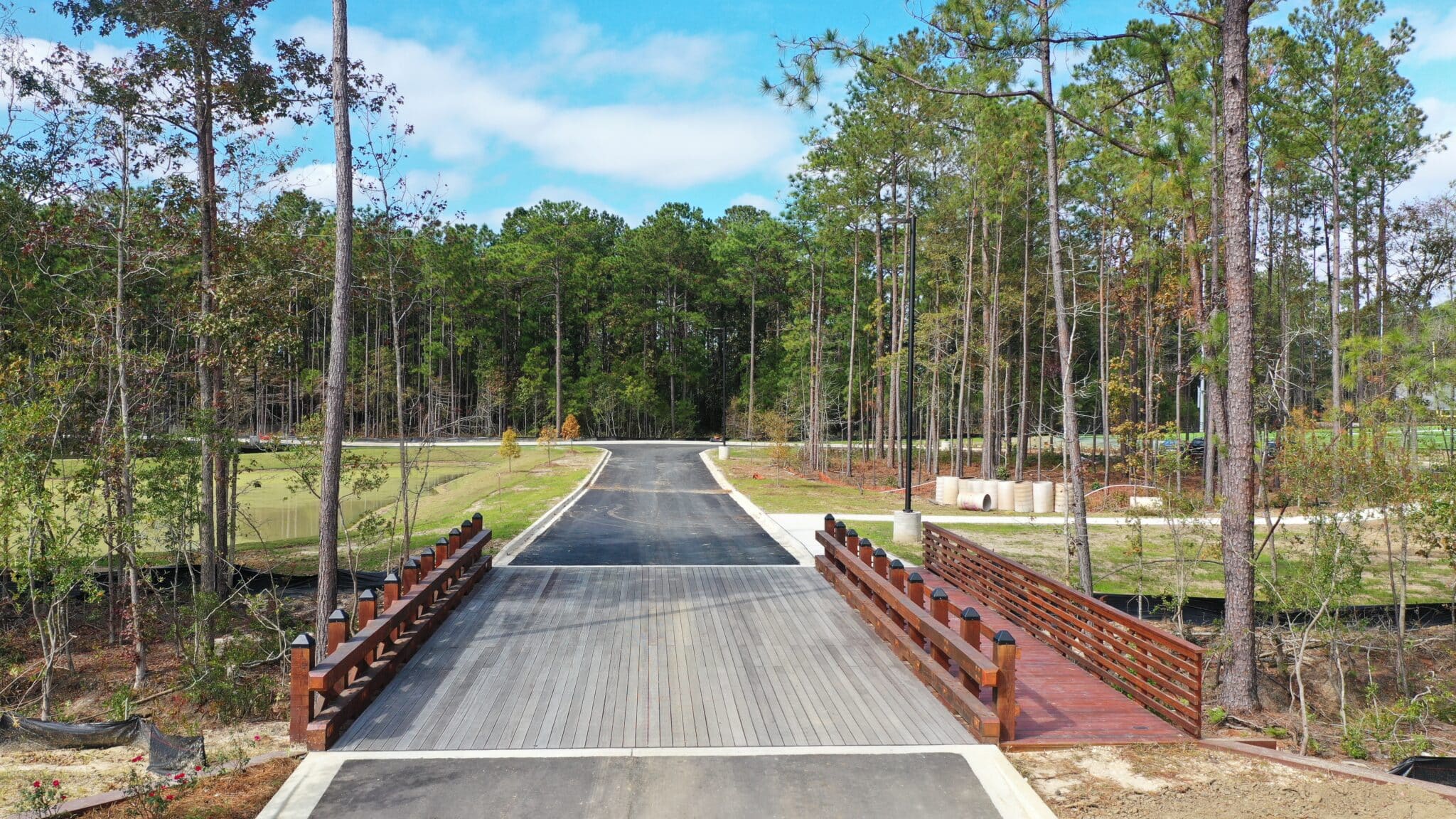
Entrance to the Coe Branch pedestrian trail bridge in Falls Church, VA built by York Bridge Concepts

Designing Architectural Excellence

York Bridge Concepts has a reputation for crafting bridges that blend seamlessly with their natural surroundings, and the Coe Branch Stream bridge is no exception. Featuring a truss design, the bridge exudes a rustic charm while providing modern structural integrity. The use of timber, a renewable resource, underscores the project’s ecological ethos and provides a warm, inviting aesthetic.

Timber was specifically chosen not just for its renewability, but for its ability to naturally weather and age with beauty, adapting over time to the wooded stream environment. This architectural harmony allows the structure to serve as a visual continuation of the park landscape, rather than a disruptive element.

The truss design further enhances structural performance while allowing for longer spans with fewer vertical supports--minimizing disturbance to the stream bed and reducing habitat fragmentation. York Bridge Concepts' Decero™ Design methodology ensured that every detail, from footing placement to handrail finishing, was tailored for site-specific integration.

To complete the bridge's refined appearance, the timber components were treated with environmentally friendly protective coatings designed to extend the lifespan of the structure while preserving its natural color tones. Galvanized hardware, concealed connections, and precision joinery reflect York Bridge Concepts' attention to both form and function.

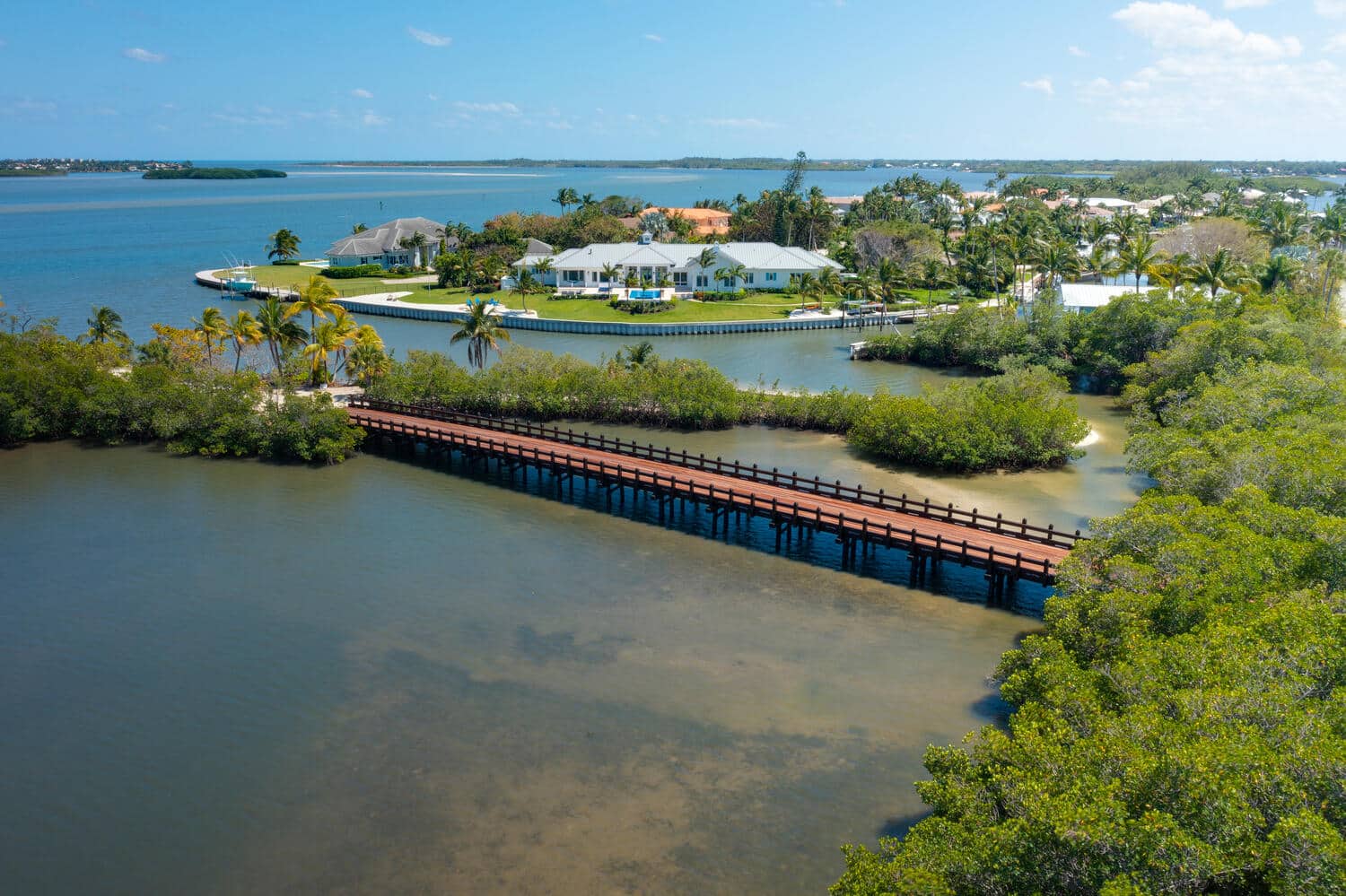
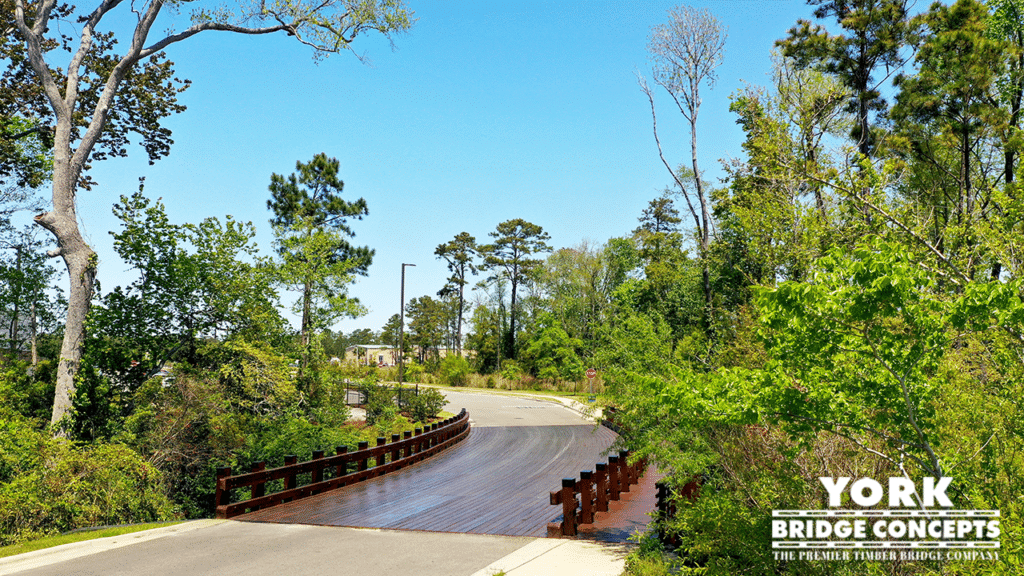
Coe Branch trail pedestrian bridge built by York Bridge Concepts in Virginia

User-Centric Functionality

Designed with the community in mind, the bridge features:

Accessibility

Fully compliant with ADA standards, ensuring that everyone, regardless of mobility, can enjoy the bridge.

Beyond baseline ADA compliance, the design incorporates gentle slope approaches and strategic transitions with non-slip composite decking materials, making it easy for mobility devices, strollers, and cyclists to navigate the bridge. Smooth transitions and adequate clearances were incorporated throughout, ensuring that the structure is welcoming to all demographics--from elderly walkers to children on scooters.

Safety

Robust railings and non-slip surfaces make it a safe option for all users, including children and the elderly.

Safety was central to the design process. Handrails were engineered for strength and durability, with a grip-friendly profile and vertical pickets spaced to meet IBC code requirements, providing fall protection without obstructing scenic views of the stream. The decking material resists warping, splintering, and UV damage, ensuring a consistent surface year-round even in Virginia's humid climate. Integrated lighting or solar-powered guide markers are also options that could be explored in future upgrades, improving visibility during early morning or evening walks.

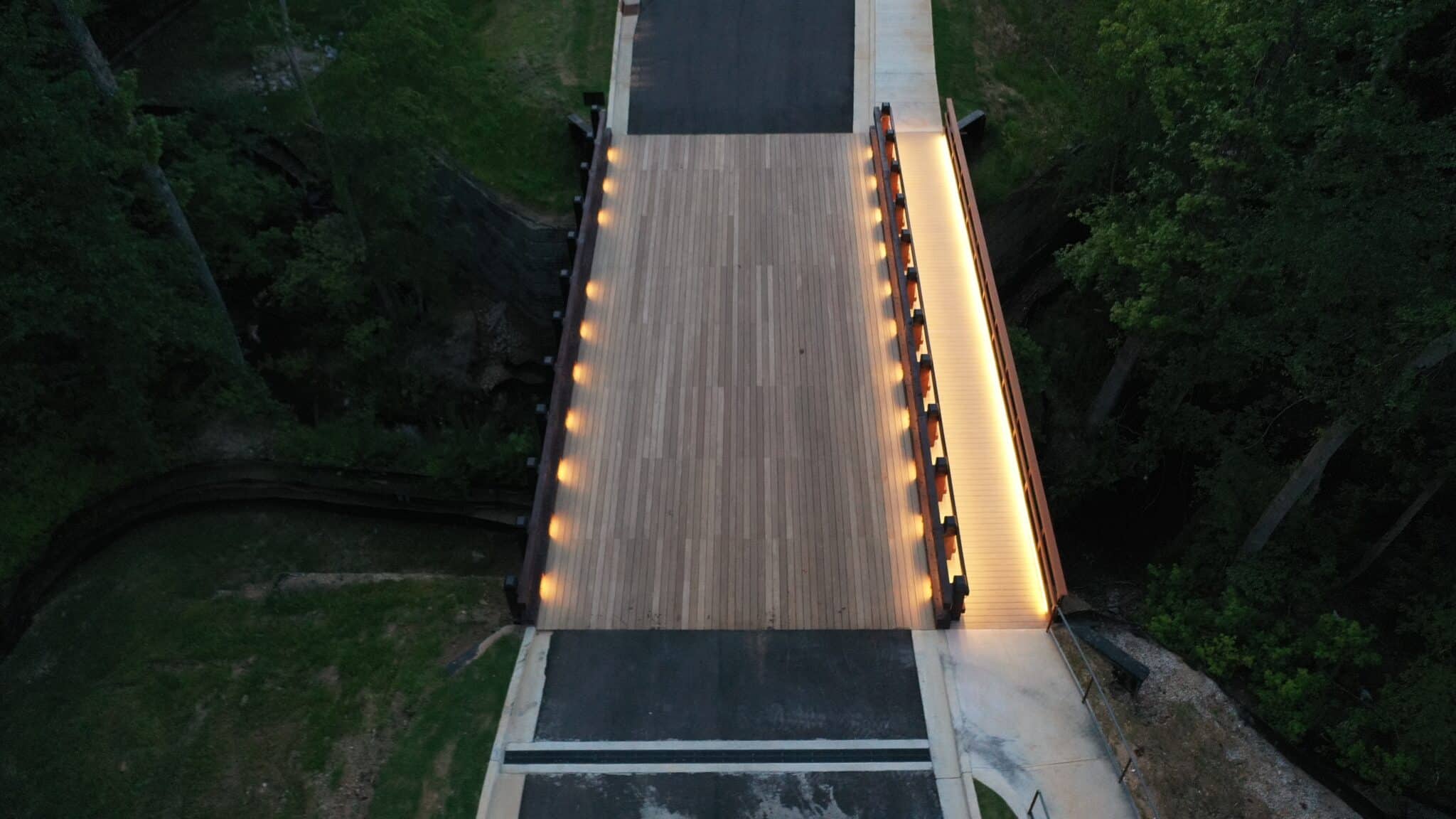
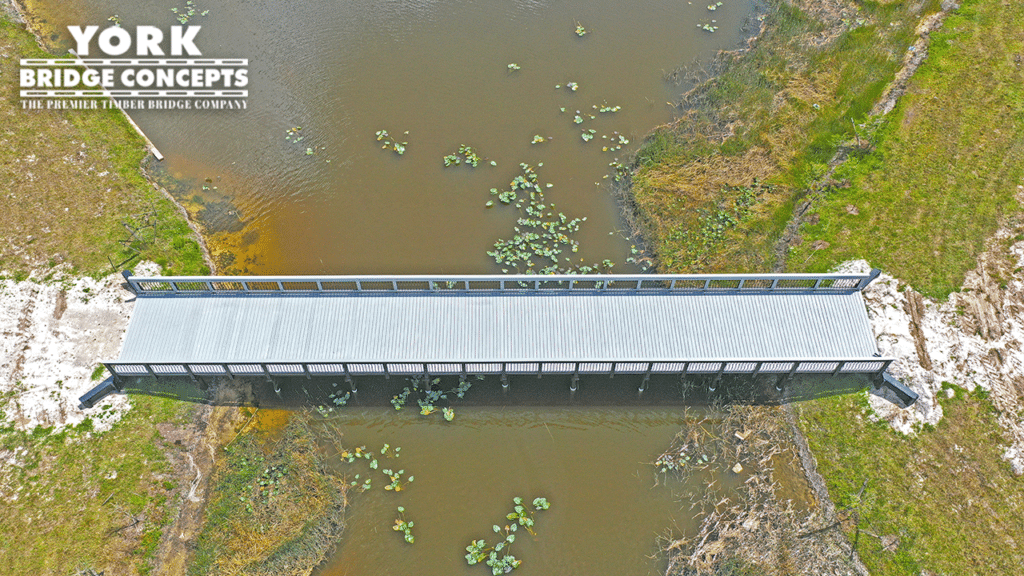
Coe Branch trail bridge pedestrian crossing over protected stream built by York Bridge Concepts in Falls Church, VA

Environmental Impact of coe Branch stream


Stream Restoration Synergy

The construction of the pedestrian bridge is part of a larger initiative to restore Coe Branch Stream. Falls Church's efforts include stabilizing the stream banks, enhancing water quality, and increasing biodiversity. The bridge itself is designed to have minimal environmental footprint, with careful consideration given to its placement and construction materials.

York Bridge Concepts worked in close coordination with local environmental engineers to ensure that the bridge installation would not impede stream flow, harm aquatic habitats, or contribute to runoff. The abutments and piers were strategically positioned to rest on natural embankments or engineered armoring, keeping the stream's flow path and hydrology intact.

By restoring native vegetation, regrading eroded streambanks, and adding natural rock weirs and habitat structures, the project enhances aquatic life, reduces sedimentation, and improves water quality downstream. The bridge--placed at a key crossing point--encourages responsible access while protecting the restoration work being done.

Wildlife Conservation

By improving habitat connectivity along the stream, the bridge facilitates the movement of pedestrians and supports aquatic ecosystems. This integration of infrastructure with natural preservation is key to the project’s success, balancing human access with ecological health.
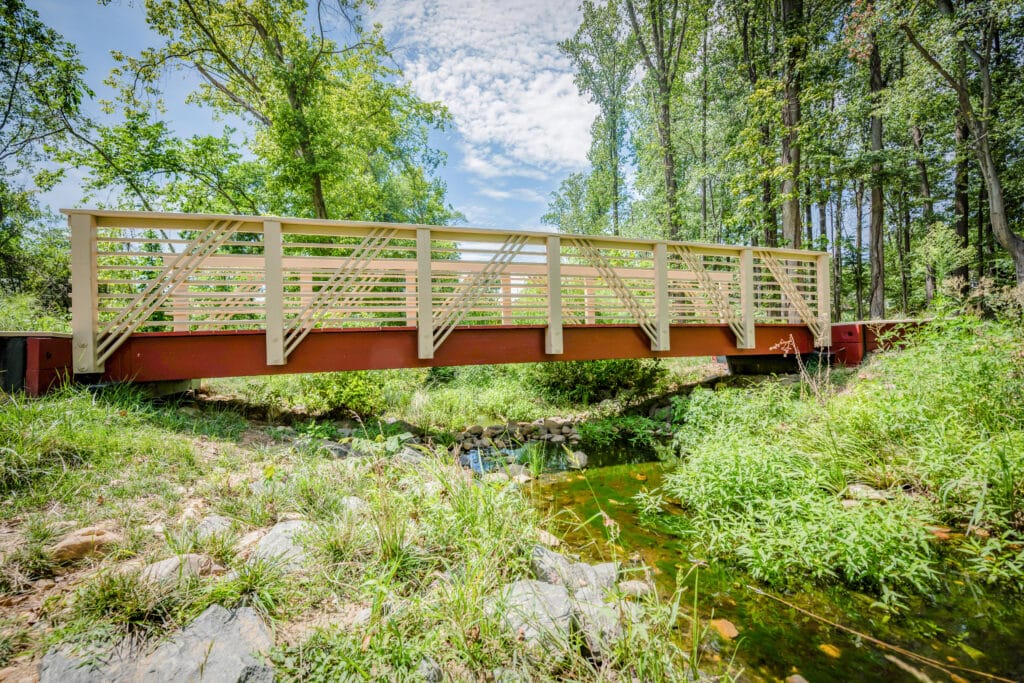
Amphibians, birds, and small mammals benefit from unobstructed riparian corridors. Unlike culverts or large concrete crossings, the open design of the timber bridge maintains daylight and airflow below the structure, reducing the chance of creating habitat bottlenecks. Interpretive signage could be added in the future to educate users on native species such as the Eastern Box Turtle, Great Blue Heron, and local fish populations.

In essence, the bridge acts not as a barrier but as an ecological conduit, enhancing both physical and biological connectivity across the landscape.

Coe Branch pedestrian trail bridge profile built by York Bridge Concepts in Falls Church, VA

Benefits of the timber bridge for the community


Enhancing Connectivity

This bridge is more than just a pathway over water; it’s a vital link between different parts of the community. It connects various trails that run along Coe Branch Stream, making it easier for residents to engage in outdoor activities like walking, jogging, and bird watching.

This enhanced connectivity encourages a more active lifestyle and supports mental well-being by offering a quiet retreat from urban stressors. For families with children, the bridge links different portions of the park system, enabling seamless movement between playgrounds, fields, and natural trails. For those commuting on foot or by bicycle, it provides a safe and scenic route that avoids road traffic.

Over time, this interconnected trail network fosters a stronger sense of place and community identity--where residents take pride in their shared environment and where civic investment leads to communal benefit.


Educational Opportunities

The project serves as an educational platform, demonstrating the benefits of sustainable construction and environmental restoration. Schools and organizations are encouraged to use the bridge and its surroundings as a learning environment.

Field trips and outdoor classrooms can leverage the bridge as a natural observation deck, providing direct access to stream life and restoration features. Biology and environmental science students can monitor macroinvertebrate populations, plant identification, or erosion control methods firsthand.

Furthermore, York Bridge Concepts and local partners could develop downloadable trail maps, interpretive guides, or augmented reality apps to enhance the learning experience. Signage placed along the path might describe the lifecycle of native species, the principles of sustainable bridge building, or the history of the Coe Branch corridor.

Economic Advantages

By increasing the area’s appeal, the bridge has a positive impact on local businesses and property values. It draws visitors to Falls Church, promoting tourism and supporting the local economy through increased foot traffic.

Outdoor amenities like the Coe Branch Bridge are proven to increase community desirability. Homes within walking distance of trail systems and greenways often are cherished by homeowners. For local retailers, coffee shops, and bike rental businesses, the increase in pedestrian traffic opens up new revenue opportunities.

Additionally, this type of infrastructure project reflects well on civic leadership, signaling to potential investors and future residents that Falls Church values quality of life, environmental responsibility, and forward-thinking design.

Coe Branch pedestrian trail bridge built by York Bridge Concepts in Falls Church, VA

Creating a landmark in falls church, virginia

The Coe Branch Stream Timber Pedestrian Bridge by York Bridge Concepts is a landmark project in Falls Church, VA. It embodies a commitment to community well-being, environmental health, and sustainable design. As we look towards future projects, the bridge stands as a beacon of how public infrastructure can harmonize with nature and foster a connected, informed community.

Already a popular backdrop for photographs, nature walks, and quiet reflection, the bridge invites residents to slow down and appreciate their environment. In a rapidly developing region, this structure will serve as a lasting reminder that thoughtful design can uplift both people and the planet.

As more cities nationwide pursue climate resilience, green infrastructure, and placemaking, the Coe Branch Timber Pedestrian Bridge will be cited as a case study in excellence. Its success offers a replicable model for other municipalities seeking to reinvigorate waterways, reconnect neighborhoods, and invest in nature-based solutions.


GET A QUOTE

All Feature Projects


What's Best: A Culvert Or A Timber Bridge?

Understand the considerations you should make before choosing your crossing method.

What Is The Best Span Type For My Project?

See how creative scoping, design, & usage work to create the perfect spanning solution for your project.

Which Load Capacity I Need?

Understand the different load capacities for usage that are needed for your project.

How Do I Cross An Environmentally Sensitive Area?

Learn how YBC crosses protected areas with our Deck-Level Construction.

How Do I Create A Landmark?

Create a memorable icon for your development project with a YBC Legacy Timber Bridge.

How Long Does A Timber Bridge Last?

Extend the lifespan of your timber bridge to over 75 years using these guidelines, material selection, protection & maintenance practices.


Placeholder Image

Culvert Or Bridge

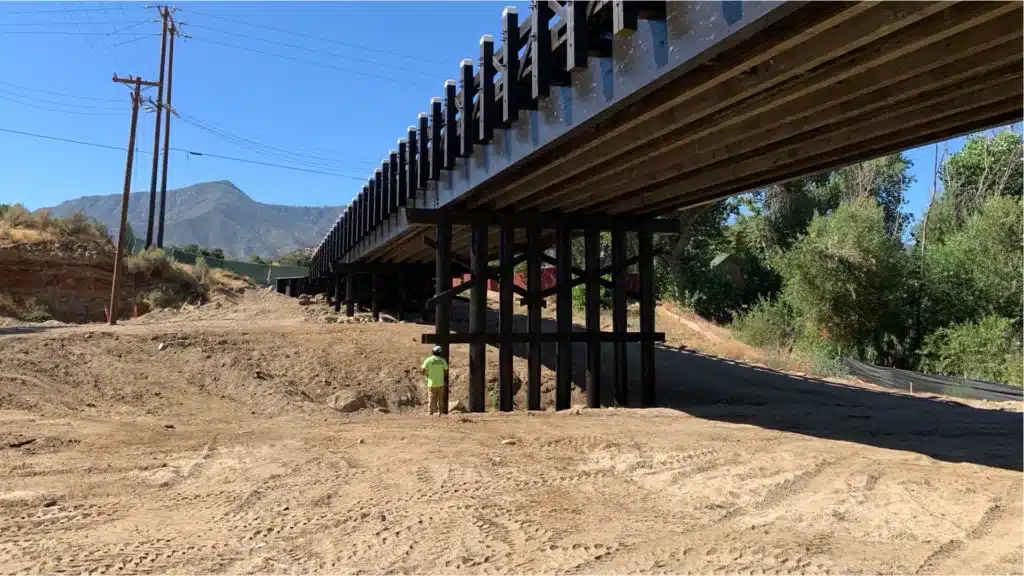
If you're considering using a culvert for your crossing project. Click below to understand the best fit for your project.
Culvert Or Bridge
Placeholder Image

Spanning Solutions

Spanning a crossing is one of the most important aspects of your crossing project. Find the best solution for your crossing needs.
Spanning Types
Placeholder Image

Uses & Capacities

The load capacity of a timber bridge may surprise you. See specs for different loads and uses that will help your decision-making process.

Bridge Loads & Usages