Lawson’s Fork Creek Trail Bridge – Spartanburg, SC

York Bridge ConceptsBridge Types, Pedestrian Bridges, Repetitive Span, South Carolina

Lawson's Fort Creek Trail Pedestrian Bridge

Nestled within the picturesque landscapes of Spartanburg, South Carolina, the Lawson's Fork Creek Trail Bridge stands as a testament to the harmonious blend of functionality, aesthetic appeal, and environmental stewardship. Designed and constructed by York Bridge Concepts (YBC), this timber bridge not only facilities connectivity but also enhances the natural beauty of the Glendale Shoals Preserve.


A gateway to natural splendor

The Glendale Shoals Preserve, a 13-acre expanse donated to the Spartanburg Area Conservancy (SPACE) in 1993 by Billy Tobias, is a sanctuary of diverse flora and fauna. Located at the historic site of the old Glendale Mill on Lawson's Fork Creek, the preserve boasts a captivating waterfall cascading over a dam, offering visitors a serene escape into nature. The area is rich in history, once known as Bivingsville in the 1800s, and served as the site of the Glendale Mill, a significant cotton factory that supported the local mill village.

Specifications


  • Width:
  • 9’
  • Length:
  • 90’
  • Height:
  • 7' 8.75 above grade
  • Capacity:
  • 90 PSF
  • Construction:
  • Ground Up
  • Span Type:
  • Repetitive Span
  • Material:
  • CCA/CA-C Treated Southern Yellow Pine
  • Foundation:
  • Timber Piles & Abutments (Acrylic/Polymer Coated where exposed)
  • Stringers:
  • Rough Sawn S4S Stringers (Acrylic Coated where exposed)
  • Deck System:
  • 2” Textured Polymer Acrylic Deck
  • Handrail:
  • Decero™ Design Wire Mesh Series
  • Crossing:
  • Creek

New call-to-action
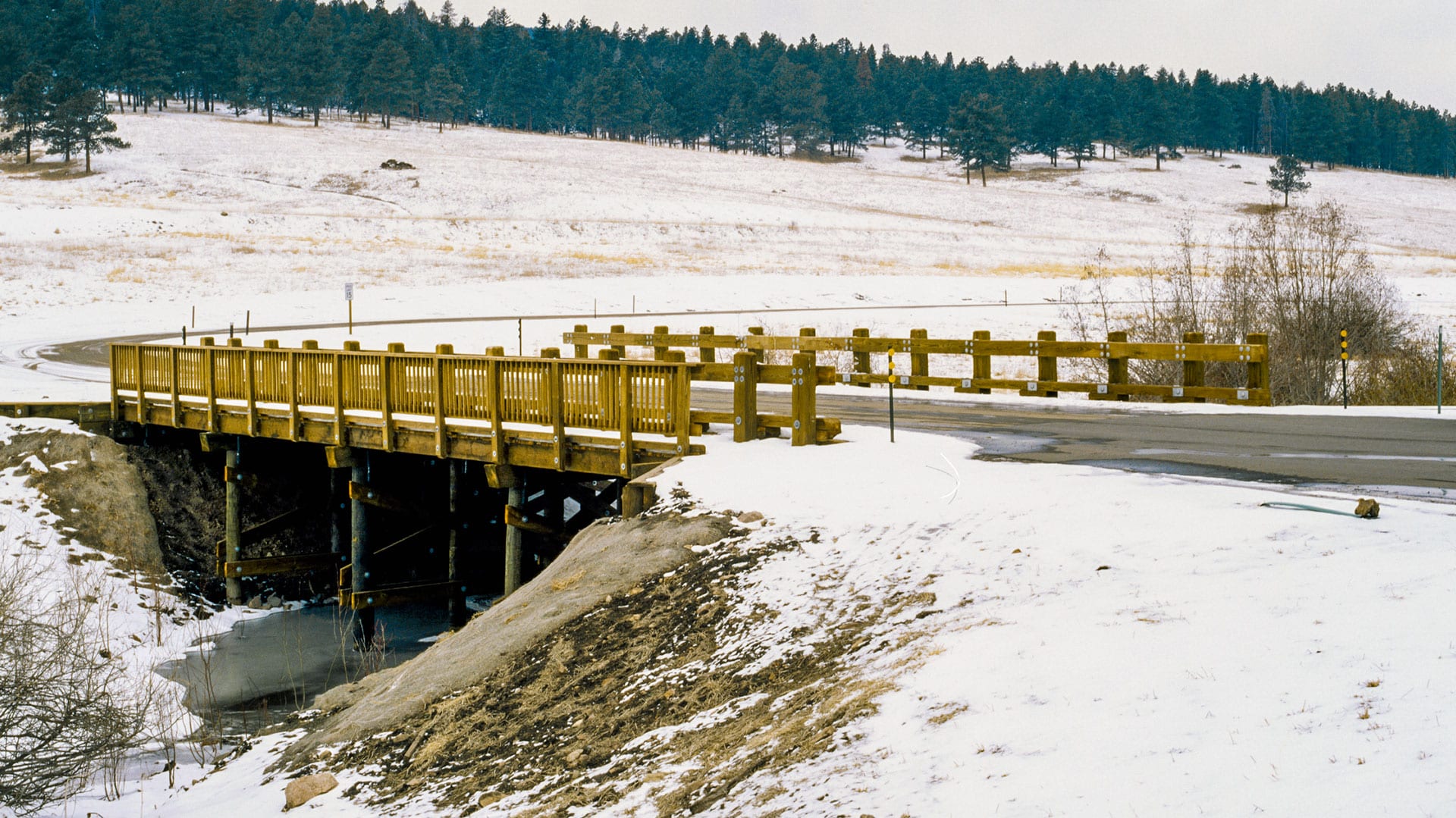
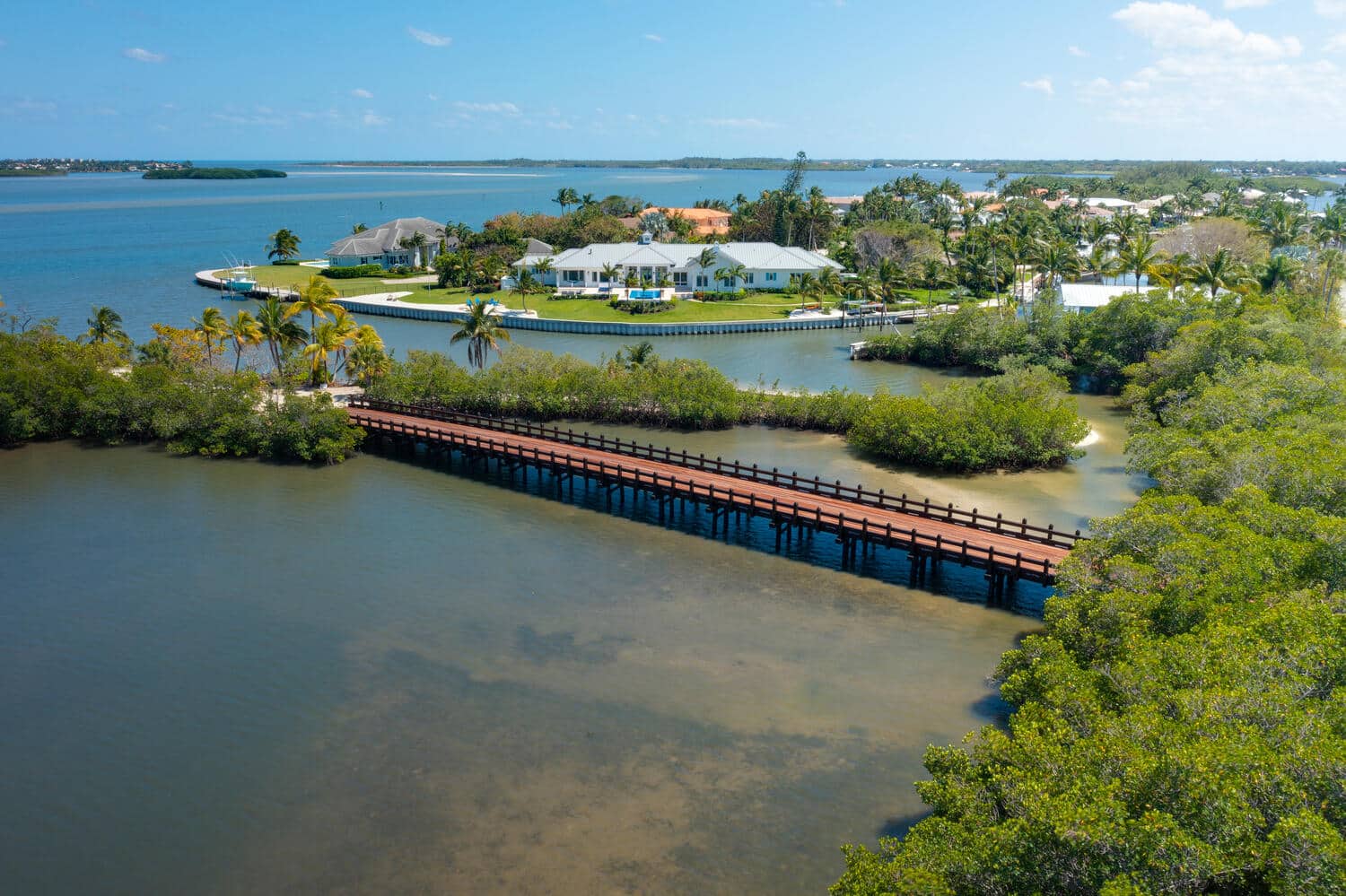
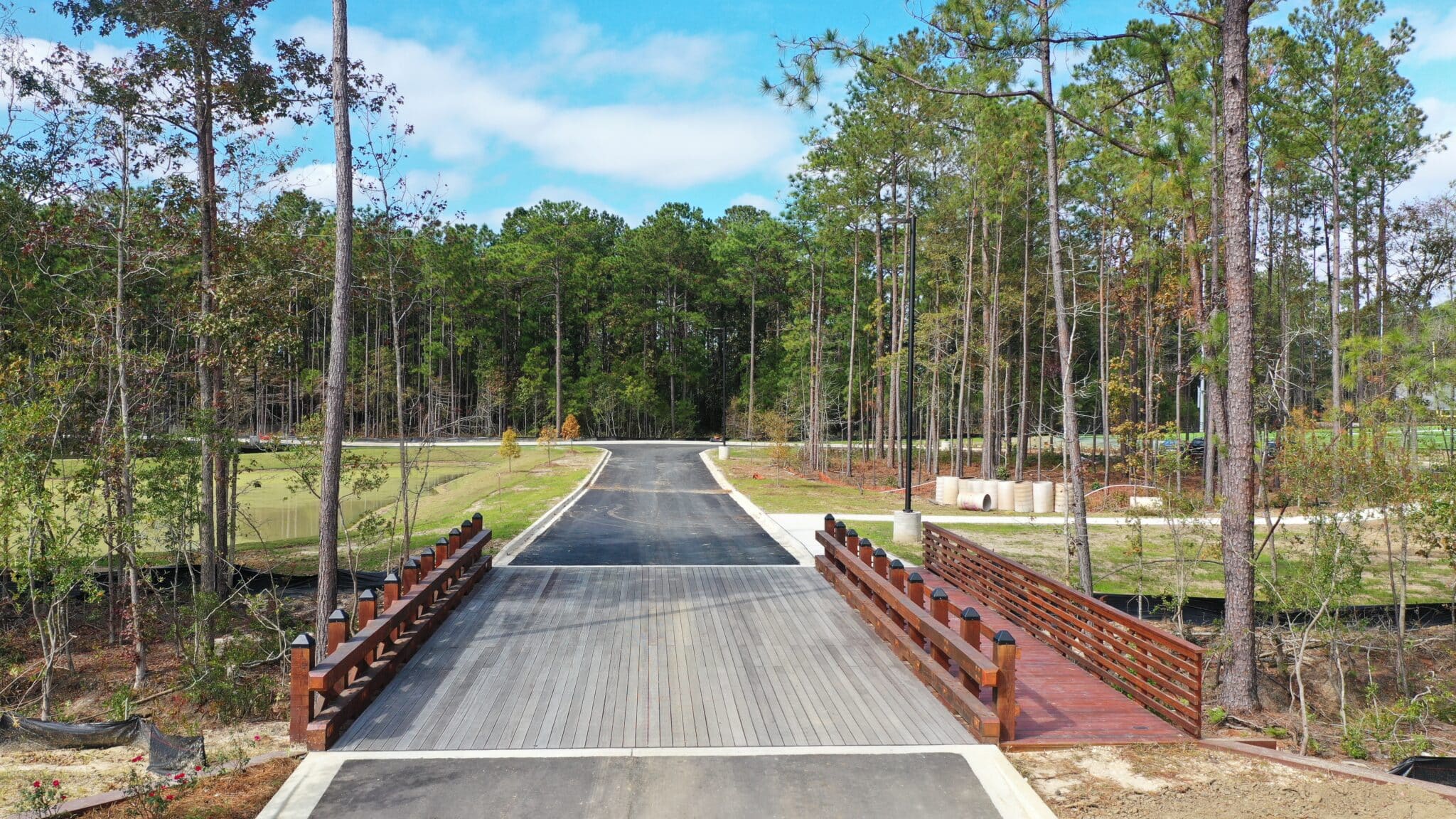
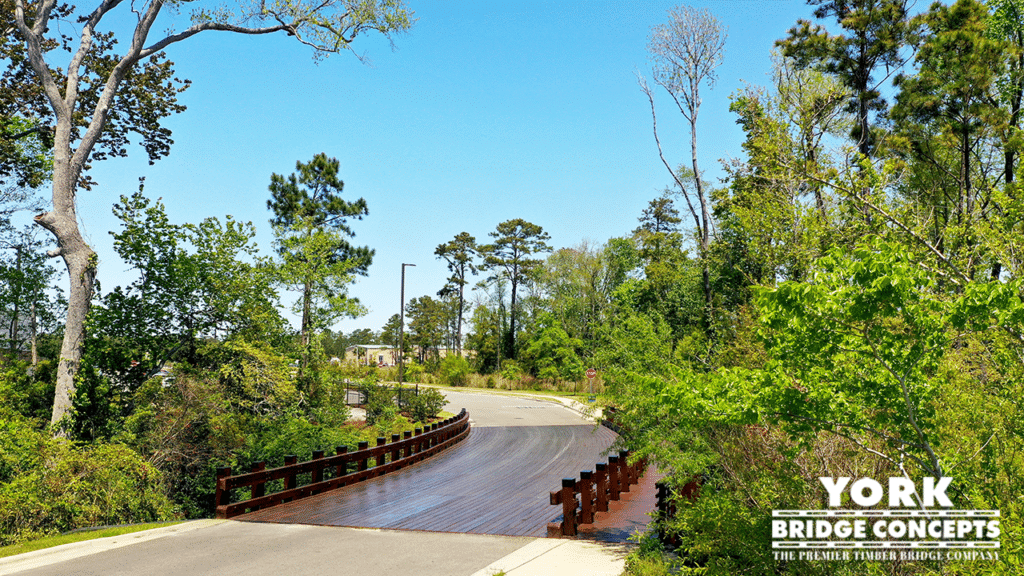
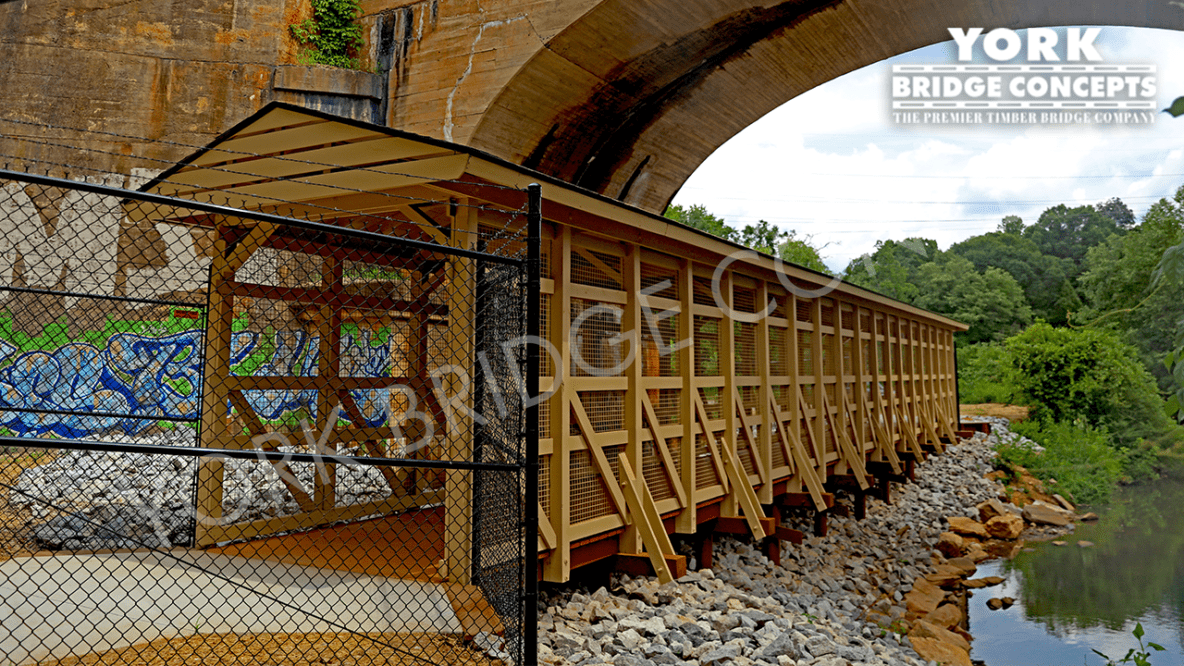
Lawson's Fork Creek Trail pedestrian bridge in Spartanburg, SC design built by York Bridge Concepts

Lawson's Fork Creek Trail Bridge Design Philosophy: Merging with the Environment

YBC's approach to the Lawson's Fork Creek Trail Pedestrian Bridge was rooted in their Decero Design Studio methodology, emphasizing bespoke solutions tailored to the specific environment. The objective was to create a structure that seamlessly integrates into the natural surroundings, ensuring minimal ecological disruption while providing a durable and aesthetically pleasing crossing.

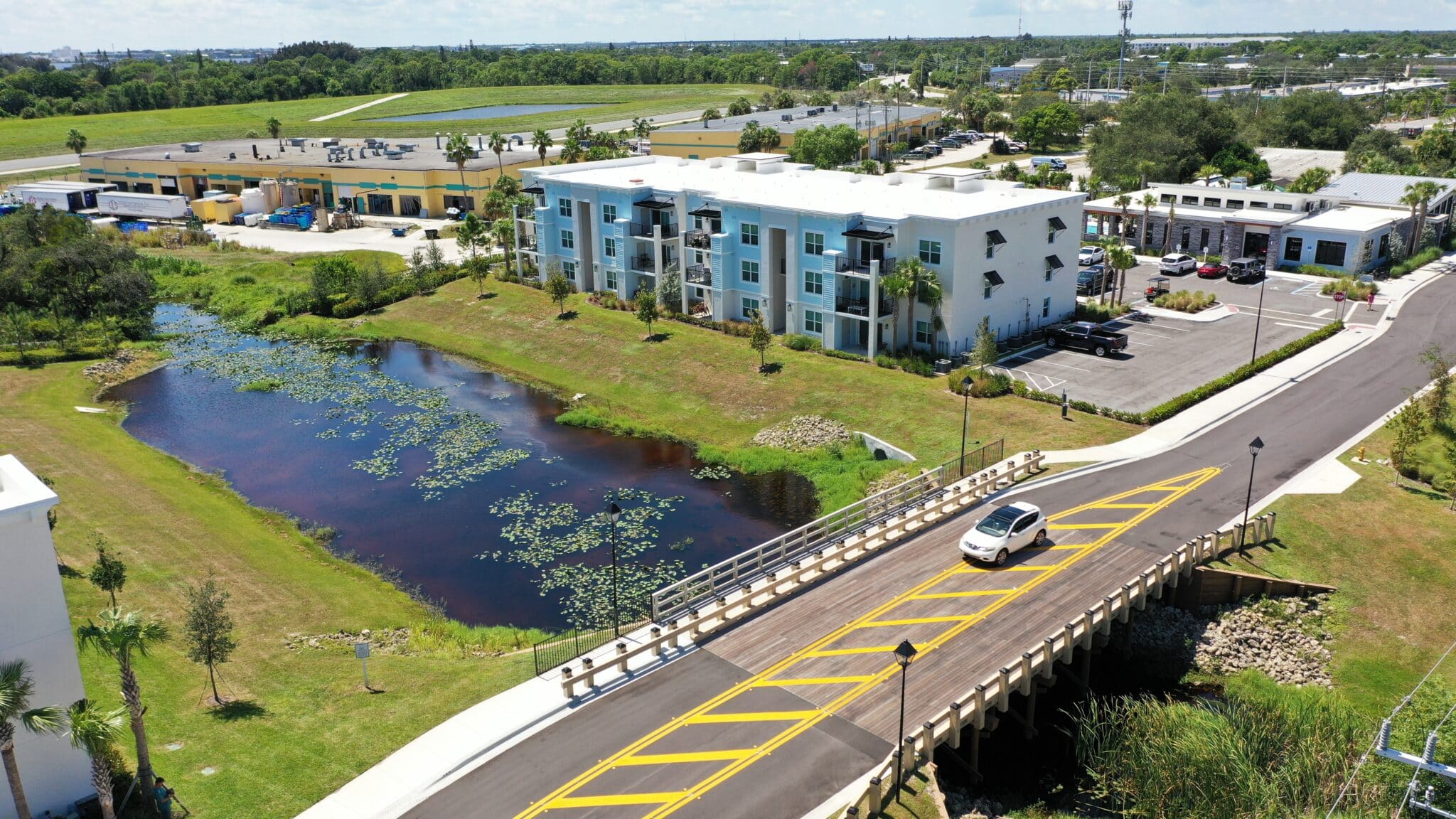
Lawson's Fork Creek Trail covered pedestrian trail bridges built by York Bridge Concepts in Spartanburg, SC

Structural Specifications & Materials

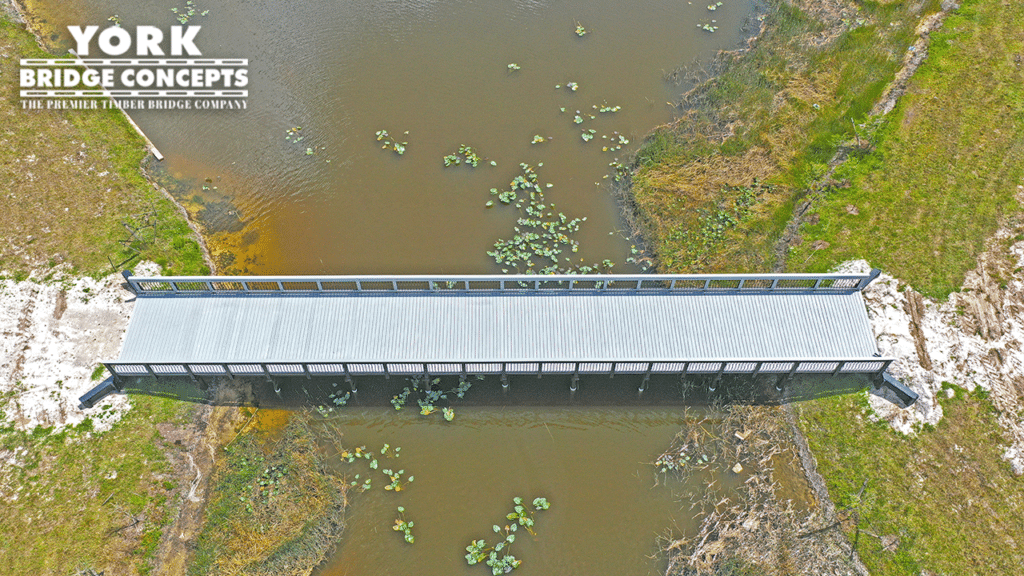
The bridge spans 90 feet with a width of 9 feet, elevated 7 feet 8.75 inches above grade. It is engineered to support a capacity of 90 pounds per square foot (PSF), accommodating both pedestrian and light vehicular traffic. The construction utilized CCA/CA-C treated Southern Yellow Pine, known for its strength and resilience. Foundations comprise timber piles and abutments, with exposed sections coated in acrylic/polymer for enhance durability. The deck system features a 2-inch textured polymer acrylic surface, complemented by YBC's Decero Design Wire Mesh Series handrails, ensuring safety without compromising the scenic views.

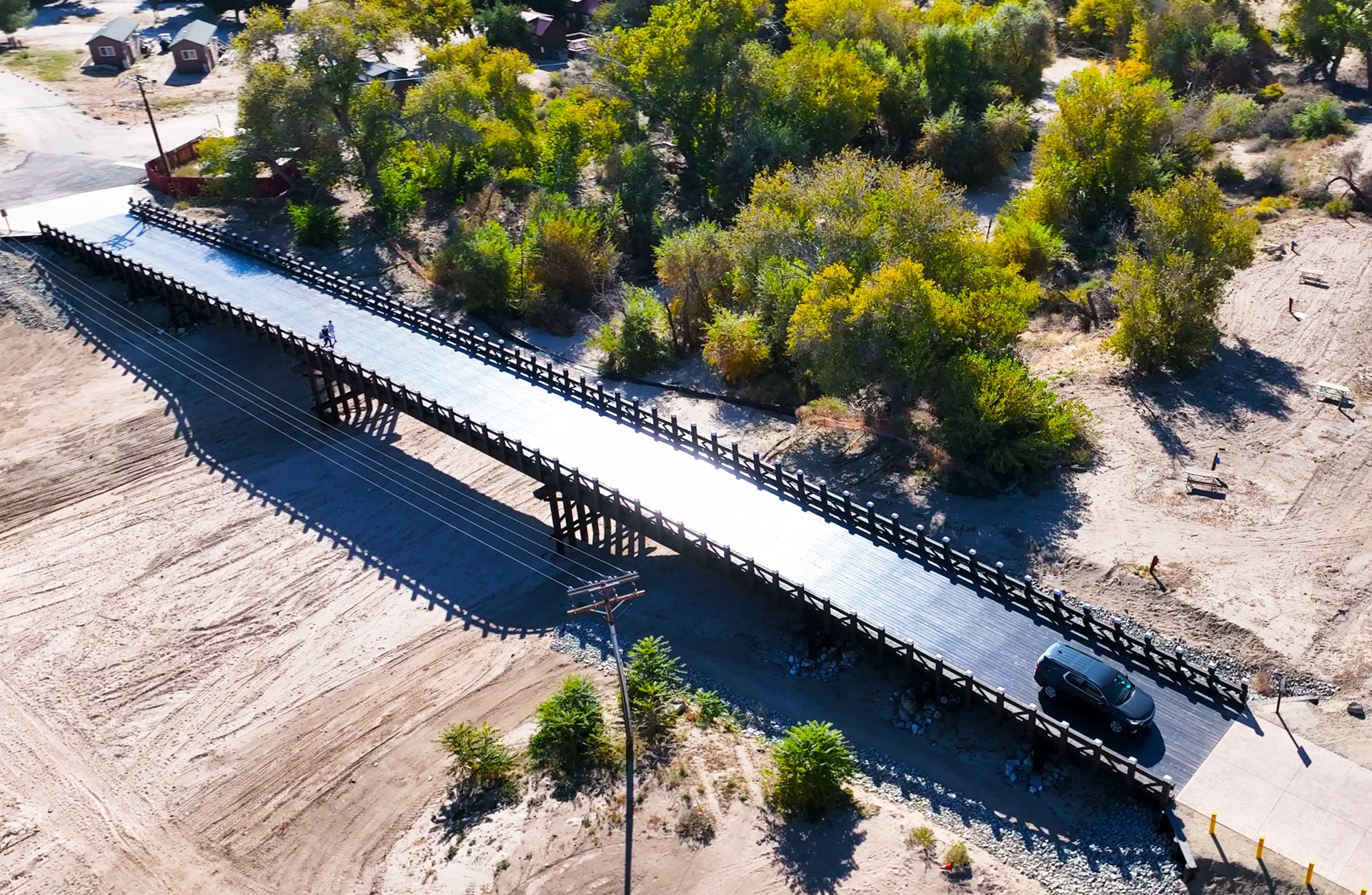
Lawson's Fork Creek Trail profile of the covered pedestrian trail bridge built by York Bridge Concepts by York Bridge Concepts in Spartanburg, SC

Sustainable Construction Practices For Lawson's Fork Creek Trail Bridge

YBC's commitment to sustainability is evident in their construction methodologies. Employing sustainable ground-level construction techniques, they minimize environmental impact during the building process. This approach is particularly beneficial in sensitive areas like the Glendale Shoals Preserve, ensuring that the surrounding ecosystem remains undisturbed. Additionally, the use of ecological materials and a focus on reducing the carbon footprint align with YBC's dedication to environmental stewardship.


Challenges & Solutions

No bridge of this kind is built without encountering constraints -- physical, regulatory, environmental, or logistical. Below are some of the principal challenges encountered in the Lawson's Fork Creek Trail Bridge project, and how YBC's design-engineer-build methods and expertise overcame them.


Site Topography

The natural banks of Lawson's Fork Creek vary in slope, bank stability, and vegetative cover. Achieving the desired alignment for a 90-foot span, at ~ 7' - 8' above grade, required careful earthwork, grading, and selective clearing. YBC's team ran detailed topographic and hydrologic surveys to understand flood stages, slope stability, and likely bank erosion zones.

To reduce excavation disturbance, native fill and selective rock removal were used. Berms and temporary erosion control measures (silt fencing, coir logs) were installed during construction to maintain water quality. On the final alignment, the ends of the bridge meet stable ground zones for abutments, minimizing cuts into steep slopes or sensitive habitats.


Flood & Hydraulic Design Concerns

One major risk in creek crossings is flood behavior. YBC's engineers conducted hydraulic modeling (e.g., 100-year and 500-year flood events) to ensure that the bridge deck, piers, and abutments would not restrict flood flows or cause upstream backwater issues. In zones of high flow, timber piles were driven deep to resist scour, and exposed structural elements (abutment surfaces, stringer bottoms) were coated with polymer/acrylic for added resistance to saturation, abrasion, and decay.

Under high flow conditions, debris impact is also a threat. The design of the deck's underside clearance, pier shape, and rail system helps deflect or pass floating logs and refuse. In particularly vulnerable stream reaches, scour pads or riprap armor were considered but, in this case, avoided in favor of more ecologically gentle stabilization if possible.


Permitting, Environmental regulations, and stakeholder engagement

Because this project lies in a preserve and crosses a creek, multiple regulatory agencies had jurisdiction: possible county flood control, state environmental quality divisions, local conservancy agencies, and wildlife or wetland regulators. YBC's project team initiated early coordination with these stakeholders, submitting site plans, hydrologic reports, biological assessments, and mitigation plans.

In some cases, permit conditions required minimizing vegetation removal, restoring native species, or installing erosion controls. The bridge plan was revised to avoid impact zones of rare species or steep banks. In certain reach areas, mitigation plantings -- including native shrubs and grasses --were integrated along access paths once construction was complete.

Additionally, public input was sought (community meetings, informational displays, feedback sessions) to communicate how the bridge would look, how much tree/vegetation removal was needed, and how trail access would be affected during construction. These efforts helped reduce opposition, manage expectations, and build goodwill.


Logistics, staging & access constraints

Access to the site during construction is often a challenge in wooded, riparian land. YBC's team had to plan staging zones for materials, equipment, and temporary worker access that wouldn't unduly disturb creek banks or adjacent habitat. Temporary matting or construction pads may have been used to reduce soil compaction and vegetation damage.

Materials (timber piles, deck boards, handrail mesh, coatings) had to be transported and staged carefully to avoid damage to sensitive zones. Crane or lifting equipment had to be positioned to reach the span without undue traversing of fragile banks. Some elements may have been prefabricated or pre-assembled offsite, like trusses for covering, to reduce onsite work time and disturbance.


Weather, timing, and unforeseen site conditions

Construction in a creek environment always carries risk due to weather (heavy rains, storms raising water levels, unpredictable flows). The project schedule likely accounted for seasonal windows with lower flow, reduced rainfall probability, and safer working conditions.

During excavation or pile driving, unanticipated soil or bedrock zones may appear. The YBC team would have contingency plans: adjusting pile lengths, reinforcing with additional piles, or modifying footing depth. Coordination with geotechnical engineers helps adapt to surprises gracefully.

By combining robust pre-construction study, modular design, early stakeholder coordination, and flexible field adjustments, YBC managed to overcome these challenges and deliver the final trail bridge on schedule and to spec.


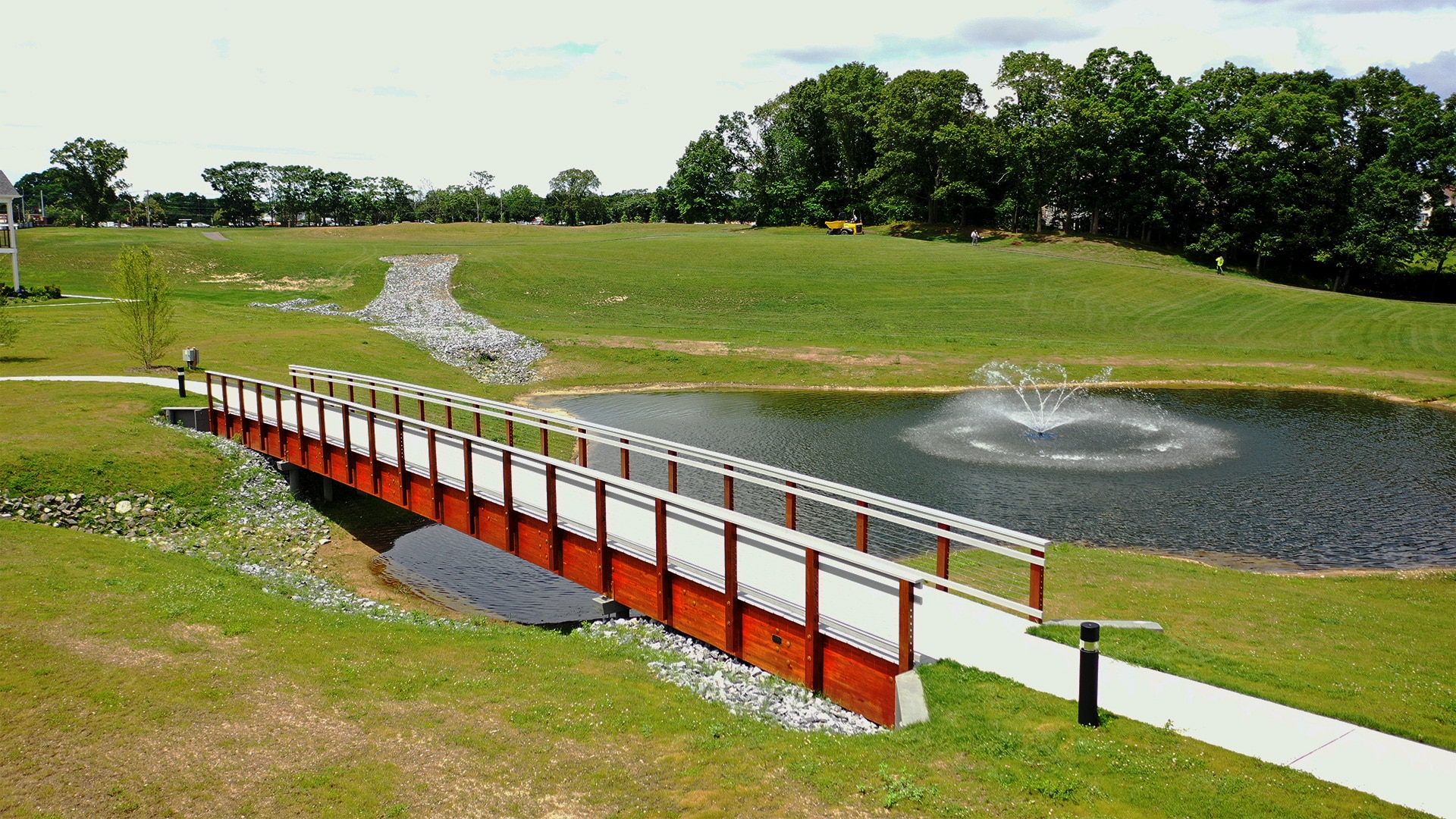
Lawson's Fork Creek Trail covered pedestrian trail bridge built by York Bridge Concepts in Spartanburg, SC

Enhancing Eco-Tourism & Community Connectivity

The Lawson's Fork Creek Trail Bridge serves as a vital link within Spartanburg's trail network, promoting eco-tourism and encouraging outdoor activities. By providing safe and scenic access under the train bridge, the pedestrian bridge enhances the recreational experience for hikers, cyclists, and nature enthusiasts. Moreover, it stands as a symbol of the community's commitment to preserving natural spaces while facilitating sustainable development.


Context & Regional Significance

In addition to the design and material excellence detailed above, the Lawson's Fork Creek Trail Bridge occupies a strategically important place in the social, environmental, and recreational fabric of Spartanburg County and the broader Upstate South Carolina region.


Connecting landscapes, history, and communities

The Glendale Shoals Preserve, through which the bridge crosses, lies at the confluence of natural beauty and human history. The region once supported the Glendale Mill and related industrial and agricultural activity, and the terrain retains many of the geological and hydrological features shaped over centuries. By placing a thoughtfully designed pedestrian crossing at this location, YBC has not merely built a walkway -- it has reactivated a corridor of movement, linking neighborhoods, trails, and green spaces in ways that respect the site's heritage.

From a greater planning perspective, the trail bridge helps stitch together fragments of local trail networks (existing and planned) on both sides of Lawson's Fork Creek. As municipalities and conservancies in Spartanburg invest in trail connectivity, greenway loops, and passive recreational corridors, this structure becomes a critical node in the "web" of open spaces. Over time, it can help catalyze foot-traffic, trail use, and community investment into adjacent parcels of land.

One often overlooked benefit is the ecological corridor value. By elevating the crossing above the creek and riparian zone (rather than forcing a low-level crossing), the design reduces fragmentation of habitat. Wildlife -- from small mammals and amphibians to plant species -- benefit when human infrastructure exerts minimal disturbance. Over decades, the bridge can have a subtle but positive role in promoting biodiversity connectivity across the creek.


Economic and tourism ripple effects

Trail bridges like this often yield return on investment beyond the immediate utility. As more people visit Glendale Shoals Preserve, local businesses, trail-side vendors, guides, and conservation groups may experience increased footfall. Enhanced visitor experience supports longer stays, repeat visits, and broader awareness of the area's natural and cultural assets.

Moreover, as Spartanburg positions itself in the regional recreation and eco-tourism market, high-quality pedestrian amenities like this bridge become part of the "brand" of the place. Whether featured in trail maps, tourism marketing, or outdoor recreation guides, it helps elevate the perception of Spartanburg as a modern, livable region that values nature and smart infrastructure.


User Experience & Community Impact

Beyond the structural and design goals, one of the most meaningful measures of success is how people experience and benefit from the bridge. In this section we explore how the Lawson's Fork Creek trail Bridge enhances user experience and community connectivity, and how it has already begun to make impact.


Inviting, safe, and Intuitive Design

Because the bridge is pedestrian-scale (9-foot width) with safe load capacity, it invites multiple uses: walkers, joggers, cyclists, families, nature watchers. The Decero™ Design Wire Mesh handrail provides security without obstructing views. The textured 2" polymer acrylic deck helps with slip resistance, especially in damp or mossy conditions, and offers a consistent walking surface.

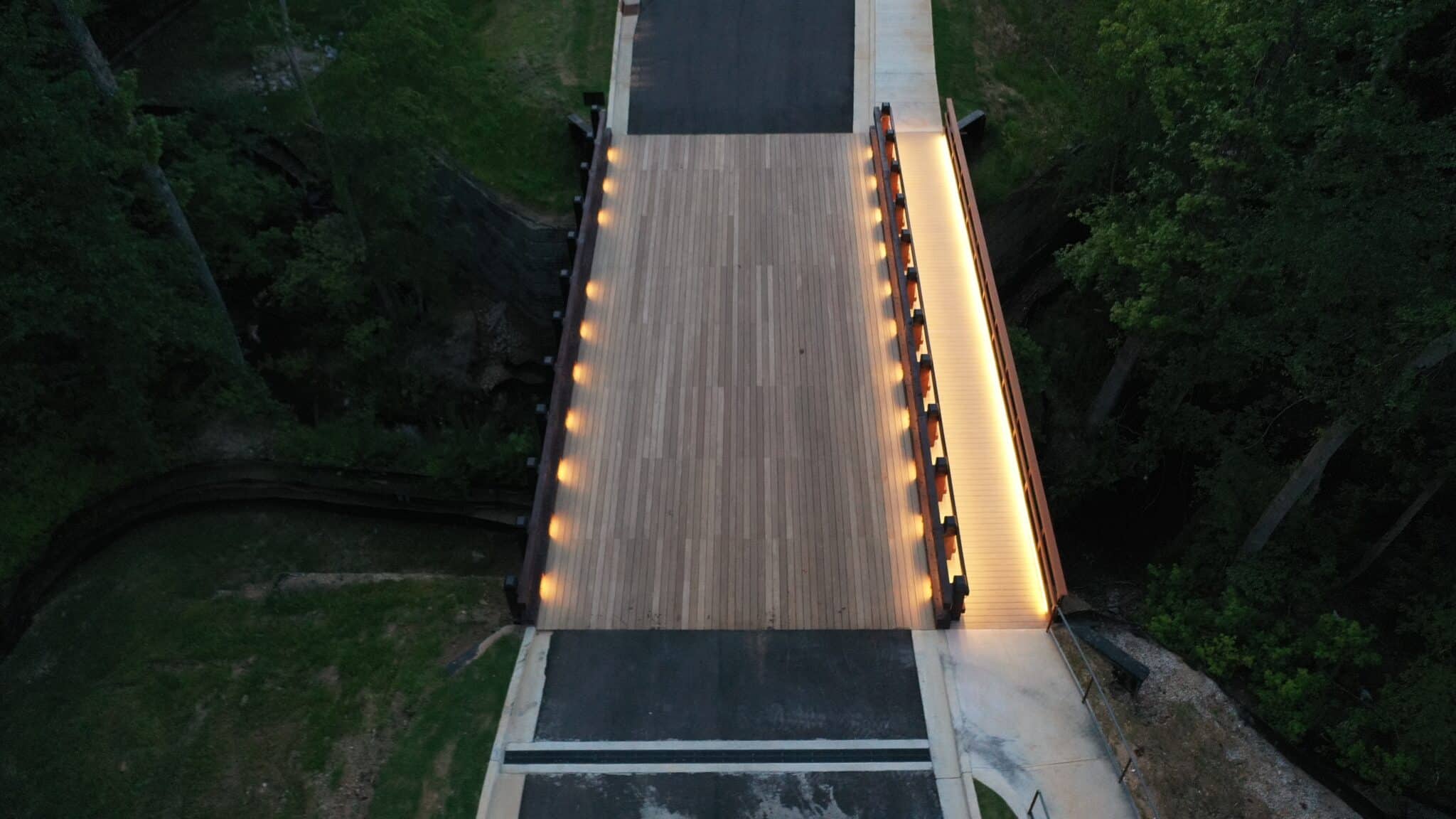
Lighting or integrated low-profile path lighting (if included or planned) can further extend hours of safe use in dusk/dawn hours. The bridge becomes not just a crossing point but a scenic vantage: visitors naturally pause midspan to view the creek, the trees, or the waterfall downstream (especially toward Glendale Shoals).


Interpretive signage and educational opportunities

To deepen the connection between visitors and place, interpretive signage can be deployed at each end of the bridge, or along adjacent trail segments. Topics may include:

  • The natural history and ecology of Lawson's Fork Creek (riparian flora, aquatic species, wetlands)
  • The cultural and industrial history (Glendale Mill, local settlement, mill village life)
  • The engineering/bridge design story (why timber, how sustainability was integrated)
  • Safety, trail etiquette, and "Leave No Trace" principles

This layering of narrative can elevate the crossing from pure infrastructure to an educational moment--especially for school groups, nature clubs, and visitors new to the site.


trail connectivity and recreational loops

The bridge enables looped trails, side spurs, and connections between neighborhoods or trail segments that were previously separated by the creek. With this bridge in place, users can plan longer, safer, and more varied outings without needing alternative road crossings or detours.

Over time, trail event planners (e.g., local races, nature walks, birding tours) may incorporate the bridge into signature circuits. The bridge becomes a destination or "checkpoint" in local walking tours, photo walks, or municipal trail maps.


Public feedback, usage patterns & anecdotal impact

Once open, usage metrics (pedestrian counts, peak hours, seasonal trends) help quantify how the community is benefitting. Anecdotal feedback is equally valuable: residents may appreciate the smoother, safer crossing; nature groups may laud the minimal ecological impact; recreational groups may highlight the scenic vantage created by the elevated span.

Some users may comment on the aesthetic integration -- how the bridge "disappears" into the woods or "feels part of nature" -- which aligns precisely with YBC's design philosophy. Over time, testimonials photos from local social media, trail blogs, or park websites can provide rich content for YBC's portfolios or case studies.


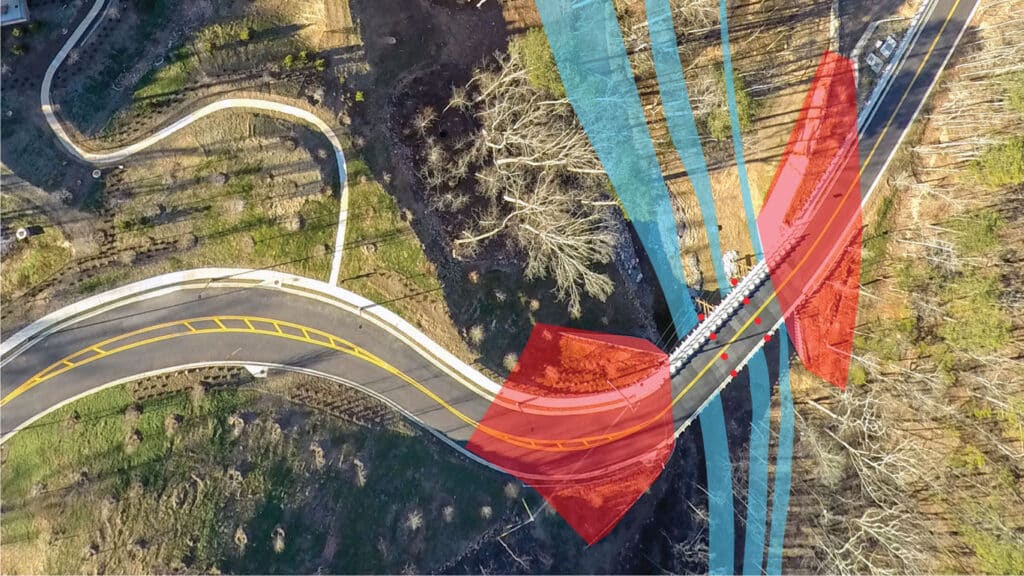
Lawson's Fork Creek Trail covered pedestrian trail bridge master craftsmanship by York Bridge Concepts

A Testament to YBC Craftsmanship

York Bridge Concepts' expertise in sustainable bridge construction is showcased in the Lawson's Fork Creek project. YBC's ability to merge traditional craftsmanship with modern engineering results in structures that are not only functional but also enrich the landscapes they inhabit. This bridge exemplifies YBC's dedication to creating icons that stand the test of time, both in durability and design.


Maintenance, Longevity & Monitoring

A well-built bridge is only as good as how it is maintained over time. For a timber pedestrian structure in a creek environment, proactive maintenance and monitoring are key to longevity.


Routine inspection schedule & structural health monitoring

YBC or the managing agency should commit to a structured inspection plan: e.g. an annual full walk-through, plus quarterly visual checks. Key checks include:

  • Timber members (stringers, deck boards, handrail supports) for signs of decay, checking, splitting, or insect damage
  • Coating condition (acrylic/polymer protection) on exposed surfaces
  • Fasteners, connectors, and embedded hardware for corrosion or looseness
  • Timber piles, abutments, and substructure for scour, movement, or undermining
  • Handrail mesh and guard attachments for tension slackening or damage
  • Surface wear, cracking, or loosening on deck boards
  • Vegetation encroachment (roots, vines, moss) and drainage around the structure

For critical members, particularly below grade or in contact with moisture, non-destructive testing (NDT) methods like resistograph penetration, moisture probes, or ultrasonic testing could be used periodically. Digital monitoring (e.g. strain gauges, displacement sensors) might also be considered if long-term structural health is a priority.


Maintenance actions & repair best practices

If minor issues are detected (surface checking, small splits, loosened bolts), prompt repair is generally more cost-effective than deferring. For example:

  • Replace or re-treat damaged deck boards
  • Re-apply polymer coatings to exposed timber surfaces
  • Tighten fasteners
  • Stabilize scour-prone areas with gentle bioengineering (coir logs, rock toe, native plantings)
  • Clear drainage channels ensure water does not pool near abutments

Any replacement timber should match original species (Southern Yellow Pine, CCA/CA-C treated) or an equivalent treated and coated alternative. Where possible, prefabricated replacement parts or modular elements reduce the time installers spend working in or near the creek.


Lifecycle cost planning a major rehabilitation

Over the decades, expect to budget for medium-scale interventions (e.g. re-coating, deck replacement, structural reinforcement). Setting aside a reserve fund for 20- to 30-year rework helps ensure the bridge's integrity.

Major rehabilitation may include adding replacement stringers, reinforcing piles, or upgrading connectors -- but the robust original design and protective measures should minimize the scale of such work. In bridge planning, YBC's use of treated timber and protective coatings already pushes the enveloper toward 50-75+ year service life when properly maintained.


Monitoring environmental interaction

Because this bridge lies in a natural area, part of maintenance is observing how the structure interacts with its context:

  • Does water drainage near the abutments change over time, causing bank erosion?
  • Are plant roots encroaching or damaging the footings?
  • Is there accumulation of debris (sediment, leaves, logs) near the piers?
  • Do neighboring vegetation and forest growth begin to shade or colonize the deck edges, possibly increasing moisture retention and decay risk?

Periodic site photos, elevation markers, or references stakes can help document subtle changes year to year.


A Harmonious Integration to the Spartanburg Community

The Lawson's Fork Creek Trail Pedestrian Bridge is more than just a crossing; it is a harmonious integration of art, engineering, and nature. Through thoughtful design and sustainable construction practices, York Bridge Concepts has delivered a structure that enhances the Glendale Shoals Preserve, promotes community engagement, and stands as a beacon of eco-friendly development in Spartanburg. As visitors traverse the bridge, they are not merely crossing a creek but experiencing a journey that embodies the essence of connectivity--linking people, history, and the natural world.


takeaways & lessons for Future Trail Projects

The Lawson's Fork Creek Trail Bridge offers more than a single successful build: it is a case study rich with lessons for designers, builders, municipalities, and conservation-minded stakeholders. Below are some of the key takeaways and recommendations drawn from this project:

  1. Early (and continuous) stakeholder engagement is essential 
    Involving conservation groups, local residents, regulatory agencies, and trail planning organizations early helps anticipate objections, align expectations, and avoids costly redesign later. The transparency builds trust and ensures the final product is well accepted.

  2. Detailed site hydrology and geotechnical modeling pay dividends 
    For amphibious environments like creek crossings, investing in hydraulic modeling, scour prediction, and soil testing early in design ensures the structure is resilient to flooding, erosion, and changing water courses.

  3. Use of protected timber and advanced coatings extends life 
    The combination of Southern Yellow Pine treated (CCA/CA-C) plus acrylic/polymer coatings on exposed surfaces is a robust strategy. In future projects, new advances (e.g., water-repellent preservatives, composite-timber hybrids) might offer even longer life with lower maintenance.

  4. Prefabrication and modularity reduce field risk 
    Off-site prefabrication of repetitive elements (deck panels, handrail modules) can reduce onsite assembly time and disruption, especially in sensitive habitats. This strategy proved valuable in the Spartanburg project.

  5. Design for minimal ecological impact first 
    By keeping the span high, minimizing piers, avoiding riprap, and restoring disturbed zones with native plants, the bridge demonstrates how infrastructure can live lightly in natural contexts.

  6. Plan for monitoring and maintenance from day one 
    A bridge is not "finished" when built. Establishing a maintenance plan, budget, and monitoring strategy at the outset helps prevent deterioration and preserves structural integrity over decades.

  7. User experience must inform aesthetic and functional decisions 
    A bridge should invite use. Thoughtful handrail design, textured walking surfaces, interpretive signage, and visual integration into the landscape all foster positive perception and frequent use by the public.

  8. Documentation and storytelling elevate the project's value 
    Taking high-quality photos, drones, time-lapse during construction, and publishing "behind the scenes" stories -- all of this contributes to YBC's portfolio, fosters community pride, and serves as marketing collateral for future clients.

  9. Scalability and adaptability 
    While this project is a 90-foot pedestrian span, many of its practices are scalable to longer spans or mixed-use bridges (bike, light vehicular). Lessons learned here can inform larger or more complex crossings.

  10. Long-term environmental and community returns exceed immediate cost 
    Though sustainable design and ecological mitigation may cost more initially, the long-term benefits -- healthier ecosystems, heightened recreational use, civic pride -- often outweigh those costs. In many cases, these intangible returns support further investment in green infrastructure.

All Feature Projects


What's Best: A Culvert Or A Timber Bridge?

Understand the considerations you should make before choosing your crossing method.

What Is The Best Span Type For My Project?

See how creative scoping, design, & usage work to create the perfect spanning solution for your project.

Which Load Capacity I Need?

Understand the different load capacities for usage that are needed for your project.

How Do I Cross An Environmentally Sensitive Area?

Learn how YBC crosses protected areas with our Deck-Level Construction.

How Do I Create A Landmark?

Create a memorable icon for your development project with a YBC Legacy Timber Bridge.

How Long Does A Timber Bridge Last?

Extend the lifespan of your timber bridge to over 75 years using these guidelines, material selection, protection & maintenance practices.


Placeholder Image

Culvert Or Bridge

If you're considering using a culvert for your crossing project. Click below to understand the best fit for your project.
Culvert Or Bridge
Placeholder Image

Spanning Solutions

Spanning a crossing is one of the most important aspects of your crossing project. Find the best solution for your crossing needs.
Spanning Types
Placeholder Image

Uses & Capacities

The load capacity of a timber bridge may surprise you. See specs for different loads and uses that will help your decision-making process.

Bridge Loads & Usages