EmergeOrtho Pedestrian Bridge – Raleigh, NC

York Bridge ConceptsBridge Types, Featured, Multiple Span, North Carolina, Pedestrian Bridges

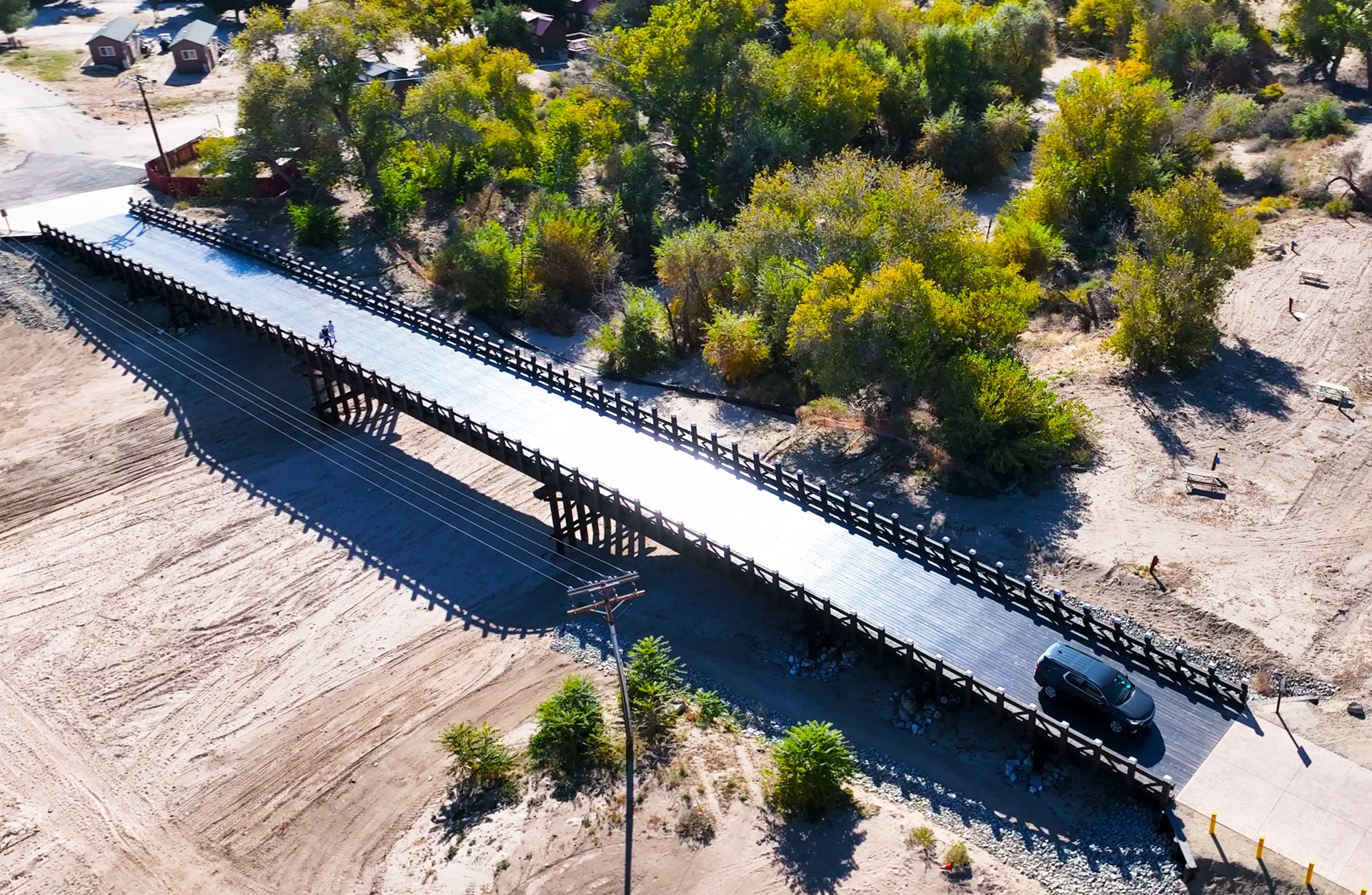
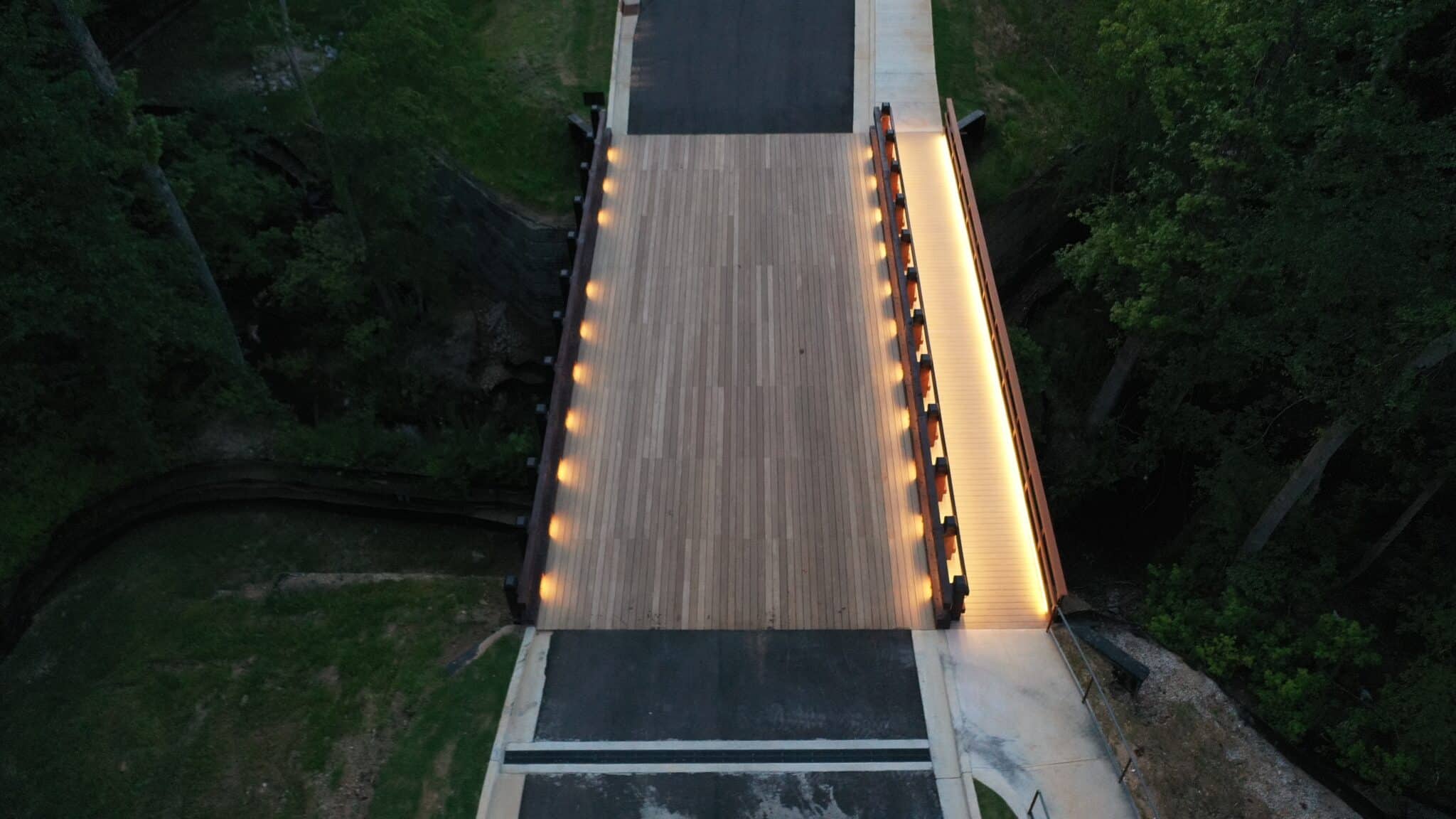
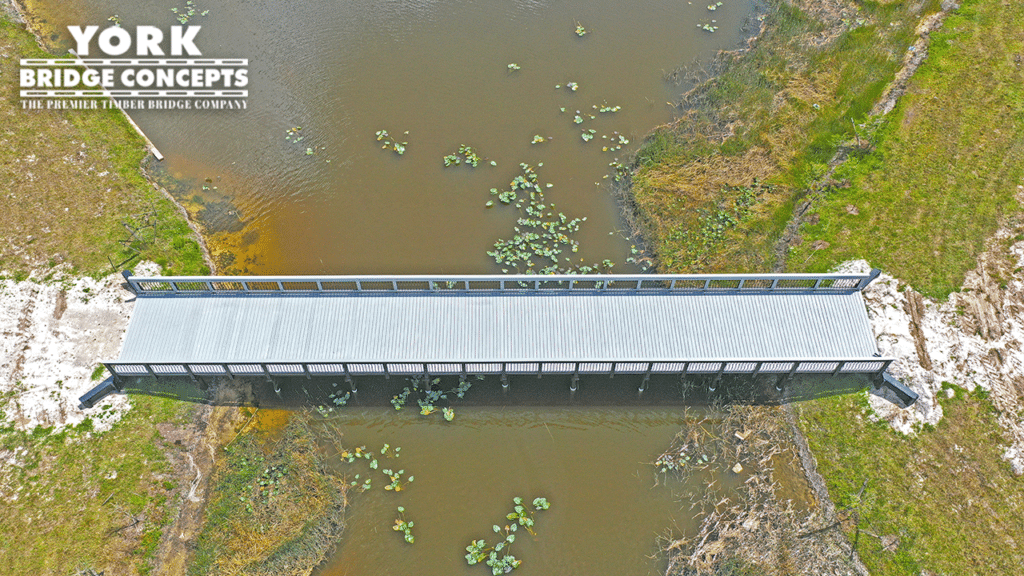
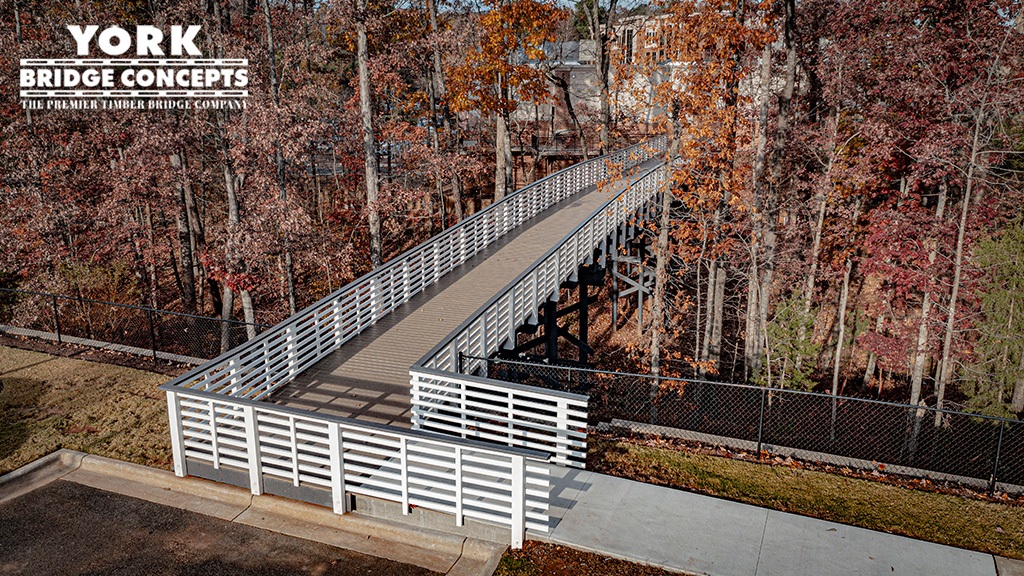
Overhead View Emergeortho Medical Offices Long pedestrian bridge. Raleigh, NC

EmergeOrtho Pedestrian Bridge, Raleigh, NC

A Legacy Series timber-and-composite crossing by York Bridge Concepts

The EmergeOrtho pedestrian bridge in Raleigh, North Carolina, is a purpose-built connection that turns everyday circulation into a confident, campus-caliber experience. Designed and built by York Bridge Concepts (YBC), this crossing belongs to YBC's Legacy Series--a design lineage known for its timeless lines, warm timber textures, and durable composite components that perform under heavy use and changing climates.

Spanning 149 feet in a repetitive-span configuration and rising approximately 25 feet above a ravine, the bridge links a designated parking area to the primary EmergeOrtho campus. In practical terms, the bridge shortens the "last-100-yards" journey for patients, staff, and visitors; in design terms, it establishes a visual rhythm that echoes the clean, contemporary architecture of the EmergeOrtho complex.

At its core, the structure pairs a Southern Yellow Pine (SYP) timber substructure--engineered for strength, resilience, and constructability--with Legacy Design composite decking and handrails. A horizontal picket railing provides a refined yet highly functional guard system, aligning with campus aesthetics while delivering superior grip, visibility, and safety.

Internal links for deeper context and YBC’s methodology:
Design-Engineer-Build Process
Deck-Level, Top-Down Bridge Construction
Decero™ Bridge Design
Crossing Environments

Specifications


  • Width:
  • 9' 10" (9 '7" clear)
  • Length:
  • 149'
  • Height:
  • 25' above grade
  • Capacity:
  • 85 PSF
  • Construction:
  • Ground Up
  • Span Type:
  • Multiple Span
  • Span Lengths:
  • (8) 10', (1) 50', (1) 14', (1) 4'
  • Material:
  • CCA/CA-C Treated Southern Yellow Pine & Reinforced Polymeric Lumber
  • Foundation:
  • Timber Piles (Acrylic Coated where exposed)
  • Stringers:
  • SYP S4S & Glulam Stringers (Acrylic Coated where exposed)
  • Deck System:
  • 1" Reinforced Polymeric Lumber Deck
  • Handrail:
  • Decero™ Horizontal Rail Design Series
  • Crossing:
  • Flood Plain

New call-to-action

Setting & Purpose

The EmergeOrtho campus serves a steady flow of patients with varied mobility needs, as well as clinicians and staff on precise schedules. Parking efficiency and intuitive wayfinding are not luxuries--they're operational essentials. By stitching a designated parking area directly to the medical campus, the EmergeOrtho pedestrian bridge streamlines arrival and departure, reduces foot traffic conflicts at grade, and gives users a dedicated, ADA-conscious route above a ravine that previously acted as a natural barrier.

This elevated crossing transforms a geographic constraint into a campus feature: movement is guided effortlessly across canopy, light, and shadow; sightlines to building entries remain clear; and pedestrians enjoy security and comfort, separate from vehicular flows.

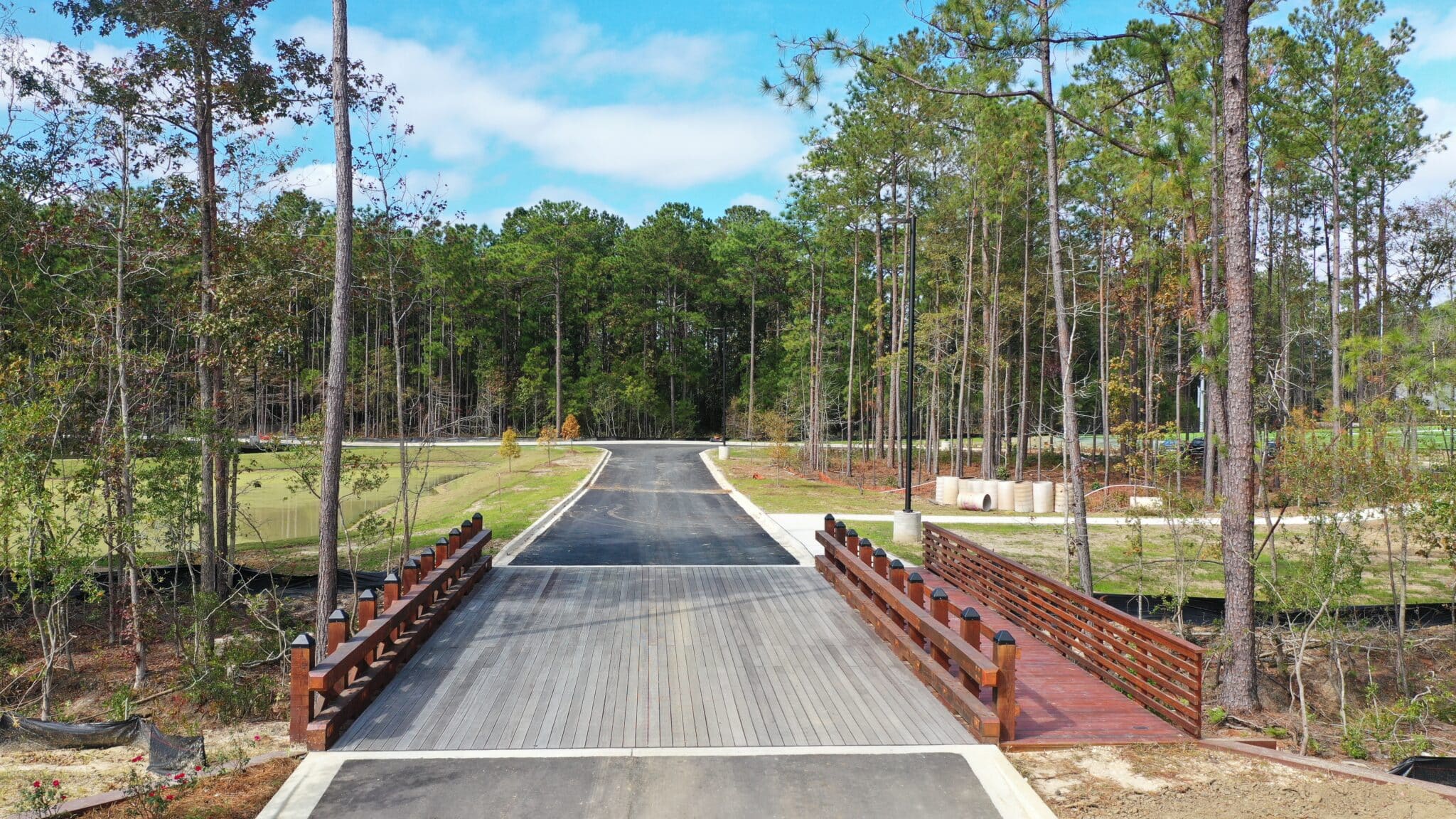
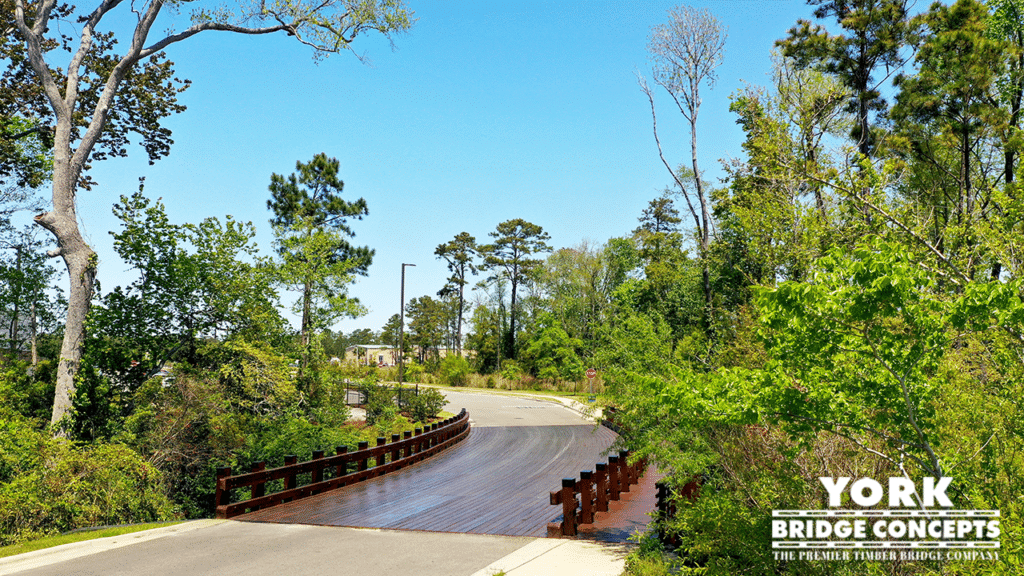
EmergeOrtho pedestrian bridge profile shot built by York Bridge Concepts in Raleigh, NC

Legacy Series: Aesthetic Discipline & Performance

The Legacy Series brings a distinct visual language: soft, linear silhouettes; crisp railing geometries; and tactile material contrasts that age gracefully. In Raleigh, YBC used that language to complement the EmergeOrtho architectural palette--clean facades, modern massing, and a restrained use of accent materials. The bridge's horizontal picket handrail mirrors the campus' horizontal lines, creating visual continuity without demanding attention.

Composite decking within the Legacy framework provides under-foot stability and long-term durability. Its low-maintenance profile is ideal for institutional environments where staff time is better invested in patient care and operations, not routine coatings or replacement cycles. Meanwhile, the SYP timber substructure offers the strength-to-weight ratio, and constructability that YBC's field teams leverage to deliver a clean, efficient build on site.

Image

Structural Strategy: Repetitive-Span Confidence

The crossing's repetitive-span design is a pragmatic, elegant response to a 149-foot total length and the ravine's geometry. Repeating spans:

  • Distribute loads uniformly while maintaining slender, visually calm proportions.
  • Simplify fabrication and installation sequences in the field, making each bay predictable and safer to build.
  • Facilitate inspection and maintenance, because a single detail is repeated across multiple locations.

This approach isn't just economical--it's a design choice that generates rhythm. As users walk the bridge, the sequence of posts and pickets becomes a metronome: steady, legible, reassuring.

Image

Materials That Make A Difference

Southern Yellow Pine Substructure

SYP is valued for its high density and capacity to accept preservative systems, its strength for short-to-medium spans, and its reliable connection behavior. For the EmergeOrtho bridge, SYP forms the primary structural backbone--girders, stringers, and framing that host the deck above. The result is a frame that is resilient, repairable, and designed for long service life when paired with YBC's coatings and detailing.

Legacy Design Composites

Composite decking and handrails deliver slip resistance, dimensional stability, and resistance to moisture-driven movement. In healthcare settings, where patient safety and predictable operations are paramount, composites reduce maintenance cycles and support consistent user experience in Raleigh's warm, humid summers and variable shoulder seasons.

Horizontal Picket Handrail

The handrail's horizontal picket profile provides a crisp line that ties back to EmergeOrtho's architectural language. Engineering-wise, the system delivers code-compliant strength and continuity, with openings carefully controlled for safety while preserving views into the ravine.

EmergeOrtho pedestrian bridge decking and handrails built by York Bridge Concepts in Raleigh, NC

Safety, Accessibility & Code

A healthcare campus prioritizes universal access, and the EmergeOrtho pedestrian bridge was conceived with ADA-conscious grades, level landings per code, and tactile, understandable details:

  • Consistent walking surface with composite deck boards selected for slip resistance.
  • Clear navigation reinforced by railing rhythm and open sightlines.
  • Edge protection and curb details where needed.
  • Balanced lighting strategy (as required by the owner) to support evening use without excessive glare or light spill into the ravine.
EmergeOrtho pedestrian bridge construction by York Bridge Concepts in Raleigh, NC

Construction: Built On-Site, From the Deck Level Down

YBC does not rely on prefabrication yards. Every bridge is built on-site, using methods refined for sensitive environments and active campuses. For the EmergeOrtho project, YBC's field crews implemented construction sequencing aligned with the company's Deck-Level, Top-Down methodology--working from the constructed deck outward and downward to protect the environment and maintain safe access. Where piling is required on similar projects, YBC typically employs a vibratory hammer extension on an excavator to drive pile with speed and precision.

This approach minimizes ground disturbance, reduces heavy equipment travel in sensitive areas, and keeps the site organized--critical for a campus that must maintain normal operations during construction.

Learn more about YBC's field approach:

Image

Detailing for Longevity

Durability is engineered into every interface:

Moisture management

Proper gaps, ventilation strategies, and drip edges keep the deck dry and the substructure ventilated.

Hardware protection

Concealed and coated fasteners reduce exposure and simplify replacement when needed.

Wear Layers

Composite deck surfaces manage abrasion from foot traffic and rolling carts without sacrificing appearance.

Coating Systems

YBC's proven coating protocols for timber elements help lock in performance and color harmony.

The outcome is a bridge that looks "day-one" ready long after commissioning and asks for predictable, low-touch maintenance.

Image

Environmental Sensitivity

Elevating people 25-feet over a ravine also elevates stewardship. The bridge consolidates foot traffic onto a single defined route, protecting vegetation and soil while preventing ad-hoc desire lines that degrade slopes. By crafting a narrow, elegant profile and preserving canopy views, the crossing keeps the ravine's ecological character intact even as it becomes an everyday part of campus life.

For a broader view of how YBC adapts designs to different sites--from wetlands to steep grades--see: Crossing Environments

User Experience: Calm, Readable, Reassuring

Great campus infrastructure removes friction. The EmergeOrtho pedestrian bridge does this in several ways:

  • Predictable rhythm: Repetitive spans and pickets keep visual noise low and wayfinding intuitive.
  • Comfort underfoot: Composite decking dampens harsh vibration and gives a stable, evenly finished walking surface.
  • Visual alignment: The handrail and fascia lines align with building datum lines, making the bridge feel "native" to the site.
  • Sense of openness: Users aren't boxed in; they move through air and view, not shadow and tunnel.

Integration With EmergeOrtho Architecture

An orthopedic facility embodies precision, stability, and care. The bridge borrows the same language: exacting linework, reliable materials, and quiet detailing. The horizontal picket design mirrors architectural horizontally; the Legacy Series rails and deck bring restrained texture that sits comfortably next to metal panel, glass, or masonry. The crossing reads as campus infrastructure, not a utility afterthought.

Operations & Maintenance

A healthcare campus can't pause to repaint every season. The selected composite systems decrease cyclical upkeep, and the STP substructure--with sound detailing and coatings--allows targeted inspections that are easy to plan and schedule. Repetitive spans mean parts are common across bays, simplifying any future component replacement.

YBC's maintenance philosophy is straightforward: engineer durability, then make the inevitable easy. That means access points, replaceable wear components, and clear documentation conveyed at close-out.

Risk Management & Safety During Construction

YBC's field teams built the bridge while respecting the operational rhythms of a healthcare campus. Core practices include:

  • Site logistics that separate construction and public paths, with barricades, signage, and clear communication.
  • Noise and vibration management during working hours.
  • Weather-aware scheduling, especially important given the ravine's hydrology.
  • Quality checkpoints at the conclusion of each step, ensuring that defects never propogate.

Why Timber + Composites for a Medical Campus?

  • Patient-centric comfort: Timber buffers temperature swings and feels visually softer than all-metal systems; composites reduce slip risk and splinter potential.
  • Lifecycle value: Lower routine maintenance, fewer closures, predictable appearance standards.
  • Sustainability posture: SYP is a renewable resource, composite longevity reduces replacement cycles and waste.
  • Design flexibility: Timber framing adapts to site constraints; composites customize surface feel and guardrail performance.

For a look into how YBC orchestrates these decisions from concept to punch list, explore:

Performance in Raleigh's Climate

Raleigh, NC experiences warm summers, freeze-thaw cycles in colder seasons, and occasional heavy rain events. The EmergeOrtho bridge answers these conditions with:

  • Composite deck profiles that manage moisture and maintain traction.
  • Timber substructure detailing that sheds water ad promotes drying.
  • Hardware selection suited to humidity and seasonal salt application on nearby pavements.
  • Thermal movement accommodation at expansion points to protect fit and finish.


Wayfinding & Place-Making

Beyond utility, the bridge is a campus landmark. Its legible geometry, consistent rails, and open views make it a natural wayfinding cue--"cross the bridge to the main entrance." At the same time, thoughtful proportions keep it secondary to the buildings; it supports brand presence without competing with architectural signatures.

Construction Sequencing At A High Level

While every site sequence is tailored, the EmergeOrtho project followed YBC's typical on-site build philosophy:

  1. Mobilization & safety setup: Perimeter controls, signage, and laydown areas established with minimal disruption.
  2. Foundational work & framing: Structural elements installed bent-by-bent, with careful alignment checks.
  3. Deck-level progression: Work proceeds from established deck surfaces, extending outward controlling access and minimizing impact.
  4. Rail installation & detailing: Composite handrails and pickets installed after structural checks, ensuring code-compliant heights and openings.
  5. Quality review & finish: Punch-list items resolved, documentation delivered, and turnover coordinated with campus teams.

For methodology details, see: Deck-Level, Top-Down Bridge Construction


Measuring Success

Success on the EmregeOrtho campus is tangible: safer, faster pedestrian movement; fewer conflicts with vehicles; reliable outdoor access that's as professional as the care inside the buildings. Operationally, facilities teams benefit from predictable maintenance, clear inspection pathways, and a crossing built to perform in Raleigh's conditions.

Sustainability & Stewardship

A resilient bridge reduces replacement cycles, limits materials churn, and protects the landscape beneath. The EmergeOrtho crossing concentrates foot traffic on an elevated corridor, minimizing erosion and habitat disturbances in and around the ravine. Meanwhile, timber's renewable nature and the longevity of composite systems are consistent with a measured, responsible approach to campus infrastructure.

Frequently Asked Questions

How long is the bridge?

The EmergeOrtho pedestrian bridge is 149 feet long, delivered as a repetitive-span system.

How high is it?

Approximately 25 feet above the ravine, giving safe, comfortable clearance and preserving the natural grade below.

What materials are used?

Acrylic coated Southern Yellow Pine substructure paired with Legacy Series composite decking and handrails. The rails use a horizontal picket motif to complement campus architecture. 

Why combine timber and composites?

To balance strength, warmth, constructability, and low maintenance--ideal for a busy healthcare campus with high expectations for reliability.

Was the bridge prefabricated?

No. YBC builds on site, sequencing work to minimize disturbance and maintain quality at each stage.

Closing Perspective

The EmergeOrtho pedestrian bridge is more than a route from Point A to Point B. It's healthcare infrastructure done right--a calm, reliable, architecturally aligned path that supports patient dignity and staff efficiency day after day. By integrating the Legacy Series aesthetic with composite performance and a Southern Yellow Pine structural backbone, YBC delivered a crossing that feels inevitable: exactly where it should be, exactly how it should look, and exactly as it should perform.

For decision-makers seeking similar outcomes--clarity of movement, durable materials, and on-site build that respects operations--YBC's process makes the difference:

All Feature Projects


What's Best: A Culvert Or A Timber Bridge?

Understand the considerations you should make before choosing your crossing method.

What Is The Best Span Type For My Project?

See how creative scoping, design, & usage work to create the perfect spanning solution for your project.

Which Load Capacity I Need?

Understand the different load capacities for usage that are needed for your project.

How Do I Cross An Environmentally Sensitive Area?

Learn how YBC crosses protected areas with our Deck-Level Construction.

How Do I Create A Landmark?

Create a memorable icon for your development project with a YBC Legacy Timber Bridge.

How Long Does A Timber Bridge Last?

Extend the lifespan of your timber bridge to over 75 years using these guidelines, material selection, protection & maintenance practices.


Placeholder Image

Culvert Or Bridge

If you're considering using a culvert for your crossing project. Click below to understand the best fit for your project.

Culvert Or Bridge
Placeholder Image

Spanning Solutions

Spanning a crossing is one of the most important aspects of your crossing project. Find the best solution for your crossing needs.

Spanning Types
Placeholder Image

Uses & Capacities

The load capacity of a timber bridge may surprise you. See specs for different loads and uses that will help your decision-making process.

Bridge Loads & Usages