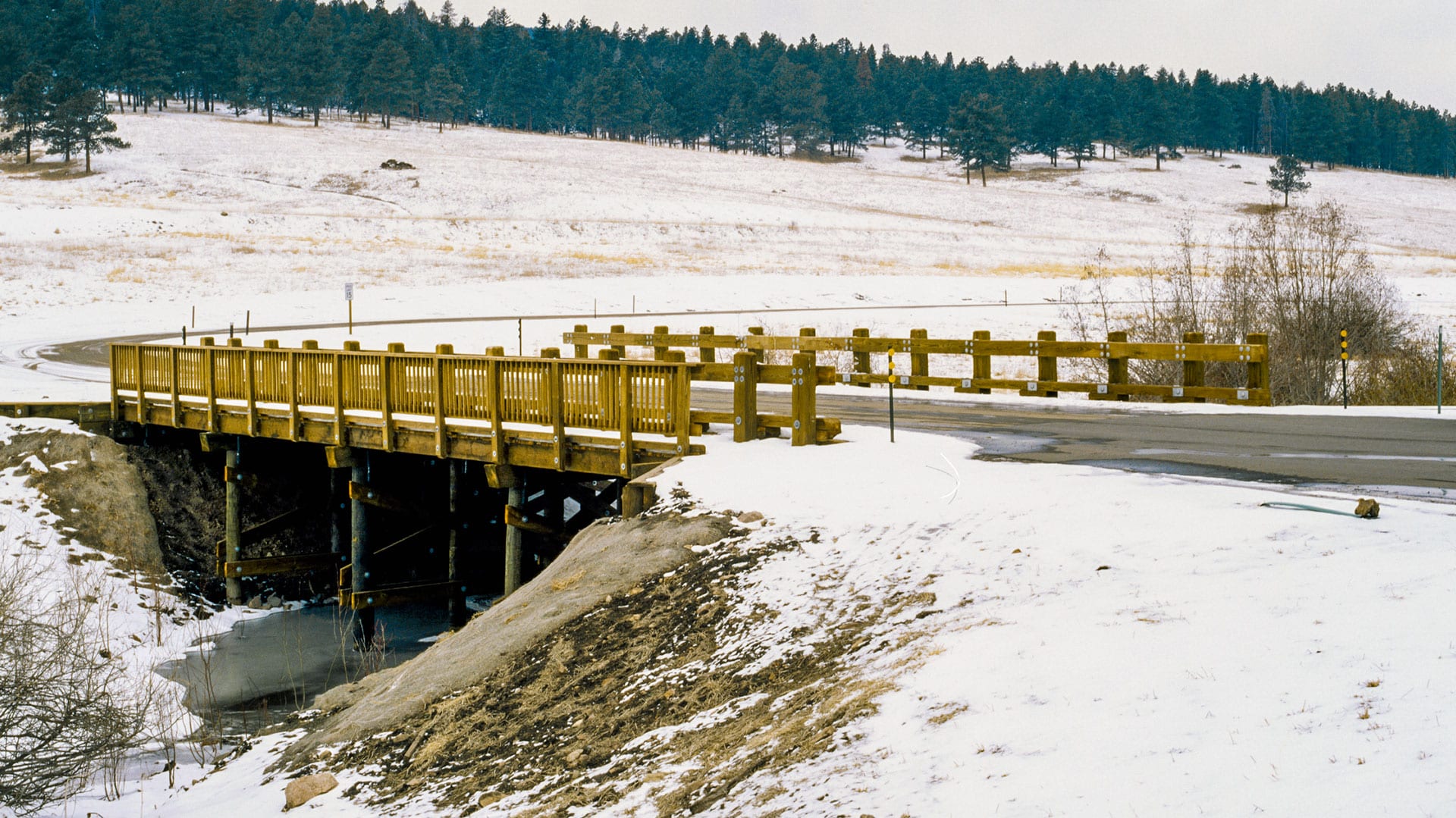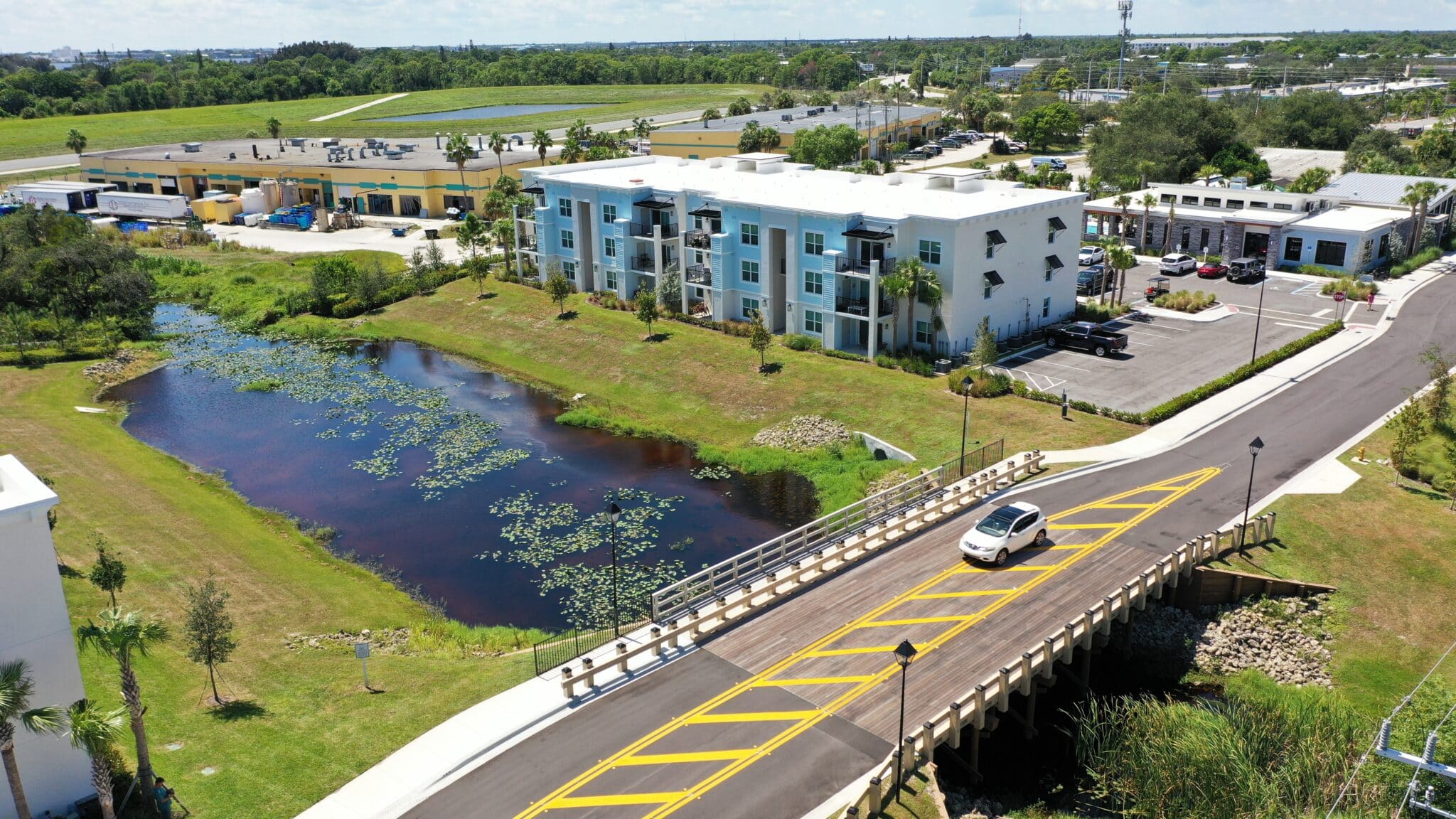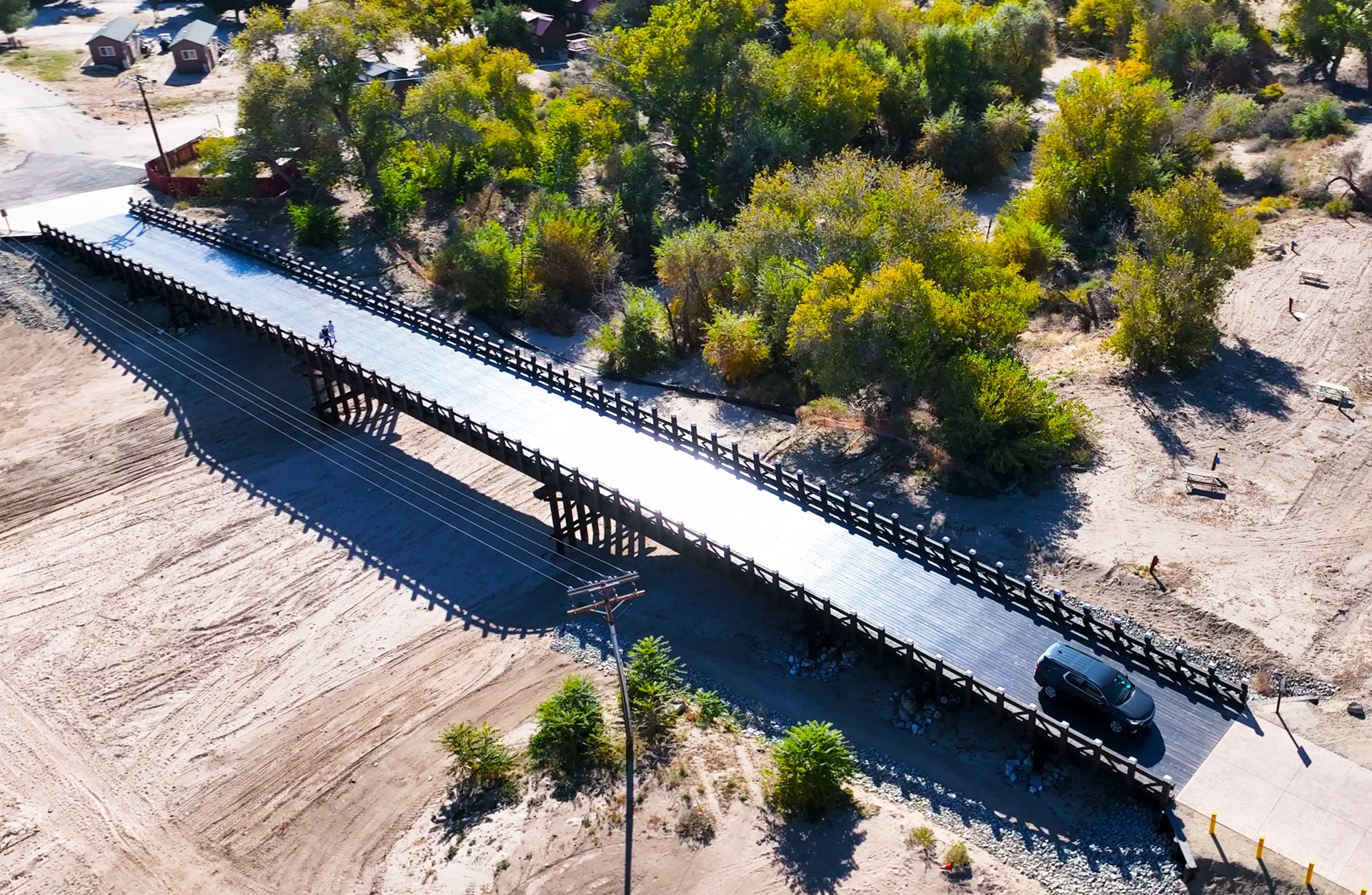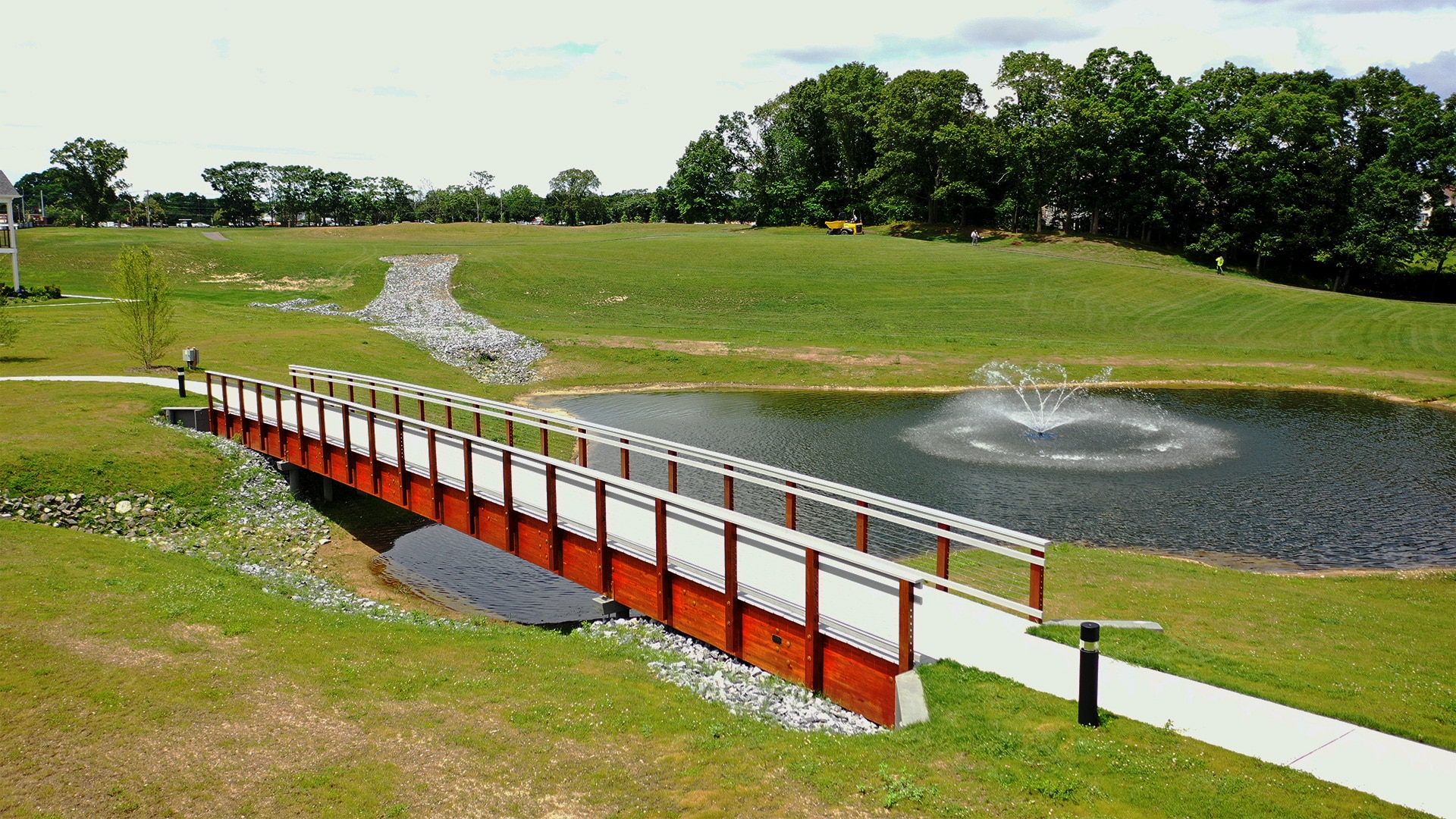
Cassique at Kiawah Island Trail Bridge
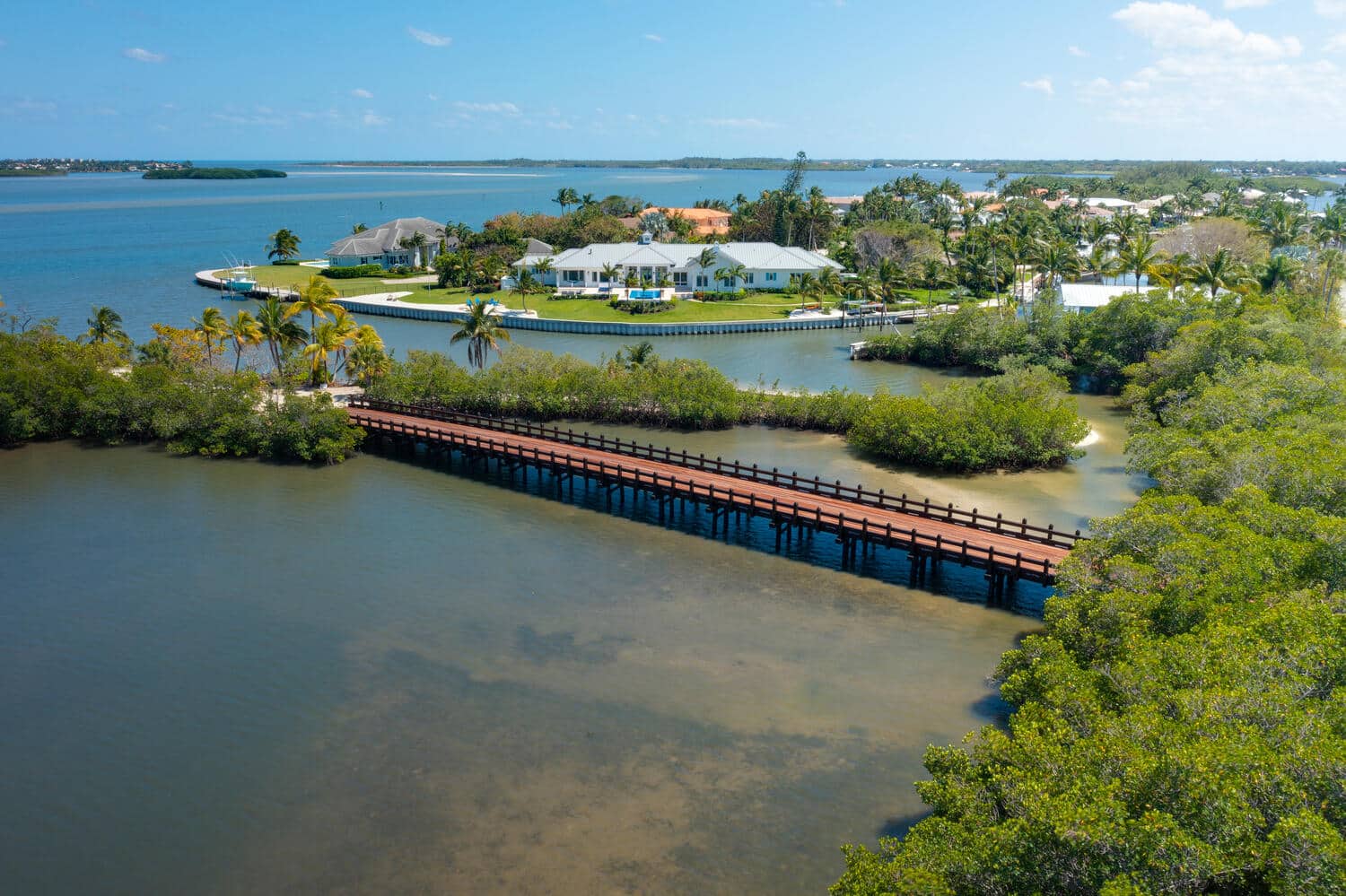
Kiawah Island, a barrier island located 15 miles south of Charleston, South Carolina, is renowned for its pristine beaches, world-class golf courses, and commitment to preserving its natural beauty. To further enhance the island's appeal and accessibility, York Bridge Concepts (YBC) partnered with Kiawah Island Ocean Park to design and construct three bridges: the 70-foot Cassique bridge, a 50-foot pedestrian bridge, and a 30-foot bicycle bridge. These structures not only improve connectivity but also align with the island's dedication to sustainable development.
Overview of the Kiawah Trail Bridge Project
Cassique Bridge
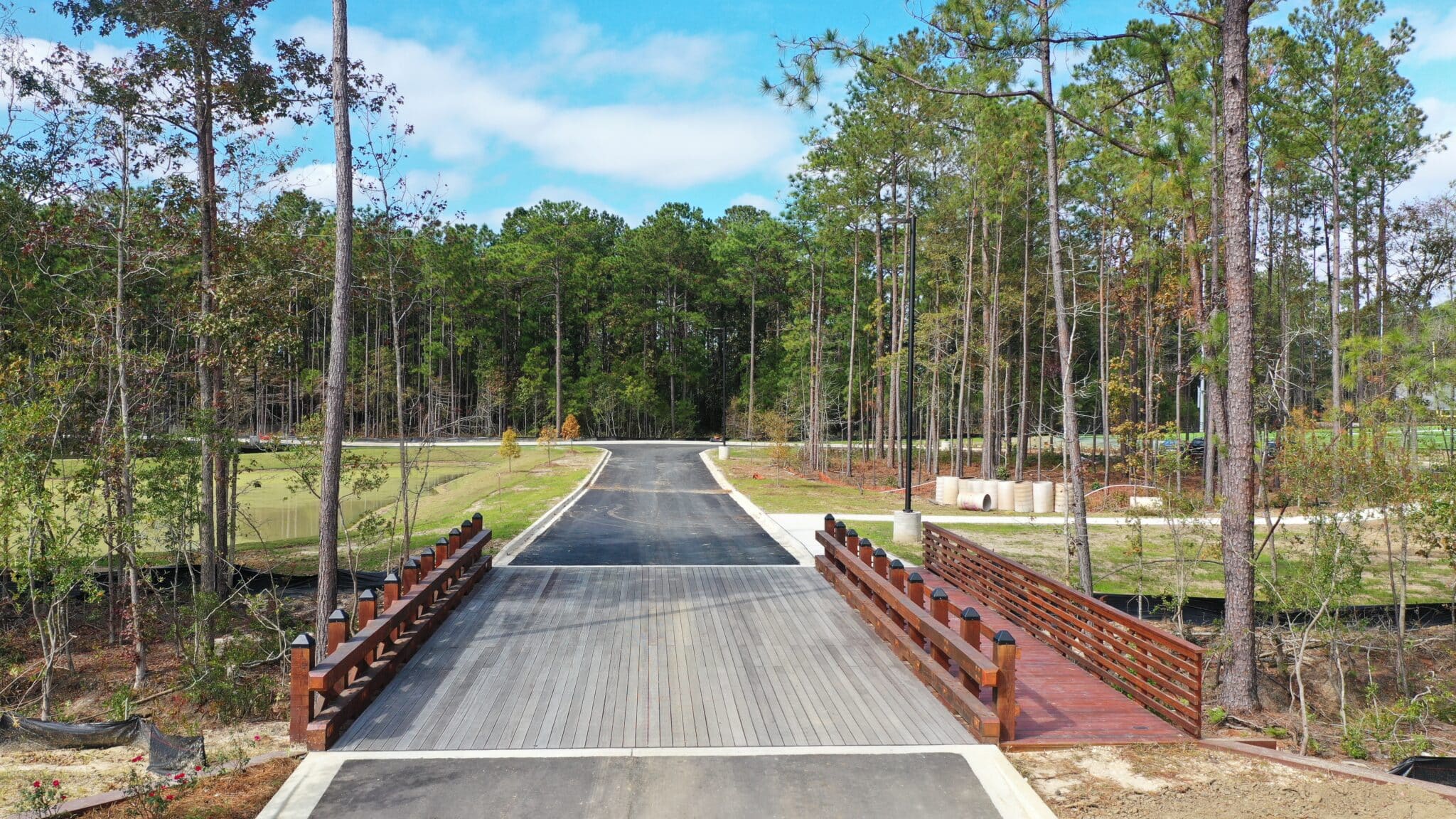
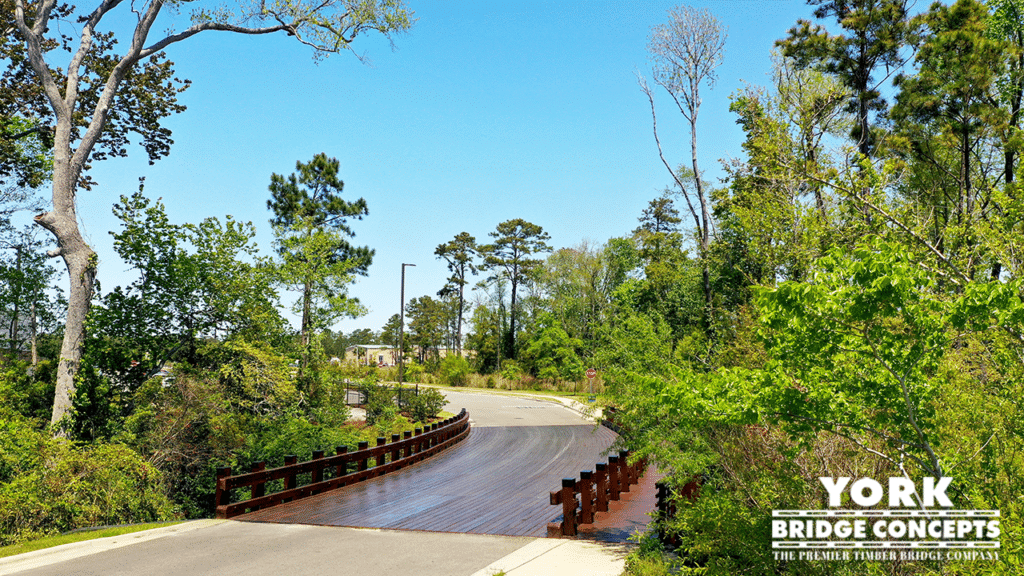
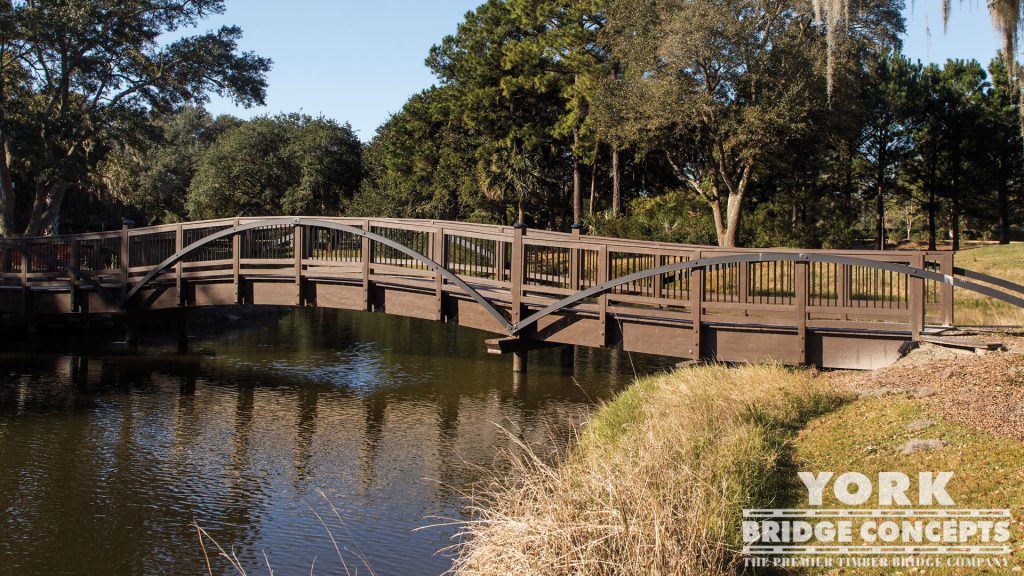
The Cassique bridge, spanning 70 feet, serves as a vital connection within the community, known for its luxurious homes and the Cassique Golf Course. This timber bridge enhances accessibility while maintaining the area's aesthetic harmony.
Pedestrian Bridge
The 50-foot pedestrian bridge offers residents and visitors a safe and scenic rout through Kiawah Island's lush landscapes. Designed with sustainability in mind, it complements the island's extensive network of walking trails.
Bicycle Bridge
The 30-foot bicycle bridge integrates seamlessly into Kiawah Island's 30 miles of paved bike trails, providing cyclists with a dedicated crossing that promotes eco-friendly transportation and recreation.
Cassique Pedestrian Bridge
- Width:
- 6’ (5’ Clear)
- Length:
- 70’
- Height:
- 10' above grade
- Capacity:
- 100 PSF
- Construction:
- Deck Level
- Span Type:
- Multiple Span
- Span Lengths:
- (1) 30’, (4) 10’
- Material:
- CCA/CA-C Treated Southern Yellow Pine
- Foundation:
- Timber Piles & Abutments (Acrylic/Polymer Coated where exposed)
- Stringers:
- SYP Glulam Stringers (Acrylic/Polymer Coated where exposed)
- Deck System:
- 1-½” Timber Deck
- Handrail:
- Decero™ Metal Picket Design Series
- Crossing:
- Lake
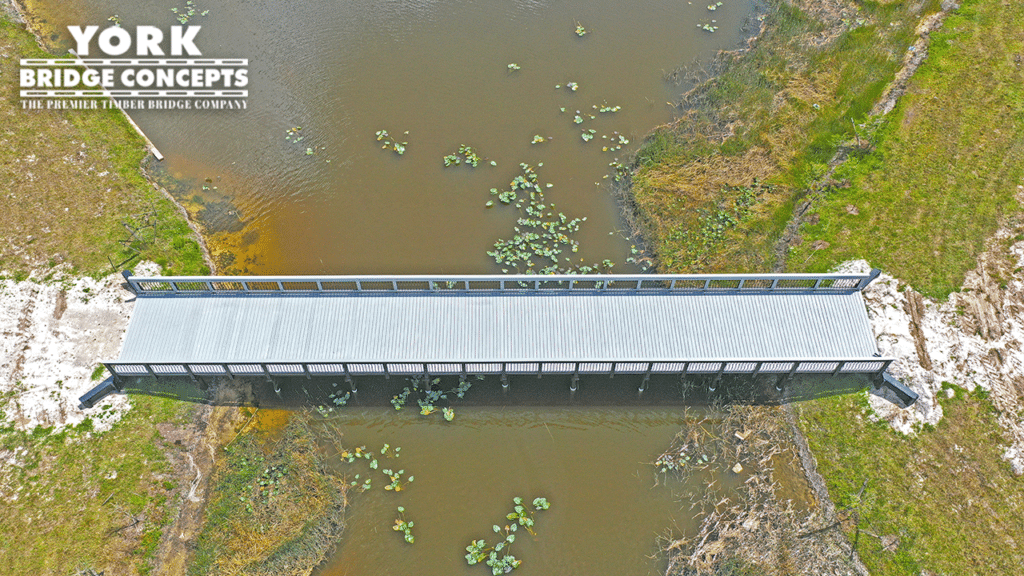
Ocean Park Pedestrian Bridges
- Width:
- 6’ (5’ Clear)
- Length:
- 50’
- Height:
- 6' above grade
- Capacity:
- 100 PSF
- Construction:
- Deck Level
- Span Type:
- Repetitive Span
- Span Lengths:
- 10'
- Material:
- CCA/CA-C Treated Southern Yellow Pine
- Foundation:
- Timber Piles & Abutments (Acrylic/Polymer Coated where exposed)
- Stringers:
- SYP S4S Timber Stringers (Acrylic/Polymer Coated where exposed)
- Deck System:
- 1-½” Timber Deck
- Handrail:
- Decero™ Wire Rope Design Series
- Crossing:
- Lake
Project Setting, Purpose, & Performance Goals
The Cassique at Kiawah Island trail bridge program was conceived to do more than span water and marsh: it was designed to knit together daily life, recreation, and conservation in a way that feels effortless to residents and visitors. The 70-foot Cassique bridge, 50-foot pedestrian bridge, and 30-foot bicycle bridge form a connected trio of crossings that shorten travel time between neighborhoods, trailheads, and amenities while preserving the quiet, low-impact character for which Kiawah Island is known.
From the outset, the project team set clear goals:
- Protect the island's ecology. Minimize in-water work and root-zone disturbance, avoid unnecessary clearing, and maintain natural hydrology across wetlands and drainageways.
- Elevate trail user experience. Deliver comfortably wide approaches, intuitive sightlines, and tactile surfaces that feel stable underfoot and under tire in both sunny and salt-mist conditions.
- Design for the coast. Anticipate salt spray, elevated humidity, UV exposure, and storm events with materials, coatings, and details proven in maritime settings.
- Extend service life and reduce lifecycle cost. Favor systems that are inspectable and maintainable with predictable intervals, and that are readily serviceable without heavy temporary works.
- Blend, don't impose. Align the bridges with existing trail geometry, select colors and timber tones that harmonize with marsh grass and live oaks, and keep profiles slender to maintain views.
Site Context & Alignment
Kiawah's trails weave through a mosaic of freshwater ponds, tidal channels, and maritime forest. The three crossings respond to this diversity:
- Cassique Bridge (70 ft): Sited to provide a clean, efficient span where trail grades are gentle, the alignment minimizes approach fills and preserves mature canopy. Abutment locations were chosen to keep foundations out of sensitive wet areas as feasible, helping maintain natural water movement and fish passage.
- Pedestrian Bridge (50 ft): Placed to convert a previously indirect route into a direct, scenic link. The setting prioritizes access to nearby walkways and overlooks without introducing new clearings.
- Bicycle Bridge (30 ft): Calibrated to the rhythm of the island's paved network. The short, nimble span provides safe separation at a pinch point while keeping cyclists moving at comfortable, controlled speeds.
Comfort, Quiet, & Quality of Movement
The bridges create a smoother, more serene experience. Gentle approach grades reduce effort for walkers, runners, strollers, and bikes. Transition zones are designed to be perceptually clear--subtle changes in decking orientation, texture, and edge detailing cue users that they're entering a crossing. Rail heights and infill are tuned to preserve expansive views across water while providing secure edge protection.
A Coastal Aesthetic
Timber's natural grain reads as part of the landscape rather than an overlay on it. Finishes and accents were selected to complement the island's palette: marsh greens, dune tans, weathered grays, and the warm amber-brown spectrum of finished Southern Yellow Pine. Hardware is discreet, lines are lean, and the overall composition feels handcrafted but clean--timeless rather than trendy.
Sustainable Design & Construction of the Kiawah Trail Bridge Project
York Bridge Concepts specializes in creating bridges that blend functionality with environmental stewardship. Using renewable resources offers a lower carbon footprint compared to alternative construction materials. YBC's commitment to sustainability is evident in their use of responsibly sourced materials, designs and construction that minimize ecological disturbance.
These bridges are constructed using YBC's proprietary Decero™ Design Studio, Design-Engineer-Build process, ensuring each structure is tailored to its specific location and purpose. This approach allows for the preservation of natural landscapes while providing durable and aesthetically pleasing infrastructure.
The Decero™ Design-Engineer-Build Approach in Practice
York Bridge Concepts' Decero™ methodology begins with a blank canvas and ends with a tailored structure whose performance, constructability, and look are tuned to the exact site. For Kiawah Island, the process unfolded through four integrated lenses:
- Discovery & Criteria Setting - Understanding hydrology, soils, wind exposure, expected pedestrian and bicycle volumes, and maintenance access. In coastal settings, YBC also evaluates salt exposure, splash/spray zones, and potential for wind-borne debris during storm events.
- Concept & Alignment - Evaluating span length, deck width, profile, and abutment type against site constraints. Alignments are iterated to preserve canopy and views, reduce approach grading, and maintain natural drainage.
- Detailing for Durability - Selecting materials and connection details that resist moisture intrusion, UV, and corrosion. Load paths are simplified; water sheds off the structure; and inspection access is built in.
- Construct for Stewardship - Deck-Level (top-down) construction techniques minimize ground disturbance, and staging plans reduce time spent near water and root zones.
Materials That Work for the Cost
- Structural Timber: Pressure-treated Southern Yellow Pine glulam and dimensional components provide strength-to-weight efficiency and a warm appearance. Treatment levels are specified for coastal environments, with incising patterns that promote deeper, more uniform preservative penetration where appropriate.
- Decking Option: Where owner preferences and use cases call for it, composite or polymer-enhanced decking delivers slip resistance and colorfastness under high UV and salt exposure. Where natural timber decking is selected, wear layers and coating systems are chosen for salt-air performance and straightforward maintenance.
- Hardware & Fasteners: Marine-grade stainless steel or hot-dip galvanized hardware (selected by exposure zone) reduces corrosion risk. Hidden-fastener strategies and countersunk fixings protect users and limit moisture traps.
- Coatings & Finishes: UV-stable coatings and oil-stained systems are selected to complement the site palette while protecting timber against checking and moisture cycling. Finish schedules anticipate the island's seasonal weather patterns.
Deck-Level (Top-Down) Construction to Protect Sensitive Areas
Working from the structure itself as it is erected, YBC's Deck-Level approach reduces the need for access roads, temporary fills, and heavy equipment near wetlands. Advantages include:
- Smaller footprint: Less ground pressure and fewer temporary works within the critical root and hydrology zones.
- Cleaner hydrology: Minimizes turbidity and sedimentation risks.
- Faster, quieter installation: Shorter on-site windows shrink the project's environmental footprint and community impact.
- Safer access for crews: Elevated working platforms and organized, sequential lifts improve safety and quality control.
Structural Philosophy & Criteria
YBC designs to applicable AASHTO guidelines for pedestrian and shared-use trail bridges and meets local code requirements. For trail bridges, this typically includes pedestrian live-load criteria and serviceability limits (deflection and vibration) that ensure the deck feels solid underfoot and under tire. Railing systems are detailed to meet guard requirements while preserving open sightlines over water.
Load paths are simplified to support quick drainage and easier inspection--connections are accessible, water-shedding bevels are integrated at cap and deck interfaces, and surface transitions are free of abrupt steps or trip points. Bearings and seat details are proportioned for coastal expansion/contraction and to resist uplift and lateral loads associated with storm winds.
Accessibility, Inclusivity, and Human Factors
Timber warmth and visual clarity support wayfinding and comfort, but inclusive design goes deeper. Approach geometry supports accessible grades and landing intervals per governing standards; transitions from trail pavement to bridge decking are flush and smooth; and handrail profiles are graspable without snag points. The result is an experience that works for kids on balance bikes, parents with strollers, older adults, and everyday walkers and runners alike.
Lighting, Wayfinding, and Nighttime Ambience
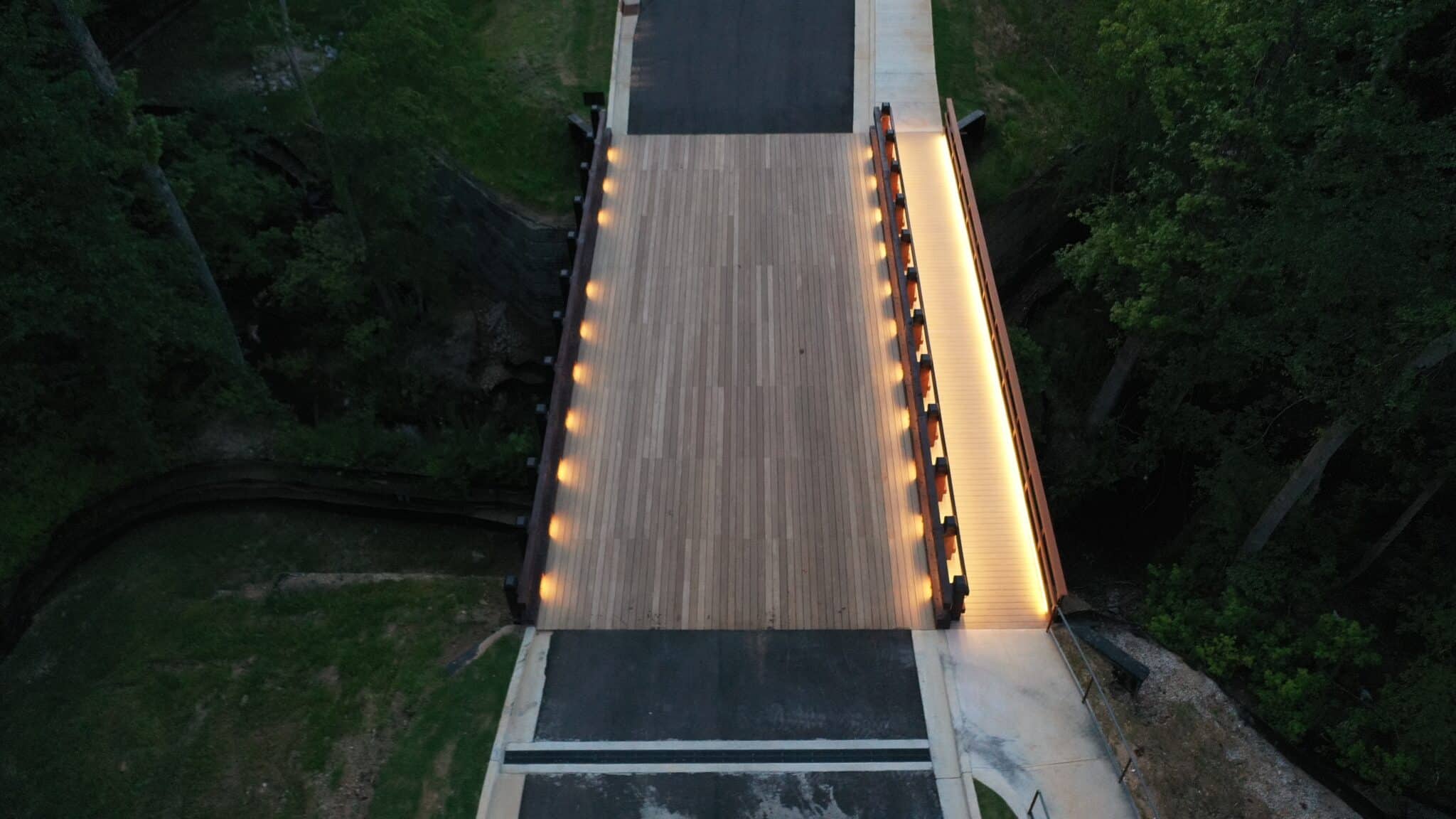
Where lighting is desired, YBC integrates low-glare, shielded fixtures positioned to protect wildlife while providing adequate vertical and horizontal illuminance for users. Embedded or under-rail lighting avoids sky glow, preserves dark-sky character, and reduces driver distraction where trails approach roads. Wayfinding touches--subtle post caps, discreet plaques, or etched markers--help users orient without cluttering the landscape.
Detailing for Long Life
- Moisture Management: Drip edges, kerfs, and water-shedding bevels are built into stringer and cap profiles.
- Ventilation: Gaps and profiles allow air circulation around members to shorten wet-dry cycles.
- Replaceability: Wear-surface components are designed for simple, single-board replacement without dismantling large sections of the deck.
- Inspection Access: Open under-deck lines of sight make it easy to verify condition during routine checks, reducing the cost and disruption of inspections.
Enhancing Eco-Tourism & Community Connectivity
Kiawah Island's dedication to eco-tourism is reflected in tis extensive trail systems and conservation efforts. The addition of these bridges by YBC enhances the island's appeal to nature enthusiasts and promotes sustainable tourism.
By improving access to various parts of the island, these bridges encourage residents and visitors to explore Kiawah's natural beauty without relying on motorized vehicles. This not only reduces traffic congestion but also aligns with the island's goal of minimizing environmental impact.
Experience Design: What Trail Users Feel
When a bridge "disappears," the user experience is successful. On Kiawah Island, the bridges feel intuitive because the cue the body and eye at the right moments:
- Approach Readability: Slight textural changes at the first few feet of decking help walkers and cyclists sense the change in surface.
- Edge Comfort: Rail height, thickness, and the spacing of infill elements are tuned so the edge feels protective without obstruction panoramic views of water and sky.
- Acoustic Calm: Timber decking softens footfall and tire noise, preserving the island's quiet soundscape.
- Thermal Comfort: Decking choices and color values keep surface temperatures manageable in the coastal sun.
Safety by Design
Safety is embedded in geometry and detail, not bolted on later. Approaches meet at gentle angles to preserve sightlines; rail returns and end treatments prevent snagging or handlebar catch; hardware is recessed; and transitions are flush so stroller wheels and bicycle tires roll smoothly. Where trail intersections are nearby, sight triangles are evaluated to ensure users can anticipate each other well in advance.
Habitat Awareness and Wildlife Sensitivity
Kiawah's wildlife--wading birds, fish, turtles, deer--shape how infrastructure is placed and detailed. Bridge heights preserve light and water movement under spans. Construction staging avoids breeding seasons when feasible. Night lighting, if used, is shielded and tuned to reduce impact on nocturnal species. The result is infrastructure that participates in the ecosystem rather than fragmenting it.
Community Wellness and Low-Carbon Mobility
Every resident trip successfully shifted from a vehicle to a walk or ride compounds benefits: lower emissions, quieter neighborhoods, and healthier daily routines. By tightening the network, these bridges make "the long way around" obsolete and turn a quick walk or bike ride into the default choice.
Coastal Resilience, Lifecycle Value, & Maintainability
Designing for the coast is as much about what happens in year fifteen as it is about day one. The Kiawah Island bridges incorporate a suite of strategies that make long-term stewardship straightforward and budget-friendly.
Built-in Resilience
- Foundations & Abutments: Selected for performance in coastal soils and designed to handle scour, uplift, and lateral loads from wind events. Where feasible, foundations are kept out of wet zones to reduce long-term exposure.
- Redundancy in Connections: Critical connections are detailed with conservative fastener schedules and corrosion-resistant systems appropriate to salt exposure.
- Storm Readiness: Open railing and superstructure profiles reduce drag during high-wind events. Drainage paths are unobstructed so wind-driven rain does not pond on the deck.
Finish Systems & Renewal Cycles
Coating systems are chosen with re-coat intervals in mind. In practice, this means using finishes that can be cleaned and renewed without stripping the structure back to bare timber. Where composite decking is used, colorfast, slip-resistant profiles reduce maintenance while maintaining the visual warmth and texture that harmonize with the site.
Inspection & BridgeCare™ Maintenance Planning
Predictable maintenance is affordable maintenance. Routine visual inspections check the condition of coatings, hardware, and wear surfaces. Because members are accessible, small preventative actions--tightening a fastener, renewing a sealant at a drip edge, cleaning a scupper--extend the life of the whole system. Where owners engage YBC's maintenance planning, the bridge receives a simple, scheduled regimen aligned with coastal cycles.
Lifecycle Carbon and Timber's Natural Advantage
Timber stores carbon absorbed during tree growth, and responsibly sourced wood can provide a lower embodied-carbon profile compared to many conventional materials. By designing slender, efficient members, detailing for longevity, and enabling maintenance that avoids major component replacements, the bridges carry their environmental benefits forward over decades of service.
Constructability = Less Impact + Higher Quality
YBC's construction sequencing emphasizes clean, repeatable steps. Members are pre-cut and pre-drilled to control tolerances; connection points are verified prior to lift; and components are set from the deck as the build progresses. This approach reduces time spent in sensitive zones and produces precise fit-ups that keep water out and coatings intact.
Aesthetic Coherence Across Three Different Spans
Creating a family resemblance without forcing uniformity is a hallmark of thoughtful design. The Kiawah trio shares a vocabulary--slender rails, well-proportioned posts, and a neutral, coastal-appropriate finish--while each span responds to its exact place. The result is a system that looks like it grew there.
Collaborating For Success
The collaboration between York Bridge Concepts and Kiawah Island Ocean Park exemplifies how thoughtful design and sustainable construction can enhance a community's infrastructure while preserving its natural charm. The Cassique, pedestrian and bicycle bridges serve as models for integrating functionality, aesthetics, and environmental responsibility.
As Kiawah Island continues to prioritize eco-friendly development, these bridges stand as enduring symbols of the island's commitment to connecting people with nature in a sustainable manner.
Outcomes & Community Benefits
Together, the bridges deliver practical and cultural value:
- Shorter, safer trips between neighborhoods, amenities, and overlooks.
- Gentle grades and clear sightlines that invite use by all ages and abilities.
- Sensitive siting that preserves hydrology, vegetation, and views.
- Materials and details tuned for salt air, sun, and storms to extend service life.
- A cohesive identity--recognizably Kiawah--achieved with timber warmth, restrained hardware, and quiet lighting.
At-A-glance Technical Profile
- Bridge Types: Timber trail bridges for pedestrian and bicycle use.
- Span Lengths: Approximately 70 ft (Cassique), 50 ft (pedestrian), 30 ft (bicycle).
- Primary Materials: Pressure-treated structural timber; composite/timber decking as selected; marine-appropriate hardware/fasteners.
- Design Approach: Decero™ Design-Engineer-Build; Deck-Level (top-down) construction.
- Performance Consideration: Applicable guidelines for pedestrian/shared-use bridges; coastal durability; accessibility; maintainability; inspection access.
- Environmental Measures: Minimized footprint in sensitive areas; lighting options designed for dark-sky sensitivity.
Owner & Operator Considerations
- Ease of Upkeep: Replaceable wear surfaces, accessible fasteners, and open under-deck lines of sight simplify routine care.
- Predictable Costs: Clear finish renewal cycles and straightforward inspection points help owners plan maintenance budgets years in advance.
- Community Satisfaction: A bridge that looks good and feels good to use tends to be used more, improving the return on investment measure in trips shifted from cars to trails.
Frequently Asked Questions
How do timber bridges hold up in a coastal environment?
Timber performs very well when detailed and protected correctly. For Kiawah, preservative treatment, marine-appropriate hardware, UV-stable coatings, and water-shedding profiles are combined to limit moisture cycling and corrosion. Routine, predictable care keeps components in top condition over a long service life.
Will the bridges require disruptive maintenance?
Maintenance focuses on cleaning, finish renewal, and periodic fastener checks--tasks that can be scheduled during low-use periods. Wear surfaces are replaceable board-by-board, so work areas stay small and contained.
Are the bridges accessible for all users?
Yes. Approach grades, transitions, and handrail profiles are designed to meet governing accessibility requirements for shared-use trails. Flush deck interfaces and smooth transitions support strollers, mobility devices, and bicycles.
How do the bridges protect habitat and water quality?
Siting avoids unnecessary clearing and in-water work. Deck-Level construction reduces ground disturbance, and the structural profiles maintain light and water movement beneath the spans. Erosion control is maintained throughout construction and removed once vegetation stabilizes.
What happens during storms?
Details anticipate wind, rain, and spray. Open rail profiles reduce wind loads; drainage paths keep water moving; and corrosion-resistant fixings are specified according to exposure. After major events, inspections verify condition and any required touch-ups are performed quickly.
Can finishes be refreshed without stripping the entire bridge?
Coating systems are selected so crews can clean and re-coat in place. This limits disruption and cost while keeping protection continuous.
Why choose timber over other materials for these spans?
For modest spans in sensitive environments, timber offers an excellent strength-to-weight ratio, warm aesthetics that blend with the landscape, and lower embodied-carbon profile compared to many alternatives. With the right detailing and maintenance plan, it delivers superior lifecycle value.
How was construction access managed without damaging trails?
By sequencing from the bridge deck as it was erected, crews minimized the need for heavy equipment near wetlands or root zones. Temporary staging was limited and removed promptly, and disturbed areas were restored.
Do the bridges include lighting?
Where lighting is desired, it is designed to be low-glare and shielded, preserving dark-sky conditions and wildlife behavior. Many trail contexts on Kiawah function beautifully without added light; decisions are made site-by-site.
How do these bridges contribute to eco-tourism?
They create continuous, scenic loops that invite people to explore by foot or bike, reducing vehicle dependence and enhancing the island's reputation as a nature-forward destination.
Looking Ahead
The Cassique, pedestrian, and bicycle bridges demonstrate how small, well-placed pieces of infrastructure can have outsized impact on mobility, wellness, and environmental quality. As Kiawah Island continues to invest in its trail network, these crossings offer a replicable model: align sensitively, detail for the coast, construct with a light touch, and maintain with intention. The result is durable beauty that serves people and place in equal measure.
All Feature Projects
What's Best: A Culvert Or A Timber Bridge?
What Is The Best Span Type For My Project?
Which Load Capacity I Need?
How Do I Cross An Environmentally Sensitive Area?
How Do I Create A Landmark?
How Long Does A Timber Bridge Last?
Culvert Or Bridge
If you're considering using a culvert for your crossing project. Click below to understand the best fit for your project.

Spanning Solutions
Spanning a crossing is one of the most important aspects of your crossing project. Find the best solution for your crossing needs.

Uses & Capacities
The load capacity of a timber bridge may surprise you. See specs for different loads and uses that will help your decision-making process.