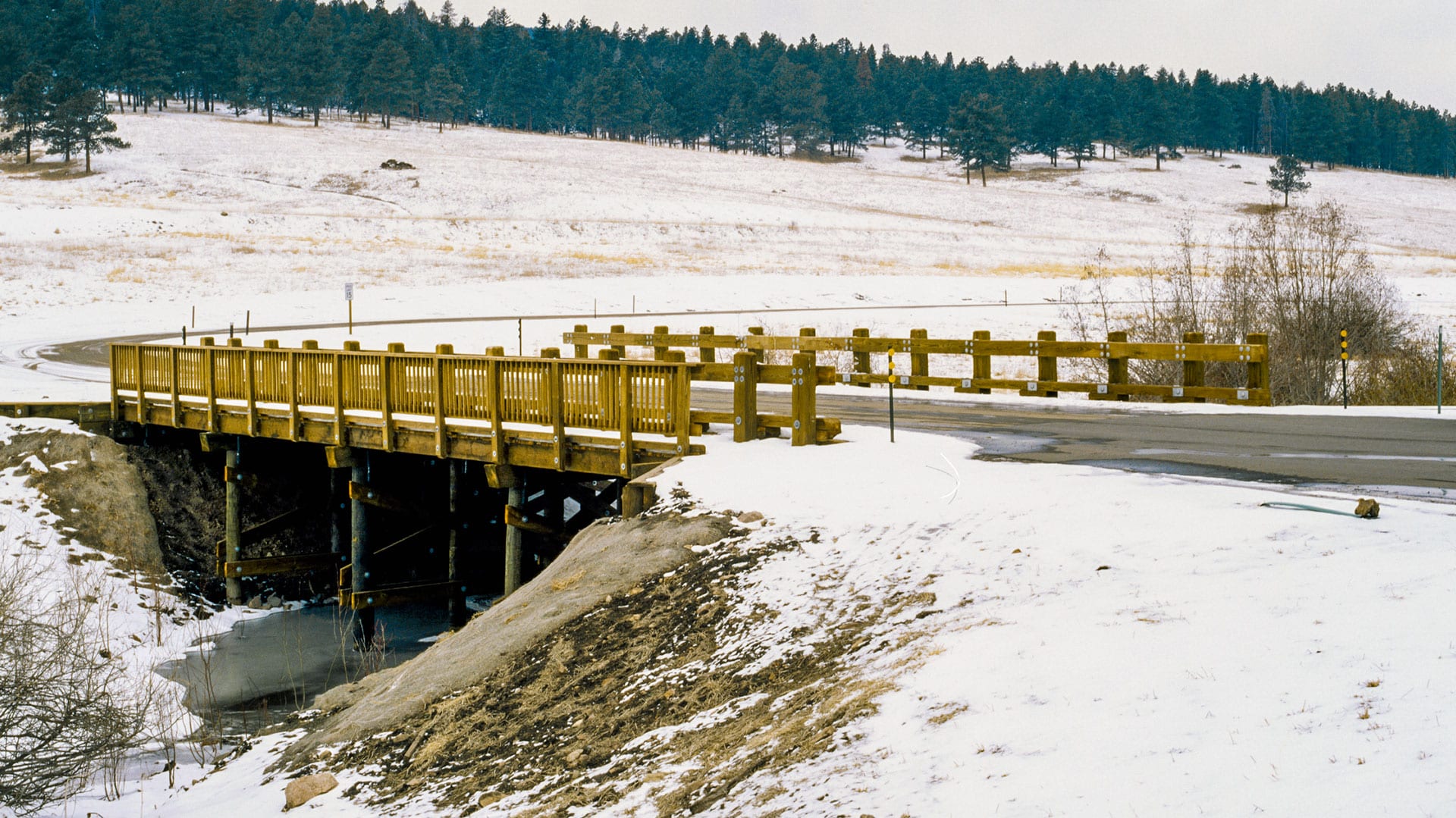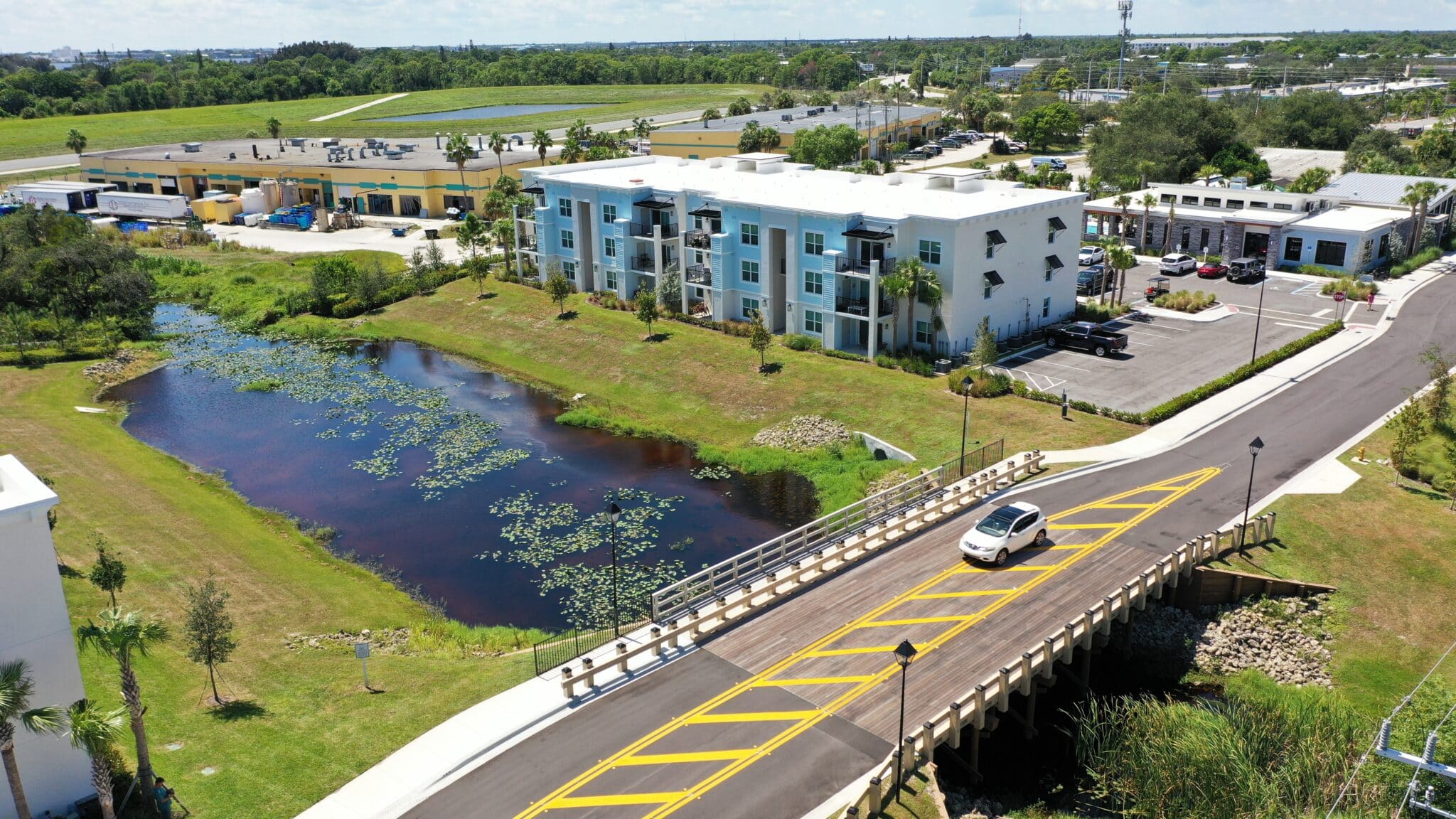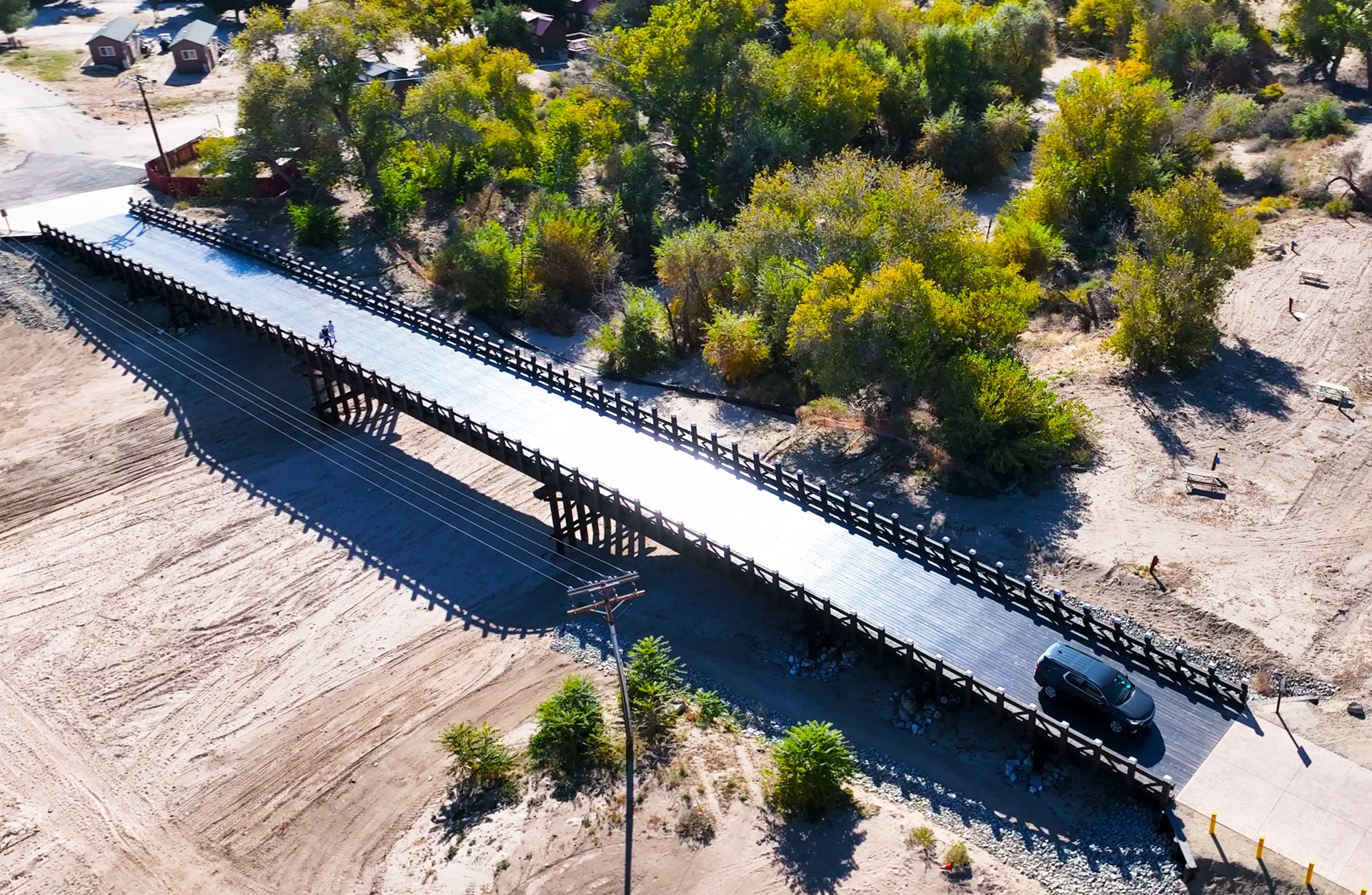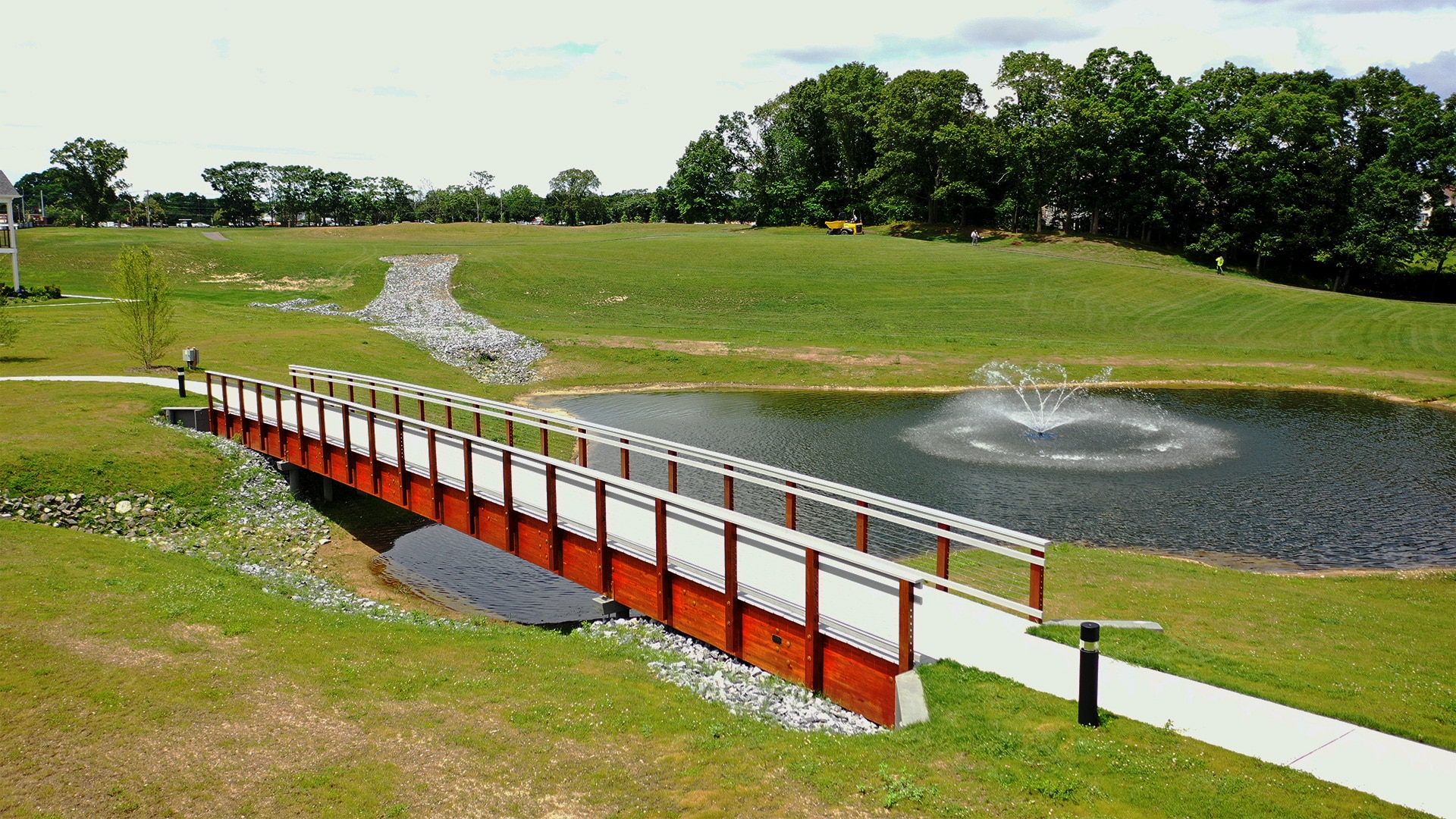
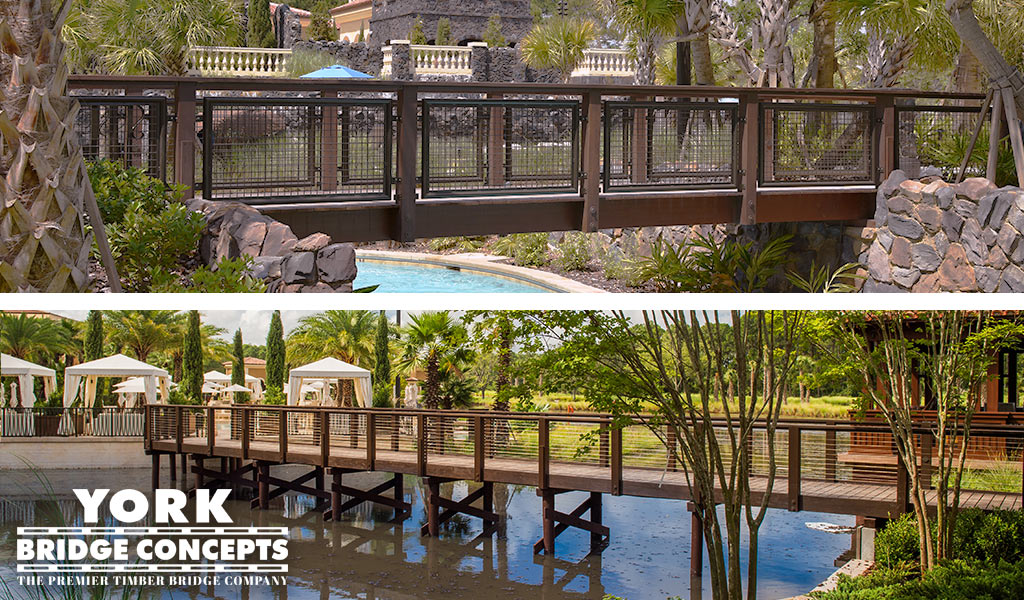
Four Seasons Resort Pedestrian Bridge & Elevated Boardwalk
Lake Buena Vista, Florida -- Decero™ Legacy Series by York Bridge Concepts
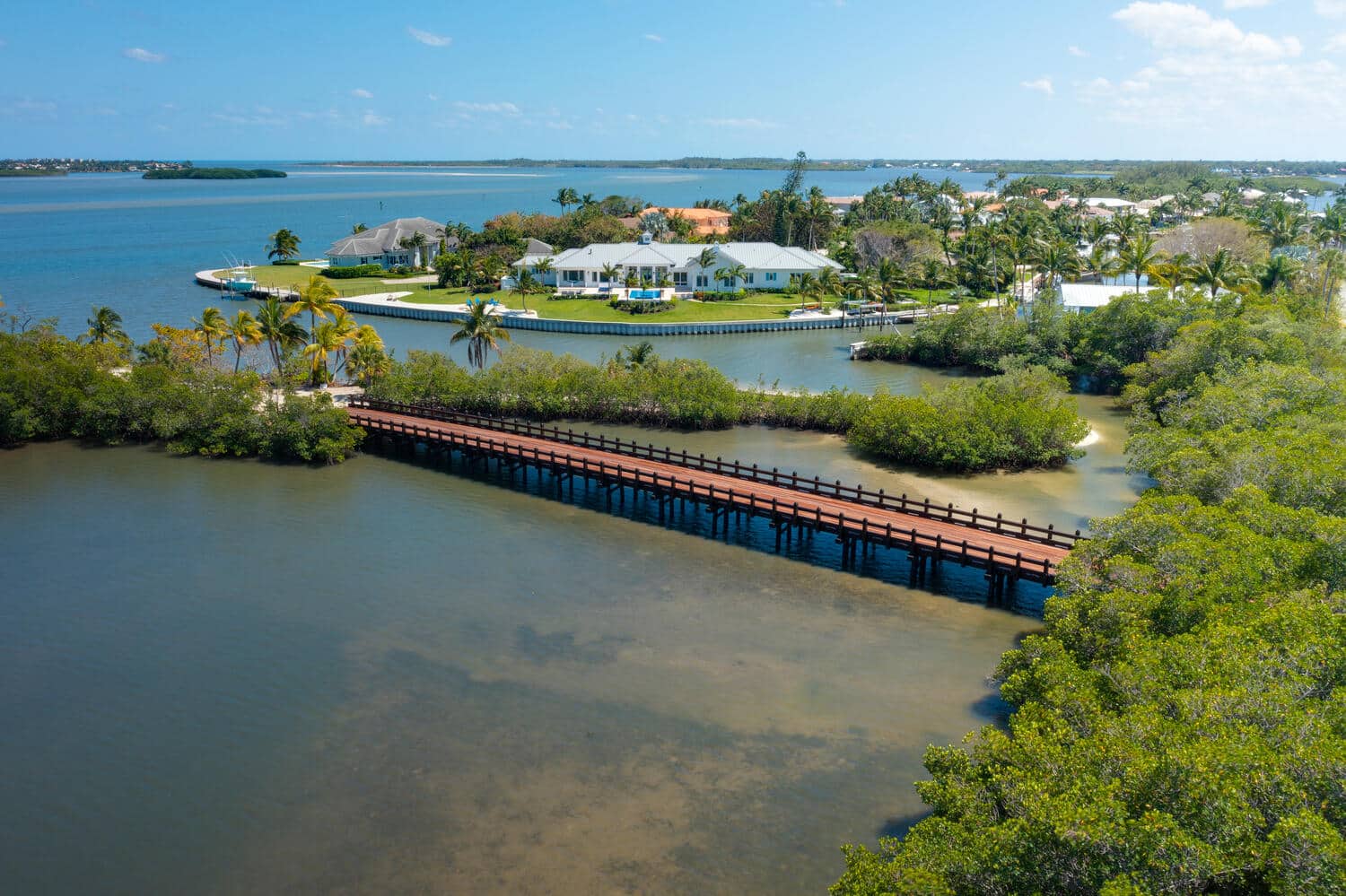
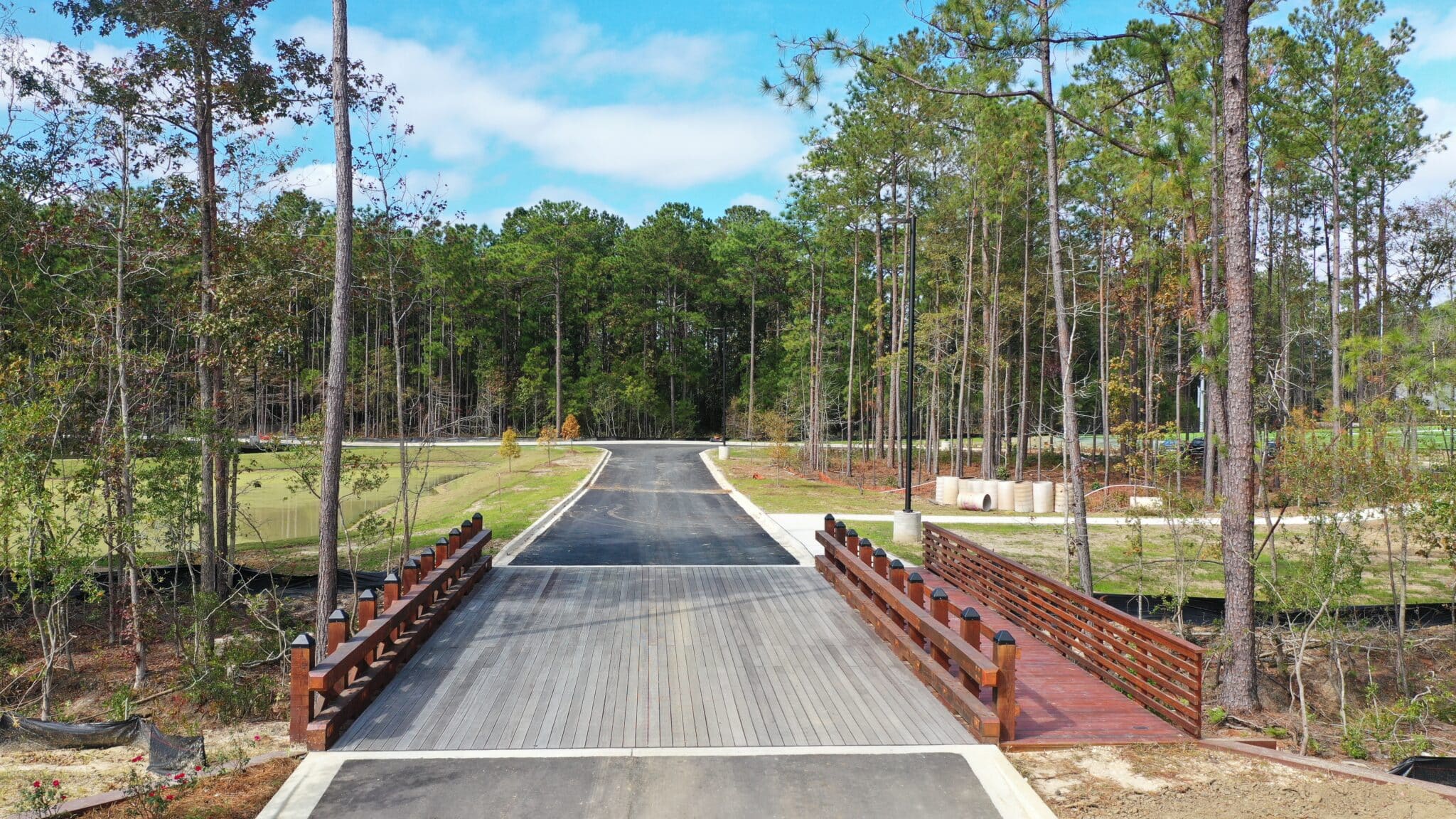
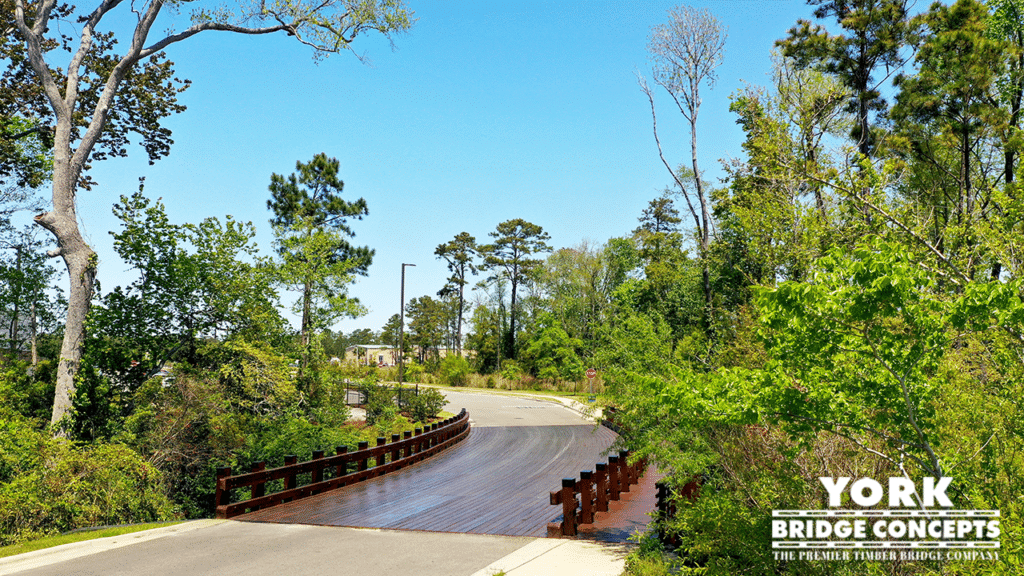
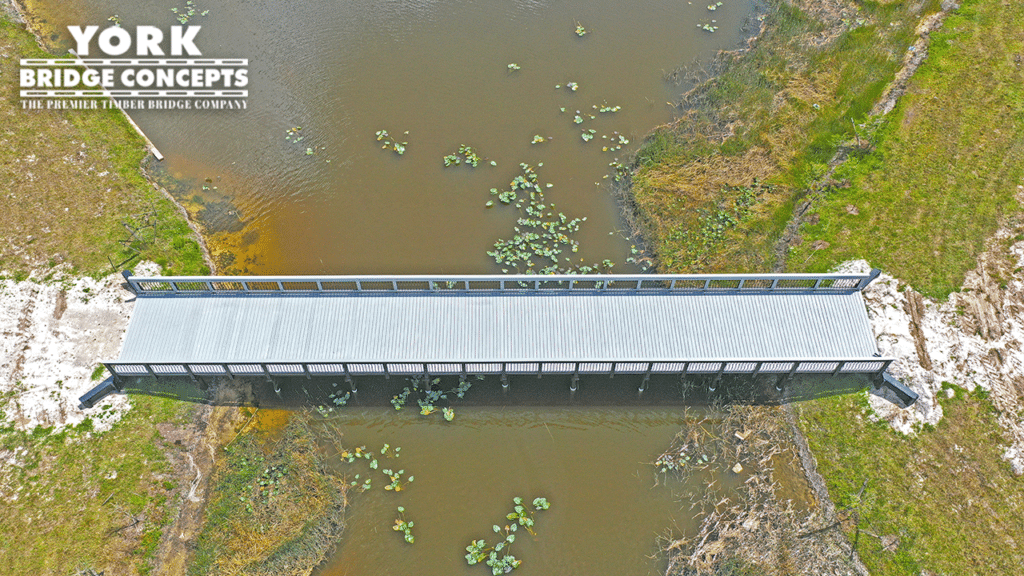
When a guest steps onto a beautifully crafted pedestrian bridge at a five-star destination, they're not simply crossing water or wetlands--they're moving deeper into the resort narrative. At the Four Seasons Resort in Lake Buena Vista, FL, York Bridge Concepts (YBC) designed, engineered, and built a network of pedestrian bridges and elevated boardwalks that quietly choreograph that narrative. The structures carry guests over lazy rivers and marshlands, linking rooms, pools, restaurants, and recreation with a level of polish that meets the expectations of world-class hospitality.
Built with a Southern Yellow Pine (SYP) structural backbone and refined with Decero™ Legacy Series upgrades--including composite elements and tropical hardwood accents for decking and handrails--these crossings exemplify Luxury Resort Infrastructure: durable, low-maintenance, and beautifully aligned to the brand's elevated guests experience. From the first step, the bridges feel intuitive underfoot, acoustically quiet, visually warm, and seamlessly integrated into the resort's architecture and landscape.
A Sense of Place: Lake Buena Vista's Waterways & Wetlands
Lake Buena Vista is defined by water. Meandering channels, manicured lagoons, and preserved marshlands wrap the resort and create both opportunity and constraint. For an operator, that means every footpath has to work harder. Circulation routes must remain resilient through heavy rain, intense sun, and peak guest traffic. For a guest, it means views--layered, framed, and made accessible without breaking the serenity that makes a "stay" feel like a true escape.
YBC's pedestrian bridges and elevated boardwalks answer both needs. They float visitors across the resort's lazy rivers and sensitive marsh corridors without intruding on the water's edge. That's crucial in a hospitality environment where the landscape is as much a product as the spa or the fine dining. The bridges become a connective tissue--never calling attention to themselves, always reinforcing the experience.
Resort Masterplanning & Circulation Strategy
Luxury resorts succeed when the journey feels as intentional as the destination. At Lake Buena Vista, the bridge and boardwalk alignments were shaped by a simple masterplanning principle: make the most beautiful route the most efficient one. That meant mapping desire lines from rooms to pools, from lobby to spa, from lounge to terrace dining--and then tuning geometry so guests naturally choose the paths that perform best operationally.
Primary spines & secondary loops. YBC established a clear hierarchy: primary spines carry peak-period traffic with generous widths, long-radius curves, and uninterrupted sightlines; secondary loops invite exploration toward quiet overlooks, kids' splash zones, and lawn events. This hierarchy ensures peak flows never feel crowded, while quieter pockets remain discoverable and serene.
View choreography. Curvature does more than move people; it frames moments. The boardwalk bends to reveal water lilies, lifts subtly over a lazy river, and straightens to create a "runway" toward a bar terrace. Handrail profiles lower at scenic corridors and subtly rise near tighter turns--guiding the eye without overt signage.
Back-of-house logic. Even in a guest-facing environment, service is the heartbeat. Strategic nodes allow linen carts, landscaping teams, and F&B runners to cross or stage without interrupting the guest stream. Where resort operations required discreet access, YBC integrated service bays and widened pull-outs that read as design features rather than back-of-house intrusions.
All-weather resilience. Central Florida's sudden showers and intense sun informed canopy gaps, drainage breaks, and quick-dry assemblies. The circulation plan routes overflow paths around temporary wet spots during extreme events, while the primary routes fully functional and dignified in appearance.
Design Intent: Seamless Luxury Resort Infrastructure
Luxury hospitality demands infrastructure that doesn't feel like infrastructure. The design intent here was to create pathways that:
- Disappear into the design language of the resort while offering distinctive moments--subtle curves, sweeping overlooks, and clean, contemporary handrail profiles.
- Perform impeccably in Florida's climate--withstanding UV, humidity, heavy rainfall, and wind events.
- Protect delicate environments--minimizing ground disturbance in marshlands and keeping water features pristine for swimmers and wildlife alike.
- Offer intuitive circulation--the most beautiful route is the most direct, with sightlines that pull guests forward and gentle slopes that meet accessibility standards without struggle.
The result is an ensemble of bridges and boardwalks that feel inevitable, as though the resort plan was drawn around them from day one.
Accessibility & Inclusive Design
Five-star hospitality is inclusive by default. The network meets accessibility goals by combining gentle slopes, ample passing widths, predictable edge conditions, and tactile clarity across surfaces and transitions.
- Slope strategy. Where elevation changes are required, YBC stretched run lengths to maintain comfortable slopes, pairing them with resting landings that also serve as photo points.
- Passing & pause zones. Expanded bays let families with strollers and mobility devices pause without blocking flow; they also function as micro-venues for tastings or character meet-and-greets.
- Edge awareness. Toe-kicks and curb rails maintain a clean visual line while offering spatial security. The rail "handfeel" is intentional: eased edges, warm touch, and consistent diameter support confidence for user of all ages.
- Non-slip comfort. Composite walking surfaces balance barefoot comfort with wet-condition traction, avoiding abrasive textures that scuff luggage or irritate skin after pool time.
The result is a path network that feels effortless--intuitive, dignified, and delightful--for every guest.
The Decero™ Legacy Series: From Vision to Detail
Every YBC project begins "Decero"--from zero--because no two sites are the same. For the Four Seasons Resort, the Decero™ process translated band ethos into technical detail:
- Discovery & Alignment
YBC worked from the resort's guest-journey maps, service routes, and operational needs, identifying where bridge geometry could shorten walks, unlock views, and relive crowding at peak times. - Environmental Respect
Marsh edges and protected vegetation demanded a light touch. YBC modeled pile locations, spans, and deck elevations to keep work out of sensitive zones while preserving natural flow patterns beneath the structure. - Legacy Series Detailing
With Legacy, the craftsmanship is palpable. Tropical hardwood handrails meet the palm-rich landscape with a warm, refined feel, while composite walking surfaces deliver consistent, slip-resistant comfort in both flip-flops and heels. Hardware is cleanly expressed, fasteners are concealed where possible, and transitions--at abutments, ramps, nodes--are precise. - Operator-Focused Engineering
The bridges were detailed to simplify ongoing care: resilient coatings on SYP members, ventilated assemblies for quick drying after Florida downpours, and material pairings that minimize the appearance of wear in high-traffic zones.
Prototyping, Mockups & the Decero™ Path
"Decero" is more than a philosophy; it's a workflow. Before full production, YBC developed shop-built mockups of rail assemblies, composite deck interfaces, and lighting integration details. These were reviewed on-site with resort stakeholders to finalize color temperature, fastener expression, and edge radii. The mockups let decision-makers evaluate the exact handfeel at sunrise, midday, and evening--when tone shifts and reflections change.
- Rapid iteration. Mockups captured how tropical hardwoods read against nearby palms and stucco finishes, allowing subtle stain adjustments for a seamless palette.
- Acoustic testing. Sample deck spans were walked, rolled over, and bumped with luggage to tune fastener spacing and diaphragm action--eliminating clicks and buzzes.
- Lighting spill control. Integrated fixtures were trialed to confirm that illumination grazes surfaces without glare, protecting the nighttime mood.
By prototyping in context, YBC locked in details that keep the network feeling "new-opening precise" long after ribbon-cutting.
Material Palette: SYP Strength, Composite Reliability, Tropical Hardwood Warmth
- Southern Yellow Pine (SYP) Substructure
SYP provides the structural backbone--beams and stringers engineered for pedestrian loads and occasional service cart traffic where required. YBC's coatings and sealants deliver a rich finish that resists UV and moisture, while the inherent strength of SYP allows efficient spans with a pleasing deck slenderness.
- Composite Underfoot
Composite decking and trim create a sophisticated walking surface with excellent slip resistance and barefoot comfort, even in summer sun. Composites resist staining from sunscreen and beverages, clean easily, and retain a consistent color tone--crucial for a resort that photographs beautifully at all hours. - Tropical Hardwood Handrails
Guests connect with the handrail more than any other element. Tropical hardwood offers tactile luxury--a smooth, cool grip at dawn and a gentle warmth at twilight. Its tonal variance echoes surrounding plantings, adding depth and authenticity. The result is a rail that looks as good in year five as it did on opening day. - Stainless and Polymer-Coated Hardware
Fasteners, brackets, and connectors are specified for longevity in a humid environment. Where hardware is visible, it's part of the aesthetic: crisp, minimal, and corrosion-resistant.
Material & Finish Schedule (Spec-style)
Structural System - Southern Yellow Pine (SYP).
- Roles: piles, caps, beams/stringers, select guard framing
- Treatments: high-performance protective coatings and sealants designed for UV and humidity
- Rationale: strength-to-cost efficiency, warm visual tone, excellent finish adhesion, and predictable maintenance cycles
Walking Surface - Composite Decking & Trim
- Roles: primary decking, nosings, edge trims at overlooks
- Properties: wet-traction consistency, fade resistance to sunscreen/beverages
- Rationale: barefoot-friendly, quiet underfoot, color-fast for high-photo environments
Handrails - Tropical Hardwood.
- Roles: fasteners, plates, concealed brackets
- Properties: corrosion resistance, clean expression in visible locations
- Rationale: long-term integrity in humid, chlorinated, and coastal-adjacent conditions
Lighting - Integrated & Shielded.
- Roles: rail and post integration, low-glare deck grazing
- Properties: warm color temperature for hospitality; shielded optics to protect dark-sky sensibilities
- Rationale: drama without glare, romance without hotspots
Finishes - Palette Discipline.
- Visual coherence comes from a tight tonal family that echoes resort architecture: warm wood notes, subdued composite grays, and crisp hardware that disappears at a glance.
Structure & Performance: Engineered for Florida
Bridges in Florida must be nimble underfoot and tough against the weather. YBC's design approach focuses on:
- Load Paths & Deflection
Pedestrian comfort is driven by perceptible movement. YBC designs keep deflection tight, so bridges feel confident and quiet even when groups traverse together. - Wind & Uplift
Handrail systems, decking, and superstructure connections are detailed for wind loads common Central Florida. Anchoring and diaphragm action prevent racking and uplift in storm events. - Hydrology & Freeboard
Over water features and marsh channels, deck elevations maintain freeboard to accommodate intense rainfall and managed flow changes without ponding or splash-over onto walking surfaces. - Thermal & UV
Material selections, coatings, and expansion gaps account for Florida's daily thermal cycles and long-term UV exposure, preserving surface quality and joint integrity.
Code, Loads & Serviceability in Florida
High guest volumes, rolling luggage, and occasional service carts require a stout, quiet structure. YBC's design criteria emphasized:
- Comfort-driven deflection limits. Serviceability governs perception. Tight deflection limits keep spans feeling solid under group movement, strollers, and light carts.
- Wind considerations. Guard rails and connections are detailed for storm-season robustness, with anchorage that resists racking and uplift while preserving a refined appearance.
- Thermal movement. Expansion gaps and slip details avoid telegraphing thermal cycles into squeaks or surface irregularities.
- Hydrologic freeboard. Deck elevations maintain clearance above managed flows and rainfall events, preserving the "constant availability" a resort demands.
- Durable joints. Bearings and interfaces are protected from splash and UV to maintain even wear and quiet transitions over time.
Guests rarely think about these elements--and that's the point. The structure simply performs.
Elevated Boardwalks: Light Touch Across Marshlands
Over wetlands, the design philosophy is simple: touch light, span wisely, leave no trace. Elevated boardwalks distributive loads through driven piles, allowing water and wildlife to move freely below. Deck level sits above expected high water, while the alignment bends gently to respect clusters of vegetation and the natural micro-topography of the marsh.
Edge conditions are critical. Curb rails and low-profile toe-kicks keep rolling luggage and small wheels safely on deck without interrupting sightlines. Drainage details ensure rainy-day water sheets off and away from foot traffic, and plantings near entry and exit points soften transitions between hardscape and habitat.
Habitat-Friendly Boardwalk Detailing
Elevated boardwalks are invitations to observe nature--without disturbing it.
- Pile patterning. Driven piles are spaced to distribute loads efficiently while keeping root zones and emergent vegetation intact.
- Micro-alignment. Small plan shifts--mere inches--preserve clusters of native plants, maintaining the marsh's mosaic character.
- Shading & ecology. Deck widths, gaps, and light levels were tuned to protect understory health. Shielded lighting minimizes disturbance to nocturnal species.
- Drain paths. Subtle camber sheds water cleanly; drip edges send runoff away from rails to reduce streaking and keep handholds pristine.
From a distance, the boardwalks read as light ribbons. Up close, they disappear into the system of water, plants, and sky.
Guest Experience: The Bridge as a Quiet Host
A great resort path anticipates the next step. These bridges do it with:
- Sightline Framing
Subtle elevation changes reveal the pool complex, a terrace bar, or a canopy of palms as the guest approaches. The handrail profile drops at view corridors and rises at tighter turns to cue movement intuitively. - Acoustic Calm
Composite surfaces hush footfall. Strategic expansion joint placement eliminates "clicks," and handrail stiffness dampens vibration--essential near spa zones or quiet lounges. - Comfort Underfoot
Fine-grained walking surfaces offer secure traction when wet and a comfortable texture for bare feet, so the journey from lazy river to lunch is effortless. - Evening Ambiance
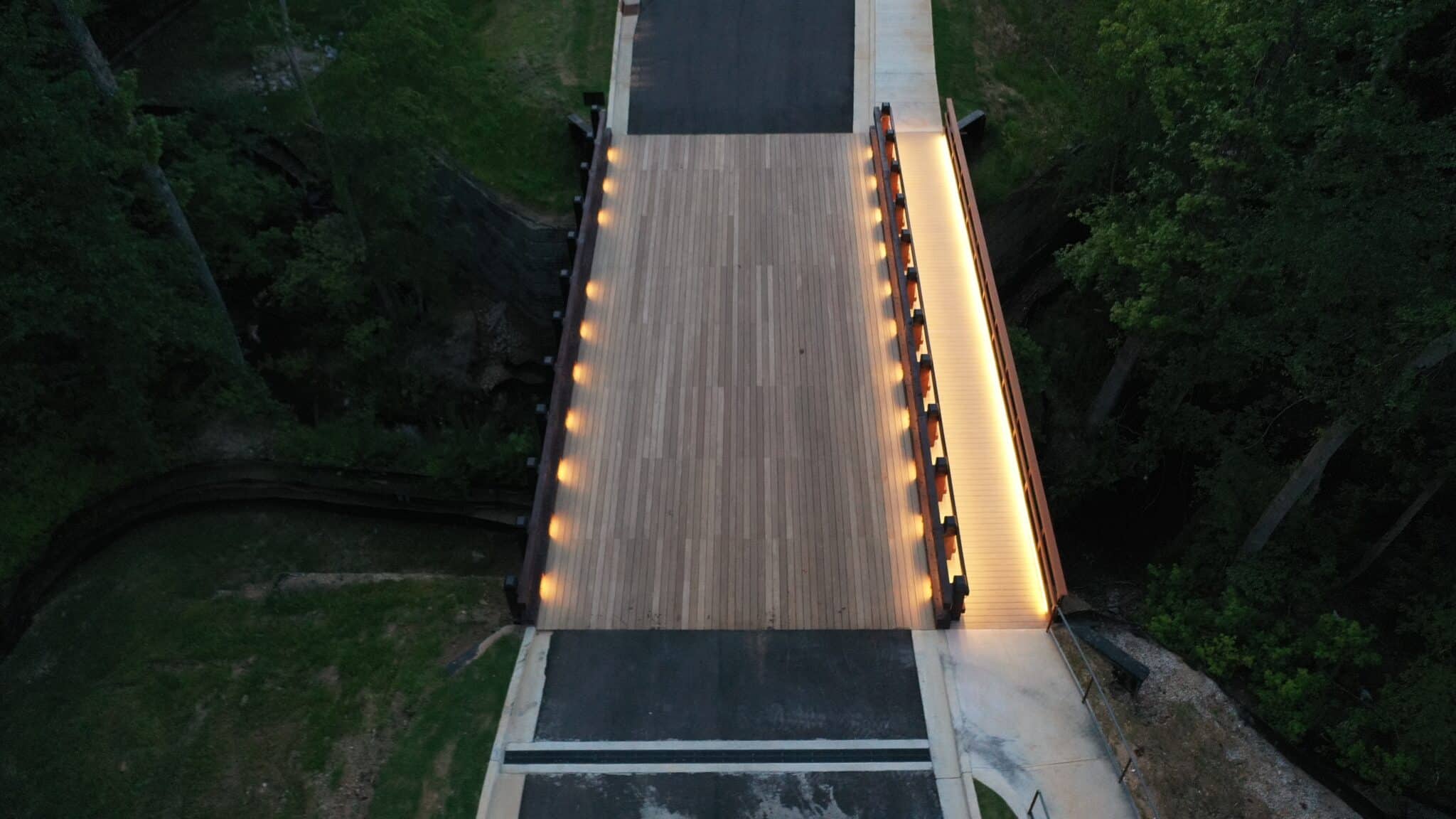
Integrated, shielding lighting grazes the deck and sculpts the rail. Color temperature is warm and consistent with ambient resort lighting, reducing glare while accentuating wood richness for unforgettable night walks.
Wayfinding, Placemaking & Nighttime Experience
When wayfinding is done right, most guests never notice it--they just always end up in the right place at the right time.
- Implicit cues. Curvature, widening, and rail height changes nudge decision-making. A soft bend signals intimacy; a widened by suggests arrival.
- Moment design. Overlooks frame photo-worthy views. Low plinths accept temporary decor for weddings or brand activations.
- Night rhythm. The lighting "score" warms as guests near dining and softens toward spa approaches. Glare control protects ambiance and sight adaptation, so eyes never feel jarred moving from garden to terrace.
The result is a network that is legible, hospitable, and photographable--day and night.
Construction Approach: Precision, Cleanliness, Continuity
Working inside an active resort requires choreography. YBC's construction plan focused on speed, neatness, and minimal disruption:
- Deck-Level/Top-Down Techniques
Where marsh conditions required, construction proceeded from the structure itself--eliminating the need for temporary causeways and reducing ground disturbance. - Vibratory Pile Driving
Piles were set with a vibratory hammer extension on an excavator, a method that is efficient, precise, and well-suited to sensitive soils, limiting turbidity and keeping adjacent water features clean. - Clean Work Zones
Protection measures--silt controls, drip pans, and containment for cutting and finishing--kept site and water pristine. Material staging occurred in discrete windows coordinated with resort operations to avoid guest impacts. - Rapid Close-In
Prefit assemblies and just-in-time deliveries condensed on-site handling, while finishing crews followed closely behind structure installation to bring bridges to their final, guest-ready state quickly.
Construction Sequencing, Safety & Phasing
Building inside an elite, continuously occupied resort is a choreography of precision and discretion.
- Pre-mobilization. Logistics plans coordinate deliveries during low-traffic windows; protection for hardscape and vegetation is installed first.
- Top-Down Staging. Where applicable, deck-level construction limits ground contact. Crews advance the structure--minimizing disturbance.
- Vibratory Pile Driving. Efficient, low-turbidity, and ideal for sensitive soils near guest water features.
- Clean Zones. Cutting stations, finish bays, and hardware staging use containment and drip control; silt protection and turbidity monitoring maintain water clarity.
- Parallel Finishing. As spans are set, finishing teams follow closely with rails, lighting integration, and coatings--compressing the schedule and reducing site time.
- Quiet Commissioning. Final tuning adjusts hardware, verifies lighting warmth and aiming, and ensures transitions achieve the "no-bump" promise under wheels and bare feet.
Throughout, guest life remains uninterrupted--no drama, no clutter, no compromise.
Detail That Matters: Joints, Transitions, & Touchpoints
Luxury lives in the details. YBC devoted extra attention to:
- Abutment Transitions
Micro-gradients ensure smooth transfers between bridge deck and adjoining pavements, preventing to-stubs and luggage catches. - Drainage & Dry-Down
Subtle camber and hidden drip edges move water off the deck without streaking rail faces. After a storm, surfaces dry evenly--no surprise slicks or puddles. - Hardware Expression
Where connectors are visible, they're refined. Countersunk fasteners, clean plate edges, and tight reveals reinforce craftsmanship. - Handfeel
Tropical hardwood rails are sanded to a buttery smoothness and eased at edges for confident grip--sharp corners, no snags.
Quality Assurance: Joints, Tolerance & Touchpoints
Luxury is often decided at the millimeter. YBC's QA focuses on repeatable excellence:
- Rail continuity. Joints land away from grasp points; miters are tight; fasteners are recessed or concealed.
- Transition smoothness. Micro-grade corrections remove toe-stubs and luggage catches; adjacent pavements are feathered for true flush conditions.
- Finish uniformity. Coatings are inspected for even sheen and coverage, avoiding "lap" marks that telegraph in harsh sun.
- Hardware expression. Visible steel is deburred and aligned; washers and bolt heads sit flush; plate edges are clean.
- Sound & feel. Trial walks confirm no squeaks, rattles, or hollow spots; wheel tests verify quiet rolling at service joints.
The guest might never articulate these details--but they feel them, and that feeling becomes brand memory.
Durability & Maintenance: Built for the Long Run
Resort infrastructure must look "opening-day fresh" year after year. The bridges achieve that with:
- Protective Coatings on SYP
High-performance finishes resist UV, moisture, and biological growth. Maintenance cycles are predictable and less frequent, critical for a property with constant occupancy. - Composite Wear Surfaces
Heavy traffic zones, sunscreen, and poolside food service challenge typical materials. Composite components shrug off staining and clean quickly, keeping appearance consistent. - Tropical Hardwood Longevity
Naturally dense and oil-rich, the hardwood handrails weather gracefully, with color maintenance options ranging from rich oiled tones to elegant silvering--set by the resort's preference. - Stainless Fasteners & Connectors
Corrosion-resistant components preserve structural integrity and finish quality even in high-humidity conditions. - BridgeCare™ Programs
YBC can tailor a maintenance plan aligned to resort operations, bundling periodic inspections, coating refreshes, and hardware checks into an unobtrusive schedule that protects uptime and aesthetics.
BridgeCare™ Maintenance Roadmap (Sample 5-Year Plan)
A maintenance plan that respects occupancy, climate, and brand standards keeps the network "opening-day fresh."
Quarterly
- Visual inspections: rail fasteners, deck-to-nosing interfaces, lighting uptime
- Quick-clean high-touch zones near bars and pool entries
- Vegetation checks at boardwalk edges; trim to preserve airflow and dry-down
Semi-Annual
- Wash & gentle clean: composite surfaces in sunscreen food-service zones
- Check coating integrity on SYP; touch-ups where sun and splash converge
- Verify drainage: drip edges clear; no streaking on rail faces
Annual
- Detailed fastener torque checks and connection audits
- Lighting calibration: confirm color temp and aim; replace any aging lenses
- Review guest-flow changes; add temporary edge protection for seasonal activations
Year 3-5
- Scheduled coating refresh on SYP to maintain color depth and UV resistance
- Replace localized high-wear composite boards if needed (typically minimal)
- Program review: align BridgeCare tasks with updated resort calendar
BridgeCare aligns work with off-peak windows, preserves guest ambiance, and keeps costs predictable.
Sustainability in a Luxury Context
Bridges and boardwalks drive measurable benefits beyond aesthetics:
- Better Circulation Means Happier Guests
When routes are clear and compelling, guests explore more amenities--and spend more time in revenue-generating zones. - Event-Ready Spaces
Wider nodes along the path can host micro-moments--photo ops, tasting stations, or pop-up activations--without interrupting flow. - Brand Cohesion
The materials, detailing, and lighting express the resort's identity at every step, reinforcing premium positioning in photos, videos, and social content. - Lower Lifetime Costs
Durable finishes and smart detailing reduce maintenance visits, protect uptime during peak seasons, and keep the experience consistently premium.
ESG & Sustainability Outcomes in Hospitality
Sustainability adds tangible value in luxury settings.
- Wetland respect. Elevated alignments maintain hydrologic exchange and habitat continuity, reducing long-term ecological risk.
- Material lifecycle. SYP structural members pair durable performance with efficient refresh cycles; composites reduce replacement frequency in high-wear zones.
- Light discipline. Shielded, warm lighting maintains guest romance while reducing ecological impact--especially near water.
- Operational efficiency. Smart detailing means fewer disruptive maintenance cycles, which lowers embodied service emissions and preserves guest satisfaction.
The bridges are quietly green--not as a marketing flourish but as a baked-in operational advantage.
Why York Bridge Concepts for Luxury Resort Infrastructure
- Design-Engineer-Build Unity
YBC owns every phase of the work, turning a complex mix of environmental, structural, architectural, and operational requirements into one coherent solution. - Hospitality-Grade Craftsmanship
From handrail touch to night lighting, details are refined for guests who notice--and photograph--everything. - Environmental Stewardship
Construction methods and structural strategies minimize disturbance, preserve water clarity, and protect marsh habitat. - Florida-Proven Performance
Materials, coatings, and connections are selected for Central Florida's climate realities, delivering a bridge that looks and feels right long after opening day.
Risk Management & Owner ROI
Well-designed pathways reduce friction across the operation.
- Fewer guest detours. Clear, beautiful circulation increases time-on-property at revenue centers.
- Lower unplanned outages. Robust detailing, wind-ready connections, and quick-dry assemblies protect against weather-related downtime.
- Photo-forward environments. Social-ready overlooks and nighttime scenes generate organic marketing--not by change, but by design.
- Predictable upkeep. BridgeCare converts unknowns into planned touchpoints, controlling lifetime costs and protecting the guest promise.
The financial case is simple: reliability + romance = revenue.
Guest-Centric Moments Along the Way
Imagine an early-morning walk: the boardwalk is dry, the rail is cool to the touch, and the first sunlight reveals a gentle ripple on the lazy river. Families move easily with strollers. Spa-goers drift past in quiet pairs. In the evening, warm lighting guides guests to dinner, reflecting softly on handrail edges and turning a simple crossing into a small memory. This is the role of great infrastructure--supporting the experience without demanding attention, yet rewarding it when it comes.
Project Outcome
The Four Seasons Resort pedestrian bridges and elevated boardwalks succeed because they honor three equal priorities:
- Guest Experience: intuitive, comfortable, and beautiful at every hour.
- Environmental Care: a minimal footprint and durable materials in a sensitive setting.
- Operational Excellence: dependable performance, predictable maintenance, and brand-true aesthetics.
They are, in every sense, Luxury Resort Infrastructure--quietly exceptional, day after day.
Success Metrics, KPIs & Story Moments
Owners and operators can track performance in three lenses:
- Guest Experience
- Average travel time from room blocks to pool and dining
- Sentiment analysis of path/setting keywords in reviews
- Nighttime satisfaction around glare/ambiance near water - Environmental Care
- Boardwalk-adjacent vegetation health checks
- Turbidity readings during and post-construction windows
- Shielding lighting compliance and wildlife observations - Operational Excellence
- Unplanned maintenance occurrences
- BridgeCare adherence and task closure rates
- F&B throughput near overlooks and nodes
Story moments--sunset reflections on tropical hardwood, early-morning quiet reels across the lazy river, romantic night walks--become the resort's evergreen imagery bank.
FAQs for Owners & Operators
How "quiet" is the walking experience near spa zones?
Composite surfaces and tuned fastener spacing, paired with stiffened rail assemblies, deliver a notably hushed footfall-even with rolling luggage.
What happens after a heavy Florida downpour?
Camber, drip edges, and ventilated assemblies move water off the deck quickly; surfaces dry evenly to avoid residual slicks or streaking on rails.
How visible are fasteners?
Where connections are exposed, hardware is intentionally expressed--flush, aligned, and minimal. Elsewhere, fasteners are concealed to preserve visual calm.
Can these bridges support service carts?
Select spans and nodes are detailed for occasional service loads; routing is planned to protect guest comfort and structural serviceability.
What does long-term color maintenance look like?
Tropical hardwood rails can be maintained as rich oiled tones or allowed to silver gracefully. SYP coatings follow a predictable refresh cycle under BridgeCare.
How do you avoid light pollution?
Integrated, shielded fixtures graze surfaces with warm light, preserving ambiance, avoiding glare, and respecting adjacent habitats.
Key Features at a Glance
- Decero™ Legacy Series design and detailing
- SYP structural system with high-performance protective finishes
- Composite decking and trim for slip resistance and easy upkeep
- Tropical hardwood handrails for tactile luxury and long life
- Elevated boardwalk alignments over marshlands with minimal disturbance
- Shielded, guest-friendly night lighting integrated into rails and posts
- Accessibility-led geometry with gentle slopes and generous passing widths
- Florida-ready connections and coatings for wind, UV, and humidity
- Maintenance planning aligned to resort operations
Planning Resources
All Feature Projects
What's Best: A Culvert Or A Timber Bridge?
What Is The Best Span Type For My Project?
Which Load Capacity I Need?
How Do I Cross An Environmentally Sensitive Area?
How Do I Create A Landmark?
How Long Does A Timber Bridge Last?
Culvert Or Bridge
If you're considering using a culvert for your crossing project. Click below to understand the best fit for your project.

Spanning Solutions
Spanning a crossing is one of the most important aspects of your crossing project. Find the best solution for your crossing needs.

Uses & Capacities
The load capacity of a timber bridge may surprise you. See specs for different loads and uses that will help your decision-making process.