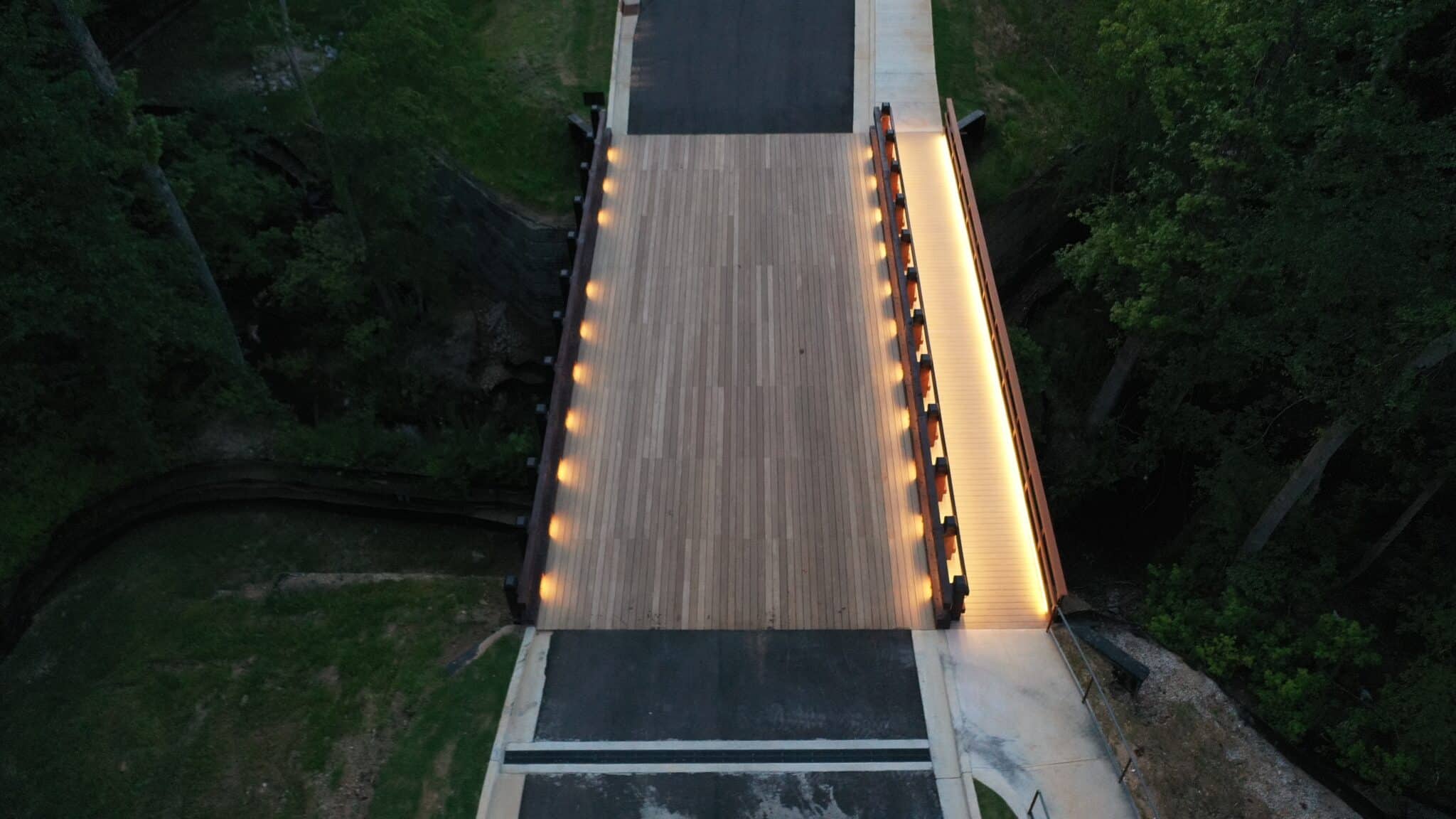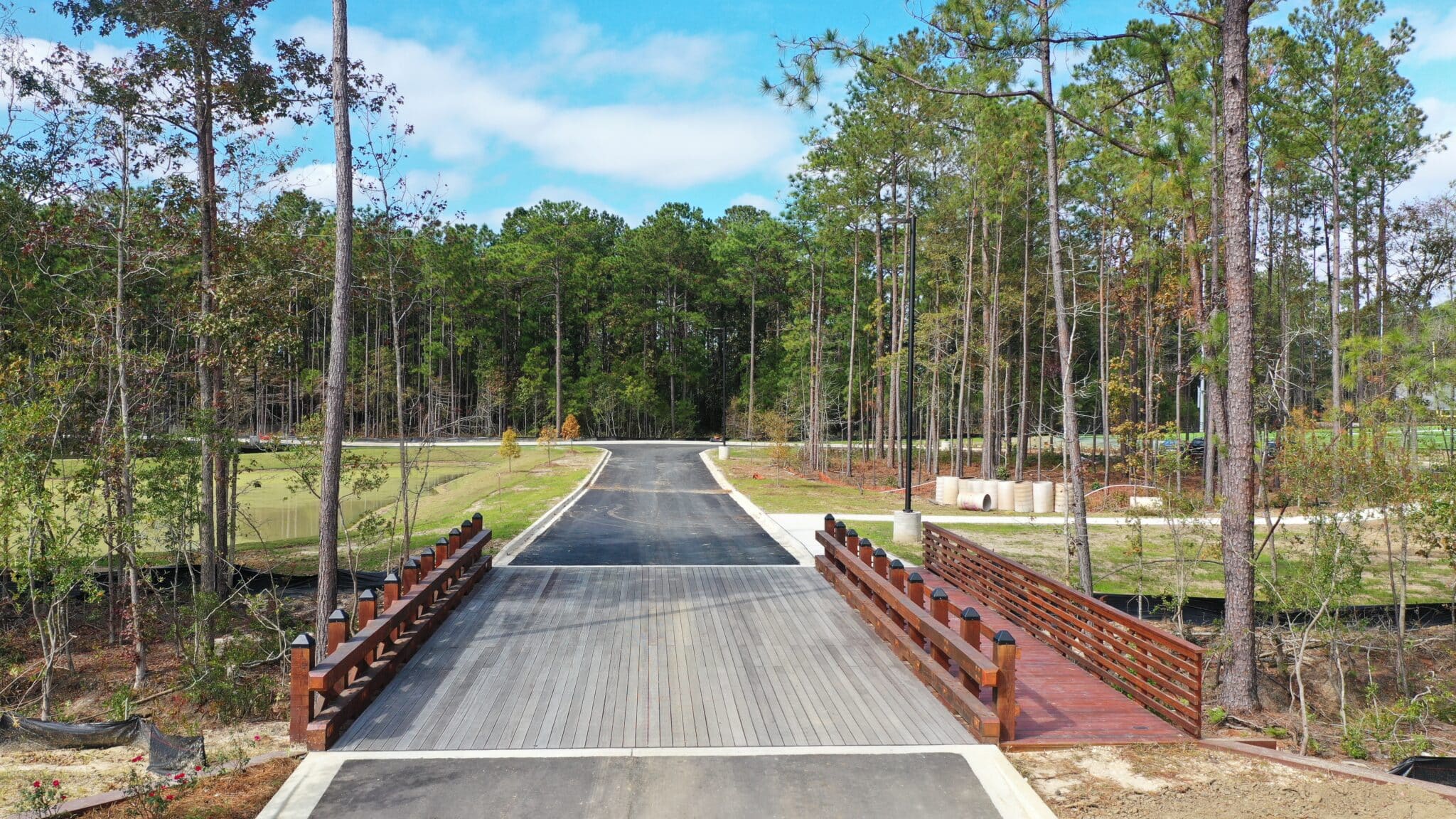
Loch Lloyd Vehicular Bridge – Cass County, MO
June 19, 2018
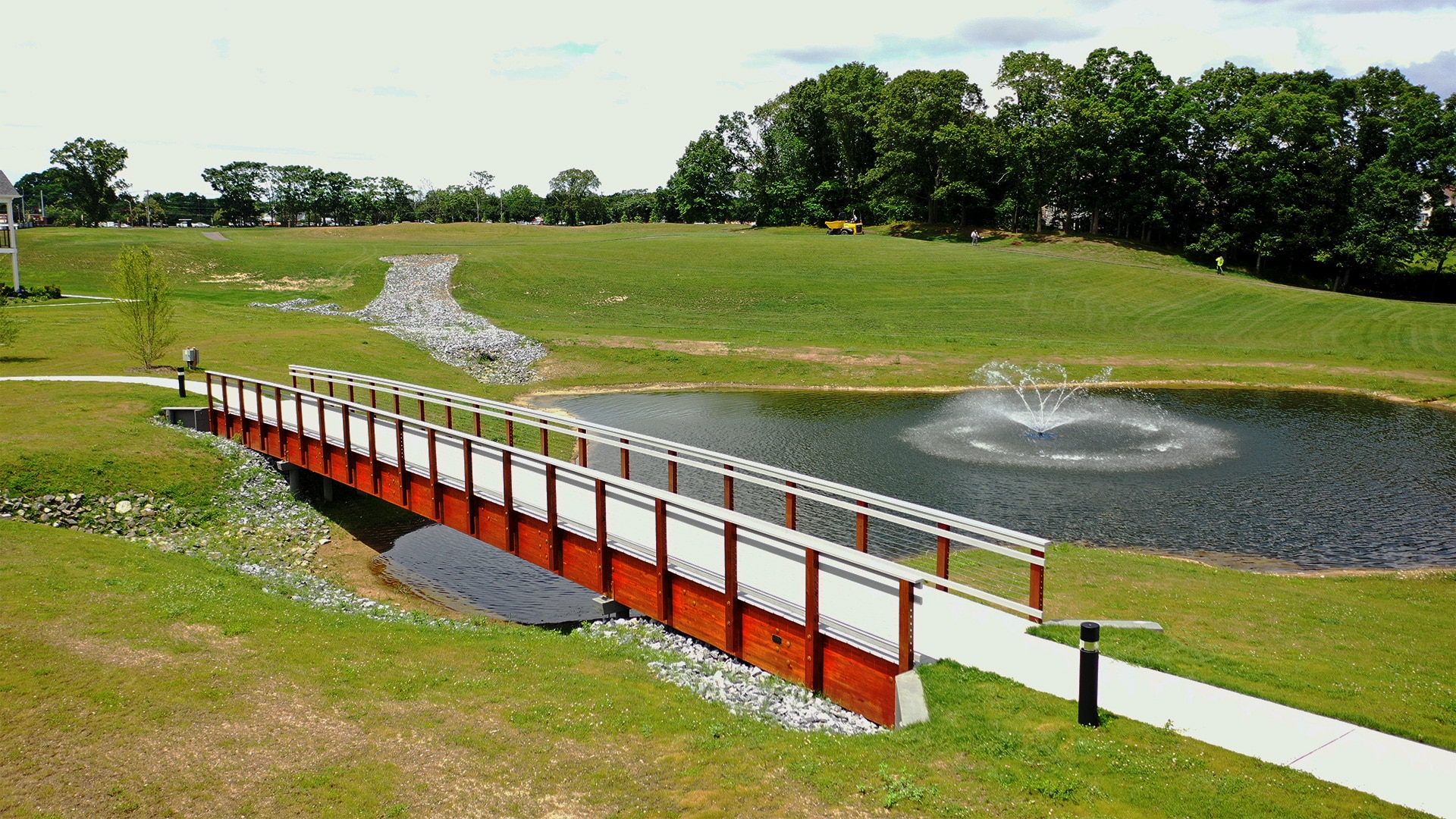
Voorheesville Elementary School Pedestrian Bridge – Voorheesville, NY
June 19, 2018Meaningful Connections For Education
Ave Maria University Pedestrian Bridge – Ave Maria, FL
Ave Maria University Timber Pedestrian Bridge: A Seamless Blend of Elegance, Environment & Engineering
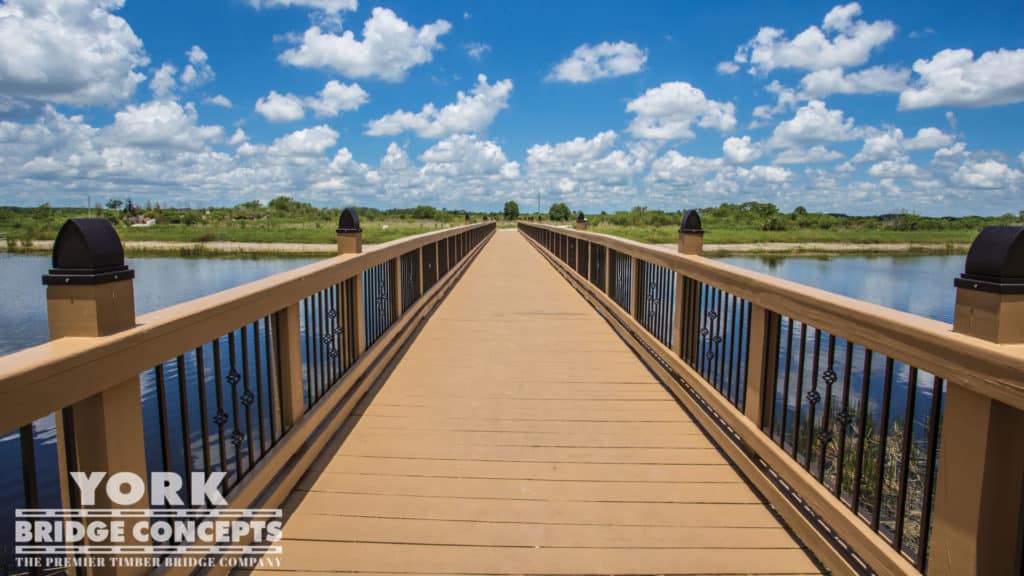
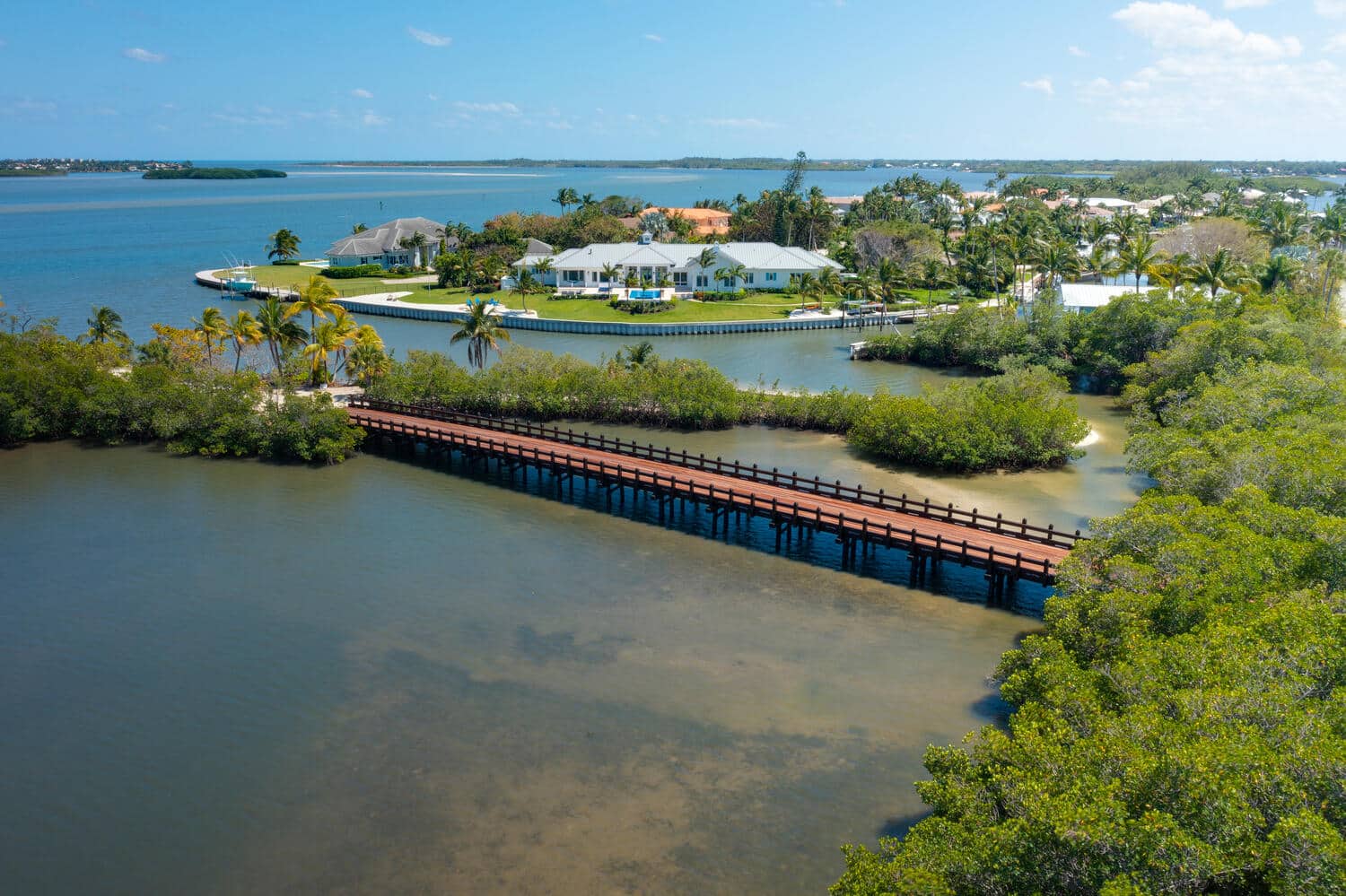
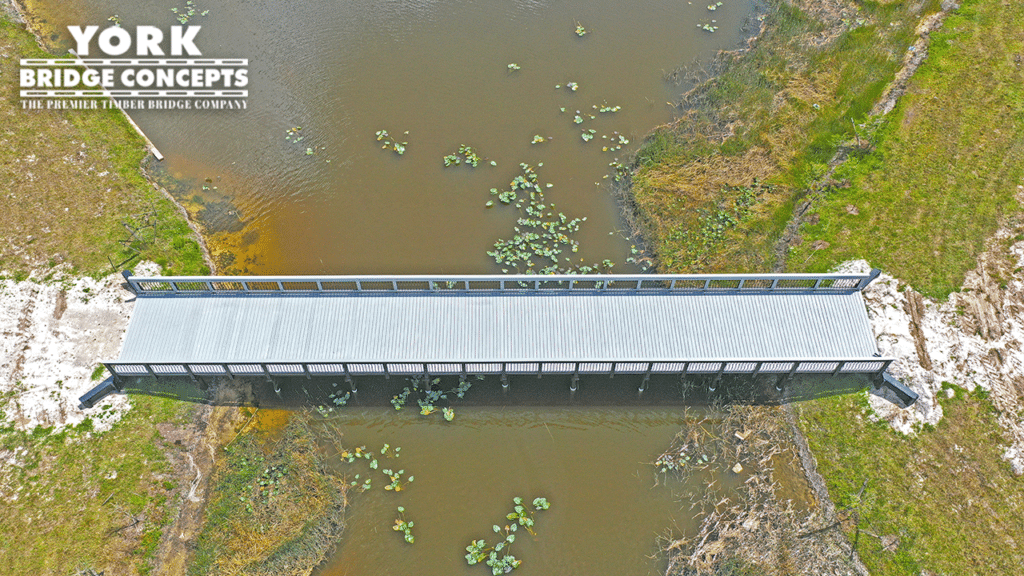
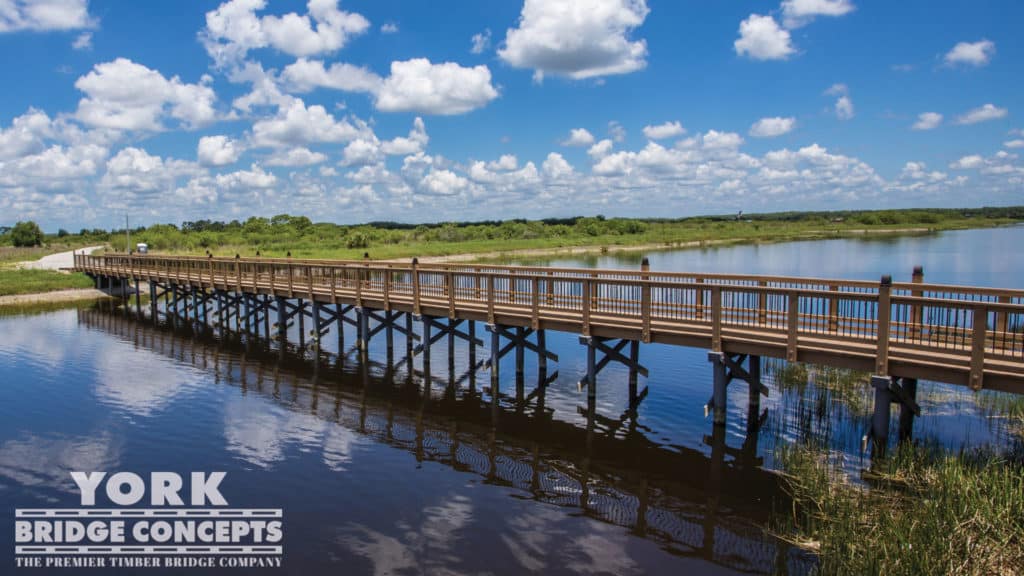
Located just 17 miles east of Naples, Florida, the Ave Maria University, pedestrian bridge designed and constructed by York Bridge Concepts (YBC) stands as a sophisticated example of how structural integrity, architectural beauty, and environmental sensitivity can merge into one cohesive design. Completed in December 2015 and spanning a total length of approximately 182 feet, this repetitive-span timber bridge traverses the university's serene Lake #7, creating a visually striking yet functional campus crossing.
Specifications
| Width: | 8’ (7’7” Clear) |
| Length: | 182’ |
| Height: | 11' above grade |
| Capacity: | 90 PSF |
| Construction: | Deck Level |
| Span Type: | Repetitive Span |
| Span Lengths: | 10' |
| Material: | CCA/CA-C Treated Southern Yellow Pine |
| Foundation: | Timber Piles & Abutments (Acrylic/Polymer Coated where exposed) |
| Stringers: | SYP S4S Timber (Acrylic/Polymer Coated where exposed) |
| Deck System: | 1-½” Timber Deck |
| Handrail: | Decero™ Architectural Picket Design Series |
| Crossing: | Lake |
"From planning, design, and construction of the Guadalupe Bridge, the professionalism of York Bridge Concepts was evident. The project was completed on time, and on budget, and a big thank you from Ave Maria University."
A Bridge Rooted in Place and Purpose
When Ave Maria University envisioned a pedestrian crossing over its signature lake, the goal extended far beyond connectivity. Leaders wanted a structure that would embody the campus's warm architectural language, foster community engagement, and resonate with the natural Florida landscape. YBC's Decero™ Design Studio was tapped to develop a solution that would stand out not only as functional infrastructure, but also as an expression of university identity through timber craftsmanship and careful detailing.
Structural Design Built for Safety and Longevity
The bridge was engineered to hold up under daily pedestrian use and occasional maintenance traffic, with a 90 PSF load capacity--well above standard code requirements. Supported by timber pile foundations driven deep into Lake #7's bed and acrylic/polymer coated where exposed, the substructure provides exceptional resistance to moisture and decay. The repetitive-span design comprises 10-foot timber spans, collectively forming the 182-foot crossing while maintaining flexibility and ease of installation.
Above the support system, S4S Southern Yellow Pine stringers and a surfaced 1.5" timber deck combine for a splinter-free, visually pleasant walking surface. Every exposed timber element is coated with acrylic or polymer finishes for UV resistance and reduced maintenance over time.
Elegant Aesthetics Tailored to Campus Values
Design played an equally important role to structural integrity. The bridge's daytime visual impact is defined by warm-toned timber, lightly colored stains, and clean architectural lines. For pedestrian protection, YBC installed elegant 42-inch-tall Decero™ Architectural Picket Series handrails, which were splinter-free, comfortable, and visually compatible with the rest of the campus aesthetic. Metal pickets incorporated into the railing added subtle sophistication, elevating the experience beyond typical boardwalks into a refined architectural feature.
Construction Harmony: Social, Technical & Ecological
YBC's specialized Deck-Level Construction process enabled top-down assembly from the decking downward, reducing disturbance to the lake environment below and protecting wetlands and shoreline vegetation. This method minimizes sediment disruption while allowing precise control over installation--ideal for sensitive natural areas like Lake #7 and wetlands surrounding the campus.
Through direct collaboration with Ave Maria University's construction team, YBC coordinated carefully on project phasing. From early design sketches to final installation, the collaborative relationship ensured the bridge not only met technical requirements, but also reinforced campus identity and accessibility goals.
Designed for Lifelong Performance
Every aspect of the bridge was chosen or engineered for longevity. The treated Southern Yellow Pine, coupled with acrylic/polymer coating, ensures that elements exposed to sun, rain, and general wear remain protected. The bridge's timber piling and subdeck system are inherently resistant to rot and insect damage, especially when maintained according to YBC recommendations. The repetitive-span model allows uniform load displacement across all spans equally, providing decades of service.
Strength Meets Beauty in an Academic Landscape
While structural performance and classroom connectivity were priorities, the bridge also succeeds as a campus landmark. Its generous scale--182 feet long and nearly 18 feet above grad--makes a visual impact visible from multiple vantage points across the university. It signals arrival, connection, and thoughtful planning in a way that other materials rarely match.
By utilizing the natural elegance of timber, YBC created a structure that complements campus architecture, reflects local environmental tones, and provides an experiential walkway that engages the senses as students pass over the water below.
Beyond Ave Maria: YBC's Approach to Campus Bridges
This project typifies how YBC approaches bridges within educational and institutional settings. On Schools & Universities portfolio page, the firm highlights Ave Maria alongside projects at Ringling College, Islip High School, Elizabethtown College, and others, showcasing its ability to tailor both free-span and repetitive-span timber bridges for diverse campus environments.
The Ave Maria bridge also reflects YBC's strengths in South Florida environments, demonstrating mastery over wetland crossings, durable construction under salt-laden air, and precise coordination with local project teams and environmental constraints.
Technical Highlights at a Glance
Without relying on bullet lists, here are the major technical specifications woven into the narrative:
The repetitive-span pedestrian bridge measures 182 feet in length, with an eight-foot total width (7'7" clear walking space), and rises approximately 19 feet above grade. Designed for pedestrian loads of 90 PSF, the structure utilizes pressure-treated Southern Yellow Pine for stringers and decking, with exposed elements finished in acrylic/polymer coatings for durability. Foundations res on timber piles and abutments coated to resist moisture and decay. The top deck features surfaced timber for splinter-free walking, and the handrail system is 42 inches high using YBC's Decero™ architectural picket design series.
Sustainability Anchored in Timber
York Bridge Concepts' methodology aligns with ecologically sensitive construction. Timber bridges like the one at Ave Maria University reduce carbon footprint compared to alternative materials and often require less invasive installation techniques. YBC's Deck-Level Construction system further protects wetlands and water bodies by avoiding heavy equipment below the deck plane.
More broadly, YBC's strategy emphasizes carbon reduction, use of ecological materials, and careful execution in sensitive environments--a theme it regularly applies across residential, institutional, and municipal bridge projects.