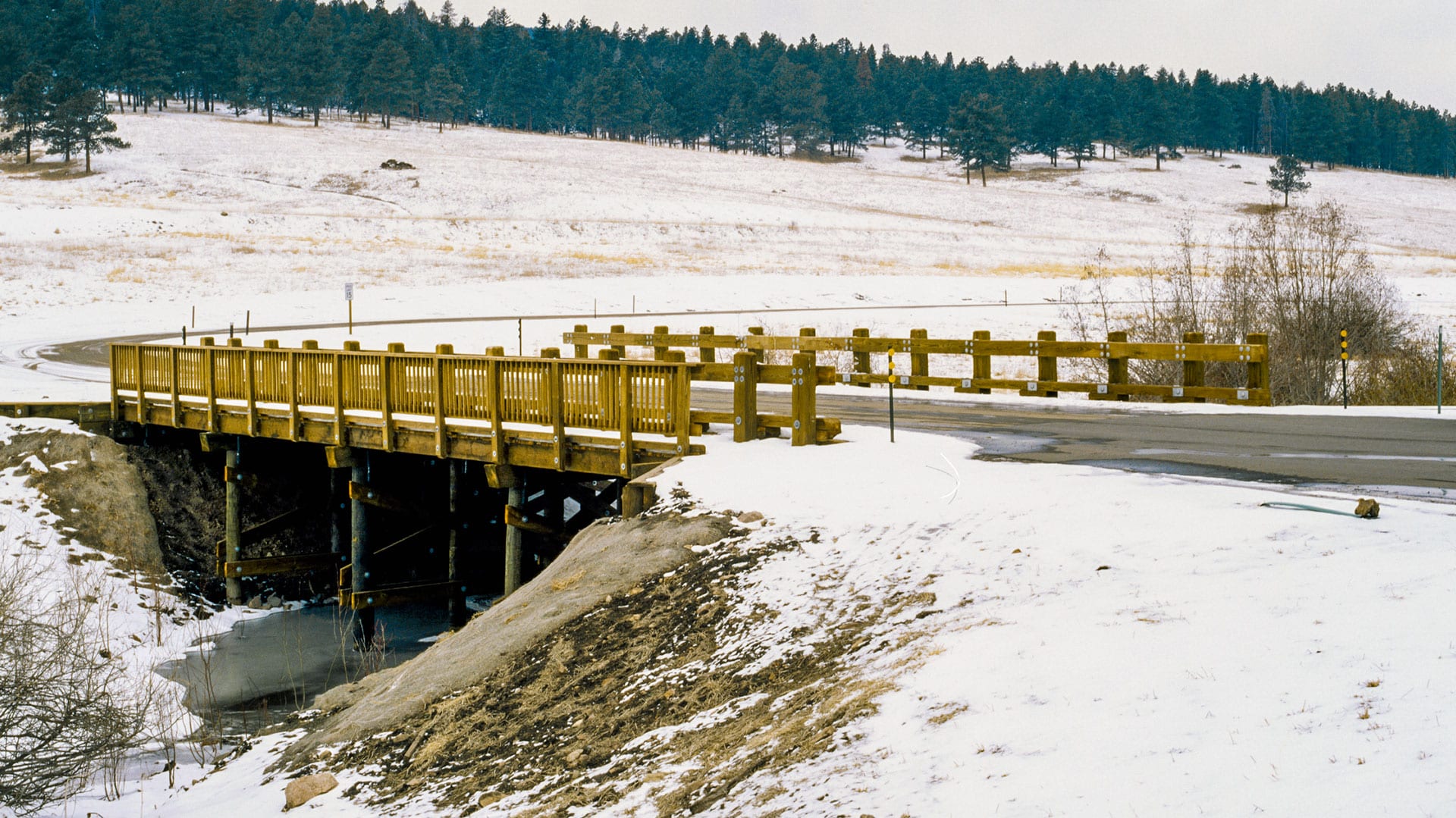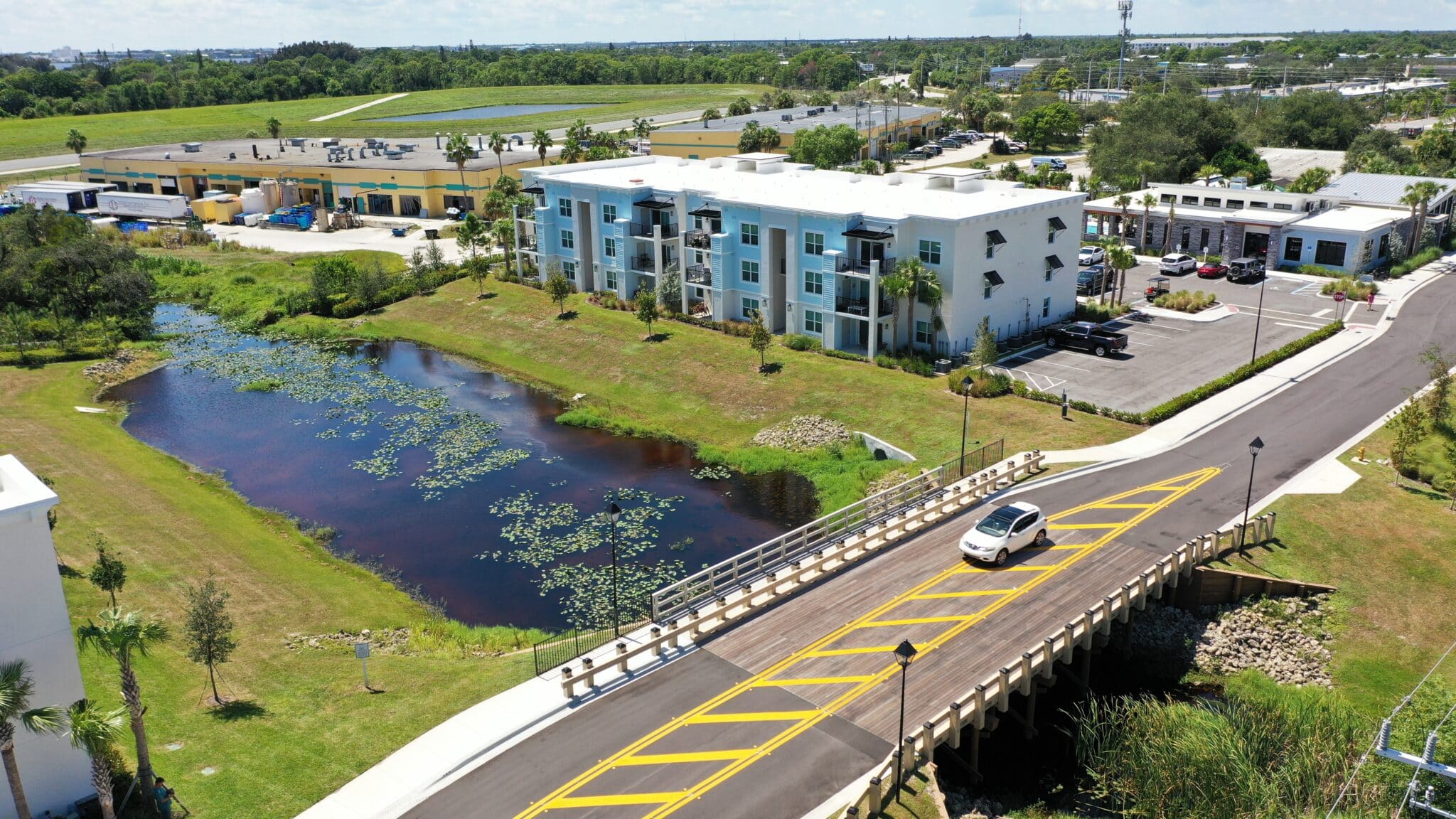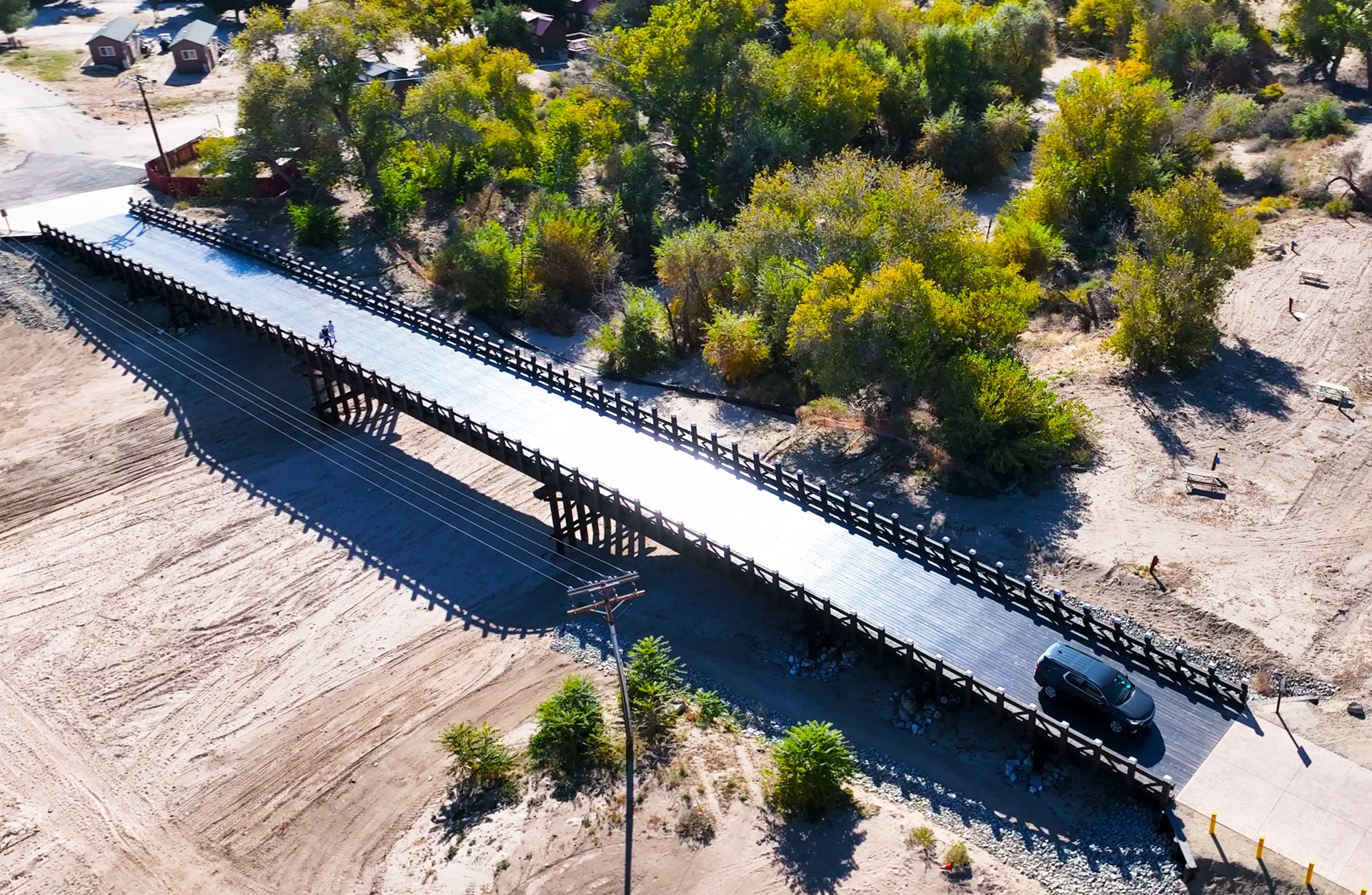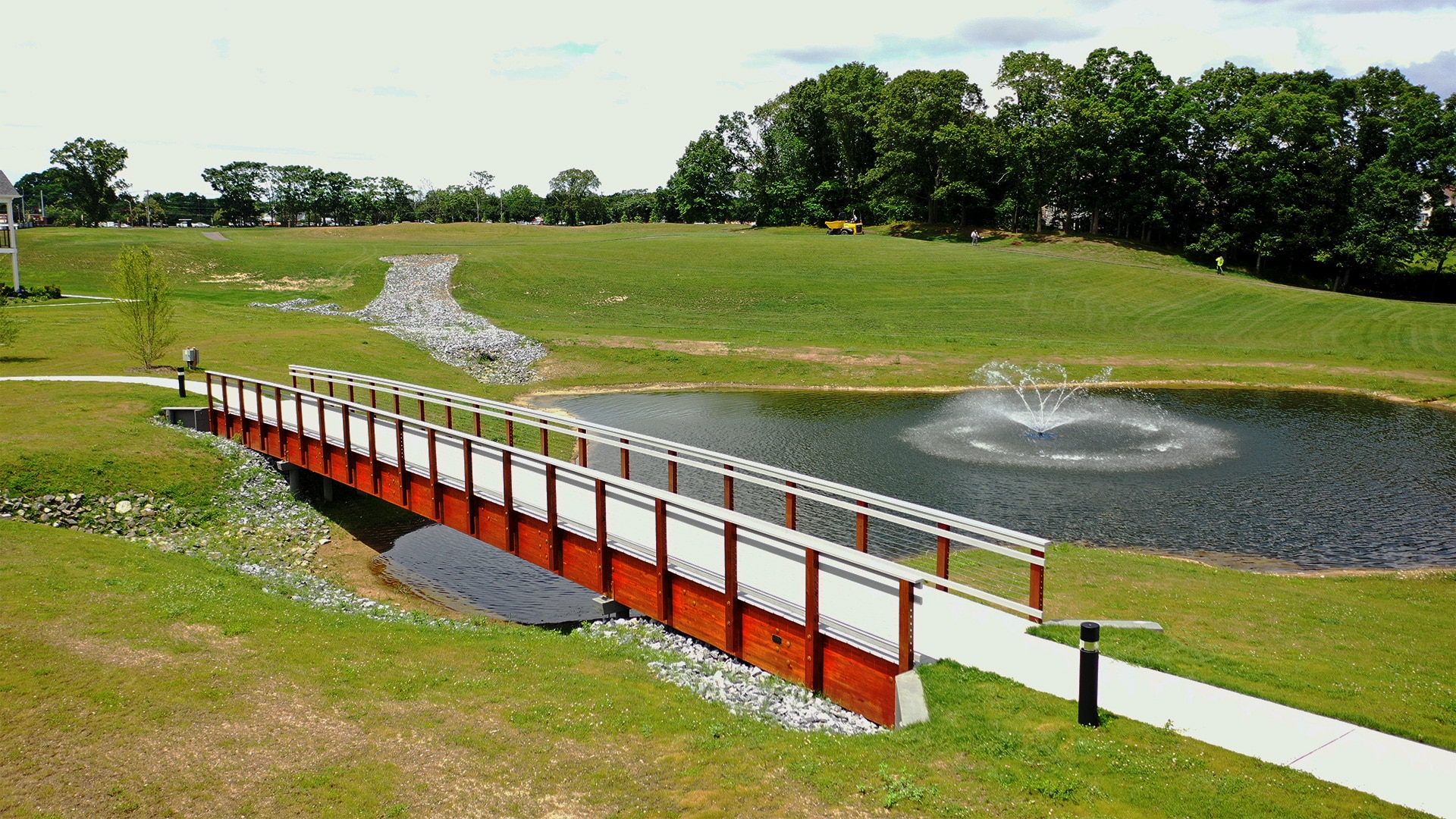
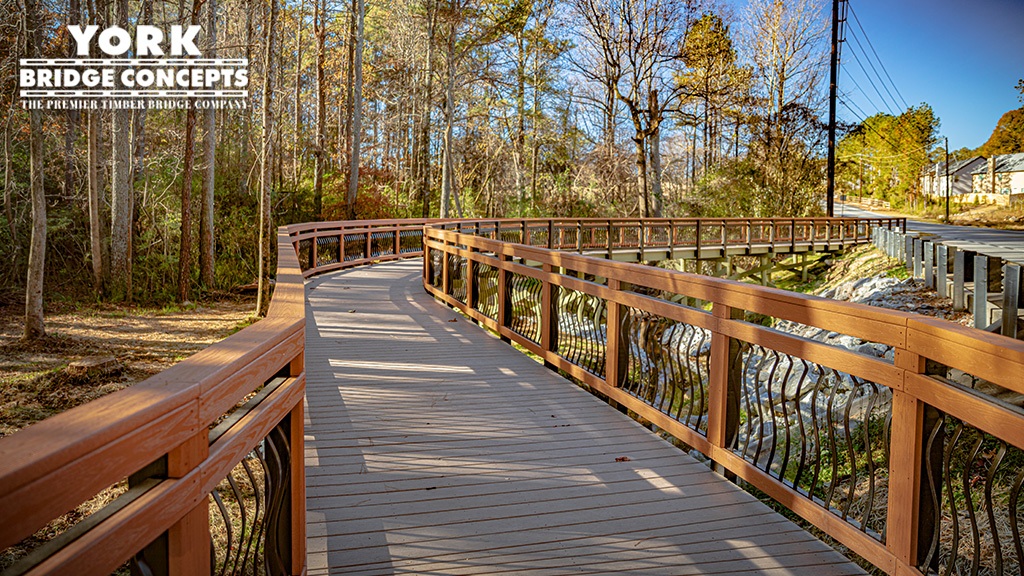
Embracing Nature: Lucky Shoals Greenway Pedestrian Bridge
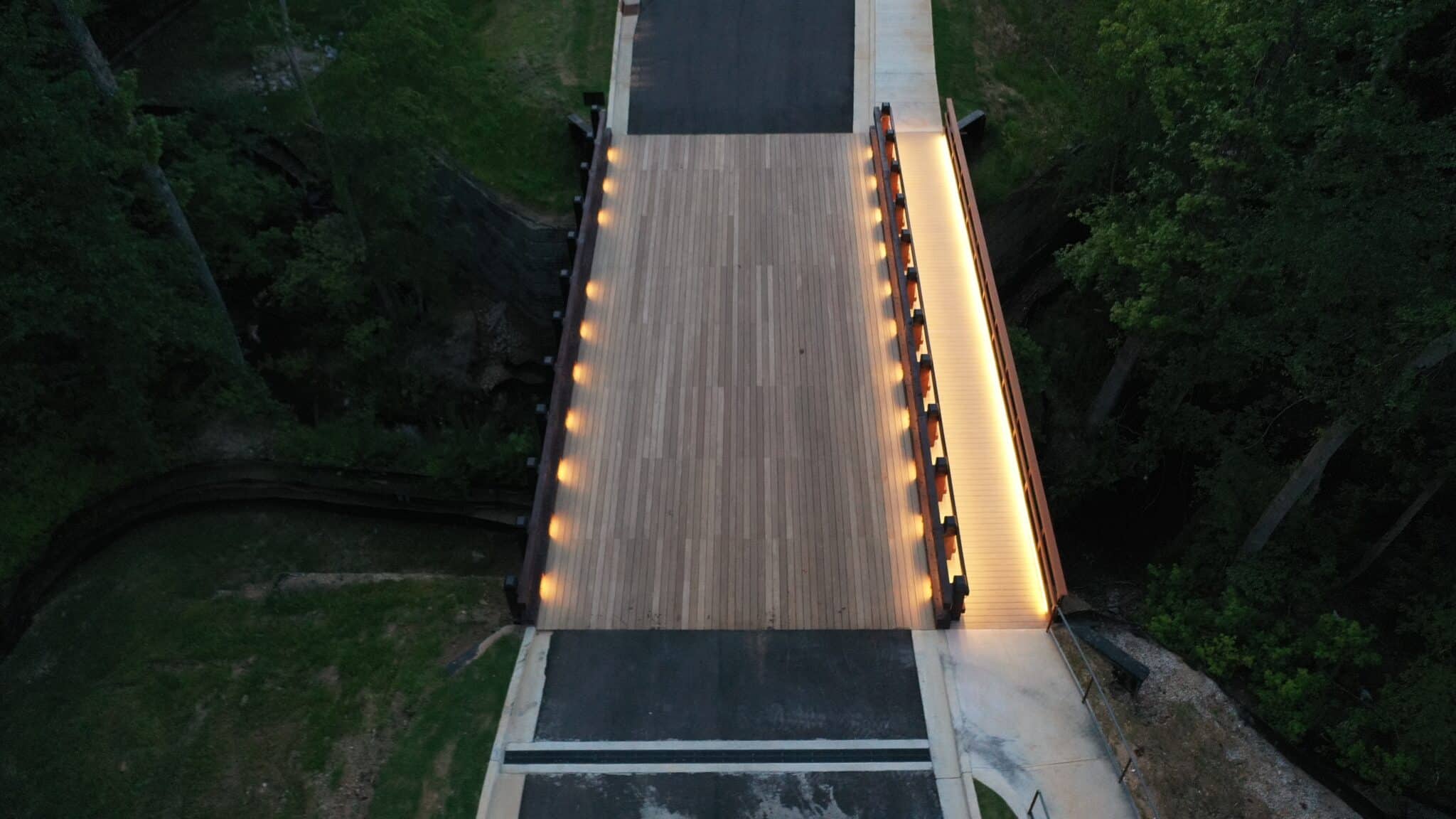
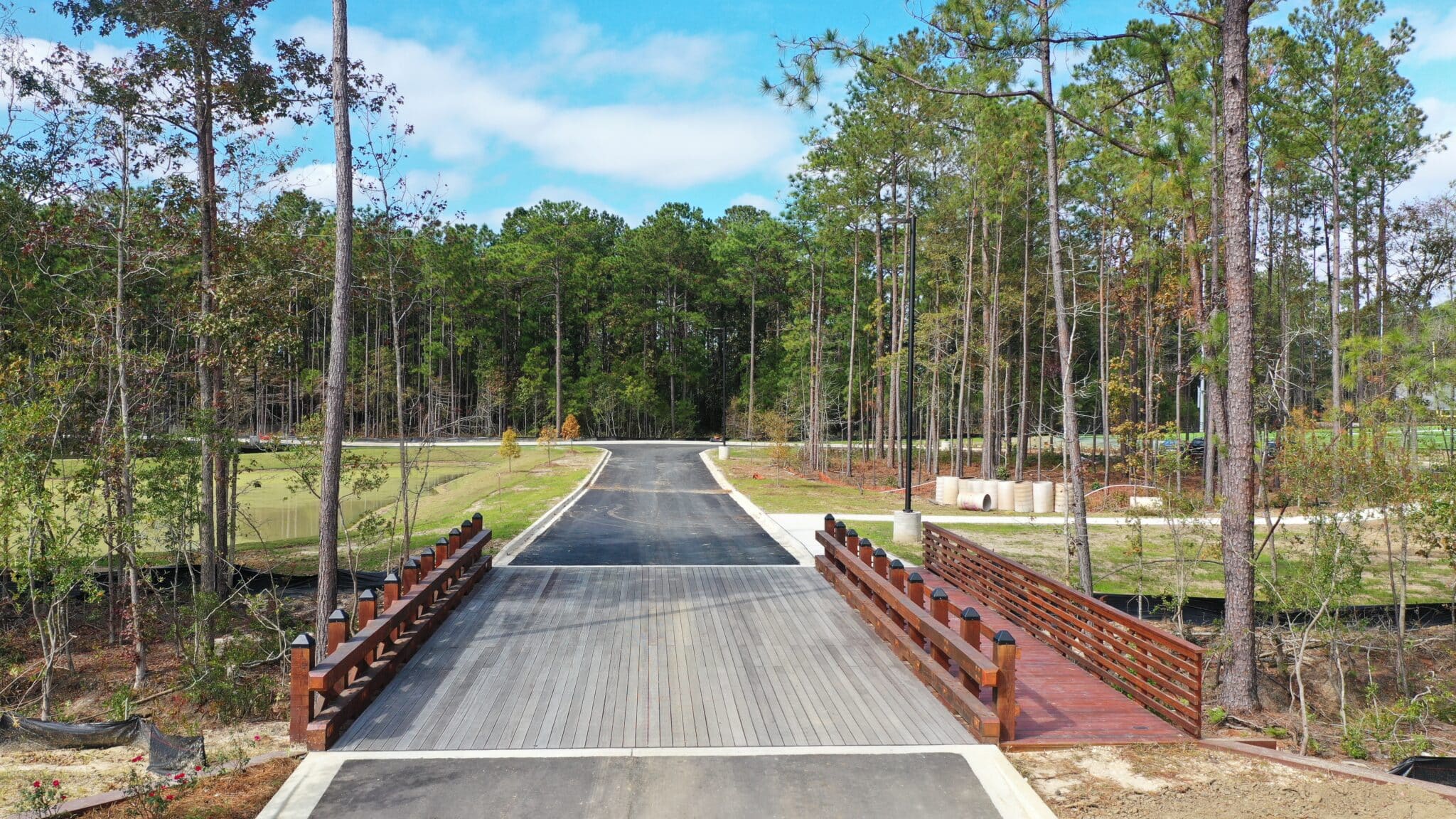
Nestled in Norcross, Georgia, the Lucky Shoals Timber Pedestrian Bridge is not just a crossing--it symbolizes a union of sustainable design, environmental sensitivity, and aesthetic grace. It is one of the standout examples of Georgia greenway Bridges--structures that enable multi-use trails, recreational corridors, and ecological connectivity across streams, wetlands, and urban landscapes.
At York Bridge Concepts, we believe in designing bridges that do more than just span distances--they become part of the landscape, contribute to ecosystem health, and anchor the identity of a place.
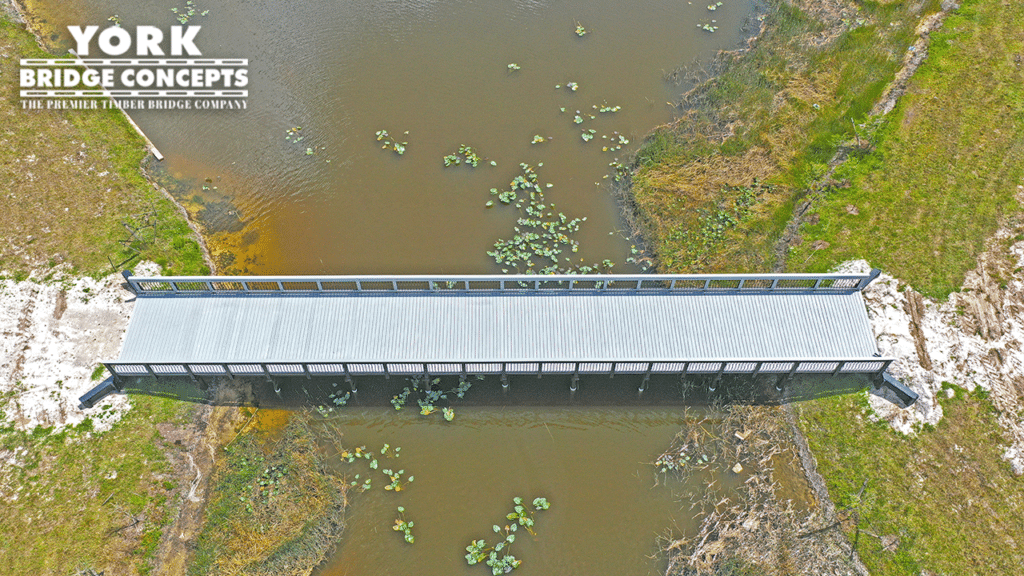
Specifications
- Width:
- 9' (7' 10" clear)
- Length:
- 170'
- Height:
- 14' above grade
- Capacity:
- 90 PSF
- Construction:
- Deck Level
- Span Type:
- Multiple Span
- Span Lengths:
- (12) 10', (1) 24', (1) 26'
- Material:
- CCA/CA-C Treated Southern Yellow Pine & Reinforced Polymeric Lumber
- Foundation:
- Timber Piles & Abutments (Acrylic Coated where exposed)
- Stringers:
- SYP S4S & Rough Sawn & Glulam Stringers (Acrylic Coated where exposed)
- Deck System:
- 1" Reinforced Polymeric Lumber Deck
- Handrail:
- Decero™ Metal Picket Design Series
- Crossing:
- Lucky Shoals Creek
The Role of the Lucky Shoals Bridge Within Georgia Greenway Bridges
The term Georgia Greenway Bridges refers to the class of bridge structures integrated into Georgia's expanding network or greenway trails. These bridges are key node in trail corridors--allowing users to pass over water bodies, flood zones, and sensitive terrain cleanly and safely. The Lucky Shoals Bridge exemplifies this trend serving as a connector withing the local greenway network of Norcross.
In the context of greenway development, bridges must meet more than just structural performance--they must:
- Minimize ecological disturbance (via low-impact foundations, deck-level construction, wetland mitigation)
- Provide aesthetic harmony with nature
- Ensure longevity and low maintenance
- Promote multimodal usage (walkers, cyclists, strollers, ADA compliance)
The Lucky Shoals project stood out in meeting all these criteria, making it a model for future Georgia Greenway Bridges across the state.
Curvature, Landscape Integration & Trail Experience
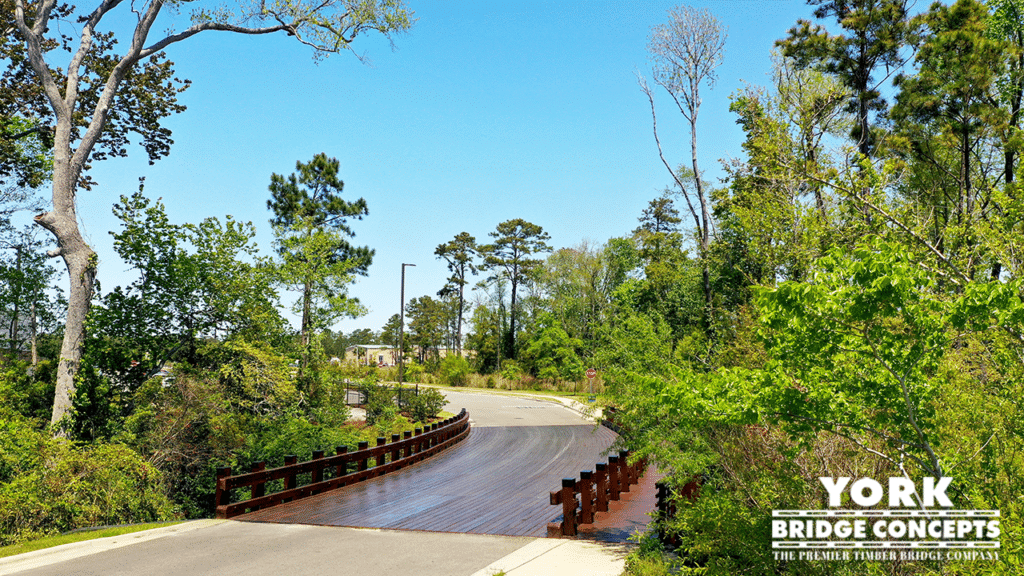
One of the most striking design features is the bridge's gentle curvature--a subtle departure from straight-line traversal. This curve:
- Follows natural topography and avoids steep grading
- Weaves around roadway obstructions and site constraints
- Enhances the visual appeal: users see changing perspectives and framing of trees, creek banks, and sky
- Encourages slower, contemplative movement, rather than rushing across
As users traverse the bridge, the interplay of timber texture, metal railings, and natural surroundings invites a pause--to observe, rest, and connect. In many greenway projects, a bridge is much more than a utility; it becomes a destination in itself, a vantage point, a meeting spot.
Sustainability & Material Choices
Timber bridges often evoke thoughts of fragility or maintenance burden--but modern design, treatment, and material innovations have transformed them into long-lasting, resilient structures. For the Lucky Shoals Bridge:
- CCA/CA-C Treated Southern Yellow Pine was selected for cost, local availability, and performance. The treatment protects against rot, insects, and fungal decay.
- Reinforced polymeric lumber decking offers the benefits of wood aesthetics with enhanced durability and resistance to weathering, de-icing salts, and wear.
- Exposed members (glulam stringers, SYP stringers, abutments) are acrylic coated to prolong life and reduce maintenance.
- The foundations (timber piles) were chosen to minimize disturbance to creek hydrology and wetland soils.
Such choices raise the expected lifespan significantly--well beyond the 30 or 50 years typically assumed for untreated timber bridges. With proper maintenance, a design life of 75+ years is achievable with a Legacy Series bridge.
Furthermore, on projects like these, we often adopt deck-level construction or top-down construction methods to reduce in-stream disturbance--techniques you reference on your site already.
Achieving ADA & Multi-Use Compliance
Greenway bridges must be inclusive: wheelchair users, families with strollers, bicycle riders, and pedestrians should all be accommodated. The Lucky Shoals Bridge meets ADA slope and clearance requirements, and the 90 PSF load capacity helps account for concentrated loads and occasional maintenance or emergency vehicles.
Rail spacing, handrail height, and guard design (Decero™ metal picket series) were selected to balance safety and transparency, maintaining sight lines to the creek and surroundings without creating a barrier. This transparency is especially appreciated along trail bridges in greenway systems, where the visual connection to nature is part of the experience.
Construction Overview & Challenges
Constructing in a live creek environment with minimal environmental impact posed and logistical challenges:
- Site Access and staging restrictions due to wetland soils and riparian buffers.
- Foundation installation required careful sequencing to avoid sedimentation and protect aquatic life.
- Curved alignment demanded precise construction tolerances to maintain curvature and geometry over multiple spans.
- Material installation over water called for temporary supports and careful planning.
- Weather windows: avoiding high-flow periods in the creek to reduce risk during in-stream work.
Using York Bridge Concepts' experience, the construction team limited disturbance by assembling much of the superstructure on-site, employing on-site fabrication and modular components, and scheduling creek-work in low-flow conditions. The acrylic coating of exposed members was applied post-installation to ensure consistent coverage.
Environmental Integration, Mitigation & Habitat Enhancement
Greenway bridges must do more than avoid damage--they should enhance habitat connectivity and respect the ecological context. For Lucky Shoals:
- The bridge alignment avoids mature tree removal and preserves riparian buffer zones.
- The curved footprint allows narrower crossing widths in sensitive zones.
- Clearing was limited; erosion control measures protected soils and minimized siltation.
- The bridge design allowed sunlight through rails, reducing shading impacts on riparian understory.
- Post-construction planted native shrubs, groundcover, and erosion control matting in disturbed zones.
- Where possible, the bridge piers were placed in areas of lower hydrologic sensitivity.
These strategies align with best practices in sustainable greenway bridge design.
The Bridge's Place in Norcross's Greenway Network
The Lucky Shoals Bridge serves as an essential connector within Norcross's trail system, enabling safe passage over Lucky Shoals Creek and linking neighborhoods, parks and trail segments. Its presence encourages alternative transportation, active reaction, and fosters community connectivity.
In future phases of greenway development, such bridges can become nodes in a broader network--helping stitch together neighborhoods into a continuous Georgia Greenway Bridges system. As adjacent trail segments expand, the bridge's role becomes even more critical.
Comparative Examples: Other Georgia Greenway Bridges
The Lucky Shoals Bridge is one of several York Bridge Concepts projects that are helping shape the story of Georgia Greenway Bridges. Across the state, YBC has been entrusted with designing and building trail and pedestrian crossings that integrate seamlessly into parks, greenways, and master-planned communities.
- Carrollwood Village Timber Pedestrian Bridge (Tampa, FL)
Designed as a community connector, this pedestrian bridge offers residents a safe and scenic passage to amenities while maintaining a minimal environmental footprint. Its Legacy Series design emphasizes durability and blends naturally with the park setting.
See Carrollwood Village Project - Edison Chastain Vehicular & Pedestrian Bridge (Marietta, GA)
While primarily serving a Class-A office complex, this multiple-span Legacy Series bridge with an attached pedestrian section demonstrates how YBC structures support both functional access and lifestyle connectivity. It enhances the property's green corridor and ties into nearby pedestrian circulation.
See Edison Chastain Project - One River Place Vehicular Bridge (Sandy Springs, GA)
A Decero™-designed timber vehicular bridge that doubles as an amenity feature for a riverfront residential community. It underscores YBC's ability to integrate crossings into eco-sensitive sites while reinforcing community trails and greenway networks.
See One River Place - Adagio on the Green Pedestrian Bridge (Mission Viejo, CA)
While located outside Georgia, this free-span pedestrian bridge demonstrates YBC's national expertise in greenway-type applications, offering a relevant parallel to Georgia trail infrastructure.
See Adagio on the Green
Together with Lucky Shoals, these projects form part of YBC's growing portfolio of Georgia Greenway Bridges, highlighting our unmatched ability to provide safe, aesthetic, and environmentally responsible connections within parks, trails, and communities.
Maintenance, Inspection & Lifecycle Management
Even the best-built timber bridge requires thoughtful maintenance to ensure longevity. For the Lucky Shoals Bridge:
- Routine inspection (biannual or annual) checks for wood degradation, seal/coat performance, fastener tightening.
- Cleaning and drainage: Keeping the deck clear of debris prevents standing moisture and prolongs performance.
- Coating touch-ups: Acrylic coatings on exposed members should be evaluated and reapplied as needed to protect from UV, moisture, and abrasion.
- Deck repairs or replacement: The modular polymeric decking allows targeted replacement of high-wear panels.
- Vegetation control: Maintain clearances, trim overhanging limbs, avoid invasive species encroachment.
- Structural checks after floods: Monitor bearing seats, pier alignment, scour near foundations after high-flow events.
With disciplined maintenance, the expected service life can be extended significantly, thus justifying the higher initial investment relative to untreated timber or less sustainable materials.
Designing the Next Generation of Georgia Greenway Bridges: Principles & Recommendations
Based on experience with Lucky Shoals and other projects, here are some key best practices for designers, municipalities, and developers pursuing Georgia Greenway Bridges:
- Early corridor coordination
Engage trail planners, environmental planners, and bridge engineers from the start so alignment, grading, and hydrology constraints inform bridge placement. - Minimize environmental footprint
Use deck-level or top-down construction, avoid large foundations in channels, minimize tree removal, and preserve riparian buffers. - Curved alignments where beneficial
Gentle curves support flexibility in navigation terrain and help create a more engaging trail experience. - Modular, maintainable components
Use panelized decking, standardized fasteners, and replaceable members to reduce maintenance cost and downtime. - Durable protective treatments
Choose coatings, sealants, and material combinations to resist moisture, insects, UV radiation, and abrasion. - User experience & aesthetics
Transparent rails, visually appealing materials, integrated lighting (if desired), and interpretive signage enhance the bridge's role in the trail. - Future-proofing
Design for multimodal use (walkers, bicycles, maintenance carts), allow expansion or retrofit potential, and account for climate change (flooding, extreme weather). - Lifecycle cost perspective
Evaluate beyond initial cost--consider maintenance, replacement, and salvage value over the bridge's life.
By applying these principles, clients and communities can realize greenway systems anchored by iconic and durable bridges--much like Lucky Shoals.
Community Impact, Usage & Outreach
Bridges on greenway trails carry a deeper social mission. The Lucky Shoals Bridge:
- Encourages active transportation by creating safe and direct walking and cycling routes across natural barriers.
- Enhances recreation and tourism, attracting walkers, joggers, birdwatchers, and nature lovers.
- Strengthens neighborhood connectivity, linking housing, parks, schools, and retail areas.
- Serves as a community landmark, often becoming a symbol for the trail corridor.
- Provides educational opportunities, especially when interpretive signage, local history plaques, or environmental markers are added on or near the structure.
- Supports public health and sustainability goals by promoting non-motorized mobility, reducing reliance on cars, and facilitating greener communities.
In future work, we recommend installing signage along the bridge to highlight native ecology, waterway health, or local history--thus reinforcing its role as part of the Georgia Greenway Bridges narrative.
Challenges & Lessons Learned
While the Lucky Shoals Bridge has many strengths, the project also offered lessons:
- Curved spans increase complexity: Getting stringer alignment, bearing placement, and deck tolerances correct requires careful survey and QA.
- Site constraints limit staging: In tight riparian zones, vehicle access, material staging, and crane positioning require creativity.
- Weather and creek dynamics: Unexpected storms or creek flows can delay or threaten in-stream work.
- Coating uniformity: Ensuring consistent acrylic coating coverage, especially at joints or fasteners is labor-intensive.
- User behavior: Trail use patterns (e.g., high pedestrian loads, bicycles, maintenance carts) sometimes exceed early assumptions and require future retrofits or reinforcement.
By documenting these challenges, future greenway bridge projects in Georgia can better anticipate risks and streamline execution.
Future Vision: Expanding Georgia Greenway Bridges
As Georgia's greenway network grows, the role of well-designed bridges becomes ever more critical. Here's how the future could evolve:
- Regional connector bridges that span wide rivers or floodplains, creating continuous trail corridors across counties or metro areas.
- Signature architectural bridges that become civic symbols--like landmark spans over large water features or urban parks.
- Retrofitting old bridges (vehicular or utility) to accommodate trail usage in mixed-use or heritage corridors.
- Climate-adaptive bridge design, factoring in flood resilience, rising storm intensity, and changing hydrology.
- Smart infrastructure integration: lighting, sensors, structural health monitoring for real-time condition tracking.
- Thematic and interpretive elements: integrating local history, art, and ecology directly into bridge deck or railing designs.
The Lucky Shoals Bridge demonstrates how a modest pedestrian bridge can embody these ambitions: durable, elegant, environmentally integrated--and primed for the next generation of Georgia Greenway Bridges.
A Model for Greenway Bridge Design in Georgia
All Feature Projects
What's Best: A Culvert Or A Timber Bridge?
What Is The Best Span Type For My Project?
Which Load Capacity I Need?
How Do I Cross An Environmentally Sensitive Area?
How Do I Create A Landmark?
How Long Does A Timber Bridge Last?
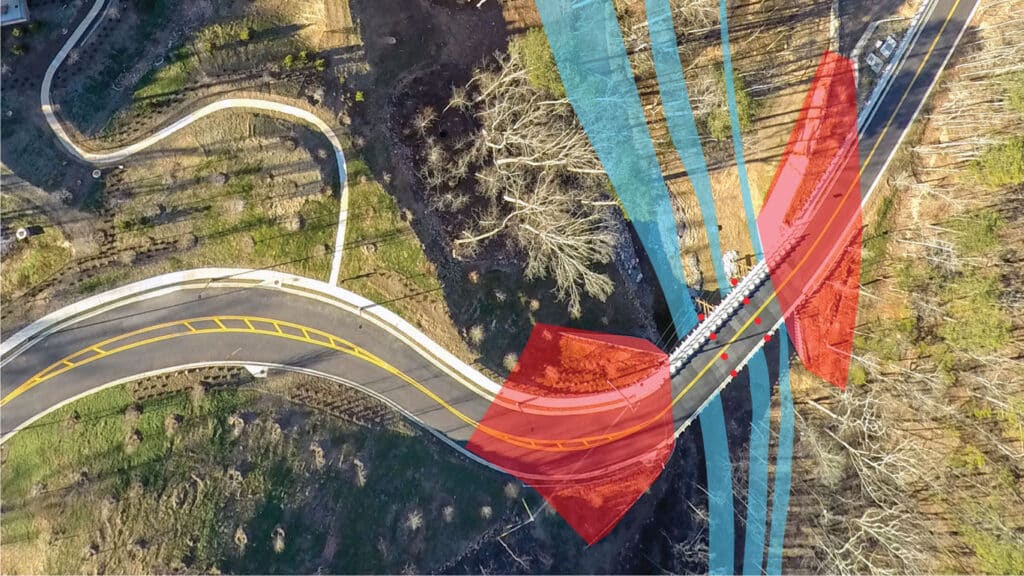
Culvert Or Bridge
If you're considering using a culvert for your crossing project. Click below to understand the best fit for your project.
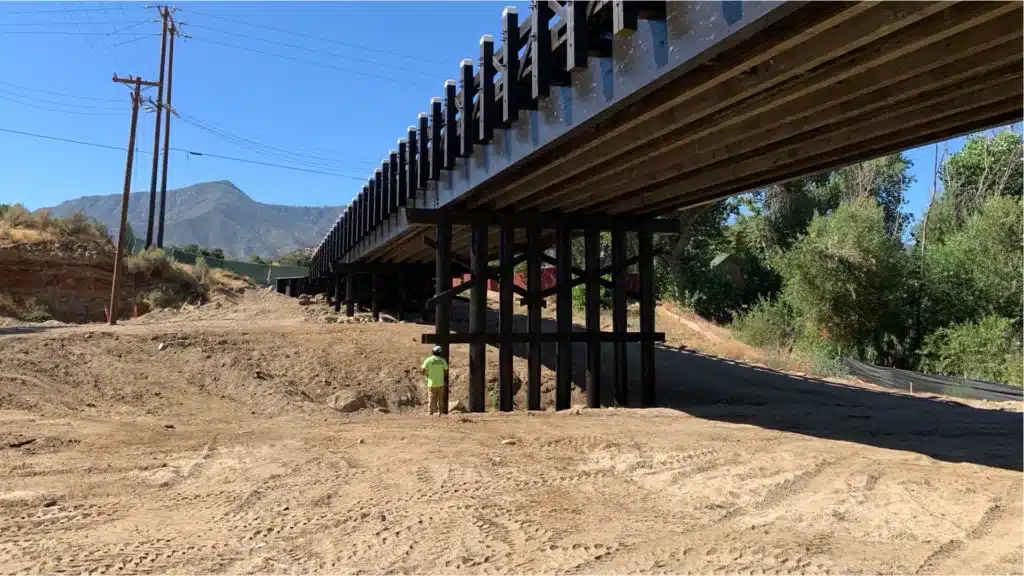
Spanning Solutions
Spanning a crossing is one of the most important aspects of your crossing project. Find the best solution for your crossing needs.
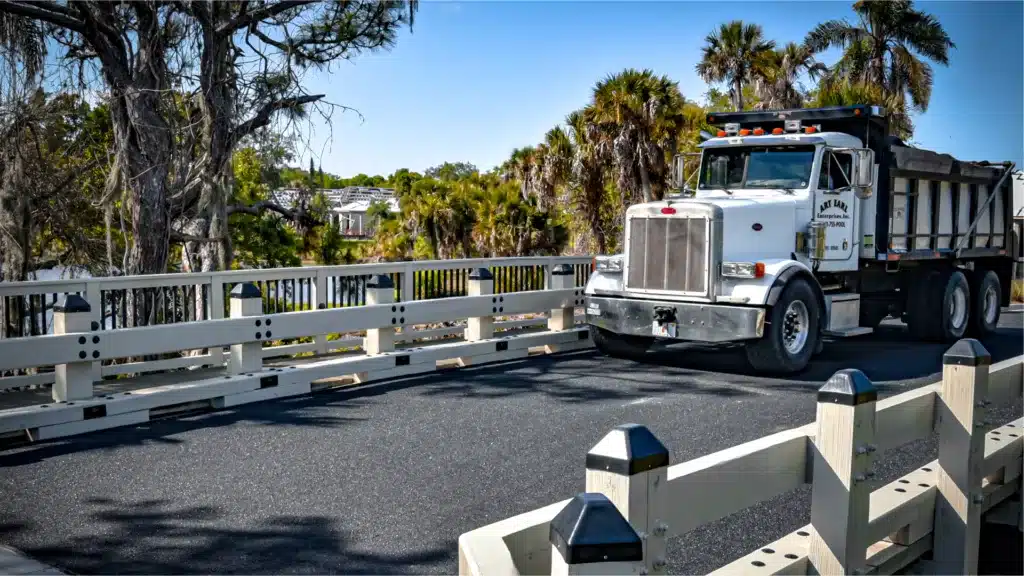
Uses & Capacities
The load capacity of a timber bridge may surprise you. See specs for different loads and uses that will help your decision-making process.