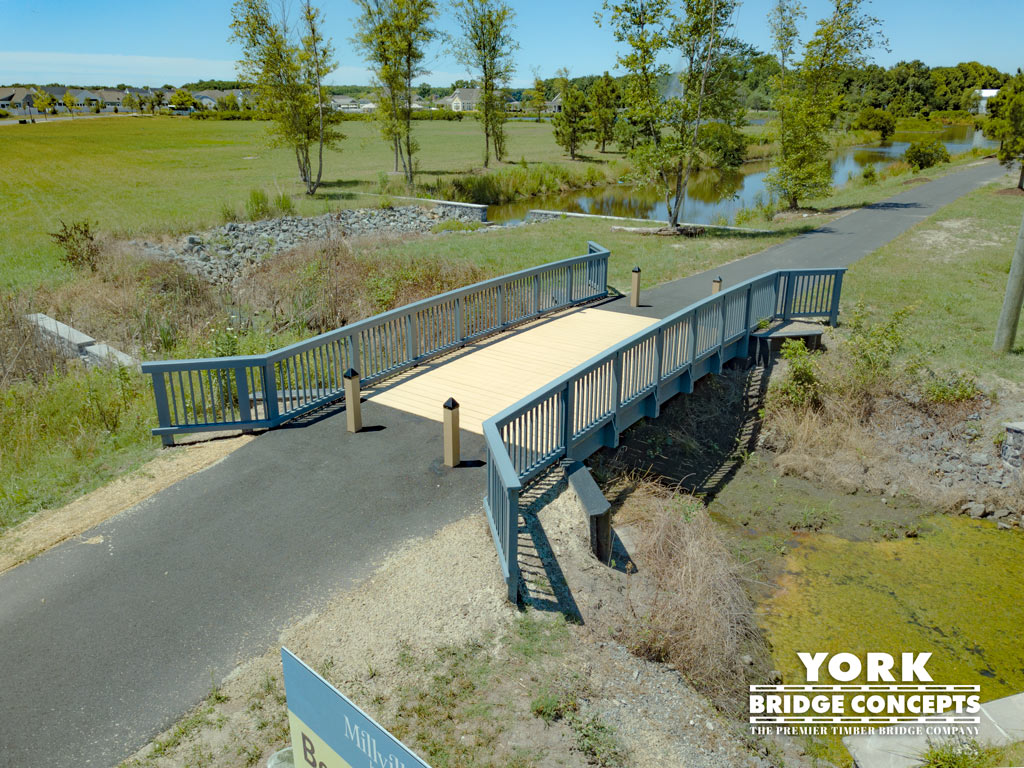
Millville by the Sea Pedestrian Bridge – Millville, DE

York Bridge ConceptsDelaware, Free Span, Pedestrian Bridges

Millville by the Sea Timber Pedestrian Bridge - Millville, DE

Delaware Pedestrian Bridge For the Millville Community

Welcome to Millville by the Sea, home of the striking Delaware Pedestrian Bridge -- a timber-bridge landmark that brings coastal charm, connectivity, and sophistication to this growing oceanfront community. Nestled near the shores of Delaware, this pedestrian bridge is more than a crossing: it's a signature piece of outdoor architecture, blending form and function in perfect harmony with its surroundings.

As part of York Bridge Concepts' Walker/Pedestrian Bridge portfolio, the Delaware Pedestrian Bridge in Millville showcases our capacity for fast, high-quality, site-sensitive timber bridge construction. Below, you'll find a full exploration of the bridge's design, construction, materials, performance, and its role within the Millville by the Sea development.

Specifications


  • Width:
  • 13’ (12’ 6” clear)
  • Length:
  • 23’ (10’ Rail Extensions on both sides)
  • Height:
  • 6' above grade
  • Capacity:
  • 85 PSF
  • Construction:
  • Ground Up
  • Span Type:
  • Free Span
  • Material:
  • CCA/CA-C Treated Southern Yellow Pine
  • Foundation:
  • Timber Piles & Abutments (Acrylic/Polymer Coated where exposed)
  • Stringers:
  • SYP Glulam Stringers (Acrylic/Polymer Coated where exposed)
  • Deck System:
  • 1-½” Timber Deck
  • Handrail:
  • Decero™ Picket Design Series
  • Crossing:
  • River Inlet

New call-to-action

Project Context & Vision

Millville by the Sea: Community & Setting

Millville by the Sea is a coastal Delaware community defined by its relaxed beachside character, walking trails, amenities, and premium architecture geared toward indoor-outdoor living. The planners and developers envisioned a network of trails and crossings that would allow residents to move seamlessly across natural waterways and inlets without breaking the coastal aesthetic or disrupting the fragile ecology.

Within this context, the Delaware Pedestrian Bridge connects trails and neighborhoods over a river inlet, creating an elegant and practical passage that enhances the walkability and charm of Millville by the Sea.


Objectives & Design Intent

When contesting a bridge in this setting, the design team sought to:

  • Create a free span structure without intermediate piers in the water, preserving the flow of the inlet and minimizing environmental disturbance.
  • Use timber as the primary aesthetic and structural material, giving warmth, a natural texture, and a coastal tonal harmony.
  • Incorporate distinctive but subtle color, railings, and finish details to complement water, sand, and vegetation.
  • Ensure structural strength, durability, and long life with proper material selection, protective treatments and maintenance strategies.
  • Execute construction with minimal site disruption and in a compressed timeframe, guarding the integrity of the banks and riparian environment.

York Bridge Concepts' Decero™ Design Team collaborated closely with the developer and field team to realize this vision on schedule.


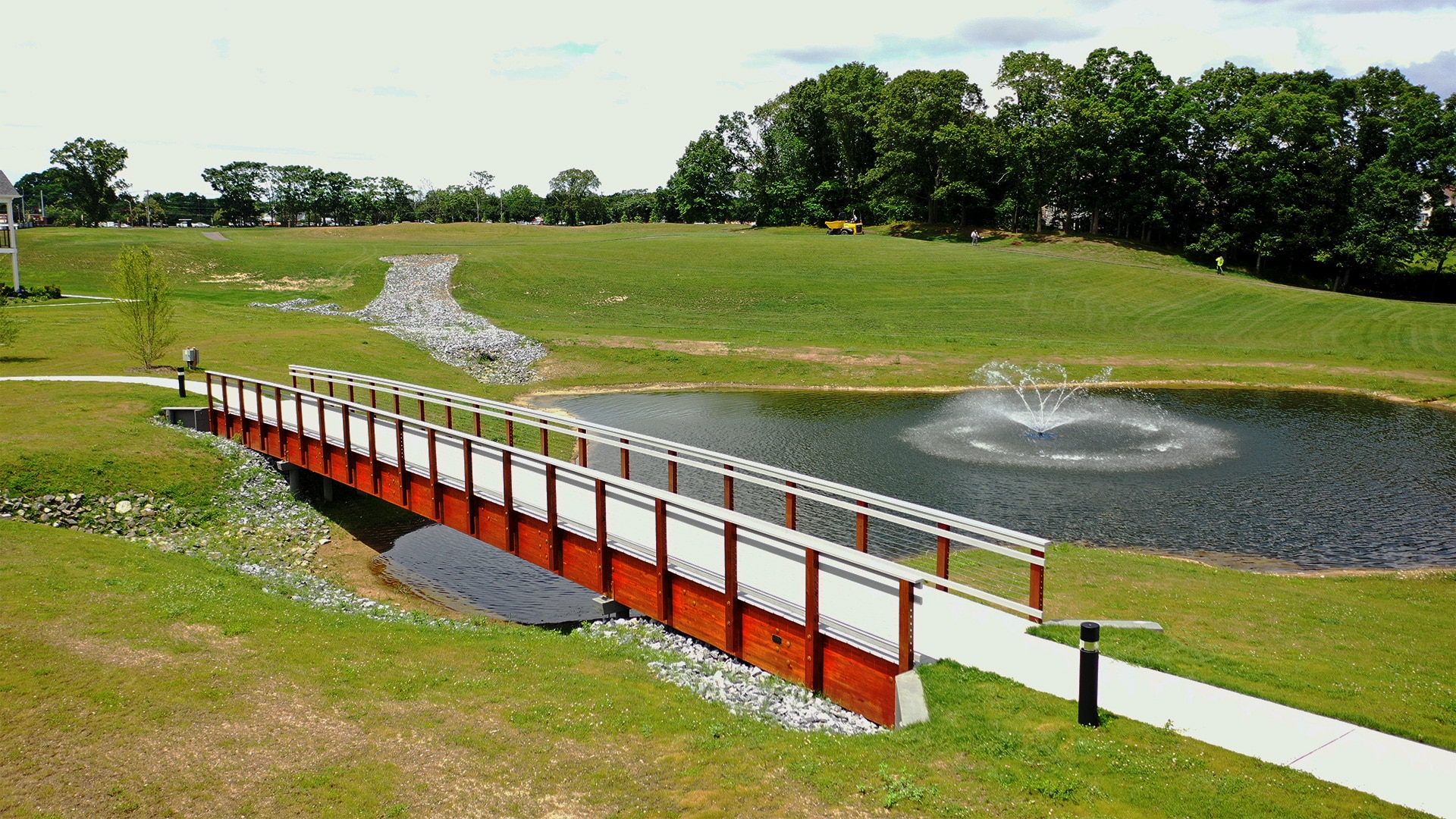
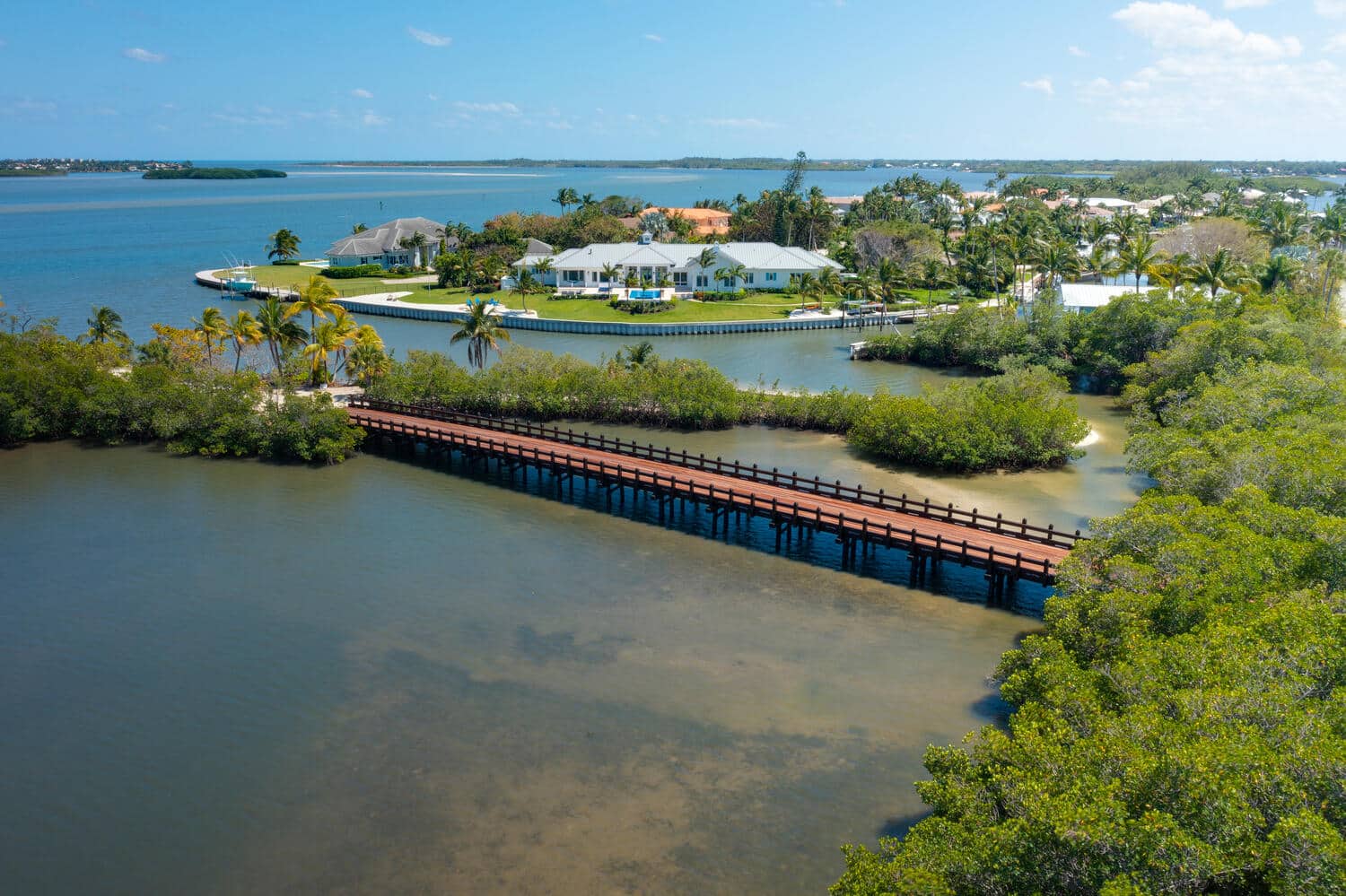
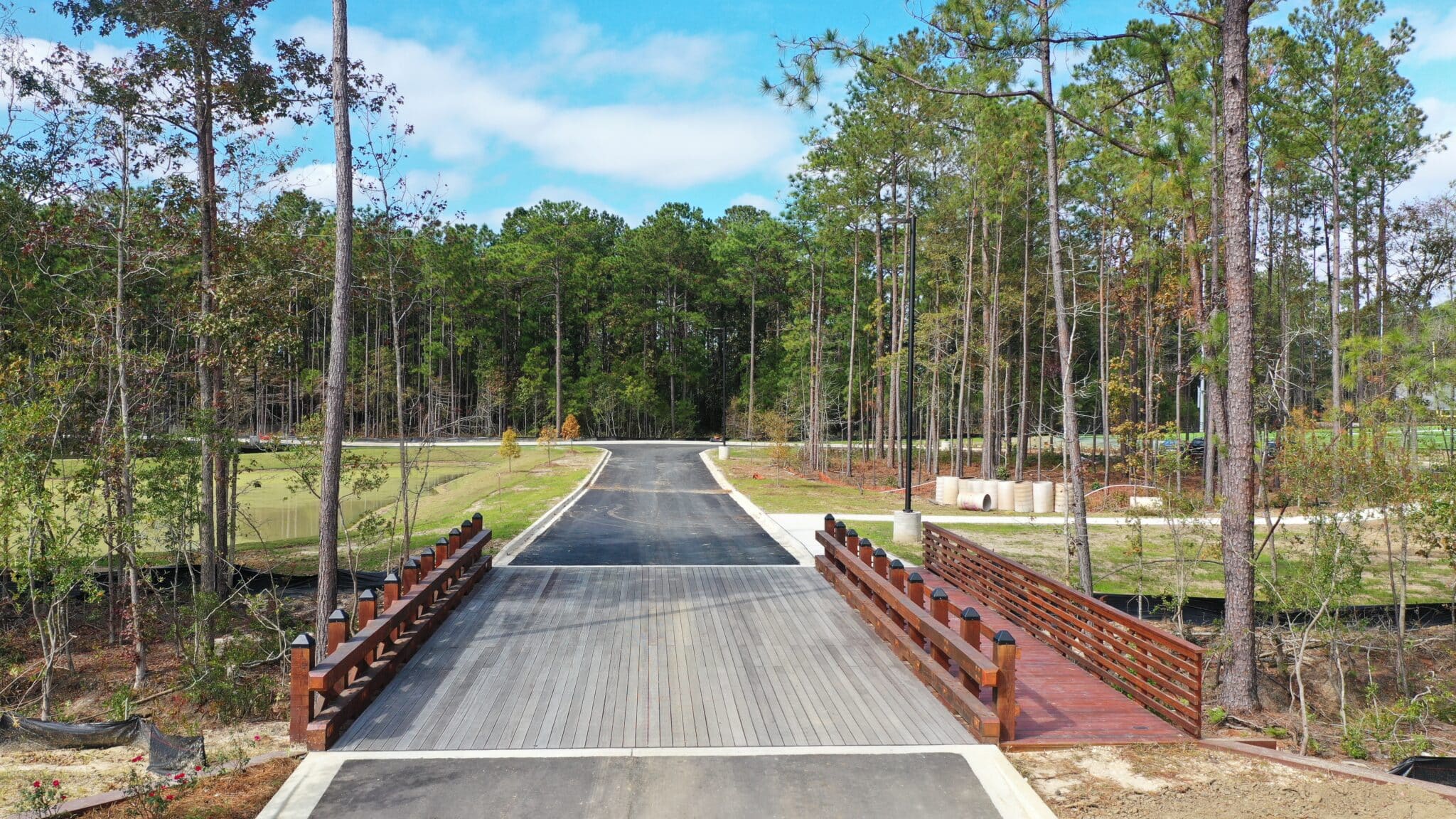
Millville by the Sea, Delaware pedestrian bridge built by York Bridge Concepts

Role & Benefits of the Delaware Pedestrian Bridge

Why is the bridge so important to Millville by the Sea--and what benefits does it bring?

Enhanced Connectivity & Walkability 
The bridge provides safe, direct pedestrian flow across a water barrier, knitting together trails, parks, and residential zones. This encourages walking, biking, and communal access without reliance on longer detours or vehicle routes.

Signature Landmark & Place Identity 
Rather than just being utilitarian, the bridge serves as a visual focal point--a signature architectural element. It enhances the identity of Millville by the Sea, contributing to branding, property value, and resident pride.

Minimal Environmental Disruption 
Because it is a free span structure (no intermediate piers in the water), the bridge preserves the natural flow, aquatic habitat, and riparian systems of the inlet. Timber materials and selective coatings further minimize ecological footprint.

Long-Term Durability & Maintenance 
Built using coated, treated timbers with protective finishes and designed for 85 PSF loading, the bridge offers strong longevity. With well-planned maintenance, the structure can serve reliably for decades, reducing long-term repair costs.

Speed of Deployment 
the fast build (two weeks) demonstrates the feasibility of high-quality timber pedestrian crossing deployment even in mature developments. This helps developers stay on schedule and reduce site disturbance.


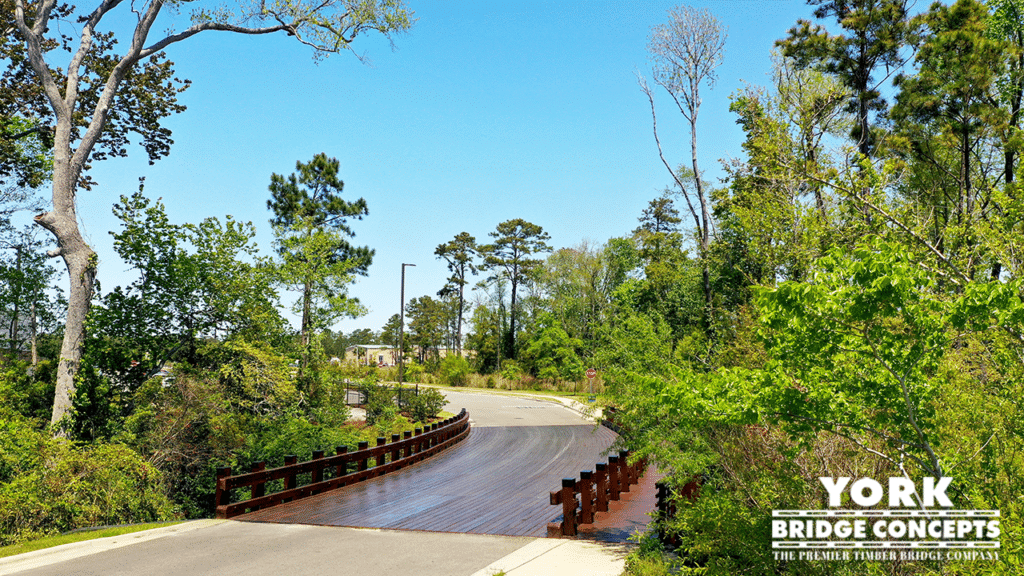
Millville, DE free span pedestrian bridge built by York Bridge Concepts

Why Timber & Free-Span Design?

Benefits of Timber Bridges in Coastal / Inland Settings 

  • Natural warmth, texture, and scale often outperform steel or concrete in pedestrian contexts
  • Timber is renewable and can be responsibly sourced
  • Coatings and design details allow resistance to moisture, UV, and biological degradation
  • Easier to blend into natural landscapes and aesthetic schemes

Why a Free Span Design? 

  • Avoids placing piers in sensitive aquatic zones
  • Reduces obstruction to water flow, debris, wildlife passage
  • Allows a cleaner, more elegant visual form
  • Simplifies maintenance

Load Design, Deflection, & Comfort?

Because the bridge is for pedestrians, the structural design emphasizes limiting deflection, controlling vibration, and ensuring comfort. The 85 PSF design criterion ensures that even in heavier foot traffic scenarios (gatherings, small carts) safety is maintained.

Material Treatment & Protection

To survive in a coastal, humid environment:

  • Use of CCA/CA-C treatments for timber
  • Acrylic / polymer coatings on exposed surfaces
  • Sealants on cut edges
  • Periodic inspections, resealing, and repair of any localized damage

When properly maintained, the lifetime of the bridge can exceed 50+ years, and in many cases 75+ years, depending on use and environment.


Millville Delaware Pedestrian Bridge built by York Bridge Concepts

Construction Process & Challenges

Site Logistics & Access

Event in a coastal development, getting equipment, materials, and crews to the water's edge while protecting landscaping and minimizing erosion is a major planning task. The YBC approach always includes:

  • Pre-staging materials offsite
  • Minimally invasive site access
  • Erosion control, silt fences, and best management practices
  • Careful bank protection during foundation work

Prefabrication & Modular Assembly

To reduce site labor and time, many bridge components (glulam beams, handrail segments, decking) were prefabricated offsite under quality control, then delivered and assembled. This modular approach:

  • Improves precision
  • Reduces waste
  • Lowers time on site
  • Minimizes disruption to surroundings

Maintaining a Pristine Site

Throughout, the YBC team upheld a "leave no trace" ethic--keeping the banks, roadsides, and vegetation intact. This is especially crucial in salt marsh zones, riparian buffers, and near public amenity zones.

Weather & Tide Considerations

Construction near water means dealing with tides, storm surges, wind, and weather windows. The schedule and structural staging accounted for:

  • Allowance for rain or storms
  • Safe working elevations versus tidal levels
  • Delays or resequencing in case of unexpected conditions

Quality Control & Inspection

Each stage included inspection checkpoints:

  • Foundation alignment and load tests
  • Beam alignment, deflection under test load
  • Decking flatness and tolerance
  • Rail strength, fastening, and safety compliance
  • Coating thickness, adhesion, and finish

Upon final acceptance, the bridge was turned over with all documentation, warranties, and maintenance guidance.


Image

Maintenance & Longevity

To ensure this Delaware Pedestrian Bridge remains in top condition, a systematic maintenance plan is essential.

Inspection Schedule 

  • Annual inspection: visual checks for wear, weathering, fastener integrity, coating condition
  • Every 5 years: more thorough structural check (fastener tightness, timber condition, any signs of decay)
  • After storms or flooding: additional assessment for scour, debris damage, or moved elements

Recoating & Sealing

  • Reapply protective coatings (acrylic / polymer sealers) to exposed surfaces as needed
  • Seal cut edges, repairs, or patches
  • Address areas of wear or abrasion promptly to avoid deeper infiltration

Fastener & Hardware Maintenance

  • Check bolts, screws, connectors for loosening, corrosion
  • YBC uses galvanized or stainless steel fasteners to resist corrosion
  • Lubricate or seal hardware as needed.

Board or Rail Replacement

  • Damaged deck boards or rail pickets should be replaced individually
  • Keep spare boards and matching coatings on hand for seamless repairs
  • Use best practices to avoid different shrinkage or mismatched finishes

Vegetation, Drainage & Erosion Control

  • Ensure drainage paths near abutments are clear
  • Monitor bank erosion near abutments and guard against undercutting
  • Manage vegetation so that drainage, airflow, and site cleanliness are preserved

Over time, with attentive care, the bridge can reamain a safe, beautiful, and functional asset for decades to come.


Image

Integration into Millville by the Sea: Trails, Amenity, & Resident Experience

Trail Network & Circulation

The Delaware Pedestrian Bridge is an integral link in Millville's trail network. Whether residents are walking to beach access points, parks, or neighboring streets, this bridge shortens paths and enhances usability. It encourages a pedestrian-first mindset in the development

Visual & Experiential Appeal

Crossing the inlet via a timber bridge with coastal color accents is an experience. Residents and visitors perceive value in these thoughtful touches. The soft blue rails, sand-tone deck, and airy openness contribute to a sense of place. At dusk or dawn, the silhouette of the bridge becomes part of the vista.

Property Value & Marketing Edge

Amenities like this pedestrian bridge help differentiate Millville by the Sea in the regional real estate market. Buyers often view these features as markers of quality, care, and lifestyle. The bridge underscores the community's commitment to thoughtful design, outdoor living, and sustainable infrastructure.

Community Identity & Storytelling

The Delaware Pedestrian Bridge can be featured in marketing materials, community events, and newsletters as a tangible embodiment of Millville by the Sea's vision. It becomes part of the narrative: bridging trails, homes, and coastal living in elegant form.


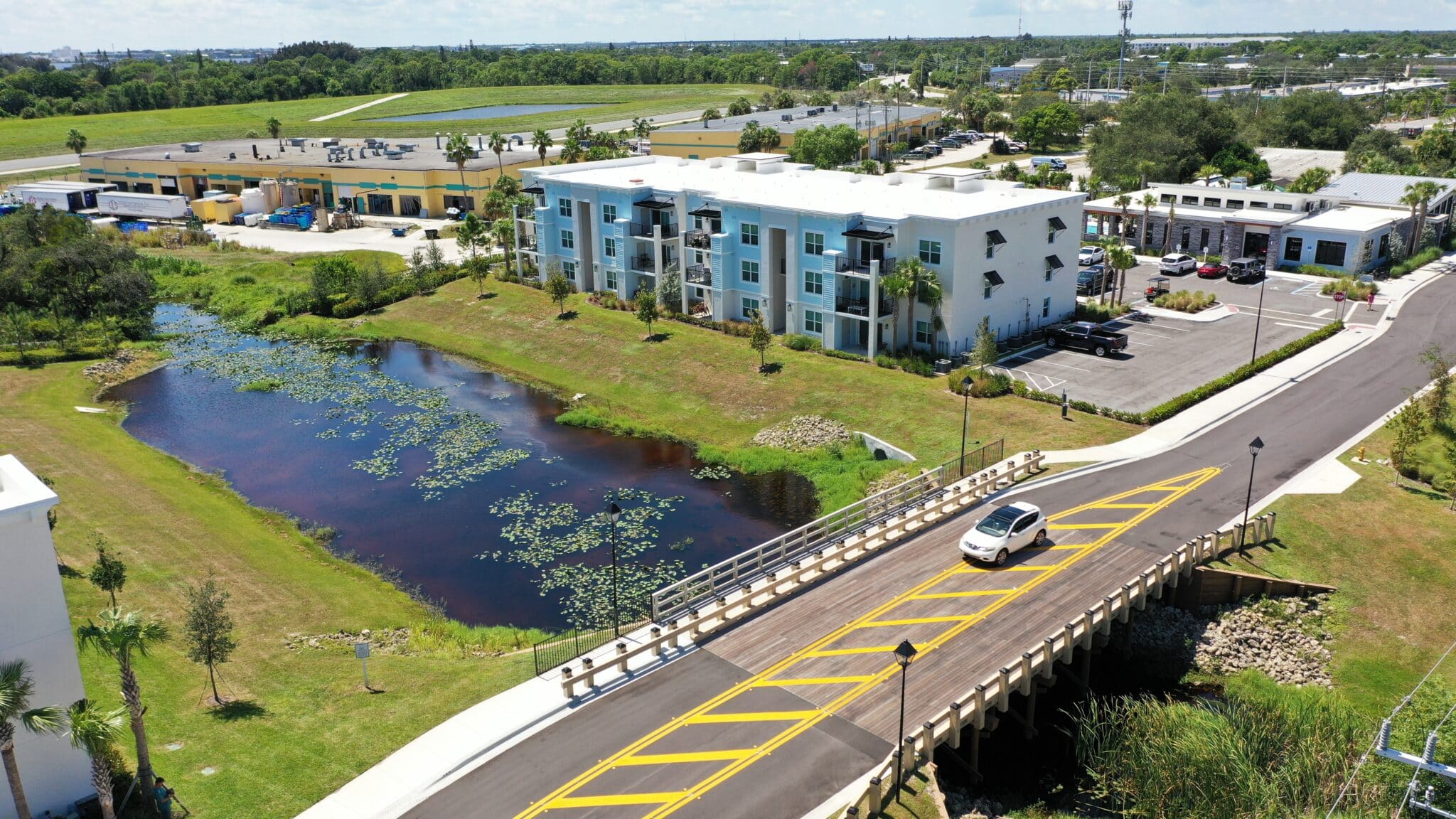
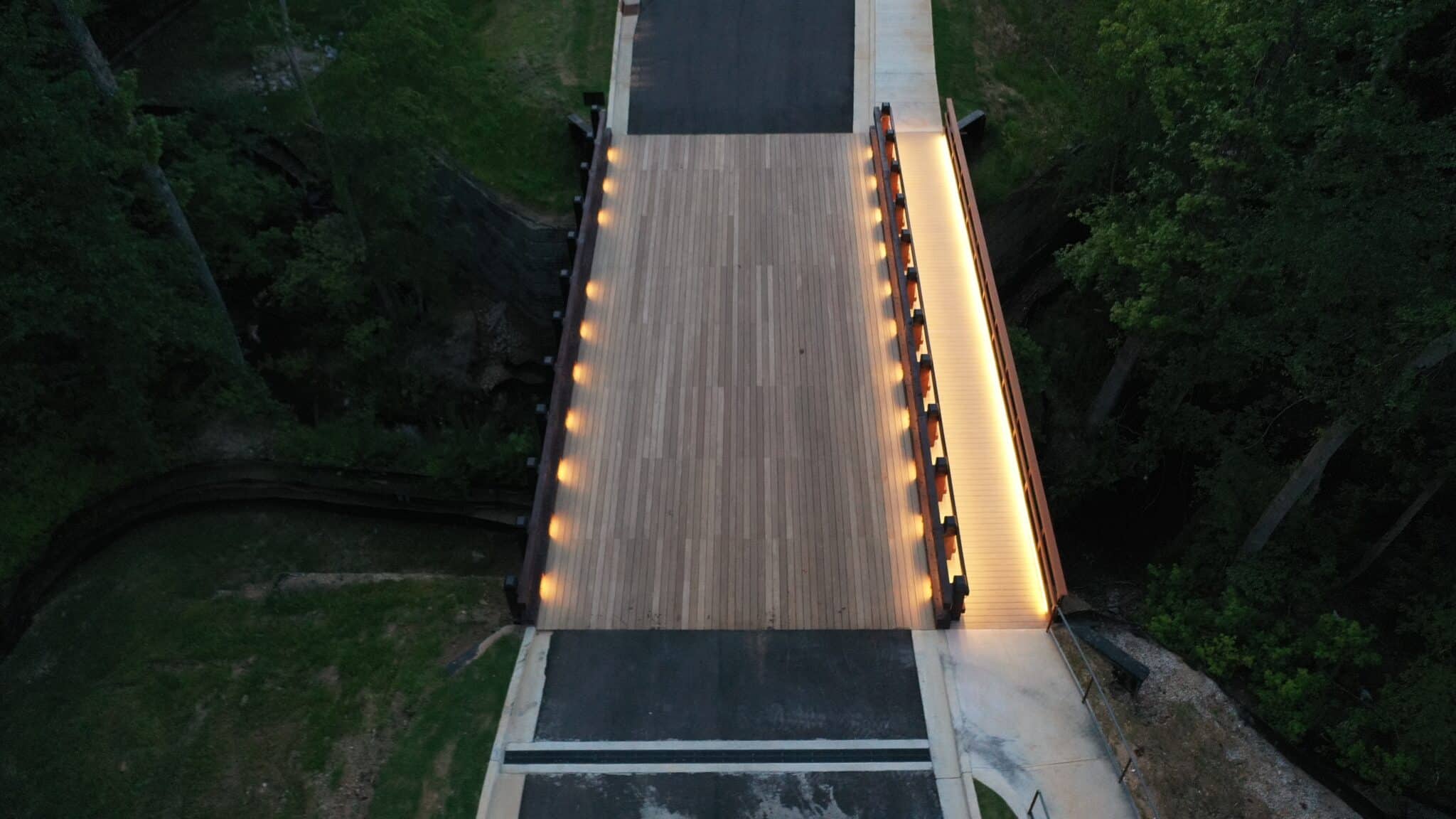
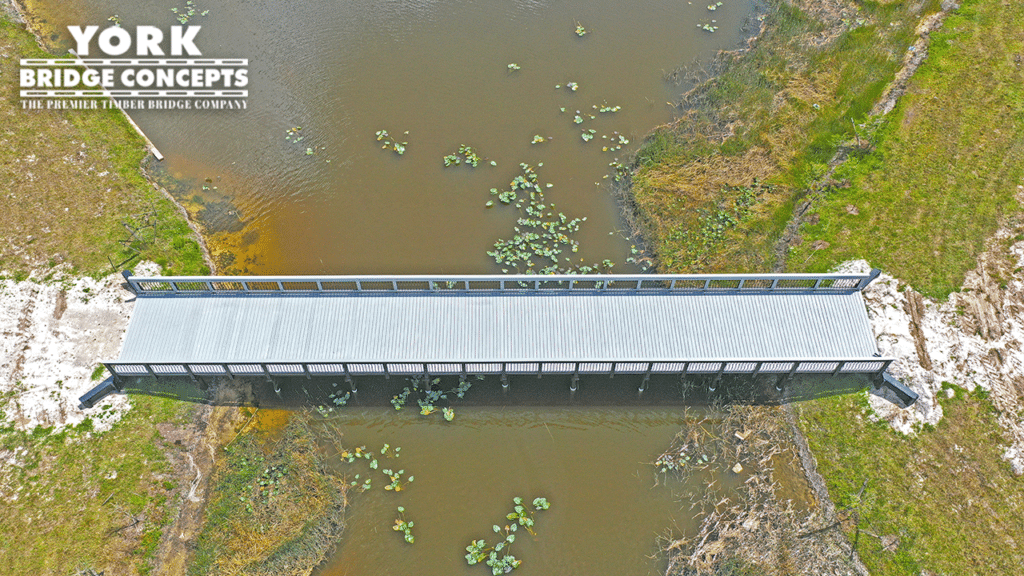
Overhead view of Millville Delaware pedestrian bridge built by York Bridge Concepts

Comparisons, Alternatives & Decision Framework

Bridge vs. Culvert or Box Culvert

One common question is: "Why not use a culvert instead of a timber bridge?" Below is a comparative view:

Option

Pros

Cons/Limitations


Culvert / Box culvert

Often lower initial cost, simpler in some terrains

Can disrupt aquatic habitats, impede water flow, limit aesthetics, require more site grading

Timber Pedestrian Bridge

Elegant, minimal in-water footprint, high architectural value, better adaptability

Requires structural design, waterproofing, maintenance, higher initial cost versus simple culvert in some cases

In Millville's context, the desire for visual quality, minimal hydrologic disruption, and a statement piece tipped the scale in favor of a timber bridge.

Span Types: Free Span vs. Supported Span

A supported span (with a pier in the water) might offer lower structural demands for a given length--but at the cost of:

  • Environmental intrusion
  • Additional foundations underwater
  • More complex maintenance
  • Visual bulk

Here, a free span was feasible given the 23' span length and soil conditions, thus preferred minimal intervention.

Material Alternatives: Steel, Concrete, Composite

  • Steel: strong, slender profiles--but less warm visually, susceptible to corrosion in coastal salt environments, maintenance of coatings
  • Concrete: durable, but heavy, bulky, and less flexible for tonal design
  • Composite / FRP: lighter and corrosion-resistant, but higher cost and sometimes less aesthetic warmth

Timber, properly treated and coated, offers a best-of-both-worlds balance in many pedestrian bridge contexts--especially for moderate spans where aesthetic harmony is desired.


Image

Key Lessons & Best Practices from This Project

From the Millville by the Sea Delaware Pedestrian Bridge project, several best practices and lessons emerge:

  1. Early coordination among designers, developers, and environmental consultants ensures alignment on aesthetics, permit needs, and ecology.
  2. Prefabrication and modularization yield faster site assembly, less waste, and greater precision.
  3. Careful color and finish selection elevates a functional crossing into a community icon.
  4. Site protection and erosion control must be integral from day one--not an afterthought.
  5. Protective coatings and finish integrity are vital in coastal or humid settings.
  6. Communication with the community- helps keep people understand the value of such infrastructure, aiding acceptance and pride.


Call to Action & Next Steps

If you are contemplating a pedestrian or vehicular bridge in a coastal, wetland, or community environment, here are some recommended steps:

  1. Engage a bridge design-builder early - the earlier the better.
  2. Evaluate span lengths, site constraints, and environmental sensitivity.
  3. Choose materials and finishes that match the vision and climate.
  4. Set a realistic maintenance plan and budget from the outset.
  5. Ask for references, review case studies (like Millville by the Sea), and request design promises on aesthetics and longevity.
  6. Communicate with stakeholders (residents, local agencies, environmental bodies) to build buy-in.

York Bridge Concepts can help you through conceptual design, permitting, construction, and long-term stewardship. Contact us to explore your own Delaware Pedestrian Bridge or similar project.


Frequently Asked Questions (FAQ)

Why is it called the Delaware Pedestrian Bridge?

Because it sits in Delaware, serving the Millville by the Sea community, and is designed exclusively for pedestrian use (walkers, bicycles, etc.). The name emphasizes location and function.

How durable is a timber pedestrian bridge in a coastal environment?

With proper treatment (CCA, CA-C), protective coatings, and regular maintenance, a well-built timber pedestrian bridge can last several decades--often exceeding 50-75 years depending on conditions.

What is the load capacity of this bridge?

The Millville by the Sea Delaware Pedestrian Bridge was designed for 85 PSF (pounds per square foot) to accommodate pedestrian flows, small carts, and occasional maintenance loads.

Why not use a concrete or steel bridge?

Those materials have merits but are less harmonious in aesthetic terms, may require more maintenance in coastal zones, and often lack the warmth and contextual fit of timber in residential or coastal settings.

How was the construction timeline so short?

Through on-site fabrication, modular assemblies, careful site staging, and disciplined logistics, the YBC field team completed the bridge in just weeks from arrival, while maintaining site cleanliness and integrity.

Does the bridge require any special permits or environmental review?

Yes. Any crossing of water bodies or wetlands typically requires permitting (e.g. for riparian buffer, wetland impact, in-water work, etc.) Early coordination with regulators and environmental consultants is essential.

Can this design be scaled or adapted?

Absolutely. The principles--free span, timber, coated finishes, modular approach--can be scaled for longer spans, different widths, or vehicular applications (with proper structural design).


Millville birds eye view of the Delaware pedestrian bridge design-engineered-built by York Bridge Concepts

Summary & Closing Thoughts

The Millville by the Sea Delaware Pedestrian Bridge stands as a compelling example of how a well-designed timber pedestrian crossing can simultaneously deliver functionality, aesthetic appeal, environmental sensitivity, and long-term durability. It stitches together neighborhoods, trails, and nature with a graceful span over water--without sacrificing visual quality or ecological integrity.

As coastal and residential communities increasingly prioritize walkability, placemaking, and sustainable infrastructure, having a signature pedestrian bridge like this becomes both a practical asset and a branding advantage. For developers, architects, planners, and communities considering similar crossings, the Millville project offers lessons in design, construction, maintenance, and community impact.

If you'd like to see more bridges like this--or explore a custom Delaware pedestrian bridge (or beyond) tailored to your site--York Bridge Concepts is ready to talk. Let's build something that bridges rivers, neighborhoods, and imaginations.


REQUEST YOUR QUOTE

All Feature Projects


What's Best: A Culvert Or A Timber Bridge?

Understand the considerations you should make before choosing your crossing method.

What Is The Best Span Type For My Project?

See how creative scoping, design, & usage work to create the perfect spanning solution for your project.

Which Load Capacity I Need?

Understand the different load capacities for usage that are needed for your project.

How Do I Cross An Environmentally Sensitive Area?

Learn how YBC crosses protected areas with our Deck-Level Construction.

How Do I Create A Landmark?

Create a memorable icon for your development project with a YBC Legacy Timber Bridge.

How Long Does A Timber Bridge Last?

Extend the lifespan of your timber bridge to over 75 years using these guidelines, material selection, protection & maintenance practices.


Placeholder Image

Culvert Or Bridge

If you're considering using a culvert for your crossing project. Click below to understand the best fit for your project.

Culvert Or Bridge
Placeholder Image

Spanning Solutions

Spanning a crossing is one of the most important aspects of your crossing project. Find the best solution for your crossing needs.

Spanning Types
Placeholder Image

Uses & Capacities

The load capacity of a timber bridge may surprise you. See specs for different loads and uses that will help your decision-making process.

Bridge Loads & Usages