Foxhorn's New Connector: A Showcase of Community Infrastructure
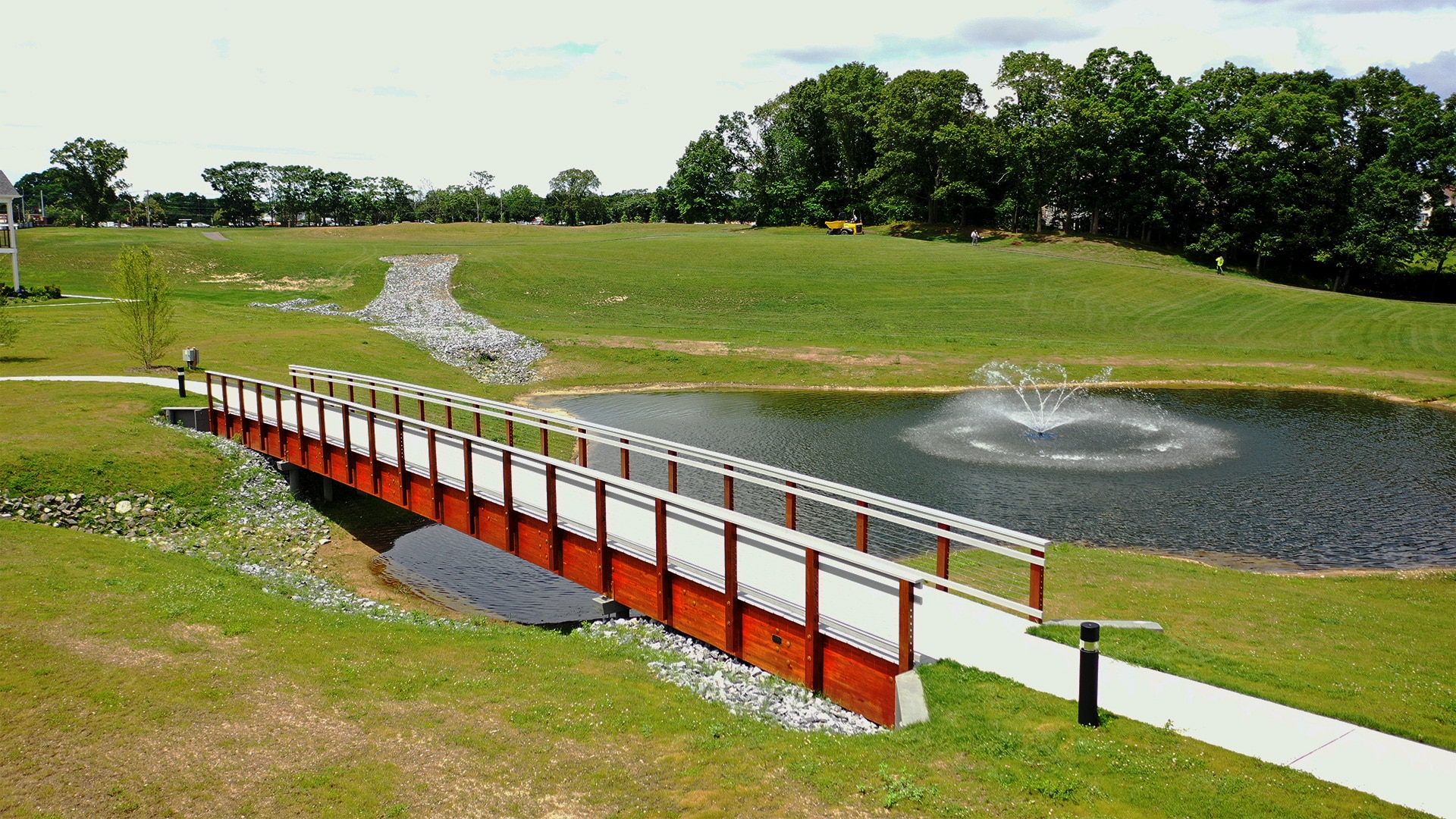
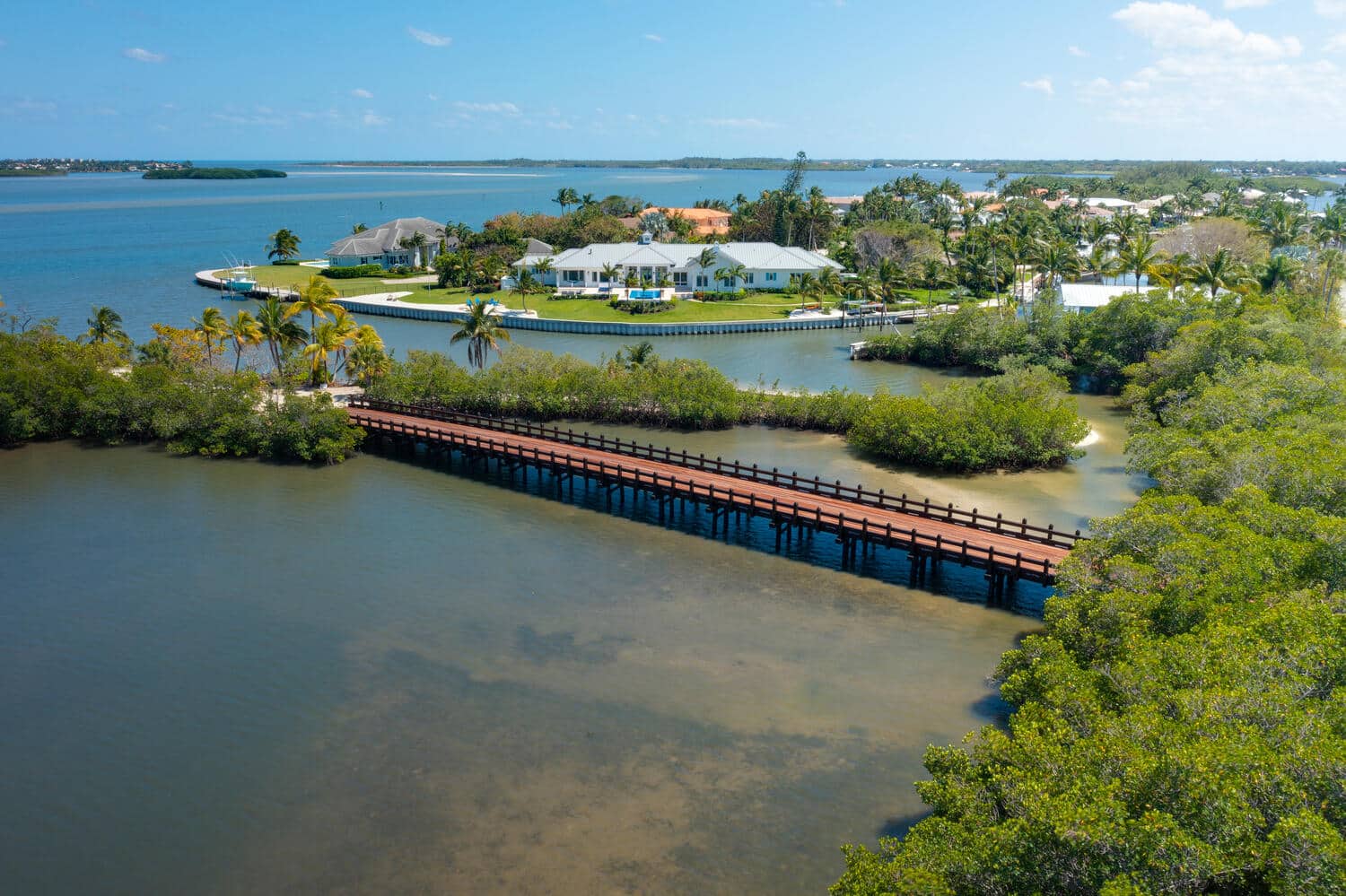
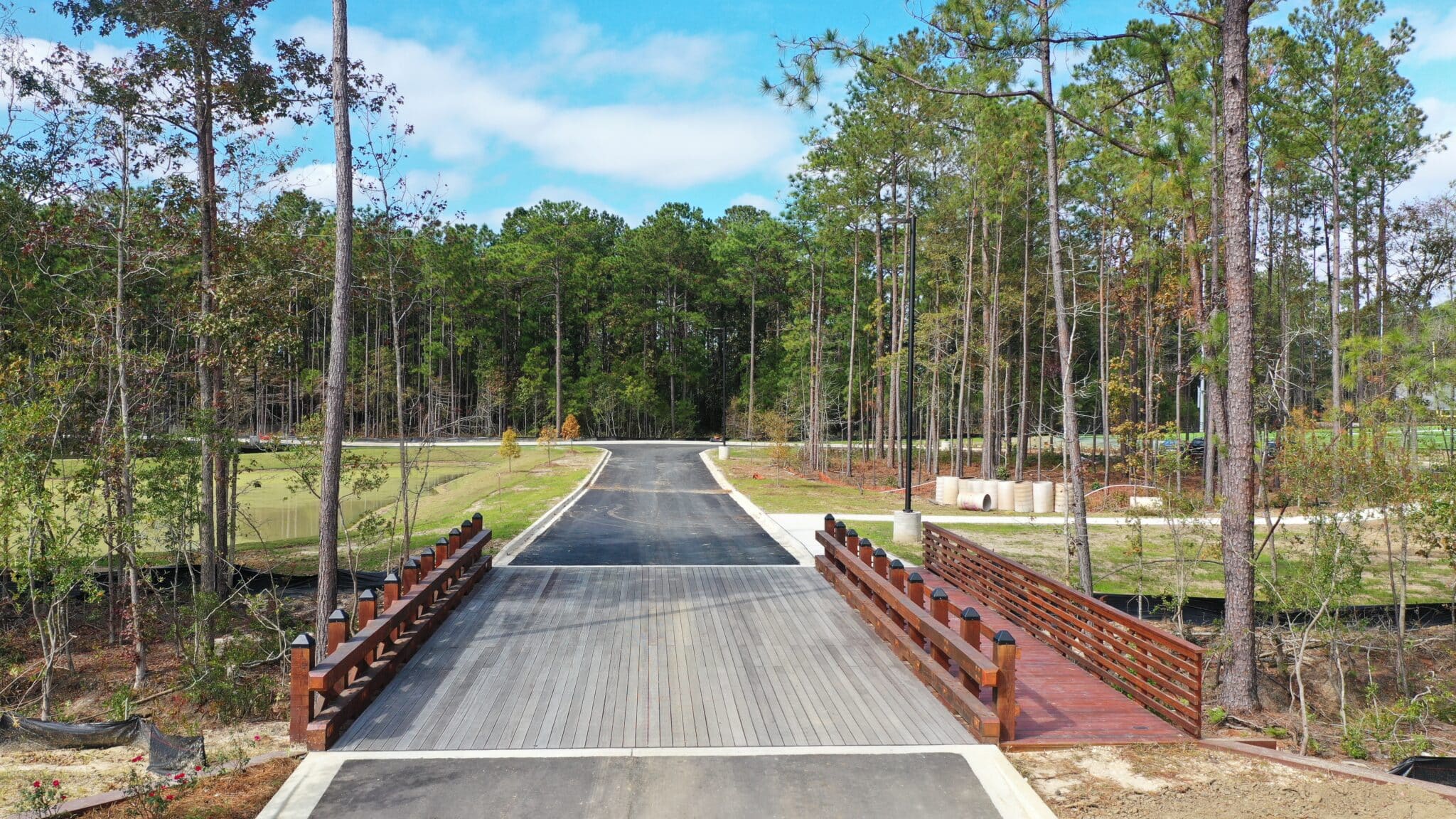
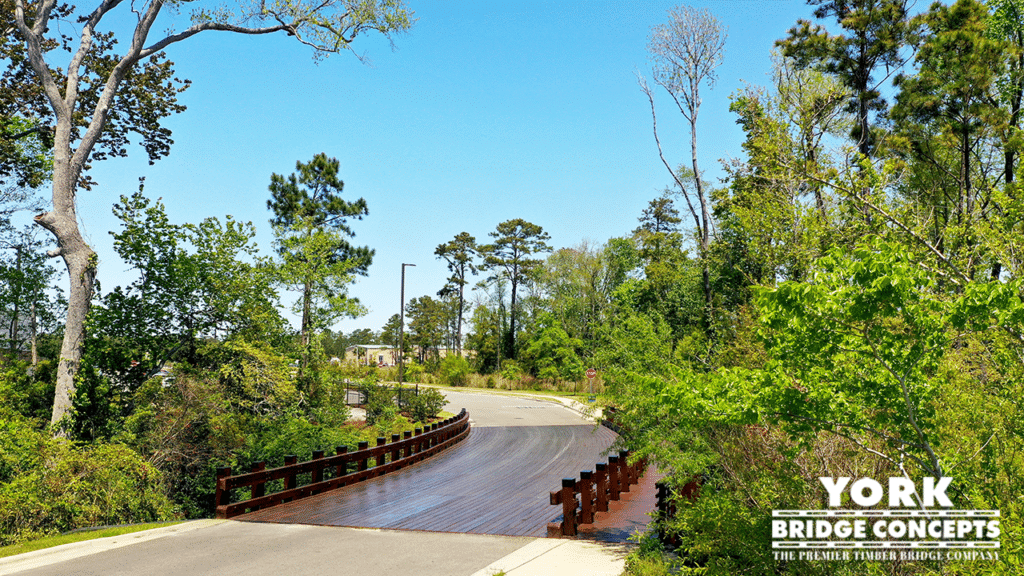
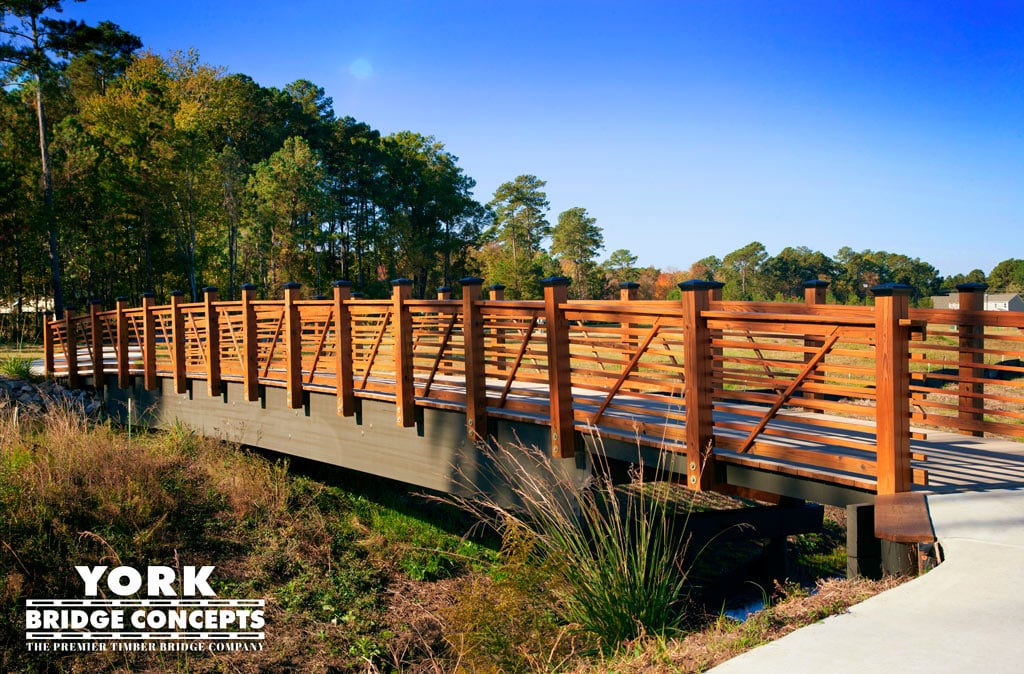
In the heart of Myrtle Beach, SC, the Foxhorn Development continues to evolve into a walkable, welcoming neighborhood where everyday life feels connected by design. At the center of that promise is a new multiple-span pedestrian bridge designed and built by York Bridge Concepts (YBC)--a 75-foot crossing that threads over a tranquil creek to unify access between community phases. With its Legacy Series design language, an acrylic-coating deep warm gray substructure, teak oil-stained Southern Yellow Pine (SYP) superstructure, and light gray composite decking, the bridge blends durable engineering with refined aesthetics. It is, in every sense, a piece of community infrastructure that does more than carry people; it carries a vision of mobility, safety, beauty, and stewardship forward.
From morning dog walks to evening stroller runs, from joggers to nature watchers, Foxhorn's bridge turns "getting there" into part of the daily experience. And because it was conceived within YBC's Decero™ Design-Engineer-Build approach and constructed via Deck-Level (top-down) methods that minimize ground disturbance, the bridge respects the creek's ecosystem while strengthening the neighborhood's walkable network.
Design Intent: Beauty, Belonging, & Everyday Use
Great community infrastructure should feel inevitable--like it was always meant to be there. The Foxhorn bridge earns that feeling in three ways:
- Visual harmony -- The deep warm gray acrylic-coated substructure recedes into the landscape, letting foliage and water remain the stars. Above, the teak oil-stained SYP superstructure adds warmth, echoing the tones of coastal timber boardwalks and the soft glow of late-afternoon Carolina light.
- Tactile comfort and safety -- The light gray composite decking maintains an even, slip-resistant walking surface with virtually no splinters and less heat retention than darker materials--ideal for Myrtle Beach's sunny days.
- Crafted details-- The horizontal handrail picket design provides a clean, modern line that frames views of the creek without visual clutter. Subtle black post caps punctuate rhythm and refinement along the rail--small details that add up to a premium, memorable crossing.
Together, these choices create a bridge that elevates daily life--an amenity residents use without thinking twice, yet notice every time they cross.
The Legacy Series: A Signature Look with Proven Performance
YBC's Legacy Series is known for balancing timeless proportions with modern materials and coatings. For Foxhorn, the series' signature lines are matched with a palette specifically curated for the site:
- Acrylic-coated substructure (deep warm gray): Acrylic coatings provide robust moisture resistance and UV stability, helping protect timber from the coastal climate while delivering a sophisticated, matte finish that diffuses glare across the waterway.
- Teak oil-stained SYP superstructure: Southern Yellow Pine is prized strength and dimensional stability. The teak-toned oil stain enhances the grain, deepens color, and supports long-term surface performance with re-treatable beauty.
- Light gray composite decking: Composite materials provide a high-durability walking surface with minimal maintenance, excellent color retention, and consistent traction. The chosen hue ties into the substructure while brightening the deck plane, offering both contrast and clarity underfoot.
This carefully orchestrated system supports a high-touch finish without inviting high-touch upkeep--a hallmark of community infrastructure that must look good and work hard year after year.
Multi-Span Configuration: A Creek-Sensitive Solution
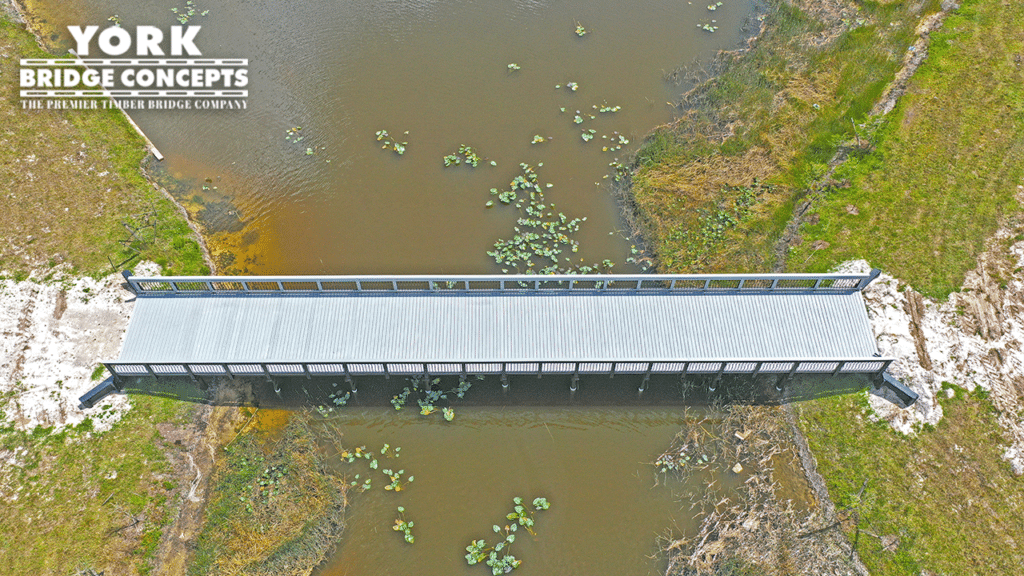
The Foxhorn pedestrian bridge spans 75 feet in a multiple-span arrangement over a creek--a design choice that balances structural efficiency, constructability, and environmental sensitivity. Rather than a single long leap, the span breaks into shorter structural bays that:
- Reduce member sizes for a more slender, elegant profile.
- Distribute loads more efficiently into foundations.
- Accommodate site grades and bank geometry with less earthwork.
- Limit in-stream disturbance by placing supports with precision and minimizing contact with sensitive riparian zones.
For residents, the result is a comfortable, confident crossing with sightlines that draw the eye down the creek corridor. For the ecosystem, it's a respectful touch that keeps the water moving, the banks intact, and the vegetation undisturbed beyond the minimal footprint required.
Context, Hydrology, Structure, and Materials
Site Context & Creek Corridor Intelligence
Every successful pedestrian crossing starts with an honest read of the land. At Foxhorn, the creek behaves like a living boundary: it braids shallow flows after summer storms, retreats to a clear, narrow channel in dry spells, and supports a fringe of wetland grasses and riparian shrubs that knit the banks together. Rather than spells, and supports a fringe of wetland grasses and riparian shrubs that knit the banks together. Rather than dominate that corridor, the bridge aligns with it. Approach paths taper into the structure at a comfortable cadence; the proportion of the spans matches the creek's visual rhythm; and the vertical profile respects sightlines from adjacent homes so the bridge reads as part of the neighborhood--not above it.
The project team also mapped how people already move: informal footpaths, preferred pet-walking loops, the shortest route between pocket parks and mail kiosks. That human geometry informed both the bridge's location and the wayfinding logic on either side. The result is a crossing that gets used because it's on the way, not in the way.
Hydrology, Flood Behavior, and Scour-Smart Detailing
Creek crossings fail most often where water and soil meet poor decisions. Foxhorn's spans and abutments were planned around flow conveyance, bank preservation, and scour resilience:
- Clear conveyance: The underside of the superstructure maintains healthy clearance for expected high-water events, allowing debris to pass and minimizing backwater effects.
- Pier placement with intention: Intermediate supports are positioned to keep natural thalweg movement intact and to avoid creating eddies that eat away at the toe of the bank.
- Energy management: Approaches and under-bridge zones incorporate subtle grade transitions and armored bearing points where needed, diffusing flow energy without telegraphing "hard engineering."
- Inspectability: Critical scour and bearing points remain visible from the deck or adjacent banks, simplifying routine checks after major rain events.
These moves turn flood time into a design load case rather than a risk to be feared--engineering confidence you can feel in the quiet days between storms.
Foundation Strategy: Minimal Footprint, Maximum Effect
With multiple spans, foundation loads are distributed efficiently. At Foxhorn, that means fewer oversized members and more slender elements tuned to local soils. Foundation choices emphasize stability with a light touch: driven supports where feasible to reduce excavation, and carefully prepared bearing zones that protect root systems and maintain bank structure. The detailing is deliberately "forgiving," with moisture-shedding surfaces, drip edges, and termination caps that keep water moving past--not into--critical interfaces.
Structural System: Timber Strength with Refined Connections
Timber is the structural backbone because it marries human-scale warmth with serious performance. Members are sized for modern pedestrian live loads and environmental factors, then connected with corrosion-restraint hardware chosen for coastal conditions. Connection strategies focus on three outcomes:
- Stiffness that feels right: The bridge reads as solid underfoot, eliminating distracting bounce for walkers and strollers.
- Long-term serviceability: Interfaces are detailed to limit water traps and accommodate seasonal movement without opening up unsightly gaps.
- Ease of inspection: Bolted and concealed fasteners are placed for access, so quick checks remain truly quick.
The horizontal picket rail continues that logic: clean sightlines, hand-friendly profiles, and attachment points that resist racking while maintaining visual lightness.
Coatings & Finishes: A Layered Defense
Coastal sun, salt-tinged breezes, and daily foot traffic demand a system--one part alone won't do. The acrylic-coated substructure delivers UV stability and moisture resistance with a low-gloss finish that visually recedes into the creek corridor. Above, teak oil-stained SYP celebrates the timber grain while adding water repellency and straightforward refresh cycles. Fastener heads and optional trims are selected to harmonize with the palette, preventing the "polka-dot" look common to exposed hardware near water.
This is materials science with aesthetic intent: performance first, beauty as a consequence.
Decking Performance: Traction, Heat, & Cleanability
The light gray composite deck does quiet work every day. Its pigment choice reduces heat gain on sunny Myrtle Beach afternoons; the micro-texture delivers confident traction without looking industrial; and the internal composition resists the scuffs and scrapes of routine use. Subtle chamfers on exposed edges soften the visual line and shed water cleanly, while color stability means the deck stays dignified through seasons of sun.
Human-Scale Geometry: Proportion That Invites Use
A bridge you enjoy is a bridge you'll use. Span lengths, rail height, picket spacing, and the deck's width are coordinated to feel intuitive--ample room for two strollers to pass, enough openness to enjoy the water, enough enclosure to feel safe. The structure reads as calm, which is its own kind of safety cue.
Commissioning Mindset from Day One
Design decisions anticipated operations: where crew members will stage a ladder for a quick inspection, how a single board can be replaced without disturbing adjacent runs, which hardware the HOA will want to keep in stock. That foresight is one reason community infrastructure ages gracefully--because it was meant to be cared for.
Deck-Level (Top-Down) Construction: Building with a Light Footprint
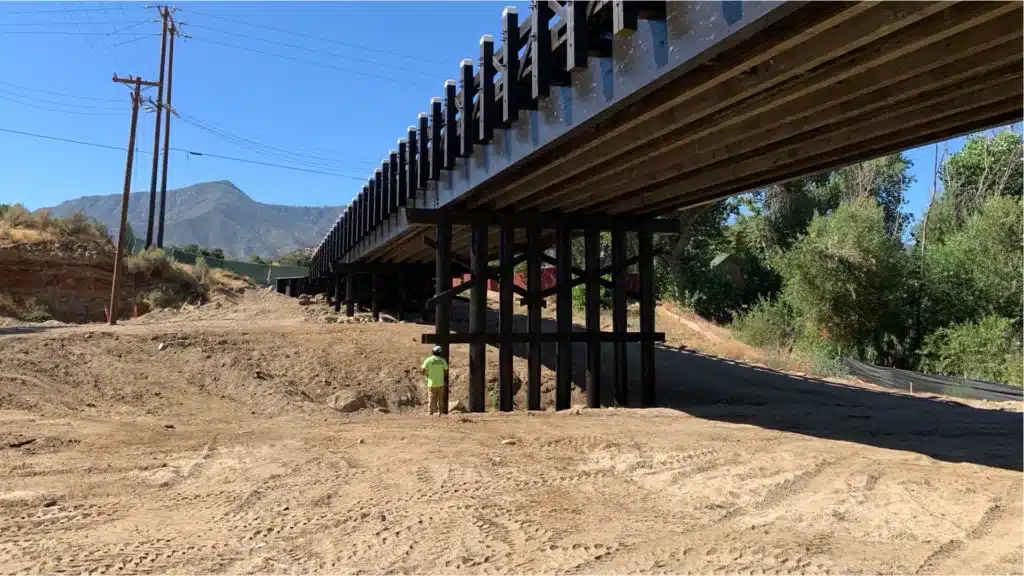
Community infrastructure is at its best when it protects the places people love. YBC's Deck-Level Construction--often called top-down construction--helps accomplish exactly that. By driving piles and building out from the deck, crews minimize temporary access roads, reduce soil compaction, and limit heavy equipment exposure in sensitive areas. On project like Foxhorn, where a creek and its banks are central to neighborhood character, this method provides tangible benefits:
- Less ground disturbance and faster site recovery.
- Lower erosion risk through reduced grading and fewer exposed soils.
- Cleaner water thanks to minimized sediment intrusion.
- A safer work zone that relies on the bridge itself as the platform for progress.
Residents gain a finished bridge and a preserved creek--two deliverables that make a neighborhood feel complete from day one.
Build Methods, Accessibility, Night Experience, and Compliance
Construction Logistics: A Quiet, Predictable Build
Top-down construction is only as good as the rhythm on site. The Foxhorn sequence followed a simple arc:
- Mobilize light and right: Compact equipment and modular tooling arrive first, keeping the footprint lean.
- Establish the platform: Initial piles and temporary work surfaces create the "floating" jobsite above the ground plane.
- Advance in measured steps: Each completed segment becomes the launchpad for the next, protecting soils and vegetation below.
- Finish as you go: Coatings, trims, and hardware are installed in a controlled sequence that reduces rework and limits time-on-site.
- Leave no trace: Temporary measures are removed, the creek corridor is cleaned, and the path network is reconnected.
Neighbors experience a concise build window with fewer disruptions, and the site recovers quickly because it was never overworked.
Safety in Construction, Safety in Use
During the build, edge protection and debris netting keep the corridor clean; staging is minimized to preserve sightlines for residents. After commissioning, safety becomes sensory: consistent rail rhythm, predictable deck texture, and approach geometry that naturally guides you onto--and--off--the structure. That quiet choreography reduces decision-making load for all ages and abilities.
Universal Design: Accessibility That Feels Natural
True accessibility is invisible--it just works. At Foxhorn, the transitions onto the bridge are smooth and generous, with grade changes handled in the approaches rather than on the span. Rail profiles are comfortable for smaller hands and secure for those who need a steadying touch. Contrast between deck, rail, and surrounding landscape enhances wayfinding without resorting to harsh color breaks. Lighting options (see below) can be tuned to provide gentle vertical illumination for faces and horizontal cues for feet.
Nighttime Experience: Lighting That Protects the Dark
Residents deserve a bridge that is as safe at dusk as it is at noon--and wildlife deserves a creek that still knows night. Consider these lighting strategies, designed for low glare, low energy, and low impact:
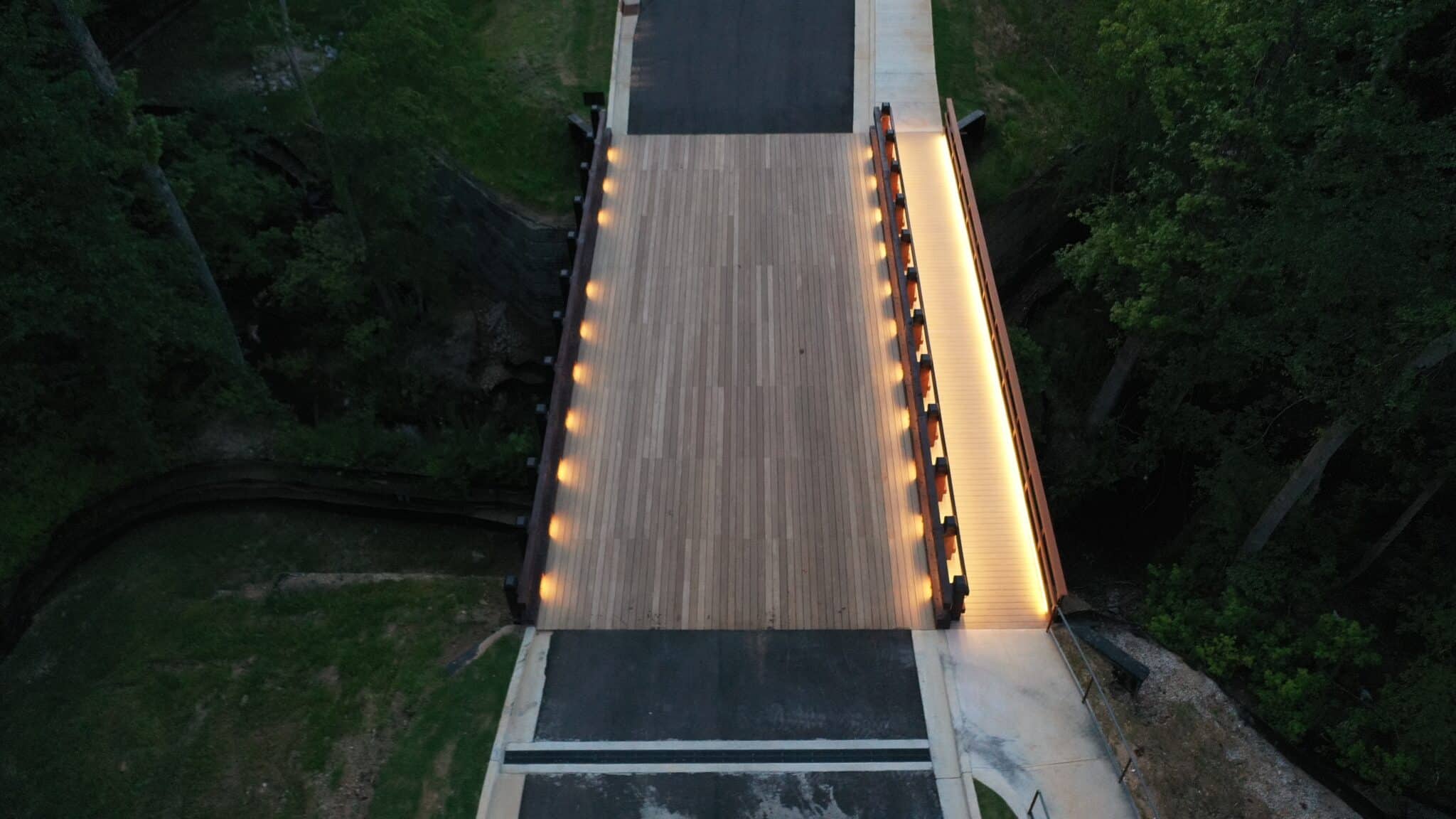
- Shielded, warm-white sources mounted below rail cap or at posts to softly wash the deck plane.
- Low-watt, close-spaced points for uniformity without bright hotspots, improving comfort for aging eyes.
- Optional bollards at approaches to mark entry without blasting the scene.
- Wildlife sensitivity: Downlight only; no uplight into tree canopies; color temperatures selected to reduce disruption to nocturnal species.
good lighting should disappear into the experience--present for safety, absent from memory.
Wayfinding & Identity: Small Cues, Big Clarity
Micro-wayfinding turns a bridge into a node in the neighborhood's mental map. Subtle plaque markers at approaches can name the creek or celebrate the development. A consistent icon--on mail kiosks, trail markers, and this bridge--helps residents and guests orient quickly. If the HOA chooses to add QR codes, they can link to trail maps, community notices, or seasonal events without adding visual clutter.
Environmental Compliance & Construction BMPs
A creek corridor is sensitive by default. Construction protocols favor:
- Silt control scaled to the site, positioned to protect downstream habitats.
- Material staging on geofabric or hardstand to prevent soil contamination.
- Refueling and wash-downs outside the buffer, with spill kits on hand.
- Post-construction stabilization with native plantings that lock soils and invite pollinators.
Compliance isn't just a permit box--it's a stewardship ethic. The bridge becomes a daily reminder that the community chose a better way to build.
Neighborhood Operations: Maintenance Access Without the Eyesore
From time to time, crews will service finishes, check fasteners, or refresh lighting. The bridge's modular details allow hand-carried materials and compact tools to do most tasks, avoiding the need for heavy equipment or temporary road cuts. The operational humility keeps the neighborhood quiet and the creek healthy.
storm Readiness and Post-Event Checks
After major weather, a quick walk-through is straightforward: verify rail integrity, inspect bearing points at supports, confirm no snagged debris under the deck, and check approach surfaces for erosion. Because access points and critical views are designed into the bridge, those checks are efficient and repeatable.
Aesthetics as a Daily Habit
Finally, there's the simple pleasure of crossing at night. Warm light on the deck; a soft gleam on the teak-toned rail; that light gray plane that reads calm underfoot. It's a short walk that feels longer--in the best way.
Safety, Comfort, & Accessibility for All
Community infrastructure must welcome everyone. The Foxhorn bridge's walking surface is wide, unobstructed, and intentionally simple, offering predictable footing and clear edges. The horizontal picket guard and black post caps provide visual cues, while the consistent, low-gloss finishes help reduce glare. Approach transitions are designed to be smooth, aiding those with strollers, walkers, or mobility devices. Handrail heights and clear widths reflect modern pedestrian standards, and the composite deck's uniformity further supports accessible passage.
Safety is also a matter of feeling. The bridge's proportions, handrail rhythm, and open views signal that this is a place designed for people--slow pace, easy breathing, and steady motion.
Durability in a Coastal Climate: Materials That Last
Myrtle Beach's salt-tinged air and sun filled days demand a well-considered materials strategy. Foxhorn's bridge answers with a layered defense:
- Acrylic coating on the substructure resists UV, moisture ingress, and abrasion, helping the extend the service life of structural elements.
- Teak oil finish on SYP superstructure components nourishes wood fivers, repels water, and is straightforward to refresh over time while maintaining its rich tone.
- Composite decking handles foot traffic, weather swings, and color stability with minimal maintenance requirements--an ideal specification for high-use pedestrian corridors.
- Hardware and fasteners are selected for corrosion resistance appropriate to the coastal environment, further protecting connections and hidden details.
For HOAs and community managers, the outcome is predictable upkeep and long-term cost control--essential qualities of responsible community infrastructure.
Aesthetics in Motion: How the Bridge Changes Through the Day
As light moves across Foxhorn, the bridge responds--another small joy in everyday life. Morning light brightens the deck plane, guiding walkers toward the day's errands or exercise. Midday, the deep warm gray substructure becomes nearly invisible against water shadows, making the superstructure appear to float. In the evening, the teak oil warmth gathers and flows, and black post caps pinprick the horizon like notes on a bar of music. The horizontal pickets frame the creek with a cinematic effect, leading residents to linger watch, and breathe.
The bridge isn't just part of the landscape-it's part of the neighborhood's rhythm.
Neighborhood Connectivity: Linking Phases, Amenities, & People
Foxhorn's grown includes multiple phases, and the bridge ensures those phases feel like one integrated place. By crossing the creek, residents gain:
- Short, safe routes between homes, pocket parks, and common areas.
- Active-transportation links that reduce short car trips, inviting walking or biking instead.
- A stronger sense of place as the bridge becomes both landmark and everyday utility.
Because it shortens the distance between where people live and where they gather, the bridge supports community wellbeing--more face-to-face hellos, more spontaneous playdates, more "see you on the trail at sunset."
This is the essence of community infrastructure: practical connections that cultivate social connections.
Lifecycle Stewardship: Designed for Maintainability
A beautiful bridge that is difficult to maintain is not responsible community infrastructure. The Foxhorn design prioritizes maintainability through:
- Coatings & finishes that can be refreshed in place with known schedules.
- Replaceable wear surfaces (composite decking) that simplify long-term asset management.
- Accessible fasteners and joints for periodic inspection and straightforward upkeep.
- Durable detailing--shaped edges, drip paths, and protective caps--that protect against water traps and UV exposure.
Many communities complement these built-in advantages with structured maintenance programs and scheduled inspections, ensuring performance remains steady across decades of use.
Lifecycle Value, Programming, and Extended FAQs
Lifecycle Value: Predictable Care, Predictable Costs
Community infrastructure earns trust by being boring--in the sense that it behaves as expected. Foxhorn's coating system, composite wear surface, and accessible fasteners mean the HOA can plan refresh cycles on a known cadence rather than chase surprises. Inspections focus on the few places that matter most; cleaning is periodic, not constant; and small parts are standardized so spares don't become a scavenger hunt. The bridge is elegant, but not costly.
BridgeCare Mindset: Proactive Maintenance as an Amenity
Planned care is an amenity in itself. A simple annual routine--deck wash, rail wipe-down, fastener spot-checks, and a look at bearing details--keeps everything tight. On a multi-year cycle, finishes can be renewed in places without dismantling major components. Residents experience the bridge as consistently excellent because that's how it's managed.
Programming the Crossing: Small Events, Big Community
Because the bridge sits at the seam between phases, it's an easy place to layer light programming that builds community without building infrastructure:
- Seasonal walks--firefly nights, leaf-color strolls, or migratory-bird mornings.
- Photo spot-- a quiet markings plaque where neighbors capture milestones.
- Pop-up wayfinding--chalked arrows for a weekend 5K loop or kids' bike parade.
A bridge becomes a landmark when people attach memories to it. This one invites that habit.
Ready for What's Next: Future-Friendly Upgrades
Need to post mileage markers or add a discreet emergency location code for faster first-responder routing? Easy. Want to integrate low-profile solar accent lighting at the approaches or add a tiny plaque that tells the creek's story? There's room. The core system--deck, rails, finishes--accepts upgrades without demanding reinvention.
Environmental Considerations: Building With--and For--Nature
Bridges over creeks must respect the systems they span. The Foxhorn project aligns with this responsibility by:
- Minimizing in-stream work through multi-span design and top-down methods.
- Protecting root zones of riparian vegetation to stabilize banks long-term.
- Preserving hydrology with clear water passage under the deck.
- Encouraging stewardship by making the creek visible and appreciated from the bridge itself.
When people can see the life of a creek--fish darting, birds nesting, sunlight sculpting ripples--the bridge becomes a classroom without a roof. In this way, community infrastructure fosters community care.
Engineering Confidence: Strength, Stability, and Peace of Mind
Beneath the artistry lies a rigorous structural backbone. A multiple-span configuration allows the bridge to manage pedestrian loads, wind, and environmental factors efficiently while maintaining slender, human-scaled lines. Timber's strength-to-weight ratio, combined with modern fasteners and precision fabrication, produces a structure that feels stable and reads as refined. Carefully considered tolerances, bearing details, and moisture control strategies support long-term performance--because confidence is an aesthetic, too.
A Bridge That Tells A Story
Every crossing is a short story. Kids notice how the handrail feels under their palms. Runners learn which boards echo their stride. Couples pause over the water and mark special days with a slow walk at dusk. Maintenance teams appreciate the way details make sense, the access panels that are exactly where they should be, the hardware that cleans up nicely. Over time, these small interactions accumulate into a shared narrative: "This is our place."
That's the quiet power of well-made community infrastructure: it builds meaning as it builds movement.
Why Timber--And Why Now
Timber bridges like Foxhorn's offer a uniquely human scale and warmth that steel and concrete struggle to match in pedestrian contexts. Timber's renewable origins and contemporary coatings create a resilient, low-carbon pathway to beauty and performance, especially when paired with composites and corrosion-resistant hardware. As neighborhoods invest in trails, greenways, and pocket parks, timber bridges meet the moment--delivering the durability managers need and the visual delight residents want.
Fit for the Future: Flexibility and Upgrades
Community infrastructure should adapt gracefully. The Foxhorn bridge's systemized components-decking, rails, and finishes--allow for future updates without reimagining the entire structure. Whether enhancing lighting, integrating wayfinding, or refreshing staining cycles, the bridge is prepared to evolve with the community's needs and preferences.
The Experience of Crossing
Stand at one end and look across: the horizontal pickets pull the eye forward; the teak oil lends a clam natural glow; the composite deck reads crisp and clean. As you step on, the bridge feels solid yet welcoming. The guardrail frames moving water below--never too bright, never too dark--thanks to the balanced palette of deep warm gray and light gray. It's quiet here. You can hear the creek, feel the breeze, and sense neighbors approaching with a friendly nod. By the time you step off the far side, you've traveled a little farther than distance alone can measure.
Foxhorn Community Value: More Than the Sum of Its Parts
The Foxhorn pedestrian bridge contributes to property value, resident satisfaction, and brand identity for the neighborhood:
- Property value and appeal: Prospective homeowners often prioritize walkability and access to outdoor amenities. A signature bridge is a visible, experiential proof point.
- Health & wellness: Easy routes for daily steps and bike trips encourage active lifestyles.
- Identity & storytelling: Signature details--black post caps, horizontal pickets, teak warmth--become recognizable and shareable, strengthening Foxhorn's sense of place.
- Operational confidence: Durable materials and maintainable detailing make the asset practical to own over time.
This is the math of community infrastructure: invest once, enjoy daily.
Frequently Asked Questions
How long is the bridge?
The Foxhorn pedestrian bridge totals 75 feet in a multiple-span configuration over a creek within the development.
What materials are used?
The bridge features an acrylic-coated deep warm gray substructure, a teak oil-stained SYP superstructure, horizontal handrail pickets with black post caps, and light gray composite decking.
Why a multiple-span design?
Multiple spans provide structural efficiency, siting flexibility, and creek-friendly construction, limiting in-stream disturbance while achieving a slender, elegant profile.
How does it handle maintenance?
The specification pairs durable coatings with replaceable wear surfaces and accessible fasteners. The approach supports predictable upkeep schedules and long service life.
What makes this a "community infrastructure"?
It's infrastructure that enhances daily living--connecting phases and amenities, supporting safe, comfortable mobility, and becoming a social and aesthetic landmark for the neighborhood.
Can the bridge accommodate occasional service carts or utility hand trucks?
While the structure is tuned for modern pedestrian standards, the deck and rail geometry allow guided passage for small, hand-pushed utility carts where HOA policies permit. Always confirm loads and wheel contact area before use.
What happens during heavy rain events?
Clear conveyance under the spans allows high water and floating debris to pass. After a major event, a short inspection clears any snag points and verifies bearing zones remain free of erosion.
How are coatings refreshed over time?
Acrylic substructure coatings and teak oil-based finishes are designed for in-place renewal. Prep work focuses on cleaning and light abrasion where needed, followed by targeted re-application to restore protection and color depth.
How are fasteners protected in a coastal environment?
Hardware is specified for corrosion resistance appropriate to Myrtle Beach conditions, with exposed heads finished to harmonize with the palette. Routine checks keep connections clean and tight.
Is the deck slippery when wet?
The composite deck's micro-texture maintains traction in wet conditions while resisting mildew and grime. Periodic cleaning preserves performance.
What is the expected service life of major components?
Service life depends on care and exposure. The design assumes scheduled maintenance and coatings refresh cycles; under that regimen, the structure is positioned for decades of reliable performance.
How quickly can damaged boards or rail elements be replaced?
Modular decking and rail sub-assemblies allow isolated repairs without dismantling long runs. Parts can be swapped with hand tools from the deck surface.
Does the bridge require special cleaning products?
No. Mild, non-acidic cleaners and soft-bristle brushes are preferred to protect finishes and the creek environment. Harsh solvents are discouraged.
Can signage, mile markers, or community branding be added later?
Absolutely--small plaques or markers at approaches are simple to mount and maintain, giving the HOA flexibility as branding evolves.
What about bicyclists?
The deck width and rail geometry welcome casual riders at walking speeds; clear sightlines and surface texture support shared use. Local rules govern speed and yielding.
How does the bridge handle sun exposure and heat?
Light-gray decking reduces heat gain; low-gloss finishes control glare; open rail geometry invites airflow. Together they create a comfortable crossing even on bright days.
Can the bridge be used as an outdoor classroom?
Yes. The rail height and picket spacing frame views of the creek safely, making the bridge a natural platform for informal nature talks and school visits.
What long-term records should the HOA keep?
A simple log of inspections, cleaning dates, finish refresh cycles, and any part replacements. That record supports warranty conversations and protects asset value.
A Lasting Invitation
The Foxhorn Development pedestrian bridge is proof that community infrastructure can be both hardworking and heartfelt. It strengthens the neighborhood with safe, accessible mobility while enriching the creek corridor it crosses. It is engineered for longevity and designed for delight. Most importantly, it serves as an everyday invitation: come walk, come meet, come belong.
As Foxhorn continues to grow, this bridge will keep doing what great infrastructure does best--quietly making life better, one crossing at a time.
Economic & Social Value Snapshot
Neighborhoods thrive on frictionless connections. By turning a natural boundary into an enjoyable route, the Foxhorn bridge nudges more short trips to happen on foot or on two small wheels--less driveway-to-mailbox traffic, more neighbor-to-neighbor moments. The economic logic is equally straightforward: predictable maintenance and long refresh cycles protect HOA budgets; enduring curb appeal supports property values; and the bridge's signature look becomes part of Foxhorn's brand story.
Project Summary (At A Glance)
- Location: Foxhorn Development, Myrtle Beach, South Carolina
- Function: Multi-span pedestrian bridge connecting community phases across a creek
- Total Length: 75 feet
- Series: York Bridge Concepts' Legacy Series
- Substructure Finish: Acrylic-coated deep warm gray
- Superstructure: Teak oil-stained Southern Yellow Pine (SYP)
- Handrail: Horizontal picket design with black post caps
- Decking: Light gray composite for longevity, traction, and color stability
- Construction Approach: Deck-Level (top-down) to minimize environmental disturbance
- Purpose: Elevate everyday mobility, unify neighborhood phases, and enhance the creek corridor as signature community infrastructure
Closing Thought
In a world that often celebrates the monumental, Foxhorn's bridge reminds us that the most transformative investments in a community infrastructure are often human-scaled--quiet, careful, and crafted to meet people where they live. Here a 75-foot crossing over a small creek becomes a daily passage to everything that makes a neighborhood feel like home.
All Feature Projects
What's Best: A Culvert Or A Timber Bridge?
What Is The Best Span Type For My Project?
Which Load Capacity I Need?
How Do I Cross An Environmentally Sensitive Area?
How Do I Create A Landmark?
How Long Does A Timber Bridge Last?
Culvert Or Bridge
If you're considering using a culvert for your crossing project. Click below to understand the best fit for your project.

Spanning Solutions
Spanning a crossing is one of the most important aspects of your crossing project. Find the best solution for your crossing needs.

Uses & Capacities
The load capacity of a timber bridge may surprise you. See specs for different loads and uses that will help your decision-making process.