Floodplain Timber Bridges

Building infrastructure within a floodplain requires thoughtful engineering, environmental stewardship, and construction methods that work with the landscape rather than against it. Whether crossing rivers, streams, wetlands, or seasonal flood zones, bridges must be designed to withstand changing water levels, maintain natural water flow, and minimize impacts on surrounding ecosystems.

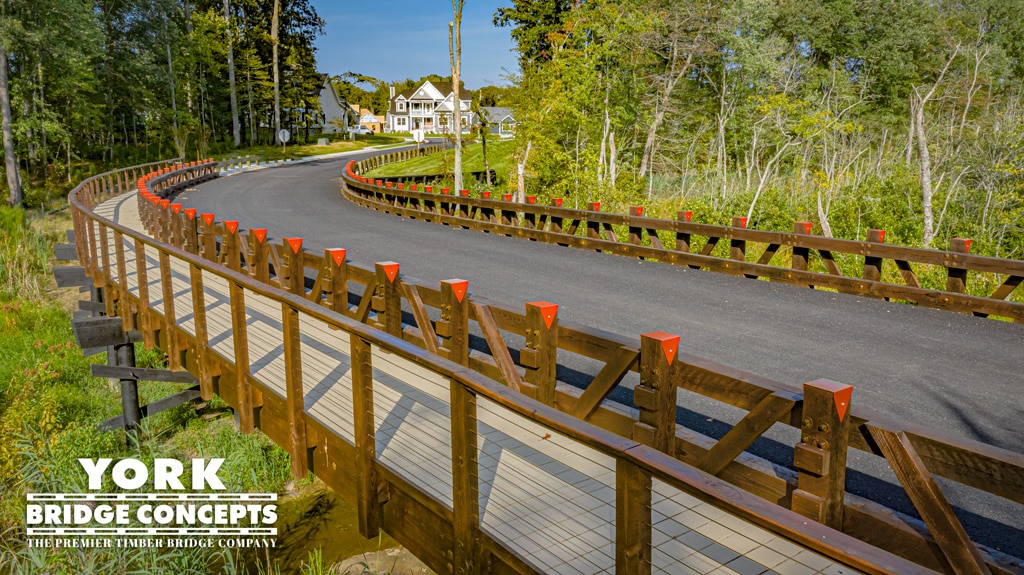
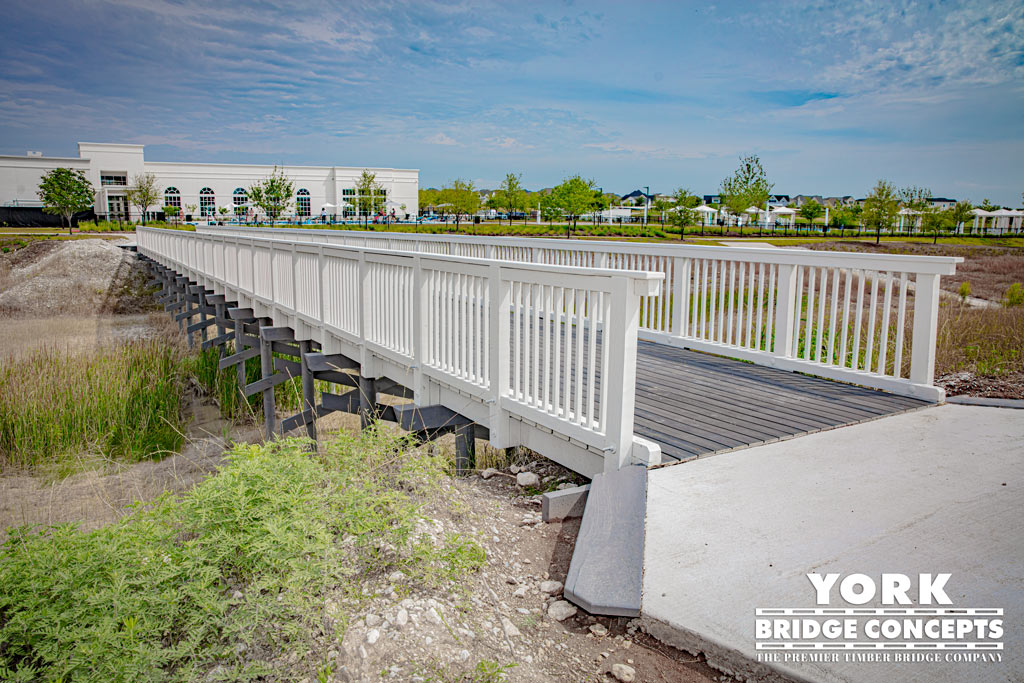
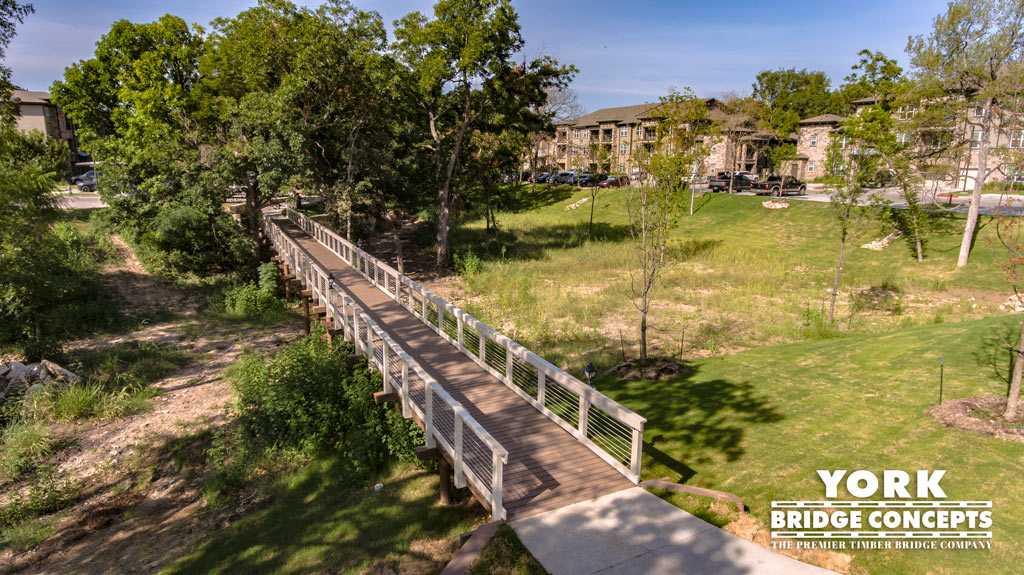
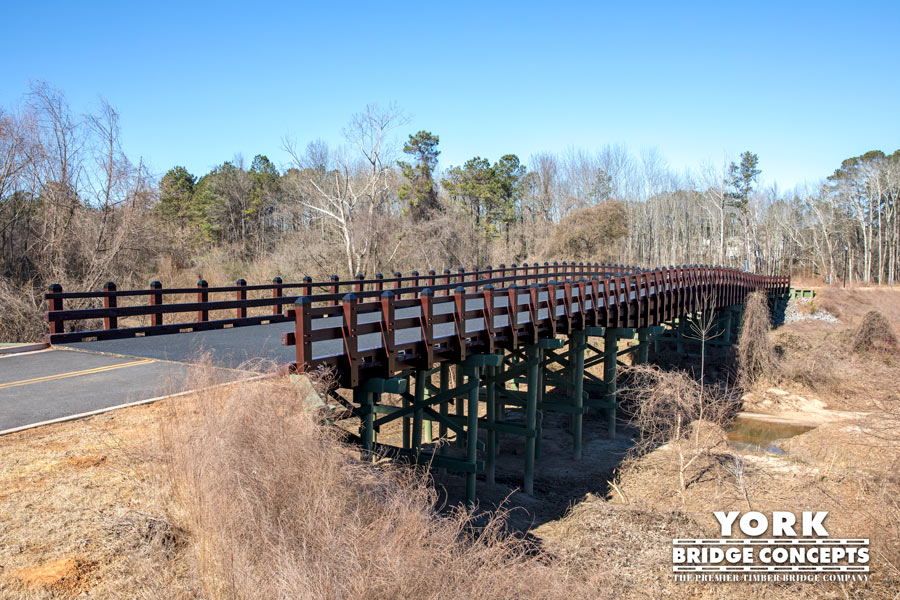
Custom timber bridges offer an ideal solution for floodplain environments. Through site-specific engineering, elevated span configurations, and environmentally sensitive construction practices, timber bridges can provide safe, reliable access while preserving the natural function of floodplains.

At York Bridge Concepts, we specialize in designing and constructing custom timber pedestrian bridges, vehicular bridges, boardwalks, and waterfront crossings for projects located within floodplains and environmentally sensitive landscapes. Through our integrated Design-Engineer-Build™ methodology and proprietary Deck-Level Construction™ process, every bridge is engineered specifically for the site’s hydrology, permitting requirements, and long-term performance.

Since 1985, York Bridge Concepts has designed and built more than 9,000 custom bridges throughout North America, including numerous projects located within regulated floodplains, wetlands, and riparian corridors.

What Is a Floodplain?

A floodplain is an area of land adjacent to a river, stream, lake, or other waterway that is periodically inundated during storm events or seasonal flooding.

Floodplains play an important role by:

  • Storing floodwaters
  • Reducing downstream flooding
  • Improving water quality
  • Supporting wildlife habitat
  • Recharging groundwater
  • Protecting stream stability

Infrastructure built within these areas must be carefully engineered to preserve these natural functions while maintaining safe access.

Why Timber Bridges Are Ideal for Floodplains

Unlike embankments, culverts, or large fill sections that can obstruct water flow, elevated timber bridges allow floodwaters to move naturally beneath the structure.

Benefits include:

  • Reduced disruption to natural drainage
  • Improved hydraulic performance
  • Minimal environmental disturbance
  • Preservation of native vegetation
  • Enhanced wildlife movement
  • Reduced long-term erosion risks

Because every York Bridge Concepts bridge is custom engineered, span configurations and foundation systems are selected specifically for each site’s hydraulic and environmental conditions.

Engineered for Changing Water Levels

Floodplain bridges must safely accommodate more than everyday traffic.

Engineering considerations often include:

  • Base flood elevations
  • Seasonal water fluctuations
  • Hydraulic openings
  • Debris loading
  • Scour potential
  • Foundation stability
  • Erosion protection
  • Freeboard requirements

York Bridge Concepts works with project teams to develop bridge solutions that satisfy engineering requirements while supporting regulatory approvals.

Floodplain Bridge Applications

Custom timber bridges are commonly used within floodplain environments for:

Parks & Recreation

Providing safe access across rivers, wetlands, and flood-prone landscapes while preserving recreational opportunities.

Greenways & Multi-Use Trails

Maintaining continuous trail systems through floodplain corridors without interrupting natural water movement.

Residential Communities

Connecting neighborhoods across streams and floodways while minimizing long-term environmental impacts.

Municipal Infrastructure

Supporting roadways, parks, and public spaces where environmentally sensitive crossings are required.

Resorts & Hospitality

Creating scenic pedestrian and vehicular crossings that complement natural landscapes while maintaining flood resilience.

Conservation Areas

Improving public access for education and recreation while protecting sensitive ecosystems.

Supporting Natural Water Flow

One of the primary goals of floodplain bridge design is preserving natural hydrology.

York Bridge Concepts designs bridges that help:

  • Maintain existing drainage patterns
  • Reduce obstruction during storm events
  • Preserve stream channels
  • Minimize bank disturbance
  • Protect riparian vegetation
  • Reduce sediment movement

This approach helps maintain the ecological health of rivers, streams, and wetlands while improving long-term infrastructure performance.

Deck-Level Construction™ Minimizes Floodplain Disturbance

Floodplain construction often occurs in environmentally regulated areas where limiting ground disturbance is essential.

York Bridge Concepts’ proprietary Deck-Level Construction™ methodology allows construction crews to build from the completed bridge deck rather than requiring extensive equipment beneath the structure.

Benefits include:

  • Reduced wetland disturbance
  • Protection of riparian vegetation
  • Reduced soil compaction
  • Preservation of stream banks
  • Improved water quality protection
  • Cleaner construction sites

This innovative construction process has become one of the defining advantages of York Bridge Concepts for projects located within floodplains and other environmentally sensitive environments.

Sustainable Infrastructure for Floodplain Environments

Floodplain projects often prioritize environmental responsibility alongside structural performance.

Timber bridges contribute through:

  • Renewable building materials
  • Carbon storage
  • Lower embodied carbon
  • Reduced construction impacts
  • Long service life
  • Responsible forestry practices

York Bridge Concepts has documented more than 48,000 tons of carbon savings through its timber bridge portfolio while continuing to advance sustainable infrastructure solutions.

Floodplain Bridge Types

York Bridge Concepts designs a variety of bridge systems for floodplain applications.

Pedestrian Bridges

Ideal for parks, greenways, campuses, and recreational trails.

Vehicular Bridges

Engineered for residential communities, municipalities, maintenance access, and emergency vehicles.

Boardwalk Systems

Elevated timber walkways that provide access through wetlands and flood-prone landscapes while minimizing environmental impacts.

Community Entrance Bridges

Create memorable gateways while safely spanning streams and floodways.

Waterfront Crossings

Custom bridges designed for rivers, lakes, marshes, and environmentally sensitive shorelines.

Featured Floodplain Projects

York Bridge Concepts has completed numerous projects within floodplains and environmentally sensitive landscapes throughout North America.

Representative examples include:

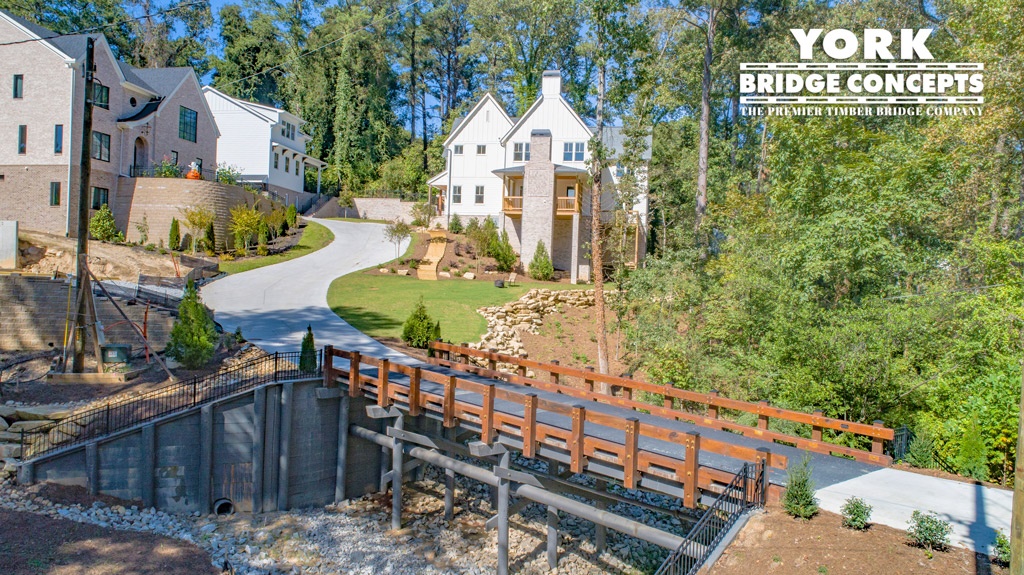
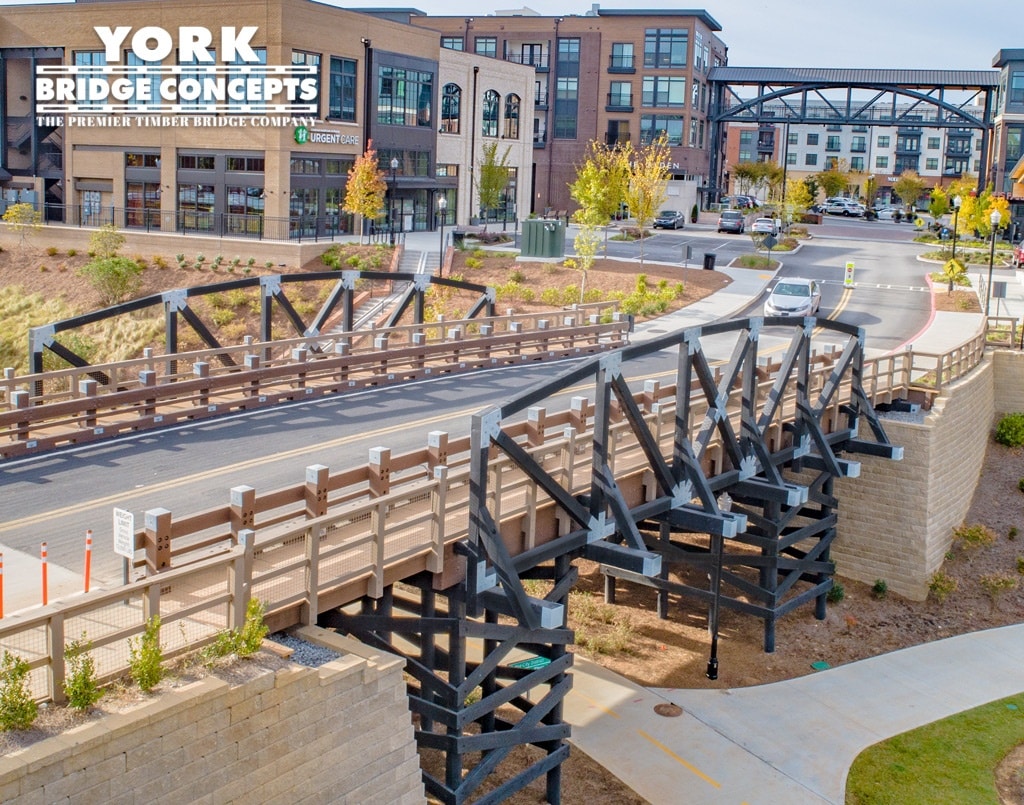
  • Parkview on Peachtree Vehicular Bridge – Chamblee, Georgia, designed within a floodplain as part of a mixed-use development.
  • Coastal Maine Botanical Gardens Discovery Bridge – Boothbay, Maine, spanning wetlands while preserving the surrounding ecosystem.
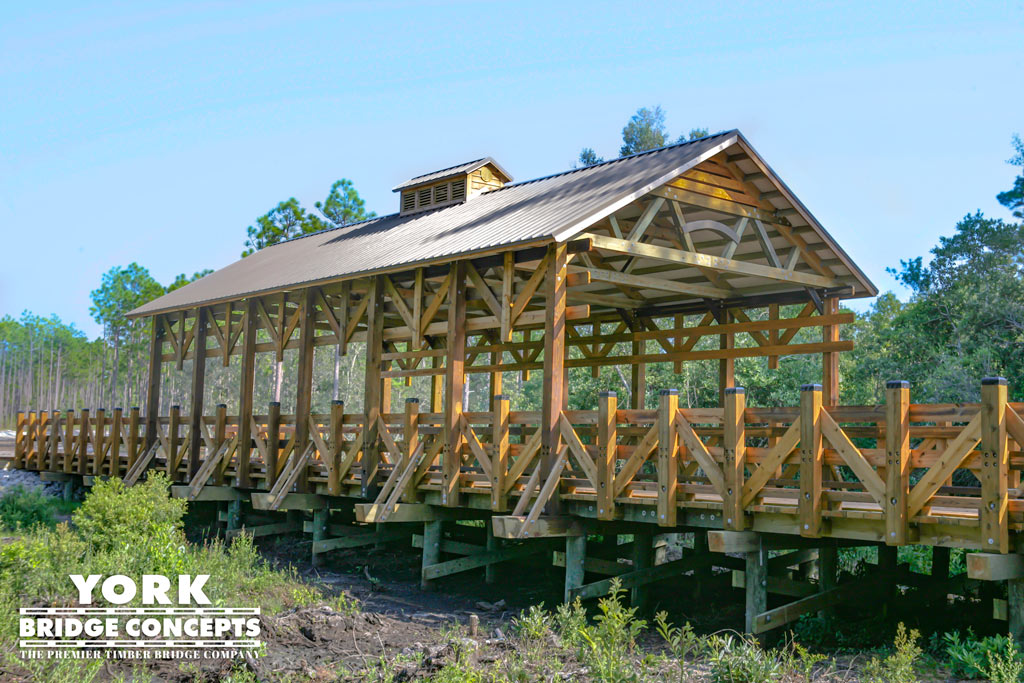
  • Cone Ranch Vehicular Bridge – Florida, providing access through the Lower Green Swamp Preserve while minimizing impacts to protected natural resources.

These projects demonstrate how thoughtful engineering and sustainable construction practices can provide reliable access while respecting floodplain environments.

The Design-Engineer-Build™ Advantage

Every York Bridge Concepts bridge is delivered through our integrated Design-Engineer-Build™ process.

Our team manages:

  • Site evaluation
  • Hydraulic coordination
  • Structural engineering
  • Environmental permitting support
  • Construction planning
  • On-site installation

Managing every phase under one experienced team streamlines project delivery while ensuring every bridge balances engineering performance, sustainability, constructability, and architectural excellence.

Why Choose York Bridge Concepts?

For more than four decades, York Bridge Concepts has specialized exclusively in custom timber bridge systems.

Clients choose YBC because of our:

  • More than 9,000 bridges built
  • Design-Engineer-Build™ methodology
  • In-house engineering expertise
  • Floodplain and environmentally sensitive site experience
  • Sustainable construction practices
  • Proprietary Deck-Level Construction™ process
  • Nationwide and international project experience

From municipal parks and greenways to residential communities and conservation areas, every bridge is engineered to provide dependable access while protecting the natural systems that surround it.

Engineering Bridges That Respect Natural Floodplains

Floodplains are dynamic landscapes that require infrastructure designed to adapt—not compete—with nature.

Custom timber bridges provide durable, resilient crossings that preserve natural water flow, reduce environmental impacts, and create lasting connections for people and communities.

Whether your project involves a park, greenway, residential development, municipal roadway, conservation area, waterfront, or mixed-use community, York Bridge Concepts can design and construct a custom timber bridge engineered specifically for your floodplain environment.

November 19, 2019

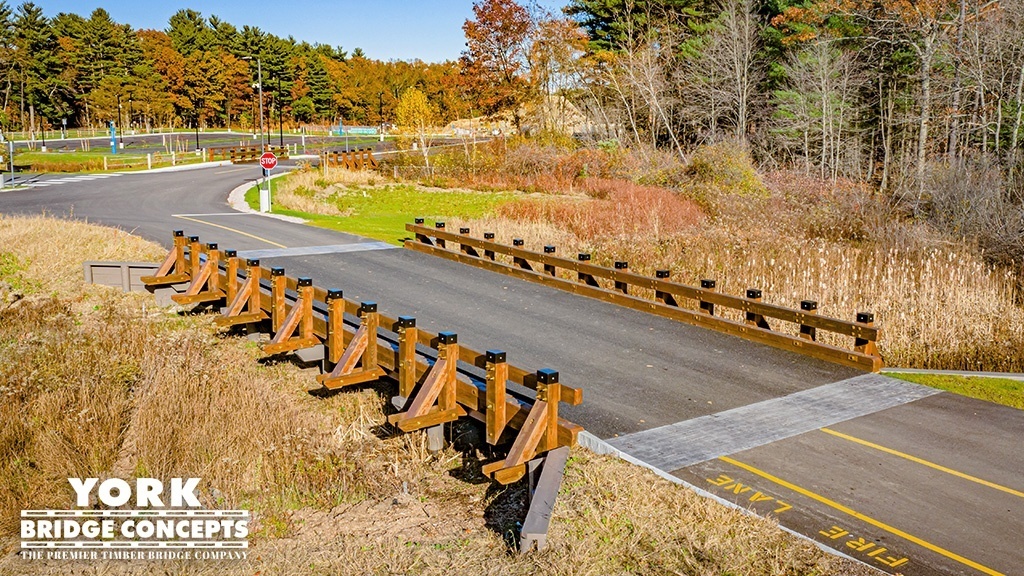
Minuteman High School Vehicular & Pedestrian Bridges – Lexington, MA

Discover the timber public school bridge at Minuteman High School—AASHTO-rated, low-impact, and inspired by the Old North Bridge.
November 13, 2019

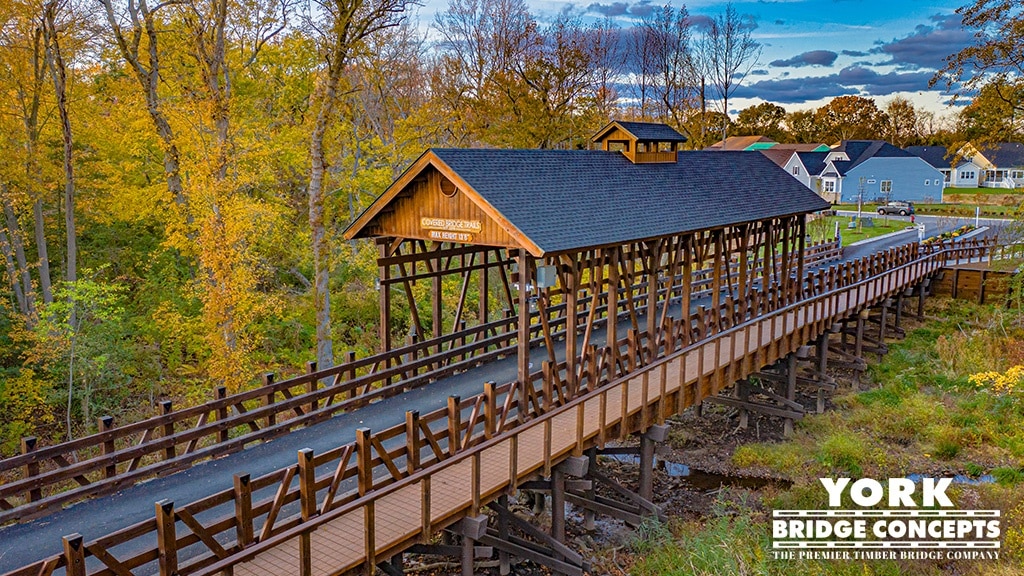
Covered Bridge Trails Vehicular Bridge – Lewes, DE

Timber covered bridge with pedestrian access in Lewes, DE. Designed by York Bridge Concepts to span protected wetlands in style and safety.
September 19, 2019

Coastal Club | Wetlands Vehicular Bridge – Lewes, DE

Discover how York Bridge Concepts' Coastal Club Project sets a new standard for wetlands vehicular bridges, combining sustainable construction, wetland mitigation, and innovative timber engineering to protect sensitive ecosystems while ensuring long-term durability and aesthetic appeal.
November 2, 2018

Heights at Ashford Park Vehicular Bridge – Atlanta, GA

YBC’s Decero™ team delivered a resilient, elegant entry bridge at Heights at Ashford—solving easements and floodplain limits in Atlanta Community Infrastructure.
June 19, 2018

Parkview on Peachtree Vehicular Bridge – Chamblee, GA

Explore how the Parkview on Peachtree Vehicular Bridge redefines Atlanta's infrastructure, blending design with urban connectivity.