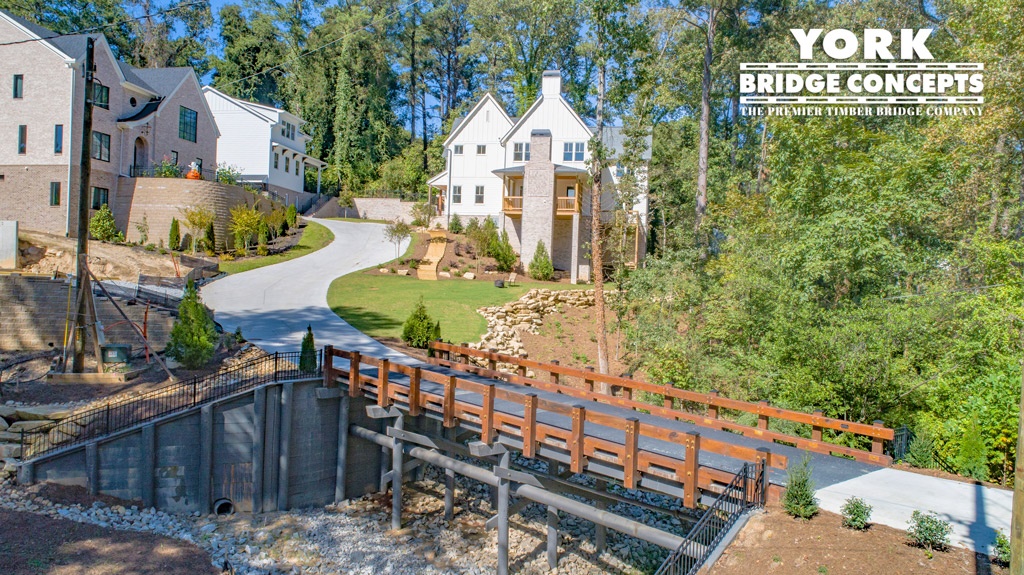
Heights at Ashford Park Vehicular Bridge – Atlanta, GA

York Bridge ConceptsGeorgia, Multiple Span, Vehicular Bridges

Heights at Ashford Park Timber Vehicular Bridge - Atlanta, GA

Heights at Ashford Entry Bridge: A Case Study in Atlanta Community Infrastructure

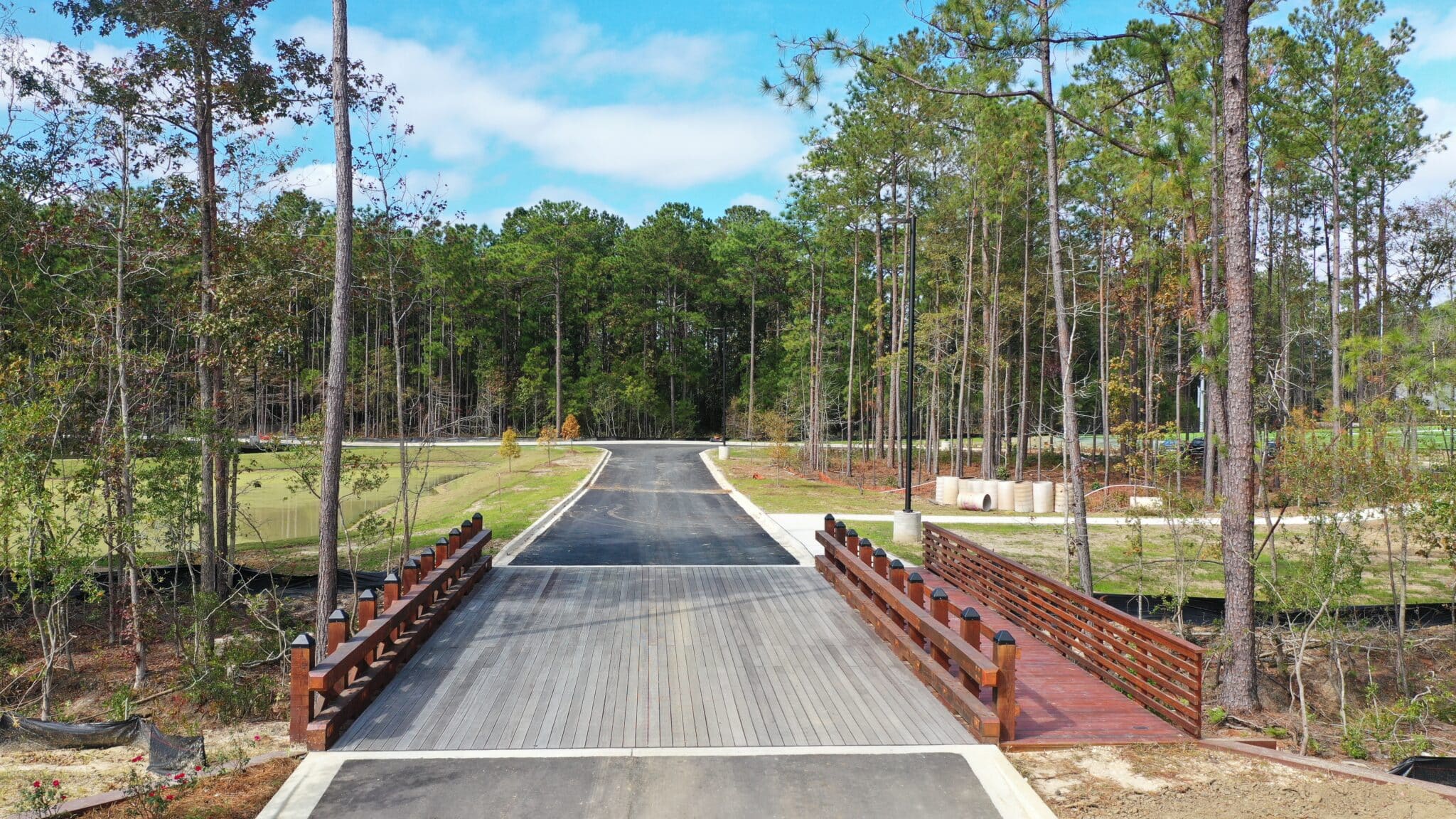
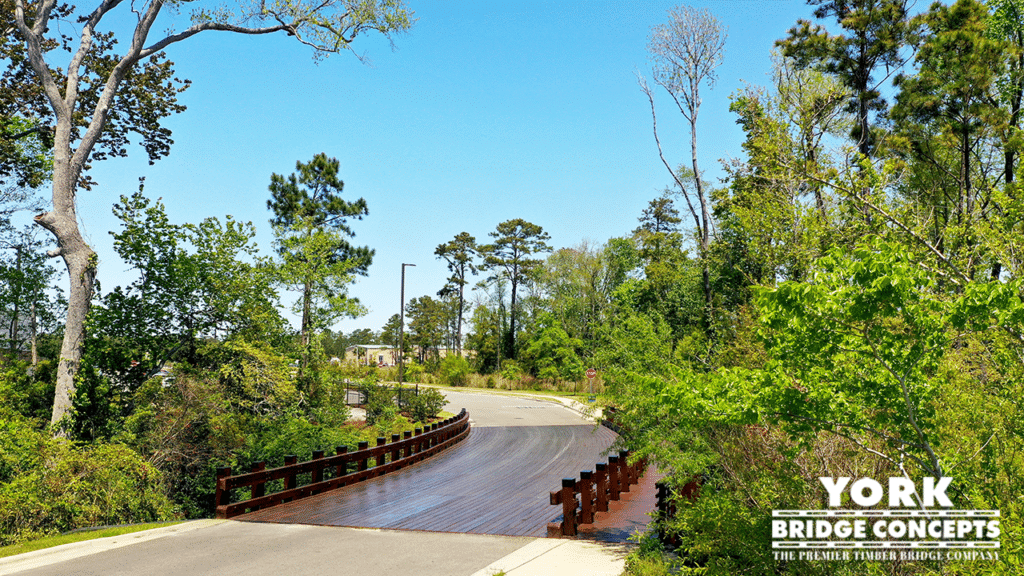
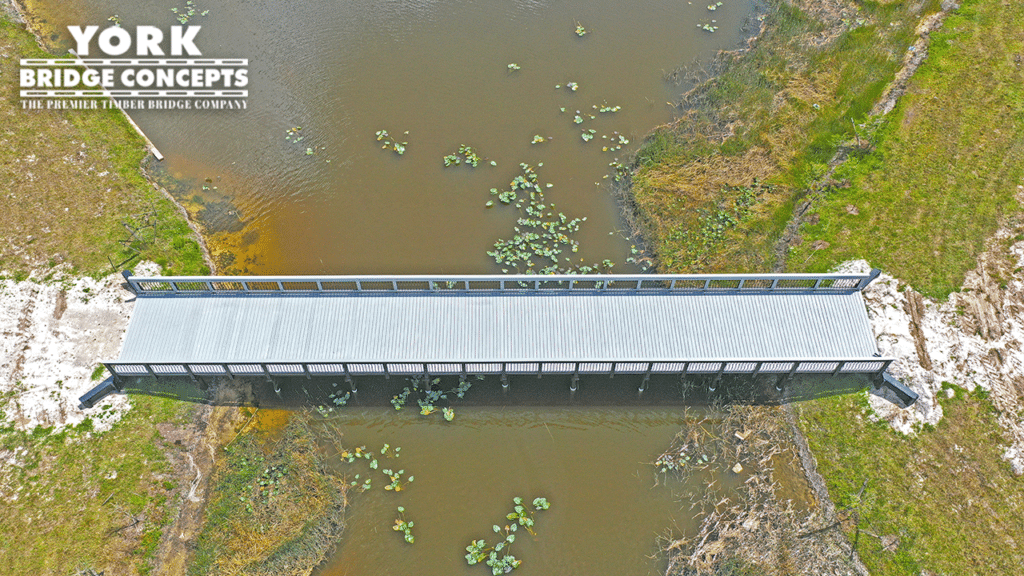
Heights of Ashford Atlanta Community Infrastructure vehicular bridge built by York Bridge Concepts

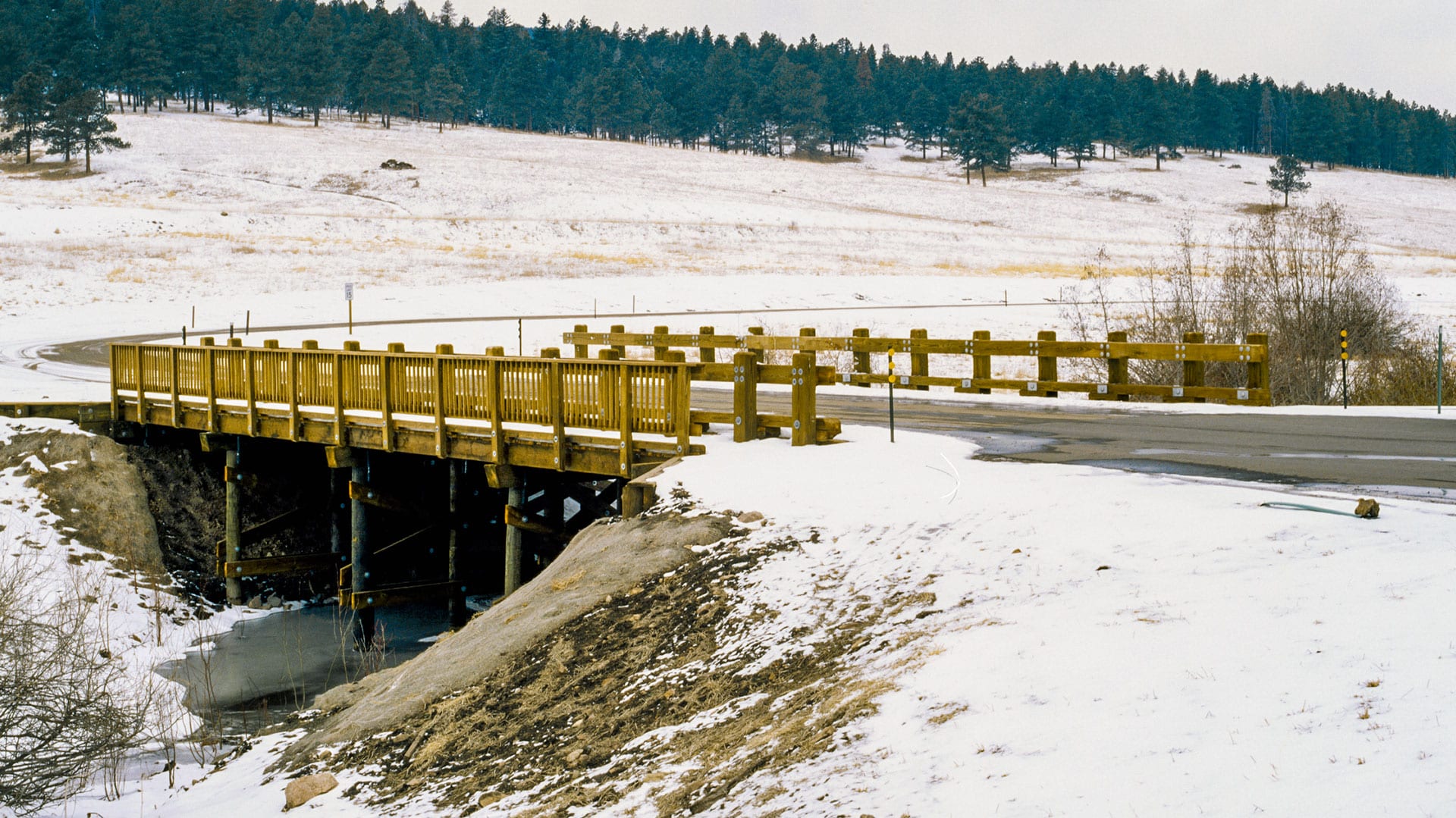
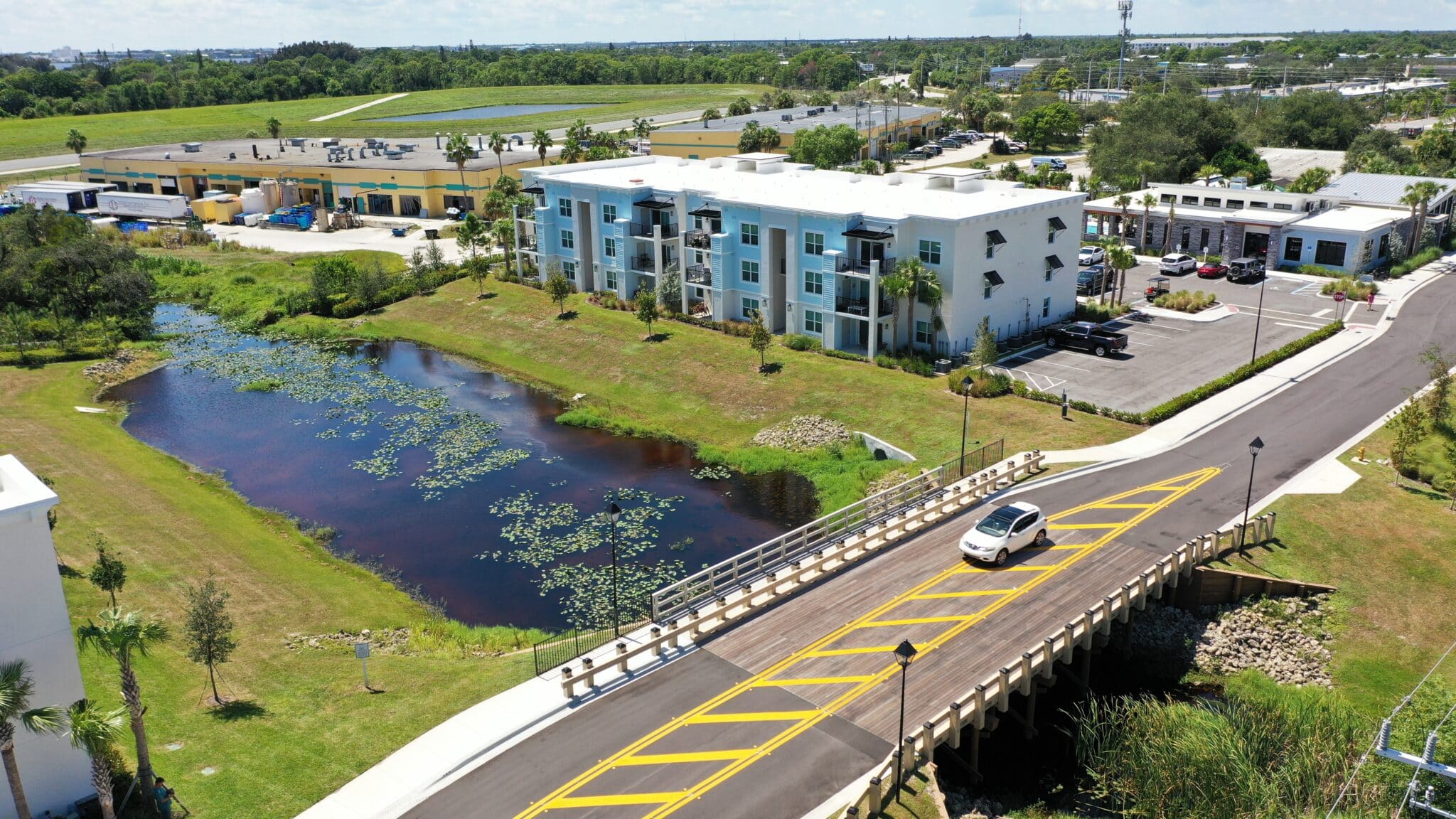
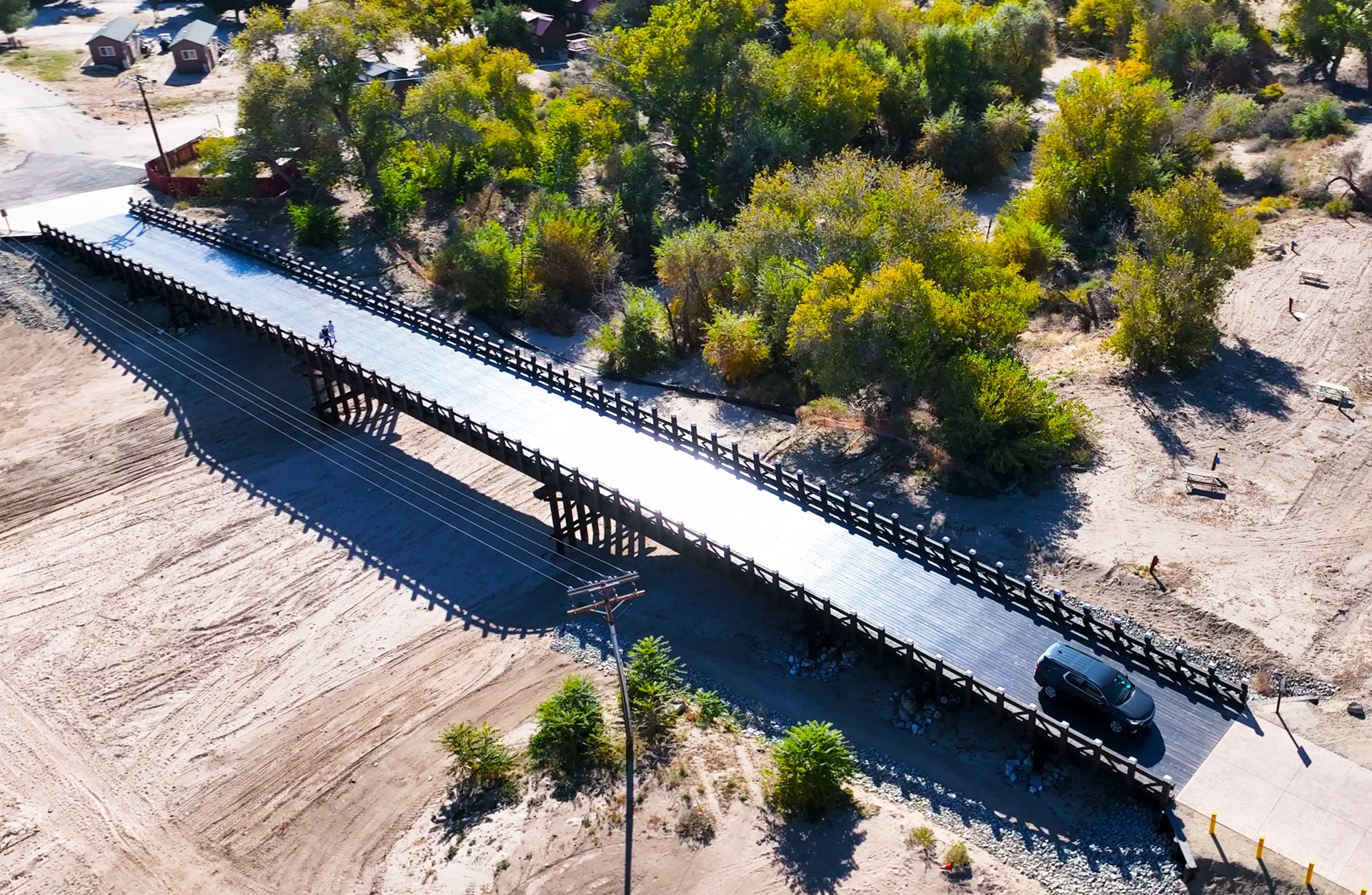
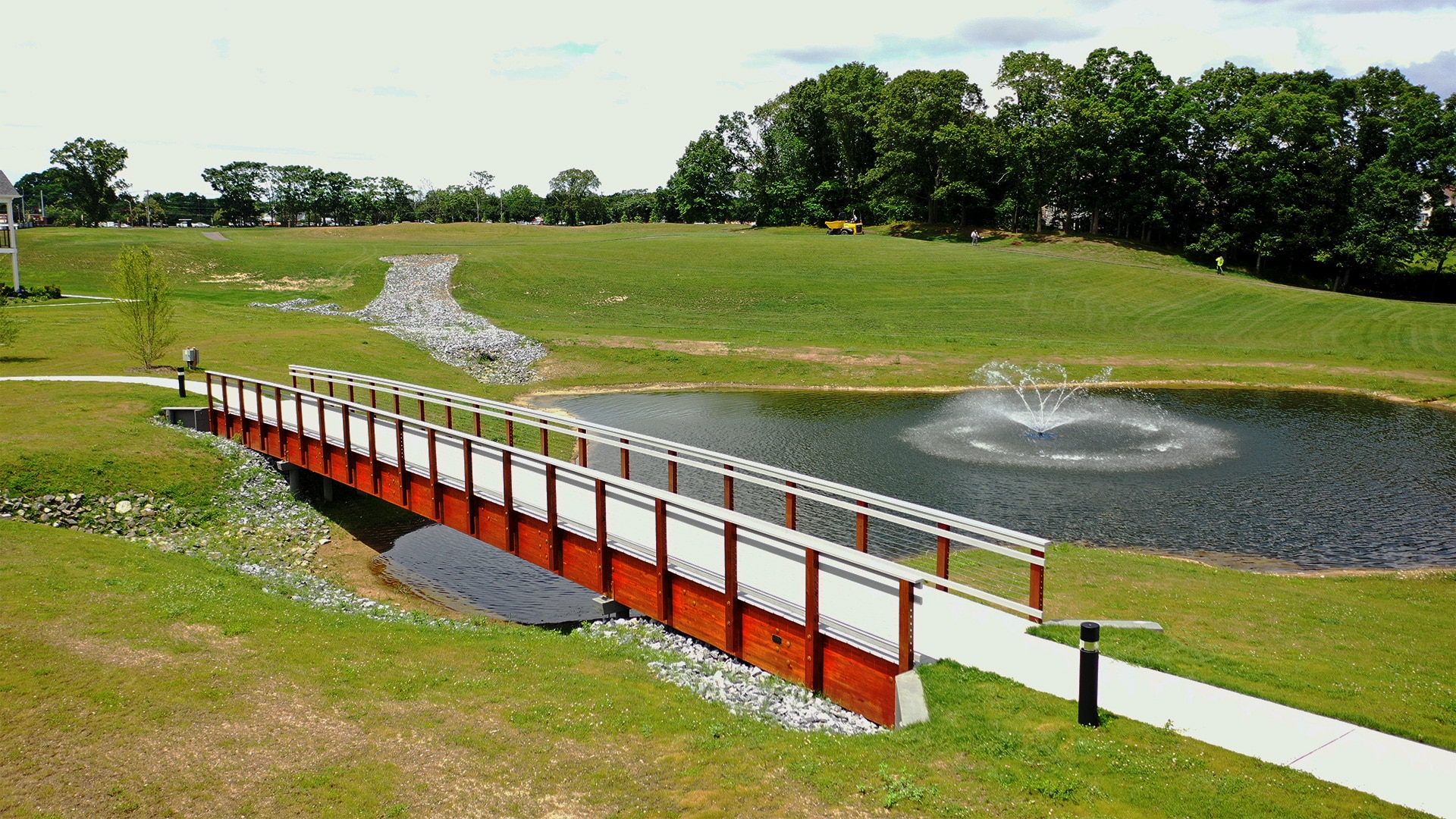
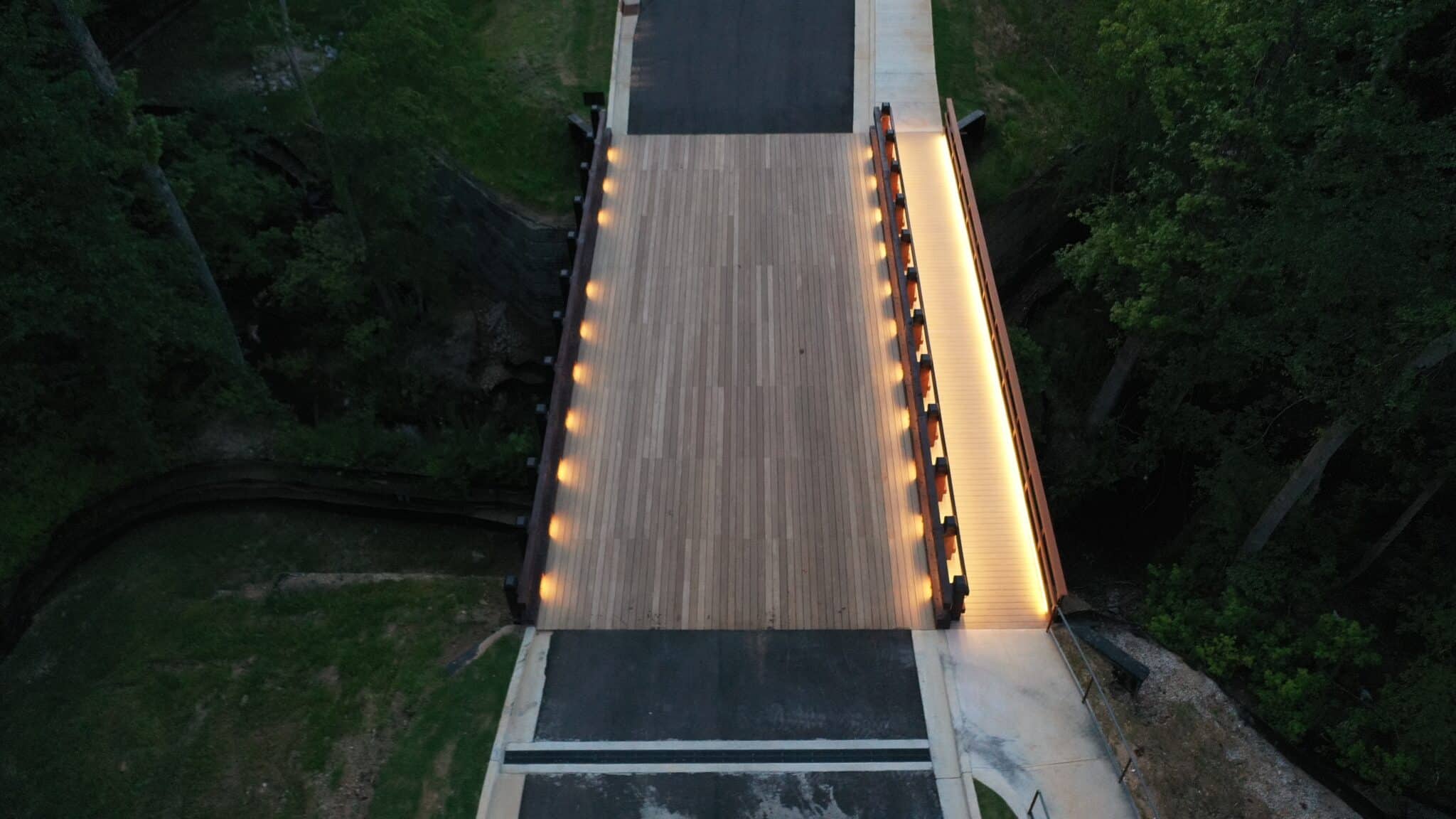
The Heights at Ashford is a boutique development nestled in the desired north Atlanta community of Brookhaven. The main entry bridge crosses a rock laden ravine and floodplain, as well as, coordinates with utilities and drainage for the uphill residences. The Decero™ Design Team faced hidden challenges of working with prohibitive easements that restricted the use of traditional stabilization tension tie-backs. An innovative compressive design strategy to stabilize the structure was engineered to meet the tight crossing requirements. More apparent than the technical beauty of this bridge is the crisp alluring aesthetic created by a sophisticated color palette and a perfectly simplistic rail. While on-site the Field Crew encountered limited access and impenetrable ground conditions that required an alternative method of construction including expansive footers to maximize the structure and efficiency of schedule. The Heights at Ashford Park is a depiction of YBC's ability to perform and produce a top of the line product through the perseverance of knowledge and experience.

Specifications


  • Width:
  • 15’ 10” (14’ 3” clear)
  • Length:
  • 52’
  • Height:
  • 17’ above grade
  • Capacity:
  • HS 20-44
  • Construction:
  • Deck Level
  • Span Type:
  • Multiple Span
  • Span Lengths:
  • (1) 24’, (2) 14’
  • Material:
  • CCA Treated Southern Yellow Pine
  • Foundation:
  • Timber Piles & Abutments (Acrylic/Polymer Coated where exposed)
  • Stringers:
  • SYP Rough Sawn Timber (Acrylic/Polymer Coated where exposed)
  • Deck System:
  • 5 ½” Double Timber Deck
  • Guard Rail:
  • Decero™ Classic Design Series
  • Crossing:
  • Flood Plain

New call-to-action

Project Overview: A Precise Solution for a Complex Site

In fast-growing neighborhoods like Brookhaven, elegant mobility infrastructure is no longer a nice-to-have-it is the connective tissue of place-making. The Heights at Ashford entry bridge demonstrates how Atlanta Community Infrastructure can be delivered with both technical rigor and architectural restraint. York Bridge Concepts (YBC) was engaged to design and build a primary access crossing that:

  • Spans a rock-laden ravine and designated floodplain,
  • Integrates utilities and uphill drainage without disrupting service or capacity, and
  • Navigates tight easements that eliminated conventional tie-back stabilization.

The outcome is a tailored timber vehicular entry bridge that reads as a natural extension of the site. Its understated guardrail lines, coordinated color palette, and proportioned structural members maintain a calm visual profile while the structure underneath quietly accomplishes significant engineering work.

Context: Why This Bridge Matters to Brookhaven

Brookhaven's residential fabric is defined by mature tree canopies, rolling topography, and water features that shape both the quality of life and the constraints of construction. For infill and boutique communities like the Heights at Ashford, these features create three persistent challenges:

  1. Access over elevation changes without scarring the landscape,
  2. Hydrologic continuity--maintaining downstream conditions through careful culvert and drainage coordination, and
  3. Limited workspace--tight setbacks, easements and neighbors require surgical construction planning.

Within this context, the Heights at Ashford bridge is more than a driveway crossing. It is a small but consequential asset in the broader ecosystem of Atlanta Community Infrastructure, setting a precedent for how sensitive sites can be linked to the urban grid without sacrificing ecological function or aesthetics.

Executive Context: A Bridge That Sets The Tone

In boutique infill settings, an entry bridge does more than clear a physical gap--it sets expectations for the experience beyond the gate. At the Heights at Ashford, the crossing performs three roles at once: mobility enabler, brand amplifier, and neighborhood neighbor. As a mobility enabler, it consolidates safe ingress/egress with geometry that feels natural at residential speeds. As a brand amplifier, it delivers a clean, confident first impression that elevates perceived home value. And as a neighborhood neighbor, it respects the hydrology, tree canopy, and sightlines that define Brookhaven's appeal.

The project also illustrates how Atlanta Community Infrastructure can be scaled: what works at the community entry can be replicated at pocket parks, greenway junctions, and small civic connectors. The same discipline--careful geotechnical interpretation, hydraulic coordination, compressive stabilization in lieu of tie-backs, top-down construction--applies across many micro-crossings that stitch together the city's daily life.

Finally, it demonstrates the power of constraint-driven design. Tight easements, shallow bedrock, and a floodplain did not shrink the design vocabulary; they refined it. Restraint becomes a design asset here: a minimal rail, proportioned members, and disciplined color unification yield a modern, warm infrastructure expression--one that reads as quiet competence rather than spectacle. The result is less "look at me" and more "of course this belongs here," which is precisely the tone premium developments seek as they welcome residents home.


Heights at Ashford Atlanta Community Infrastructure vehicular bridge guiderails built by York Bridge Concepts

The Decero™ Design-Engineer-Build Method

Every YBC project begins with a blank page--The Decero™, "from zero." For Heights at Ashford, that meant building a design narrative around constraints rather than forcing a standard detail into a nonstandard site. The process unfolded in four overlapping tracks:

  1. Discovery & Criteria Setting
    - Survey and geotechnical review confirmed shallow bedrock zones and highly variable soils.
    - Jurisdictional requirements around the floodplain and utility separations were mapped into non-negotiables.

  2. Concept Development
    - Alternative load paths were modeled to avoid prohibited tie-backs.
    - Superstructure depth, member spacing, and pier placements were iterated to minimize excavation and utility conflicts.

  3. Detailing for Constructability
    - Connection details were refined for repeatability and field tolerance given limited access.
    - Component sizing balanced stiffness, weight, and the realities of delivery and placement on a tight site.

  4. Execution Planning
    - A deck-level (top-down) construction sequence reduced disturbance in the ravine.
    - An alternative foundation strategy using expansive footers provided compressive resistance where tension elements were disallowed.

The The Decero™ approach is not a formalistic style; it is a disciplined way to integrate engineering, construction, and aesthetics into one continuous plan.


Design Discovery: From Unknowns to Non-Negotiables

Discovery work is where YBC converts uncertainty into a project compass. For Heights at Ashford, the team prioritized four threads:

1) Subsurface truth. Borings and test pits confirmed shallow bedrock and variable overburden. Rather than chasing uniformity, the design accepted variability and used foundation proportioning to find competent bearing without invasive tie-back systems.

2) Hydraulic behavior. The ravine's low-flow channel, overbank conveyance, and debris tendencies were mapped to shape abutment returns and pier locations. Keeping the thalweg clear reduces maintenance and protects freeboard.

3) Utility choreography. Existing and future service paths (water, power, telecom, storm) were treated as co-equal design constraints. Minimum separations and access envelopes were codified early so that the bridge integrated with, rather than obstructed, long-term serviceability.

4) Buildability in tight quarters. Discovery included temporary works planning: crane access, deck-launch sequences, and just-in-time deliveries. the team validated that each construction step had a safe, feasible path given neighboring parcels and protected areas.

From these inputs came project non-negotiables: no soil anchors, no utility conflicts, no hydraulic penalties, and no staging that exceeded the site's tolerance. With the guardrails defined, YBC iterated concepts around load path clarity (shortest, straightest force routes), member economy (section sizes that deliver stiffness without mass inflation), and assembly logic (connections that tolerate minute alignment shifts typical of constrained sites). The resulting scheme is a case study in Decero™: constraints are not headwinds--they are the wind tunnel that shapes a more precise, more durable solution.

Heights at Ashford substructure built by York Bridge Concepts in Atlanta, Georgia

Engineering the Unseen: Compression Over Tie-Backs

Traditional stabilization for abutments or wingwalls in constrained sites often relies on soil anchors or tension tie-backs. At Heights at Ashford, easements took those tools off the table. YBC's structural engineers instead pursued a compressive stabilization strategy, which can be summarized as:

  • Mass + Bearing: Expansive footers and carefully stepped subgrade preparation distribute load into competent strata, letting gravity do the work that tension anchors would otherwise handle.
  • Geometry as a Force Manager: Abutment geometry was refined to reduce eccentricities and keep reaction lines comfortably within the bearing area across anticipated load cases.
  • Integrated Drainage Relief: Controlled drainage behind the abutments prevents hydrostatic pressure buildup, which is a common hidden driver of lateral demand.
  • Connection Redundancy: Superstructure-to-substructure connections were detailed for both serviceability and ultimate limit states, ensuring that load paths remain predictable under rare events.

The effect is a bridge whose stability is legible to engineers and invisible to everyone else: it simply looks "right," sitting confidently on its bearings without bulky walls or visually disruptive hardware.


Structural Strategy: Load Paths You Can Trust

A durable bridge begins with predictable load paths. In lieu of tension-based stabilization, Heights at Ashford relies on gravity-driven bearing and geometry that contains reactions within the footing footprint. Member sizing establishes stiffness targets for everyday performance (ride quality at low residential speeds), while connections are detailed for serviceability first, ultimate strength always.

Key choices include:

  • Span economy: Member spacing and depth balance clearances, construction weight, and perceptible vibration limits.
  • Connection repeatability: Identical or near-identical details across the deck simplify fabrication, inspection, and future maintenance.
  • Redundancy by interface: Superstructure-to-substructure interfaces resist prying and uplift without relying on any single connector type.

Because the bridge serves both routine residential vehicles and occasional emergency access per the authority having jurisdiction, the system is calibrated to deliver stiffness without overbuild. that avoids mass that can amplify seismic or thermal demand, and it protects the visual lightness that defines the project's aesthetic brief. The result is a structure that feels calm underfoot and underwheel--quietly doing what it was designed to do.


Image

Hydrology, Utilities, and the Floodplain

Any crossing in a floodplain must "do no harm." YBC coordinated closely with the civil designer to maintain existing conveyance and storage while achieving code-compliant freeboard. Key moves included:

  • Flow Alignment: Pier placements and abutment returns were shaped to keep low-flow channels clear and avoid creating eddies or debris traps.
  • Scour Awareness: Bearing surfaces were checked for anticipated scour depths; protection strategies were chosen to match the geomorphology of the ravine rather than fighting it.
  • Utility Priority: The entry bridge design respected utility separations and access requirements, threading the structure through a three-dimensional puzzle of existing lines and future capacity.

This attention to water and utilities turns an access point into a quiet piece of environmental infrastructure--supporting both mobility and watershed health within Atlanta Community Infrastructure.


Image

Hydraulic Performance: Designing with Water

Floodplains ask for deference, not domination. The Heights at Ashford design honors three hydrologic principles:

  1. Align with existing flow logic. Piers and return walls are shaped to respect the low-flow channel and let debris pass, reducing backwater and maintenance.
  2. Protect bearing from scour. Anticipated scour depths informed footing elevations and protective measures. Where warranted, discreet bed stabilization complements natural channel geometry rather than armoring everything in sight.
  3. Relieve pressure. Behind abutments, controlled drainage pathways mitigate hydrostatic buildup--a frequent culprit in lateral load surprises.

The effect is a bridge that participates in the watershed rather than obstructing it. Conveyance is preserved visual clutter is avoided, and long-term maintenance is simplified by not creating problems that must be solved later. That is a hallmark of thoughtful Atlanta Community Infrastructure in creek-adjacent neighborhoods.

Image

Materials & Finish: Quiet Sophistication

From the roadway, the bridge reads as minimal and modern: a perfectly simplistic rail, crisp lines, and a palette that harmonizes with the surrounding hardwood canopy. Beneath that simplicity lies a high-performance timber system chosen for strength, durability, and ease of maintenance:

  • Structural Timber: Southern Yellow Pine members--engineered and preservative-treated--provide excellent strength-to-weight ratios and predictable performance.
  • Protective Coatings: A multistep coating system anchors the color palette while shielding the timber from UV, moisture cycling, and abrasion.
  • Hardware & Connections: Concealed or color-matched hardware minimizes visual clutter and protects critical steel from exposure.
  • Deck Options: Where appropriate, composite decking or wear layers can be specified to balance traction, longevity, and aesthetics.

The result is a bridge that looks at home on day one and, with periodic care, retains its tailored appearance for decades.


Material System: Timber, Finished for Duty

YBC specifies timber because it will work hard and look good doing it. Preservative-treated structural members deliver strength-to-weight advantages that simplify erection and reduce disturbance. Where the brief calls for even lower upkeep at the wear surface, composite decking or sacrificial wear layers can be integrated without diluting the visual unity of the system.

Coatings are a performance layer and a design layer. Multi-coat systems control UV exposure and moisture cycling while providing the crisp, low-gloss finish that visually quiets the bridge in its wooded setting. Color is tuned to the site--warm enough to read as wood, neutral enough to harmonize with both shade and sun.

Hardware is concealed where feasible and color-matched elsewhere. This is not strictly a vanity move; it also shields steel from direct exposure, improving durability. Fasteners and connectors are selected for inspectability--you can see what you need to see without disassembly.

Over time, that combination--inspectable details, replaceable elements, and protective finishes--yields a bridge that ages predictably. It will never demand wholesale reconstruction to correct preventable detailing choices. Instead, it invites periodic, straghtforward care, which is exactly what owners need.


Construction in Tight Quarters

Limited access and stubborn subsurface conditions are a fact of life in urban infill. The Heights at Ashford site required surgical logistics:

  • Staging and Sequencing: Delivering sequencing was planned to minimize on-site inventory and keep the right components arriving at the right time.
  • Top-Down (Deck-Level) Practices: Working form the advancing deck limited disturbance in the ravine and reduced the footprint of temporary works.
  • Expansive Footers: Where the ground refused easy excavation, the team adapted footing dimensions and placements to capture competent bearing and ensure schedule-friendly installations.
  • Safety by Design: Fall protection, equipment access, and clear zones were baked into the plan, not retrofitted under pressure.

This blend of foresight and flexibility is central to YBC's field craft--especially when the site refuses to cooperate.

Build Sequence: Top-Down, Minimal Footprint

Constrained sites reward teams that build from what they've already built. The Heights at Ashford crossing uses a top-down (deck-level) approach that turns the advancing superstructure into a temporary work platform. That reduces ground impacts, limits the need for extensive temporary roads, and keeps crews operating in safe, predictable zones.

A typical sequence:

  1. Access establishment and protection measures: tree fencing, silt controls, and exclusion zones.
  2. Foundations proportioned for compressive stability: careful excavation, subgrade preparation, and placement to elevations validated against scour and utilities.
  3. First spans installed to create the initial deck work surface; bracing and temporary edge protection installed immediately.
  4. Progressive assembly of subsequent spans, rails, and utilities coordination while crews remain on the deck plane.
  5. Finish work: coatings touch-ups, final torque checks, drainage verifications, and demobilization without heavy traffic across sensitive ground.

The logistics plan is as important as any drawing. Deliveries are timed to eliminate on-site stockpiling; crane picks are choreographed to minimize swing over protected areas; and crew sizes are tuned to the available workfront so safety margins remain generous.

This not merely a construction convenience. It's a design principle: when buildability is honored early, the outcome is cleaner, faster, and less disruptive. That's good for neighbors, good for schedule, and good for the watershed.


Aesthetics With A Purpose

Good bridge design is more than structural adequacy. It's the discipline of aligning forces, forms, and finishes so that the crossing feels inevitable--as if it were always meant to be there. For Heights at Ashford:

  • Rails Proportioning keeps sightlines open while meeting code.
  • Color Strategy grounds the bridge in the landscape and unifies a variety of materials.
  • Clean Edge Detailing at transitions (approach slabs, abutment interface, wingwalls) avoids visual "noise."
  • Nighttime Presence can be addressed with low-glare, shielded lighting to ensure safe access without light spill into the ravine.

These moves deliver a bridge that elevates curb appeal, supports brand value for the development, and contributes to the character of Atlanta Community Infrastructure.


Visual Discipline: Small Moves, Big Impact

The Heights at Ashford palette is intentionally restrained. Three decisions do heavy lifting:

  • Rail proportioning that meets code while protecting sightlines. The top profile is slim and continuous; posts are set to a rhythm that feels residential rather than highway.
  • Color that recedes. Mid-tone, low-sheen finishes tuck the bridge into the tree canopy, avoiding the glare and visual "shout" that bright coatings can introduce.
  • Clean edges at transitions. Approach slabs, abutment interfaces, and wingwalls are detailed to read as a single gesture, not a college of parts.

Add optional low-glare lighting--shielded, aimed, and warm in temperature--and the bridge supports nighttime safety without broadcasting into the ravine. This level of visual discipline is not aesthetic fussiness; it is a way to lower cognitive load for drivers and pedestrians so the crossing feels calm, intuitive, and premium.


Atlanta Community Infrastructure with the Heights at Ashford vehicular bridge project built by York Bridge Concepts

Sustainability: Timber as Working Green Infrastructure

Timber bridges are carbon-smart by nature. The structural members store carbon absorbed during tree growth, while fabrication and erection typically require less energy than steel or concrete equivalents. Additional sustainability wins include:

  • Lower Disturbance Footprints: Top-down construction and lighter components reduce heavy equipment needs and site disturbance.
  • Repairability: Individual timber elements can be replaced without wholesale demolition.
  • Finish Longevity: Modern coatings extend service life and reduce lifecycle impacts from refinishing.

In aggregate, these benefits make the Heights at Ashford bridge a credible exemplar of environmentally attuned Atlanta Community Infrastructure.

Environmental Stewardship in Practice

Sustainability here is not a slogan--it's the byproduct of design choices:

  • Lower embodied energy in the timber superstructure compared to many steel or concrete equivalents of the same span class.
  • Reduced disturbance via top-down assembly and lighter components, meaning fewer trips by heavy machinery and smaller temporary pads.
  • Repairability: The ability to swap individual elements prevents full-span tear-outs decades down the line.
  • Watershed respect through alignment with flow, scour awareness, and pressure relief.

Because these choices are embedded in the design, the owner does not need to "opt in" to sustainability later. The bridge already behaves like green infrastructure--quietly delivering ecological benefits alongside mobility and aesthetics. That's a compelling pattern for Atlanta Community Infrastructure wherever creeks, floodplains, and neighborhoods meet.


Performance and Service Life

While details vary by jurisdiction and owner preference, YBC designs for multi-decade service life under routine residential loads and occasional emergency access. The structural system, connections, and protective systems are coordinated to:

  • Maintain stiffness and ride quality,
  • Resist moisture cycling, UV exposure, and wear, and
  • Provide clear inspection and maintenance paths to keep small issues from becoming big ones.

These fundamentals underpin total lifecycle value--lowering cost of ownership without compromising the user experience.


Serviceability: What Users Actually Feel

Users never see a load rating. They feel ride quality, acoustic calm, and predictable sightlines. The Heights at Ashford design pursues these serviceability goals:

  • Vibration control through member stiffness targeting, avoiding the trampoline effect that plagues under-spanned decks.
  • Acoustic quiet from tight connection detailing and wear-surface choices that tame clatter.
  • Sightline continuity through rail height, post spacing, and approach geometry that reduce visual startle.

These choices reinforce the message the development wants to send: this is a premium place, not only at move-in but every day thereafter. Serviceability is brand value, translated into physics.


Risk Management & Quality Assurance

Complex sites compound risk. YBC's delivery strategy reduces uncertainty through:

  • Front-Loaded Coordination with civil, utility, and site engineers,
  • Shop Detailing that anticipates tolerances and field realities,
  • Pre-Installation Mock-ups where connections or interfaces are novel, and 
  • Structured QA/QC during fabrication and erection, logging critical inspections and torque checks.

A bridge that looks effortless is almost always the product of disciplined process.

Quality Controls: Build it, Check it, Log it

A bridge that looks effortless usually has a checklist behind it. YBC's QA/QC framework includes:

  • Pre-installation meetings aligning crews, equipment operators, and inspectors on sequences and hold points.
  • Fit-up verifications before lifting--fastener kits, hole checks, and protective wraps all confirmed.
  • Torque logs on critical connections with inspector sign-off.
  • Coatings inspections for mil thickness and cure windows.
  • Hydraulic features verified against shop and civil drawings to ensure relief paths and clearances remain as designed.

Documentation is captured as part of the turnover package, creating a maintenance baseline and traceable record for future owners or managers.


Image

The Owner Experience: Turnkey & Transparent

For developers and builders, time is money. YBC's Design-Engineer-Build model consolidates responsibility and information flow, offering:

  • One accountable team from concept through punch list,
  • Milestone submittals aligned to the broader construction schedule, and
  • On-site leadership that anticipates conflicts before they hit the critical path.

The Heights at Ashford team benefited from this integrated model, staying on schedule despite the site's stubborn geology and access constraints.

Owner Alignment: Fewer Hand-offs, Fewer Surprises

The Design-Engineer-Build model consolidates accountability. Instead of multi-firm relay, the owner engages a single team that controls concept, engineering, procurement, and field execution. The benefits are tangible:

  • Schedule clarity with milestone submittals that dovetail into site-wide timelines.
  • Cost discipline since value engineering occurs within one shop rather than across silos.
  • Issue anticipation because the people drawing the details are often the same people planning the picks, staging, and torque checks.

For Heights at Ashford, this meant rapid decision loops. When a subsurface nuance surfaced, the team adjusted footing proportions, validated bearing, and kept work moving--with one conversation rather than four.


What "Success" Looks Like on Day 1--and Day 3,650

Project success is measured twice: at ribbon-cutting and at the ten-year mark. For Heights at Ashford, YBC calibrated design and construction choices to ensure that:

  • The bridge feels premium at first occupancy, reinforcing the development's market position, and 
  • It stays premium through its first decade with routine maintenance--no surprises, no premature overhauls.

That is how a small piece of Atlanta Community Infrastructure compounds value over time.

Commissioning: From Punch List to Performance

Turnover is not a final coat of paint. It's a performance handoff. YBC's commissioning playbook includes:

  • Walkthroughs with the owner's team to review coatings, drainage, and connection access.
  • As-built packages covering foundations, superstructure members, hardware, and finish systems.
  • Maintenance calendar with sensible intervals and inspection prompts.
  • Training moments so staff know what to look for and what to log.

By closing the loop from design intent to operating instructions, the bridge is set up to perform consistently from day one to year ten and beyond.


Owner-Friendly Maintenance: A Simple Plan

Bridges don't maintain themselves, but good ones don't ask for much. A pragmatic plan typically includes:

  • Annual Walkthroughs to check coatings, fasteners, and drainage.
  • Cyclical Recoat Intervals aligned with finish specifications and exposure conditions.
  • Keep-Clear Practices: Debris removal at inlets/outlets and away from abutment toes.
  • Timely Touch-Ups: Protecting nicked coatings before moisture ingress.

YBC also offers structured maintenance support programs to keep owners on a steady, budget-friendly path.


Maintenance Playbook: Predictable, Not Painful

A good plan is simple and repeatable:

Annually:

  • Walk the deck, rails, and abutment toes after leaf-fall and after spring storms.
  • Clear debris at inlets/outlets and any relief drains.
  • Spot-touch coatings nicks; verify fastener heads and visible connectors.

Every 3-5 years (exposure-dependent:

  • Recoat per the finish specification, focusing on sun-exposed fascias and rail tops.
  • Re-verify torque on designated connections.

After major events:

  • Inspect for displaced riprap or bed features; check for unusual settlement lines at approach slabs.
  • Photograph and log any anomalies to build a trend history.

Because individual timber elements are replaceable, owners avoid the all-or-nothing maintenance cycles typical of some materials. Small, timely interventions keep the bridge both beautiful and reliable.

Heights at Ashford vehicular bridge for Atlanta Community Infrastructure built by York Bridge Concepts

Lessons Learned: Turning Constraints Into Catalysts

Every difficult site teaches. Three takeaways form Heights at Ashford will resonate across the region:

  1. Easement-Driven Design is an Opportunity
    By embracing compressive stabilization and massing, the team delivered a cleaner aesthetic and sidestepped the complexities of tension hardware.

  2. Hydrology Wants Partnership, Not Domination
    The best floodplain solutions align with the site's natural logic--directing flows, avoiding eddies, and maintaining conveyance without brute force.

  3. Construction Sequencing is Design Variable
    When access is limited, building from the deck isn't just a means; it is a design constraint that improves outcomes if considered early.

These are replicable strategies for future Atlanta Community Infrastructure projects that must harmonize development goals with sensitive terrain.


Safety by Design: Protecting People and Workflows

Safety is embedded, not added later:

  • Edge protection during top-down assembly prevents exposure as the workfront advances.
  • Equipment separation keeps pick paths away from pedestrian routes and neighboring parcels.
  • Low-glare lighting options maintain nighttime visibility without casting into habitat.
  • Drainage controls reduce slip risks at deck level and minimize ice potential at shaded approaches.
  • Emergency access geometry aligns with local apparatus requirements while protecting residential character.

Because the construction plan mirrors the final use case--working from the deck plane as residents ultimately will--the team validates safety and flow under real geometry, not abstractions.


Frequently Asked Questions

Is the bridge designed for standard residential and emergency vehicles?

Yes. YBC designs entry bridges to meet applicable codes for residential traffic and emergency access as required by local authorities having jurisdiction.

How does the bridge address flood events?

Pier placements, abutment geometry, and clear conveyance pathways support hydrologic performance while maintaining required freeboard. Drainage integration behind abutments reduces hydrostatic pressures.

What's the expected service life?

With periodic inspections and recoating per specification, timber vehicular bridges routinely deliver multi-decade service lives.

Will timber last in Atlanta's climate?

Properly detailed, treated, and coated timber performs reliably in humid climates. The key is quality detailing controlled moisture paths, and a reasonable maintenance cadence.

How disruptive is construction on a tight site?

YBC's top-down sequencing and just-in-time logistics minimize disturbance. Staging is planned to keep work contained and respectful of neighbors.

Can the aesthetic be customized?

Yes. Rails, coatings, decking, and hardware finish can be tailored to match community branding or architectural themes.

What permits are required?

Permitting varies by jurisdiction and floodplain classification. YBC coordinates with civil engineers and local reviewers to align submittals with code and environmental requirements

Replicability Across Atlanta

The micro-challenges at Heights at Ashford--easement constraints, floodplain adjacency, utilities integration--are macro-themes across the metro. As population increases, Atlanta will need more bridges that thread the needle between environmental prudence and development ambition. The playbook demonstrated here provides a scalable pattern for:

  • Residential entries over creek ravines,
  • Neighborhood greenway crossings, and
  • Low-profile access structures integrated with stormwater systems.

This is the essence of thoughtful Atlanta Community Infrastructure: small, high-impact interventions that upgrade daily life without overwhelming the landscape.

Regional Reuse: A Kit of Parts for Atlanta

The logic demonstrated here--compressive stabilization, hydraulic alignment, top-down construction, disciplined aesthetics--is broadly applicable across metro Atlanta. Small creeks thread through neighborhoods from Brookhaven to Decatur to Sandy Springs. Crossing needs are often short-to-medium spans with environmental sensitivity, tight easements, and a desire for an elevated yet quiet visual presence.

A kit-of-parts approach lets teams adjust span count, rail variants, and decking choices while retaining proven details for connections and coatings. That speeds approvals, improves cost predictability, and ensures that Atlanta Community Infrastructure accumulates as a coherent network rather than a patchwork of one-offs.


Design Elements at a Glance

  • Structure: Timber vehicular bridge tailored for site constraints
  • Stabilization: Compressive strategy with expansive footers (no tie-backs)
  • Hydrology: Maintained conveyance, scour awareness, drainage relief
  • Aesthetics: Minimal rail, crisp color palette, concealed hardware where feasible
  • Construction: Deck-Level sequencing, limited-access logistics
  • Maintenance: Simple, periodic inspections with planned recoats


Specifier's Snapshot: What to Ask For

For owners, civil engineers, and architects writing scopes, consider language that captures the Heights at Ashford lessons:

  • Stabilization: "Abutment and wingwall stability via compressive foundation strategy; no soil anchors or tie-backs permitted within easement limits."
  • Hydraulics: "Maintain existing conveyance; shape returns to reduce debris trapping; provide relief drainage behind abutments."
  • Constructability: "Top-down assembly preferred; sequence to minimize ground disturbance and tree canopy impacts."
  • Aesthetics: "Minimal rail with continuous top profile; low-sheen mid-tone coatings; concealed or color matched hardware."
  • Maintenance: "Coating system with defined recoat interval; connections accessible for inspection; replaceable wear surface options."

This language preserves flexibility for bidders while protecting the project's intent.

Image

Why Timber for Entry Bridges?

Timber offers a compelling combination of engineering performance, constructability, and placemaking:

  • Strength & Weight: High strength-to-weight ratios simplify erection and foundation demands.
  • Speed: Prefabricated components accelerate installation windows.
  • Beauty: Warmth and tactility enhance perceived quality at the arrival moment.
  • Sustainability: Carbon-storing materials and low-disturbance methods align with modern environmental expectations.

For boutique developments, these attributes translate into real advantages: shorter schedules, quieter jobsites, and finished works that resonate with prospective homeowners.


Timber vs. Alternatives: The Practical Math

When spans are modest and sites are sensitive, timber's strength-to-weight advantage is more than a structural nicety--it's a logistics and environmental win. Lighter lifts mean smaller equipment, fewer temporary mats, and less site recovery. Fabrication timelines are typically shorter, allowing faster time-to-open. And because components are discrete, refurbishment decades later is targeted rather than wholesale.


Collaborative Delivery: Developer, Civil, & YBC

Success at Heights at Ashford was rooted in a collaborative environment:

  • The developer articulated priority outcomes: safe, elegant access that protects market positioning.
  • The civil engineer ensured drainage, utilities, and grading worked in concert.
  • YBC integrated those aims into a single buildable plan, verifying that the bridge supported, rather than complicated, the larger site design.

This alignment protected schedule, optimized cost, and ensured that design intent survived contact with field realities.


Communications: Keeping Stakeholders In The Loop

Good projects are good conversations. YBC's communications cadence kept the developer, civil engineer, and field teams aligned:

  • Weekly look-aheads to preview deliveries, picks, and inspections.
  • Constraint registers documenting easement, hydraulic, and utility guardrails so decisions remained within bounds.
  • Photo logs for progress verification and as-built records.
  • Issue triage with clear owners and decision deadlines.

This transparency lowers stress for everyone--especially neighbors--by minimizing surprises and demonstrating care for context. It's part of the social license to build in and around established communities.


The Value Case

When evaluating entry crossings, owners often default to the cheapest structural path. The Heights at Ashford project is a reminder that lowest first cost can be penny-wise and pound-foolish. A better calculus weighs:

  • Lifecycle Cost (maintenance, recoats, component replaceability)
  • Speed to Market (fewer days between site work and certificate of occupancy), and
  • Market Impact (arrival experience, brand alignment, perceived quality).

On these measures, a well-designed timber bridge routinely outperforms.


Cost Realism: Where Value Emerges

Value is not lowest line time--it's the confidence that the number you pick will actually deliver the outcome you need. For Heights at Ashford, value showed up in:

  • Reduced temporary works via top-down logistics.
  • Shorter mobilizations because lighter components and repeatable details speed field time.
  • Lower lifecycle spend thanks to repairable elements and predictable recoat cycles.
  • Market impact: a premium arrival experience that supports the development's pricing power.

When owners evaluate proposals, weighing schedule, disturbance footprint, and brand value alongside first cost produces better decisions--and happier neighborhoods.


From Constraint to Catalyst: A Closing Perspective

The Heights at Ashford entry bridge is a disciplined answer to a thorny question: how do you deliver a code-compliant, flood-aware, utility-sensitive crossing on a site that says "no" to all the usual tricks? YBC's response--compression over tension, design over default, process over improvisation--turns constraint into catalyst. The crossing now serves as both gateway and guarantor: an elegant first impression and a durable piece of Atlanta Community Infrastructure that will do its work quietly for years to come.


REQUEST YOUR QUOTE

All Feature Projects


What's Best: A Culvert Or A Timber Bridge?

Understand the considerations you should make before choosing your crossing method.

What Is The Best Span Type For My Project?

See how creative scoping, design, & usage work to create the perfect spanning solution for your project.

Which Load Capacity I Need?

Understand the different load capacities for usage that are needed for your project.

How Do I Cross An Environmentally Sensitive Area?

Learn how YBC crosses protected areas with our Deck-Level Construction.

How Do I Create A Landmark?

Create a memorable icon for your development project with a YBC Legacy Timber Bridge.

How Long Does A Timber Bridge Last?

Extend the lifespan of your timber bridge to over 75 years using these guidelines, material selection, protection & maintenance practices.
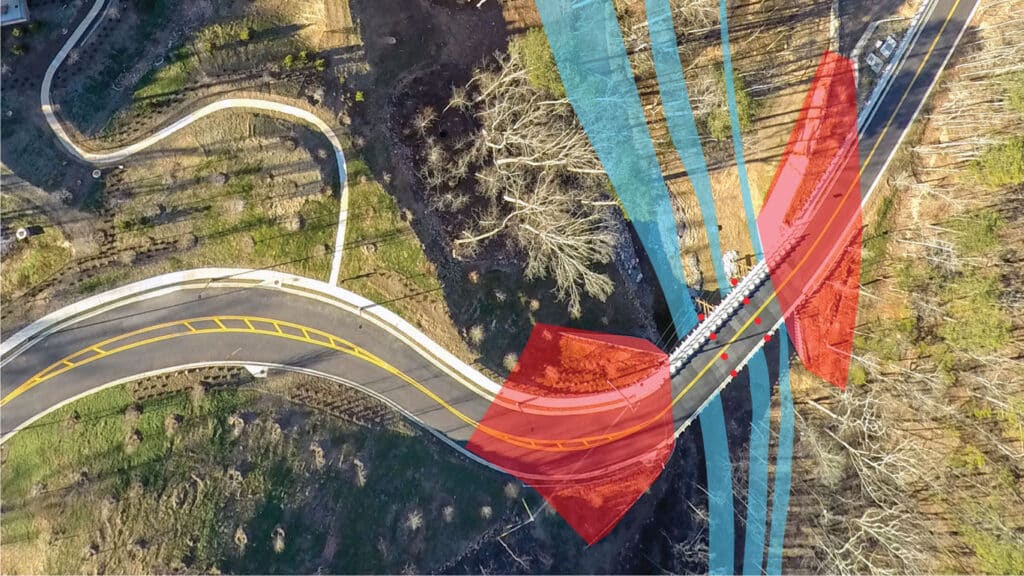


Placeholder Image

Culvert Or Bridge

If you're considering using a culvert for your crossing project. Click below to understand the best fit for your project.

Culvert Or Bridge
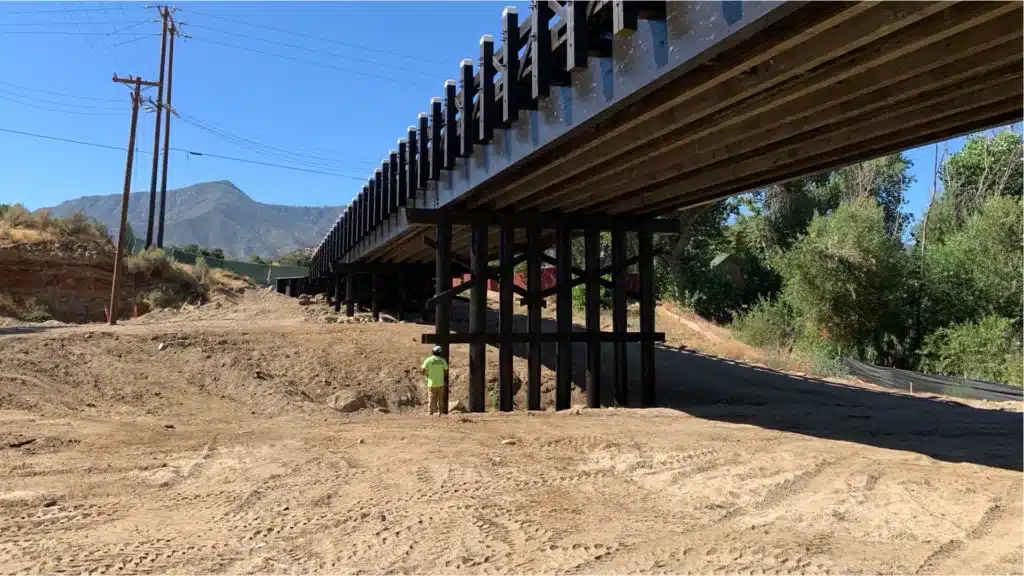
Placeholder Image

Spanning Solutions

Spanning a crossing is one of the most important aspects of your crossing project. Find the best solution for your crossing needs.

Spanning Types
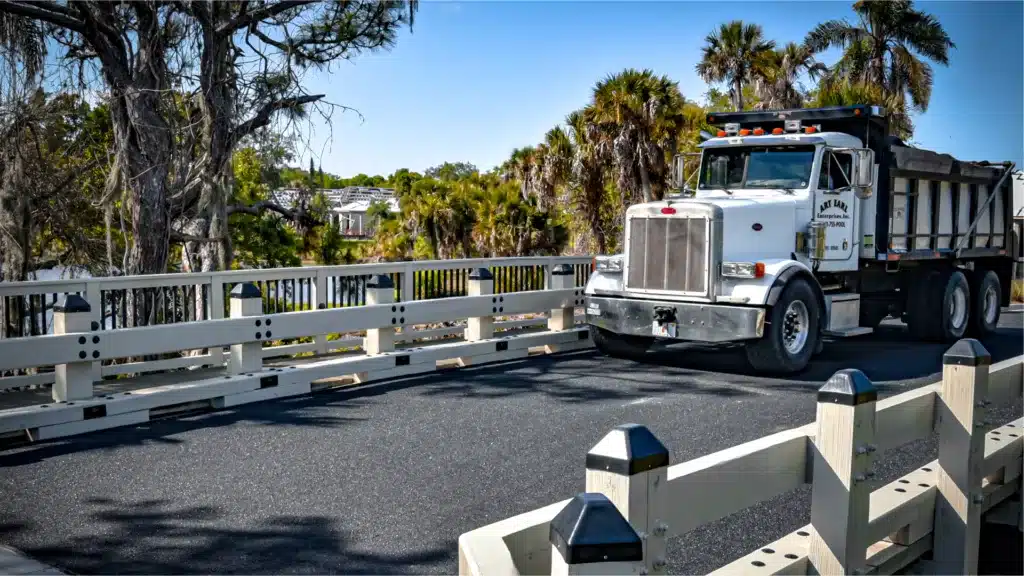
Placeholder Image

Uses & Capacities

The load capacity of a timber bridge may surprise you. See specs for different loads and uses that will help your decision-making process.

Bridge Loads & Usages