Timber vs. Steel Construction

Choosing the right construction material is one of the most important decisions in any bridge project. For decades, steel has been the standard for many large transportation structures, while modern engineered timber has emerged as a highly effective solution for pedestrian bridges, vehicular bridges, boardwalks, parks, waterfront developments, master-planned communities, universities, and commercial projects.

Rather than asking which material is universally “better,” the more important question is which material is best suited for your project’s goals, environmental conditions, budget, aesthetics, maintenance strategy, and long-term performance requirements.

At York Bridge Concepts, we specialize in designing and constructing custom engineered timber bridges through our integrated Design-Engineer-Build™ methodology and proprietary Deck-Level Construction™ process. Since 1985, we have designed and built more than 9,000 custom bridges throughout North America, helping clients select infrastructure solutions that balance engineering, sustainability, lifecycle value, and architectural beauty.

Timber vs. Steel: Understanding the Differences

Both timber and steel are proven structural materials with unique advantages.

The best choice depends on factors including:

  • Bridge span
  • Structural loading
  • Environmental conditions
  • Project budget
  • Construction schedule
  • Architectural goals
  • Lifecycle costs
  • Sustainability objectives
  • Maintenance expectations

Every York Bridge Concepts bridge is engineered specifically for the project rather than relying on a one-size-fits-all solution.

Sustainability

One of the biggest differences between timber and steel construction is environmental impact.

Engineered Timber

Timber offers several sustainability advantages:

  • Renewable building material
  • Stores carbon throughout its service life
  • Lower embodied carbon
  • Responsibly sourced forestry products
  • Natural appearance
  • Reduced environmental footprint

York Bridge Concepts has documented more than 48,000 tons of carbon savings across its portfolio of custom timber bridge projects.

Steel

Steel provides exceptional structural capability, particularly for extremely long spans and heavy transportation infrastructure, but its manufacturing process generally requires significantly more energy than engineered timber and results in higher embodied carbon.

Construction Speed

Construction schedules often affect overall project costs.

Timber Construction

Engineered timber bridges can often be installed efficiently because:

  • Components are fabricated to precise dimensions
  • Timber is lighter than comparable steel members
  • Smaller equipment may be required
  • Construction logistics are often simplified

Combined with York Bridge Concepts’ proprietary Deck-Level Construction™ methodology, projects can often minimize environmental impacts while maintaining efficient construction schedules.

Steel Construction

Steel bridge construction may require:

  • Larger cranes
  • Heavier lifting equipment
  • More complex erection procedures
  • Additional corrosion protection in many environments

Construction requirements vary depending on bridge size and location.

Maintenance Requirements

Lifecycle maintenance is an important consideration.

Engineered Timber

Modern engineered timber bridges are designed with:

  • Protective coatings
  • Pressure-treated structural members where appropriate
  • Durable hardwood decking options
  • Replaceable wear surfaces
  • Routine inspection programs

With proper engineering and maintenance, timber bridges can provide a 75+ year design life for many applications.

Steel

Steel bridges offer excellent strength but generally require ongoing inspection and corrosion management, particularly in coastal environments or locations exposed to deicing chemicals and moisture.

Architectural Appeal

Appearance often plays an important role in public infrastructure.

Timber

Timber provides:

  • Natural warmth
  • Timeless architectural character
  • Integration with surrounding landscapes
  • Premium appearance
  • Custom detailing opportunities

These qualities make timber especially popular for:

  • Parks
  • Resorts
  • Universities
  • Waterfronts
  • Residential communities
  • Mixed-use developments
  • Golf courses

Steel

Steel is often selected for:

  • Long-span crossings
  • Industrial applications
  • Urban transportation infrastructure
  • Highly engineered transportation corridors

Both materials can create visually impressive structures depending on project goals.

Environmental Impact During Construction

Construction methods can significantly influence environmental performance.

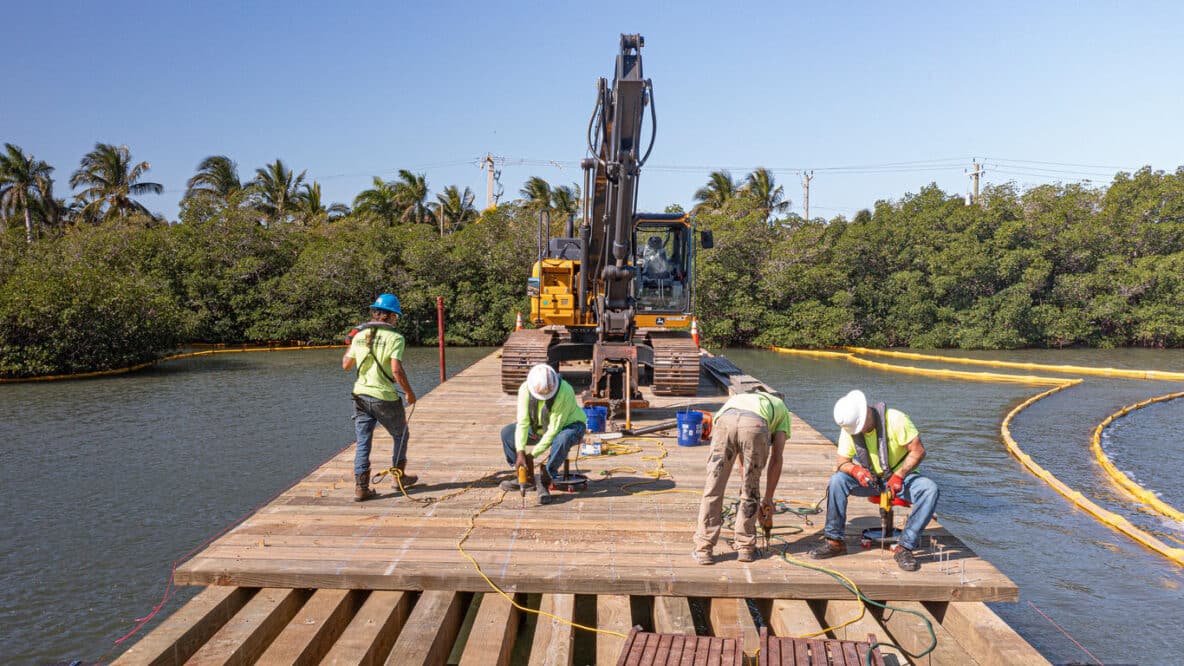
York Bridge Concepts’ proprietary Deck-Level Construction™ methodology allows construction to progress from the completed bridge deck rather than requiring extensive equipment beneath the structure.

Benefits include:

  • Reduced wetland disturbance
  • Protection of native vegetation
  • Reduced soil compaction
  • Preservation of waterways
  • Cleaner construction sites
  • Improved environmental stewardship

These advantages are especially valuable for parks, wetlands, conservation areas, coastal environments, and environmentally sensitive sites.

Applications for Engineered Timber

Timber is frequently selected for:

  • Pedestrian bridges
  • Vehicular bridges
  • Boardwalks
  • Golf cart bridges
  • Community entrance bridges
  • Waterfront infrastructure
  • Greenway trail systems
  • University campuses
  • Municipal parks
  • Mixed-use developments
  • Resorts
  • Nature preserves

Every bridge is engineered specifically for anticipated loading and environmental conditions.

When Steel May Be the Right Choice

Steel remains an excellent structural material for many applications, particularly where projects require:

  • Extremely long spans
  • Major interstate transportation corridors
  • Heavy rail infrastructure
  • Specialized industrial applications
  • Unique structural geometries

Material selection should always be based on engineering requirements rather than assumptions.

The Design-Engineer-Build™ Advantage

Every York Bridge Concepts bridge is delivered through our integrated Design-Engineer-Build™ process.

Our team manages:

  • Site evaluation
  • Structural engineering
  • Environmental coordination
  • Permitting support
  • Construction planning
  • On-site installation

Managing every phase under one experienced team ensures every bridge balances structural performance, sustainability, constructability, lifecycle value, and architectural excellence.

Why Choose York Bridge Concepts?

For more than four decades, York Bridge Concepts has specialized exclusively in custom timber bridge systems.

Clients choose YBC because of our:

  • More than 9,000 bridges built
  • Design-Engineer-Build™ methodology
  • In-house engineering expertise
  • Sustainable construction practices
  • Proprietary Deck-Level Construction™ process
  • Premium architectural customization
  • Nationwide and international experience

Our team works closely with owners, architects, engineers, and developers to determine whether engineered timber is the right solution for each project’s unique requirements.

Choosing the Right Material Starts with the Right Partner

Every successful bridge begins with informed decision-making.

Project goals.

Environmental conditions.

Lifecycle costs.

Community character.

Long-term performance.

Whether you’re evaluating timber, steel, or other structural systems, York Bridge Concepts can help you identify the solution that delivers the greatest value while creating infrastructure that will serve your community for generations.