Timber vs. Steel Bridge Costs
Choosing the right bridge material is about more than the initial price tag. Developers, municipalities, engineers, architects, and property owners must evaluate the total cost of ownership, including design, construction, maintenance, lifecycle performance, and long-term value.
When comparing timber vs. steel bridge costs, many project owners are surprised to learn that modern engineered timber bridges are often highly competitive—and in many cases can provide lower overall project costs depending on the bridge type, site conditions, and construction requirements.
At York Bridge Concepts, we specialize in designing and constructing custom timber pedestrian bridges, vehicular bridges, boardwalks, golf cart bridges, and covered bridges through our integrated Design-Engineer-Build™ methodology and proprietary Deck-Level Construction™ process. Since 1985, we have designed and built more than 9,000 custom bridges across North America, helping clients maximize long-term value through engineered timber bridge solutions.
Are Timber Bridges Less Expensive Than Steel?
There is no universal answer because every bridge is unique.
The total cost depends on factors such as:
- Bridge length
- Span configuration
- Site accessibility
- Foundation requirements
- Environmental permitting
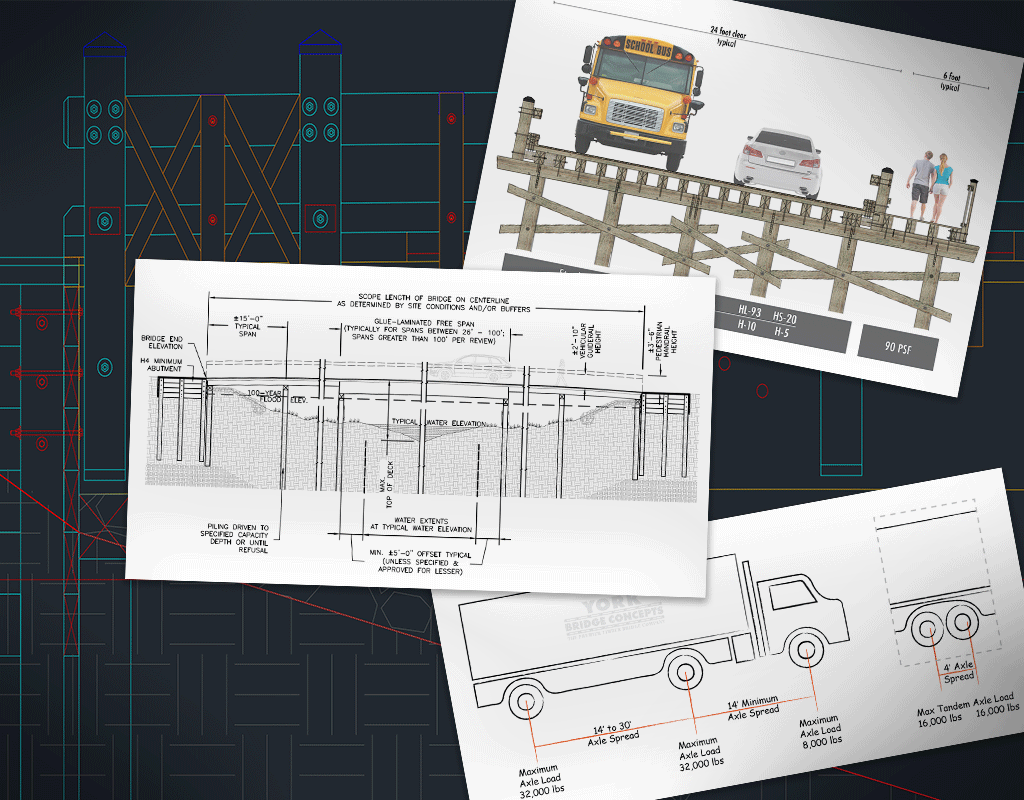
- Bridge loading
- Architectural detailing
- Material availability
- Construction schedule
For many pedestrian bridges, community bridges, parks, golf courses, residential developments, and municipal projects, engineered timber bridges are often cost-competitive or less expensive than comparable steel structures, particularly when construction time and lifecycle costs are considered.
Initial Construction Costs
Initial construction costs include:
- Engineering
- Materials
- Foundations
- Fabrication
- Transportation
- Installation
- Equipment
- Labor
Because timber weighs significantly less than structural steel, projects frequently benefit from:
- Smaller foundations
- Reduced equipment requirements
- Lower transportation costs
- Simplified installation
- Faster construction schedules
These savings can help offset material costs while reducing overall project budgets.
Faster Construction Saves Money
Construction time directly affects project cost.
Shorter schedules reduce:
- Labor costs
- Equipment rental
- Traffic disruptions
- Site overhead
- Project management expenses
York Bridge Concepts’ custom timber bridges are constructed on-site using our proprietary Deck-Level Construction™ methodology, allowing many projects to be completed more efficiently than comparable conventional bridge construction methods.
Foundation Costs
Bridge foundations often represent a significant portion of total project cost.
Because timber bridges are lighter than steel bridges, they frequently require:
- Smaller foundations
- Less excavation
- Reduced concrete quantities
- Smaller cranes
- Lower transportation weights
Site conditions ultimately determine foundation design, but reduced dead loads can contribute to overall project savings.
Transportation & Installation Costs
Steel bridge components often require:
- Oversized transportation permits
- Escort vehicles
- Heavy cranes
- Specialized lifting equipment
- Complex installation sequencing
York Bridge Concepts builds bridges on site, allowing each structure to be fabricated specifically for its environment while minimizing many transportation challenges associated with large prefabricated steel systems.
Benefits include:
- Reduced oversized hauling
- Greater construction flexibility
- Better adaptation to site conditions
- Improved quality control
Lifecycle Costs Matter More Than Initial Price
The lowest upfront bid does not always produce the lowest lifetime cost.
Owners should evaluate:
- Inspection costs
- Maintenance requirements
- Repair frequency
- Material replacement
- Protective coatings
- Operational disruptions
Lifecycle costs often represent the largest long-term investment in bridge ownership.
Timber vs. Steel Maintenance Costs
Properly maintained timber bridges are designed to provide decades of dependable service.
Typical timber maintenance includes:
- Routine inspections
- Protective coating renewal
- Individual member replacement when needed
- Deck maintenance
- Fastener inspection
Steel bridges typically require ongoing protection against corrosion, which may include:
- Surface preparation
- Abrasive blasting
- Repainting
- Corrosion mitigation
- Weld inspections
- Coating replacement
Maintenance needs vary by environment, but corrosion protection can become a significant long-term cost for steel bridges, particularly in coastal or humid climates.
Environmental Costs
Increasingly, project owners also evaluate environmental performance.
Timber provides several sustainability advantages:
- Renewable building material
- Carbon storage
- Lower embodied carbon
- Responsible forestry practices
- Lower manufacturing energy requirements
York Bridge Concepts has documented more than 48,000 tons of carbon savings through its portfolio of custom timber bridges.
For organizations pursuing ESG initiatives, carbon reduction goals, or sustainable infrastructure programs, these environmental benefits can provide additional long-term value beyond construction costs.
Timber Bridges Offer Long-Term Value
Modern engineered timber bridges are designed for long service lives.
York Bridge Concepts designs bridges with an expected 75+ year design life when properly maintained.
Because every bridge is custom engineered, owners benefit from:
- Project-specific structural design
- Efficient material use
- Reduced construction impacts
- Easier future maintenance
- Architectural flexibility
Rather than focusing solely on material cost, YBC evaluates total project value over the bridge’s entire lifecycle.
Ideal Projects for Timber Bridges
Timber bridges are particularly cost-effective for:
- Pedestrian bridges
- Parks
- Greenways
- Residential communities
- Golf courses
- Universities
- Municipal parks
- Boardwalks
- Resort developments
- Community entrances
- Mixed-use developments
Every bridge is engineered according to the required loading, span length, environmental conditions, and architectural objectives.
Deck-Level Construction™ Improves Project Efficiency
York Bridge Concepts’ proprietary Deck-Level Construction™ methodology further enhances project efficiency.
Construction advances from the completed bridge deck itself rather than requiring extensive heavy equipment beneath the structure.
Benefits include:
- Reduced wetland disturbance
- Lower site restoration costs
- Reduced soil compaction
- Protection of mature vegetation
- Cleaner construction sites
- Improved environmental compliance
This innovative approach often helps reduce construction complexity while protecting environmentally sensitive sites.
The Design-Engineer-Build™ Advantage
York Bridge Concepts manages every phase of the project through our integrated Design-Engineer-Build™ process.
Our team provides:
- Site evaluation
- Structural engineering
- Environmental coordination
- Cost optimization
- Construction planning
- On-site bridge fabrication
- Final installation
Managing every phase under one experienced team improves communication while helping owners maximize value throughout the project.
Why Choose York Bridge Concepts?
For more than four decades, York Bridge Concepts has specialized exclusively in custom timber bridge systems.
Clients choose YBC because of our:
- More than 9,000 bridges built
- Design-Engineer-Build™ methodology
- In-house engineering expertise
- On-site bridge construction
- Sustainable construction practices
- Proprietary Deck-Level Construction™ process
- Premium architectural customization
- Nationwide and international experience
Rather than offering standardized bridge systems, every York Bridge Concepts bridge is engineered specifically for its site, delivering long-term value through thoughtful design, efficient construction, and proven structural performance.
Looking Beyond the Initial Price
The true cost of a bridge extends far beyond the material itself.
Construction efficiency.
Maintenance.
Environmental impact.
Lifecycle performance.
Architectural value.
Community appeal.
All contribute to the total return on investment.
For many pedestrian, vehicular, park, residential, golf course, and municipal projects, engineered timber bridges provide an outstanding balance of performance, sustainability, and long-term cost efficiency.
Whether your project involves a community entrance, waterfront crossing, boardwalk, pedestrian bridge, or vehicular bridge, York Bridge Concepts can design and construct a custom timber bridge that delivers exceptional value for decades to come.
- All
- Alabama
- Architectural-Design
- Arizona
- Avenue Collection
- Boardwalks
- Bridge Education
- Bridge Types
- California
- Case Study
- Classic
- Colorado
- Commercial Bridges
- Community Designed Projects
- Connecticut
- Construction Techniques for Wood Bridges
- Contemporary Series
- Covered Bridges
- Culvert vs Bridge
- Delaware
- Eco-Tourism Bridges
- Environmental Benefits of Wooden Bridges
- Environmental Mitigation
- Extreme Grades
- Featured
- Floodplain
- Florida
- Free Span Bridge
- Georgia
- Golf Cart Bridge Designs
- Golf Cart Bridges
- Idaho
- Illinois
- International
- Lakes
- Locations
- Louisiana
- Maine
- Maryland
- Massachusetts
- Master Planned Community
- Michigan
- Missouri
- Mixed-Use Development
- Montana
- Multiple Crossings
- Multiple Span
- New Hampshire
- New Jersey
- New York
- North Carolina
- Ohio
- Oklahoma
- Overpasses
- Pedestrian Bridge Designs
- Pedestrian Bridges
- Pennsylvania
- Popular Articles
- Prefabricated Bridges For Sale
- Private Collection
- Repetitive Span
- Retail Developments
- Short Span Timber Bridges
- South Carolina
- Span Types
- Streams
- Tennessee
- Texas
- The LiNK
- Timber Bridge Designs
- Timber vs Steel
- Types of Wood Bridges
- Uncategorized
- Vehicular Bridge Designs
- Vehicular Bridges
- Virginia
- Waterside Collection
- West Virginia
- Wetland Conservation Conservation Bridges