
December 7, 2023
The environmental impact of a timber bridge versus a steel bridge can play an essential role in your project decision-making process.


Choosing the right bridge material extends far beyond structural performance and aesthetics. Today, owners, municipalities, engineers, architects, and developers are increasingly evaluating the environmental impact of timber versus steel bridges as sustainability becomes a central component of infrastructure planning.
At York Bridge Concepts (YBC), we believe every bridge should balance engineering excellence with responsible environmental stewardship. Modern timber bridge construction offers significant sustainability advantages when responsibly sourced materials, efficient construction methods, and long-term lifecycle performance are considered. Timber is a renewable resource, generally requires less manufacturing energy than steel, and can store carbon throughout its service life when sourced from sustainably managed forests.
Infrastructure projects influence the environment long before construction begins and long after a bridge is completed. Material selection affects:
Looking beyond initial construction costs allows project teams to better understand the total environmental footprint of a bridge throughout its lifecycle.
One of the most significant differences between timber and steel is how each material is produced.
Responsibly harvested structural timber is a renewable natural resource. As trees grow, they absorb carbon dioxide from the atmosphere and store it within their wood fibers. Even after timber is incorporated into a bridge, much of that carbon remains stored throughout the bridge’s service life. Timber production also generally requires substantially less manufacturing energy than steel production.
Steel is manufactured through energy-intensive industrial processes involving mining, refining, and high-temperature production. These processes require significant amounts of energy and generate substantial greenhouse gas emissions before construction even begins. Although steel is highly recyclable, its initial production carries a considerably higher embodied carbon footprint than responsibly sourced timber.
Embodied carbon represents the greenhouse gas emissions associated with producing, transporting, and constructing building materials.
Numerous life-cycle assessments have found that mass timber and structural timber systems often have lower embodied carbon than comparable steel systems, although results vary depending on forest management, transportation distances, project type, and lifecycle assumptions.
This reduced embodied carbon makes timber an increasingly attractive choice for organizations pursuing:
Unlike steel, timber continues to store carbon that was absorbed during tree growth.
This characteristic, known as carbon sequestration, allows timber bridges to function as long-term carbon storage while remaining in service. Responsibly managed forestry practices further support this cycle by replanting harvested forests to continue future carbon absorption.
It’s important to note that researchers continue to debate the full climate benefits of timber depending on harvesting practices, forest regeneration, and end-of-life assumptions. Sustainable forestry and responsible sourcing are essential to realizing these environmental advantages.
The manufacturing process for timber requires significantly less energy than producing structural steel.
Timber benefits from:
Steel manufacturing, by comparison, relies on energy-intensive mining, smelting, and fabrication processes that contribute substantially to greenhouse gas emissions.
Material selection is only part of the sustainability equation. Construction methods can have an equally significant environmental impact.
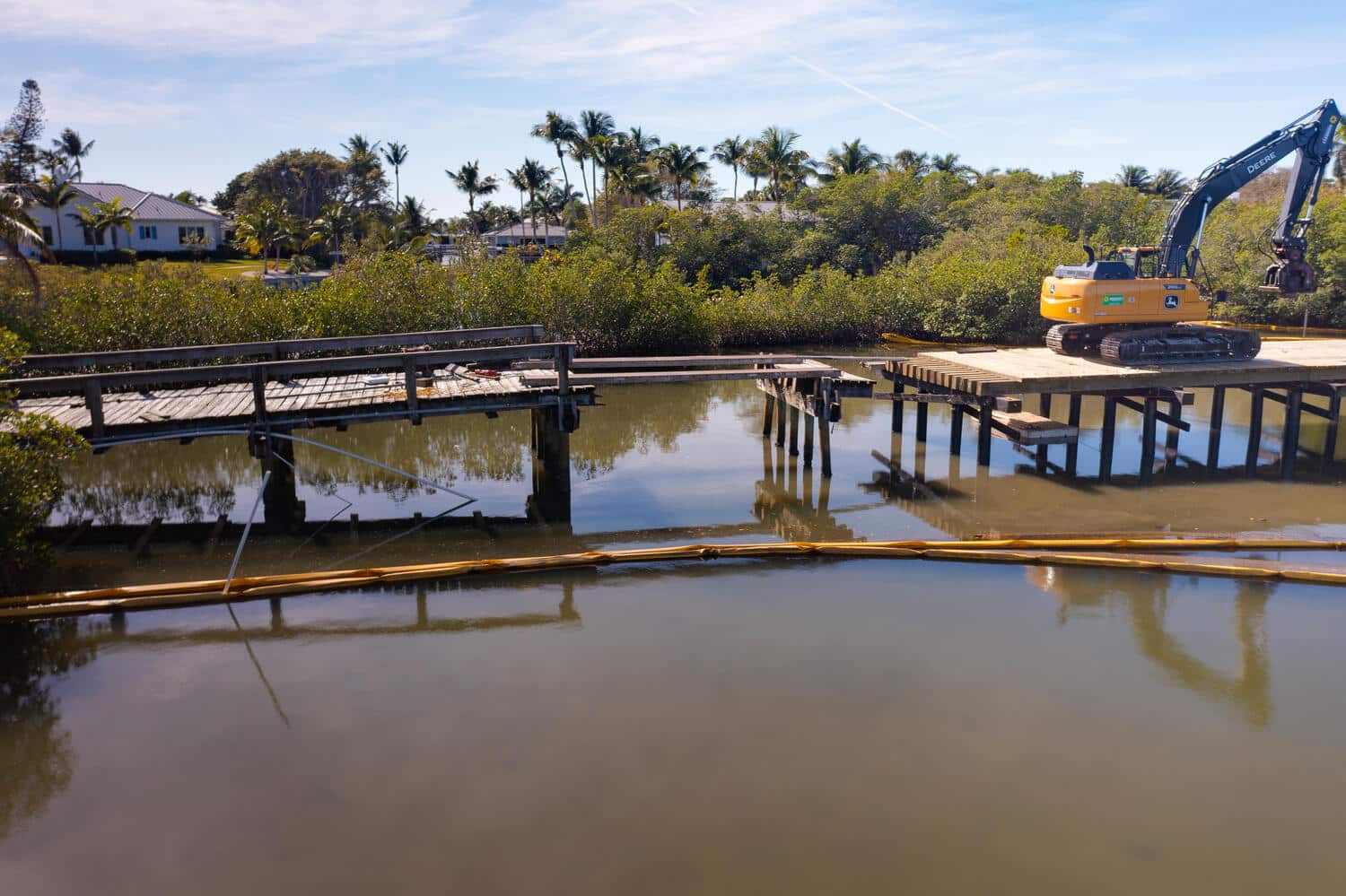
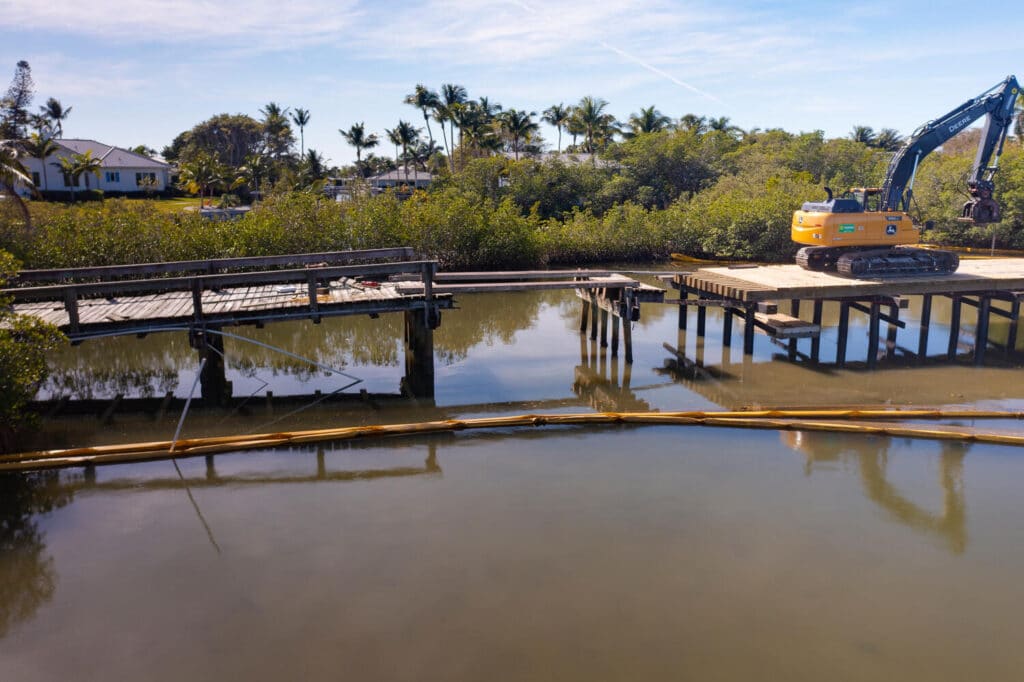
York Bridge Concepts minimizes construction disturbance through our proprietary Deck-Level (Top-Down) Construction methodology.
Rather than bringing heavy equipment into sensitive environments, crews construct the bridge while advancing across the completed deck itself. This approach minimizes disturbance to:
The result is reduced ground disturbance, fewer environmental impacts, and a more efficient construction process. YBC highlights Deck-Level construction as a key component of its environmentally conscious bridge-building approach.
Many bridge projects occur within environmentally sensitive locations, including:
Timber bridges naturally complement these settings while YBC’s low-impact construction techniques help preserve the surrounding landscape throughout construction.
Sustainability also depends on longevity.
Modern timber bridges differ dramatically from untreated wood structures of the past. York Bridge Concepts utilizes:
Properly designed and maintained timber bridges are engineered for a design life exceeding 75 years, reducing the need for frequent replacement and the associated environmental costs.
Lifecycle environmental impacts extend well beyond initial construction.
Timber bridges generally require:
Steel bridges, particularly in coastal or corrosive environments, may require:
Reducing maintenance frequency can lower long-term material use, labor, and environmental impacts over the life of the structure.
Environmental sustainability is not limited to carbon accounting.
Timber bridges integrate visually into:
Rather than dominating the landscape, timber structures often complement natural surroundings while enhancing the visitor experience.
Responsible sourcing is fundamental to the environmental performance of timber.
York Bridge Concepts works with suppliers that follow responsible forestry practices, helping ensure timber is harvested from well-managed forests where regeneration and long-term forest health remain priorities. Sustainable forestry is essential to achieving the environmental benefits associated with timber construction.
Timber bridges provide sustainable solutions for:
Each project benefits from custom engineering while supporting broader environmental objectives.
No single material is universally the right choice for every bridge. Steel remains appropriate for many applications, particularly certain long-span or specialized infrastructure. The most sustainable solution depends on project-specific engineering, lifecycle, maintenance, and environmental considerations.
For many pedestrian bridges, boardwalks, golf cart bridges, municipal crossings, and custom vehicular bridges, timber offers an outstanding combination of:
York Bridge Concepts combines these environmental advantages with custom engineering, premium craftsmanship, and decades of bridge-building expertise to create infrastructure that serves both people and the environment for generations.
This website uses cookies
We use cookies to personalise content and ads, to provide social media features and to analyse our traffic. We also share information about your use of our site with our social media, advertising and analytics partners who may combine it with other information that you’ve provided to them or that they’ve collected from your use of their services.
Cookies are small text files that can be used by websites to make a user's experience more efficient.
The law states that we can store cookies on your device if they are strictly necessary for the operation of this site. For all other types of cookies we need your permission. This means that cookies which are categorized as necessary, are processed based on GDPR Art. 6 (1) (f). All other cookies, meaning those from the categories preferences and marketing, are processed based on GDPR Art. 6 (1) (a) GDPR.
This site uses different types of cookies. Some cookies are placed by third party services that appear on our pages.
You can at any time change or withdraw your consent from the Cookie Declaration on our website.
Learn more about who we are, how you can contact us and how we process personal data in our Privacy Policy.
Please state your consent ID and date when you contact us regarding your consent.