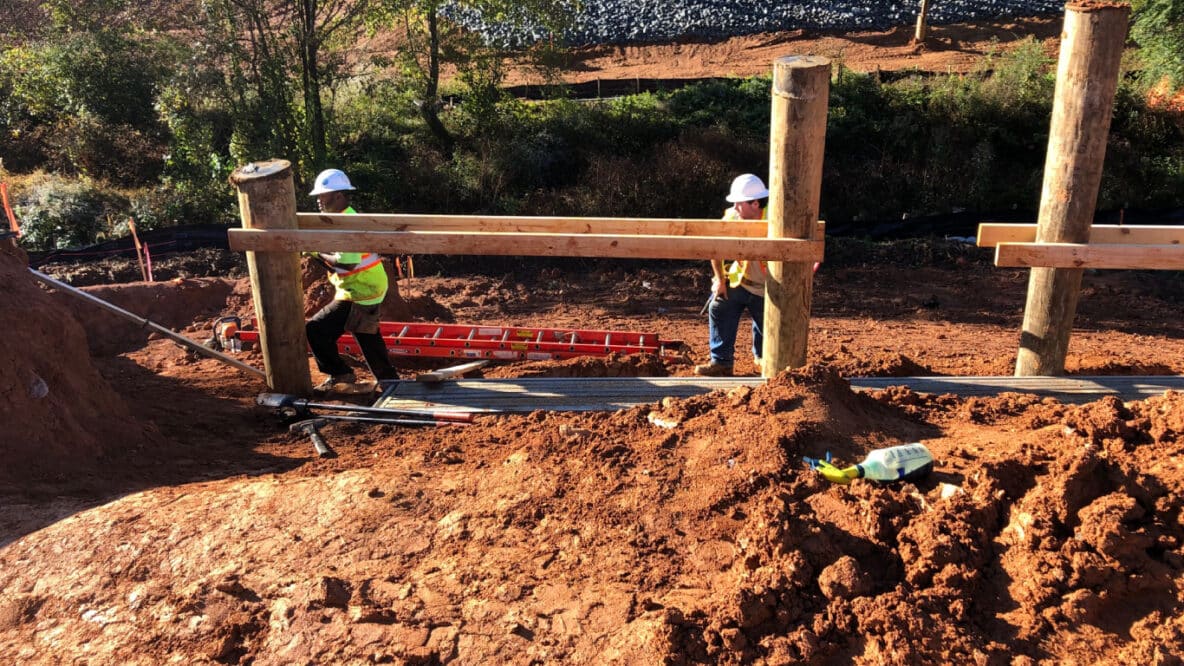
Timber vs. Steel: Key Differences for Bridge Construction
Selecting the right bridge material is one of the most important decisions in any infrastructure project. Architects, engineers, developers, municipalities, and property owners must evaluate structural performance, construction methods, maintenance requirements, sustainability, lifecycle costs, and aesthetics before choosing between timber and steel.
While both materials have proven applications, modern engineered timber bridges have become an increasingly popular alternative to steel for pedestrian bridges, vehicular bridges, boardwalks, parks, mixed-use developments, resorts, golf courses, and community infrastructure. Advances in engineered wood products, preservative treatments, and construction techniques have allowed timber bridges to deliver exceptional strength, durability, and long-term performance while providing significant environmental and architectural benefits.
At York Bridge Concepts, we specialize in designing and constructing custom timber pedestrian bridges, vehicular bridges, boardwalks, golf cart bridges, covered bridges, and waterfront crossings. Through our integrated Design-Engineer-Build™ methodology and proprietary Deck-Level Construction™ process, every bridge is engineered specifically for its site, resulting in infrastructure that balances structural performance, sustainability, and timeless architectural beauty.
Since 1985, York Bridge Concepts has designed and built more than 9,000 custom bridges throughout North America for municipalities, developers, universities, parks, resorts, and private owners.
Understanding the Difference Between Timber & Steel
Both timber and steel are excellent structural materials, but they excel in different applications.
Steel is commonly selected for:
- Long-span highway bridges
- Major transportation infrastructure
- Heavy industrial applications
- Large suspension bridges
Engineered timber performs exceptionally well for:
- Pedestrian bridges
- Vehicular bridges
- Community entrance bridges
- Boardwalks
- Parks
- Greenways
- Resorts
- Universities
- Residential communities
- Mixed-use developments
The right choice depends on the project’s structural requirements, environmental conditions, budget, maintenance expectations, and architectural goals.
1. Strength & Structural Performance
Steel has a higher absolute tensile strength, but modern engineered timber offers an exceptional strength-to-weight ratio.
Glulam beams and other engineered timber products are capable of supporting significant structural loads while remaining considerably lighter than steel.
York Bridge Concepts engineers bridges for project-specific loading requirements, including:
- 85 PSF pedestrian loading
- 90 PSF pedestrian loading
- H5 loading
- H10 loading
- 10-Ton GVW
- HS20-44 loading
- HL-93 loading
Rather than relying on material alone, structural performance is achieved through project-specific engineering. Timber’s flexibility also allows it to absorb and distribute dynamic loads such as wind and seismic forces effectively.
2. Sustainability
One of timber’s greatest advantages is environmental performance.
Timber offers:
- Renewable building materials
- Carbon storage
- Lower embodied carbon
- Responsible forestry practices
- Lower manufacturing energy requirements
- Natural integration with surrounding landscapes
Steel remains highly recyclable, but producing new structural steel generally requires substantially more energy than harvesting and manufacturing engineered timber.
York Bridge Concepts has documented more than 48,000 tons of carbon savings through its portfolio of timber bridge projects.
3. Construction Speed
Construction efficiency affects both project schedules and overall costs.
Timber bridges often provide advantages including:
- Lighter structural components
- Reduced equipment requirements
- Smaller foundations
- Simplified installation
- Faster construction schedules
York Bridge Concepts further improves construction efficiency through our proprietary Deck-Level Construction™ methodology.
4. Maintenance Requirements
Every bridge requires periodic inspections and preventative maintenance.
Timber bridge maintenance typically includes:
- Protective coating renewal
- Fastener inspections
- Individual member replacement when necessary
- Deck maintenance
Steel bridges generally require additional attention to:
- Corrosion protection
- Surface preparation
- Repainting
- Weld inspections
- Coating maintenance
In coastal or humid environments, corrosion management often becomes a significant long-term maintenance consideration for steel structures.
5. Corrosion Resistance
One of timber’s natural advantages is that it does not rust.
Properly treated timber naturally resists:
- Corrosion
- Moisture damage
- Biological deterioration
- Weather exposure
Steel, while extremely durable, requires protective coatings to prevent corrosion over time, particularly in marine and coastal environments.
6. Design Flexibility
Timber offers exceptional architectural versatility.
Custom timber bridges can incorporate:
- Decorative trusses
- Covered bridge designs
- Curved alignments
- Premium hardwood decking
- Wire rope railings
- Architectural lighting
- Decorative post caps
- Custom stain finishes
This flexibility allows timber bridges to become architectural landmarks while blending naturally into parks, campuses, and residential communities.
7. Environmental Impact During Construction
Construction methodology significantly affects sensitive landscapes.
York Bridge Concepts’ proprietary Deck-Level Construction™ methodology allows construction to progress from the bridge deck itself rather than requiring extensive heavy equipment beneath the structure.
Benefits include:
- Reduced wetland disturbance
- Protection of mature vegetation
- Reduced soil compaction
- Preservation of natural hydrology
- Cleaner construction sites
- Improved environmental stewardship
This process is especially valuable for projects located within wetlands, floodplains, streams, and conservation areas.
8. Lifecycle Value
Bridge owners increasingly evaluate total lifecycle value rather than initial construction costs alone.
Important considerations include:
- Initial construction
- Maintenance
- Repair costs
- Inspection requirements
- Material longevity
- Sustainability
- Operational disruptions
Modern engineered timber bridges provide outstanding lifecycle performance when properly designed and maintained. Research from the USDA Forest Service has shown that preservative-treated timber bridges can achieve long service lives while remaining economically competitive with other bridge materials.
Ideal Applications for Timber Bridges
Engineered timber bridges are particularly well suited for:
- Parks & recreation
- Greenways
- Residential communities
- Universities
- Resorts
- Golf courses
- Mixed-use developments
- Municipal infrastructure
- Waterfront developments
- Conservation areas
Every York Bridge Concepts bridge is custom engineered to meet project-specific performance requirements.
The Design-Engineer-Build™ Advantage
Every York Bridge Concepts bridge is delivered through our integrated Design-Engineer-Build™ process.
Our team manages:
- Site evaluation
- Structural engineering
- Environmental coordination
- Material selection
- Construction planning
- On-site installation
Managing every phase under one experienced team improves communication while ensuring every bridge balances engineering excellence, sustainability, constructability, and architectural beauty.
Why Choose York Bridge Concepts?
For more than four decades, York Bridge Concepts has specialized exclusively in custom timber bridge systems.
Clients choose YBC because of our:
- More than 9,000 bridges built
- Design-Engineer-Build™ methodology
- In-house engineering expertise
- Sustainable construction practices
- Proprietary Deck-Level Construction™ process
- Premium architectural customization
- Nationwide and international experience
From community parks and universities to luxury resorts and mixed-use developments, every bridge is engineered to provide exceptional performance while enhancing the environment it serves.
Choose the Right Bridge Material for Your Project
The best bridge material isn’t determined by a single characteristic.
It’s determined by your project’s goals.
Structural requirements.
Environmental conditions.
Construction schedule.
Maintenance expectations.
Architectural vision.
For many pedestrian, vehicular, park, municipal, and commercial projects, engineered timber bridges provide an exceptional combination of strength, sustainability, efficiency, and timeless beauty.
Whether your project involves a pedestrian bridge, vehicular bridge, boardwalk, community entrance, or waterfront crossing, York Bridge Concepts can design and construct a custom timber bridge engineered specifically for your project.
- All
- Alabama
- Architectural-Design
- Arizona
- Avenue Collection
- Boardwalks
- Bridge Education
- Bridge Types
- California
- Case Study
- Classic
- Colorado
- Commercial Bridges
- Community Designed Projects
- Connecticut
- Construction Techniques for Wood Bridges
- Contemporary Series
- Covered Bridges
- Culvert vs Bridge
- Delaware
- Eco-Tourism Bridges
- Environmental Benefits of Wooden Bridges
- Environmental Mitigation
- Extreme Grades
- Featured
- Floodplain
- Florida
- Free Span Bridge
- Georgia
- Golf Cart Bridge Designs
- Golf Cart Bridges
- Idaho
- Illinois
- International
- Lakes
- Locations
- Louisiana
- Maine
- Maryland
- Massachusetts
- Master Planned Community
- Michigan
- Missouri
- Mixed-Use Development
- Montana
- Multiple Crossings
- Multiple Span
- New Hampshire
- New Jersey
- New York
- North Carolina
- Ohio
- Oklahoma
- Overpasses
- Pedestrian Bridge Designs
- Pedestrian Bridges
- Pennsylvania
- Popular Articles
- Prefabricated Bridges For Sale
- Private Collection
- Repetitive Span
- Retail Developments
- Short Span Timber Bridges
- South Carolina
- Span Types
- Streams
- Tennessee
- Texas
- The LiNK
- Timber Bridge Designs
- Timber vs Steel
- Types of Wood Bridges
- Uncategorized
- Vehicular Bridge Designs
- Vehicular Bridges
- Virginia
- Waterside Collection
- West Virginia
- Wetland Conservation Conservation Bridges