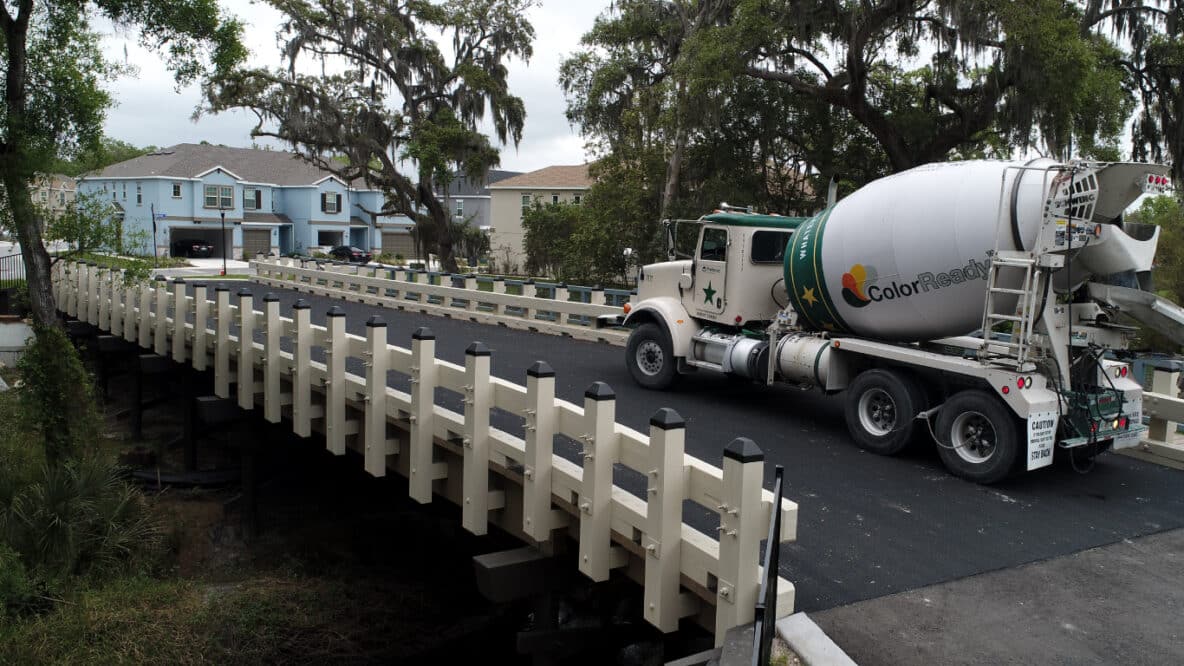
Timber vs. Steel Bridges: Which Is Stronger & More Durable?

When selecting a bridge material, one of the most common questions engineers, developers, municipalities, and property owners ask is: “Is timber or steel stronger and more durable?”

The answer depends on the project’s goals, environmental conditions, loading requirements, lifecycle costs, and maintenance strategy. While steel has long been associated with heavy infrastructure, modern engineered timber bridges have proven that they can deliver exceptional strength, durability, sustainability, and long-term value when properly designed and maintained.

At York Bridge Concepts, we specialize in designing and constructing custom timber pedestrian bridges, vehicular bridges, boardwalks, golf cart bridges, and covered bridges using our integrated Design-Engineer-Build™ methodology and proprietary Deck-Level Construction™ process. Since 1985, we’ve designed and built more than 9,000 custom timber bridges throughout North America, demonstrating that engineered timber is a proven structural solution for a wide range of bridge applications.

Is Timber Stronger Than Steel?

Steel has a higher absolute tensile strength than timber, which makes it the preferred material for extremely long-span highway bridges and suspension bridges. However, strength alone does not determine the best bridge material.

Modern engineered timber products, including glued laminated timber (glulam), provide outstanding strength-to-weight ratios, making them highly effective for pedestrian bridges, vehicular bridges, parks, residential developments, golf courses, and municipal infrastructure. Timber’s lighter weight also reduces foundation requirements and simplifies installation while maintaining excellent structural performance.

Rather than asking “Which material is stronger?”, the better question is:

“Which material is best engineered for the intended application?”

For many bridge projects, timber provides all the structural capacity required while offering significant architectural and environmental advantages.

Modern Engineered Timber Is Built to Perform

Today’s timber bridges are very different from the untreated wooden bridges of the past.

York Bridge Concepts utilizes modern structural systems engineered to meet project-specific loading requirements, including:

  • Pedestrian loading (85–100 PSF)
  • H5 loading
  • H10 loading
  • 10-Ton GVW
  • HS20-44 loading
  • HL-93 loading

With proper engineering, modern timber bridges safely support:

  • Passenger vehicles
  • Emergency vehicles
  • Fire apparatus (where required)
  • Maintenance equipment
  • Municipal service vehicles
  • Golf carts
  • Heavy pedestrian traffic

The bridge is engineered for the load—not simply the material.

Durability Depends on Design & Maintenance

Neither timber nor steel is inherently maintenance-free.

Both materials require proper design, detailing, protective systems, and routine inspections to achieve their intended service life.

Timber Bridge Durability

Modern timber bridges are protected through:

  • Pressure treatment
  • Protective coatings
  • Moisture management
  • Quality detailing
  • Proper drainage
  • Scheduled inspections
  • Preventative maintenance

When these practices are followed, timber bridges can provide decades of dependable performance. Thousands of timber railroad and vehicular bridges in North America have remained in service for many decades, demonstrating the longevity of properly engineered and maintained timber structures.

Steel Bridge Durability

Steel bridges also provide exceptional performance but typically require ongoing protection against:

  • Corrosion
  • Rust
  • Salt exposure
  • Moisture
  • Coating deterioration
  • Thermal expansion and contraction

Protective coatings must be monitored and periodically renewed to maintain long-term durability, particularly in coastal or humid environments.

Timber Performs Well in Challenging Environments

Many York Bridge Concepts projects are located in:

  • Wetlands
  • Coastal environments
  • Parks
  • Rivers
  • Lakes
  • Floodplains
  • Forests
  • Conservation areas

With appropriate preservative treatments, detailing, and maintenance, timber performs exceptionally well in these environments while offering a warm, natural appearance that blends into the surrounding landscape. Proper drainage and ventilation are essential to maximize long-term durability regardless of material.

Timber vs. Steel: Maintenance Comparison

One of timber’s greatest advantages is the ease of maintaining individual structural components.

Timber bridge maintenance often includes:

  • Routine inspections
  • Protective coating renewal
  • Individual timber replacement when necessary
  • Fastener inspection
  • Deck maintenance

Steel bridges frequently require:

  • Surface preparation
  • Abrasive blasting
  • Repainting
  • Corrosion mitigation
  • Weld inspections
  • Specialized repair procedures

Both systems benefit from proactive maintenance programs, but maintenance activities and costs differ depending on the project and environment.

Sustainability: Timber Has a Natural Advantage

Sustainability has become a major factor in bridge material selection.

Timber offers several environmental benefits:

  • Renewable building material
  • Carbon storage throughout the bridge’s life
  • Lower embodied carbon
  • Responsible forestry practices
  • Lower manufacturing energy requirements
  • Natural integration with surrounding landscapes

York Bridge Concepts has documented more than 48,000 tons of carbon savings through its portfolio of custom timber bridges.

For many municipalities, parks, universities, and developers pursuing sustainability initiatives, timber offers a compelling alternative to traditional bridge materials.

Architectural Flexibility

Beyond structural performance, timber offers tremendous design freedom.

Custom timber bridges can incorporate:

  • Decorative trusses
  • Premium hardwood decking
  • Covered bridge designs
  • Wire rope railings
  • Architectural lighting
  • Curved alignments
  • Community entrance features
  • Custom stain colors
  • Decorative post caps

This flexibility allows every bridge to become a unique architectural landmark rather than simply a transportation structure.

Construction Advantages

Timber’s lighter weight often simplifies construction compared to heavier structural systems.

York Bridge Concepts enhances this advantage through our proprietary Deck-Level Construction™ methodology.

Benefits include:

  • Reduced wetland disturbance
  • Protection of mature trees
  • Reduced soil compaction
  • Preservation of natural hydrology
  • Cleaner construction sites
  • Improved environmental compliance

Rather than relying on extensive equipment beneath the bridge, construction advances from the completed deck itself, minimizing impacts on environmentally sensitive landscapes.

Common Applications for Timber Bridges

Modern engineered timber bridges are ideal for:

  • Pedestrian bridges
  • Vehicular bridges
  • Boardwalks
  • Community entrance bridges
  • Golf cart bridges
  • Parks & recreation
  • Greenways
  • Universities
  • Mixed-use developments
  • Residential communities
  • Resorts
  • Private estates

Each bridge is engineered specifically for its intended loading, span requirements, environmental conditions, and architectural objectives.

Why York Bridge Concepts Builds with Timber

At York Bridge Concepts, we believe the best bridge is the one that balances structural performance, sustainability, constructability, lifecycle value, and architectural beauty.

Our clients choose timber because it offers:

  • Proven structural performance
  • Custom engineering
  • Sustainable construction
  • Premium architectural character
  • Reduced environmental impacts
  • Exceptional design flexibility
  • Long-term durability with proper maintenance
  • Efficient on-site construction

Through our integrated Design-Engineer-Build™ process, every bridge is engineered specifically for its site rather than adapted from a standard design.

Timber or Steel? Choose the Right Material for the Right Project

There is no single “best” bridge material for every application.

Steel excels in certain long-span, high-capacity transportation projects.

Modern engineered timber excels in projects where strength, durability, sustainability, architectural beauty, environmental stewardship, and lifecycle value are equally important.

For parks, residential communities, campuses, resorts, golf courses, municipal infrastructure, and mixed-use developments, custom timber bridges offer an exceptional combination of engineering performance and timeless design.

Whether your project involves a pedestrian bridge, vehicular bridge, boardwalk, community entrance, or waterfront crossing, York Bridge Concepts can design and construct a custom timber bridge that is engineered to perform for generations while enhancing the landscape it serves.

December 7, 2023

Which Is Stronger and More Durable: Timber Or Steel Bridges?

The choice between timber and steel for bridge construction is a critical decision that hinges on a multitude of factors, with strength and durability being paramount considerations.