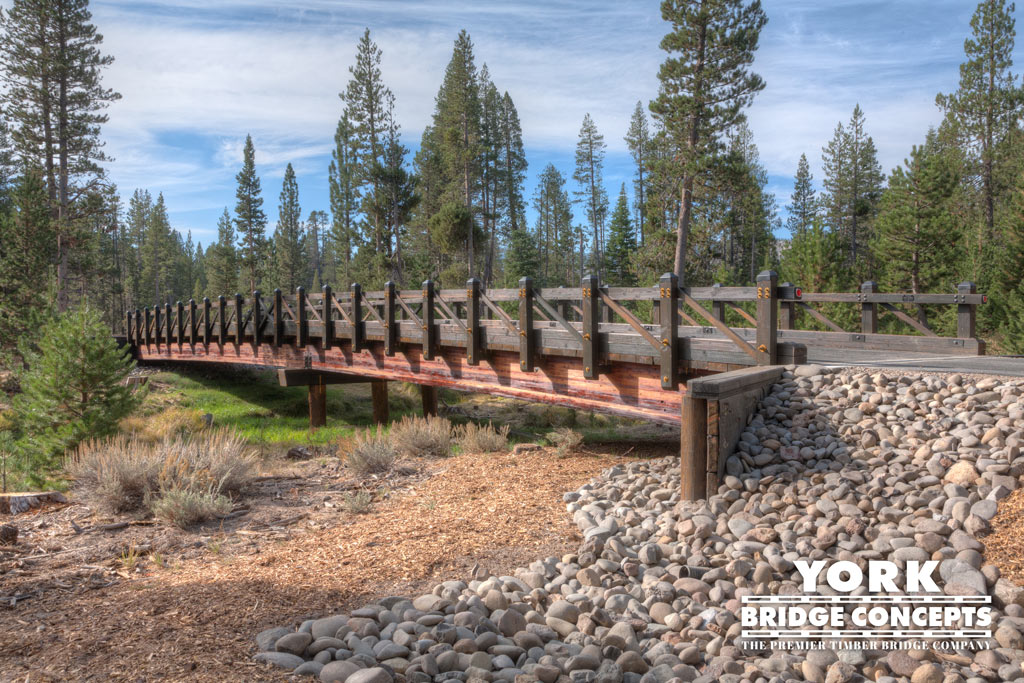
Single Lane Vehicular Bridges
Efficient Access. Timeless Design. Engineered Performance.
Not every crossing requires a multi-lane bridge.
For many residential communities, private estates, parks, resorts, campuses, agricultural properties, and environmentally sensitive developments, a single lane vehicular bridge provides the ideal balance between functionality, cost efficiency, sustainability, and architectural appeal.
At York Bridge Concepts, single lane vehicular bridges represent some of our most versatile and sought-after infrastructure solutions. Designed to accommodate passenger vehicles, maintenance equipment, emergency responders, and site-specific traffic requirements, these bridges provide reliable access while minimizing environmental impacts and preserving the character of the surrounding landscape. YBC’s Single Lane Vehicular Timber Bridge Collection emphasizes sophistication, sustainability, durability, and custom design tailored to each project’s unique needs.
Through our Design-Engineer-Build™ methodology and proprietary Deck-Level Construction™ process, we create custom timber bridges that seamlessly integrate into communities, parks, golf courses, waterfront properties, and natural environments across North America.
What Is a Single Lane Vehicular Bridge?
A single lane vehicular bridge is designed to safely accommodate one direction of vehicle traffic at a time.
These bridges are commonly used when traffic volumes are relatively low and where a full two-lane crossing would be unnecessary or impractical.
Typical applications include:
- Private driveways
- Residential communities
- Parks and recreation areas
- Golf course developments
- Ranches and agricultural properties
- Resorts and hospitality destinations
- Educational campuses
- Nature preserves
- Conservation developments
Single lane bridge configurations provide an efficient solution for crossing streams, wetlands, floodplains, ravines, drainage channels, and environmentally sensitive areas while reducing construction costs and environmental impacts. YBC’s vehicular bridge portfolio includes numerous single-lane applications across residential, commercial, institutional, and recreational developments.
Why Choose a Single Lane Vehicular Bridge?
For many projects, a single lane bridge offers significant advantages over a larger double-lane structure.
Cost Efficiency
Single lane bridges typically require:
- Less material
- Smaller foundations
- Reduced site disturbance
- Lower construction costs
This often makes them a highly economical infrastructure solution.
Reduced Environmental Impact
A narrower bridge footprint helps minimize impacts to:
- Wetlands
- Streams
- Wildlife habitat
- Vegetation
- Sensitive ecosystems
This is particularly valuable for projects requiring environmental permitting and conservation considerations.
Improved Site Integration
Single lane bridges often fit naturally within:
- Rural landscapes
- Residential communities
- Parks
- Wooded environments
- Waterfront developments
Their scale allows them to complement the surrounding environment rather than dominate it.
Architectural Appeal
Timber single lane bridges create a welcoming sense of arrival and provide a more intimate user experience than many larger transportation structures.
Common Applications for Single Lane Vehicular Bridges
Residential Communities
Master-planned communities frequently utilize single lane bridges to connect:
- Neighborhood entrances
- Community amenities
- Parks
- Trails
- Recreational facilities
These bridges often become signature features that reinforce community identity.
Projects such as Heights at Ashford Park in Georgia and The Preserve at Marvin in North Carolina demonstrate how single lane bridges can enhance community access while complementing surrounding architecture.
Private Driveways & Estates
Private property owners often choose single lane timber bridges to create distinctive entrances while crossing:
- Streams
- Creeks
- Wetlands
- Ravines
- Water features
A custom timber bridge immediately enhances curb appeal while providing reliable long-term access.
Parks & Recreation
Single lane bridges are ideal for:
- Maintenance access
- Emergency vehicle routes
- Park service roads
- Conservation areas
Their smaller footprint helps preserve the natural environment while supporting operational needs.
Resorts & Hospitality
Luxury resorts often utilize single lane bridges to create:
- Memorable arrival experiences
- Waterfront access
- Amenity connections
- Scenic crossings
These structures become part of the guest experience and contribute to the overall character of the property.
Engineered for Performance
Every York Bridge Concepts single lane vehicular bridge is engineered to meet the specific requirements of the project.
Bridge designs may accommodate:
- Passenger vehicles
- Service vehicles
- Maintenance equipment
- Emergency responders
- Fire trucks
- Utility vehicles
YBC’s Avenue Collection is specifically engineered to support a wide range of vehicular applications, including single-lane traffic, emergency vehicle access, HS20-44 loading, and customized structural requirements.
The Avenue Collection
Single lane vehicular bridges are a key component of YBC’s Avenue Collection.
The Avenue Collection combines:
- Structural strength
- Architectural beauty
- Sustainable construction
- Long-term durability
- Custom design flexibility
These bridges are designed to create a lasting first impression while providing dependable performance for decades. YBC describes the Avenue Collection as its most robust vehicular bridge system, capable of accommodating a wide range of traffic and loading requirements.
Custom Design Options
Every site is unique.
Through our Decero™ Design Studio process, clients can customize their bridge to reflect the character of their development, property, or community.
Popular options include:
Open Span Bridges
Clean, timeless designs that highlight the beauty of natural timber.
Covered Bridges
Adding architectural character and weather protection while creating an iconic destination.
Attached Pedestrian Walkways
Supporting both vehicle and pedestrian circulation within a single structure.
Decorative Rail Systems
Including:
- Timber railings
- Wire rope systems
- Architectural steel accents
- Community-specific detailing
Premium Finishes
Custom stains, coatings, and architectural enhancements help create a truly one-of-a-kind bridge.
Sustainability at the Core
Sustainability has become an increasingly important consideration in modern infrastructure.
Timber offers several environmental advantages:
- Renewable sourcing
- Carbon storage
- Lower embodied carbon
- Natural aesthetics
- Long-term lifecycle benefits
York Bridge Concepts emphasizes sustainable bridge construction and responsible forestry practices throughout its bridge collections. The company reports more than 48,000 tons of carbon savings through its timber bridge portfolio.
Deck-Level Construction™: A Smarter Way to Build
One of the biggest challenges associated with bridge construction is minimizing impacts to the environment below.
YBC’s proprietary Deck-Level Construction™ methodology allows construction to progress from the bridge deck itself rather than requiring extensive access underneath the structure.
Benefits include:
- Reduced wetland disturbance
- Preservation of vegetation
- Protection of waterways
- Reduced soil compaction
- Improved environmental stewardship
This approach is particularly valuable for single lane bridges located within environmentally sensitive settings such as wetlands, streams, floodplains, and coastal environments. YBC specifically highlights Deck-Level Construction™ as a core component of its sustainable construction philosophy.
Ideal Environments for Single Lane Bridges
Single lane vehicular bridges perform exceptionally well in:
Residential Developments
Creating elegant community entrances and internal roadway connections.
Waterfront Properties
Providing access while preserving shoreline ecosystems.
Conservation Developments
Balancing connectivity with environmental stewardship.
Golf Communities
Supporting maintenance and community circulation.
Agricultural Properties
Providing durable crossings for farms, ranches, and rural estates.
Educational Campuses
Connecting facilities while maintaining campus aesthetics.
Parks & Recreation
Supporting operational access while protecting natural resources.
Built to Last Generations
Durability remains one of the defining characteristics of every York Bridge Concepts bridge.
Our single lane bridges are designed with:
- Engineered structural systems
- Premium treated timber
- Durable coatings
- Quality hardware
- Long-term performance in mind
YBC designs its bridges with a 75+ year design philosophy, helping owners maximize value while minimizing lifecycle costs.
Why Choose York Bridge Concepts?
For more than four decades, York Bridge Concepts has helped clients create custom vehicular bridge solutions that combine engineering excellence, environmental responsibility, and architectural beauty.
Clients choose YBC because of our:
- More than 9,000 bridges built
- Design-Engineer-Build™ methodology
- Avenue Collection expertise
- In-house engineering resources
- Sustainable construction practices
- Deck-Level Construction™ process
- Custom design capabilities
- Nationwide and international experience
From private estates and community entrances to resort destinations and conservation developments, our bridges are designed to create lasting value while connecting people to the places that matter most.
One Lane. Unlimited Possibilities.
A single lane bridge may occupy a smaller footprint, but its impact can be significant.
It can create access where none existed.
Enhance property value.
Preserve sensitive landscapes.
Improve connectivity.
And establish a memorable sense of arrival.
Whether your project involves a residential development, private estate, park, resort, campus, golf community, or environmentally sensitive site, York Bridge Concepts can design and construct a custom single lane vehicular bridge tailored to your vision.
- All
- Alabama
- Architectural-Design
- Arizona
- Avenue Collection
- Boardwalks
- Bridge Education
- Bridge Types
- California
- Case Study
- Classic
- Colorado
- Commercial Bridges
- Community Designed Projects
- Connecticut
- Construction Techniques for Wood Bridges
- Contemporary Series
- Covered Bridges
- Culvert vs Bridge
- Delaware
- Eco-Tourism Bridges
- Environmental Benefits of Wooden Bridges
- Environmental Mitigation
- Extreme Grades
- Featured
- Floodplain
- Florida
- Free Span Bridge
- Georgia
- Golf Cart Bridge Designs
- Golf Cart Bridges
- Idaho
- Illinois
- International
- Lakes
- Locations
- Louisiana
- Maine
- Maryland
- Massachusetts
- Master Planned Community
- Michigan
- Missouri
- Mixed-Use Development
- Montana
- Multiple Crossings
- Multiple Span
- New Hampshire
- New Jersey
- New York
- North Carolina
- Ohio
- Oklahoma
- Overpasses
- Pedestrian Bridge Designs
- Pedestrian Bridges
- Pennsylvania
- Popular Articles
- Prefabricated Bridges For Sale
- Private Collection
- Repetitive Span
- Retail Developments
- Short Span Timber Bridges
- South Carolina
- Span Types
- Streams
- Tennessee
- Texas
- The LiNK
- Timber Bridge Designs
- Timber vs Steel
- Types of Wood Bridges
- Uncategorized
- Vehicular Bridge Designs
- Vehicular Bridges
- Virginia
- Waterside Collection
- West Virginia
- Wetland Conservation Conservation Bridges