Wetland Bridges
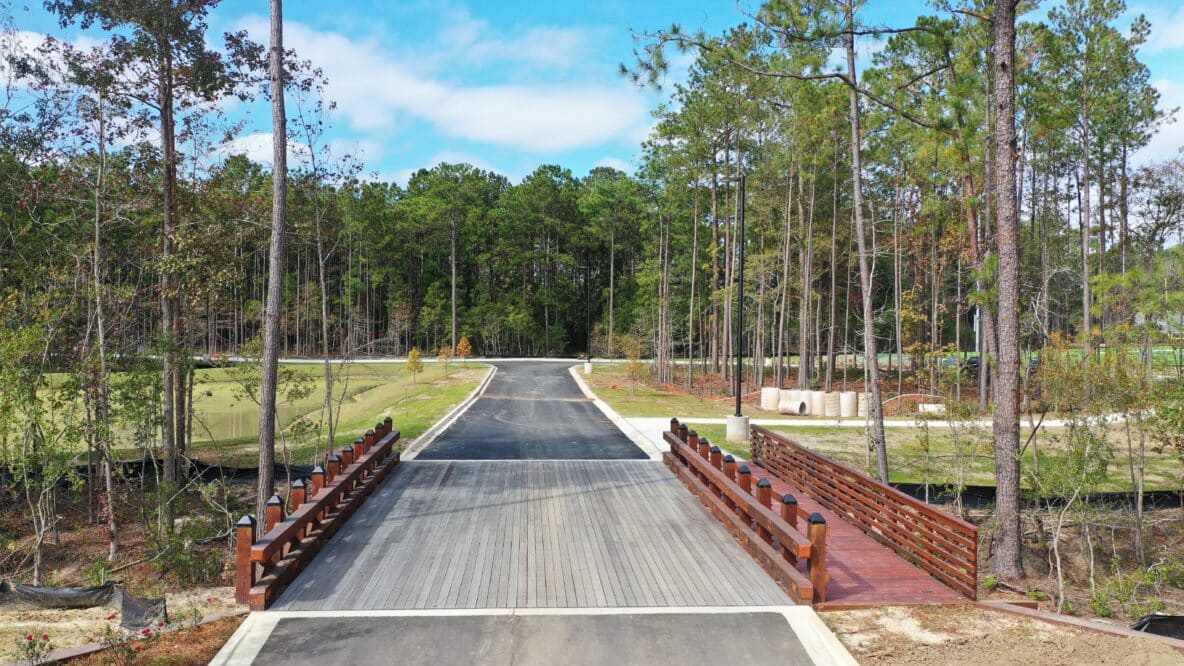
Wetlands are among the world’s most valuable ecosystems, providing flood protection, improving water quality, supporting biodiversity, and creating habitats for countless plant and animal species. As communities, parks, and developments seek to improve public access while protecting these sensitive environments, custom timber wetland bridges have become one of the most sustainable infrastructure solutions available.
For more than 40 years, York Bridge Concepts (YBC) has designed and constructed custom timber bridges and elevated boardwalks that cross wetlands with minimal environmental disturbance. Through our integrated Decero™ Design-Engineer-Build process and proprietary Deck-Level (Top-Down) Construction methodology, we help developers, municipalities, conservation organizations, landscape architects, and parks create safe, durable crossings that preserve the natural ecosystems below.
What Is a Wetland Bridge?
A wetland bridge is an elevated structure designed to provide safe passage across environmentally sensitive areas without significantly disrupting natural water flow, vegetation, wildlife habitats, or soil conditions.
Wetland bridges are commonly used for:
- Public parks
- Nature preserves
- Greenway trail systems
- Residential communities
- Waterfront developments
- Eco-tourism destinations
- Universities and campuses
- Wildlife refuges
- Municipal infrastructure
- Coastal developments
Unlike traditional pathways that require grading or fill material, elevated timber bridges allow visitors to cross wetlands while protecting the landscape beneath the structure.
Why Wetland Bridges Matter
Wetlands perform essential ecological functions that benefit both wildlife and surrounding communities.
Healthy wetlands help:
- Improve water quality
- Reduce flooding
- Recharge groundwater
- Filter pollutants
- Prevent shoreline erosion
- Support native vegetation
- Provide wildlife habitat
- Increase biodiversity
When designed correctly, timber bridges allow access without disrupting these critical environmental functions.
Elevated crossings also help keep visitors on designated pathways, reducing habitat fragmentation and limiting long-term environmental impacts.
Sustainable Wetland Bridge Design
Every wetland environment is unique.
Before engineering begins, YBC evaluates numerous site-specific conditions, including:
- Wetland boundaries
- Hydrology
- Flood elevations
- Soil conditions
- Existing vegetation
- Protected species
- Water flow patterns
- Environmental permitting
- Visitor circulation
This comprehensive evaluation allows each bridge to work with the natural landscape instead of altering it.
Deck-Level (Top-Down) Construction for Sensitive Environments
One of the greatest challenges of wetland construction is accessing the project without damaging the surrounding ecosystem.
York Bridge Concepts addresses this challenge through our proprietary Deck-Level (Top-Down) Construction methodology.
Rather than relying on extensive temporary roads or operating heavy equipment beneath the bridge, construction progresses from the completed deck surface.
This innovative approach helps reduce:
- Wetland disturbance
- Soil compaction
- Vegetation removal
- Temporary construction access
- Habitat disruption
- Restoration requirements
For projects requiring environmental permits, this construction method can simplify project execution while preserving the natural conditions that regulatory agencies seek to protect.
Elevated Bridges That Preserve Natural Water Flow
Maintaining natural hydrology is essential for healthy wetlands.
Elevated timber bridges allow water to continue flowing beneath the structure without creating barriers that alter drainage patterns or increase erosion.
Benefits include:
- Improved flood resilience
- Reduced erosion
- Natural stormwater movement
- Protection of aquatic habitats
- Preservation of native plant communities
- Reduced sediment disturbance
This design approach supports long-term environmental sustainability while providing dependable public access.
Wetland Bridges for Parks and Greenways
Many park systems and greenway trails cross environmentally sensitive areas where elevated bridges are the preferred solution.
Common applications include:
- Nature trails
- Multi-use pathways
- Birdwatching areas
- Wildlife observation routes
- Riverwalks
- Marsh crossings
- Educational trails
- Environmental learning centers
- Coastal parks
- Community greenways
Timber bridges blend naturally into these environments while creating memorable outdoor experiences for visitors.
Boardwalks Through Wetlands
Boardwalk systems provide another effective solution for navigating wetlands while minimizing environmental impacts.
Elevated boardwalks are ideal for:
- Marshes
- Floodplains
- Mangrove habitats
- Coastal ecosystems
- Riparian corridors
- Forest wetlands
- Lakefront parks
- Environmental education facilities
These structures protect sensitive vegetation by concentrating pedestrian traffic above the landscape rather than directly on it.
Durable Materials for Demanding Environments
Wetland environments expose bridges to moisture, humidity, changing water levels, and seasonal weather conditions.
YBC offers premium material options selected specifically for long-term performance, including:
- Southern Yellow Pine
- Douglas Fir
- Engineered glulam members
- Tropical hardwood decking
- Composite decking
- Recycled Plastic Lumber (RPL)
- Corrosion-resistant hardware
- Advanced protective coating systems
Each material is selected based on site conditions, anticipated traffic, maintenance expectations, and project objectives.
Environmental Benefits of Timber Wetland Bridges
Timber remains one of the most environmentally responsible materials for wetland infrastructure.
Advantages include:
- Renewable building materials
- Lower embodied carbon
- Natural carbon storage
- Reduced visual impact
- Excellent integration with natural landscapes
- Sustainable sourcing options
- Long service life with proper maintenance
These benefits make timber an ideal choice for organizations committed to environmental stewardship and sustainable development.
Applications Across Multiple Industries
YBC wetland bridges serve a wide range of public and private organizations.
Our bridges are commonly used by:
- Municipal governments
- Parks and recreation departments
- Conservation organizations
- Residential developers
- Landscape architects
- Civil engineers
- Universities
- Resorts
- Hospitality properties
- Environmental education centers
Each project is engineered to balance visitor accessibility with long-term ecological preservation.
Architectural Bridges That Complement Nature
A wetland bridge should enhance the landscape rather than dominate it.
YBC offers extensive customization options, including:
- Decorative timber rail systems
- Horizontal railing designs
- Cable rail systems
- Scenic overlooks
- Wildlife observation platforms
- Educational gathering areas
- Premium stains and finishes
- Composite or hardwood decking
- Integrated lighting
These features create bridges that become memorable destinations while maintaining harmony with the surrounding environment.
Why Choose York Bridge Concepts?
Since 1985, York Bridge Concepts has specialized exclusively in custom timber bridge systems.
Our integrated Decero™ Design-Engineer-Build process provides:
- Site evaluation
- Environmental coordination
- Structural engineering
- Custom bridge design
- Material selection
- On-site construction
- Quality assurance
- Long-term maintenance support
With more than 9,000 bridges completed throughout North America, YBC has become a trusted partner for organizations seeking infrastructure that protects environmentally sensitive areas while improving public access.
Whether you’re developing a public park, restoring wetlands, expanding a greenway, creating an eco-tourism destination, or connecting a residential community, York Bridge Concepts designs custom wetland bridges that preserve the natural environment while providing exceptional long-term performance.
- All
- Alabama
- Architectural-Design
- Arizona
- Avenue Collection
- Boardwalks
- Bridge Education
- Bridge Types
- California
- Case Study
- Classic
- Colorado
- Commercial Bridges
- Community Designed Projects
- Connecticut
- Construction Techniques for Wood Bridges
- Contemporary Series
- Covered Bridges
- Culvert vs Bridge
- Delaware
- Eco-Tourism Bridges
- Environmental Benefits of Wooden Bridges
- Environmental Mitigation
- Extreme Grades
- Featured
- Floodplain
- Florida
- Free Span Bridge
- Georgia
- Golf Cart Bridge Designs
- Golf Cart Bridges
- Idaho
- Illinois
- International
- Lakes
- Locations
- Louisiana
- Maine
- Maryland
- Massachusetts
- Master Planned Community
- Michigan
- Missouri
- Mixed-Use Development
- Montana
- Multiple Crossings
- Multiple Span
- New Hampshire
- New Jersey
- New York
- North Carolina
- Ohio
- Oklahoma
- Overpasses
- Pedestrian Bridge Designs
- Pedestrian Bridges
- Pennsylvania
- Popular Articles
- Prefabricated Bridges For Sale
- Private Collection
- Repetitive Span
- Retail Developments
- Short Span Timber Bridges
- South Carolina
- Span Types
- Streams
- Tennessee
- Texas
- The LiNK
- Timber Bridge Designs
- Timber vs Steel
- Types of Wood Bridges
- Uncategorized
- Vehicular Bridge Designs
- Vehicular Bridges
- Virginia
- Waterside Collection
- West Virginia
- Wetland Conservation Conservation Bridges