Park School of Baltimore
A Free-Span Eco-Friendly Vehicular Bridge Designed & Built by York Bridge Concepts
Enhancing Campus Connectivity with Sustainable Innovation
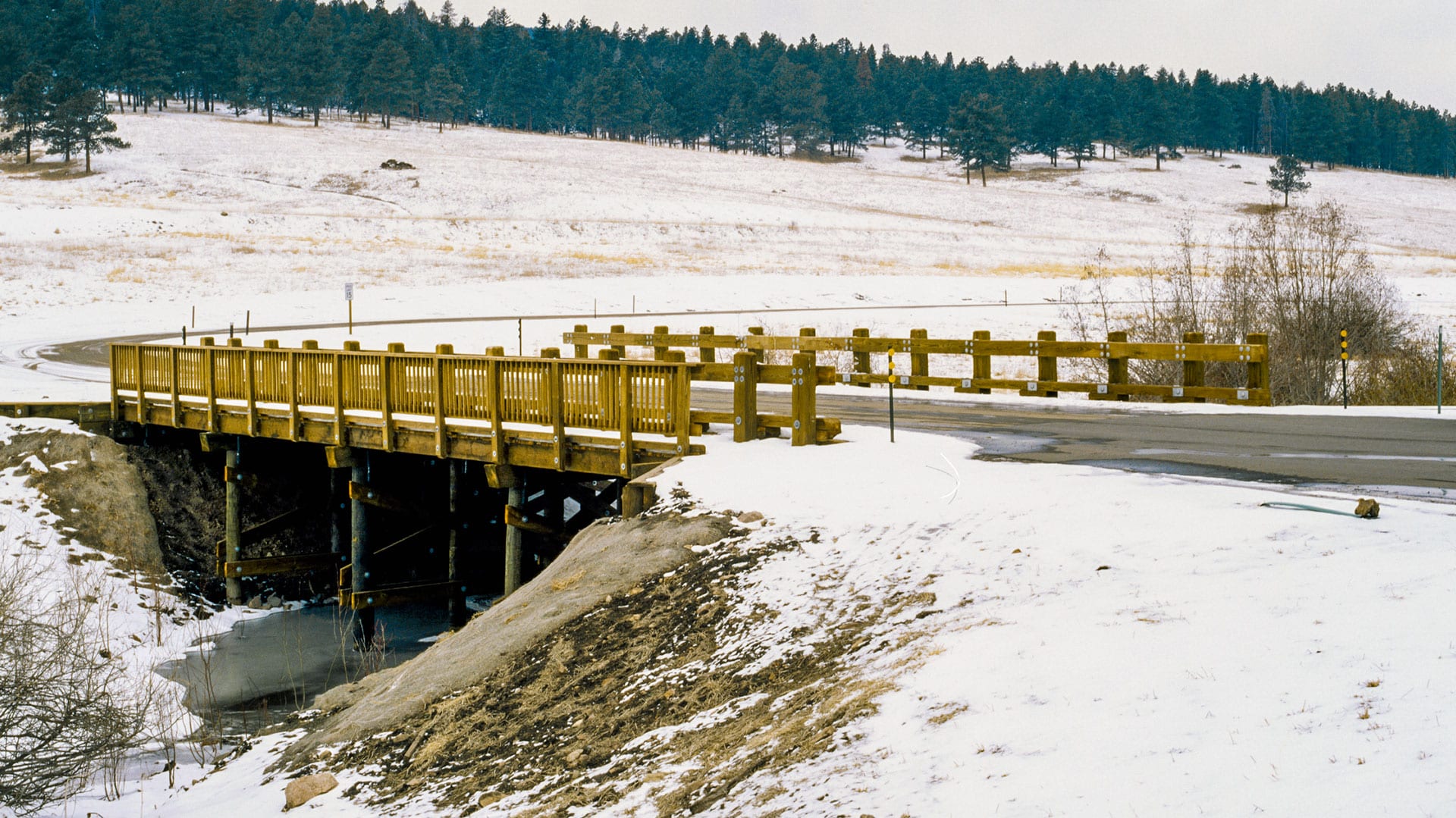
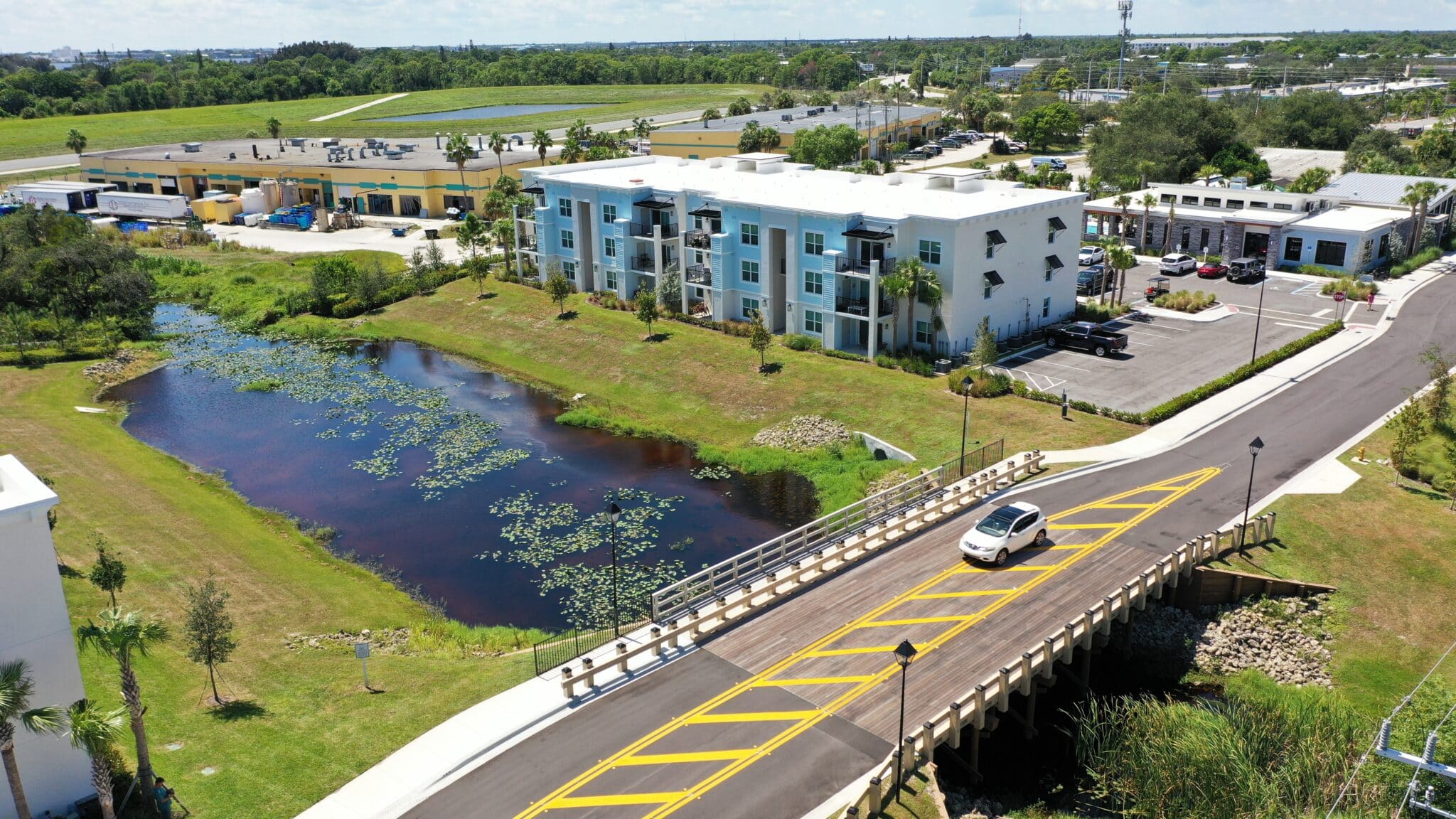
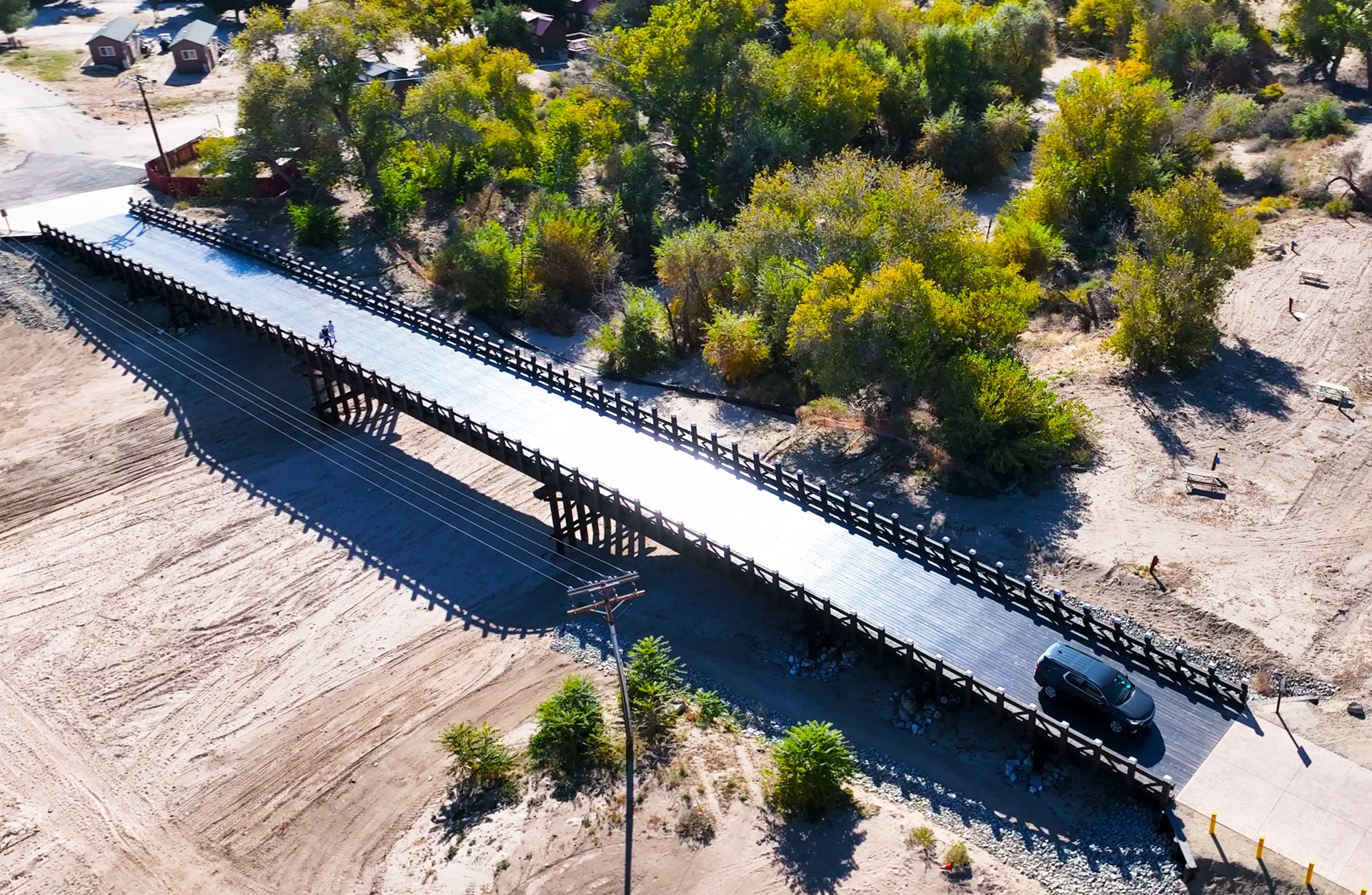
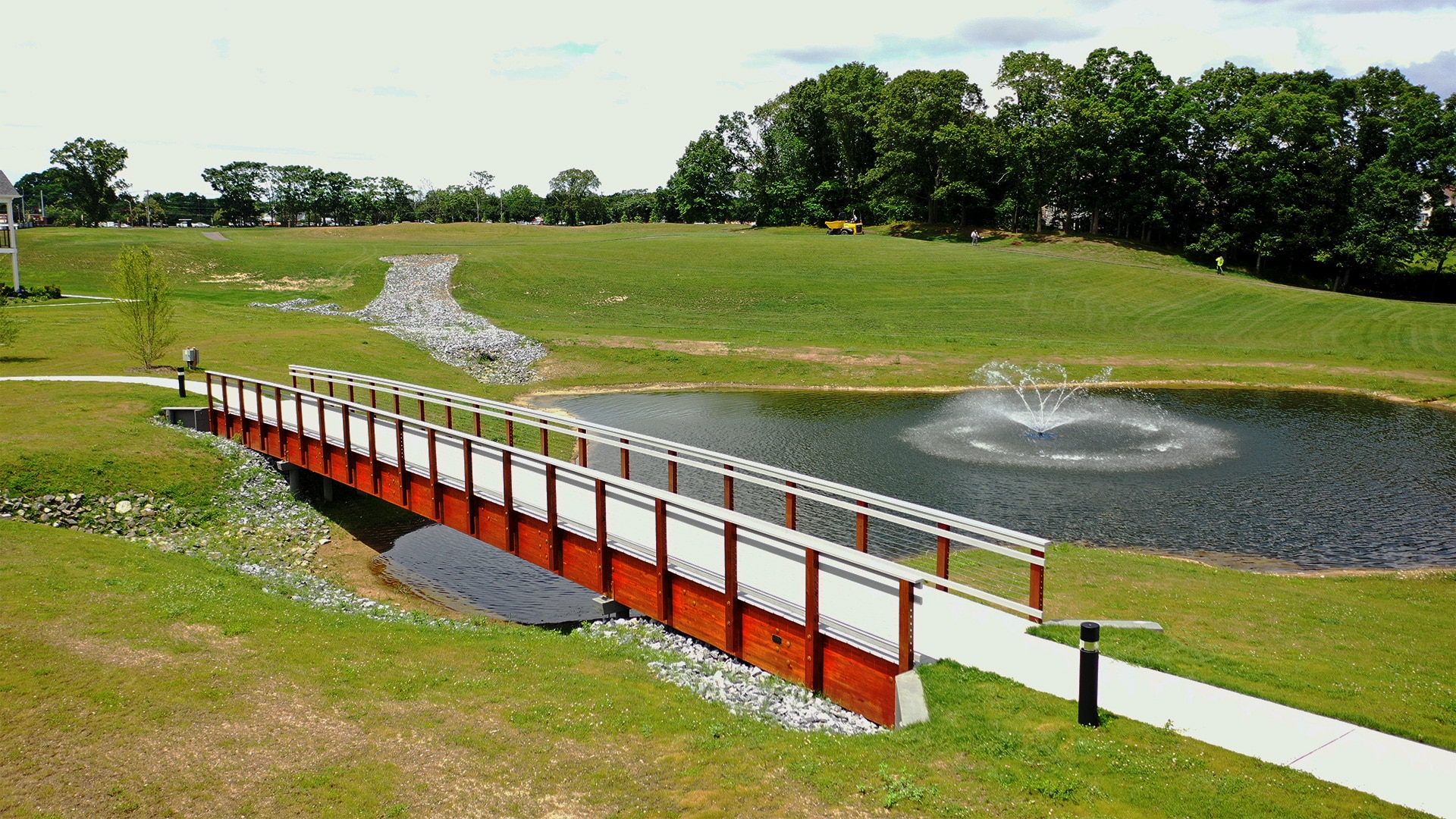
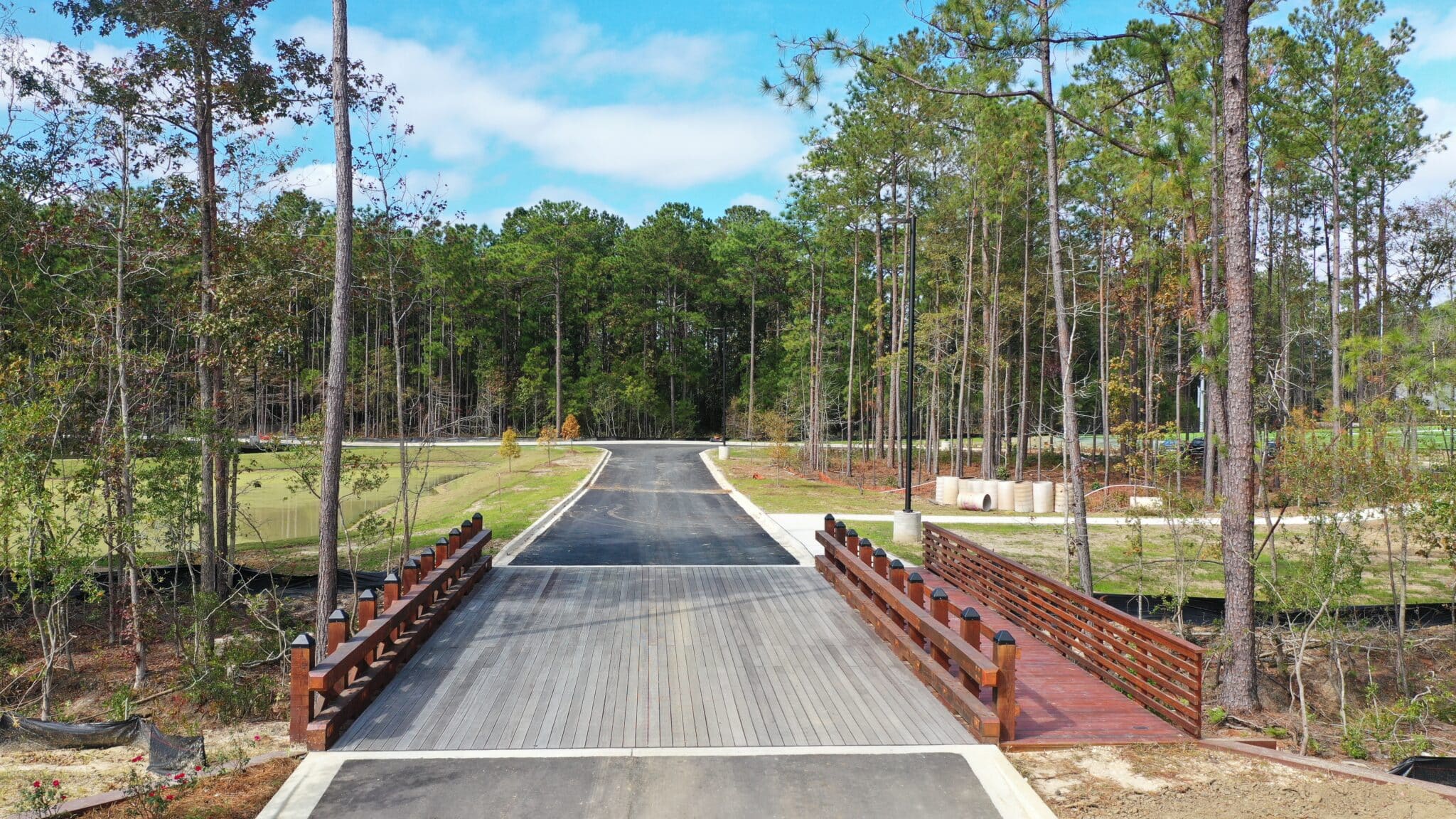
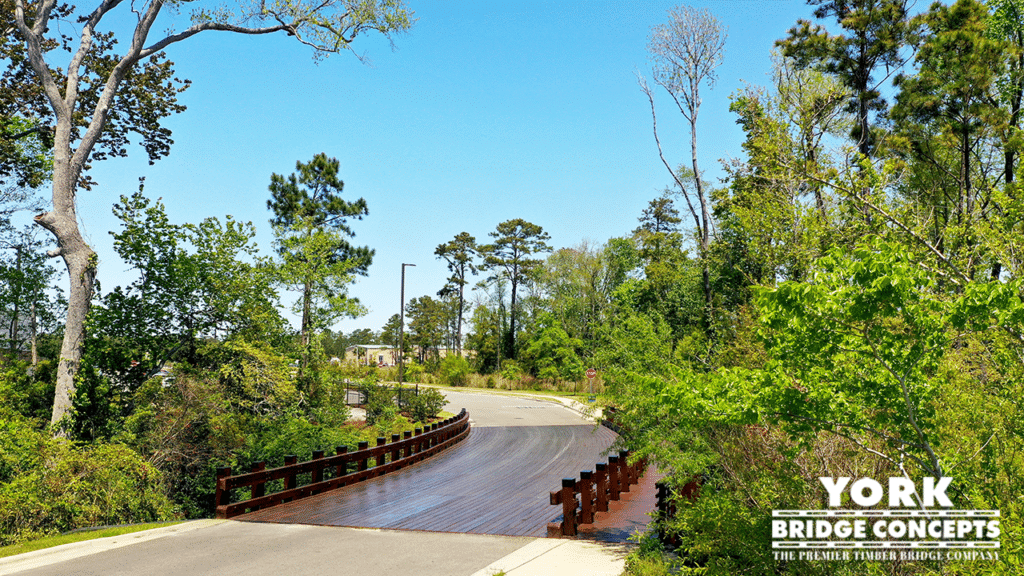
Tucked away in the heart of Maryland, the Park School of Baltimore is known for its commitment to academic excellence, sustainability, and environmental stewardship. When the need arose for a durable, aesthetically pleasing, and environmentally conscious solution to enhance campus connectivity, the school turned to York Bridge Concepts (YBC). As the nation's leading designer and builder of eco-friendly vehicular bridges, YBC provided an elegant and efficient solutions: a free-span Maryland vehicular bridge that seamlessly integrates into the school's picturesque landscape.
Specifications
- Width:
- 12’ (11’ Clear)
- Length:
- 25'
- Height:
- 5' above grade
- Capacity:
- HS20-44
- Construction:
- Ground Up
- Span Type:
- Free Span
- Material:
- CCA/CA-C Treated Southern Yellow Pine
- Foundation:
- Timber Piles & Abutments (Acrylic/Polymer Coated where exposed)
- Stringers:
- SYP Rough Sawn Timber Stringers (Acrylic/Polymer Coated where exposed)
- Deck System:
- 5 1/2” Timber Deck
- Guard Rail:
- Decero™ K-Style Design Series
- Crossing:
- Trout Creek
Project Context & vision
When the leadership at Park School of Baltimore first envisioned creating a stronger, more direct connection across the campus's natural waterways, they were not simply thinking about utility, Their goal was to redefine how infrastructure can catalyze both movement and meaning--how a bridge can serve not just as a crossing, but as an invitation, an architectural gesture, and a living statement of environmental care.
Park School, rooted in principles of innovation, ecological responsibility, and aesthetic harmony, sought a solution that would respect its campus's unique topography, preserve its ecosystems, and elevate its daily life. Their search for a partner led them to York Bridge Concepts (YBC), a firm whose reputation in eco-sensitive timber and hybrid bridge design promised not only structural integrity, but synergy with nature.
From the outset, the collaboration was holistic: the bridge would not be a bolt-on piece of infrastructure but a seamless, integrated catalyst for campus flow, sustainability, and beauty. Over multiple design sessions, site walks, ecological studies, and stakeholder consultations, the following guiding vision took shape:
- Minimal site disruption - the bridge's footprint and construction process needed to avoid unnecessary impact to streams, soils, and vegetation.
- Timeless aesthetics - the structure should feel at home amid mature trees, meadows, and campus architecture, not as an afterthought.
- Long-term durability - to be a legacy asset, it must last decades with manageable maintenance.
- Safety & adaptability - accommodating campus vehicles, service traffic, emergency access, and future flexibility.
- Educational inspiration - as part of a school campus, it should serve as a learning artifact: an exposed structure students might observe, understand, or study.
With these goals in mind, the project advanced into schematic and then detailed design, ultimately yielding the free-span timber vehicular bridge that now gracefully spans Trout Creek on the Park School campus.
A Free-Span Design for Uninterrupted Beauty & Functionality
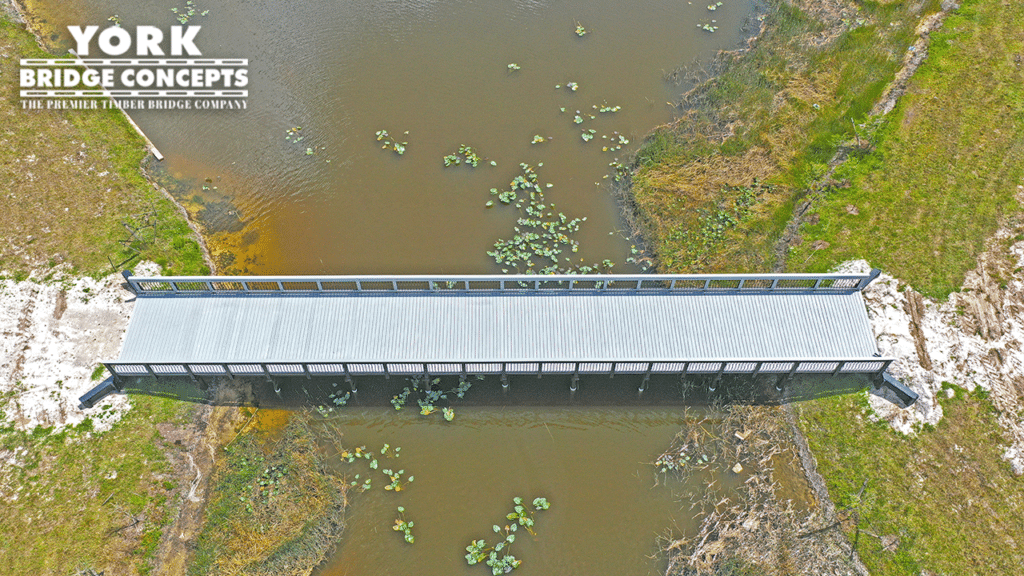
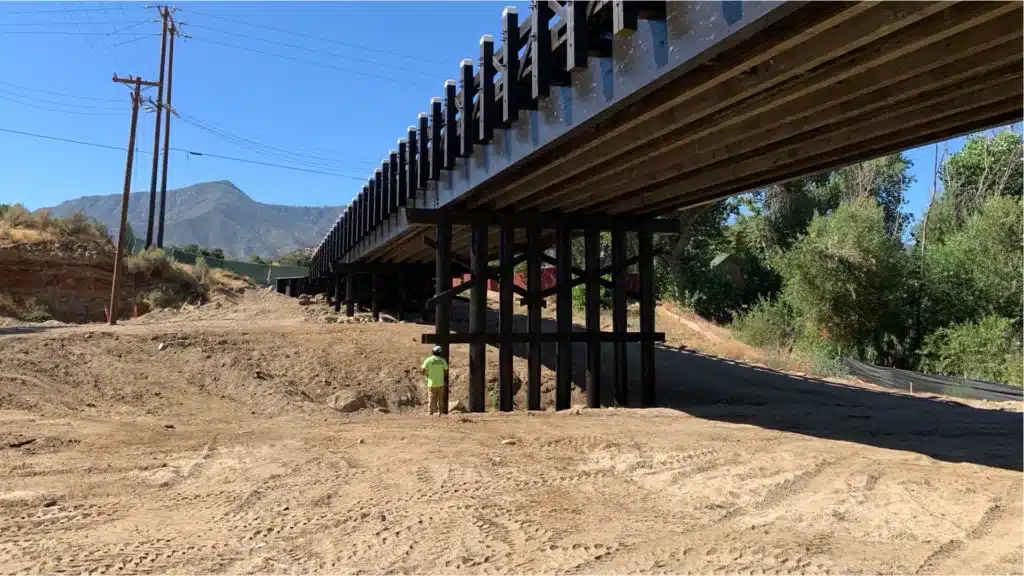
One of the standout features of the eco-friendly vehicular bridge at the Park School of Baltimore is its free-span design. Free-span construction eliminates the need for intermediate supports within the crossing, preserving the natural flow of waterways, minimizing environmental impact, and reducing long-term maintenance costs. This design is particularly beneficial for educational institutions like the Park School, where sustainability and aesthetics play a crucial role in campus development.
By implementing a free-span structure, York Bridge Concepts ensured that the bridge would provide uninterrupted passage for vehicles while maintaining the integrity of the surrounding environment. This approach not only enhances the natural beauty of the area but also upholds the school's commitment to sustainability by minimizing soil disturbance and allowing local ecosystems to thrive.
From Site Conditions to Structural Choices
Park School's site is defined by rolling terrain, mixed hardwood forest, riparian buffers, and a sensitive stream channel. Any crossing approach demanded careful attention to stormwater flows, erosion control, and wildlife passage. The soils near the creek banks exhibited variability--some soft alluvial deposits and pockets of silty clay--necessitating foundational footing studies and geotechnical borings.
In early design, YBC and Park School's civic/landscape teams mapped high-water marks, flood events, overbank behavior, and seasonal vegetation lines. They also performed surveys to locate tree root zones, protected plant habitats, and drainage corridors to be preserved. A goal was to avoid installing piers or footings within the active channel or within the riparian buffer where possible.
Additionally, environmental permitting constraints encouraged a design that allowed for no in-channel supports, to maintain natural stream dynamics and aquatic life continuity.
Choosing a Free-Span Timber Bridge
Given the site constraints and environmental imperatives, the free-span bridge option emerged as ideal: a structure spanning the creek without midstream supports. This reduced disruption to the channel, minimized long-term scour risk, and simplified permitting. Moreover, it aligned with the school's aspirations for a clean elegant solution that wouldn't overwhelm the landscape.
Timber was the material of choice for multiple reasons:
- Visual warmth and context: wood resonates with campus surroundings more sympathetically than alternative materials.
- Sustainability credentials: responsibly sourced Southern Yellow Pine, treated for durability, offers carbon sequestration benefits and lower embodied energy compared to many structural materials.
- Performance: with modern preservative treatments, protective coatings, and design detailing, timber can deliver decades of service under vehicular loading.
Yet timber is not without challenges--moisture, UV, decay, insect attack, and maintenance must be addressed in design. YBC's experience with acrylic/polymer coatings, careful detailing, and proactive maintenance protocols brings confidence to long-term performance.
Structural & Aesthetic Components
Here's how the project's structural anatomy was resolved:
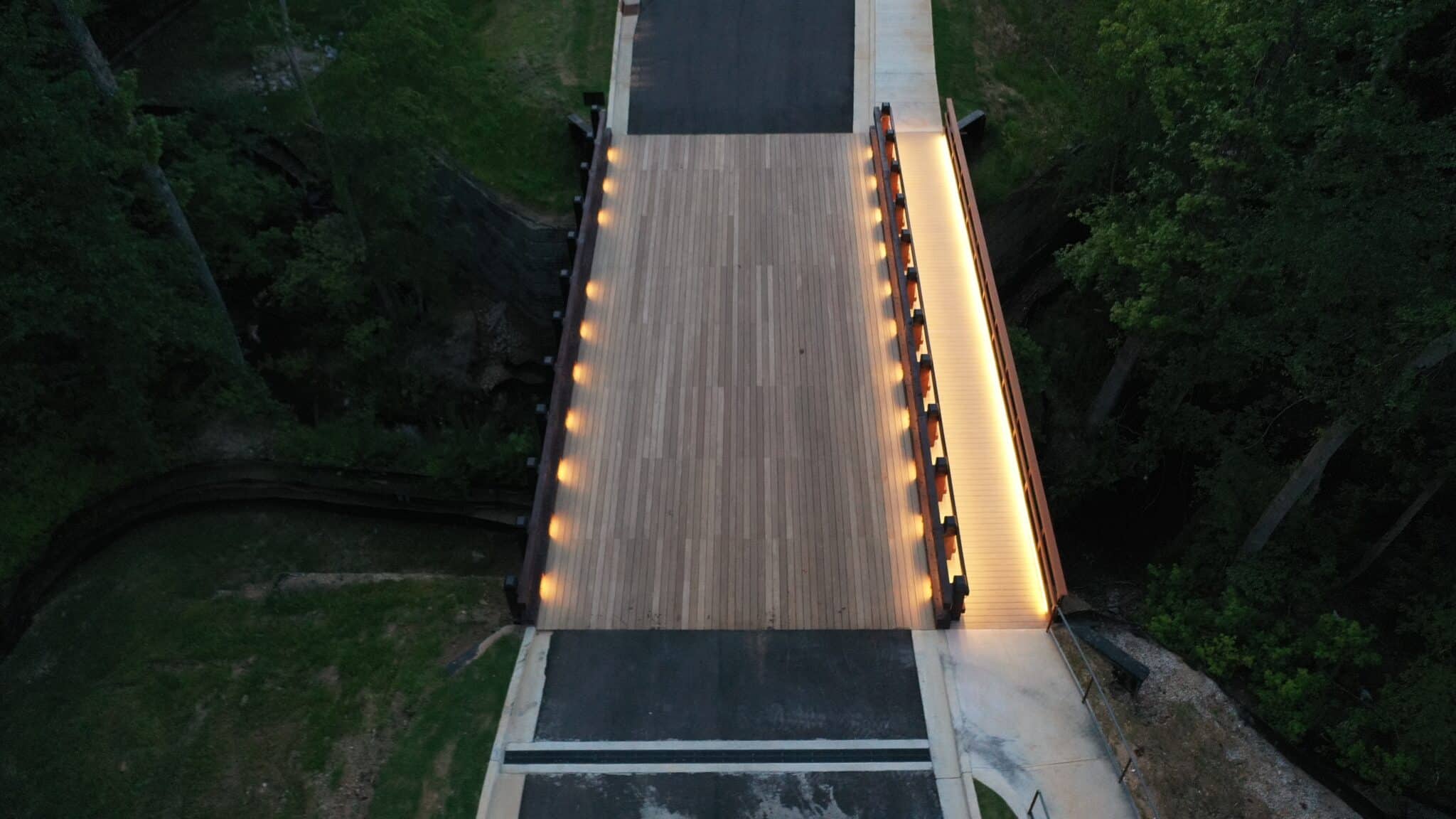
- Width & Decking: The bridge is 12 feet wide with an 11-foot clear vehicle path (i.e., usable carriageway). The deck system uses 5 1/2-inch thick timber decking, laid longitudinally to facilitate drainage and walking/service access.
- Stringers & Beams: Rough-sawn Southern Yellow Pine stringers were used, with critical exposed surfaces protected by acrylic or polymer coatings to resist moisture, insect intrusion, and wear.
- Foundations & Abutments: At each bank, treated timber piles and abutments anchor the structure. Where exposed material are present above grad, they're coated with protective layers to shield from the elements.
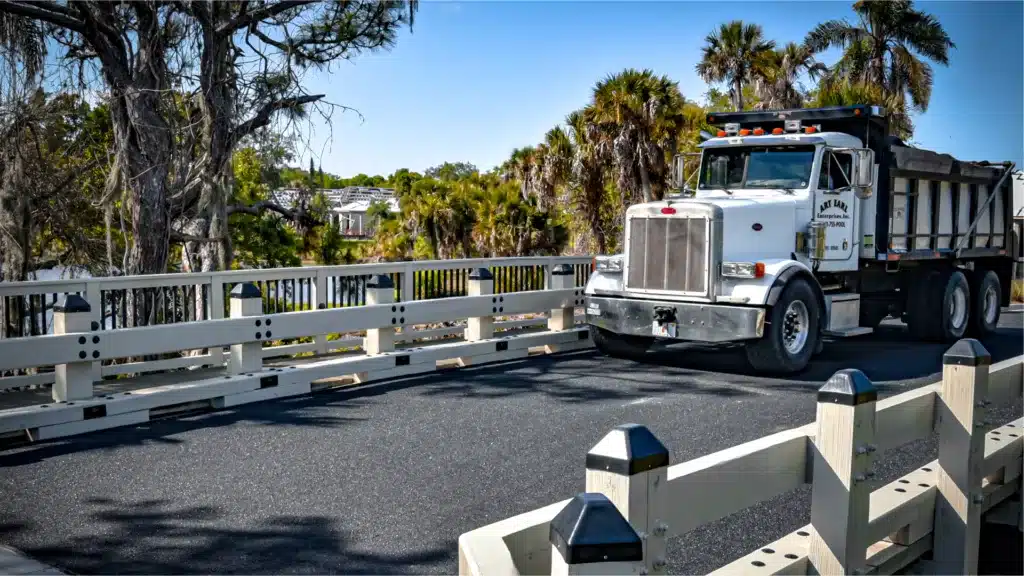
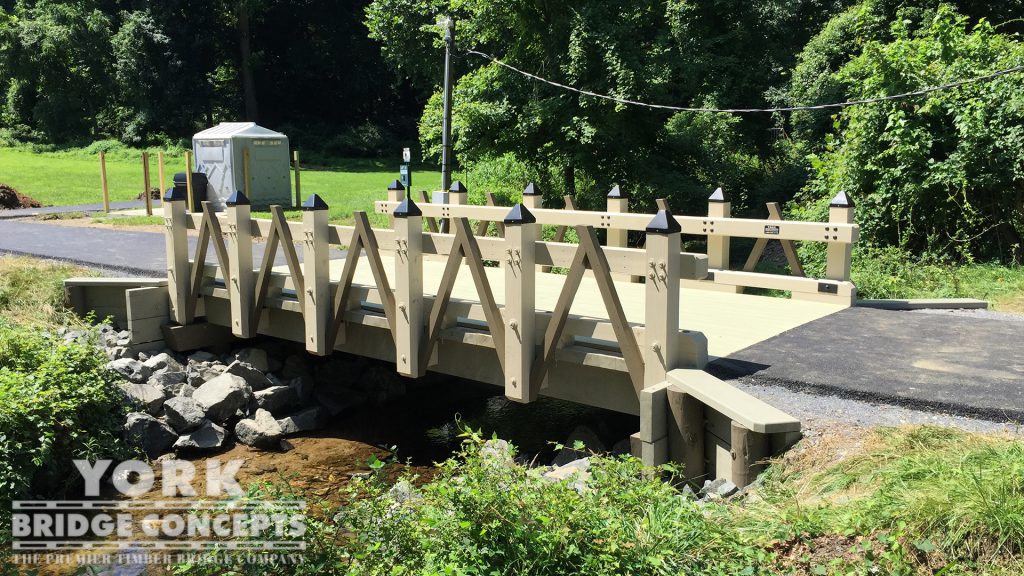
- Guardrails & Safety: A Decero™ K-Style Design Series guardrail system provides the required safety containment while retaining clean sightlines and a refined architectural character.
- Clearance & Span: With a span length of 25 feet and a bridge deck sitting approximately 5 feet above the grads, the structure allows for flood passage and natural flow. The HS20-44 loading specification ensures the bridge can carry standard highway service vehicles and emergency access.
Every component was chosen not only for structural correctness, but also for harmony--with natural materials, simplicity of form, and alignment to campus scale.
Sustainable Infrastructure for Educational Campuses
Educational institutions across the nation are increasingly turning to eco-friendly vehicular bridges as a solution for campus expansion, connectivity, and accessibility. York Bridge Concepts has established itself as a trusted partner for schools, colleges, and universities by delivering innovative bridge designs that balance function, longevity, and environmental responsibility.
The Park School of Baltimore's Maryland vehicular bridge serves as a testament to YBC's expertise in crafting solutions that meet the specific needs of educational institutions. By incorporating sustainable materials, advanced engineering, and aesthetic design elements, YBC provides schools with bridges that not only facilitate transportation but also contribute to the overall campus experience.
Construction & Installation Timeline
Preconstruction & Site Preparation
Prior to heavy work, the project team conducted detailed site access planning, erosion control layout, and tree protection enforcement. A temporary work pad and staging area were strategically located to minimize disturbance to lawns, plantings, and existing campus walks.
Vegetation adjacent to the banks was trimmed with care; only minimal pruning occurred to permit crane access. Silt fencing, erosion barriers, and sediment control traps were staged to capture runoff during earthwork.
Meanwhile, on-site fabrication of timber components took place during the construction of the bridge to account for any minor fluctuations with the site to make adjustments in real-time--maximizing precision and reducing costs related to shipping.
Foundation & Substructure Work
After soil clearing, the timber pile foundations and abutments were installed. Because the structure is free-span (i.e., no midstream piers), foundation work was confined to the banks. The piles were driven to refusal or into bearing stratum, depending on geotechnical recommendations. Abutments were then constructed in timber, with transition elements to connect the deck superstructure.
Where abutment faces are exposed, additional acrylic/polymer coatings were applied as shielding layers. Backfill behind the abutments incorporated engineered stone and drainage elements to ensure proper subgrade performance and to avoid hydrostatic pressure issues.
Superstructure Assembly
Once substructure work is achieved design tolerances, the bridge superstructure was craned into place. Prefabricated glulam stringers were set, checks made for alignment and grading, and then timber decking was laid and fastened with corrosion-resistant hardware.
Guardrail systems were assembled and anchored into the deck and substructure. Final hardware, caps, and finishing details were added. Exposed bolts, cut ends, and potential moisture traps were sealed or flashed to prevent deterioration.
Finishing & Site Restoration
After structural installation, the client moved the project into cosmetic and environmental restoration:
- Backfilling, grading, and reseeding of disturbed areas.
- Mulching and planting of native buffer species along creek habitats
- Final cleanup, path connections, and site integration.
- Testing of water runoff, drainage system performance, and joint behavior.
Throughout, YBC coordinated with Park School's landscape, civil, and maintenance teams to ensure continuity with existing campus infrastructure, stormwater patterns, and visual lines.
Long-Term Performance & Maintenance Strategy
A timber bridge's success over decades depends not solely on its structural design, but on proactive maintenance and careful monitoring. For the Park School bridge, YBC recommended a multi-tiered stewardship plan to maximize longevity and aesthetics.
Inspection & Monitoring
- Annual inspections: A full visual inspection each year, including all members, fasteners, coatings, drainage, guardrails, and abutments.
- Every 3-5 years: More detailed evaluation of moisture infiltration, joint conditions, and subsurface decay testing.
- Post-storm or flood event checks: Immediately inspect for scour, debris impact, foundation shifting or erosion.
These inspections should be documented, photos archived, and any emerging issues addressed early.
Coating & Protective Maintenance
The applied acrylic/polymer coatings are vital elements of preservation; hence:
- Every 5-10 years (depending on environmental exposure), recoat or touch up exposed surfaces.
- Inspect expansion joints, flashing, and sealants regularly to prevent water intrusion into vulnerable timber zones.
- Use only approved coating materials compatible with original protective systems to avoid delamination or adverse reactions.
Drainage & Vegetation
Such a structure's life is heavily influenced by surrounding hydrology:
- Keep drainage clear--ditch lines, scuppers, gutters, and soil grading must direct water away from structural timber.
- Maintain vegetative clearance so that the tree limbs, vines, or shrubs do not trap moisture or deposit debris onto the bridge.
- Periodically remove leaf litter, sediment, or organic buildup from surfaces.
Fasteners, Hardware & Guardrail Upkeep
- Check fasteners and bolts annually for loosening, and tighten
- Guardrails and safety hardware should be assessed, any damage, should be a prompt and timely repair.
- Ensure proper drainage around the base of guardrail posts to preclude moisture wicking up into structural elements.
With disciplined maintenance, YBC anticipates this bridge will reliably serve for 50+ years, and potentially over 75 years with proper care.
The YBC Approach: Innovation, Sustainability, & Quality
York Bridge Concepts follows a meticulous design-build process to ensure that every bridge they construct aligns with the unique requirements of the client and the surrounding environment. The Park School of Baltimore's eco-friendly vehicular bridge was designed with the following principles in mind:
Sustainable Materials & Construction Methods
YBC prioritizes sustainability by utilizing responsibly sourced wood products that provide durability without compromising environmental integrity. The bridge's construction employed non-toxic coatings and advanced preservation techniques to extend its lifespan while maintaining an environmentally friendly footprint.
seamless Integration With the Natural Landscape
Every aspect of the bridge was thoughtfully designed to complement the existing landscape of the Park School campus. From the selection of natural wood tones to the incorporation of architectural details that reflect the school's aesthetic, the bridge blends harmoniously with its surroundings.
Minimal Maintenance Requirements
Educational institutions require infrastructure that is both reliable and cost-effective. YBC designed the Park School bridge with long-term sustainability in mind, incorporating materials and construction techniques that minimize maintenance needs, thereby reducing overall costs for the school.
Supporting Schools, Colleges, & Universities Nationwide
Beyond the Park School of Baltimore, York Bridge Concepts has a proven track record of supporting educational institutions in their quest to improve campus connectivity. By providing eco-friendly vehicular bridges, YBC helps schools create seamless transportation solutions that enhance accessibility while preserving the integrity of natural landscapes.
From pedestrian bridges for college campuses to vehicular bridges for large university properties, YBC's expertise extends to a variety of educational settings. Their ability to deliver customized solutions ensures that each bridge is tailored to the specific needs of the institution, whether it be accommodating school buses, faculty vehicles, or emergency responders.
Campus & Community Benefits
The Park School pedestrian--vehicular bridge goes beyond the purely structural. Its far-reaching impacts ripple through campus life, community identity, and environmental stewardship.
Improving Connectivity & Circulation
By providing a direct vehicular route across Trout Creek, the bridge has eased internal circulation for faculty, maintenance crews, delivery trucks, and emergency responders. It has reduced travel times, avoided circuitous detours, and restored continuity to campus circulation plans.
Moreover, the structure doubles as a symbolic connector--linking separate zones of the campus into a unified spatial experience, reinforcing cohesion across teaching, athletic, residential, and natural areas.
Safety, Reliability & Emergency Access
Before the bridge, crossing the creek under adverse weather or in emergency situations was constrained. With a safe, engineered crossing now in place, response times are shorter, and campus safety is improved. The bridge provides a resilient route even during high-water events (within design limits), ensuring continuity of access and campus operations.
Innovative Teaching & Experiential Value
On a campus infused by curiosity and learning, the bridge serves as a living educational tool. Students and faculty in environmental science, civil engineering, biology, sustainability, and art can study:
- Timber engineering principles and structural behavior
- Environmental impacts, stream hydrology, and erosion control
- Material science--coatings, decay resistance, and durability
- Integration of architecture, landscape, and built from
Guided tours, classroom observations, or even lab assignments can center on this bridge as a campus exemplar.
Reinforcing Institutional Values
By choosing a sustainable, contextually sensitive design, Park School underscores its commitment to environmental responsibility. The bridge becomes a physical manifestation of the values taught in classrooms--acting as a statement piece that students, visitors, and the broader community see daily. It sends a message: infrastructure can be beautiful, ecologically intelligent, and economically responsible.
The Impact of An Eco-Friendly Bridge On Campus Life
The addition of an eco-friendly vehicular bridge at the Park School of Baltimore has had a profound impact on campus accessibility and functionality. Key benefits include:
- Enhanced Campus Connectivity: The bridge provides direct and efficient rout across the school grounds, improving transportation flow and reducing congestion.
- Increased Safety: The bridge offers a dedicated and structurally sound crossing point, ensuring safe passage for students, faculty, and visitors.
- Preserved Natural Beauty: By implementing a free-span design, the bridge minimizes disruption to the surrounding ecosystem, allowing nature to flourish.
- Sustainability Leadership: The Park School reinforces its commitment to environmental responsibility by choosing a bridge solution that aligns with its sustainability goals.
Lessons Learned, Challenges & Adaptive Solutions
Every ambitious project encounters unforeseen challenges. The Park School bridge was no exception--but through adaptive design, collaboration, and rigorous planning, obstacles became lessons.
Challenge: Site Access Constraints
The tight campus boundaries and mature landscaping limited large equipment staging. YBC and the campus team mitigated this by:
- Prefabricating modules offsite, reducing crane time onsite
- Using smaller track-mounted equipment in sensitive zones
- Staging material deliveries during low-traffic windows
- Coordinating with campus operations to minimize interference with school life
The result: construction without major disruption to classes or campus routines.
Challenge: Moisture & Humidity Considerations
Baltimore's seasonal humidity and temperature swings challenged timber moisture equilibrium. To address this:
- Timber members underwent pre-conditioning,
- Design details included drainage breaks, vented connections, and flashing
- Protective coatings were applied with overlapping coverage
- Sealants and expansion allowances were built in to accommodate movement
Challenge: Long-Term Monitoring & Accountability
At the campus intends to preserve the bridge for decades, the concern was ensuring that maintenance responsibility remains consistent, regardless of future staff turnover. The solution:
- A maintenance manual and inspection schedule were handed over,
- Training sessions were held for facilities staff,
- Digital documentation (photos, condition logs) were archived in campus asset systems,
- Warranty and performance guarantees were clearly spelled out in the construction contract.
Comparative & Contextual Perspective
While the Park School bridge is unique in its campus role, it sits within a broader movement toward sustainable timber and hybrid crossing structures. Some comparative insights:
- Many educational institutions increasingly favor timber or mixed-material pedestrian bridge for trail systems; fewer invest in full vehicular timber crossings--yet with proper design, they are viable.
- Compared to steel or concrete, timber bridges often require more committed maintenance, but the material and lifecycle benefits can offset that over time.
- In settings sensitive to ecological integrity--campuses, parks, protected lands--the free-span, minimally invasive design sets a benchmark for responsible infrastructure.
- The Park School model can inform similar projects across small colleges, K-12 campuses, research stations, and private estates.
In choosing timber-composite design, YBC continues to expand the palette for structural solutions that are both expressive and grounded.
A Vision For The Future: Building More Sustainable Educational Spaces
As educational institutions continue to prioritize sustainability and infrastructure development, the demand for Maryland vehicular bridges and other eco-friendly solutions is expected to rise. York Bridge Concepts remains at the forefront of this movement, delivering innovative and environmentally conscious bridge designs that enhance the educationally experience.
The Park School of Baltimore's bridge project exemplifies the possibilities of integrating sustainable infrastructure into school campuses. With YBC's expertise, more schools, colleges, and universities can implement solutions that support their growth while fostering a deeper connection to nature.
Future Opportunities & Expansion Phases
The initial project addresses a key crossing need. But its success opens doors for subsequent enhancements and campus-wide expansion:
Multi-Modal Adaptation
Though currently designed for vehicular use, segments of the bridge or adjacent paths could evolve into designated pedestrian or bike-friendly zones--with safety railings, lightings, or interpretive signage.
Monitoring & Smart Instrumentation
Over time, the bridge could incorporate sensors for:
- Moisture and humidity in timber
- Load monitoring
- Vibrational behavior
- Temperature fluctuations
This data could feed into campus sustainability programs or engineering classes.
Landscape & Interpretive Features
The bridge might be enhanced with:
- Educational signage about structure, ecology, or hydrology
- Native plantings along abutments reinforcing buffer zones
- Lighting designed to minimize light pollution while adding nighttime interest
- Seating or gathering nooks at approaches, turning the bridge into a contemplative campus destination, not merely a conduit
Replication & Learning Across Campus
The successful deployment at Park School may inspire additional crossing projects--across smaller streams, walking trails, or wetland buffers--bringing uniformity of design language, sustainability, and campus identity.
Technical Addendum: Structural & Material Rationale
Load Design & Safety Factor
Using the HS20-44 standard ensures that the bridge accommodates most vehicular use, including heavier service vehicles and possible emergency trucks, with appropriate safety margins. Structural members were sized to limit deflections, meet fatigue criteria, and maintain serviceability.
Selection of Southern Yellow Pine (SYP)
SYP, properly treated, is a commendable structural timber commodity. Its strength-to-weight ratio, availability, and cost-effectiveness make it suitable for bridge applications. In the Park School project:
- All timber was preservative-treated to resist decay, insects, and moisture--chosen to meet or exceed industry standards.
- Exposed portions received acrylic/polymer coatings to shield from UV, abrasion, and weathering.
- Critical joints and connections incorporate stainless or hot-dipped galvanized hardware to resist corrosion.
Detailing for Drainage & Ventilation
To avoid trapped moisture and decay, detailing includes:
- End-grain seals and flashing at cut ends,
- Venting gaps or drainage channels beneath deck planking,
- Water-deflecting drip edges and scuppers,
- Slope moderation to shed water rather than ponding.
These measures are essential for timber longevity.
Guardrail & Safety Features
The Decero™ K-Style guardrail provides visual refinement and structural safety. Anchoring and flex detailing ensure that guardrail performance meets crash containment criteria, while minimizing intrusion into the aesthetic experience. The rail's slender proportions and finish choices help mitigate visual impact while preserving necessary structural stiffness.
Park School of Baltimore; Not just a Bridge
The Park School of Baltimore vehicular bridge is more than infrastructure--it is a celebration of design, ecology, and function wrapped into a single campus element. In delivering a free-span, sustainably crafted timber bridge, York Bridge Concepts demonstrates how human mobility and natural systems can coexist harmoniously.
For educational institutions, private campuses, or municipalities seeking a bridge solution that is elegant, resilient, and environmentally rooted, York Bridge Concepts offers deep experience, technical excellence, and a design mindset that honors place.
Partnering with York Bridge Concepts for Eco-Friendly Solutions
York Bridge Concepts' commitment to sustainability quality craftsmanship, and innovative engineering makes them the ideal partner for educational institutions seeking eco-friendly vehicular bridges. The success of the Park School of Baltimore's Maryland vehicular bridge underscores the impact that well-designed, environmentally responsible infrastructure can have on campus accessibility and sustainability.
For schools looking to invest in long-lasting, aesthetically pleasing, and environmentally conscious bridge solutions, YBC offers unmatched expertise and dedication to excellence. By choosing York Bridge Concepts, educational institutions can enhance connectivity, improve safety, and uphold their commitment to sustainability - all while investing in infrastructure that stands the test of time.
If your school or university is considering an eco-friendly vehicular bridge, contact York Bridge Concepts today to explore how their innovative solutions can transform your campus.
All Feature Projects
What's Best: A Culvert Or A Timber Bridge?
What Is The Best Span Type For My Project?
Which Load Capacity I Need?
How Do I Cross An Environmentally Sensitive Area?
How Do I Create A Landmark?
How Long Does A Timber Bridge Last?
Culvert Or Bridge
If you're considering using a culvert for your crossing project. Click below to understand the best fit for your project.

Spanning Solutions
Spanning a crossing is one of the most important aspects of your crossing project. Find the best solution for your crossing needs.

Uses & Capacities
The load capacity of a timber bridge may surprise you. See specs for different loads and uses that will help your decision-making process.