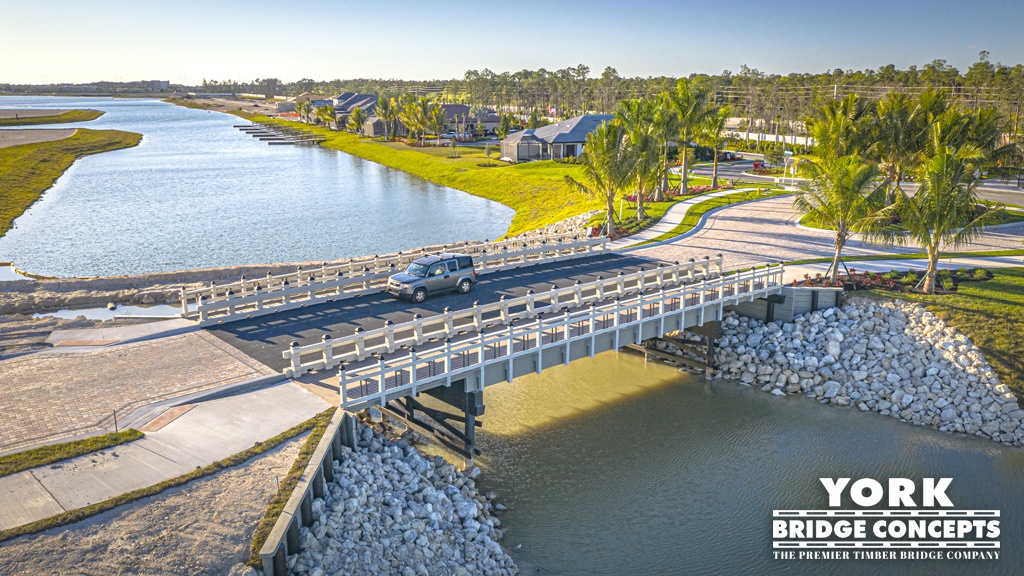
Esplanade Lake Club's Exquisite Timber Bridge Project by York Bridge Concepts
Nestled within the serene beauty of Ft. Myers, Florida, the Esplanade Lake Club stands as a testament to resort lifestyle and modern luxury. In a remarkable collaboration between York Bridge Concepts and Taylor Morrison, this visionary community has been bestowed with the prestigious Urban Green Designed Community award, underscoring its commitment to sustainable living and aesthetic excellence.
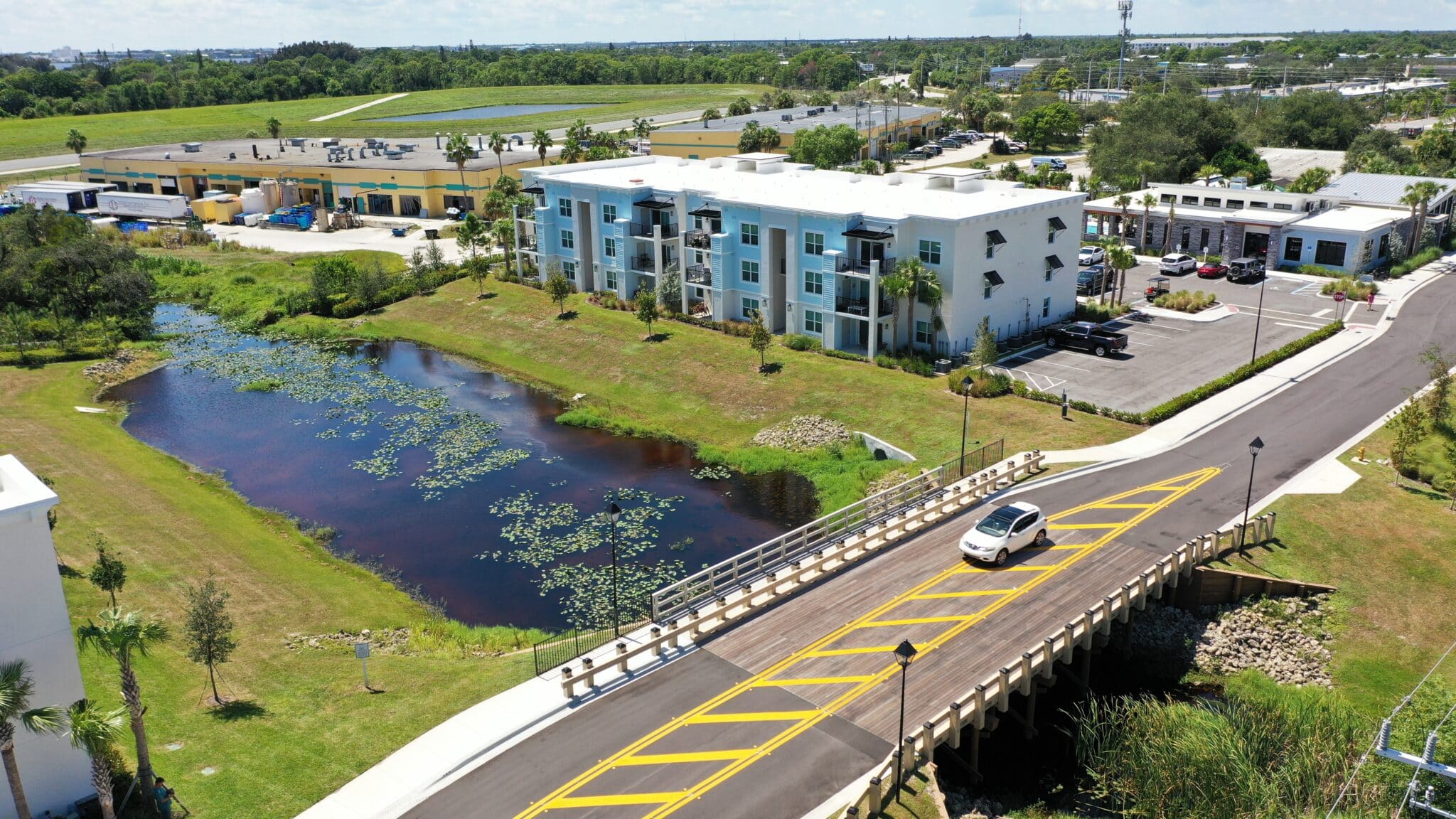
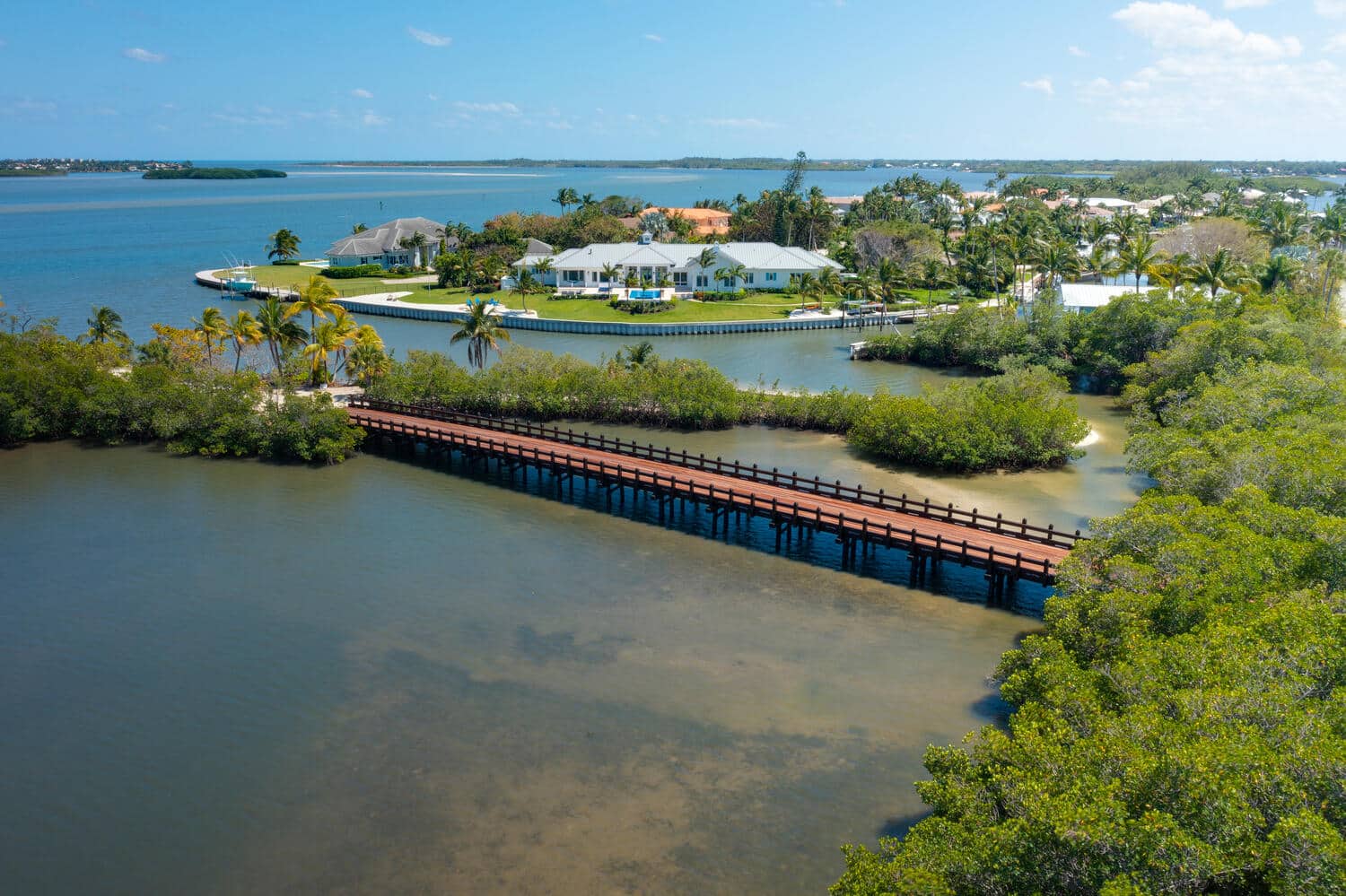
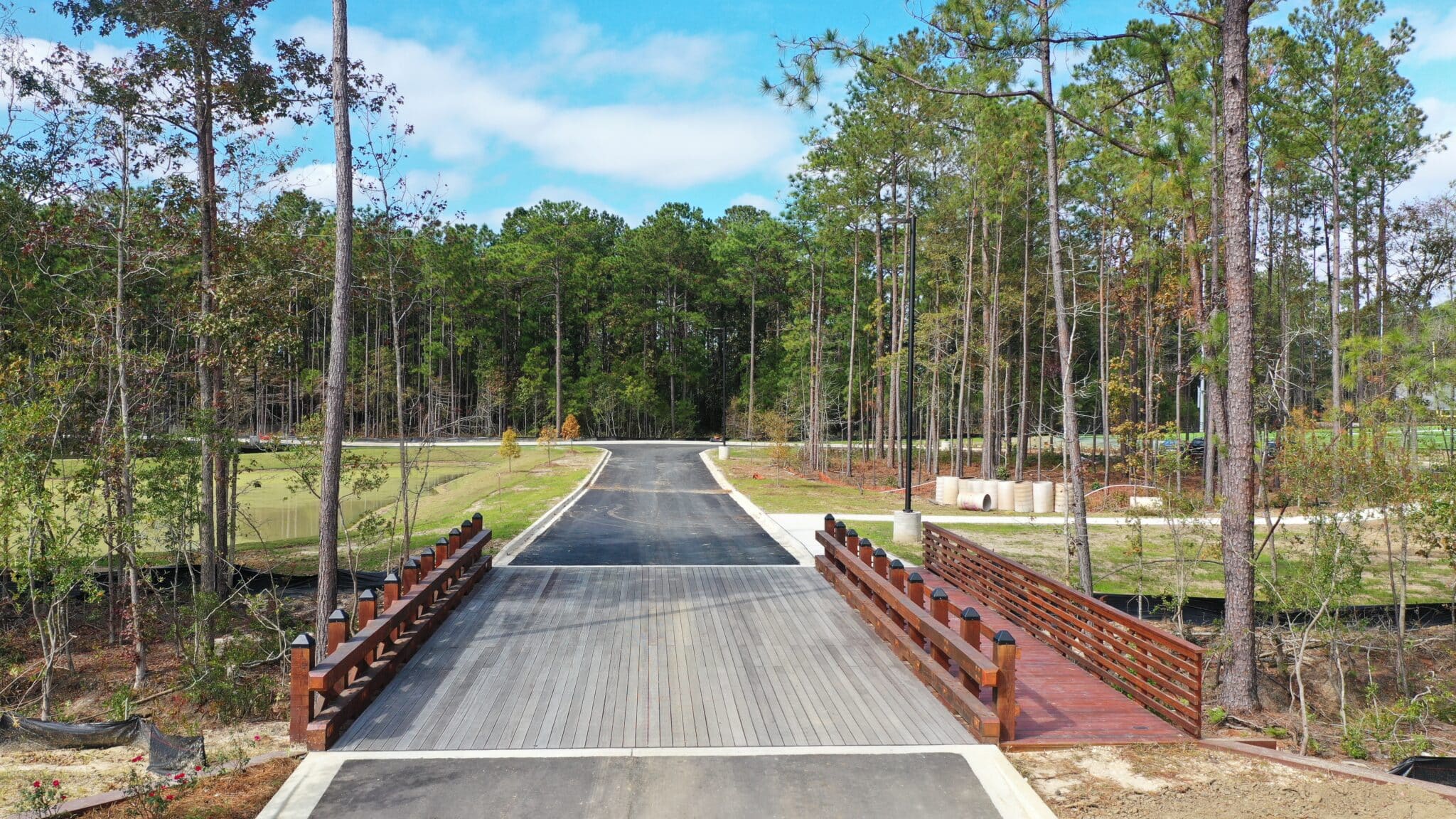
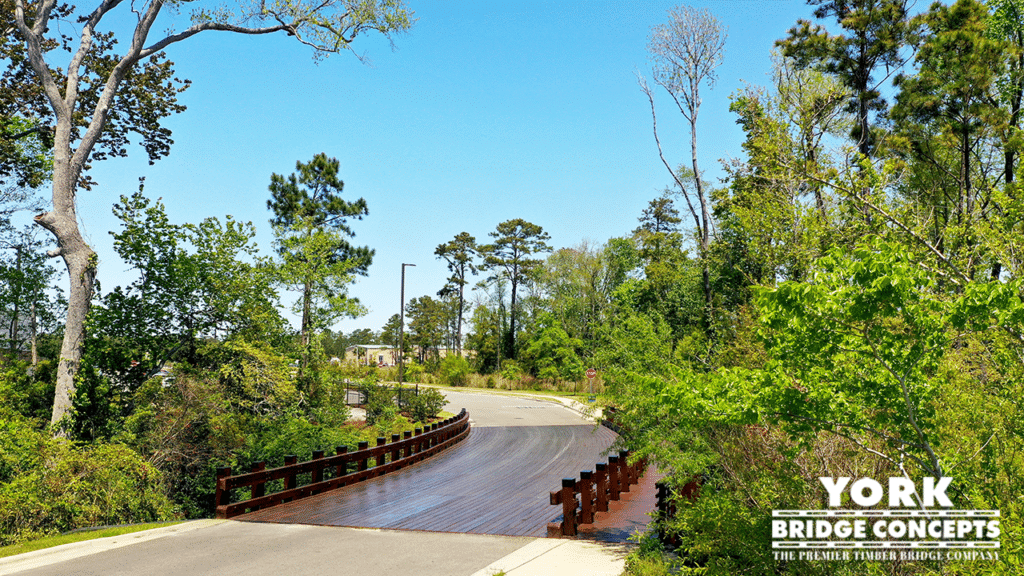
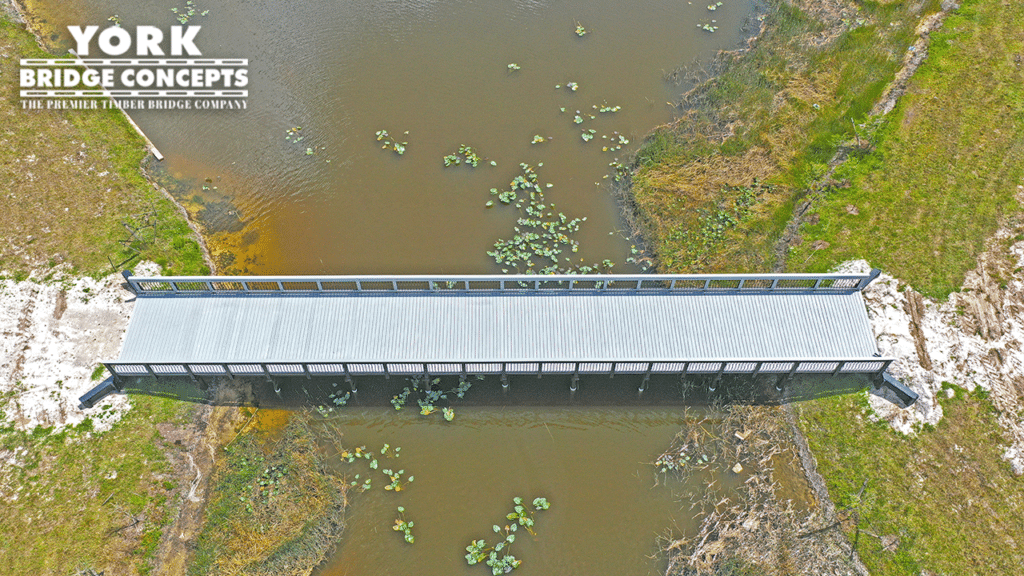
At the heart of this exceptional community lies the crown jewel of transportation infrastructure - a meticulously crafted timber bridge, expertly designed and constructed by York Bridge Concepts. This marvel of engineering seamlessly integrates functionality, durability, and timeless beauty, enriching the landscape while providing essential connectivity.
Specifications
- Vehicular Width:
- 26' (24' 5" clear)
- Pedestrian Widths:
- 11'10" (10'5" clear) 5' 10" (4' 5" clear)
- Length:
- 80'
- Height:
- 13' above grade
- Capacity:
- HS20/44 / 85 PSF
- Construction:
- Ground Up
- Span Type:
- Multiple Span
- Span Lengths:
- (2) 16', (1) 48'
- Material:
- CCA/CA-C Treated Southern Yellow Pine & Composite
- Foundation:
- SYP Timber Piles & Abutments (Acrylic/Polymer Coated where exposed)
- Stringers:
- SYP Rough Sawn Timber & Glulam Stringers (Acrylic/Polymer Coated where exposed)
- Vehicular Deck System:
- 5 ½” Timber Deck
- Pedestrian Deck System:
- 1-½” Composite Deck
- Guard Rail:
- Decero™ Classic Design Series
- Handrail:
- Decero™ Wire Rope Design Series
- Crossing:
- Flood Plain
Community Vision, Place-Making, & Context
Esplanade Lake Club's setting in Ft. Myers offers a rare combination of pristine water views, native vegetation, and a thoughtfully amenity lifestyle. Within this context, the vehicular bridge is more than a practical crossing--it's signature experience that quietly shapes daily life. Residents and guests arrive to a sense of calm as warm wood tones and clean lines frame open skies and reflective water. The first impression is both resort-casual and architecturally refined, mirroring the community's emphasis on wellness, outdoor living, and long-horizon stewardship.
From the outset, York Bridge Concepts partnered with the development team to align three priorities: connectivity, character, and conservation. Connectivity is straightforward--safe, intuitive access that supports vehicles, carts, cyclists, and pedestrians, Character goes deeper, blending coastal aesthetics with a contemporary palette that complements the architecture rather than competing with it. Conservation anchors the design philosophy, ensuring the crossing respects hydrology, nearby habitats, and long-term durability in a coastal climate.
To achieve this balance, YBC applied its Design-Engineer-Build approach: an integrated process that allows design intent, engineering performance, and construction methods to inform each other in real time. Early conversations centered on how people would use the bridge in different moments--morning walks, sunset cart rides, neighborhood gatherings--so that the structure would feel effortless to navigate and delightful to experience. As these use-cases were mapped, the team explored sightlines, approach geometry, and how handrail profiles shape the visual rhythm of movement. The result is a crossing that reads as a natural extension of the land plan, guiding residents across water and landscape with a fluid sense of place.
Equally important was the bridge's quiet sustainability--not only in materials and coatings but in the way the structure engages its setting. Timber's lower embodied energy relative to many conventional alternatives, along with responsible sourcing, offers an elegant path to environmental performance without sacrificing strength or longevity. Detailing is purposeful and restrained: edges are softened, proportions feel human-scaled, and everything visitors touch is warm to the hand. This is infrastructure that participates in the beauty of its environment, not just passing through it.
Design-Engineer-Build, Construction Methodology, & Coastal Resilience
Delivering a bridge that performs year in a coastal region requires a disciplined, field-tested methodology. YBC's Design-Engineer-Build model streamlines the path from concept to completion by keeping teams aligned on schedule, construction, and quality assurance at every step. The result is fewer hand-offs, faster decision, and a finished structure that precisely reflects the approved design.
Top-Down, Deck-Level Construction. To minimize disturbance to sensitive ground and shoreline areas, YBC employs top-down, deck-level construction techniques. Work proceeds from the structure itself, allowing crews to operate from the advancing bridge rather than relying on extensive ground-based access. This approach reduces compaction, protects vegetation, and helps maintain water quality. It also supports tight site logistics--especially important in active communities where residents and contractors share roadways and staging areas.
Foundation Strategy and Pile Installation. Subsurface conditions in coastal Florida can vary significantly over short distances. YBC's foundation strategy is calibrated through geotechnical review to achieve the necessary bearing while respecting the local environment. Piles are installed with a vibratory hammer mounted to an excavator, providing controlled energy transfer and efficient penetration with minimal footprint. The method's precision supports consistent alignment and vertically, which are critical to long-term structural performance and clean architectural lines.
Structural Framing and Load Path. The timber superstructure is engineered to carry vehicular loads, carts, and pedestrian traffic with generous safety factors. Members and connections are sized to control deflection, maintain comfortable ride quality, and support the bridge's multiple use zones. The load path from deck to foundation is clear and redundant, distributing forces efficiently while preserving a slender, elegant profile above the water.
Coastal Durability and Protective Systems. Materials and coatings are selected for the region's heat, humidity, and salt-air exposure. Acrylic/polymer protective systems help shield Southern Yellow Pine elements, and corrosion-resistant fasteners, connectors, and hardware support long service life. The bridge detailing anticipates wind-borne rain and rapid wet-dry cycles, with drainage pathways, drip edges, and strategic ventilation reducing moisture retention and protecting fiver integrity. Where appropriate, stainless or hot-dip galvanized steel hardware is deployed to ensure consistent performance in marine-adjacent conditions.
Hydraulics, Freeboard, and Scour Awareness. Even in calm internal water bodies, hydraulic behavior during storm events matters. YBC evaluates anticipated water surface elevations and flow velocities to maintain prudent freeboard and to resist uplift and lateral pressures. Abutment areas are detailed to manage potential scour, and the bridge's geometry supports unimpeded flow, reducing debris accumulation and preserving natural water movement.
Quality Assurance and Commissioning. Throughout construction, YBC's field teams perform dimensional checks, torque verification, and coating inspections. Before opening, the crossing is commissioned with a focus on ride quality, railing continuity, surface traction, signage, and transitions at approaches. The outcome is a crossing that meets its performance objectives on day one and sets the standard for years to come.
The Design & Functionality Of Esplanade Lake Club Timber Bridge
The double-lane vehicular timber bridge, adorned with an attached cart path and pedestrian walkway, epitomizes the marriage between form and function. York Bridge Concepts' expertise shines through in every aspect of the design, from the intricate timber detailing to the precision-engineered structure.
Multi-Modal Functionality, Safety, & Material Craft
The Esplanade Lake Club bridge is designed as a true multi-modal corridor, with a double-lane vehicular section, an attached cart path, and a pedestrian walkway that invites people to move comfortably at their own pace. This separation of modes reduces conflicts and fosters an intuitive sense of order: vehicles glide through at neighborhood speeds; golf carts enjoy a dedicated lane for resort-style mobility; and walkers, runners, and cyclists experience a calmer edge buffered from vehicular activity.
Approach Geometry and Visibility. Sightlines at the approaches were studied to create predictable, stress-free transitions. Subtle geometry helps drivers center naturally in the travel lanes while providing clear cues for carts and pedestrians. The bridge's gently crowned deck aids drainage, and the handrail system maintains visual permeability so users can take in views of water and sky without distraction.
Guardrail and Handrail Integration. Safety elements are carefully composited into the architecture. Vehicular guardrails coordinate with cart and pedestrian rails, creating a coherent family of lines rather than a patchwork of mismatched parts. On the pedestrian side, rail height, picket spacing, and hand feel are tuned for comfort and code compliance. The result is tactile confidence--every edge feels intentional, smooth and trustworthy.
Deck Surface & Trustworthy. Underfoot security is essential. Deck boards are selected and oriented to manage water, with traction patterns and finishes chosen for grip in wet conditions without feeling abrasive. Expansion gaps support drainage and ventilation, and edge details move runoff away from walking areas. These subtle choices are the difference between a surface that merely looks polished and one that performs day after day in Florida's climate.
Human-Scaled Proportions. While the bridge carries vehicles, it's scaled for people. Member depths, rail heights, and post spacings are composed to create rhythmic intervals that feel calm and welcoming. Timber's grain and warmth soften the experience, transforming a simple crossing into a place where residents pause, converse, and watch egrets skim the water.
Timber Substructure & Protective Finishes. Southern Yellow Pine provides the structural backbone, chosen for its strength, reliability, and affinity for protective coatings. YBC's acrylic/polymer systems help guard against UV, moisture ingress, and surface wear, while allowing the natural character of the wood to read through. Detailing prioritizes water shedding--horizontal surfaces are minimized, and cut ends are sealed to prevent wicking. The combined effect is a durable timber framework that retains its elegance as seasons turn.
Structural Performance & Comfort. The bridge is engineered to modern standards appropriate for community traffic, with attention to serviceability criteria that shape real-world experience--deflection, vibration, and ride quality. This is where YBC's multi-modal design matters: pedestrians appreciate a stable, reassuring platform; carts enjoy a smooth traverse; and drivers feel a calm, secure passage aligned with neighborhood speed expectations.
Wayfinding & User Cues. Subtle design moves--rail breaks at overlooks, post rhythm changes at transitions, and pavement markings where appropriate--create a legible sequence. Users instinctively know where to walk, where to roll, and when to slow down. The bridge communicates with clarity, using architecture rather than cluttered signage.
Environmental Fit. The structure's low profile and warm palette help it sit gently in the landscape. Reflections on the water, soft shadow lines on the deck, and glimpses of surrounding flora create an atmosphere of relaxed sophistication. Even in busy moments, the crossing remains a calming space that belongs to the setting.
Focused On Aesthetics & Elegance For Sophisticated Living
As residents and visitors traverse the bridge, they are greeted by a symphony of natural beauty, with the timber's coastal design blending seamlessly with the surrounding environment and architecture. Each element of the bridge has stood meticulously crafted to exude elegance and charm, elevating the overall aesthetic of the Esplanade Lake Club.
Aesthetic Detailing, Nighttime Ambience, & Landscape Integration
Aesthetics at Esplanade Lake Club are not merely decorative--they're functional, psychological, and environmental. Timber's color temperature harmonizes with the community's architecture, while carefully chosen accent tones reference coastal vegetation and sun-bleached shoreline textures. Posts, rails, and caps create a deliberate cadence; each element contributes to an overall composition that reads as confident yet understated.
Coastal Palette & Finish Strategy. YBC's finish approach balances longevity with visual richness. Coatings are selected to enhance grain without glossiness, resulting in a natural, low-sheen appearance that resists glare. Where the light hits, you see depth and pattern; where shade falls, you see calm, neutral tones that let the water and sky remain the highlight. Over time, the finish strategy helps the bridge maintain its character while gracefully weathering.
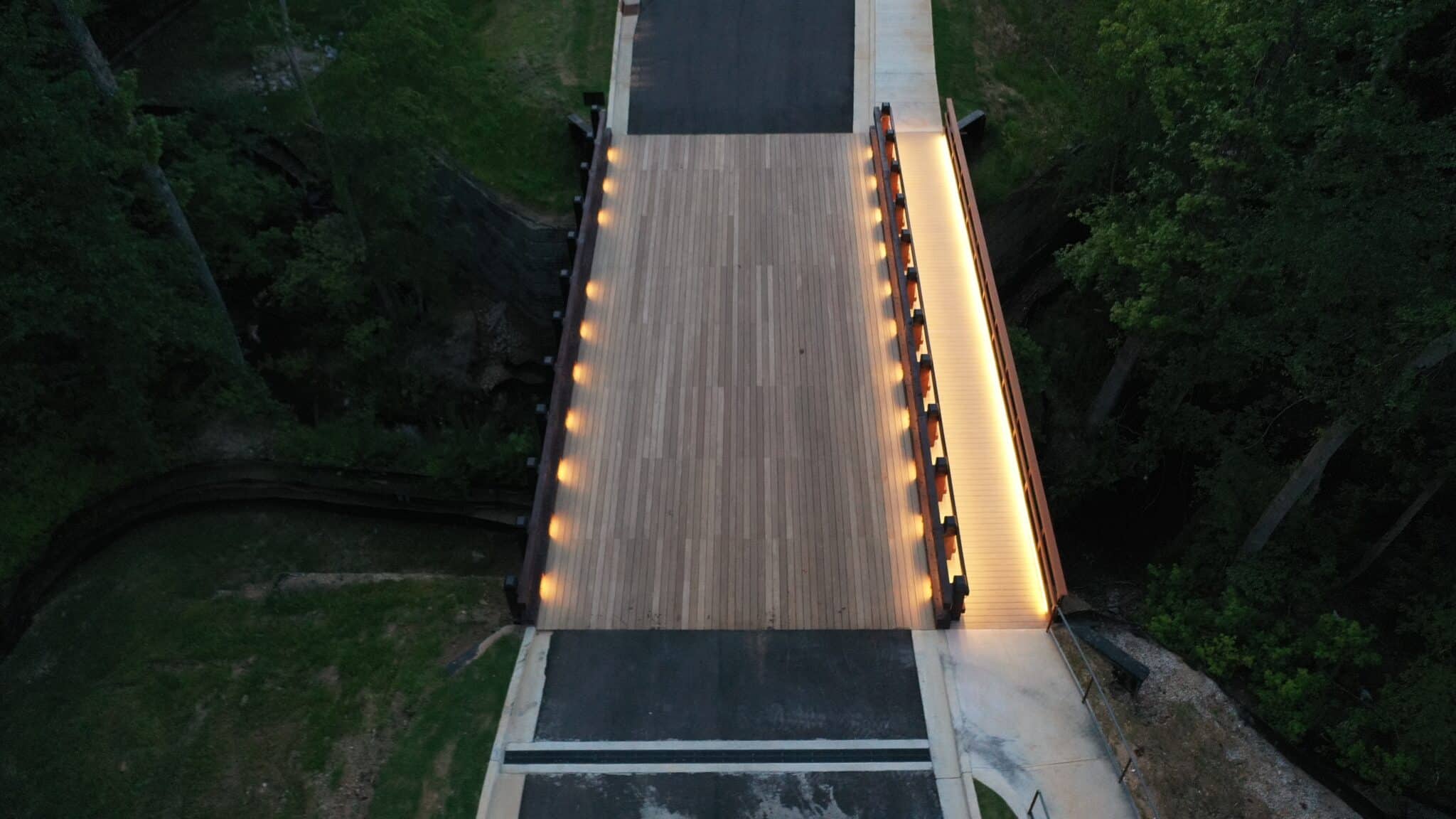
Nighttime Experience. After sunset, the bridge transforms into a softly illuminated promenade. Lighting is conceived to support safety and wayfinding while protecting the night sky. Low-glare fixtures, thoughtfully shielded, define edges and transitions without overwhelming the senses. The water's surface picks up gentle highlights, and the passing silhouette of a cart or evening walker becomes part of the scene. Residents experience the bridge as a safe, inviting path for stargazing strolls and post-dinner rides, reinforcing the resort lifestyle that makes Esplanade Lake Club distinctive.
Landscape Continuity. Planting at approaches is curated to frame views, not block them. Native and adaptive species provide seasonal interest and habitat value while supporting soil stability. The bridge's abutments and transitions are detailed to avoid hard visual breaks: materials step down, lines soften, and the crossing appears to settle naturally into the land. This continuity helps the structure feel like a long-standing part of the community, even when freshly completed.
Edges, Overlooks, & Moments. Small expansions or widened bays at select points can create impromptu overlooks--micro-places where neighbors pause for a photo, a conversation, or a quiet moment. Handrail profiles at these points favor leaning and resting, inviting people to linger. These experiential "moments" transform a required piece of infrastructure into a place of memory.
Acoustic Calm. Timber's materiality contributes to a quieter crossing, absorbing and dispersing sound more softly than many harder surfaces. The result is an auditory environment that feels less mechanical and more organic--important in residential settings where quality of life is paramount.
Architectural Alignment. The bridge's aesthetic language resonates with the community's homes, amenities, and waterfront features. It neither mimics nor competes; instead, it complements, creating a thread that ties neighborhoods and lakefronts into a cohesive whole. Subtle echoes--such as the horizontal emphasis of rails in conversation with contemporary facades--reinforce a shared design DNA.
Delivering A Masterpiece In Timber Bridge Design & Construction
In crafting the timber bridge at Esplanade Lake Club, York Bridge Concepts has not only delivered a masterpiece of engineering and design but has also contributed to the creation of a truly exceptional living environment. With its seamless integration of functionality, aesthetics, and sustainability, this bridge stands as a testament to the power of collaboration and innovation in shaping the communities of tomorrow.
Operations, Stewardship, & Long-Term Value
A great bridge is measured not only by its first day but by its thousandth. YBC's stewardship mindset begins at design and continues through operation, making inspection, care, and renewal intuitive for the community.
BridgeCare™ Maintenance Philosophy. Proactive care protects appearance and performance. Routine walk-throughs check fastener tightness, coating integrity, drainage pathways, and deck traction. Periodic cleaning keeps surfaces free of organic buildup, and scheduled recoating at manufacturer-recommended intervals preserves color and protection. These tasks are predictable, budget-able, and aligned with community operations.
Life-Cycle Economics. By aligning design, materials, and maintenance from the start, YBC helps communities plan for total cost of ownership rather than chasing unpredictable fixes. Thoughtful detailing reduces water traps and points of premature wear, while robust hardware and protective systems extend the intervals between major interventions. The outcome is a bridge that looks and feels premium while delivering responsible long-term economics.
Safety Over Time. As communities evolve, usage patterns can shift. The bridge's multi-modal layout anticipates change, providing clear separation that remains legible as traffic ebbs and flows. Night lighting remains calibrated for visibility without glare, and the open handrail language preserves oversight and defensible space, contributing to a sense of security.
Environmental Performance. Timber stores carbon throughout its service life, and the bridge's construction methods help minimize site disturbance. Over time, healthy vegetation around the crossing supports shoreline stability and habitat value, while the structure's small visual footprint keeps the natural environment front and center. Stewardship is not an add-on; it's integrated into the crossing's DNA.
Community Identity & Daily Joy. Perhaps the most enduring value is the simplest: everyday delight. The bridge's warm materiality, quiet acoustics, and graceful lines make routine trips feel like moments of leisure. Sunrises are framed by rails that invite a pause; afternoons unfold as neighbors roll by on carts; evenings glow softly across the water. The bridge doesn't just connect two points on a map--it connects people to their place.
All Feature Projects
What's Best: A Culvert Or A Timber Bridge?
What Is The Best Span Type For My Project?
Which Load Capacity I Need?
How Do I Cross An Environmentally Sensitive Area?
How Do I Create A Landmark?
How Long Does A Timber Bridge Last?
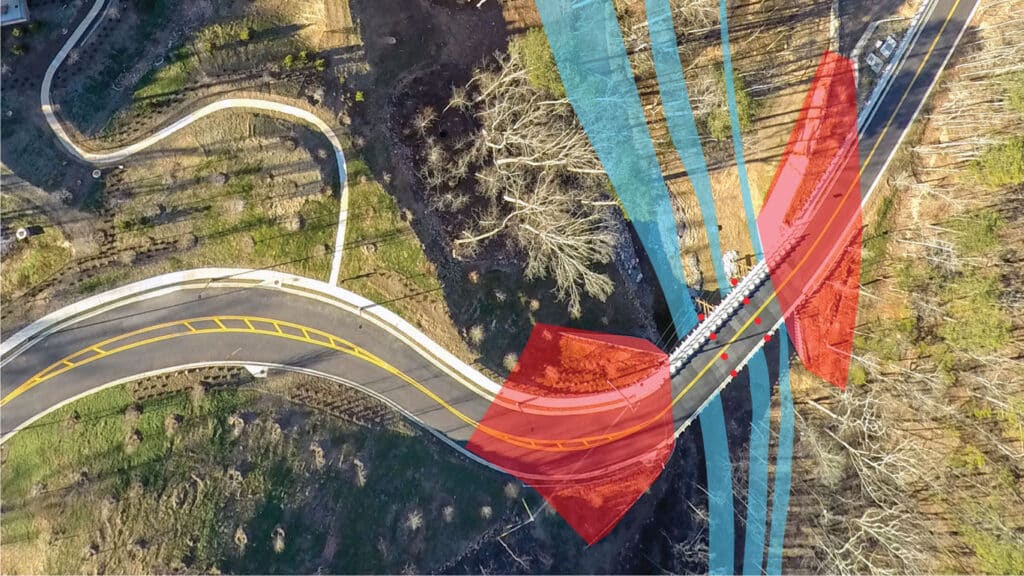
Culvert Or Bridge
If you're considering using a culvert for your crossing project. Click below to understand the best fit for your project.
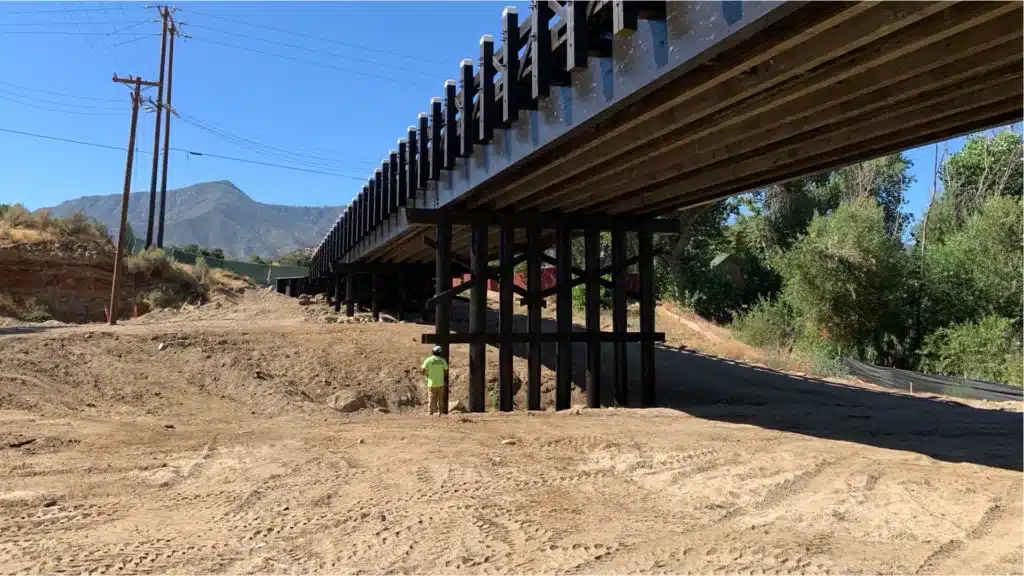
Spanning Solutions
Spanning a crossing is one of the most important aspects of your crossing project. Find the best solution for your crossing needs.
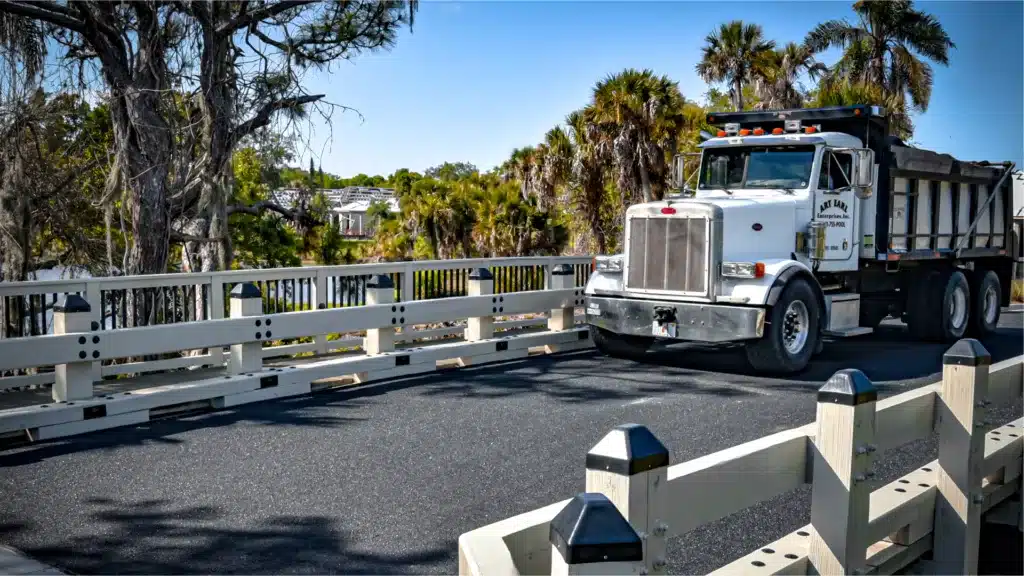
Uses & Capacities
The load capacity of a timber bridge may surprise you. See specs for different loads and uses that will help your decision-making process.