YOUR LEADING NATIONAL TIMBER BRIDGE BUILDER
Crafting Bespoke Masterpieces since 1985
York Bridge Concepts (YBC), the premier leader in timber bridge design and construction. With four decades of experience, we specialize in designing and building customized timber bridges that enhance natural surroundings while offering unparalleled durability and craftsmanship. Our solutions are trusted nationwide, from small pedestrian crossings to expansive vehicular bridges. Whether you are seeking a solution for an environmentally sensitive area or require a cost-effective alternative to conventional bridges, YBC delivers.
Why York Bridge Concepts Is Your Choice For Your Next Timber Bridge Project Near Me
At YBC, we are not just builders—we are pioneers in the timber bridge industry. Our design-build process ensures a seamless experience from start to finish. We control every aspect of your project, from concept to final construction, allowing for enhanced creativity, time savings, and cost-efficiency. Here’s what sets us apart:
- Complete Turnkey Solutions: We manage every phase of your bridge project, including design, engineering, permitting, and construction.
- Environmental Responsibility: Our bridges blend seamlessly with their natural surroundings, and we prioritize sustainability in materials and practices.
- Custom Designs for Every Need: No two sites are the same, and our team specializes in developing custom solutions tailored to your unique needs.


Design-Build Timber Bridge Expertise
The heart of York Bridge Concepts lies in our design-build approach. We streamline your project by managing both the design and construction under one roof, ensuring exceptional communication, fewer delays, and maximum cost control.
The Design-Build Process
1. Consultation and Feasibility
Every project starts with an in-depth analysis of your needs. Our team evaluates environmental conditions, site challenges, and your long-term vision.
2. Innovative Bridge Design
YBC’s design team works collaboratively to create a bridge that harmonizes with the environment while meeting all technical specifications. Our expertise spans vehicular, pedestrian, equestrian, and more specialized types of bridges.
3. Engineering & Drawings
Our in-house engineering capabilities ensure that every bridge design meets state and federal safety standards. We also provide drawings to assist you with the permitting process to guarantee a smooth timeline.
4. Precision Construction
Once your design is finalized, YBC’s skilled construction team brings the vision to life. Using the highest quality timber materials, we ensure the longevity and beauty of your bridge.
Through this integrated process, we deliver bridges that not only last but become iconic landmarks in their environments.
Timber Bridge Builder near Me by York Bridge Concepts
Across the Nation: From Florida to California & Beyond
York Bridge Concepts has constructed timber bridges across a range of terrains and applications. Each project is a testament to our craftsmanship and expertise. Here are just a few examples of our work across the United States:

Florida: Mandalay
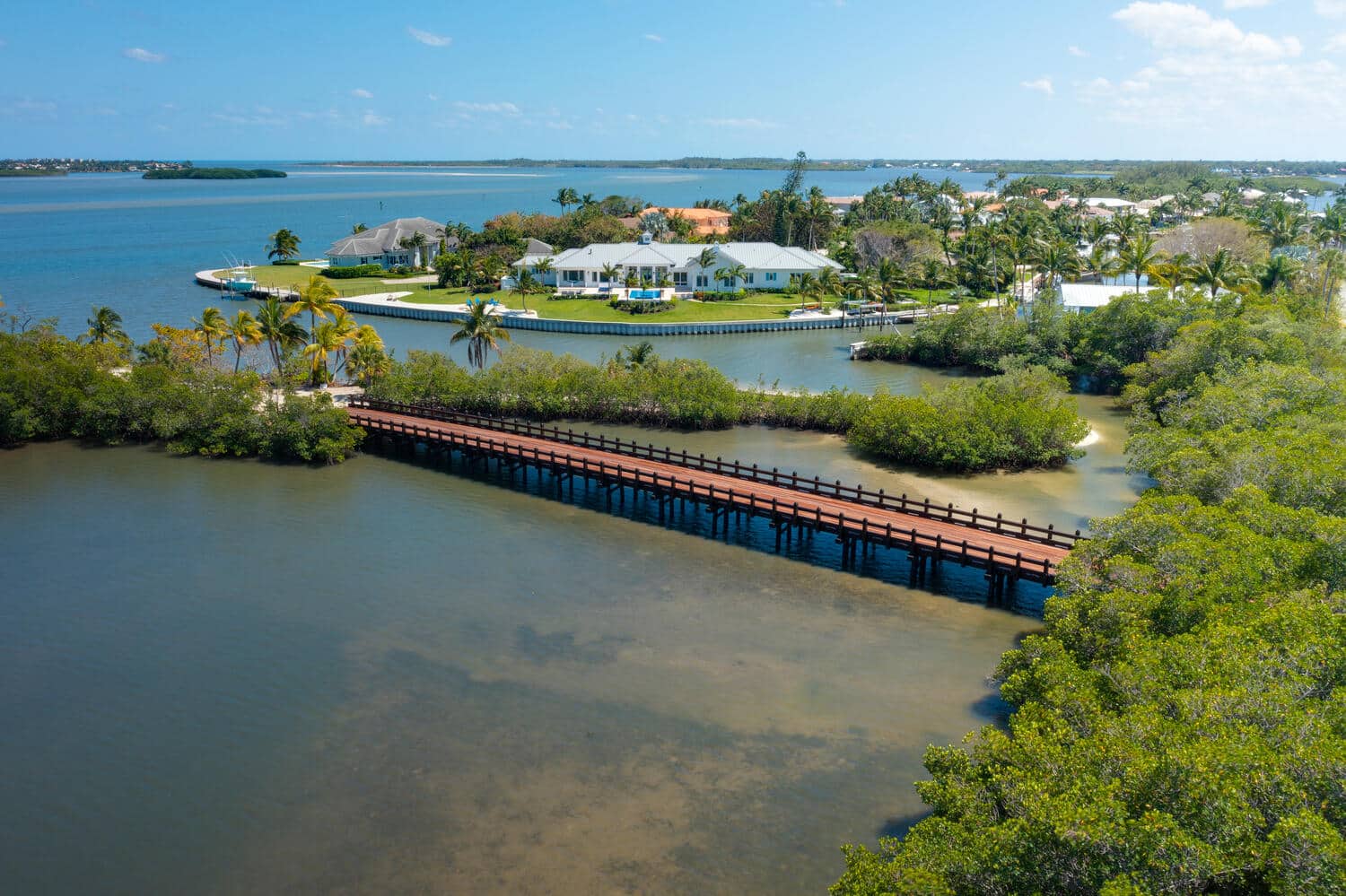
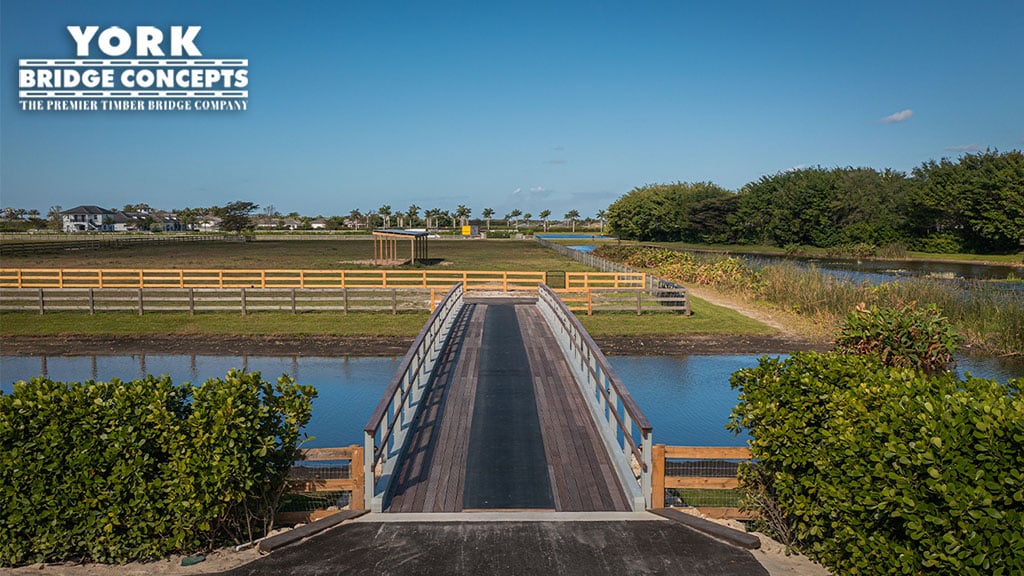
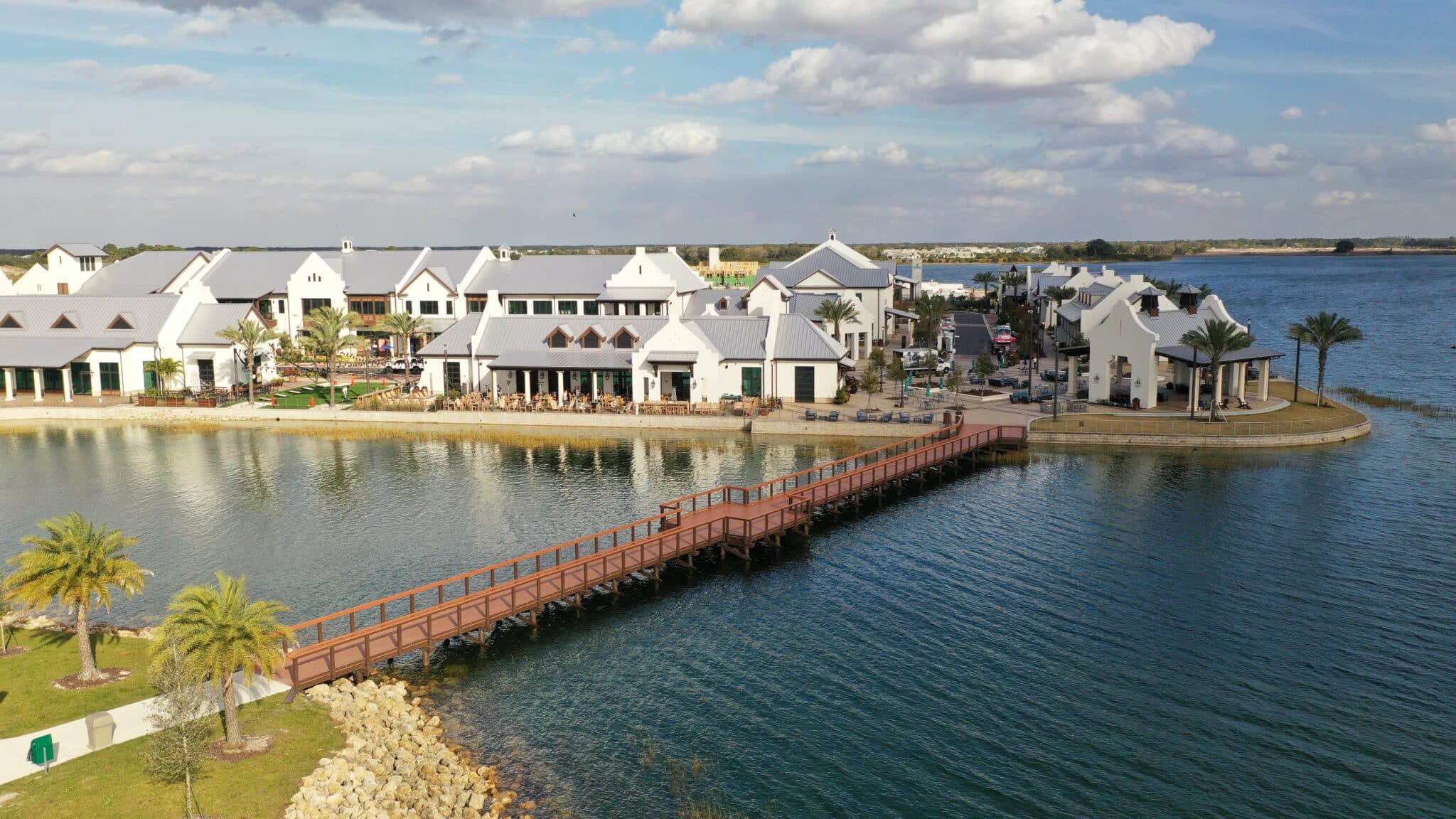
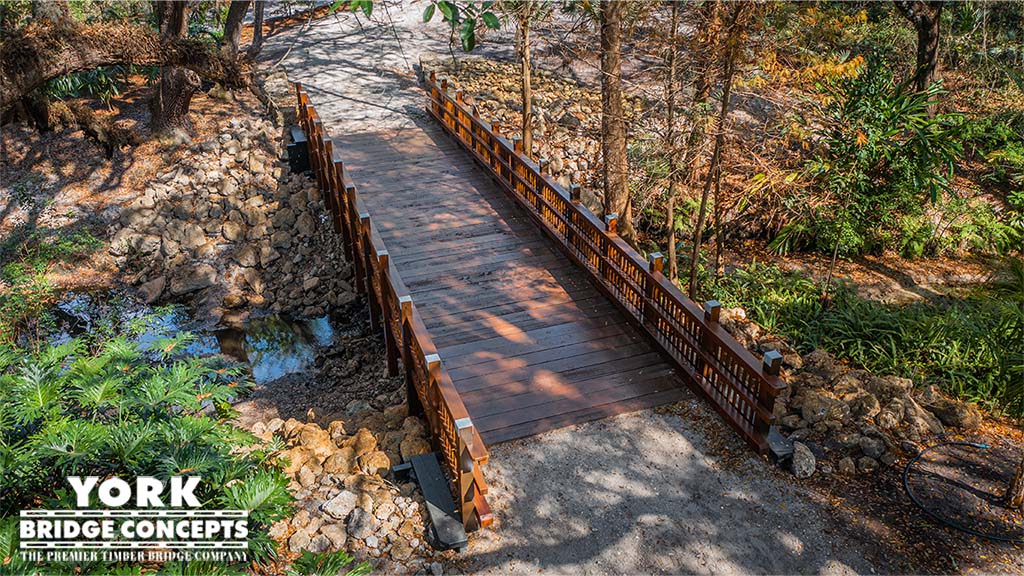
In the heart of the South Florida, YBC designed and constructed a timber pedestrian bridge to enhance visitor access while preserving the fragile ecosystem. Built with environmental sensitivity in mind, this bridge blends into its surroundings and minimizes its footprint in this protected area.
Texas: Willow Park
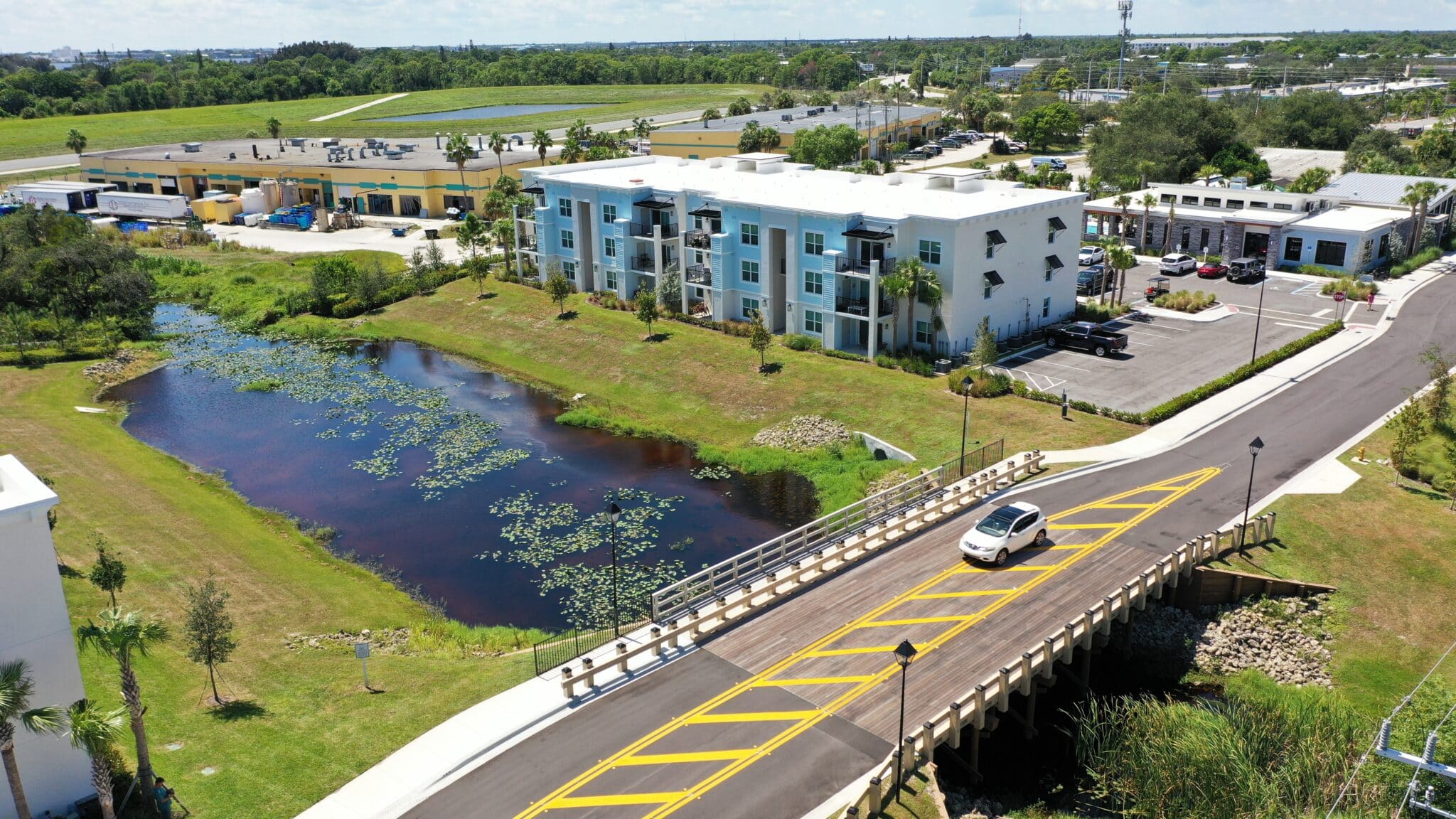
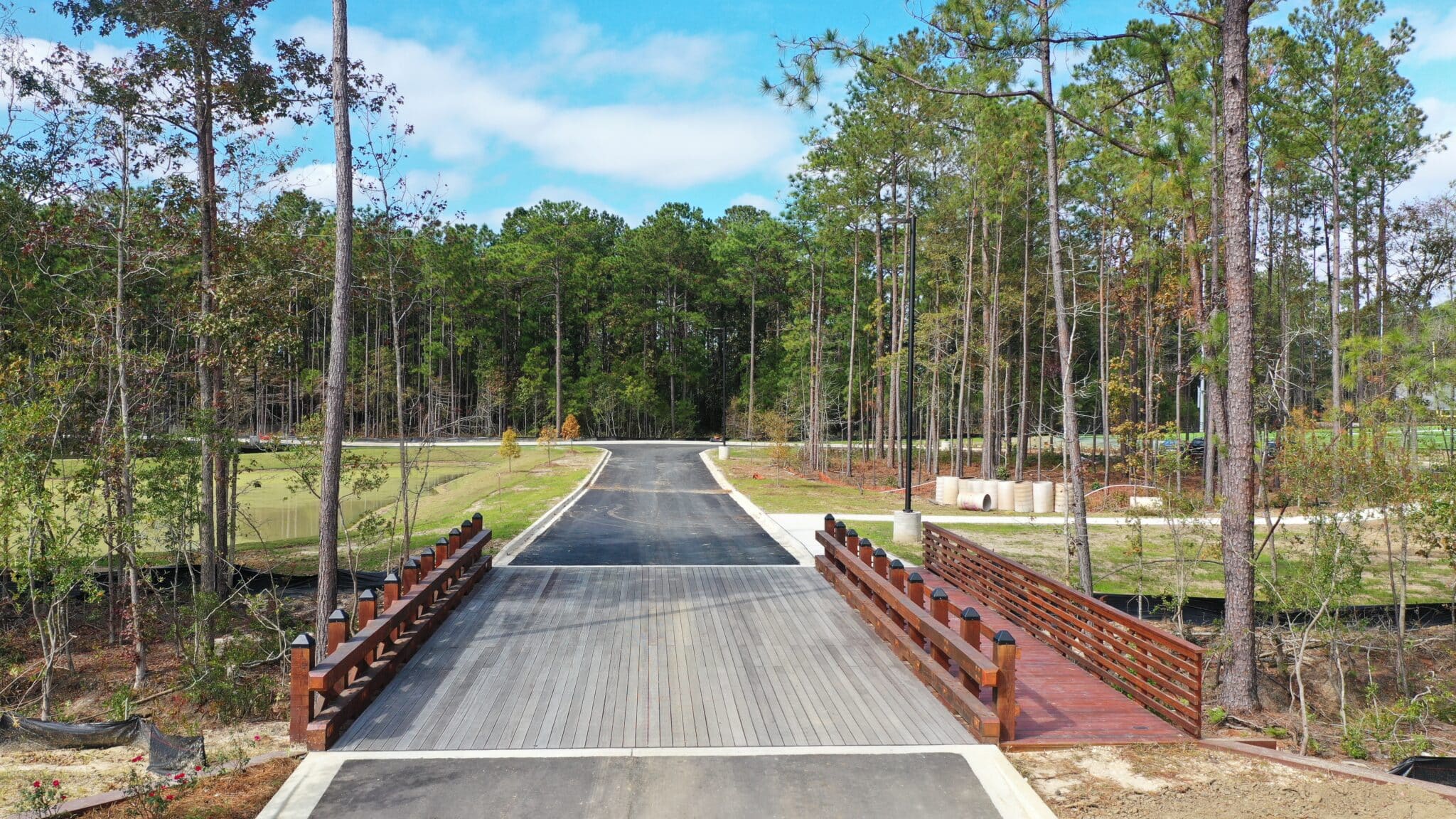
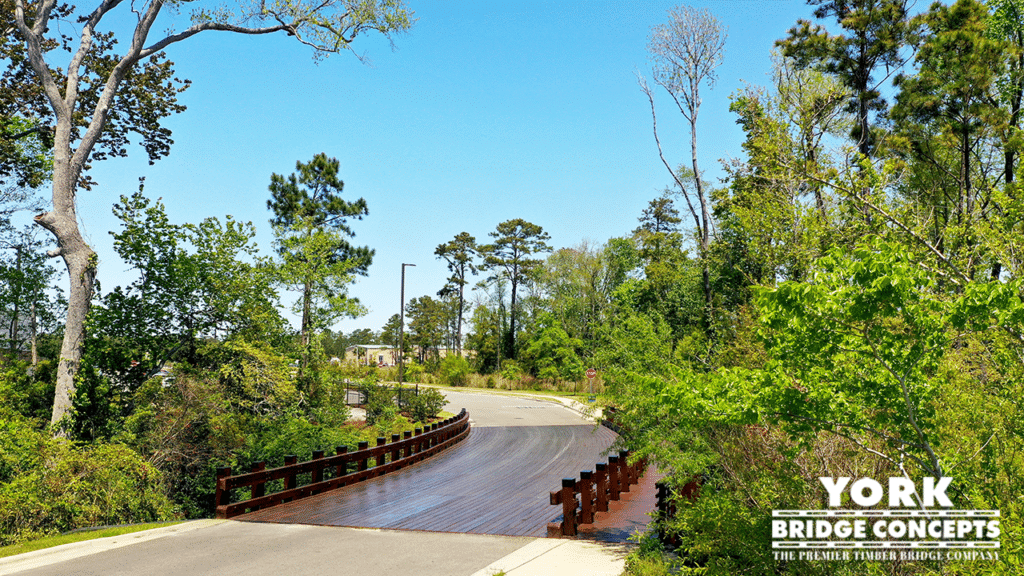
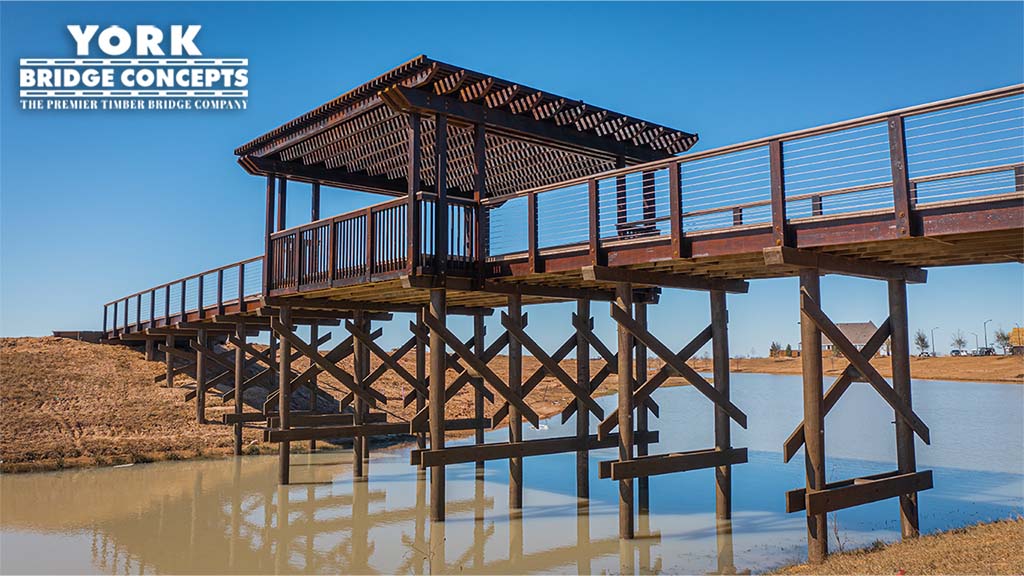
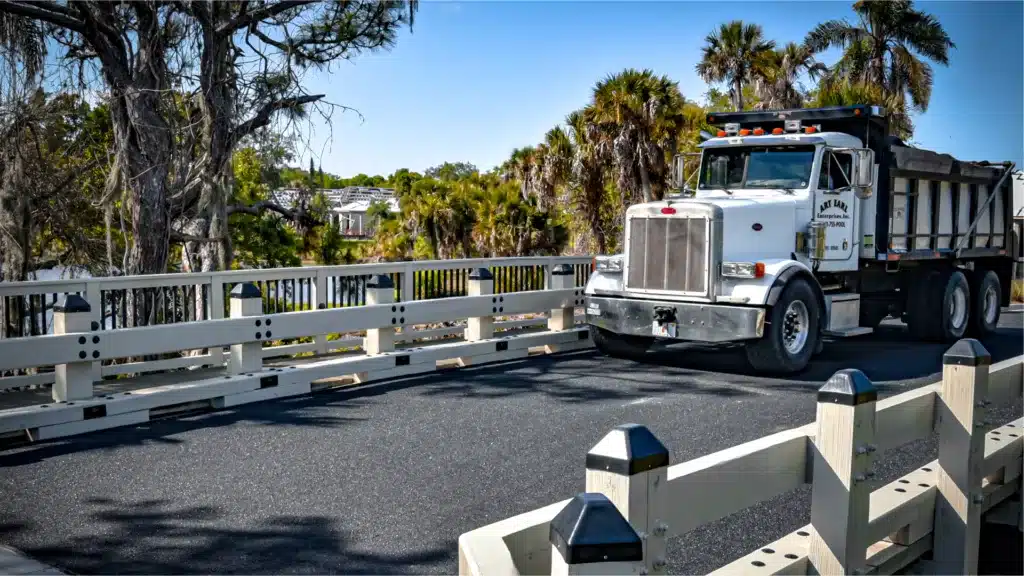
YBC completed a vehicular timber bridge for the Willow Park community in Texas, delivering a custom solution for high-traffic vehicular use. The design incorporated YBC's Legacy Trim, complete with color matched coatings to protect against the harsh Texan climate.
California: Thousand Trails
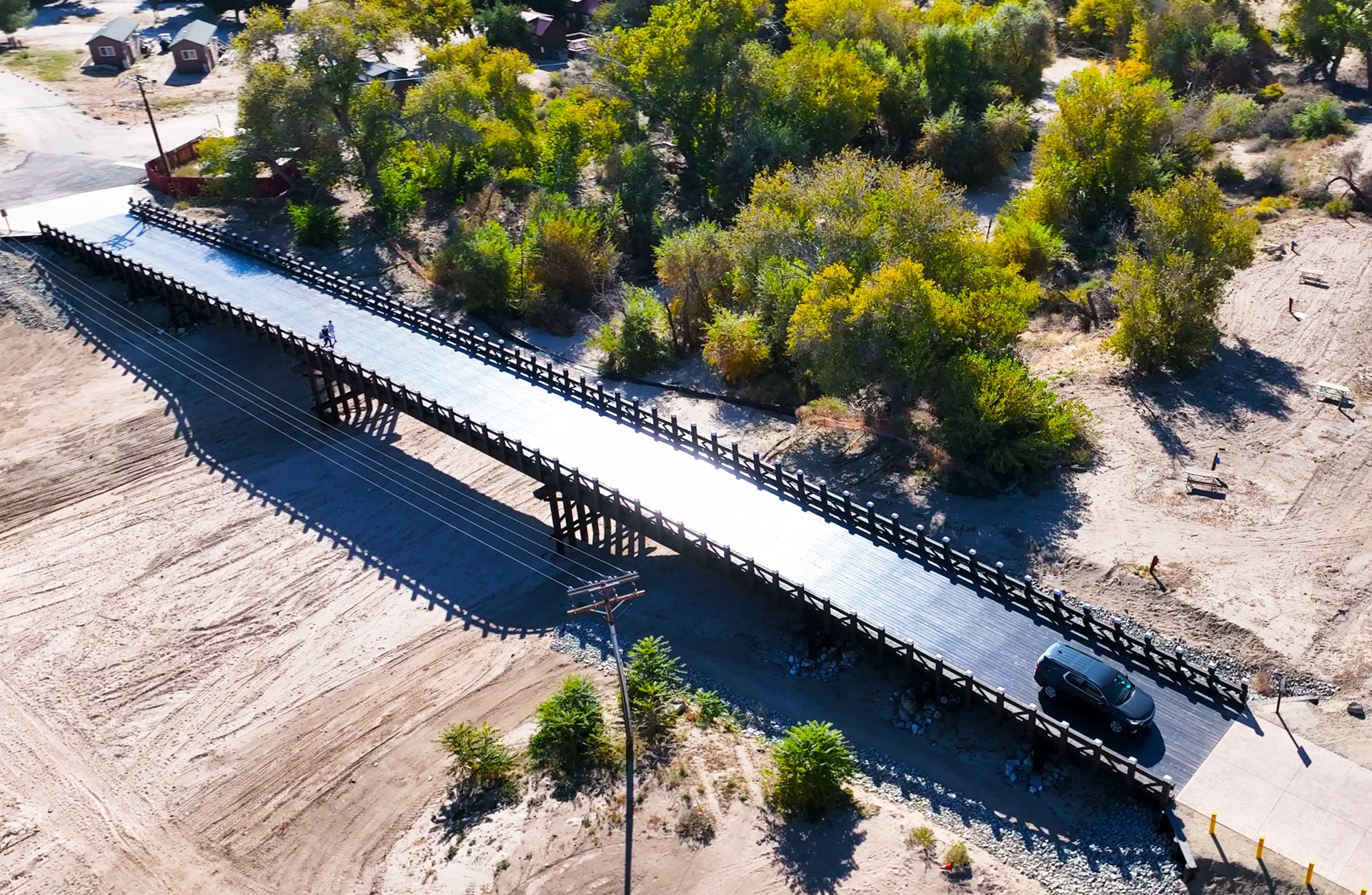
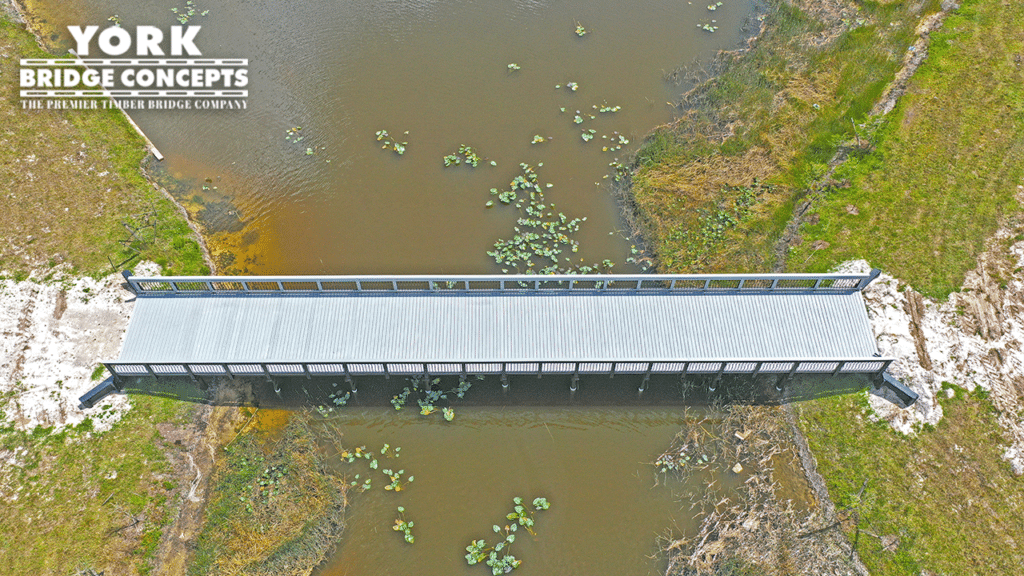
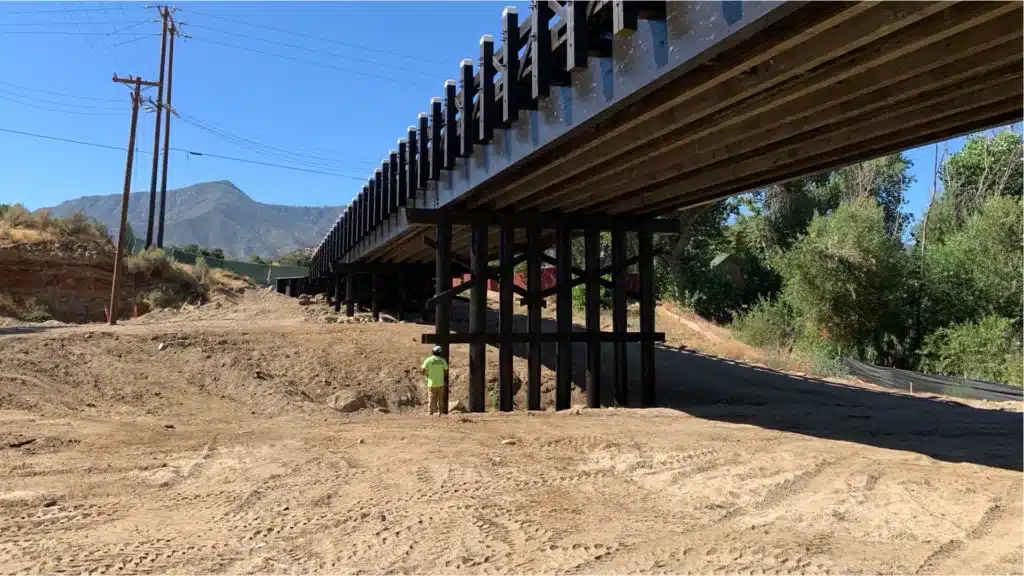
In a project set within a RV park, YBC constructed a multiple long-span timber vehicular bridge over a dry river bed, to provide access after a culvert failed from flooding. Utilizing YBC's Sustainable Construction processes the client was able to easily permit the bridge that protects local wildlife. The timber design not only offers strength but also respects the natural beauty of the park.
New York: Voorheesville
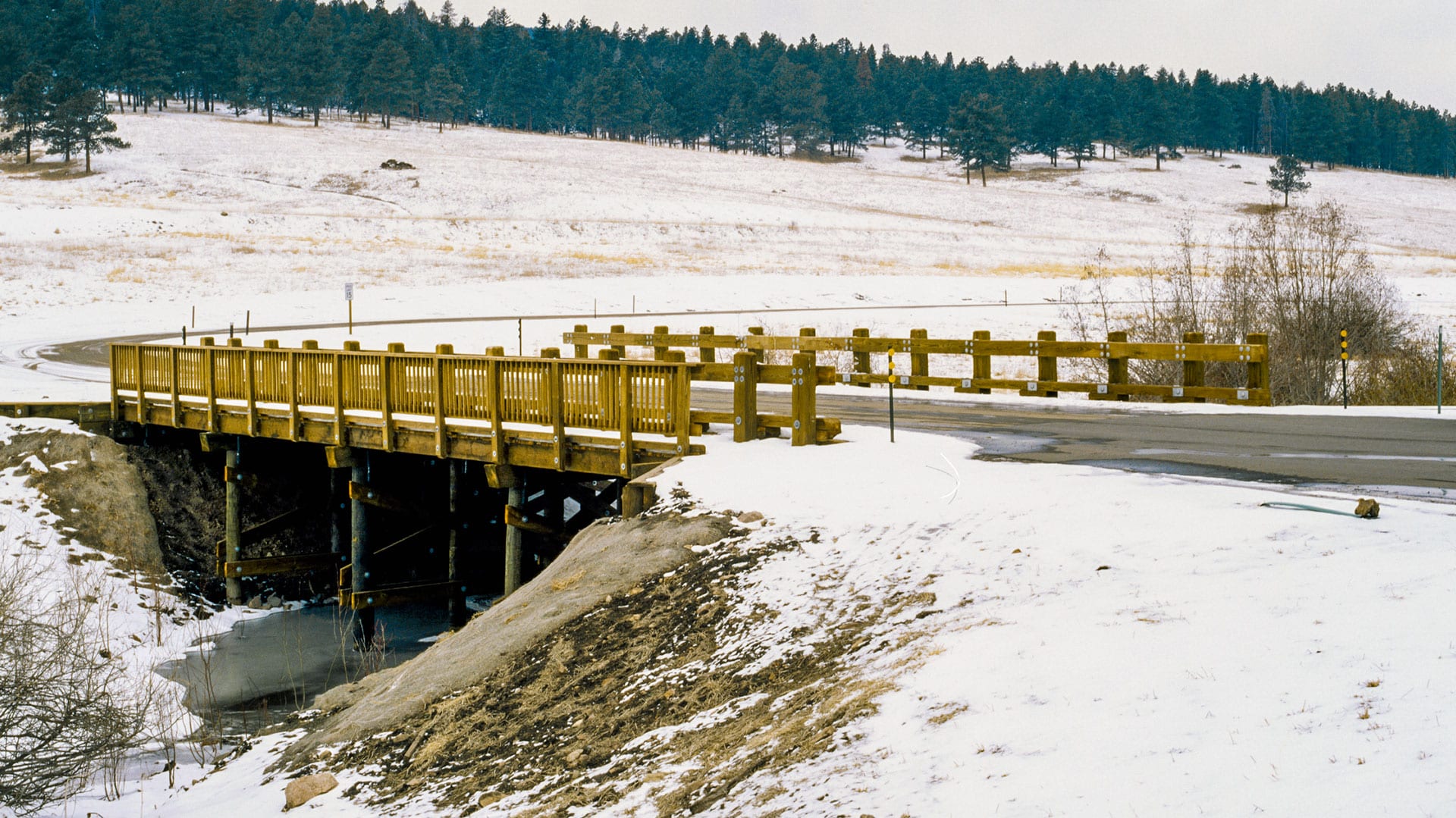
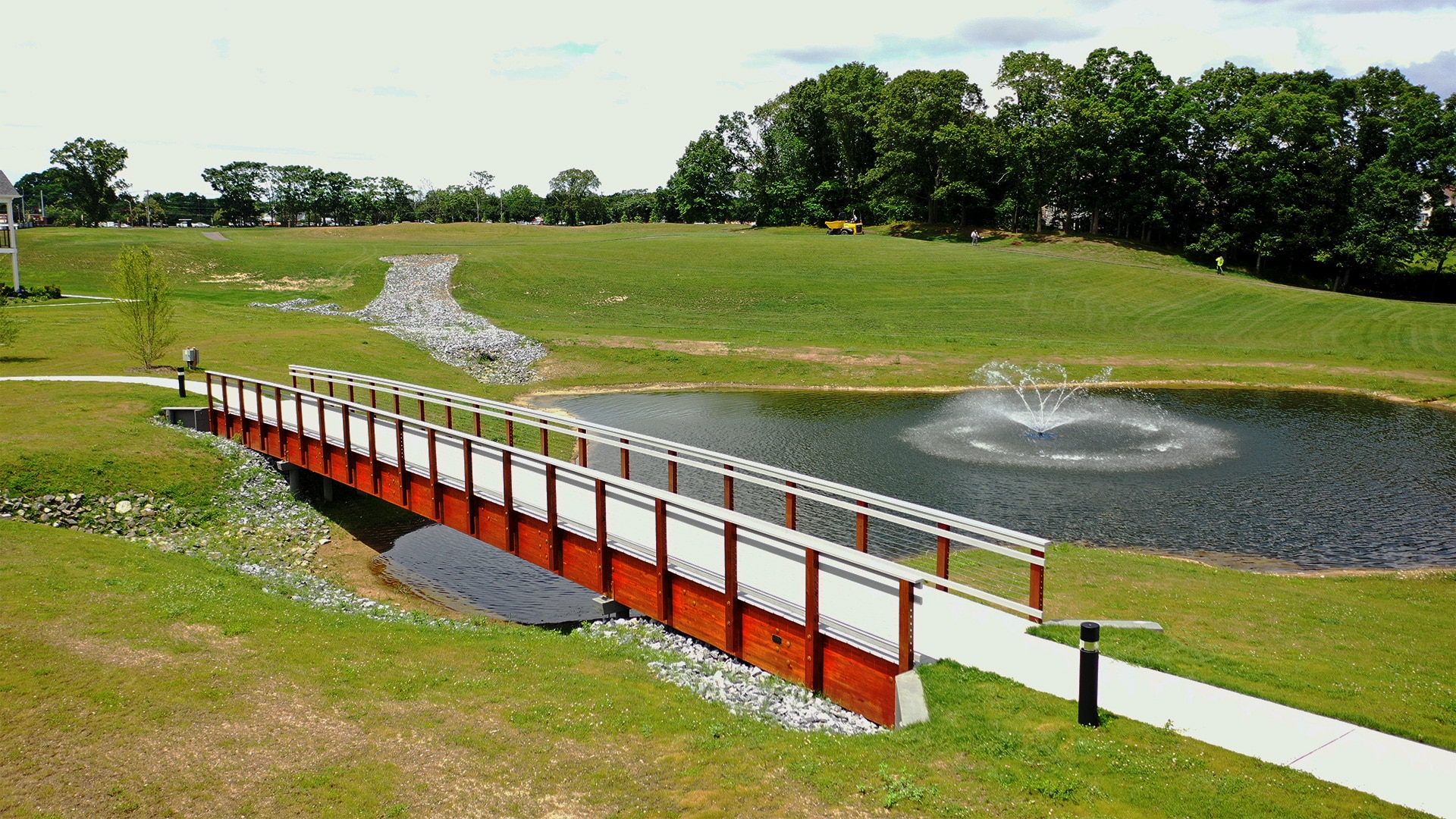
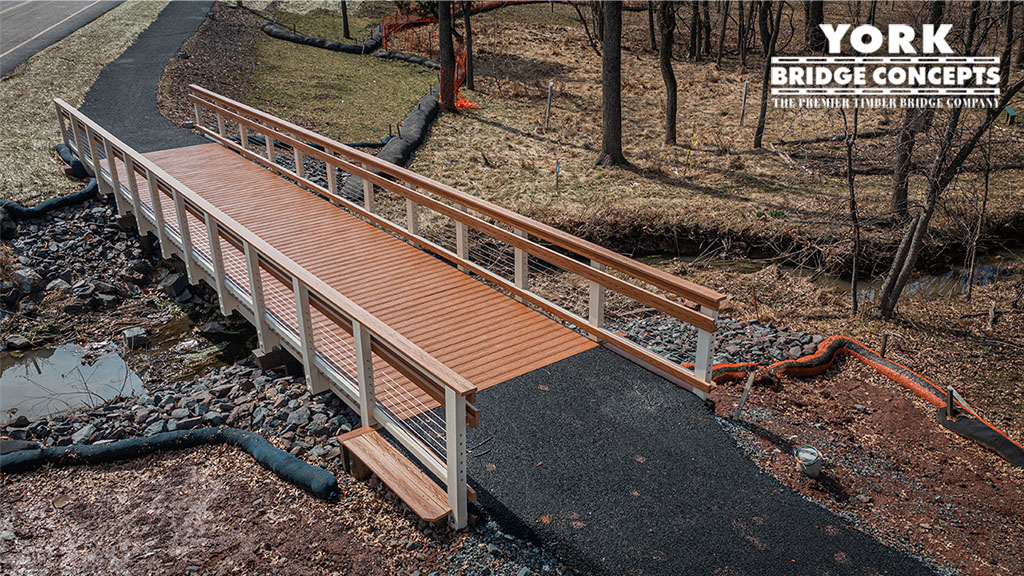
Spanning a creek, YBC constructed a timber free-span pedestrian bridge that not only helped provide necessary access for faculty, students, & guests, but preserved the natural flow of a pristine tributary. The result? A cost-effective and aesthetically pleasing solution that protects the local eco-system.
Making The Right Choice: Culvert vs. Timber Bridge
When deciding between a culvert or a timber bridge for your project, it’s essential to understand the pros and cons of each solution. At YBC, we often recommend timber bridges due to their numerous benefits, particularly for environmentally sensitive areas. Here’s a breakdown of each option:
Timber Bridge
Best for Natural Aesthetics:
Timber bridges offer a warm, organic look that blends into natural surroundings. YBC timber bridges can be fully customized to meet your architectural aesthetic vision.
Environmentally Friendly:
Timber is a sustainable and renewable resource. With YBC's Deck-Level Construction methods there is minimal disturbance to the environment, which is ideal for pristine wetlands and waterways.
Long-Term Durability
A YBC Design-Built bridge has a design life-span of over 75 years. With our upgraded trim levels you will have a timber bridge that will last for generations, providing strength and longevity.
Culvert
Perceived Less-expensive:
Culverts are in many cases a lower-cost solution for short spans. Conversely, when you factor in added materials and permitting the cost can quickly rise to be more expensive than a timber bridge option.
Hydraulic Restriction:
Culverts can restrict waterflow, and sometimes create a barrier for aquatic life down stream. In flooding situations water can flow over and result in failure of culvert systems. This is where a timber bridge option is the best solution.
Get Started Today
Custom Spanning Solutions For Every Project
YBC offers a range of spanning solutions tailored to your specific site conditions. From pedestrian crossings to large vehicular bridges, our team has the expertise to span any obstacle. Here are some of the solutions we offer:
Repetitive Span Bridges
This span type is built on a series of equally spaced pile bent foundations. Repetitive spans can be built to any length to span and is ideal for Deck-Level Construction. They are quick to install and cost-effective.
Short Span Bridges
Ideal for parks, residential communities, or rural roads, these bridges range between 10 to 50 feet in length and are typically used for light traffic or pedestrian use. They are quick to install and cost-effective.
Free Span Bridges
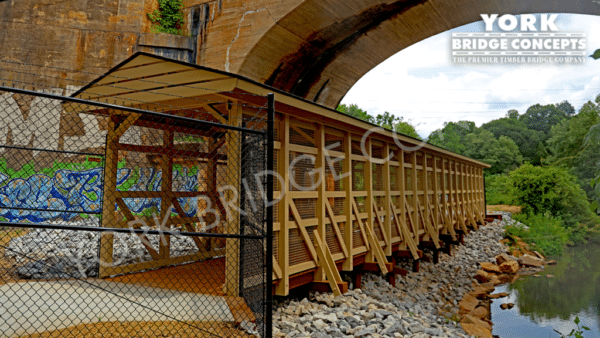
A single span built with Glue Laminated Timber (Glulam) Beams between two abutments. This design gives the maximum clearance underneath the bridge.
Multiple Span Bridges
This design is uses one longer free span, usually over a channel with shorter repetitive span approaches. This can be used with any combination of spans listed above.
Multiple Long Span Bridges
A series of spans built with Glue Laminated Timber (Glulam) beams on varying or evenly spaced pile bent foundations between abutments. These span types are typically used for increased heights or lengths.
Get Started Today
Timber Bridges for Environmentally Sensitive Areas
Environmental protection is at the forefront of every YBC project. Timber bridges are an ideal solution for projects located in environmentally sensitive areas—such as wetlands, protected forests, and wildlife habitats—due to their low impact on the surrounding ecosystem. Here’s why timber is the best choice for green infrastructure:
Minimal Impact On Surroundings
YBC's Sustainable Construction technique creates less disruption to the landscape compared to traditional concrete or steel bridges. The lighter materials allow for easier transport to remote areas, reducing the need for large machinery and heavy construction equipment.
Sustainability
Timber is a renewable resource, and YBC sources its materials responsibly, prioritizing sustainability at every step. We also use environmentally friendly treatments to preserve the timber without causing harm to the ecosystem.
Wildlife Preservation
Timber bridges can be designed to accommodate wildlife movement, preventing the disruption of natural habitats. Whether for terrestrial animals or aquatic life, we design bridges that help maintain the integrity of the environment.
Stormwater Management
YBC timber bridges are designed with stormwater management in mind. Our structures allow for proper water flow, preventing flooding while preserving water quality in sensitive areas.
The YBC Difference: Decero™ Design-Engineer-Build
York Bridge Concept's Decero™ Design-Engineer-Build approach is a fully integrated delivery model created specifically for timber bridge work in sensitive environments. Decero means "from zero" --we begin with your site's constraints, your program requirements, and your stakeholders' goals, then design upward with a single, cohesive vision. Because one team carries design intent through engineering, permitting support, fabrication, and field construction, you avoid the hand-offs that typically cause cost creep and schedule slippage. The result is a bridge that reflects the spirit of place, meets the technical demands of your authority having jurisdiction (AHJ), and stays on budget.
What this looks like in practice: early constructability reviews, access planning that protects wetlands and tree canopies, material selections matched to climate and unsafe, and value-engineering that strengthens long-term performance without compromising aesthetics. Our teams manage risk proactively--identifying utilities, easements, drainage paths, and flood conveyance needs--so that construction is predictable and neighbors remain supportive throughout the project.
Engineering Standards, Codes & Loads--Handled Under One Roof
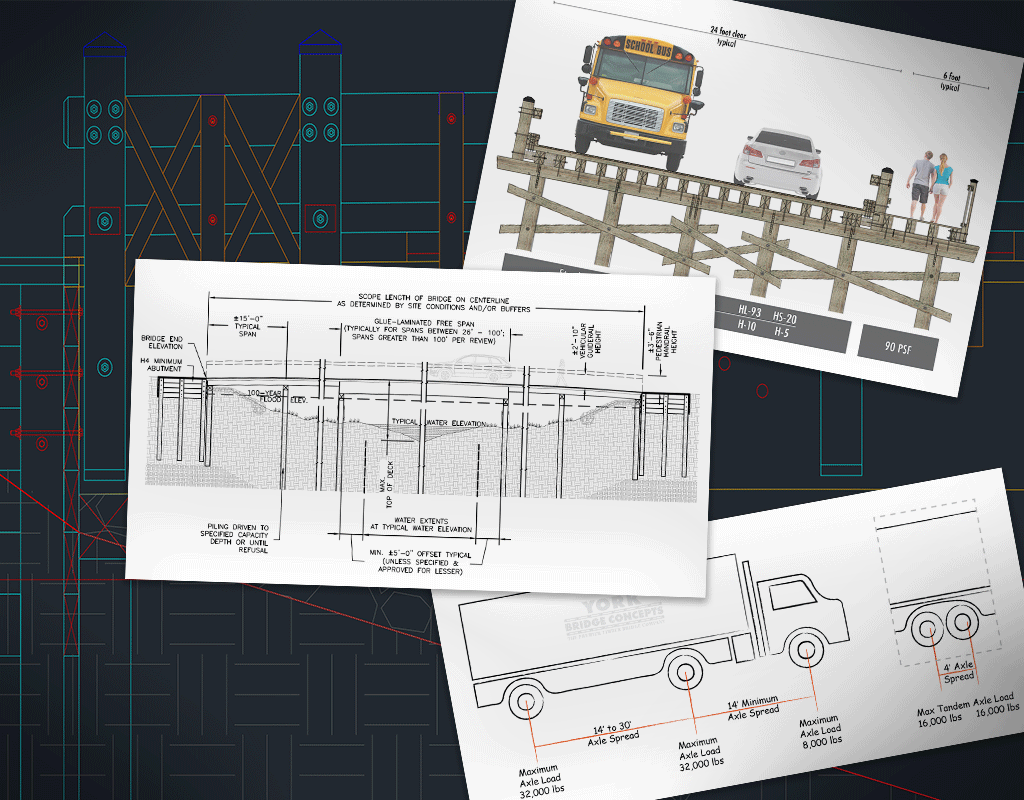
sound engineering is the backbone of every YBC bridge. Our in-house team designs to applicable standards--AASHTO pedestrian load criteria (commonly 85-100 PSF or greater, as required), ADA accessibility guidance for walking surface continuity and approach grades, and vehicular criteria such as HL-93 and specialty capacities (or a legacy HS20-44 when stipulated by the AHJ) for service and emergency access. We coordinate geotechnical recommendations, scour considerations, and freeboard requirements with your civil team to ensure hydraulics and foundation choices work together.
From abutment selection to rail height and infill details, we engineer for the way your bridge will actually be used: daily foot traffic, event surges, maintenance carts, and emergency vehicles where required. Our shop drawings and calculations are prepared with permitting in mind, helping your team move cleanly through reviews.
Materials That Marry With Performance
Timber's warmth is why communities love it; our specifications make sure it lasts. We pair structural Southern Yellow Pine or engineered glulam members with corrosion-resistant hardware, modern wood protection systems, and composite wear surfaces when low maintenance is a priority. Where appropriate, we incorporate tropical hardwood or engineered handrail caps for tactile durability. Color-matched protective coatings and trim systems elevate the architectural finish while shedding water and UV. Every selection is made with lifecycle in mind: low-noise walking comfort, minimal thermal gain, simple cleaning, and components that can be serviced without disrupting a sensitive site.
Foundations & Hydraulics--Respecting Water As A Stakeholder
Creeks, marshes, and lake edges behave differently across seasons. Our designers treat water as a stakeholder, planning spans and foundations that maintain conveyance, reduce backwater effects, and preserve aquatic passage. For repetitive span solutions, we position pile bents with careful attention to channel geometry and flood plain hydraulics; for free-span crossings we use glulam beams or hybrid systems to clear the channel entirely. The outcome is a bridge that works with storm cycles rather than against them, protecting banks, plant communities, and downstream habitats.
Deck-Level (Top-Down) Construction--Built From Above To Protect Below
Sensitive sites demand a light touch. YBC's Deck-Level (Top-Down) Construction minimizes ground disturbance by staging from the structure itself as it advances. Instead of heavy equipment crisscrossing wetlands, we sequence foundations, caps, stringers, and decking from controlled work platforms. This method reduces compaction, protects root zones, keeps silt out of waterways, and shortens restoration time after completion. For owners, that means easier permitting, happier neighbors, and a site that looks "undisturbed" far sooner.
Bridge Aesthetics--Legacy Details That Tell A Place-Based Story
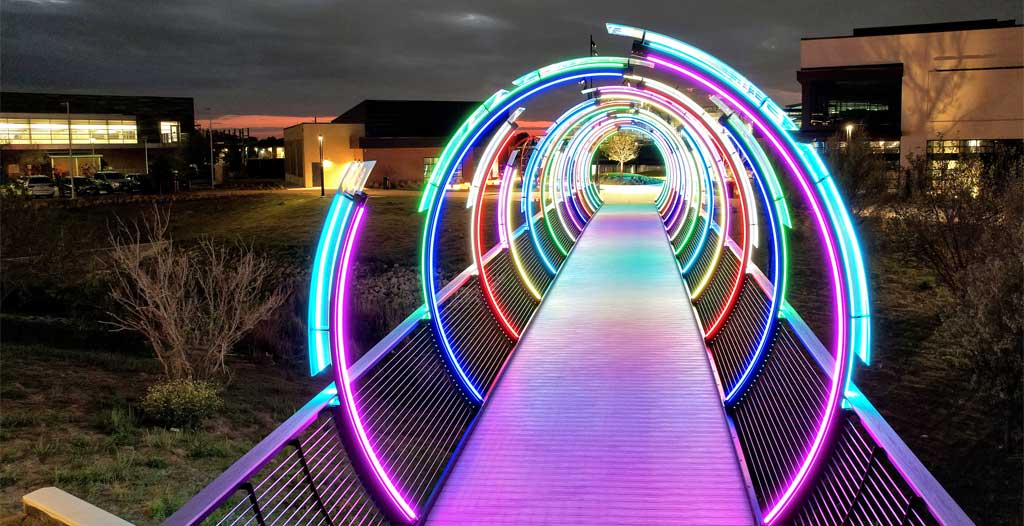
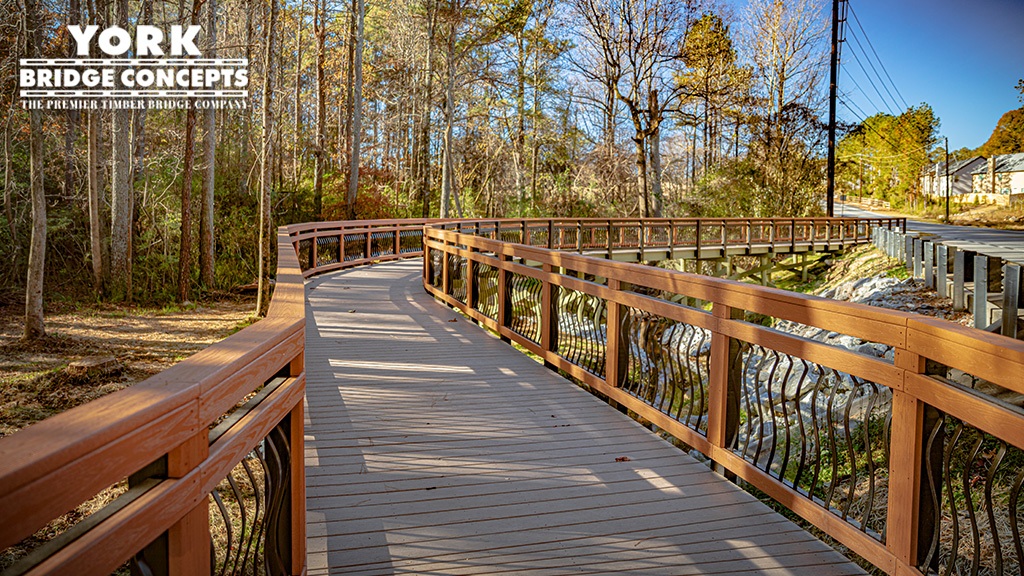
A bridge can be utility--or it can be identity. YBC's trim systems, color palettes, wire-rope handrail inserts, and lighting options allow you to craft a signature look tied to your community brand, park master plan, or resort narrative. Composite decking in cool neutral tones keeps surfaces comfortable underfoot; oil-stained timber shows grain and depth; wire-rope infill preserves long views to water and wildlife. The design reads as timeless, never trendy--crucial for infrastructure that will represent you for decades.
Sustainability beyond The Buzzwords
Timber stores carbon captured from the atmosphere; building with it keeps that carbon sequestered for the service life of the bridge. Compared to steel or concrete superstructures, timber's embodied energy is typically lower, and our construction approach reduces site emissions by limiting heavy ground operations. We source responsibly, design for longevity, and specify finishes with reduced environmental impact where feasible. Stormwater strategies--clear-span where needed, intelligent pile spacing, and thoughtful approach grading--protect water quality while keeping the landscape's hydrology intact.
Lifecycle, Maintenance & BridgeCare™ Support
Great bridges are designed not just to be built--but to be cared for effortlessly. We provide owner training, routine inspection guidelines, and maintenance planning that fits your operations. With a proactive BridgeCare™ strategy, typical tasks include periodic fastener checks, cleaning, and touch-ups to protective coatings in high-exposure areas. Composite wear surfaces and robust coatings stretch intervals between service windows. For many owners, the maintenance burden is lighter than expected, especially compared to culverts that frequently silt in and require costly excavation to recover capacity.
Access, Safety & Comfort For All Users
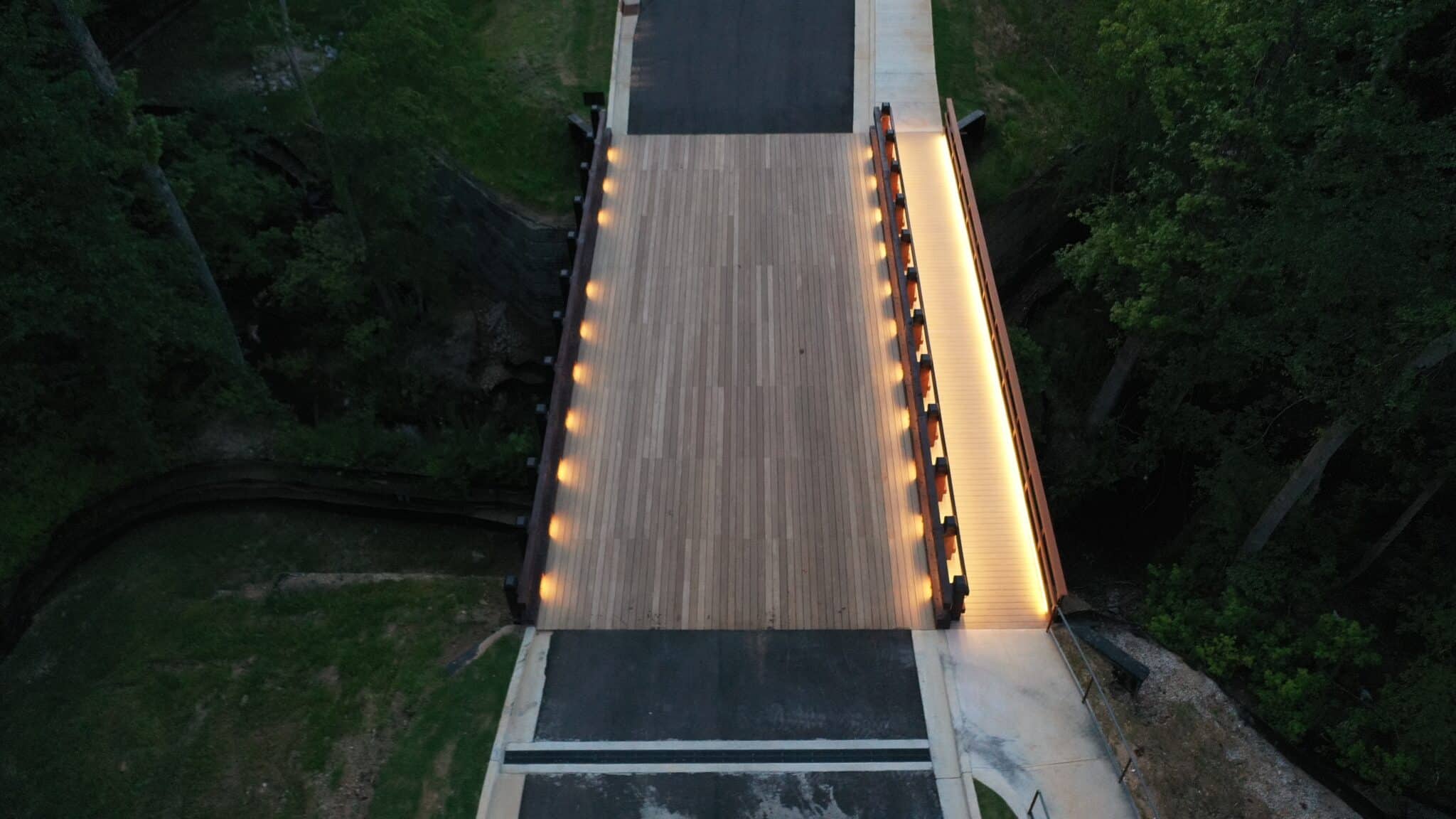
People feel safe on a well-designed bridge long before they read a spec sheet. Clear approach transitions, consistent rail heights, comfortable handholds, slip-resistant walking surfaces, and calm visual lines all contribute to intuitive wayfinding and reduced conflict between user groups. Where pedestrians and carts share space, we incorporate sightline-friendly rail infill and optional lane delineation; in public parks, we can design rail picket spacing and toe-board elements appropriate for family use near water. Lighting--ambient or handrail-integrated--extends usable hours without glare or wildlife disruption.
Industries & Settings We Serve
- Municipal Parks & Trails: Pedestrian loops, nature overlooks, lake circuits, and ADA-accessible experiences.
- Residential Communities: Entries, amenity connections, and neighborhood trail networks that boost real estate value and cohesion.
- Resorts & Hospitality: Quiet, brand-true crossings that elevate the guest experience and create signature moments.
- Golf & Recreation: Low-profile wetlands crossings, course circulation, and spectator routing with minimal environmental footprint.
- Utilities & Conservation: Access for operations across waterways without constricting habitat or hydrology.
Extended Project Spotlights--Across The Nation
Florida: Mandalay--Bringing People To Water Without Disturbing It
In a sensitive South Florida waterfront setting, the goal wasn't just to cross--it was to invite people closer while protecting the shore. YBC delivered a pedestrian bridge that sits lightly on its foundations, with spans and bent spacing designed to maintain tidal flow and fish passage. Composite decking resists humidity and salt-air wear, while wire-rope infill keeps breezes and views unbroken. The bridge is now a favorite stroll route at sunrise and boasts minimal maintenance needs thanks to coatings tuned for coastal UV and moisture exposure.
Texas: Willow Park--A gateway With Everyday Strength
Willow Park needed a dependable vehicular connection that could stand up to hot summers, intense storms, and daily traffic. YBC engineered a multiple-span solution with color-matched Legacy Trim and protective coatings that reflect solar heat and deflect UV. The bridge blends seamlessly with community landscaping, offering curb appeal at the entry while meeting the operational needs of service vehicles. Residents see a beautiful structure; the public works team sees a predictable, serviceable asset.
California: Thousand trails--Resilience After A Failure
When flash flooding compromised an existing culvert, access for RV guests and emergency responders was at risk. YBC replaced the chokepoint with a timber bridge designed for conveyance and clearance, restoring reliable mobility while improving the site's hydraulic performance. The new structure resists debris jams that often plague culverts, and the top-down build limited disturbance to the newly stabilized banks. The lesson: when water shows you how it wants to move, a bridge partner should listen.
New York: Voorheesville--A Clean Span For Clean Water
On a pristine tributary, the mandate was simple: preserve the stream's character. YBC designed a free-span pedestrian bridge with abutments set back from the water's edge to protect the bed and banks. The result is a quiet crossing where the sound of water isn't drowned by footfall noise, and the plant community under the span thrives. For the client, operating costs remain low, water quality remains high, and the community enjoys a graceful structure that frames the landscape.
Culvert vs. Timber Bridge--A Decision Framework You Can Use
If you're weighing options, use this quick framework with your stakeholders:
- Span Need & Conveyance: If flowlines, wildlife passage, or flood conveyance are priorities, a bridge generally outperforms a culvert.
- Environmental Permitting: Where protected waters, wetlands, or riparian buffers are involved, a bridge's low-disturbance footprint helps.
- Lifecycle Costs: Culverts can appear cheaper on day one but may require frequent sediment cleanout or upsizing after storms; bridges avoid many of those recurring costs.
- Community Experience: If you value views, placemaking, and quiet underfoot, timber bridges deliver human-scale charm that pipes and headwalls cannot.
- Schedule Confidence: A single design-build partner reduces hand-offs and surprise scope growth.
Custom Spanning Solutions--How To Choose What's Right
- Repetitive Span Bridges: Best when you need flexible length with quick installation, especially in march or flat wetland settings where pile bents can be placed at consistent intervals.
- Short Span Bridges (10-15 feet): Ideal for pond edges, parklets, and small channel crossings where pedestrian comfort and budget discipline matter most.
- Free-Span Bridges: Use glulam beams between abutments to keep water clear and maintenance simple; great for creeks with sensitive beds or habitat.
- Multiple Long-Span Bridges: When height, view corridors, or flood plains require it, long glulam spans carried on pile bents raise the structure out of harm's way.
Permitting Support Without The Paper Chase
Every Jurisdiction has its own rhythm. We produce the drawings, calculations, and material data that reviewers need, then align our construction narrative with your permit conditions--access routes, staging areas, erosion and sediment control, and restoration. By anticipating reviewer questions (freeboard, scour checks, wildlife passage, and ADA transitions), we help you avoid costly resubmittals.
Quality Assurance From Shop To Site
Our QA/QC program spans material verification, protective treatment checklists, fit-up tolerances, and field inspection hold points. Pre-drilling and hardware kits keep field work efficient; labeled components and sequence plans reduce rework. Before turn-over, we conduct a final walk-through, confirm hardware torques, verify rail heights and openings, and review maintenance expectations with your team.
Accessibility & Universal Design
Accessible approaches, appropriate cross-slopes, smooth surface transitions, and logical wayfinding benefit everyone--not only users with mobility devices. We design approach grades, landing intervals where needed, and rail profiles that offer both security and openness. On popular routes, added width supports two-way passing without conflicts; on overlooks, expanded nodes provide room for strollers and wheelchairs to linger without blocking flow.
Lighting, Signage & Smart Options
Because bridges are civic stages after dusk, we offer low-glare lighting integrated into rails or posts, preserving dark skies and wildlife patterns. Discreet signage can mark length and load where required. For operational awareness, owners may add sensor-based counters to understand usage patterns and plan programming around real data.
Owner Playbook--What To Expect On Day One
- A clean, finished structure with punch-list items resolved.
- As-built documentation and maintenance guidelines tailored to your materials and climate.
- Clear contact pathways for future support, whether that's seasonal check-ups or long-term BridgeCare™ tracking.
Frequently Asked Questions
How long will a YBC timber bridge last?
With modern protection systems, composite wear surfaces where specified, and routine care, YBC bridges are designed for multi-decade service lives--measured in generations, not seasons.
Will timber handle crowd surges for events?
Yes. We design to applicable pedestrian live loads (often 85-100 PSF or as directed by the AHJ) and can increase criteria for event venues.
What about emergency or maintenance vehicles?
When the program requires it, we design for vehicular standards (e.g., HL-93 or legacy HS20-44) and coordinate curb, rail, and approach details accordingly.
How much maintenance is required?
Far less than many assume. Routine cleaning, periodic fastener checks, and coating touch-ups in high-exposure zones are typical. Composite decking further reduces tasks.
Won't timber look worn quickly?
Thoughtful coating systems and trim details minimize weathering. Many owners prefer timber's natural patina; we can tailor finishes to maintain a crisp aesthetic.
How do you protect wetlands during construction?
Our Deck-Level (Top-Down) method stages from the advancing structure, sharply limiting ground equipment and root-zone disturbance.
Are timber bridges cost-effective compared to culverts?
For many sites--especially where culverts trigger expensive hydraulic modeling, upsizing, or repeated sediment removal--a bridge's lifecycle economics are superior.
Can we customize color and trim to match our brand?
Absolutely. Legacy trims, handrail profiles, wire-rope infill, and color palettes can be tuned to align with your architectural language.
Do you work nationwide?
Yes. From Florida to California and beyond, our delivery model scales to diverse climates, terrains, and regulatory environments.
How early should we involve YBC?
The earlier the better. Early input saves time and cost by aligning span concepts, permitting strategy, and access logistics before designs harden.
Programming The Experience--More Than Just A Crossing
A successful bridge is a destination. We help owners think about rest nodes, shaded pauses, interpretive signage, and photo moments that encourage dwell time without crowding the walkway. Overlooks and widened bays can be integrated at key vantage points--bird habitat edges, sunset alignments, or waterfall views--so the structure earns a place on postcards and social feeds.
Resilience & Climate Readiness
Climate patterns are changing; infrastructure must adapt. Our designs account for intensified storm events, floating debris loads, and heat exposure. Composite wear surfaces and reflective coatings moderate heat at mid-day; clear spans and strategic pile spacing reduce the chance of snagging during high water; and detailing prioritizes rapid post-storm inspection and re-opening
Community Engagement & Transparency
Public projects succeed when neighbors feel heard. We support your engagement with explanatory graphics, finish samples, and construction staging narratives that show how access will be maintained and how the site will be protected. This transparency build trusts and smooths the path to groundbreaking.
Total Cost Of Ownership--Seeing The Full Picture
Initial price is only part of the story. Consider permitting success probability, construction disturbance, restoration scope, hydrologic performance, and long-term serviceability. Timber bridges score well across these factors, especially where the landscape is sensitive and aesthetics matter. With YBC's integrated delivery, soft-cost uncertainty drops--and you gain a partner accountable for outcomes.
Your Next Step--A Clear Path Forward
Whether you're early in master planning or ready to permit, YBC will clarity options, budgets, and schedules so decision-makers can move with confidence. We'll develop concepts tailored to your constraints, outline the best span strategy, and map a clean path through approvals and construction.
Timber Bridge Builder Near Me--National Expertise, Local Sensitivity
Wherever your project lives, it deserves a partner who respects the site as much as the schedule. From coastal boardwalks to mountain creeks and community greens, York Bridge Concepts builds bridges that belong--technically sound, environmentally responsible, and unmistakably beautiful.
Create Your Legacy Today
Discover the intersection of strength, durability, and environmental responsibility with York Bridge Concepts. Let's build a bridge to the future together.