

January 14, 2025
Durability & Longevity of Timber Bridges
A bridge is one of the most significant long-term investments a community, developer, municipality, or property owner can make. Beyond aesthetics and functionality, its true value lies in its ability to perform safely and reliably for decades. While timber bridges are sometimes misunderstood as having shorter service lives than steel or concrete, modern engineering, advanced wood preservation technologies, and thoughtful maintenance have transformed timber into one of today’s most durable and sustainable bridge materials.
At York Bridge Concepts (YBC), every bridge is engineered with longevity in mind. Through premium material selection, custom engineering, proprietary Deck-Level (Top-Down) Construction, and preventative maintenance planning, YBC designs timber bridges with an expected 75+ year design lifespan under proper maintenance and inspection programs. Our bridges demonstrate that modern timber infrastructure can deliver exceptional structural performance while preserving the natural beauty of its surroundings.
How Long Does a Timber Bridge Last?
Modern timber bridges are designed to provide decades of dependable service when they are properly engineered, constructed, and maintained.
Several factors influence the lifespan of a timber bridge, including:
- Structural engineering
- Timber species selection
- Pressure treatment and preservation
- Protective coating systems
- Moisture management
- Drainage design
- Construction quality
- Environmental conditions
- Routine inspections
- Preventative maintenance
Today’s engineered timber bridges are significantly different from historic untreated wood structures. Advances in preservative treatments, engineered wood products, drainage detailing, and maintenance practices allow timber bridges to remain in service for many decades. Federal research has shown that properly designed, treated, and maintained timber bridge components can achieve service lives of 50 years or longer, with many bridges remaining in service well beyond that timeframe.
Engineering for a 75+ Year Design Life
Bridge longevity begins during the design process.
Every York Bridge Concepts bridge is custom engineered based on the unique conditions of the project site.
Our engineering team evaluates:
- Bridge loading requirements
- Soil conditions
- Flood elevations
- Hydrology
- Wind exposure
- Environmental conditions
- Moisture management
- Expansion and contraction
- Drainage details
- Future maintenance accessibility
Rather than applying standardized bridge designs, every structure is tailored to maximize structural efficiency while reducing long-term deterioration.
This customized approach helps ensure bridges perform reliably under the environmental and operational conditions specific to each project.
Premium Timber Selection
The quality of the timber directly affects the long-term performance of every bridge.
YBC carefully selects structural materials based on:
- Strength-to-weight ratio
- Natural durability
- Load requirements
- Climate
- Environmental exposure
- Appearance
- Sustainability
Depending on project requirements, materials may include:
- Southern Yellow Pine
- Douglas Fir
- Engineered glulam members
- Tropical hardwood decking
- Composite decking
- Recycled Plastic Lumber (RPL)
Each material is selected to provide the optimal balance between structural performance, durability, and long-term maintenance.
Advanced Wood Preservation
Modern timber preservation has dramatically increased the service life of wood bridge components.
Pressure treatment and preservative systems help protect structural members from:
- Decay fungi
- Moisture intrusion
- Insect damage
- Biological deterioration
- Environmental weathering
Combined with thoughtful detailing and routine maintenance, these preservation methods significantly extend bridge service life even in demanding climates.
Moisture Management Is Critical
Moisture is one of the primary factors influencing timber durability.
YBC incorporates design features that help keep structural members dry, including:
- Proper drainage
- Elevated deck systems
- Protective post caps
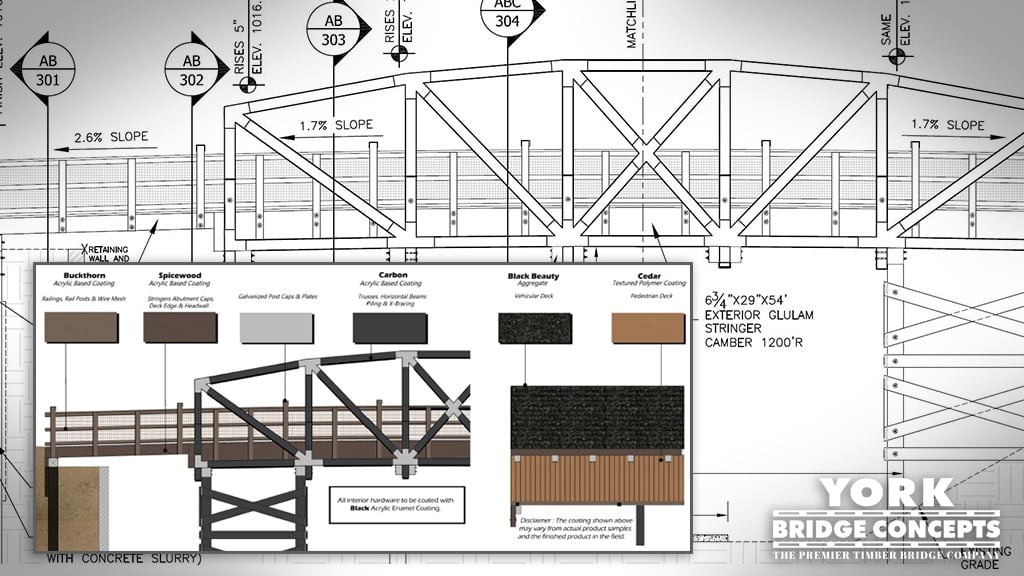
- High-performance acrylic coatings
- Ventilation
- Water-shedding details
- Appropriate spacing between members
Managing water effectively helps reduce long-term deterioration while preserving the structural integrity of the bridge.
Deck-Level (Top-Down) Construction Protects Structural Integrity
Unlike many prefabricated bridge systems, YBC constructs bridges on-site using our proprietary Deck-Level (Top-Down) Construction methodology.
Building directly on-site provides several long-term advantages:
- Precise structural alignment
- Adaptation to actual field conditions
- Reduced construction stress
- Improved fit between structural components
- Fewer field modifications
- Enhanced overall structural continuity
Because the bridge is built specifically for its environment, the finished structure reflects actual site conditions rather than assumptions made during off-site fabrication.
Protective Coatings That Extend Service Life
Surface protection plays an important role in preserving exposed timber.
YBC utilizes advanced protective coating systems designed to help resist:
- UV degradation
- Moisture penetration
- Surface checking
- Weathering
- Color fading
These coatings preserve both appearance and long-term performance while reducing future maintenance requirements.
Routine Maintenance Maximizes Bridge Longevity
Even the most durable bridge benefits from regular inspections and preventative maintenance.
A proactive maintenance program typically includes:
- Routine structural inspections
- Cleaning debris from drainage areas
- Inspecting hardware connections
- Monitoring protective coatings
- Reapplying finishes when necessary
- Evaluating wear surfaces
- Addressing minor issues before they become major repairs
Preventative maintenance is widely recognized as one of the most cost-effective methods for extending bridge service life and reducing lifecycle costs.
Timber Bridges and Lifecycle Value
Durability should be evaluated over the entire life of the bridge—not simply at installation.
When lifecycle costs are considered, timber bridges provide significant long-term value through:
- Long service life
- Renewable building materials
- Lower embodied carbon
- Efficient maintenance
- Repairable structural components
- Reduced environmental impact
- Architectural longevity
- Adaptability for future rehabilitation
Many bridge owners also appreciate that timber components can often be repaired or replaced individually rather than requiring complete bridge replacement.
Sustainability and Long-Term Performance
Longevity and sustainability work together.
A bridge that remains in service for decades reduces the need for replacement, conserves natural resources, and lowers lifecycle environmental impacts.
Timber also offers additional sustainability advantages:
- Renewable material
- Carbon storage
- Lower embodied carbon than many conventional materials
- Responsibly sourced wood products
- Natural integration with surrounding landscapes
These characteristics make timber an attractive choice for organizations pursuing both resilience and environmental stewardship.
Applications That Demand Long-Term Durability
YBC designs long-lasting timber bridges for a wide range of applications, including:
- Pedestrian bridges
- Vehicular bridges
- Trail bridges
- Boardwalks
- Wetland crossings
- Golf cart bridges
- Municipal infrastructure
- Parks and recreation
- Residential communities
- Commercial developments
- University campuses
- Eco-tourism destinations
Every project is engineered to meet the performance requirements of its intended use while supporting decades of reliable service.
Why Choose York Bridge Concepts?
Since 1985, York Bridge Concepts has specialized exclusively in custom timber bridge systems.
Our integrated Decero™ Design-Engineer-Build process includes:
- Site evaluation
- Structural engineering
- Material selection
- Custom bridge design
- Environmental coordination
- On-site construction
- Quality assurance
- Bridge inspection support
- Long-term maintenance services
With more than 9,000 bridges completed, YBC has demonstrated that modern timber bridges are capable of delivering exceptional durability, structural performance, and architectural beauty. Through careful engineering, premium materials, advanced preservation techniques, and proactive maintenance planning, our bridges are designed to become lasting assets that serve communities, parks, developments, and institutions for generations.
Invest in a Bridge Built to Last
A bridge should be measured not only by how it looks on opening day, but by how well it performs decades later. Whether you’re planning a pedestrian crossing, vehicular bridge, boardwalk, or community landmark, York Bridge Concepts designs timber bridges that combine proven engineering, sustainable materials, and long-term durability into infrastructure built for the future.
- All
- Alabama
- Architectural-Design
- Arizona
- Avenue Collection
- Boardwalks
- Bridge Education
- Bridge Types
- California
- Case Study
- Classic
- Colorado
- Commercial Bridges
- Community Designed Projects
- Connecticut
- Construction Techniques for Wood Bridges
- Contemporary Series
- Covered Bridges
- Culvert vs Bridge
- Delaware
- Eco-Tourism Bridges
- Environmental Benefits of Wooden Bridges
- Environmental Mitigation
- Extreme Grades
- Featured
- Floodplain
- Florida
- Free Span Bridge
- Georgia
- Golf Cart Bridge Designs
- Golf Cart Bridges
- Idaho
- Illinois
- International
- Lakes
- Locations
- Louisiana
- Maine
- Maryland
- Massachusetts
- Master Planned Community
- Michigan
- Missouri
- Mixed-Use Development
- Montana
- Multiple Crossings
- Multiple Span
- New Hampshire
- New Jersey
- New York
- North Carolina
- Ohio
- Oklahoma
- Overpasses
- Pedestrian Bridge Designs
- Pedestrian Bridges
- Pennsylvania
- Popular Articles
- Prefabricated Bridges For Sale
- Private Collection
- Repetitive Span
- Retail Developments
- Short Span Timber Bridges
- South Carolina
- Span Types
- Streams
- Tennessee
- Texas
- The LiNK
- Timber Bridge Designs
- Timber vs Steel
- Types of Wood Bridges
- Uncategorized
- Vehicular Bridge Designs
- Vehicular Bridges
- Virginia
- Waterside Collection
- West Virginia
- Wetland Conservation Conservation Bridges

December 20, 2024
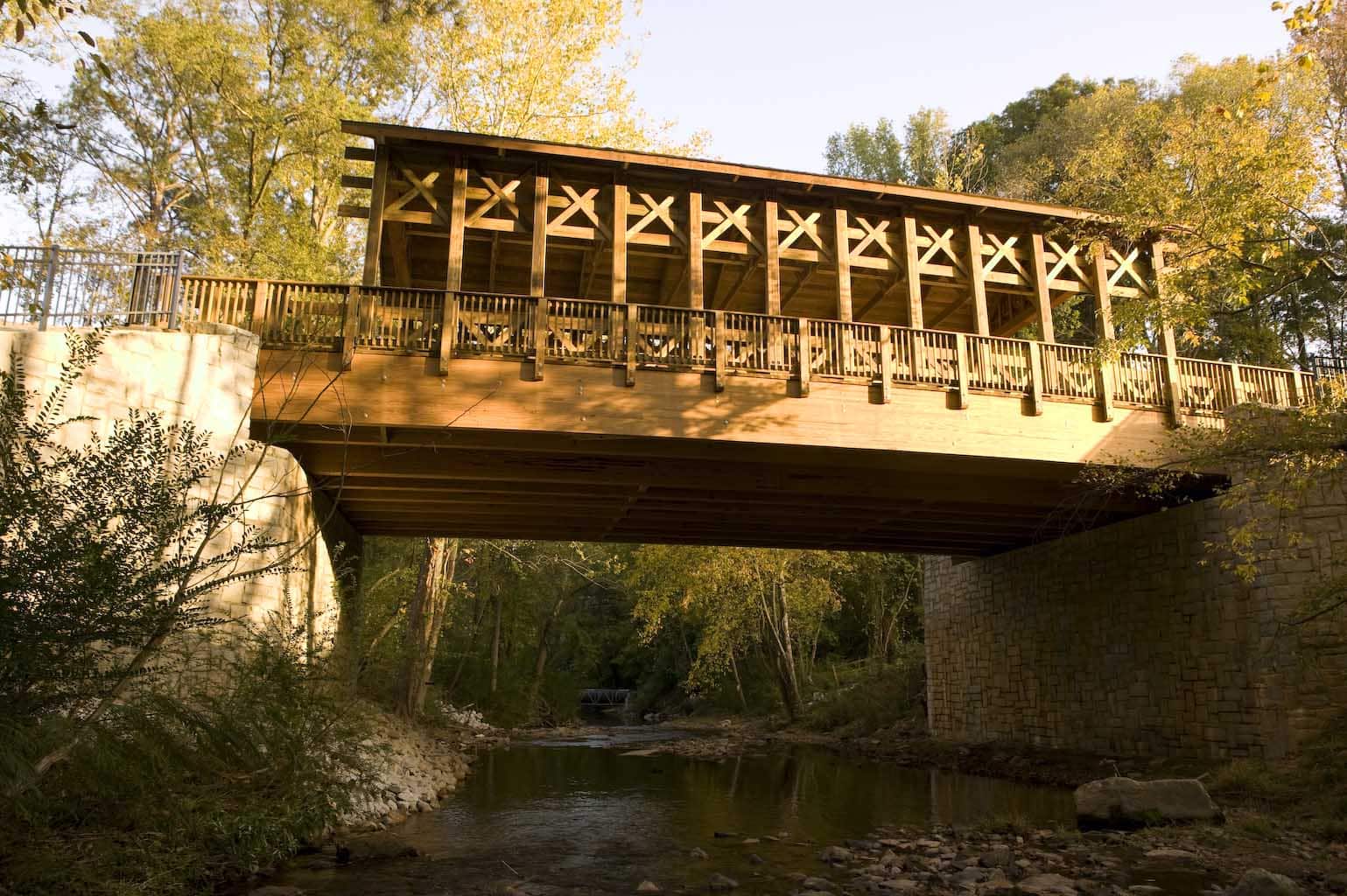
The durability and longevity of timber bridges are no longer a challenge but a proven reality, thanks to York Bridge Concepts. With a meticulous approach to engineering, material selection, and design, we deliver bridges with a 75+ year lifespan and minimal maintenance.
June 18, 2024