North Carolina Timber Bridges
North Carolina’s diverse geography—from the Blue Ridge Mountains to the Piedmont and the Atlantic coastline—creates unique opportunities and challenges for bridge construction. Whether spanning mountain streams, coastal wetlands, rivers, golf courses, or master-planned communities, custom timber bridges provide durable, sustainable, and architecturally distinctive solutions that complement the state’s natural beauty.
For more than 40 years, York Bridge Concepts (YBC) has designed and constructed custom timber bridges throughout North Carolina. With projects across the state, including residential communities, parks, universities, golf destinations, commercial developments, and waterfront properties, YBC has helped shape communities with infrastructure engineered for performance, longevity, and environmental stewardship. North Carolina continues to be one of YBC’s strongest project markets, featuring pedestrian bridges, vehicular bridges, covered bridges, boardwalks, and trail systems in communities from Wilmington and Southport to Calabash and Whispering Pines.
Custom Timber Bridges Designed for North Carolina
Every bridge begins with understanding its environment.
North Carolina presents a wide variety of site conditions, including:
- Coastal wetlands
- Rivers and streams
- Mountain terrain
- Floodplains
- Marshes
- Lakes
- Golf courses
- Nature preserves
- Residential waterways
- Greenway trail systems
Rather than adapting standard bridge designs, YBC engineers every bridge specifically for its location, anticipated loading requirements, environmental considerations, and architectural objectives.
This project-specific approach results in bridges that perform reliably while enhancing the surrounding landscape.
Timber Bridge Solutions for Every Industry
York Bridge Concepts serves clients across numerous industries throughout North Carolina.
Residential Communities
Signature entrance bridges create memorable first impressions while providing dependable daily access for residents, visitors, and emergency vehicles.
Many master-planned communities also incorporate pedestrian bridges, golf cart bridges, and trail systems that improve connectivity between neighborhoods and amenities.
Municipal Infrastructure
Cities and counties rely on timber bridges to improve:
- Public parks
- Greenway systems
- Multi-use trails
- Community gathering spaces
- Waterfront redevelopment
- Recreational facilities
Timber provides a warm architectural appearance while supporting sustainable infrastructure goals.
Parks & Recreation
Pedestrian bridges and elevated boardwalks improve access through forests, wetlands, rivers, and environmentally sensitive landscapes while preserving the natural terrain.
Golf Courses & Resorts
North Carolina’s renowned golf communities frequently incorporate timber bridges that enhance both functionality and the overall guest experience.
Commercial & Mixed-Use Developments
Developers use custom timber bridges to create attractive entrances, connect retail districts, and improve pedestrian circulation throughout commercial properties.
Pedestrian Bridges Across North Carolina
Pedestrian bridges encourage outdoor recreation while improving safety and accessibility.
YBC designs custom pedestrian bridges for:
- Greenways
- Nature trails
- Parks
- University campuses
- Schools
- Botanical gardens
- Mixed-use developments
- Environmental education centers
- Waterfront parks
Every bridge is engineered for anticipated pedestrian traffic while blending naturally into the surrounding environment.
Vehicular Timber Bridges
North Carolina continues to experience rapid residential and commercial growth, increasing demand for dependable vehicular bridge infrastructure.
YBC designs custom vehicular bridges for:
- Residential developments
- Private communities
- Commercial properties
- Resorts
- Municipal roadways
- Emergency access
- Service roads
Depending on project requirements, bridges can be engineered for H5, H10, HS20-44, or HL-93 loading criteria.
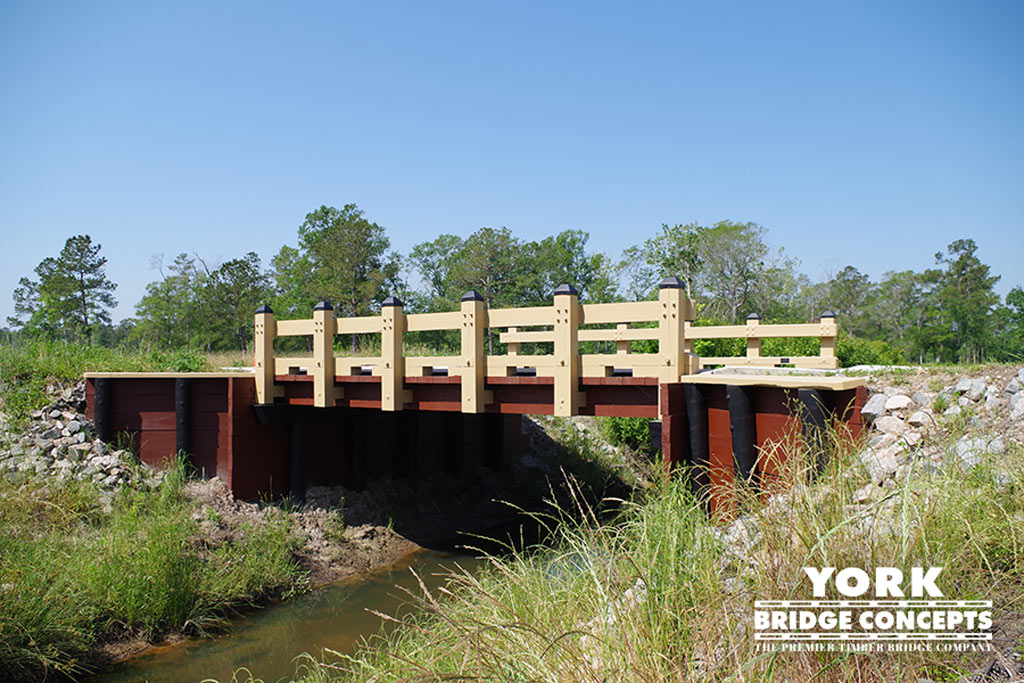
Representative North Carolina projects include community entrance bridges in Whispering Pines, Calabash, Southport, and River Landing, demonstrating YBC’s experience across a variety of structural and architectural applications.
Boardwalks and Wetland Crossings
North Carolina’s coastal environment includes extensive marshes, estuaries, rivers, and wetlands where elevated boardwalk systems provide ideal access.
Applications include:
- Nature preserves
- Coastal parks
- Riverwalks
- Wildlife observation areas
- Community greenways
- Residential waterfronts
- Environmental education centers
Elevated timber boardwalks preserve sensitive ecosystems while allowing visitors to experience North Carolina’s natural beauty.
Sustainable Construction for Sensitive Environments
Environmental stewardship is a priority throughout North Carolina.
YBC’s proprietary Deck-Level (Top-Down) Construction™ methodology significantly reduces construction impacts by allowing crews to progressively build from the completed bridge deck.
Benefits include:
- Reduced wetland disturbance
- Less soil compaction
- Minimal vegetation removal
- Fewer temporary access roads
- Reduced habitat disruption
- Lower restoration costs
This innovative approach is particularly valuable for projects located within coastal wetlands, protected habitats, and environmentally sensitive areas.
Built for North Carolina’s Climate
Bridge infrastructure throughout North Carolina must withstand a wide range of environmental conditions.
YBC bridges are engineered for:
- Coastal humidity
- Salt air exposure
- Heavy rainfall
- River flooding
- Mountain weather
- Seasonal storms
- UV exposure
- Temperature fluctuations
Premium structural timber, engineered components, corrosion-resistant hardware, and advanced protective coatings help ensure decades of dependable performance.
Architectural Bridges That Reflect North Carolina
Every bridge should complement its surroundings.
YBC offers extensive customization options including:
- Decorative timber rail systems
- Horizontal rail designs
- Cable railing
- Covered bridge architecture
- Composite decking
- Tropical hardwood decking
- Premium stains
- Acrylic polymer coatings
- Decorative lighting
- Scenic overlooks
Whether the project reflects mountain architecture, coastal design, traditional Southern character, or contemporary development, every bridge is tailored to its setting.
Why Timber Bridges?
Timber remains one of the most environmentally responsible bridge materials available.
Advantages include:
- Renewable building materials
- Lower embodied carbon
- Carbon storage
- Faster construction schedules
- Reduced environmental disturbance
- Natural architectural warmth
- Long service life
- Seamless integration into natural landscapes
These benefits make timber an ideal choice for communities seeking resilient, sustainable infrastructure.
Why Choose York Bridge Concepts?
Since 1985, York Bridge Concepts has specialized exclusively in custom timber bridge systems.
Our integrated Decero™ Design-Engineer-Build process provides:
- Site evaluation
- Custom bridge design
- Structural engineering
- Environmental coordination
- Material selection
- On-site construction
- Project management
- Long-term maintenance support
With more than 9,000 bridges completed throughout North America, YBC has become a trusted partner for North Carolina developers, municipalities, engineers, landscape architects, parks departments, and private organizations. Our experience spans the mountains, Piedmont, and coastal regions, delivering bridges that combine structural integrity, sustainability, and timeless architectural appeal.
Connecting Communities Across North Carolina
Whether you’re planning a pedestrian bridge for a mountain greenway, a vehicular bridge for a master-planned community, a boardwalk through coastal wetlands, or a covered bridge that becomes a community landmark, York Bridge Concepts delivers custom timber bridge solutions engineered specifically for North Carolina’s landscapes, climate, and environmental conditions.
Our bridges do more than connect two points—they connect communities, protect natural resources, and create lasting destinations for generations to come.
- All
- Alabama
- Architectural-Design
- Arizona
- Avenue Collection
- Boardwalks
- Bridge Education
- Bridge Types
- California
- Case Study
- Classic
- Colorado
- Commercial Bridges
- Community Designed Projects
- Connecticut
- Construction Techniques for Wood Bridges
- Contemporary Series
- Covered Bridges
- Culvert vs Bridge
- Delaware
- Eco-Tourism Bridges
- Environmental Benefits of Wooden Bridges
- Environmental Mitigation
- Extreme Grades
- Featured
- Floodplain
- Florida
- Free Span Bridge
- Georgia
- Golf Cart Bridge Designs
- Golf Cart Bridges
- Idaho
- Illinois
- International
- Lakes
- Locations
- Louisiana
- Maine
- Maryland
- Massachusetts
- Master Planned Community
- Michigan
- Missouri
- Mixed-Use Development
- Montana
- Multiple Crossings
- Multiple Span
- New Hampshire
- New Jersey
- New York
- North Carolina
- Ohio
- Oklahoma
- Overpasses
- Pedestrian Bridge Designs
- Pedestrian Bridges
- Pennsylvania
- Popular Articles
- Prefabricated Bridges For Sale
- Private Collection
- Repetitive Span
- Retail Developments
- Short Span Timber Bridges
- South Carolina
- Span Types
- Streams
- Tennessee
- Texas
- The LiNK
- Timber Bridge Designs
- Timber vs Steel
- Types of Wood Bridges
- Uncategorized
- Vehicular Bridge Designs
- Vehicular Bridges
- Virginia
- Waterside Collection
- West Virginia
- Wetland Conservation Conservation Bridges